A kitchen can be perfectly functional yet still feel worn out when cabinet doors start lifting at the corners, bubbling near the kettle or peeling along the handles. So, can peeling cabinet doors be fixed? In many cases, yes. The right solution depends on what the doors are made from, how far the damage has spread and whether the cabinet itself is still structurally sound.
For homeowners, peeling doors do not automatically mean a full kitchen replacement. A careful repair or professional respray can restore the look of the room for considerably less disruption, cost and waste than fitting a brand-new kitchen.
Why cabinet doors start peeling
Peeling is usually a surface problem rather than a problem with the cabinet carcasses. Many fitted kitchens have solid, serviceable units behind doors finished with vinyl, laminate, thermofoil or a painted coating. Over time, heat, steam, cleaning products and daily use can weaken that outer layer.
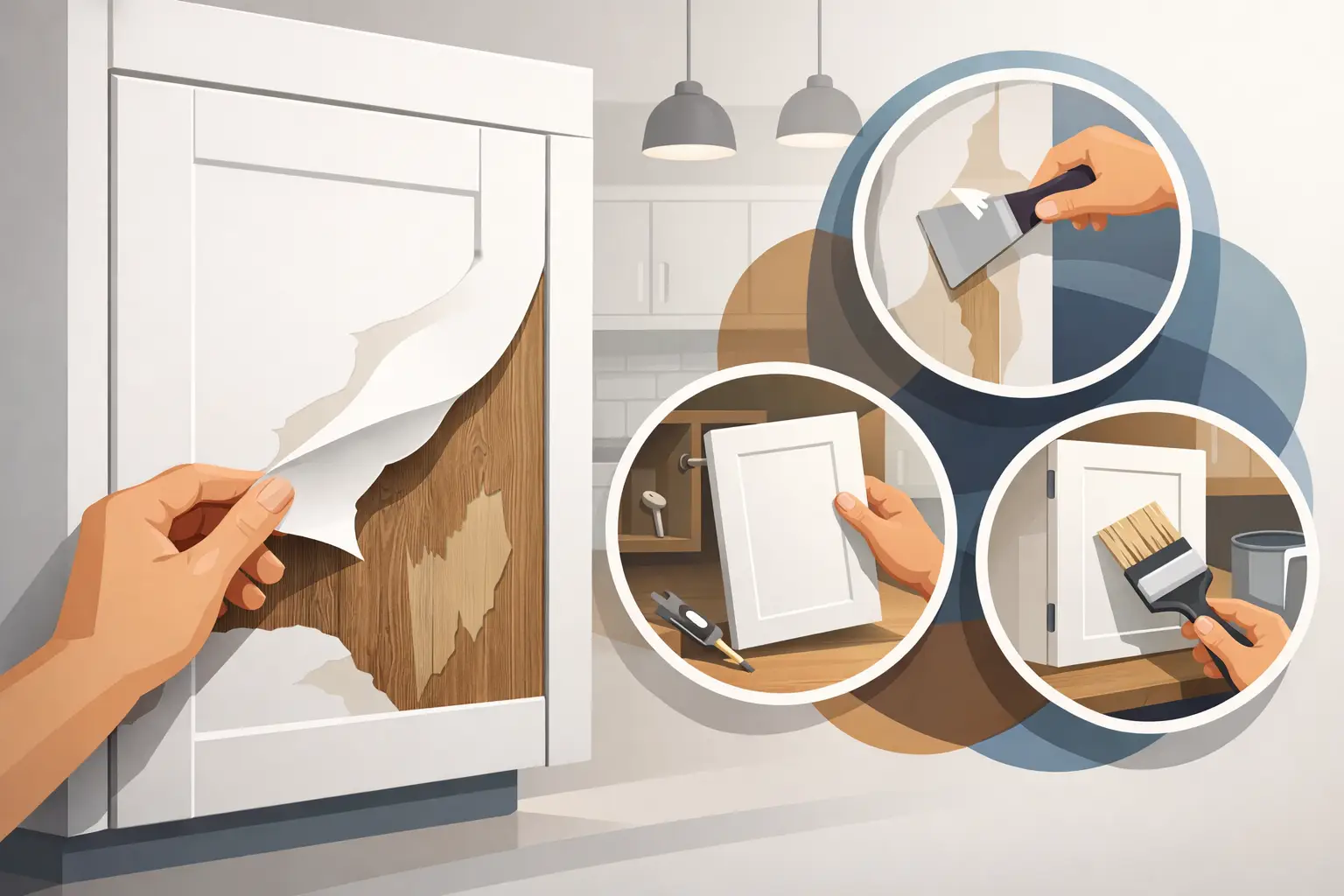
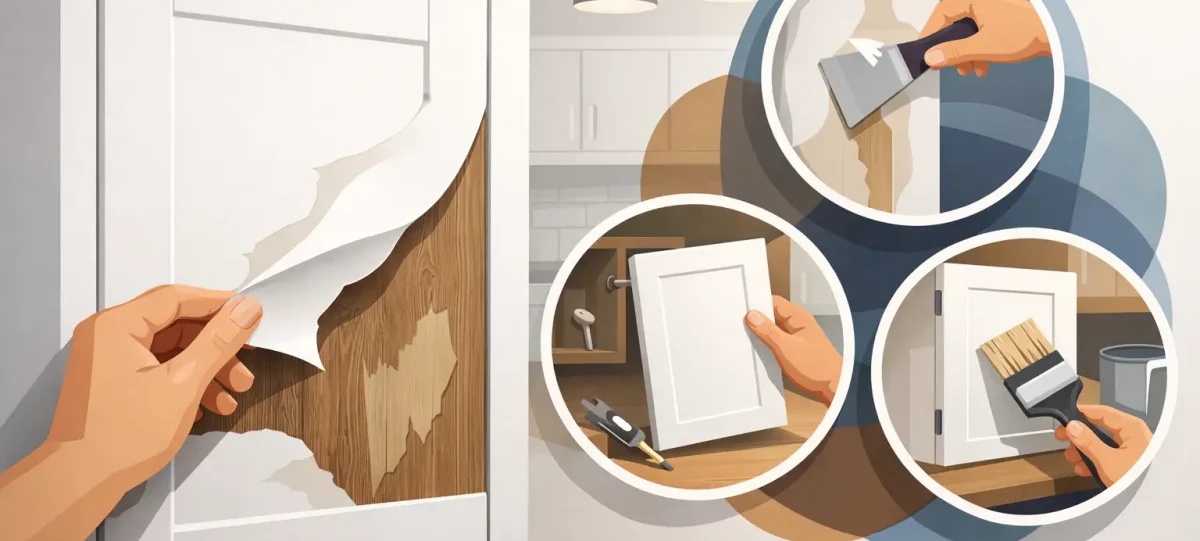
Thermofoil and vinyl-wrapped doors are especially prone to lifting. These doors have a thin decorative skin bonded over an MDF core. When the adhesive fails, the coating often starts to curl around the edges, near ovens, dishwashers and sinks, where heat and moisture are most persistent. Once an edge has lifted, steam can travel underneath and make the problem spread.
Painted doors can peel for different reasons. Poor original preparation, repeated exposure to moisture, harsh degreasers or knocks around handles may cause the paint film to lose its grip. Laminate doors may chip or lift at corners if the edge banding has been damaged.
The key distinction is between a failed finish and a failed door. If the MDF is swollen, crumbling or distorted by water damage, a cosmetic repair may not last. If the board remains dry, flat and firm, there is often an excellent opportunity to renew it.
Can peeling cabinet doors be fixed without replacing them?
Small, isolated areas can sometimes be repaired at home. A loose vinyl corner may be carefully re-adhered using a suitable contact adhesive, provided the material has not stretched, cracked or warped. Light paint flaking can also be sanded back, primed and touched up.
However, spot repairs have limits. The repaired area may remain visible, particularly on gloss doors, dark colours or doors that receive strong daylight. More importantly, the original finish may continue to fail elsewhere. Fixing one corner can simply reveal that another edge is ready to lift a few months later.
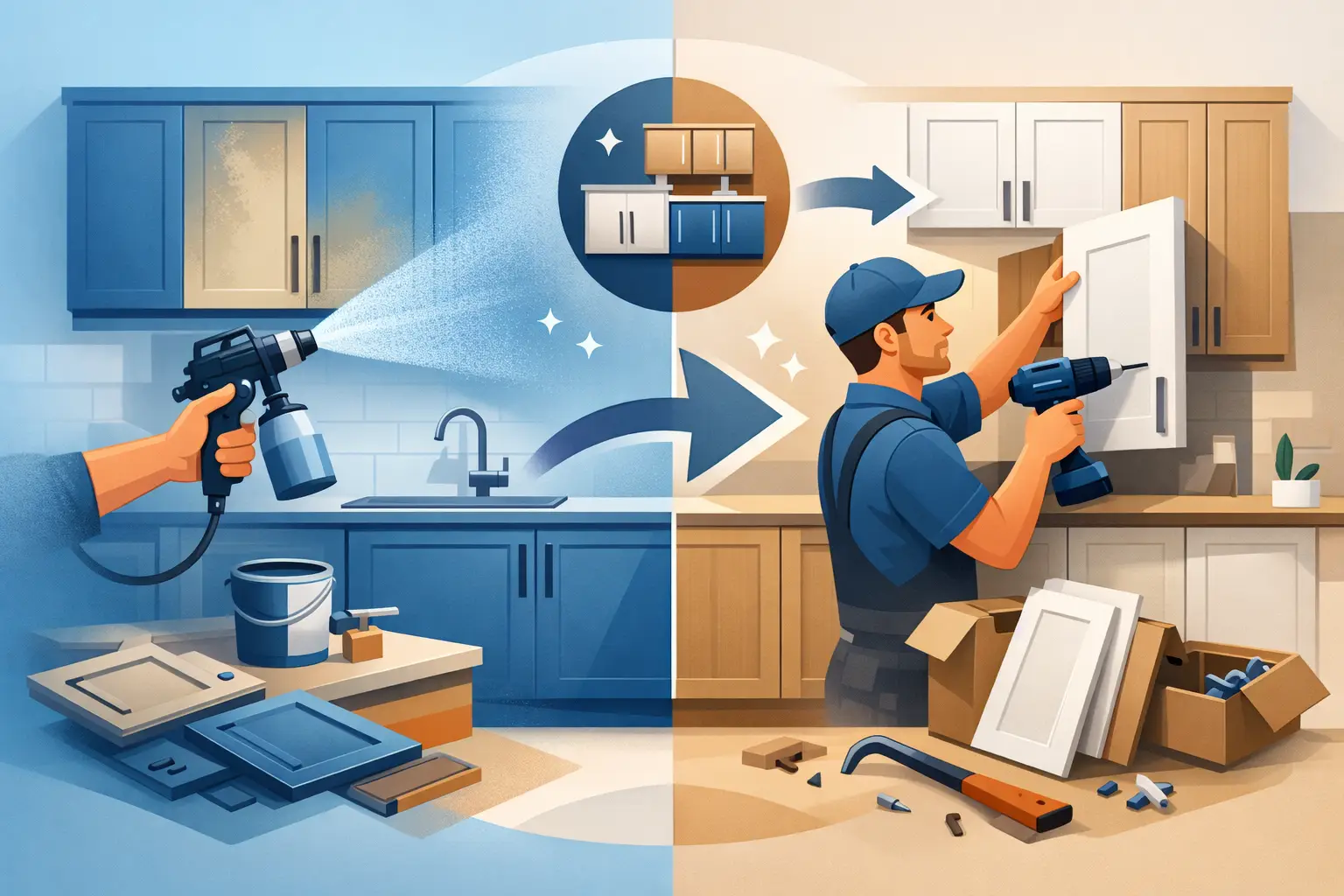
A door with widespread peeling vinyl is rarely a good candidate for repeated glue repairs. Removing the loose layer and applying a professionally prepared spray finish is usually a more reliable option, assuming the substrate underneath is sound. This changes the door from a failing wrapped finish to a renewed painted surface designed for everyday kitchen use.
Replacement is the sensible route when doors are badly swollen, split, bowed or damaged beyond a stable repair. It can also make sense where a matching door is readily available and only one or two fronts are affected. Yet for an older kitchen range, exact replacements are often unavailable, leaving homeowners with mismatched doors or the cost of replacing every front.
How to assess the condition of your doors
Before deciding on a repair, inspect the damage closely. Run a hand over the affected area. A surface that feels flat and solid beneath the peeling coating is promising. If it feels soft, raised or uneven, moisture may have penetrated the MDF.
Look carefully at the bottom edges of sink units and doors beside integrated appliances. These are common places for water damage. Darkened, swollen or rough MDF usually indicates that the material has deteriorated. No finish can reliably hide an unstable surface for long.
Also consider the scale of the issue. One damaged door caused by a dishwasher steam leak is different from an entire kitchen where the vinyl coating is lifting at handles, corners and edges. Widespread failure points towards an ageing finish rather than one-off accidental damage.
A practical assessment should include the hinges and door alignment too. Good-quality hinges can often be retained or adjusted, while damaged ones can be replaced. When the cabinet boxes are solid and the layout still works for your household, renewing the visible surfaces is often the most cost-effective decision.
Your repair and renewal options
Localised touch-up repairs
A small paint chip or a minor lifted laminate edge may respond well to a local repair. The area needs to be cleaned thoroughly, dried completely and prepared with the correct primer or adhesive. This approach is affordable for modest damage, but colour matching and sheen matching can be difficult.
It is best suited to discreet areas or recently painted doors where the original paint specification is known. It is less suitable for old vinyl doors with multiple lifting sections.
Re-wrapping or fitting new vinyl
Some homeowners consider having doors re-wrapped in vinyl. This can freshen the look quickly, but it is worth asking how the existing substrate will be prepared and how edges around heat sources will be handled. A new wrap is still reliant on adhesive performance, and poor preparation can lead to another round of lifting.
For doors with complex profiles, grooves or existing damage, a spray finish often provides a more consistent result. It can also offer far more flexibility in colour and sheen.
Professional cabinet respraying
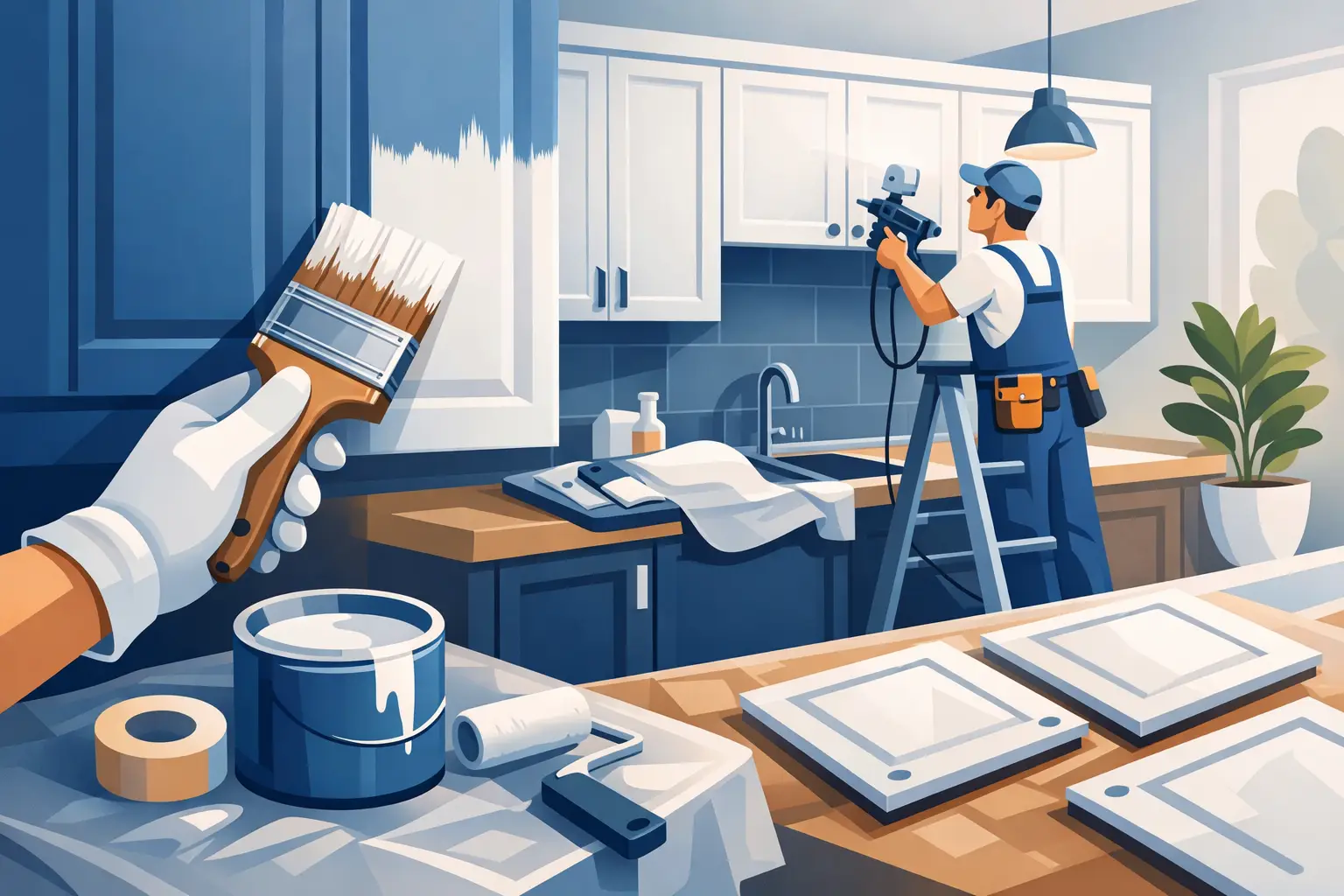
Respraying is particularly effective where the cabinets are sound but the doors look dated, scratched or are peeling. The process is not simply a matter of painting over the problem. Loose coating must be dealt with properly, surfaces need thorough cleaning and degreasing, and damaged sections require careful preparation before an appropriate primer and durable topcoat are applied.
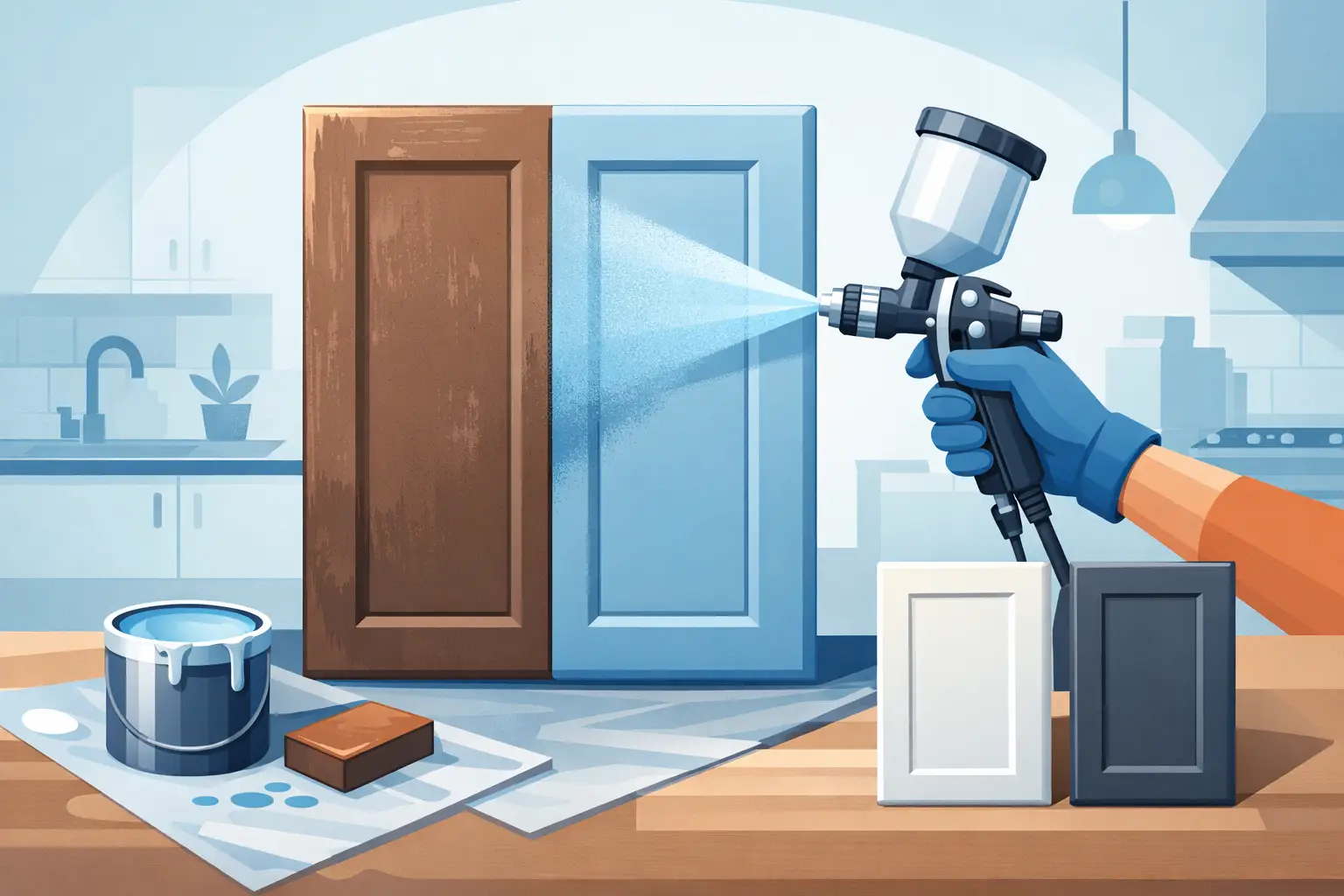
A professional spray application creates an even, furniture-quality finish that brush painting rarely achieves. It is a practical way to move from a tired vinyl effect or dated colour to a contemporary matt, satin or gloss appearance without removing functional cabinetry.
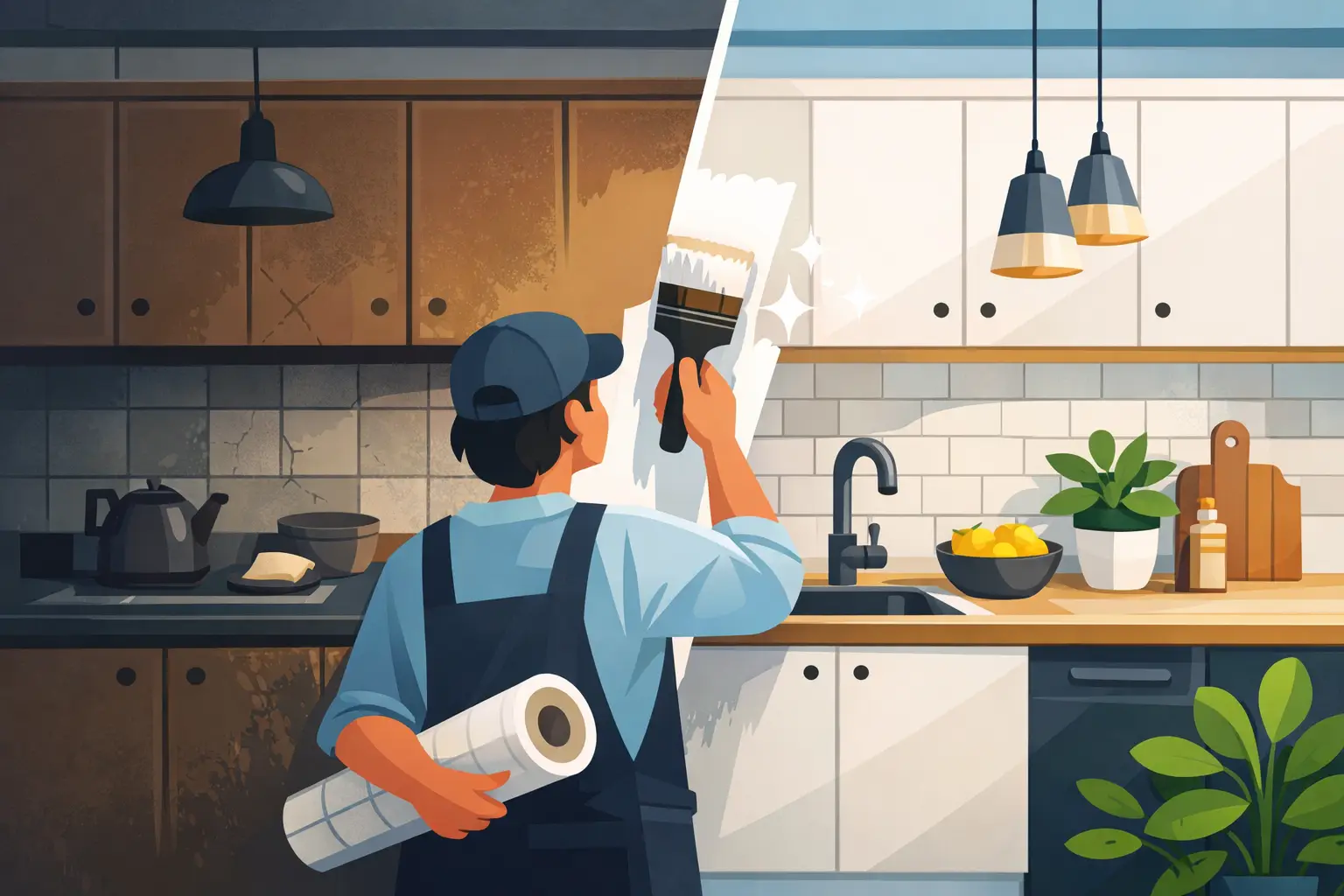
Dublin Kitchen Respray assesses each kitchen on its condition rather than promising a one-size-fits-all fix. Where doors are suitable for preparation and respraying, the result can be a striking, affordable and eco-friendly transformation with far less upheaval than a full renovation.
Replacing selected doors or the full kitchen
If water damage has compromised the core material, replacing the affected doors is usually wiser than coating over them. For extensive damage to cabinets, worktops or layout, a full replacement may be the better long-term investment.
That said, replacement creates more waste and can involve plumbing, electrical work, tiling and several weeks of disruption. It should be chosen because the kitchen genuinely needs rebuilding, not simply because its surface finish has reached the end of its life.
What makes a repaired finish last?
Preparation determines whether a renewed door stays looking good. Kitchen surfaces collect grease, polish residue and cooking vapours, even when they appear clean. Any contamination left behind can interfere with adhesion.
Professional preparation generally involves cleaning, degreasing, abrading the surface, repairing imperfections and applying primers selected for the door material. Each stage matters. Skipping preparation may save time initially, but it often leads to peeling, chipping or an uneven finish later.
After respraying, treat the doors with sensible care. Use a soft cloth and mild cleaner rather than abrasive pads or strong solvents. Wipe down water around sink units promptly, and make sure appliances vent properly. A kettle pushed tightly beneath a wall unit can repeatedly send steam into the same vulnerable edge, so positioning and ventilation make a real difference.
When a professional opinion is worthwhile
It is worth arranging an assessment when you are unsure whether the issue is only cosmetic. Photographs can show the visible peeling, but an experienced professional can identify subtle swelling, weak edges and problem areas around hinges or appliances that affect the viability of a repair.
This is especially useful if you are weighing up respraying against replacement. A trusted provider should be clear about what can be restored, what needs replacing and what finish is realistic for your doors. Honest advice protects both the appearance of the kitchen and your budget.
Peeling cabinet doors are frustrating, but they do not have to dictate a complete renovation. If the units beneath are dry, solid and still suit your home, renewing their finish can give the kitchen the fresh, like-new look you want while keeping a good kitchen in use for years to come.