A dated oak finish, tired cream paint or scratched vinyl can make an otherwise well-planned kitchen feel past its best. So, can kitchen doors be resprayed rather than replaced? In many cases, yes. Professional respraying can give sound kitchen doors a stunning, factory-style finish at a fraction of the cost and disruption of fitting a new kitchen.
The key is not simply the current colour. It is the condition and material of the doors underneath. A trusted respray specialist assesses this first, then uses the right preparation and coating system to create a finish built for a busy kitchen.
Can Kitchen Doors Be Resprayed Successfully?
Kitchen doors can usually be resprayed when they are structurally sound, open and close properly, and have no serious water damage. The doors do not have to look perfect before work begins. Scuffs, minor chips, faded colour and everyday wear are exactly the problems respraying is designed to address.
Solid wood, MDF, painted timber and many vinyl or laminate-faced doors are suitable candidates. Shaker doors, slab doors and more detailed routed styles can all be transformed, although doors with deeper grooves or ornate profiles require particularly careful preparation to keep the finish even.
The result depends on both the substrate and the workmanship. A kitchen door is handled constantly, exposed to steam and grease, and cleaned more often than most furniture. A professional finish needs to adhere properly, cure correctly and withstand daily use, not merely look good on the day it is sprayed.
Doors that are ideal for respraying
Well-made cabinets often outlast the colour trends they were fitted for. If the cabinet carcasses are sturdy, the hinges are serviceable and the layout still works for your household, retaining them makes practical and financial sense. Respraying allows you to update the visible doors, drawer fronts, plinths and panels without sending usable cabinetry to landfill.
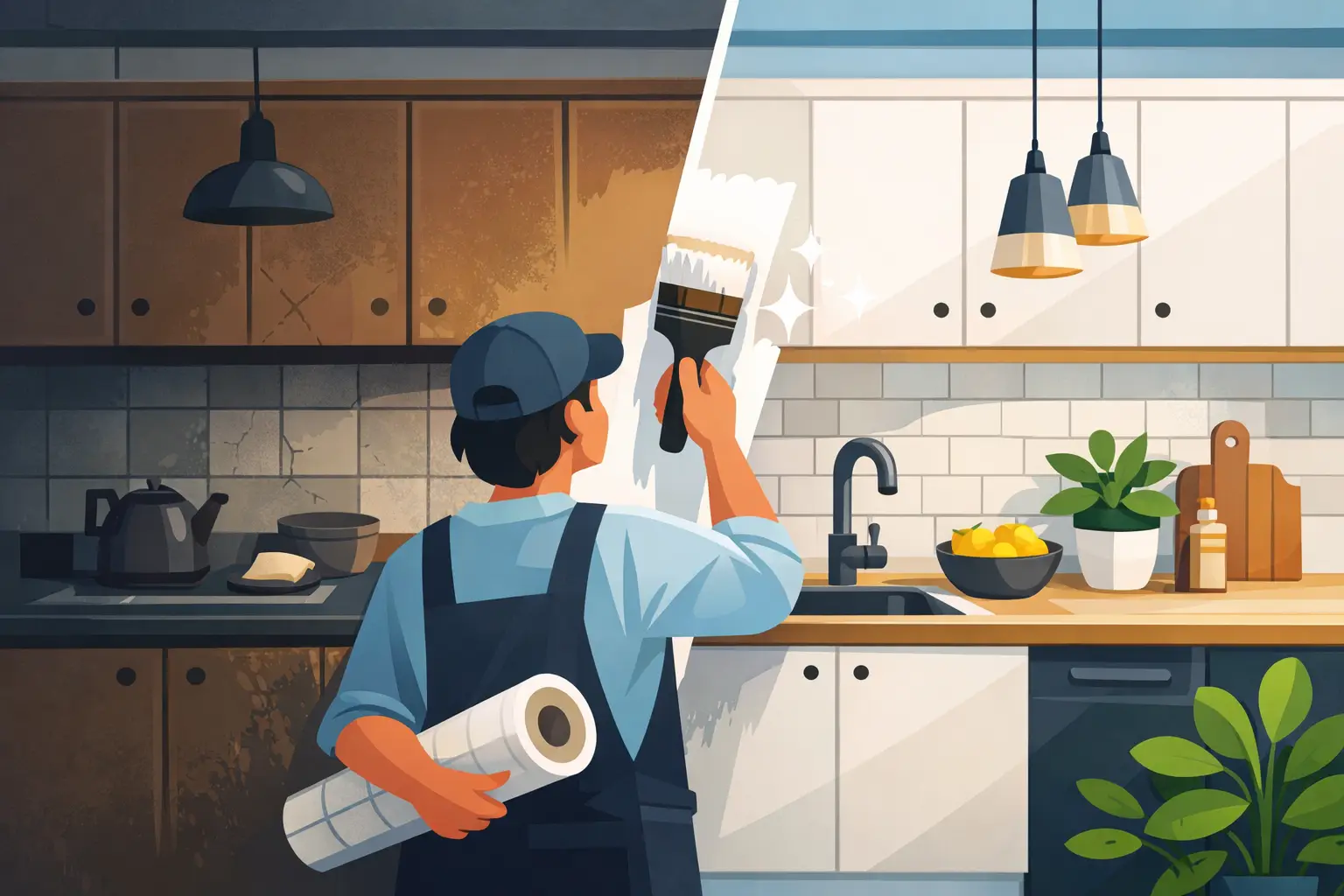
It is particularly worthwhile where a kitchen has good-quality timber or MDF doors but an outdated finish. A warm beech, orange-toned oak or worn cream kitchen can be changed to a contemporary soft grey, warm white, deep navy or another colour suited to the room’s light and worktops.
When respraying may not be the right answer
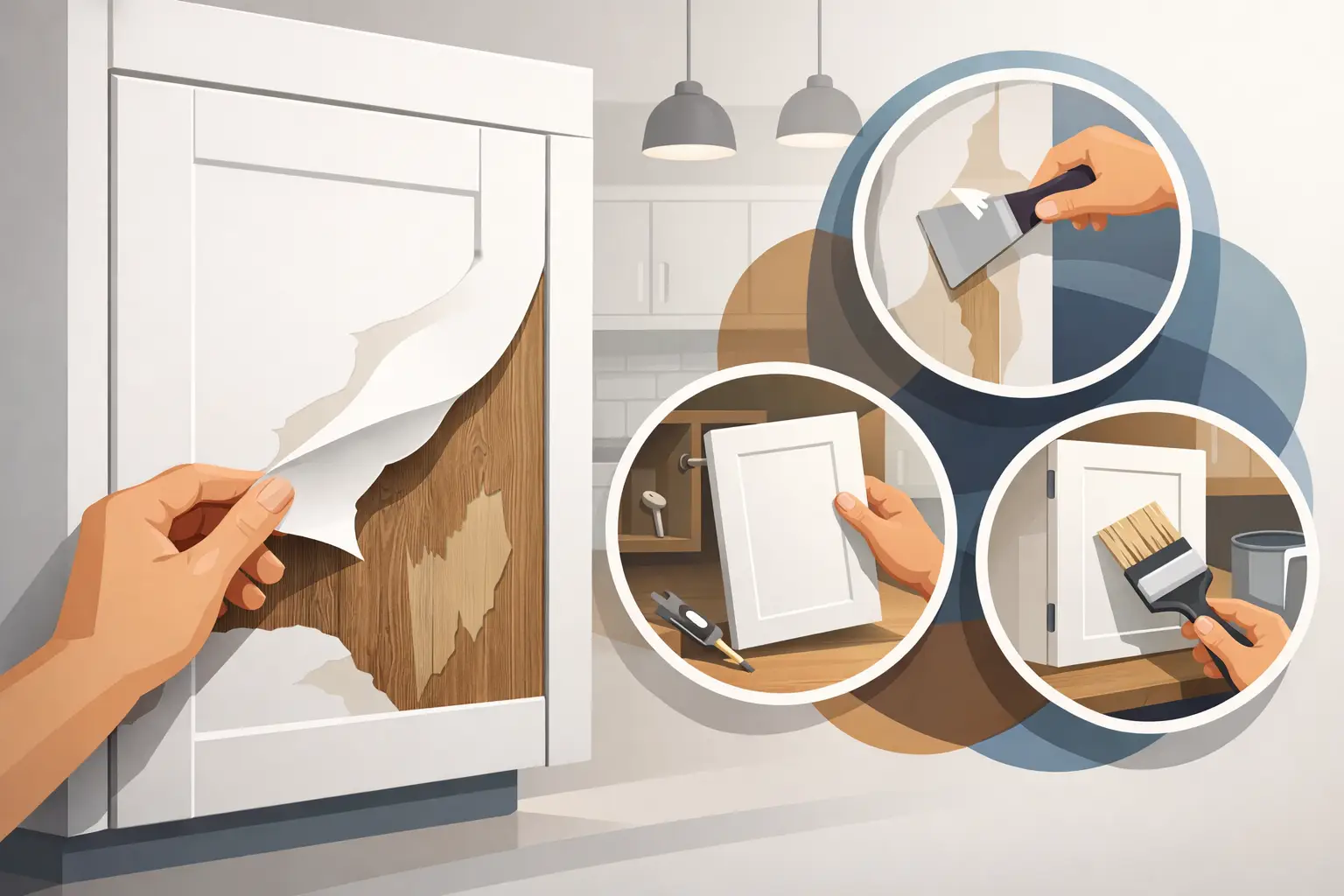
Not every door should be sprayed without further work. Swollen chipboard, crumbling MDF edges, extensive peeling caused by moisture, warped doors and severe heat damage need attention first. Sometimes individual doors can be repaired or replaced while the remaining doors are resprayed, which is still often more affordable than a complete refit.
Poorly bonded vinyl can also present a challenge. If the coating is lifting across large areas, it may need to be removed and the surface stabilised before spraying. An expert survey is valuable here because it identifies whether a durable result is realistic, rather than promising a quick cosmetic fix.
What Happens During a Professional Kitchen Door Respray?
A high-quality respray is a controlled finishing process, not a coat of paint applied over old surfaces. The preparation takes time because it is what gives the new colour its strength and smooth appearance.
First, doors, drawer fronts and removable panels are carefully taken down and labelled. Hinges and hardware are protected or removed as needed. The existing surface is thoroughly cleaned to remove grease, silicone residue and cleaning-product build-up, all of which can interfere with adhesion.
Next comes repair and preparation. Small dents, chips and cracks are filled, while damaged edges are restored where possible. Surfaces are sanded or keyed to create the correct base for the primer. This stage also helps remove the uneven sheen and small imperfections that can show through a new finish.
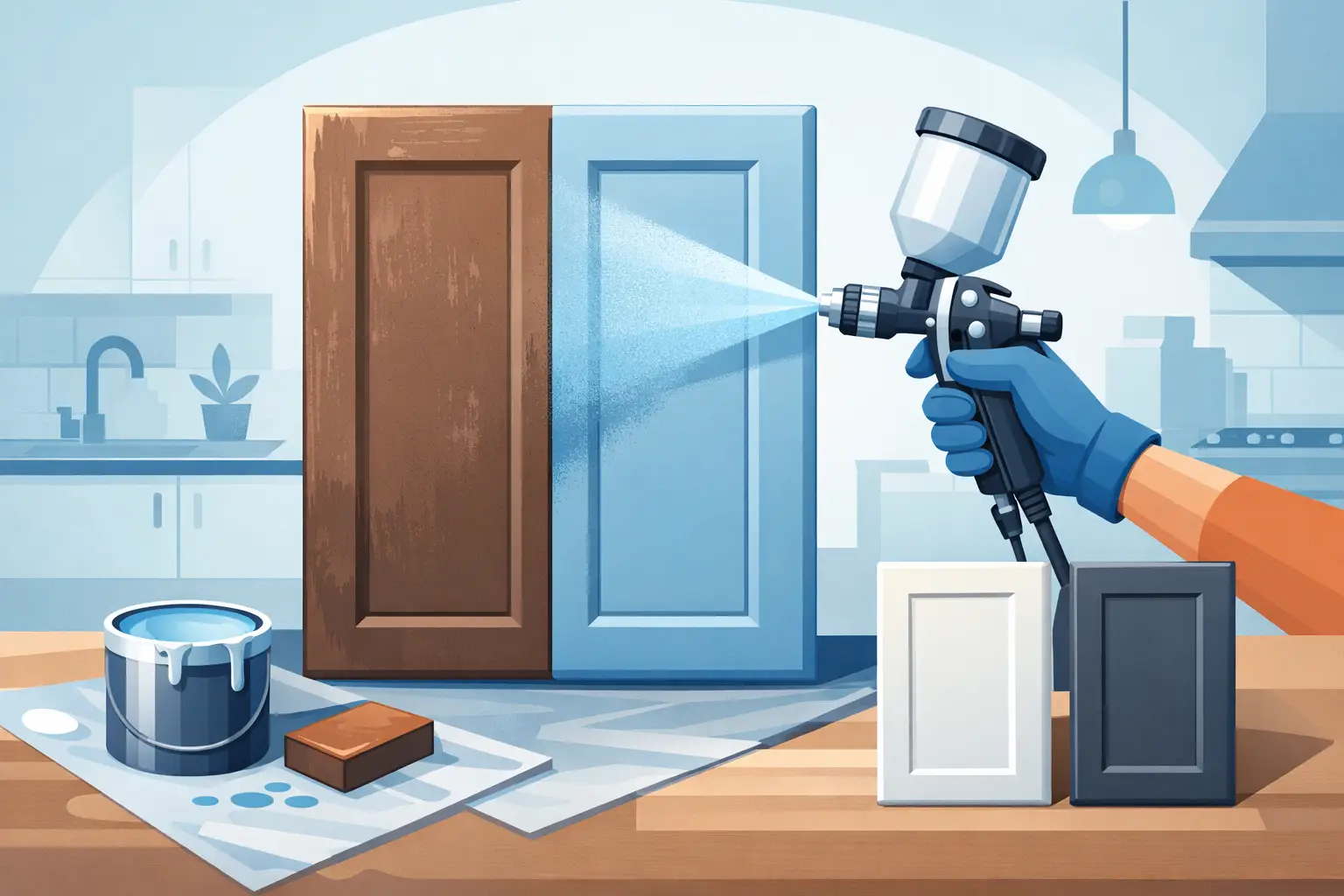
A suitable primer is then applied for the specific door material, followed by professional spray coats in the chosen colour and sheen. The doors are left to cure properly before being refitted and adjusted. This produces an even finish without brush marks, roller texture or the patchiness often associated with a DIY repaint.
The work is typically far less disruptive than a full renovation. There is no need to remove sound cabinet units, alter plumbing or wait for a replacement kitchen to arrive. For homeowners who want an impressive update without turning their home upside down, that difference matters.
Choosing the Right Colour and Finish
Colour is where a respray becomes more than a repair. It can change the perceived size, warmth and character of the whole kitchen. Pale neutral shades can make compact Dublin kitchens feel brighter, while richer colours work beautifully on larger runs of cabinetry or a kitchen island.
The finish also deserves consideration. A matt or low-sheen finish offers a contemporary, understated appearance, but very flat finishes can show marks more readily in a high-traffic family kitchen. Satin provides a gentle sheen and is a practical choice for many homes. Higher gloss reflects more light and can look striking, although it is less forgiving of fingerprints and surface imperfections.
Look beyond the doors before making a final choice. Consider the floor, wall colour, handles, splashback and worktop together. If your worktops or tiles are also dated, a coordinated surface update can make the result feel like a complete renovation rather than a colour change. The goal is a kitchen that feels considered and lasting, not simply different.
Respraying Versus Replacing Kitchen Doors
Replacing doors can be a good option when the existing fronts are beyond repair or you want a completely different door style. However, new doors need to match the cabinet sizes, hinge positions and overall proportions of the existing kitchen. Costs can rise quickly once fitting, new handles, panels and alterations are included.
Respraying retains the doors you already own and changes their appearance with less material waste. It is an eco-friendly choice for homeowners who value quality but do not want to discard cabinetry that remains fully functional. It also keeps familiar storage arrangements intact, which is useful where the kitchen layout already meets your needs.
There are trade-offs. Respraying will not turn a simple slab door into a shaker door, fix a poorly designed layout or solve failing cabinet boxes. It does, however, provide a dramatic visual transformation when the fundamental kitchen is still good.
How to Look After Resprayed Kitchen Doors
Once cured, professionally resprayed doors are designed for normal kitchen use. Gentle care helps protect their appearance for years. Wipe spills promptly with a soft cloth and mild detergent, then dry the surface rather than leaving water around door edges and handles.
Avoid abrasive pads, scouring powders, bleach-heavy products and harsh solvent cleaners. These can dull the finish over time. Take particular care around kettles, steamers and ovens, as prolonged heat and moisture are tougher on any painted or coated surface.
Handles are worth keeping clean too. Grease transferred from hands tends to build up around them, and regular light cleaning is easier than aggressive scrubbing later. If a chip does occur, dealing with it promptly can prevent moisture reaching the substrate.
Is a Kitchen Door Respray Worth It?
For many homeowners, the answer is clear: if the doors and cabinet units are sound, respraying is one of the most affordable ways to achieve a like-new kitchen. It preserves what works, addresses what looks tired and avoids much of the cost, waste and disruption associated with replacement.
The best outcomes begin with an honest assessment of the existing doors and a clear idea of how you want the room to feel. Dublin Kitchen Respray approaches each project with that practical focus, helping homeowners choose a durable finish that makes their kitchen feel fresh, personal and ready for the years ahead.