A vinyl door can look tired long before the rest of the kitchen does. If the surface is chipped at the edges, lifting near the handles or showing small knocks from everyday use, the obvious question is: can chipped vinyl doors be sprayed? In many cases, yes – but the real answer depends on how badly the vinyl has failed, what sits underneath it, and whether the prep work is done to a professional standard.
That distinction matters. A well-sprayed door can look fresh, smooth and modern again without the cost and disruption of full replacement. A poorly prepared one may look acceptable for a short time, then start showing the same defects back through the new finish.
Can chipped vinyl doors be sprayed successfully?
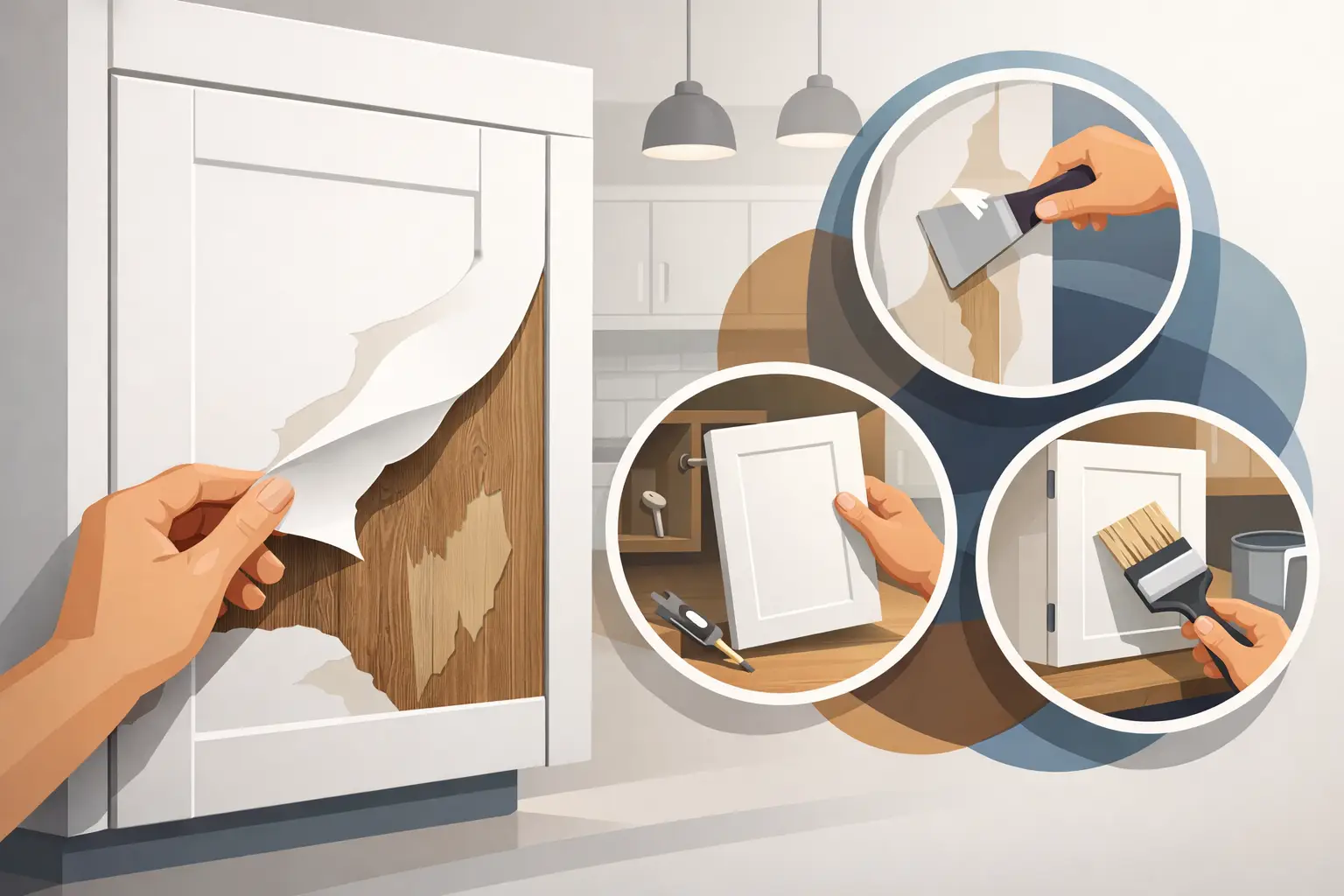
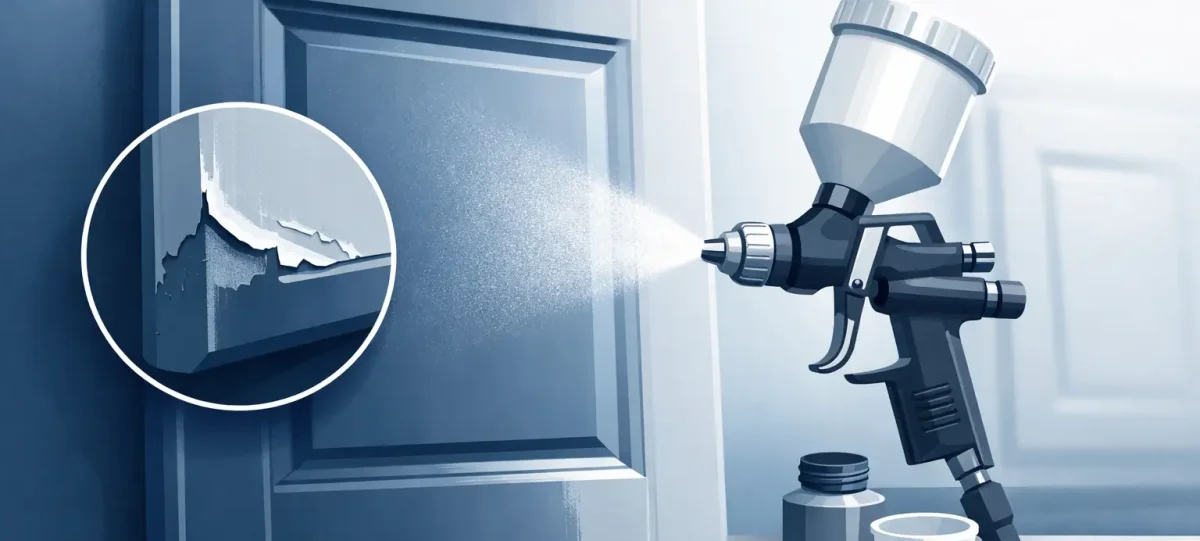
They can, provided the damage is assessed properly first. Vinyl-wrapped kitchen doors are usually made from MDF with a thin vinyl foil pressed over the face and edges. When that foil chips, peels or splits, the issue is not only cosmetic. It can expose vulnerable edges, create uneven texture and make adhesion more difficult.
If the chip is localised and the underlying door is still sound, spraying is often a very good solution. Small damaged areas can be repaired, stabilised and refinished to create a clean, updated appearance. This is especially attractive when the door shape still suits the kitchen and the goal is to improve the look without replacing every front.
If the vinyl is lifting extensively, however, the job becomes less straightforward. Large sections of loose foil, swelling MDF, or repeated failure around multiple edges can mean the door needs more than a cosmetic fix. In those cases, a professional may recommend stripping, specialist repair or replacement of selected doors rather than spraying over a failing surface.
What decides whether spraying is the right option?
The condition of the vinyl is the first test. A small chip on an otherwise stable door is very different from foil that has started to shrink, bubble or separate across the panel. Heat and moisture are often the culprits, especially around kettles, ovens and sink areas. Once vinyl has begun to fail widely, the problem is rarely isolated.
The substrate underneath matters just as much. MDF is commonly used because it gives a smooth machined profile, but once moisture gets into damaged edges it can expand. If that has happened, simply painting over the defect will not hide it. The surface has to be repaired properly so the final finish sits flat.
There is also the question of durability. A sprayed finish is only as reliable as the bond beneath it. If unstable vinyl is left in place, any coating applied on top is working over a weak layer. That is why professional preparation is not a minor step – it is the part that determines whether the result lasts.
Small chips versus widespread peeling
Small chips, minor edge knocks and isolated scuffs are usually the most spray-friendly type of damage. These can often be filled, sanded, primed and coated to achieve a strong visual result.
Widespread peeling is more complicated. If several doors are affected, particularly near corners and edges, it may point to age-related breakdown of the foil adhesive. At that stage, the repair strategy needs to be chosen carefully. Sometimes respraying remains worthwhile. Sometimes a mix of door replacement and respraying gives the better long-term outcome.
How chipped vinyl doors are prepared for spraying
Preparation is where expert work shows. A professional finish does not start with paint. It starts with cleaning, repair and creating a stable surface that will accept primer and topcoat evenly.
The doors need to be thoroughly degreased first. Kitchens collect more contamination than most homeowners realise, especially around hand contact points. Grease, polish residue and airborne cooking oils can all interfere with adhesion.
Any loose or lifting vinyl must then be dealt with. This may involve removing unstable sections, feathering edges and repairing the exposed area underneath. The aim is to avoid a visible ridge telegraphing through the final coat.
After that, damaged sections are filled where needed and sanded smooth. On chipped corners or edges, shaping the repair correctly is just as important as filling the defect. If the profile is not rebuilt properly, the flaw will still be noticeable once light hits the door.
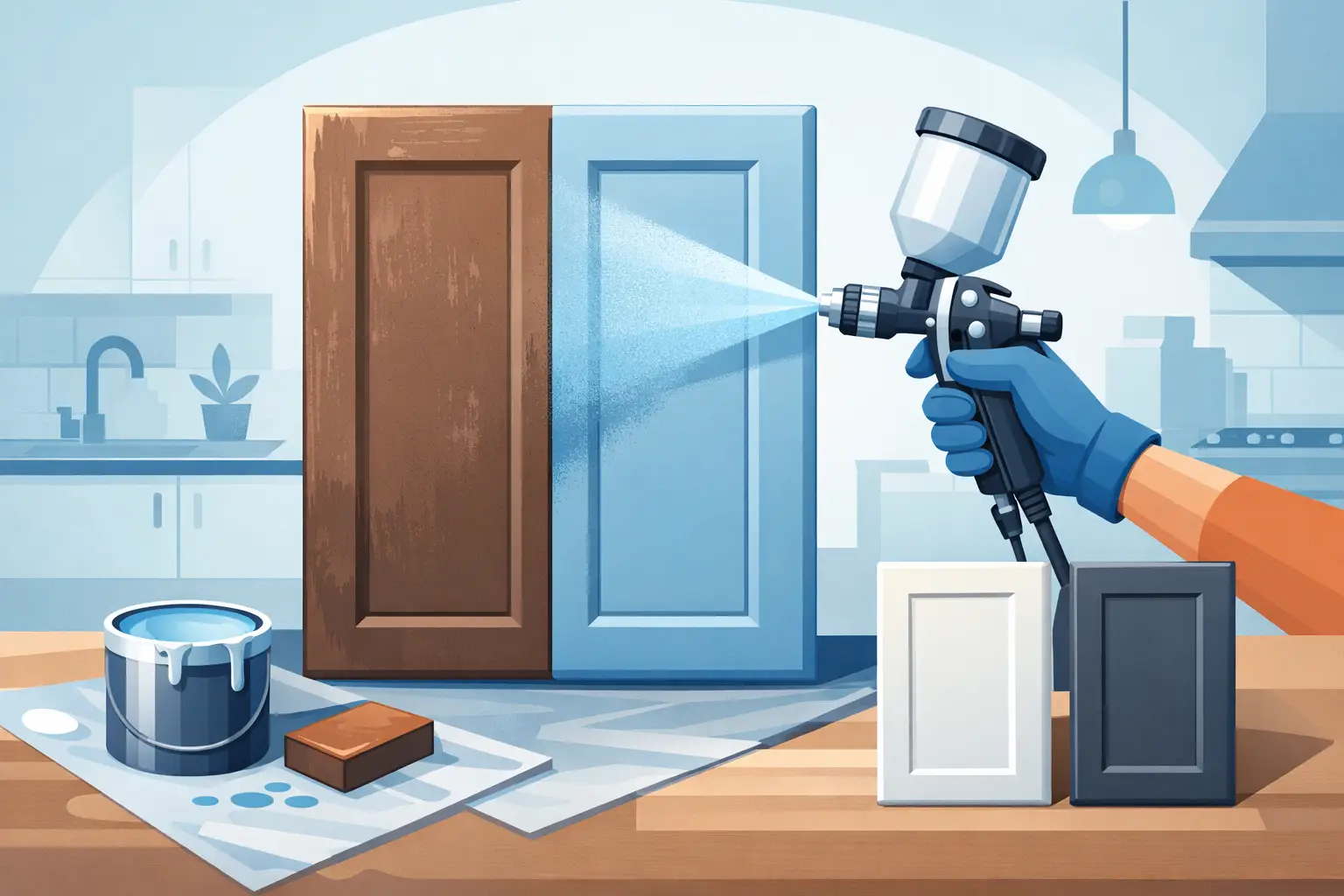
A specialist primer suitable for difficult surfaces is then applied. This is essential on vinyl and previously wrapped doors because standard coatings are rarely enough on their own. Once primed and refined, the topcoat can be sprayed in controlled layers for an even, factory-style finish.
Why DIY spraying often disappoints
On the face of it, chipped vinyl doors seem like a manageable weekend project. The problem is that most disappointing results come from the stages you do not immediately see. A door may look fine after the first coat, only for the old chip line, lifted edge or patchy adhesion to appear later.
Domestic paints and off-the-shelf primers are often not designed for vinyl-wrapped kitchen doors. Even when they stick initially, they may struggle with the constant handling, moisture and temperature changes that kitchen cabinetry faces every day.
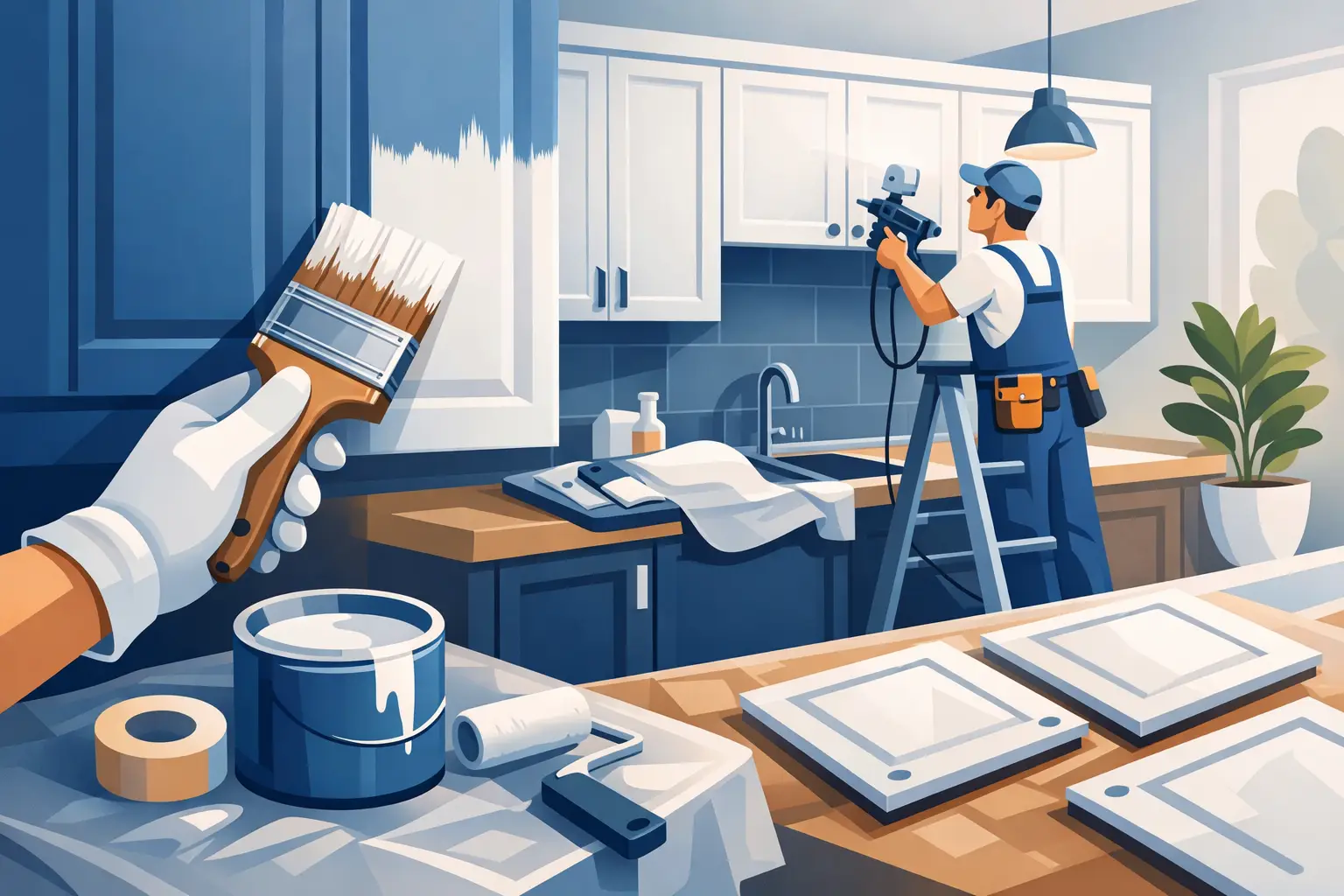
Spraying technique is another factor. A smooth finish depends on the right coating system, clean environment and even application. Too much material can cause runs or soft edges. Too little can leave dry spray, poor coverage or a rough feel. Professional spraying is not only about colour change – it is about creating a durable finish that looks refined up close.
When spraying chipped vinyl doors is worth it
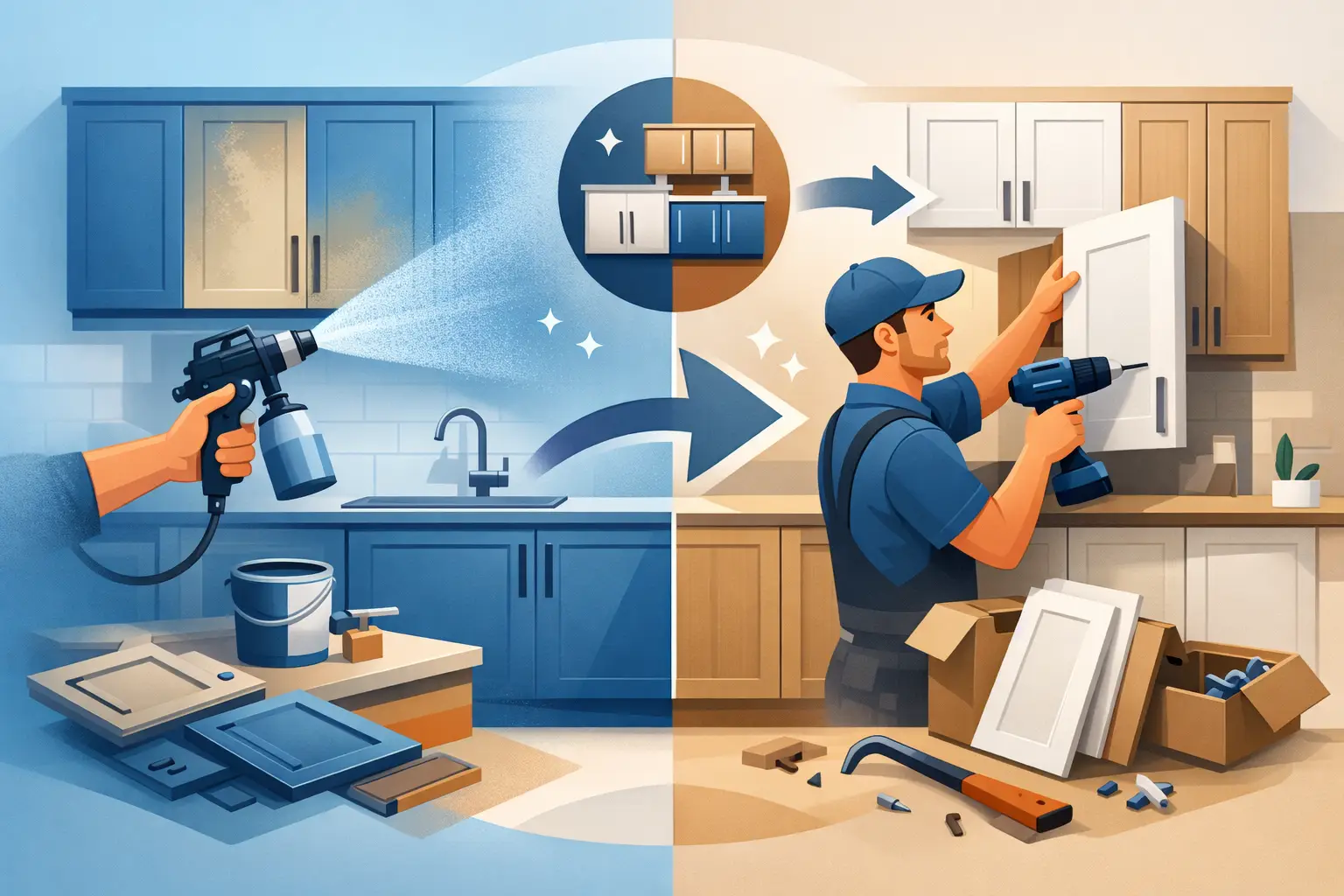
Spraying makes excellent sense when the doors are structurally sound and the damage is mostly surface-level. It is particularly good for homeowners who like their kitchen layout, want a more current colour, and would rather avoid the cost and waste of replacing usable units.
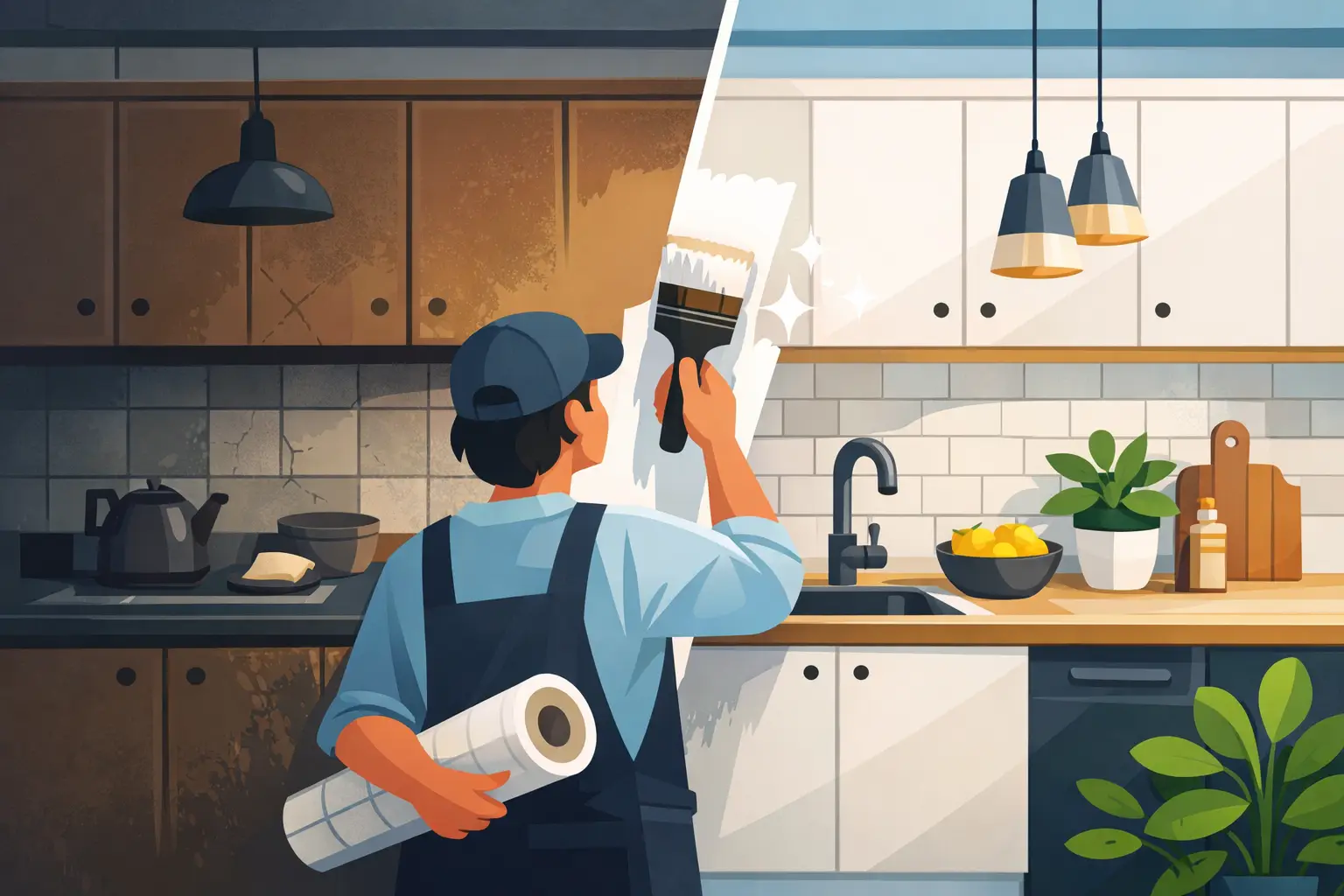
This approach can transform a dated kitchen far more affordably than a full renovation. It also avoids the disruption of stripping out cabinetry that still functions well. For many households, that balance of value, appearance and practicality is exactly the appeal.
There is an eco-friendly benefit too. Extending the life of existing doors reduces unnecessary waste, which matters when the bones of the kitchen are still perfectly serviceable. A well-executed respray gives older cabinetry a second life instead of sending it to landfill.
When replacement may be the better route
Not every chipped vinyl door should be sprayed. If the MDF underneath has swollen badly, if the foil is failing across most of the kitchen, or if the doors are very poor quality to begin with, replacement can be the more sensible investment.
The same applies when there is repeated damage in high-heat zones. A sprayed coating can look excellent, but it should not be used to disguise a substrate that is already breaking down. Honest advice matters here. A trusted professional should tell you when repair is viable and when it risks becoming false economy.
For some kitchens, the best answer is a mixed one. The worst affected doors can be replaced while the remaining sound doors and panels are professionally sprayed to match. That can give a strong overall result without paying for a complete new kitchen.
What kind of finish can you expect?
When chipped vinyl doors are repaired and sprayed properly, the finish can be remarkably smooth and contemporary. Most homeowners are looking for a result that feels like a new kitchen rather than a touched-up one, and that is achievable with the right process.
Colour choice also plays a part. Lighter shades can freshen a dark room, while deeper tones can make a kitchen feel more tailored and expensive. Matt, satin and low-sheen finishes each have their place, though practicality should guide the decision as much as style. A family kitchen needs a coating system that can cope with regular cleaning and everyday contact.
If you are in Dublin or the surrounding counties and are weighing up whether to replace or respray, a professional assessment is the quickest way to know what is realistic. Companies such as Dublin Kitchen Respray look at the actual condition of the door, not just the surface appearance, which is often where the right decision becomes clear.
Can chipped vinyl doors be sprayed and still last?
Yes – if the damage is limited, the preparation is thorough and the coating system is suitable for the surface. That is the version of the answer that matters. Spraying is not a shortcut around poor substrate condition, but it is an excellent solution for many kitchens where the doors are still fundamentally sound.
If your vinyl doors are chipped, do not assume they are beyond saving, and do not assume every damaged door should be painted either. The best results come from knowing which doors can be restored properly and treating them with the level of preparation they require. A careful respray can turn worn cabinetry into something that looks clean, current and built to last for years, not just until the next touch-up.