A tired oak finish, yellowing cream doors or chipped paint can make an otherwise sound kitchen feel past its best. When weighing up kitchen respray versus replacement cost, the biggest surprise for many homeowners is how much of the budget for a new kitchen goes beyond the cabinets themselves. Fitting, removal, worktops, plumbing, electrics and the inevitable finishing work can quickly turn a straightforward refresh into a major project.
For kitchens with solid cabinet boxes and a layout that still works, professional respraying can deliver the visual change people want for a fraction of the cost and disruption. Replacement is sometimes the right call, but it should solve a genuine practical problem, not simply a colour problem.
Kitchen respray versus replacement cost: the real difference
A full kitchen replacement in Dublin can range widely in price. A modest supply-and-fit kitchen may begin at around €8,000 to €12,000, while a larger or more bespoke project with premium cabinetry, new worktops and layout changes can readily reach €20,000 or considerably more. Those figures often rise once old units are removed and trades uncover extra work.
A professional kitchen respray is usually substantially more affordable because the existing cabinet carcasses, hinges and layout remain in place. The final price depends on the number of doors and drawer fronts, the condition of the surfaces, the preparation required, and whether additional elements such as end panels, cornices, islands or worktops are included. In many cases, a respray costs a portion of a replacement while producing a striking, like-new finish.
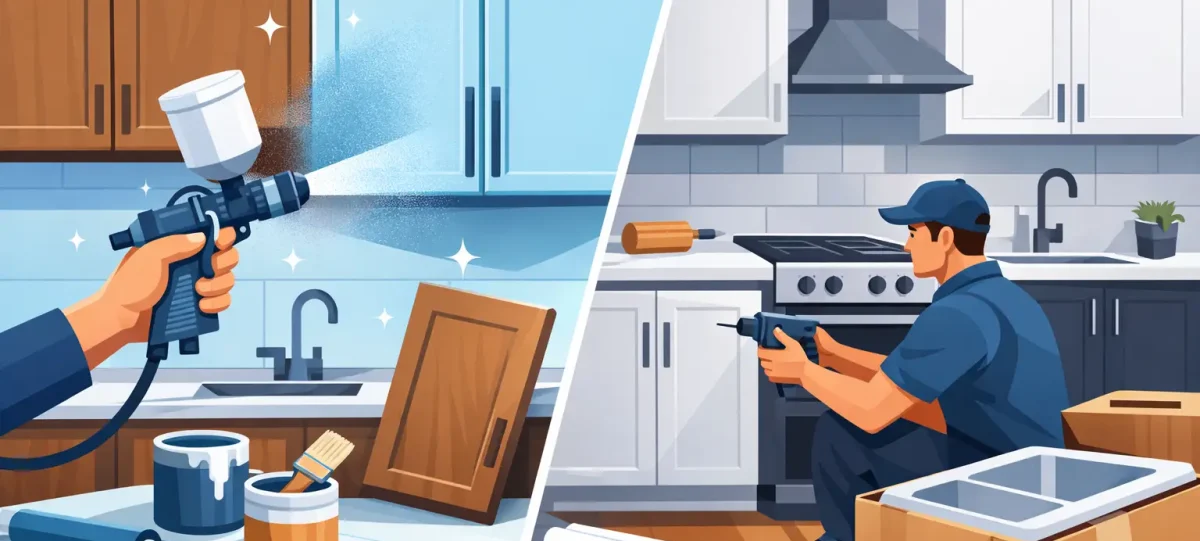
The important comparison is not simply the initial figure. It is what each option changes. Replacement buys new cabinetry and the opportunity to alter the room. Respraying renews what is already there, preserving sound units while changing their colour, sheen and overall character.
Costs that are easy to overlook with replacement
A kitchen quote can look attractive until the wider project is considered. Replacing cabinetry may also involve measuring and design appointments, delivery, removal and disposal of old units, fitting, plaster repairs, tiling, painting and new flooring. If the sink, hob or appliances move, plumbing and electrical work add further cost and coordination.
There is also the practical cost of having a kitchen out of action. Larger renovations can take weeks from first order to final completion, particularly where several trades are involved. Delays in deliveries or unexpected issues behind old cabinets can extend that timescale.
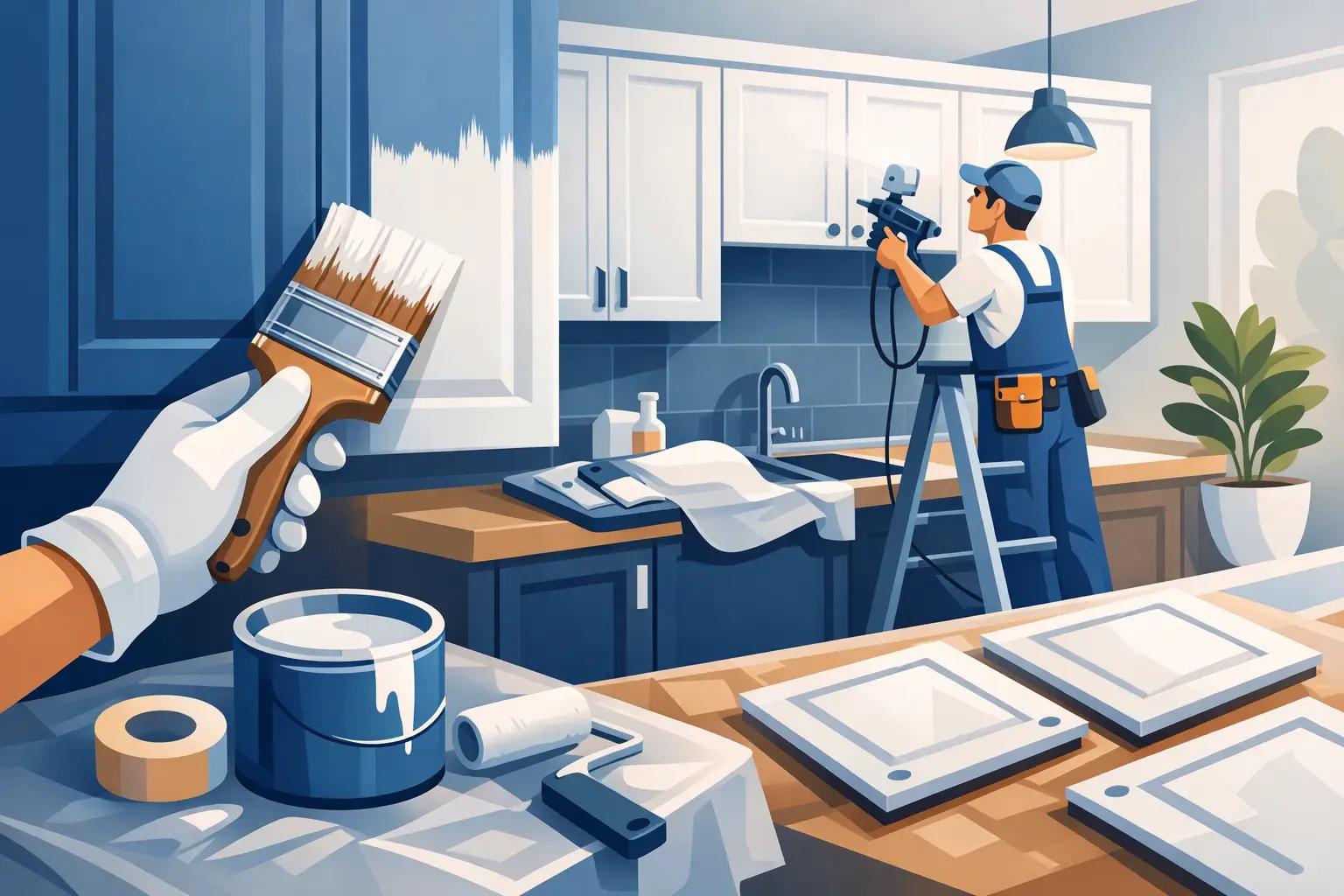
Respraying is a more contained process. Doors, drawer fronts and visible panels are carefully prepared and professionally sprayed for an even, durable finish. The work is planned around the existing kitchen rather than requiring the room to be stripped back. That makes it a particularly sensible option for busy households that want a substantial visual transformation without living through a full refurbishment.
When respraying offers the best value
Respraying tends to make excellent financial sense when cabinet boxes are structurally sound, doors close properly and there is no need to change the position of appliances or storage. Older kitchens are often better built than homeowners realise. A dated vinyl, timber or painted finish can disguise strong, well-made cabinetry that has plenty of life left.
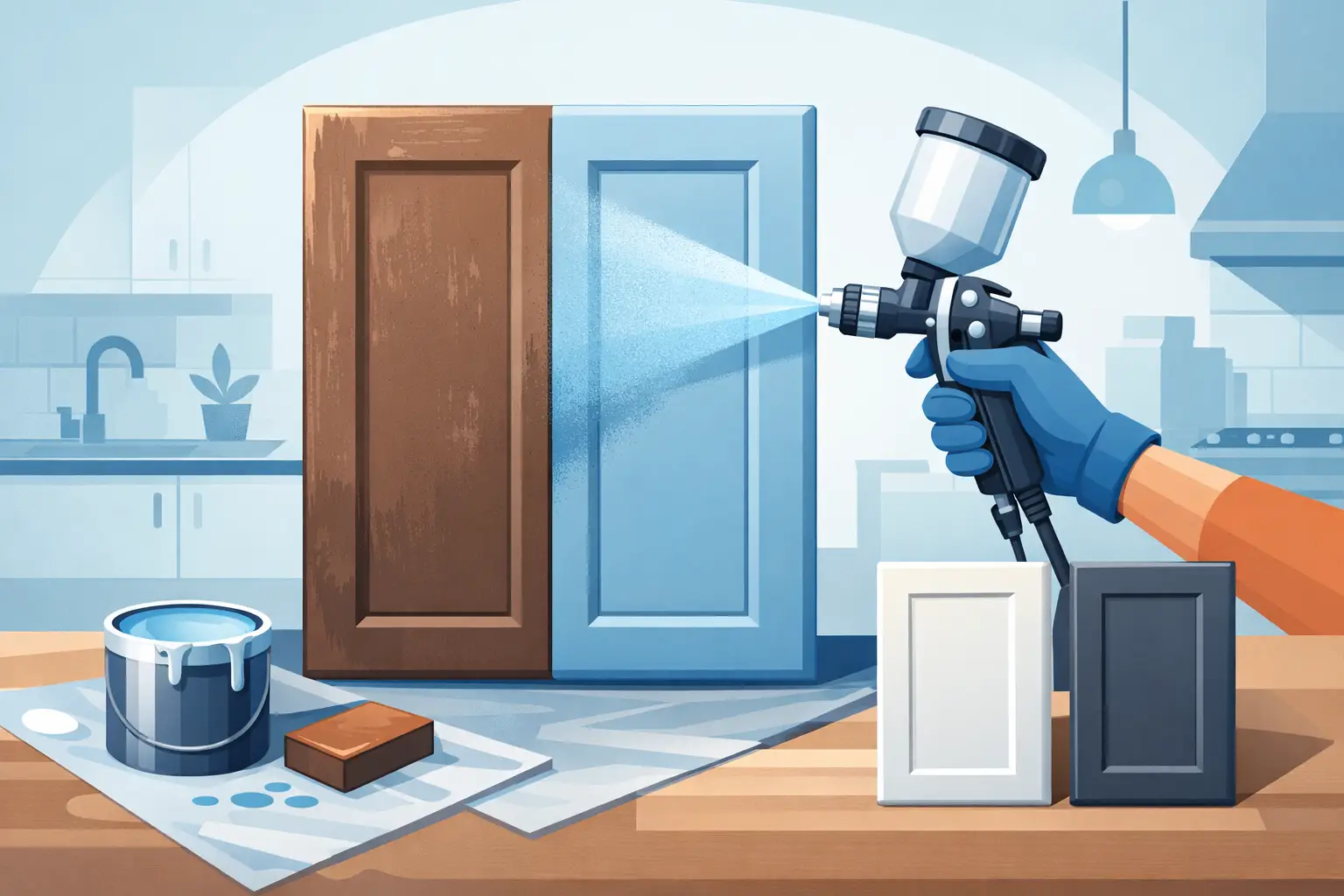
Colour is one of the most powerful reasons to respray. Deep navy, warm greys, soft sage, crisp white and modern neutral tones can completely change how a kitchen feels. Choosing the right sheen also matters: a subtle satin finish is forgiving in a family kitchen, while a lower sheen can create a more contemporary, refined look.
Respraying also works well where the kitchen layout is practical but the surrounding finishes let it down. A professional spray granite finish for a worktop, tiled splashback or floor can help bring tired surfaces into line with newly sprayed cabinets. Rather than replacing multiple materials at once, homeowners can create a coordinated result with less waste and less upheaval.
There is an eco-friendly benefit too. Keeping quality cabinet carcasses out of landfill reduces the material waste associated with a complete rip-out. For homeowners who want their renovation budget to reflect both good design and sensible resource use, extending the life of existing fixtures is a meaningful advantage.
When replacement is worth the extra spend
A respray cannot fix every kitchen issue, and a trusted professional should be clear about that from the outset. Replacement may be the wiser investment if cabinets are swollen from water damage, the carcasses are unstable, doors have failed beyond sensible repair, or the kitchen no longer meets the household’s needs.
A new kitchen is also the better route when the layout is the problem. If you need to move walls, create space for a larger fridge, add an island, improve accessibility or relocate the sink and cooker, new cabinetry gives greater freedom. It can also be appropriate where storage is severely limited and the internal arrangement needs a complete rethink.
Worktops deserve separate consideration. A badly cracked or deeply damaged worktop may need replacing, even if the cabinets are suitable for respraying. However, cosmetic wear, dated patterns and old tiles do not automatically require a full replacement. An assessment of the surface condition will show whether a spray granite coating is a realistic alternative.
The best decision is therefore not based on whether replacement is inherently better. It is based on whether your current kitchen has good foundations. If it does, replacing every cabinet just to achieve a different look can be an expensive way to solve a finish problem.
Durability: what to expect from a professional respray
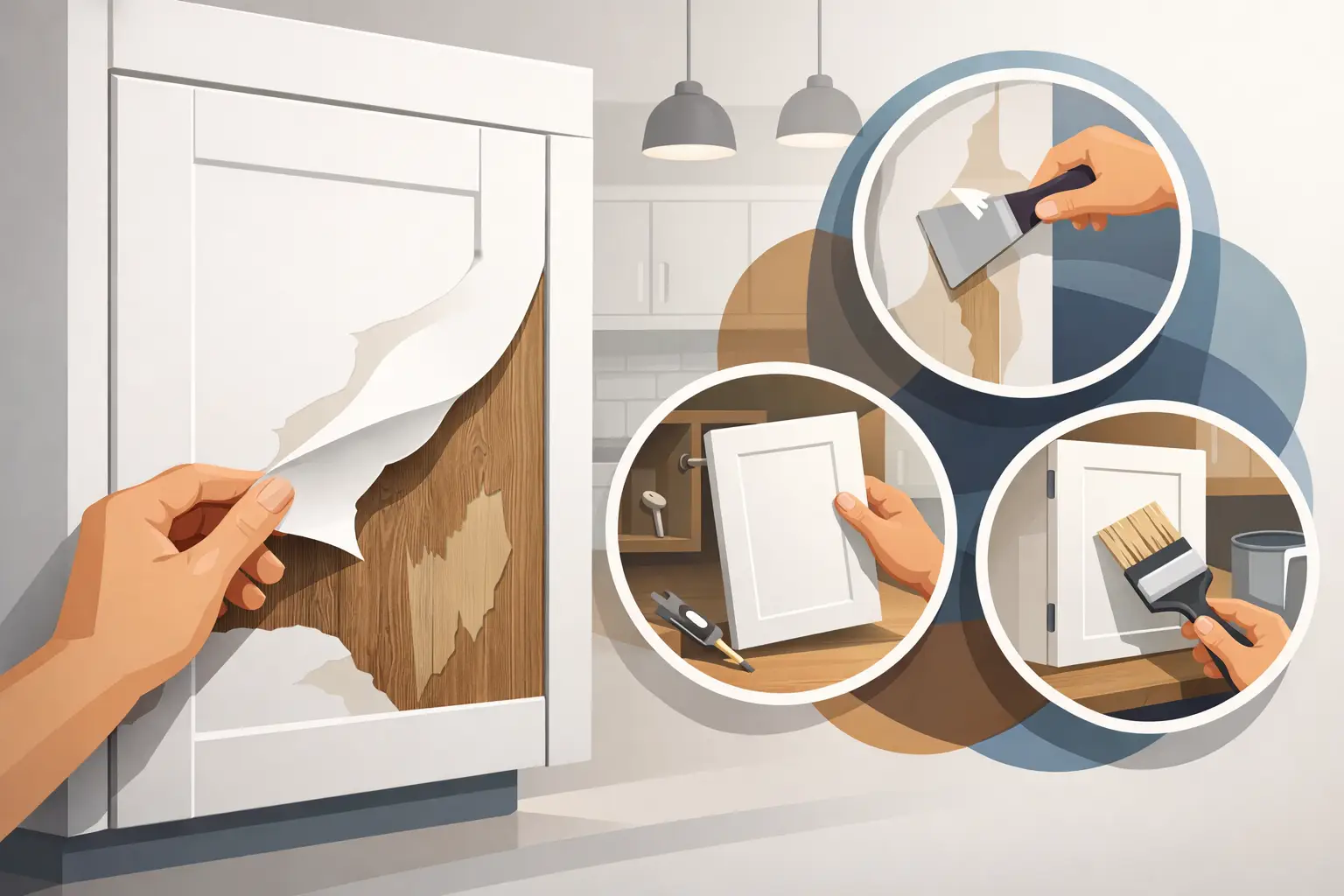
The durability of a respray depends heavily on preparation, materials and application. Simply painting cabinet doors with a brush or roller is not comparable with a specialist spray process. Professional work involves thorough cleaning and degreasing, repairs where needed, careful sanding or surface preparation, suitable primers and controlled spray application.
This process is what helps create an even colour and a hard-wearing finish that stands up to everyday use. Like any kitchen surface, it still benefits from sensible care. Wipe spills promptly, avoid abrasive pads and harsh chemicals, and take care around sharp edges. These small habits protect both new cabinetry and professionally sprayed finishes.
Replacement doors are not maintenance-free either. New laminate, painted timber and wrapped doors can all chip, scratch, discolour or suffer from moisture if poorly treated. The useful question is not which option is indestructible, because neither is. It is whether the expected lifespan and appearance justify the spend for your home and how you use it.
Comparing disruption, not just euros
Budget matters, but disruption often decides the project. A replacement kitchen can mean dust, deliveries, tradespeople, temporary cooking arrangements and several decisions being made at once. For some households, that is manageable and worthwhile, especially if the room requires major changes.
For others, the appeal of respraying is that it preserves the working bones of the kitchen. You can update the room without choosing every new component from scratch or coordinating a full renovation. It is a practical route for homeowners preparing to sell, updating a recently purchased property, or simply wanting their kitchen to feel current again.
Dublin Kitchen Respray approaches this work as a tailored transformation rather than a quick cosmetic cover-up. The condition of the existing units, the desired finish and the wider room are considered before work begins, so homeowners can make a decision with clear expectations.
How to make the right choice for your kitchen
Start with an honest assessment of the cabinet structure and your reasons for changing the room. If your doors and units are sound but the finish feels dated, respraying is likely to offer excellent value. If the room is cramped, damaged or poorly planned, replacement may prevent you from spending money twice.
It also helps to separate must-haves from nice-to-haves. A new colour, updated handles and a refreshed worktop can often create the kitchen you pictured. Moving plumbing, adding cabinetry and changing the layout are different ambitions with a different budget.
Before committing, ask for a professional assessment and a detailed quotation that explains what preparation, surfaces and finishing work are included. The most satisfying kitchen updates are not always the largest projects. They are the ones that respect what is worth keeping, improve what you see and use every euro where it will make the greatest difference.