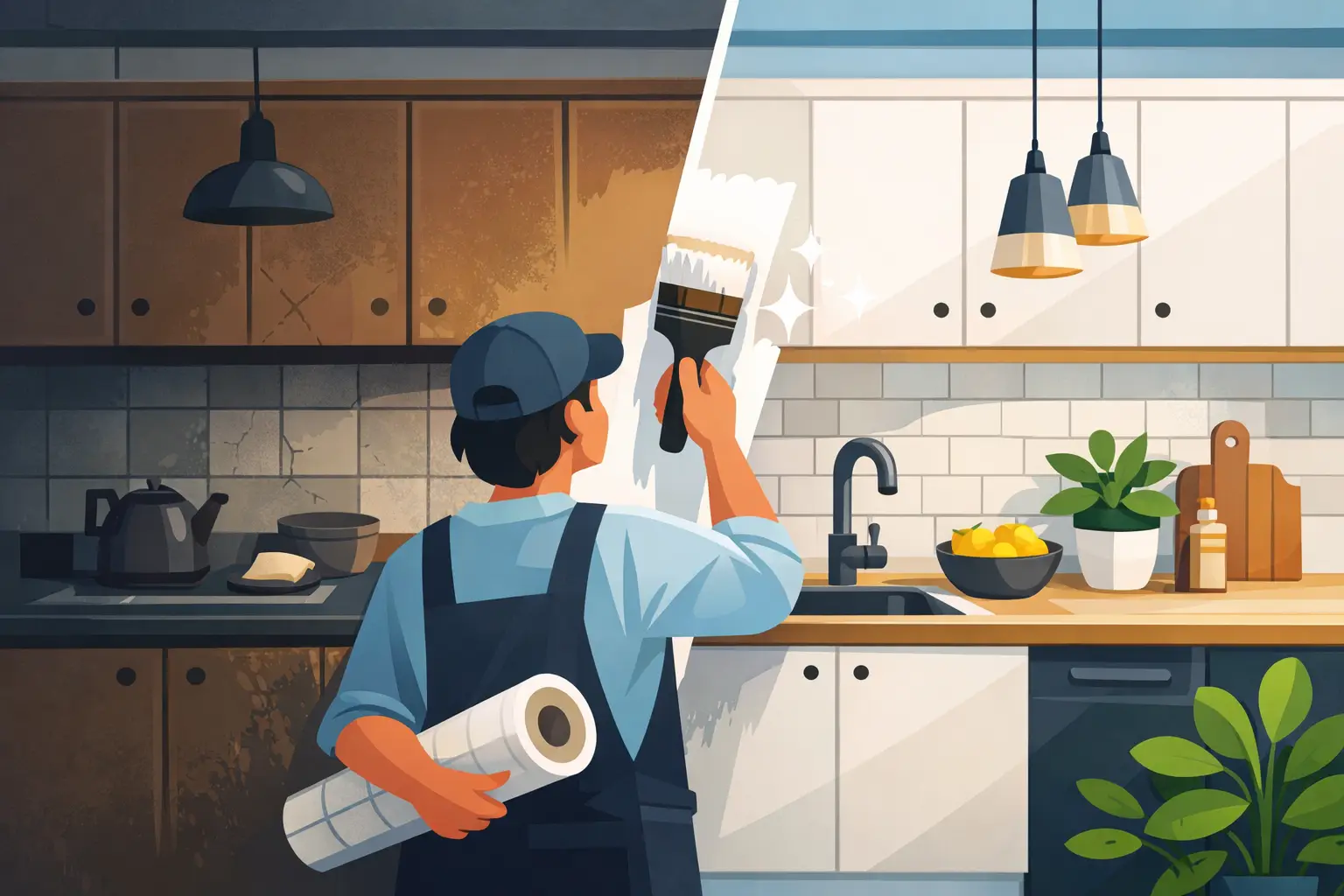
If your kitchen still works well but the doors make the whole room feel tired, you do not need to jump straight to a full renovation. For many homeowners, learning how to update dated kitchen doors is really about finding the smartest balance between cost, finish and disruption. The right approach can make an older kitchen look brighter, cleaner and far more current, without ripping out perfectly usable units.
How to update dated kitchen doors without replacing the kitchen
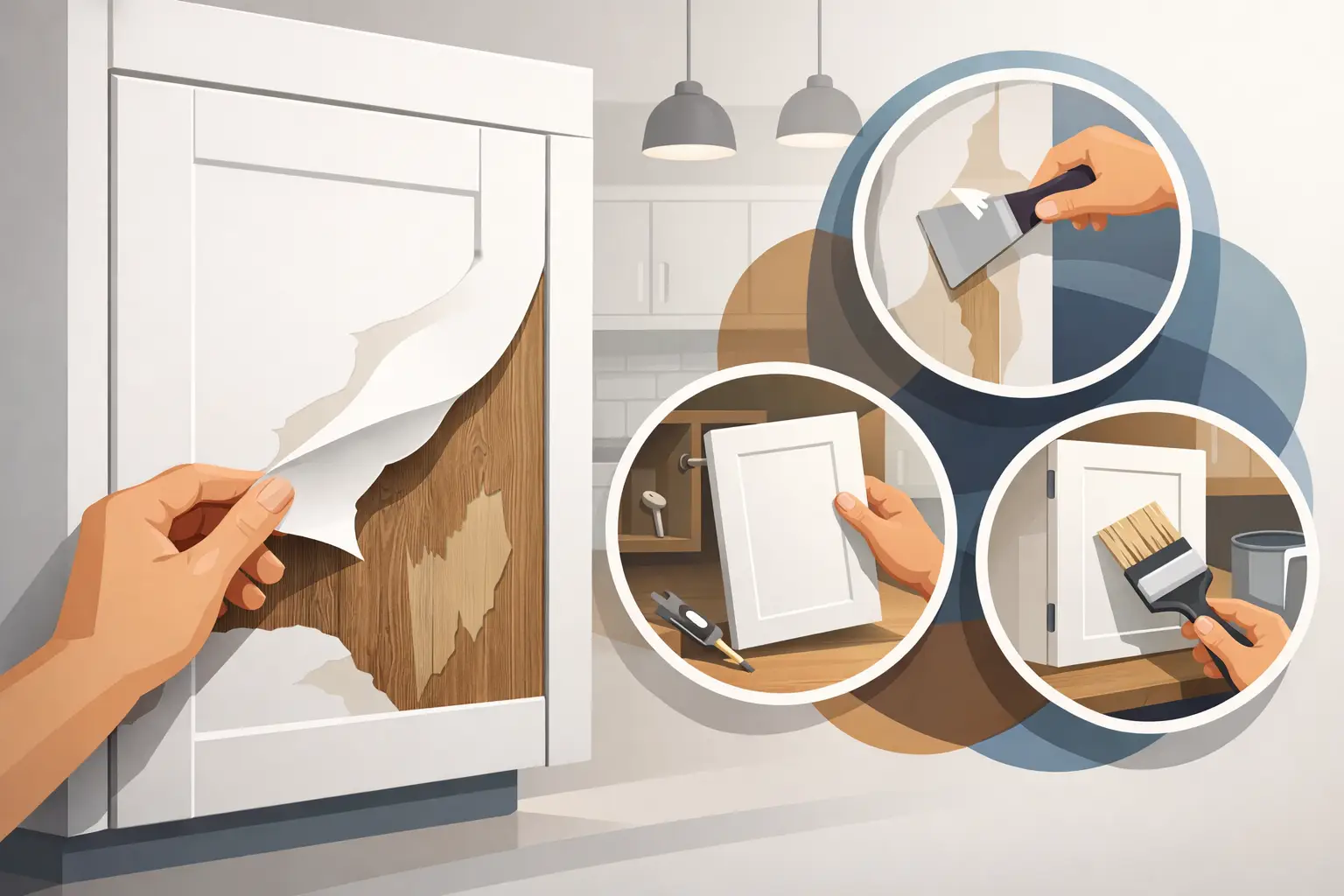
The first thing to assess is whether the doors are only visually dated or genuinely beyond saving. A lot of kitchens look old because of faded colour, yellowing lacquer, worn edges or heavy traditional profiles that no longer suit the rest of the home. That is very different from doors that are swollen from water damage, cracked through the core or hanging badly because the cabinets themselves are failing.
If the carcasses are sound and the doors open and close properly, updating the finish is usually the most cost-effective option. This is why so many homeowners choose to improve what they already have rather than start again. It saves money, avoids unnecessary waste and keeps the project far less disruptive.
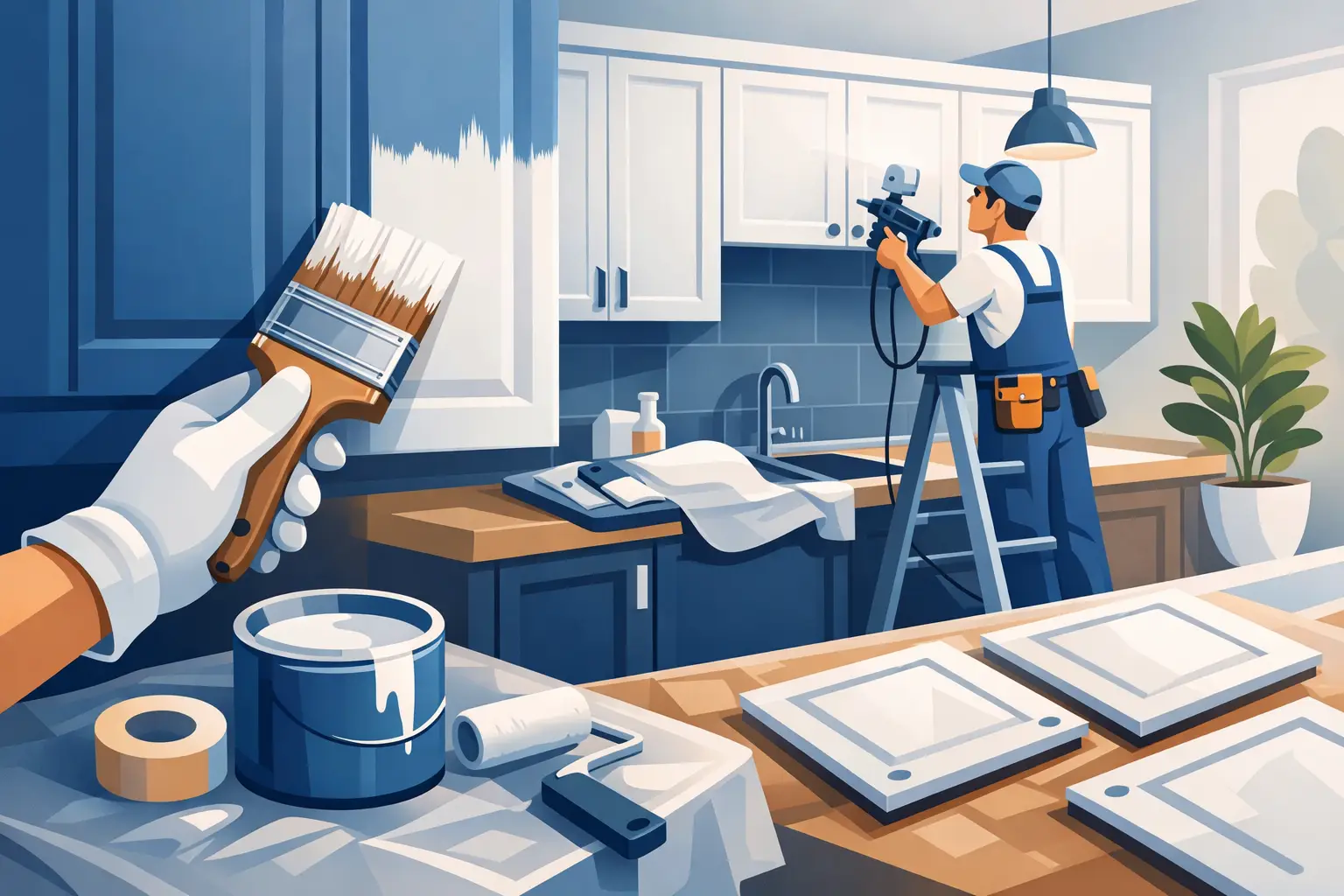
In practical terms, there are three main routes. You can repaint the doors, have them professionally resprayed, or replace the doors while keeping the existing units. Each can work well, but the right choice depends on the condition of the doors, the finish you want and how much wear your kitchen gets every day.
When repainting makes sense
Painting kitchen doors yourself can be a reasonable option if you are working with a small kitchen, a limited budget and a simple door style. Flat or lightly detailed doors are far easier to prepare and paint than heavily routed or ornate designs. If you are patient with sanding, cleaning and priming, a DIY refresh can improve the look noticeably.
That said, kitchen doors take more punishment than most painted surfaces in the home. Steam, grease, regular wiping and knocks around handles all put the finish under pressure. Brush marks, uneven coverage and poor adhesion are common problems when the preparation is rushed or the wrong products are used. White and light neutral shades can also show every flaw if the surface is not finished properly.
For some households, that trade-off is fine. If you want a quick visual lift for a few years, painting can do the job. If you want a harder-wearing, factory-like result, it is usually not the best route.
Why respraying is often the better upgrade
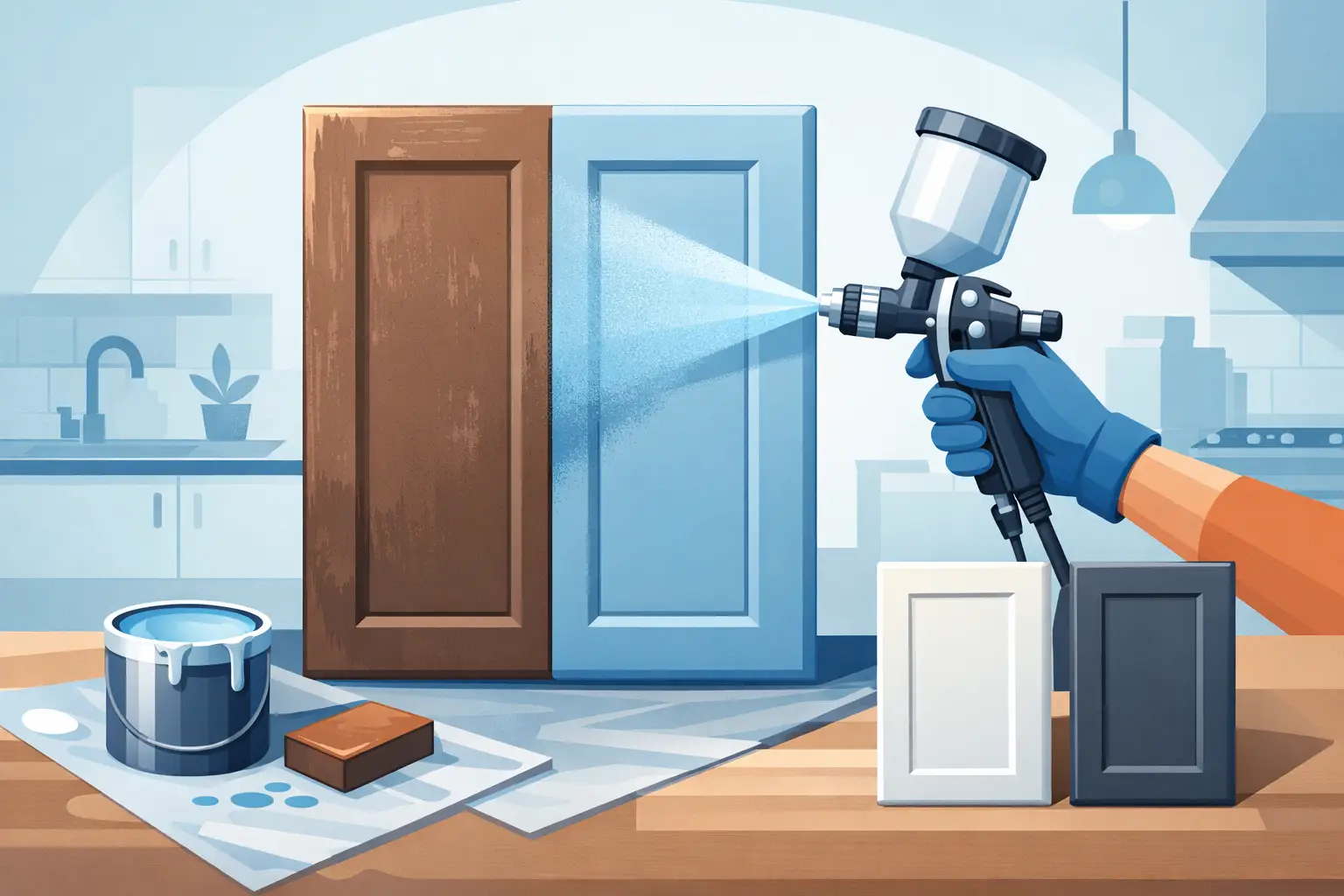
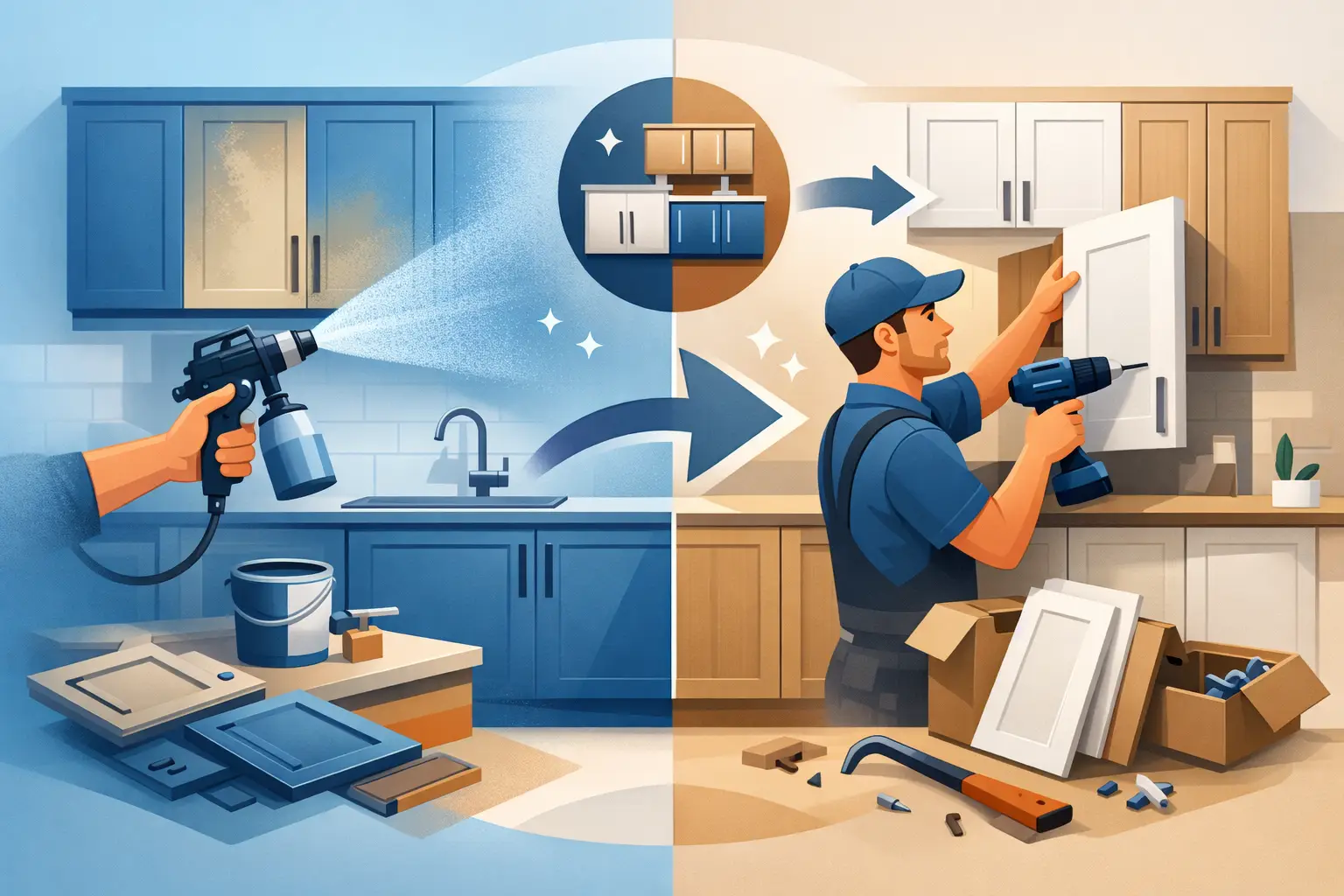
Professional respraying is one of the most effective answers to how to update dated kitchen doors when the layout still works and the doors are structurally sound. Instead of replacing good materials, the existing doors are carefully prepared and coated with specialist spray finishes designed for durability and a smooth, consistent appearance.
The biggest difference is the quality of the finish. Spraying produces a cleaner, more even result than most brush or roller applications, particularly on large flat surfaces. It is also ideal for achieving contemporary colours, from warm whites and soft greys to deeper greens, navy tones and modern taupes.
For homeowners who want a kitchen to feel new without the cost of a full refit, respraying is often the sweet spot. It is more affordable than replacement, more refined than standard repainting and far less disruptive than a full renovation. It also makes sense from an eco-friendly point of view. If the structure is good, keeping it and improving it is simply the smarter choice.
The finish matters as much as the colour
A lot of people focus first on colour, but sheen level and surface quality have just as much impact. A dated kitchen is not always dated because of the shade alone. Sometimes it is the glossy honey oak, the yellowed cream, or the dull, patchy finish that makes the room feel stuck in another decade.
Modern kitchens tend to suit cleaner, calmer finishes. Soft matt and satin finishes are especially popular because they look current without feeling stark. They also work well with a wider range of worktops, flooring and wall colours. If your kitchen is short on natural light, a lighter colour can open it up. If the room is bright and spacious, deeper shades can add character without making it feel heavy.
There is a practical side to this too. Very dark colours can show fingerprints more easily, while ultra-matt finishes may mark faster in high-use family kitchens. A trusted professional will usually guide you towards a finish that looks good and performs well in real life, not just in a brochure.
Door style can still date a kitchen
Sometimes the issue is not the finish alone but the design of the doors themselves. Arched panels, heavy grain patterns and ornate trims can make a kitchen feel older even after repainting. In that case, it is worth asking whether respraying will modernise the look enough or whether replacement doors would be a better investment.
This is where an honest assessment matters. If you have simple shaker doors, slab doors or a classic panel design, respraying can transform the space. If the profile is extremely dated, changing the doors while keeping the cabinets may give a better long-term result. You still avoid the expense and upheaval of a full kitchen rip-out, but the finished look is more convincingly updated.
Small changes that make updated doors look even better
Door handles can quietly age a kitchen just as much as the doors themselves. Brass-effect handles from twenty years ago, shiny chrome bows or chunky timber knobs often clash with a more modern finish. Swapping them for simpler hardware can sharpen the whole room immediately.
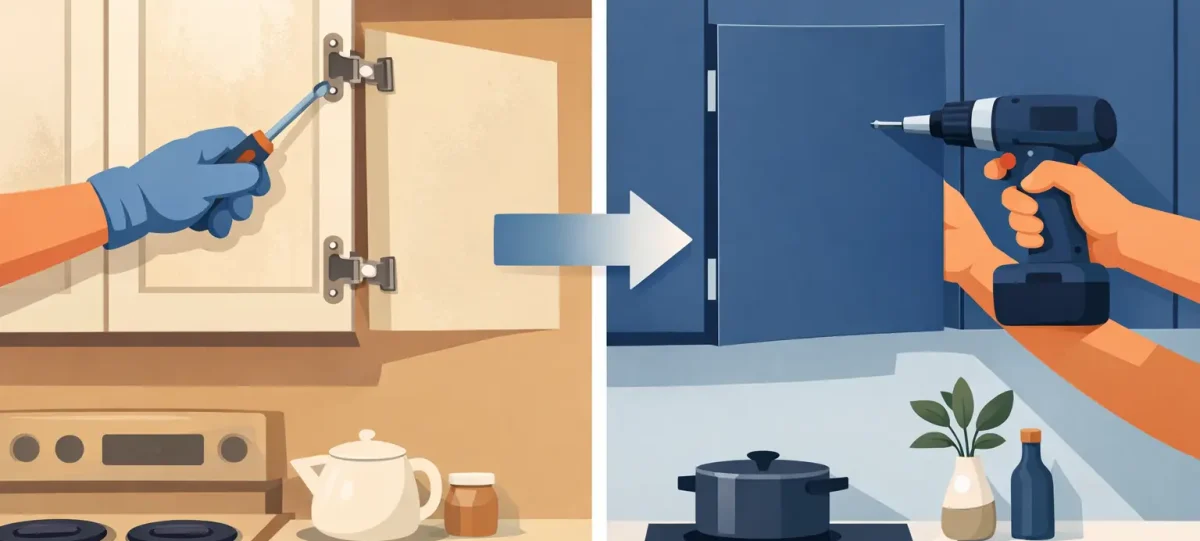
The same applies to hinges, soft-close mechanisms and alignment. Freshly finished doors will not look their best if they hang unevenly or catch when closing. A professional update should include careful refitting and adjustment so the kitchen feels as good as it looks.
If you are refreshing doors, it is also worth looking at adjoining surfaces. Worn kickboards, faded end panels or old splashbacks can stand out once the doors have been updated. You do not always need to replace everything, but the elements around the doors should be considered as part of the final result.
How to decide between repainting, respraying and replacing
The right solution depends on what bothers you most about the kitchen. If the main problem is the colour and surface wear, respraying is usually the strongest option. If the doors are badly damaged or the style is beyond updating, replacement doors may be more sensible. If your budget is very tight and you are happy to accept a less refined finish, repainting can still be worthwhile.
Budget matters, but so does the lifespan you expect. A cheaper job that needs doing again quickly is not always the better value. Many homeowners in Dublin and surrounding counties prefer to invest once in a professional finish that lasts, especially when the kitchen is one of the hardest-working rooms in the house.
It also helps to think about disruption. Full replacement means more decisions, more trades and more time. A professional respray is typically much more straightforward. For busy households, that simplicity is a major part of the appeal.
How to update dated kitchen doors and keep the result looking fresh
Once the doors are updated, everyday care makes a real difference. Gentle cleaning, avoiding abrasive products and wiping spills before they sit on edges will help preserve the finish. This is particularly important around the sink, dishwasher and bin area, where moisture and regular contact create the most wear.
It is also wise to be realistic about use. No finish is indestructible, and kitchen doors in a family home will always face knocks, steam and frequent handling. The goal is not perfection forever. It is a durable, attractive result that stands up well to daily life and keeps the kitchen looking current for years.
For homeowners who like the layout of their kitchen but dislike how old it feels, updating the doors is often the most sensible improvement they can make. A professional approach brings clarity to the decision, because the best transformations are not about replacing everything. They are about recognising what is still good, improving what dates the space, and creating a kitchen that feels right for the way you live now.
If your kitchen works but no longer looks the part, the door finish may be the change that brings the whole room back to life.