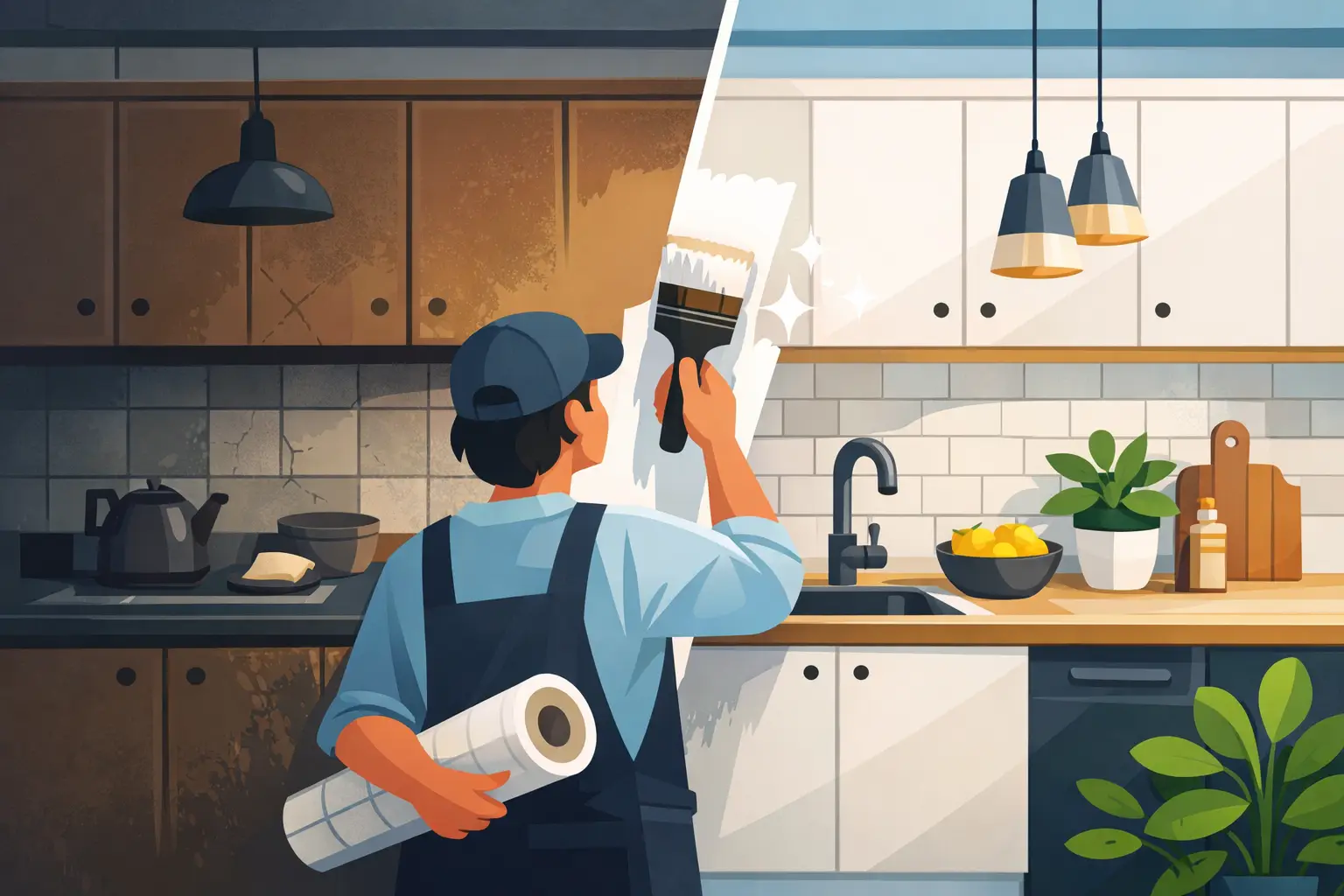
A tired kitchen usually gives itself away at the cupboards first. The layout may still work perfectly well, but worn edges, dated colours and patchy finishes can make the whole room feel older than it is. If you want to paint kitchen cupboards, the good news is that you do not always need a full renovation to get a fresh, modern result. The better question is how to do it in a way that actually lasts.
For many homeowners, the appeal is obvious. Painting existing cupboards is far more affordable than replacing them, it avoids unnecessary waste, and it can completely change the feel of the room in a short space of time. That said, cupboard painting is one of those jobs where the finish depends heavily on preparation, products and technique. A kitchen is a hardworking space, and cabinet doors deal with grease, moisture, heat and constant handling.
Should you paint kitchen cupboards or replace them?
In most cases, painting is worth considering first. If the cabinet carcasses are sound, the doors are structurally in good condition, and the layout still suits your needs, replacing the whole kitchen can be an expensive answer to a cosmetic problem. A professional repaint or respray can make cupboards look contemporary again without the disruption of ripping everything out.
There are limits, of course. If doors are warped, swollen from water damage or badly chipped, painting may only disguise the issue for a while. The same applies if hinges, alignment and storage function are already causing frustration. In those situations, some level of repair or replacement may be the more sensible investment.
For kitchens that are basically solid but visually dated, painting sits in a very practical middle ground. You keep what works and improve what does not.
What makes painting kitchen cupboards difficult?
Cupboards are not like ordinary interior walls. Most kitchen doors have a smoother factory finish, often designed to resist stains and daily wear. That means paint does not naturally grip the surface without proper sanding and priming. Skipping that stage is usually where problems begin.
The second challenge is durability. Even if a cupboard looks fine on day one, the real test comes a few months later when corners start to scuff, handles collect grime and doors near the hob face repeated exposure to heat and grease. A poor-quality paint or rushed application tends to show up quickly in these areas.
Then there is the finish itself. Brush marks, roller texture and uneven sheen can all make a painted kitchen look obviously DIY. Some people are perfectly happy with that. Others want a smoother, like-new appearance, and that is where the method matters.
How to paint kitchen cupboards properly
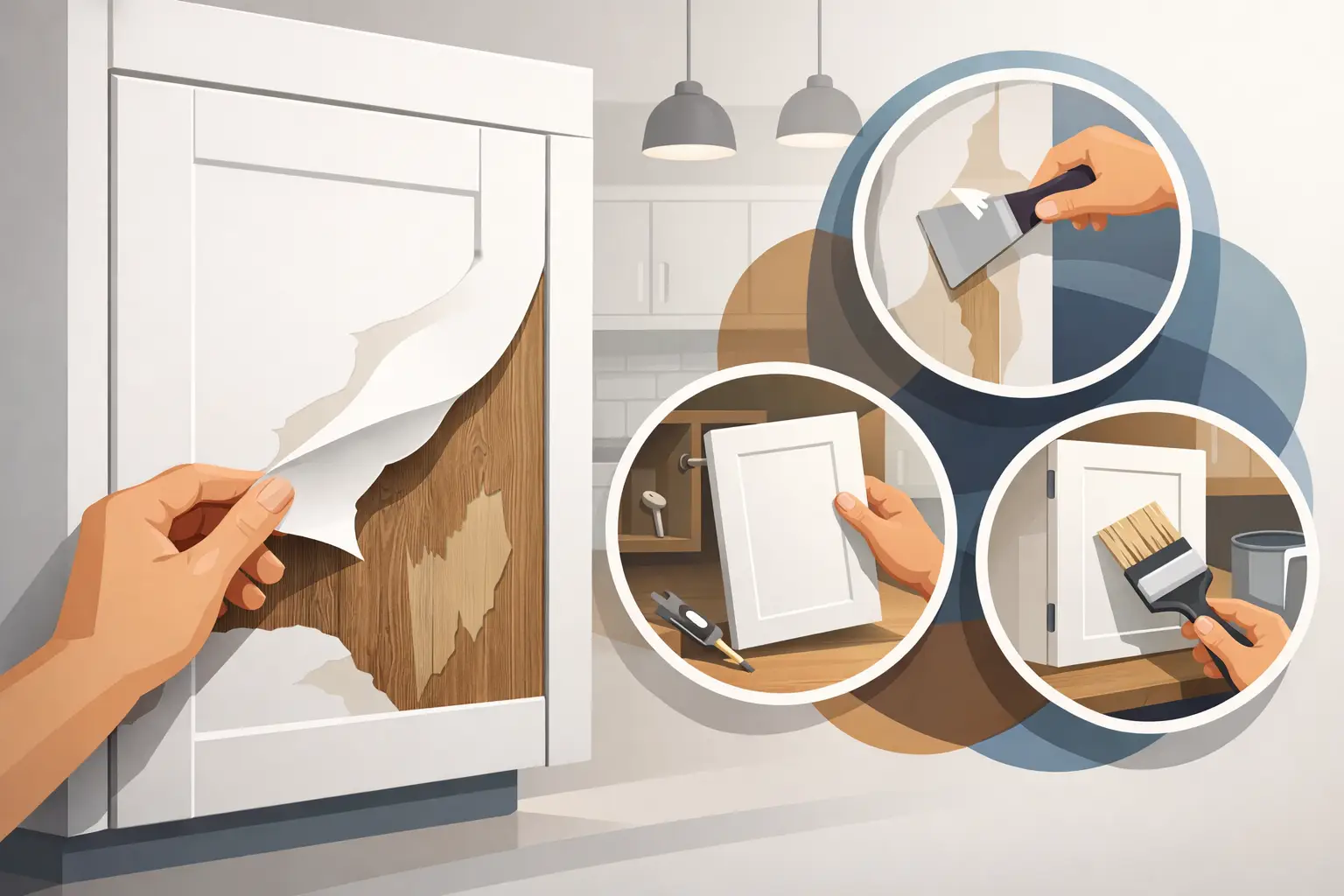
If you are planning to do it yourself, preparation is the part that deserves the most time. Remove doors, handles and hinges so you can work on each piece evenly. Label everything as it comes off. It sounds minor, but it saves a lot of hassle when it is time to reassemble.
Clean every surface thoroughly before you do anything else. Kitchens hold more grease than most people realise, especially around cooking zones and above handles. If residue is left behind, primer and paint will struggle to bond properly. Once clean and dry, sand the surfaces enough to dull the existing finish. You do not need to strip them bare in every case, but you do need to create a key.
After sanding, dust must be removed fully. A high-adhesion primer is then essential. This helps the topcoat stick and improves overall durability. Only once the primer has cured should you move on to the colour coat.
Two topcoats are usually better than one heavy coat. Thin, even applications produce a better finish and reduce the risk of drips or tacky areas. Drying time matters too. Rushing the process by rehanging doors too early can leave marks, sticking and chipped edges before the kitchen is even back in use.
Best paint for kitchen cupboards
The best paint depends partly on the door material. Solid wood, MDF, laminate and vinyl-wrapped doors all behave differently. A durable cabinet paint or professional-grade coating is generally the safest route because it is designed for hardwearing surfaces rather than decorative walls.
Finish is another decision. Matt can look stylish, but on cupboards it may mark more easily and be harder to wipe down. Satin and eggshell finishes are often a better balance for kitchens because they offer a softer look while still being practical. High gloss can work well in some modern spaces, but it tends to highlight imperfections.
Colour choice also deserves more thought than many expect. Warm whites, soft greys, muted greens and navy shades remain popular because they update a kitchen without feeling too stark. In homes with limited natural light, very dark cupboard colours can look smart but may make the room feel smaller. In brighter kitchens, they can add depth and contrast beautifully.
Brush, roller or spray?
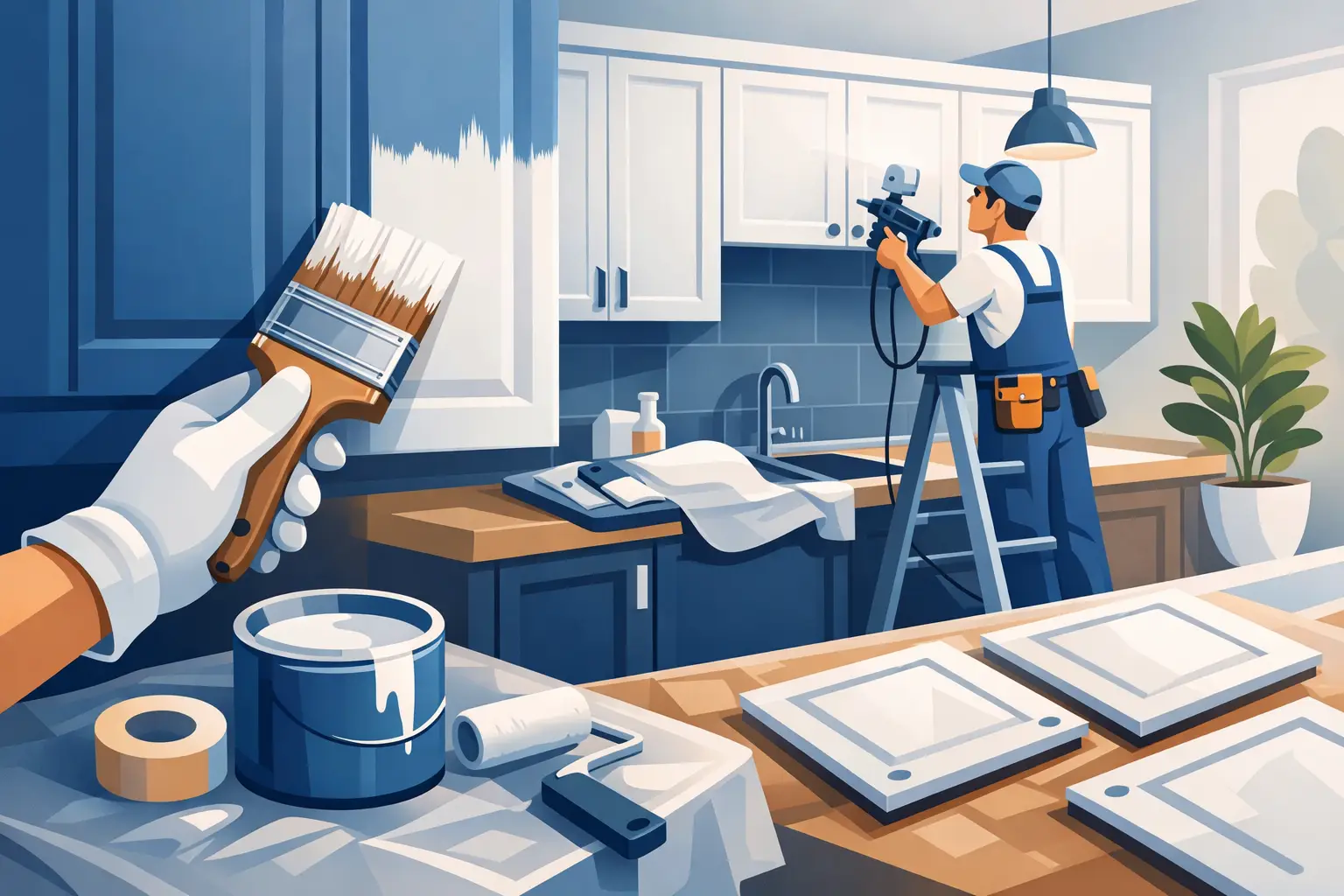
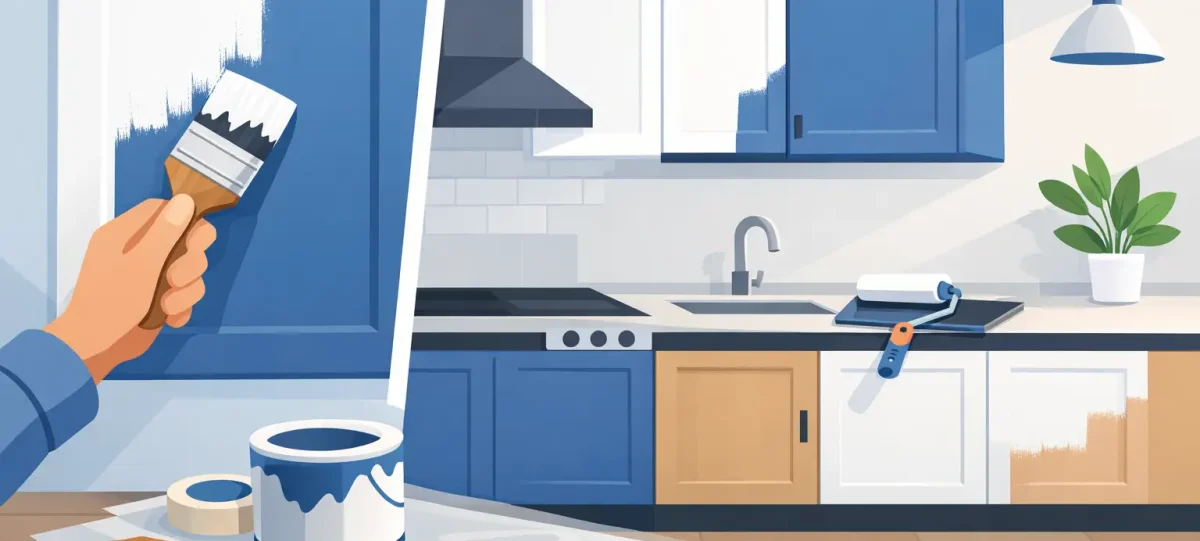
This is where expectations need to be realistic. You can paint kitchen cupboards with a brush or roller and get a decent result, especially if the doors have simple flat fronts and you are patient with the prep. For some homeowners, that is enough.
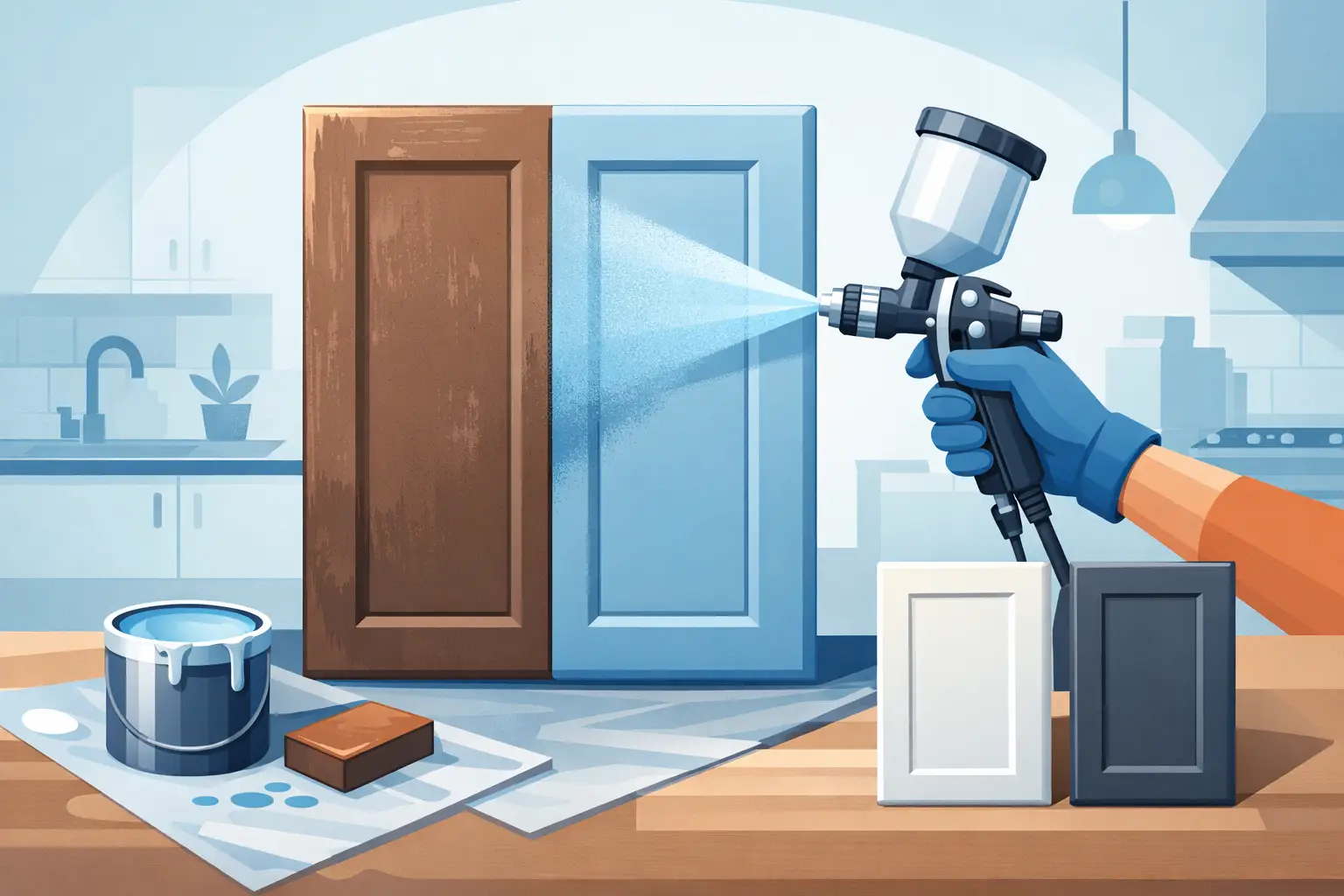
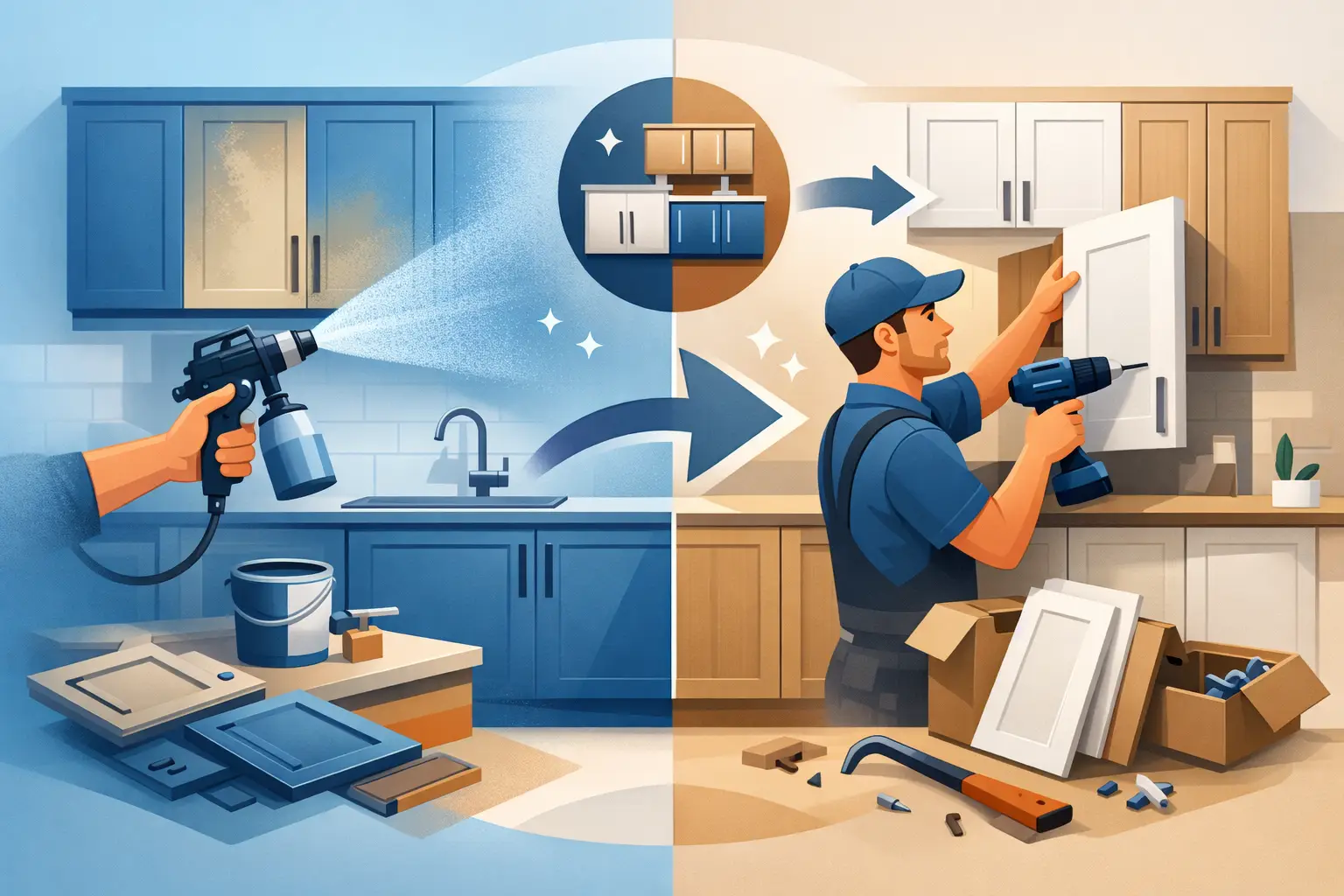
If you want the smoothest, most even finish, spraying is usually the superior method. It lays down paint more uniformly, avoids brush marks, and tends to produce a cleaner, more factory-style appearance. It is also particularly effective on shaker doors and detailed profiles where brushes can leave heavier build-up in corners.
That does not mean spraying is always a DIY-friendly task. Proper masking, controlled conditions and professional equipment make a significant difference. Poorly executed spraying can create overspray, inconsistent coverage and a finish that looks worse rather than better.
Why professional respraying often gives better value
Many people start out thinking they simply want to paint kitchen cupboards, but what they actually want is a durable transformation with minimal disruption. That is not always the same thing as buying paint and doing it yourself.
A professional respray service tends to deliver a stronger finish because the preparation, coatings and application methods are more specialised. Surfaces are treated correctly, doors are sprayed for an even look, and the final result is usually far closer to a new kitchen than a standard repaint. For homeowners balancing budget with expectations, that can be a very attractive option.
It is also quicker and less stressful. Rather than spending weekends sanding doors in the garage and hoping the finish cures properly, you get a more controlled process and a predictable result. For busy households, that convenience matters.
There is an environmental benefit too. Keeping existing cupboards and refreshing them professionally reduces unnecessary waste. If the bones of the kitchen are good, replacing everything can be hard to justify when respraying can achieve such a dramatic improvement.
In many homes across Dublin and surrounding counties, this has become the sensible alternative to full renovation. It keeps costs under control while still delivering a stunning visual update.
When DIY painting can make sense
There are certainly cases where a DIY approach is worthwhile. If the kitchen is small, the doors are in good condition, and you are comfortable taking your time, painting them yourself can improve the space at a modest cost. It can also work well in utility rooms, rental properties or kitchens where perfection is not the main goal.
The trade-off is that DIY results are often less durable and less refined, especially on high-traffic cupboards. Even a careful job may not match the hardness, consistency and finish of a professional respray. That is not a criticism, just the reality of working with different tools and materials.
If you are investing in a more design-led kitchen, or you simply want a finish that looks professionally done because the rest of the home is finished to a high standard, it usually makes sense to treat the cupboards the same way.
Common mistakes when you paint kitchen cupboards
Most problems come down to rushing. Painting over grease, skipping primer, underestimating drying time and choosing the wrong paint are the usual culprits. Another frequent mistake is testing a colour on one door under artificial light, only to find the whole kitchen looks quite different in daylight.
Hardware is another detail people overlook. Freshly painted cupboards next to tired handles and worn hinges can leave the room looking only half updated. Sometimes a simple change of handles is enough to sharpen the final look considerably.
It is also easy to focus only on the doors and ignore side panels, plinths and visible trim. A professional-looking transformation depends on consistency. If one area is left behind, it tends to stand out.
A better result starts with the right expectation
Painting cupboards is one of the most cost-effective ways to revive a kitchen, but the finish you get depends on what you start with and what standard you expect at the end. If you simply want a cleaner, fresher look, a careful DIY job may do the trick. If you want a durable, high-end finish that feels like a true upgrade, professional respraying is often the smarter route.
A well-planned kitchen update does not always mean starting from scratch. Sometimes the best improvement comes from recognising that what you already have is worth refining, not replacing.