A tired kitchen rarely needs to be stripped back to bare walls to look new again. The real question is whether to replace kitchen doors or respray the units you already have. Both options can dramatically change the room, but they suit different cabinet conditions, budgets and design goals.
For many Dublin homeowners, the deciding factor is not simply price. It is whether the existing kitchen is structurally sound, how much disruption the household can accommodate, and whether the desired finish can be achieved without replacing perfectly good cabinetry. A professional assessment makes that choice far clearer.
Replace kitchen doors or respray: the key difference
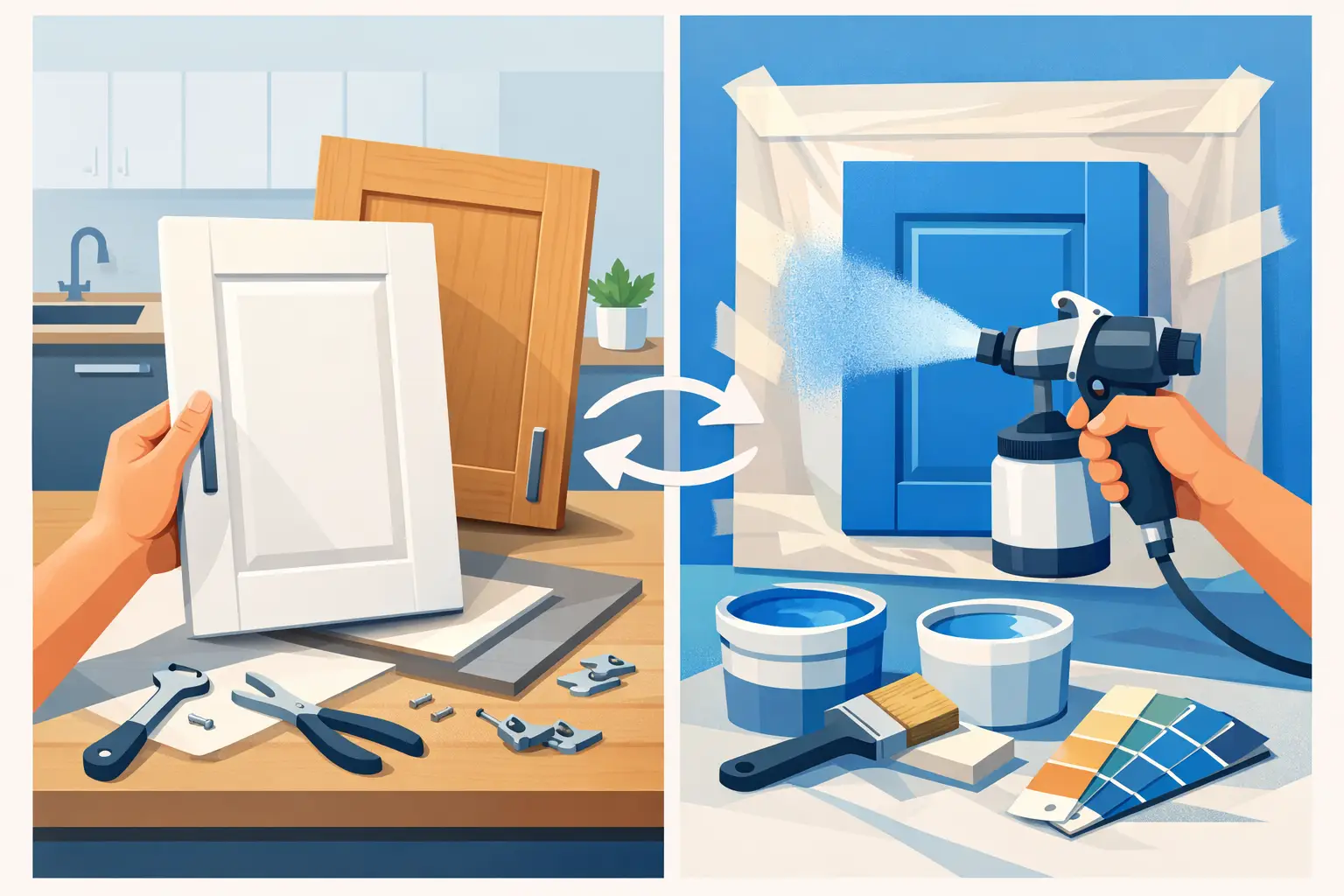
Replacing doors means retaining the existing cabinet carcasses while fitting new cupboard doors, drawer fronts, handles and, if required, hinges. It changes the front-facing look of the kitchen but does not alter the underlying cabinet boxes, layout or worktops.
Respraying keeps both the cabinet carcasses and doors in place where possible. The visible surfaces are carefully cleaned, prepared, repaired and professionally spray-painted in a chosen colour and finish. It is a full surface transformation rather than a partial replacement.
Neither option is automatically better. New doors can make sense when current doors are swollen, warped or badly damaged. Respraying is often the stronger value when the kitchen is well built but dated in colour, finish or style.
When kitchen respraying is the smarter choice
A respray is particularly effective when your cabinet doors are solid, close properly and have no significant water damage. Oak, laminate, MDF, vinyl-wrapped and previously painted kitchens can often be transformed, provided the preparation work is carried out properly.
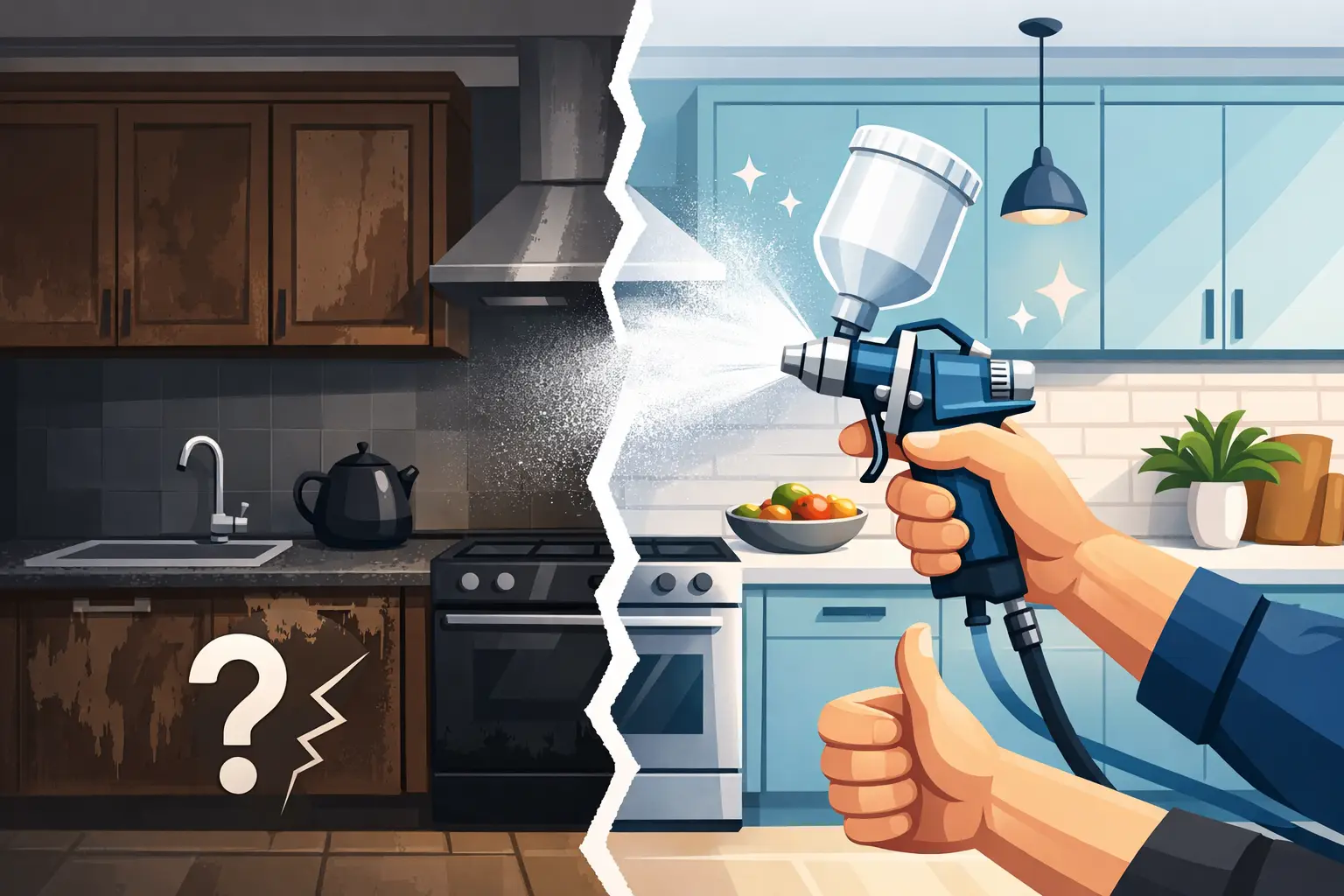
The visual improvement can be striking. Glossy cherry-effect doors can become a soft contemporary grey. Yellowed cream cabinets can be refreshed in clean white. A dated timber kitchen can take on a modern matt finish while retaining the quality of its original construction. Respraying also gives you far more freedom with colour than buying from a standard door range.
The process is designed to be efficient. Doors and drawer fronts may be removed for controlled spraying, while fixed elements are masked and treated with care. Professional preparation is the part that determines whether a finish looks refined and lasts well. Surfaces need cleaning, keying, priming where necessary and repairing before the final coats are applied.
Respraying is also an eco-friendly choice. Keeping usable doors and cabinets out of waste streams reduces the material and transport involved in manufacturing and fitting replacements. If you value a lower-waste home improvement without compromising on appearance, this is a compelling advantage.
Dublin Kitchen Respray can also coordinate a wider surface refresh, such as spray granite finishes for worktops, tiles or splashbacks. This can help an older kitchen feel properly redesigned rather than simply repainted, without the cost and upheaval of a complete refit.
The limits of respraying
Respraying is not a repair for structural failure. If doors have expanded from long-term moisture exposure, are splitting at the edges, or have lost their shape, paint will not put them right. Equally, a cabinet carcass that is soft, unstable or badly damaged near the sink should be repaired or replaced before any cosmetic work begins.
It is also worth being realistic about the layout. A respray updates what you have; it does not create extra storage, move appliances or correct an awkward kitchen design. If your main frustration is poor workflow or insufficient cupboard space, a larger renovation may be the better investment.
When replacing kitchen doors makes more sense
New doors are a practical middle ground between respraying and a full kitchen replacement. They work well where the cabinet boxes remain sound but the doors are beyond restoration, or where you want a specific door profile that cannot be created through paint alone.
For example, changing plain slab doors to a traditional shaker style will alter the character and depth of the kitchen. Likewise, if you want integrated handleless rails, new glazed doors or a distinct routed design, replacement doors may be necessary.
This route can also be useful if only some areas of the kitchen have deteriorated. A bank of units beside a dishwasher or sink may have suffered moisture damage while the remaining cabinetry is in excellent condition. Replacing the affected doors, then considering a respray for a consistent finish, can be a sensible tailored solution.
However, door replacement can become less economical than expected. You need accurate measurements, compatible hinges, suitable drawer fronts, fitting time and potentially new end panels or plinths to ensure everything matches. If the cabinet carcasses have unusual dimensions or the kitchen is an older bespoke installation, made-to-measure doors can add considerably to the cost.
Compare the practical trade-offs before deciding
Cost matters, but it should be viewed alongside durability, appearance and the amount of work involved. A cheaper option is not good value if it leaves you with mismatched panels, poor fitting or a finish that does not hold up to everyday use.
Respraying is generally the more affordable route when the entire kitchen is in good condition and the aim is a complete colour change. You retain the doors, drawer fronts and panels you already own, avoiding the cost of manufacturing and fitting a new set. The saving can be especially meaningful in larger kitchens.
Replacing doors can cost more, particularly with premium styles and bespoke sizing, but it offers a physical change in door design. It may also be the better long-term answer when surface damage is too deep or extensive for a respray.
In terms of disruption, both options are usually far less intrusive than replacing a whole kitchen. There is no need to remove cabinet carcasses, disconnect most appliances or disturb flooring simply to change the look. Respraying is often completed with a particularly streamlined process because the kitchen’s structure stays in place.
Durability depends on the quality of the materials and workmanship. Factory-finished replacement doors can be highly durable, but they still need careful fitting and suitable cleaning. A professionally prepared and sprayed finish is likewise built for daily kitchen use, provided it is allowed to cure correctly and looked after with non-abrasive cleaning products.
Check the condition of your existing kitchen first
Before choosing either route, inspect the kitchen honestly. Open every door, look beneath the sink, check around appliances and run your hand along exposed edges. The following signs usually point towards replacement or repair before respraying:
- swollen MDF, crumbling chipboard or persistent moisture damage;
- doors that are bent, split or no longer sit squarely in their frames;
- loose hinges that cannot be secured because the fixing holes have failed;
- cabinet carcasses that move, sag or show damage to their base panels.
If these problems are limited to one or two units, there may be no reason to replace the whole kitchen. Targeted repairs combined with a respray can produce a more balanced and affordable result. If they are widespread, a more comprehensive replacement is likely to offer better value over time.
Think beyond the cabinet doors
Kitchen doors dominate the room, but the surrounding surfaces influence whether the finished space feels cohesive. Old handles can make a fresh colour look dated, while damaged worktops or tired tiles can pull attention away from beautifully refinished units.
Small changes often have the biggest effect: modern handles, a new tap, updated lighting and a carefully chosen wall colour can support the transformation. Where worktops, splashbacks or floor tiles are sound but visually tired, specialist surface spraying may avoid unnecessary removal and mess.
Choose colours with the room’s natural light in mind. Soft whites and warm greys tend to suit darker kitchens, while deep navy, forest green or charcoal can create a refined look in a bright, spacious room. Matt finishes are popular for their contemporary appearance, whereas satin or low-sheen finishes can be a practical choice for busy family kitchens because they are easier to wipe clean than very flat paint.
A decision based on condition, not pressure
There is no benefit in replacing good-quality doors simply because the colour no longer suits your home. Equally, there is little point in respraying doors that have already reached the end of their useful life. The right choice comes from matching the solution to the kitchen’s condition and the result you want to live with.
If your cabinets are sturdy and you want a stunning, affordable change with less waste and disruption, professional respraying is often the answer. If you need a new door style or your existing fronts are damaged, replacement doors may justify the extra spend. Start with the structure, then choose the finish that makes your kitchen feel like yours again.