If you are planning a kitchen refresh, one of the first questions you will ask is how long cabinet spraying takes. That makes sense. You want a stunning finish, but you also want to know how long your kitchen will be out of action, when doors can go back on, and how soon the space will feel normal again.
The short answer is that most cabinet spraying projects take a few days from preparation to reinstallation, with full curing taking longer. The more honest answer is that timing depends on the size of the kitchen, the condition of the cabinets, the finish you choose, and how much on-site protection and prep work is needed. A small, straightforward kitchen can move quickly. A larger kitchen with damaged doors, detailed profiles, or extra surfaces to spray will naturally take more time.
How long cabinet spraying takes in a typical kitchen
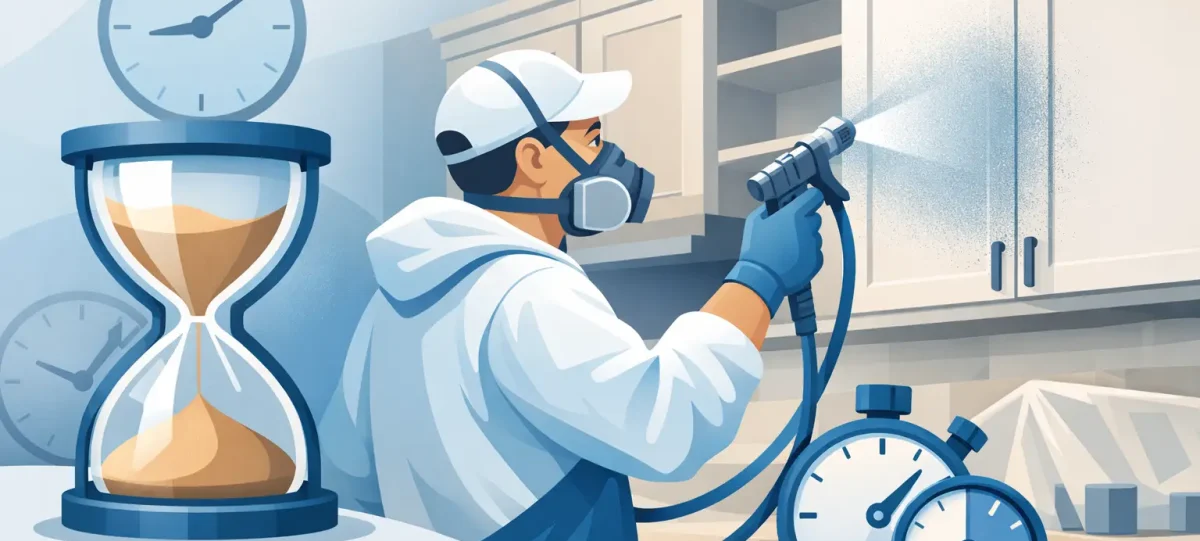
For an average kitchen, the spraying process itself is often completed within two to five days. That usually includes removing doors and drawers, cleaning and degreasing, sanding and preparing surfaces, priming where needed, applying multiple coats, and then allowing suitable drying time before reassembly.
This does not always mean your kitchen is fully back to normal on day two or day three. There is a difference between paint being dry enough to handle and being fully cured. Drying means the surface is touch-safe and can be carefully moved or refitted. Curing means the coating has hardened properly and reached its full durability. That can take several more days, and in some cases a few weeks, depending on the product used and the conditions in the home.
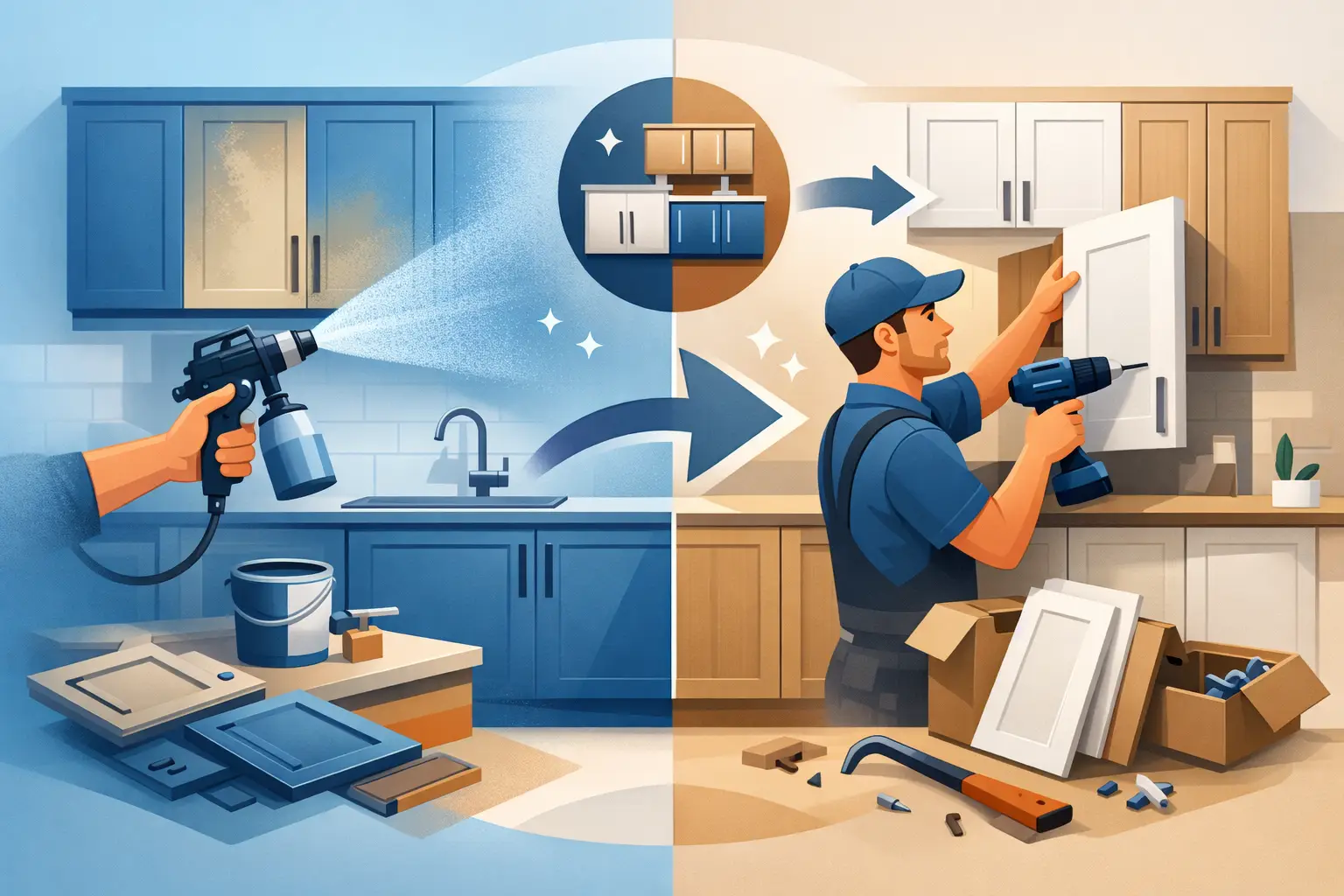
For most homeowners, the practical timeline matters most. You want to know when cupboards can be used again with confidence. In a professional setup, doors and drawer fronts are often sprayed under controlled conditions to produce a smoother, more durable finish. Frames may be prepared and sprayed on site. That approach reduces disruption compared with a full renovation, but there is still a process to respect if you want the best result.
What affects how long cabinet spraying takes?
The biggest factor is kitchen size. A compact kitchen with eight to ten doors and a few drawer fronts takes less time than a large family kitchen with an island, tall pantry units, and integrated panels. More surfaces mean more preparation, more spraying, and more drying time between coats.
Condition matters just as much. Cabinets that are already in good structural shape can be prepared efficiently. If there is grease build-up, chipped edges, old peeling coatings, or visible repairs needed, the timetable extends. Professional spraying is only as good as the preparation beneath it. Rushing that stage is usually what causes disappointing finishes later.
The cabinet style can also slow or speed things up. Flat slab doors are simpler to prep and spray than heavily detailed shaker or routed designs. Decorative grooves and panel edges need more careful sanding and coating to achieve an even result. They can look fantastic when sprayed properly, but they do ask for more time.
Then there is the question of colour change. Moving from a lighter shade to a similar tone is usually more straightforward than covering a very dark finish with a pale neutral, or vice versa. Strong contrasts can require extra priming or additional coats to achieve consistent coverage.
Environmental conditions play a part too. Temperature, humidity, and airflow affect drying and curing times. Even with expert products and proper technique, paint behaves differently in cool, damp conditions than it does in a controlled spray environment. That is one reason a professional team will give an estimated schedule rather than a careless promise.
The cabinet spraying process, day by day
On the first day, the focus is usually on preparation. Doors, drawers, handles, and hinges are removed and carefully labelled so everything goes back in the right place. Surfaces are cleaned thoroughly to remove grease, polish, and everyday residue. Kitchens collect more contamination than most people realise, especially around handles, hob areas, and sink units.
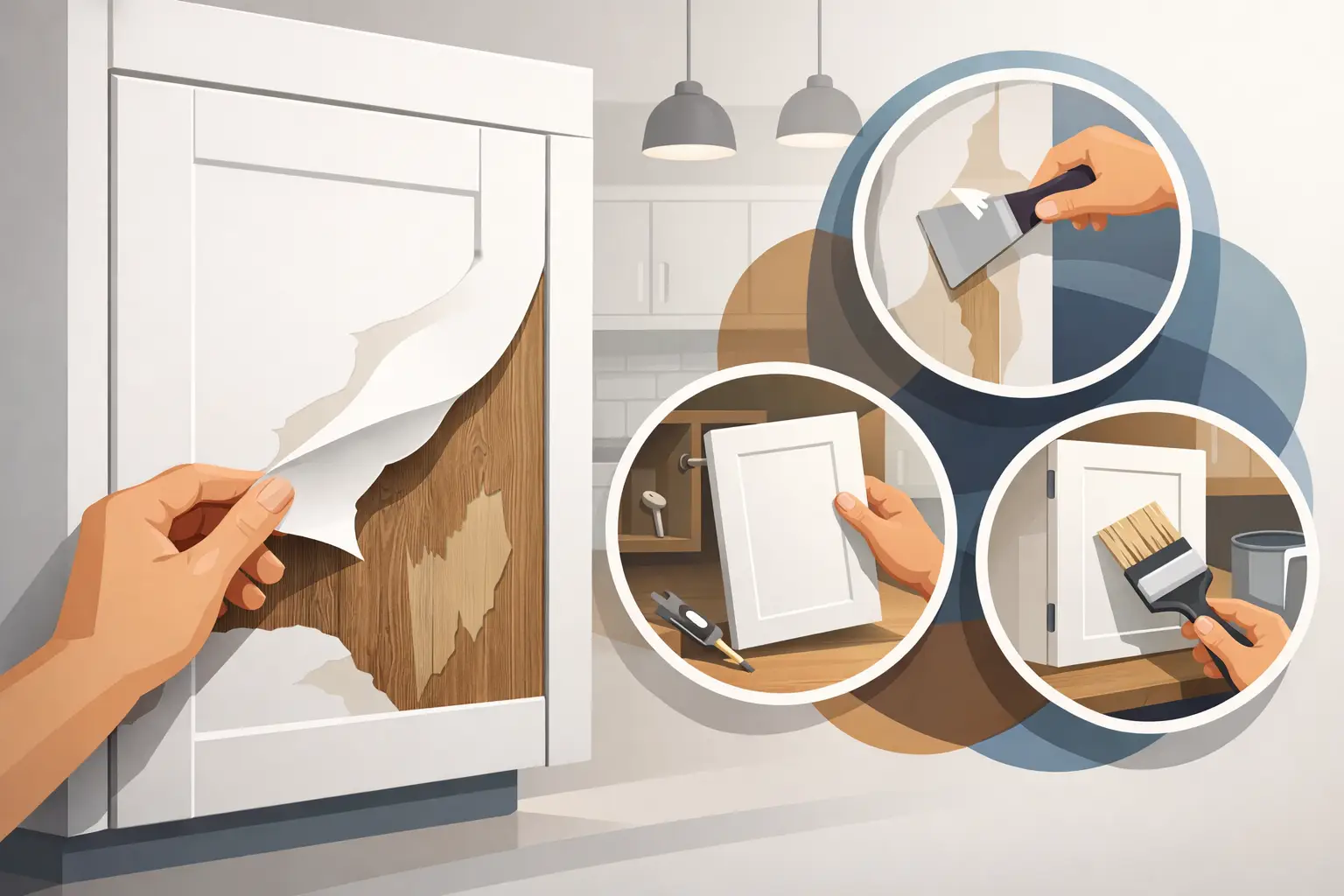
After cleaning comes sanding and surface preparation. This is where adhesion is built. Depending on the existing finish, there may also be filling, minor repairs, or spot priming. Frames and surrounding areas are masked carefully to protect worktops, appliances, floors, and walls.
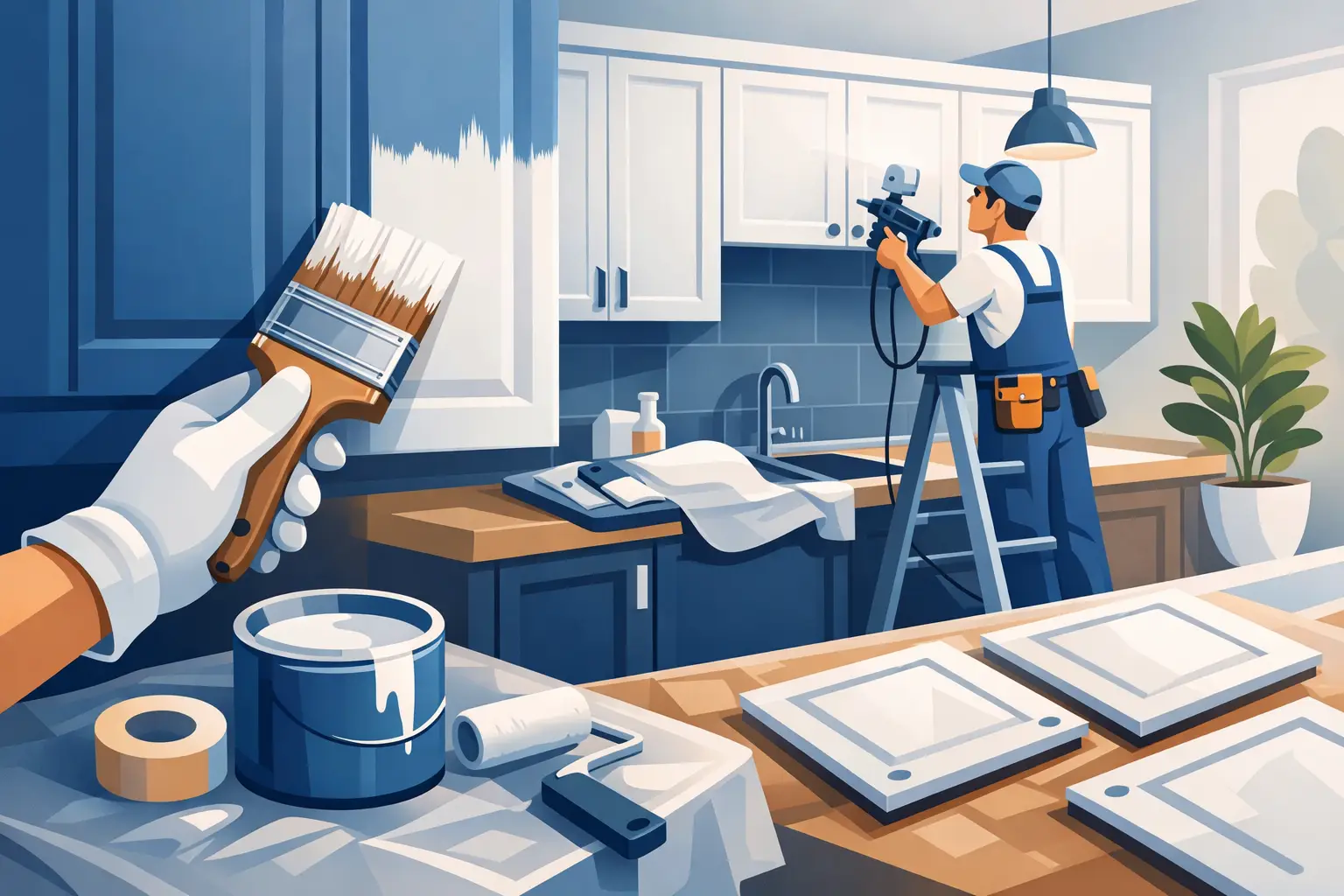
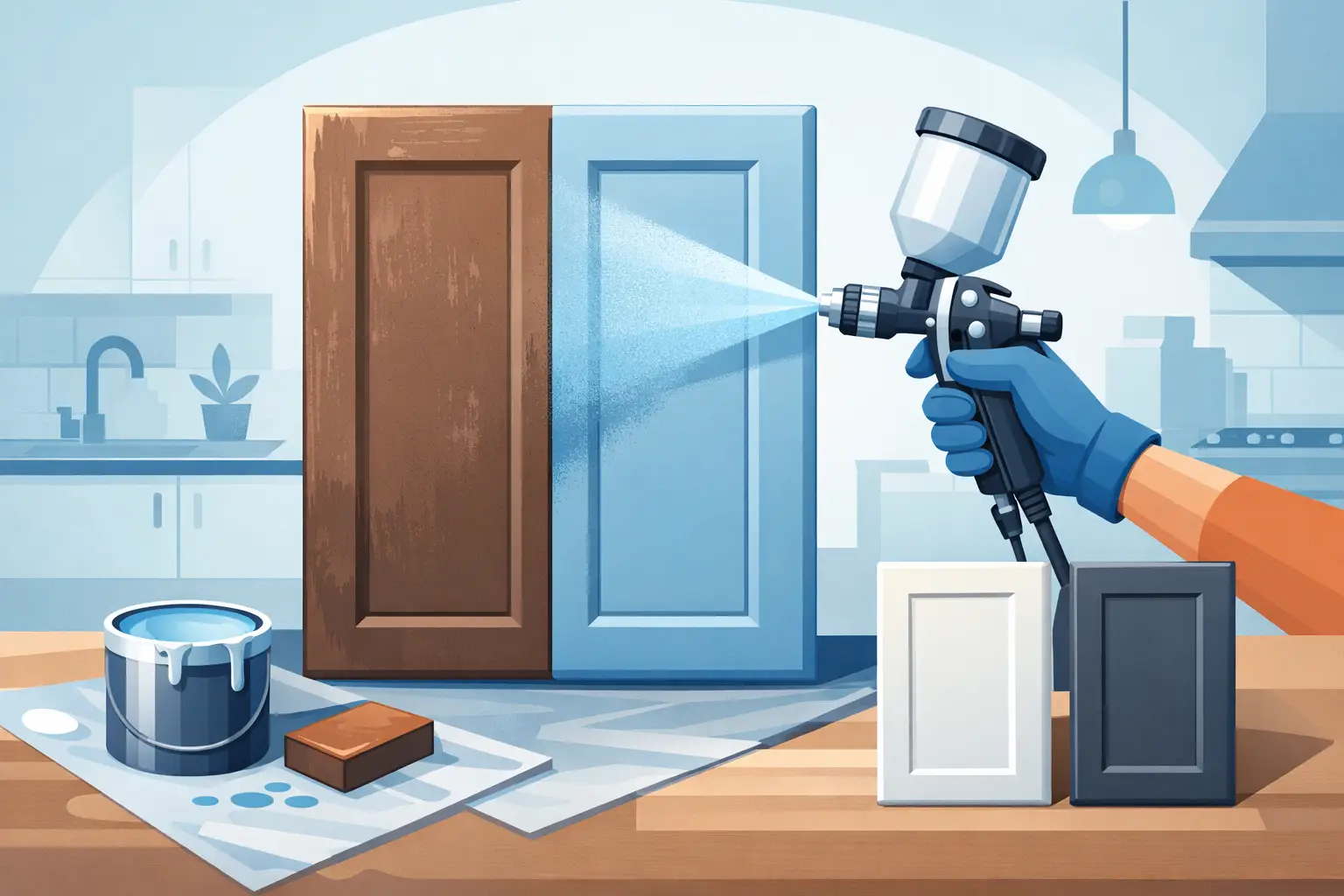
The spraying stage follows once surfaces are ready. Multiple coats are typically applied rather than one heavy coat. That produces a more even finish and better durability. Between coats, there is waiting time. It may not look dramatic, but this is part of what creates a professional result.
Reinstallation usually happens once doors and drawers are dry enough to handle safely. Hardware is refitted, alignment is checked, and final touch-ups are completed if needed. At that point, the kitchen starts to feel like itself again, only cleaner, brighter, and more up to date.
Drying time versus curing time
This is where expectations need to be realistic. A sprayed cabinet can feel dry to the touch quite quickly, but that does not mean it is ready for daily knocks, steam, cleaning products, or heavy use. Full curing takes longer, and that extra time is what gives the finish its strength.
During the early curing period, cabinets should be treated with care. Avoid slamming doors, dragging sharp objects across surfaces, or using harsh cleaners. A trusted professional will explain exactly how long to wait before normal cleaning and heavier use.
This slower final stage is not a drawback of cabinet spraying. It is simply how high-quality coatings perform. The benefit is that once cured properly, the finish is durable, attractive, and far more cost-effective than replacing the kitchen outright.
Can you use your kitchen while cabinets are being sprayed?
Usually, yes – but with some limitations. One of the strongest advantages of cabinet respraying is that it is far less disruptive than a full kitchen renovation. Your units stay in place, there is no demolition, and the overall project moves much faster than a replacement kitchen.
That said, there may be periods when parts of the room are temporarily off-limits, especially while masking, spraying, or drying is underway. You may need to work around missing cupboard doors or limited access to certain storage areas for a short time. For most households, that is a manageable inconvenience rather than a major upheaval.
If timing matters because of work schedules, school runs, or family routines, it helps to discuss that upfront. An experienced team can often advise on the least disruptive sequence for the job.
Why preparation should never be rushed
When homeowners ask how long cabinet spraying takes, they are often really asking whether it can be done quickly without cutting corners. The answer is yes, up to a point. Cabinet spraying is a fast and affordable alternative to replacement, but speed only works when the process is disciplined.
Preparation is where professional results are won. Proper cleaning, careful sanding, accurate masking, and the right primer all affect the final appearance and lifespan of the finish. If a company promises an unrealistically short turnaround without explaining prep and curing, that is worth questioning.
A stunning result should look smooth on day one and still look smart months later. That is why trusted professionals focus on both efficiency and finish quality, not just speed.
Planning around your timeline
If you are preparing for guests, selling your home, or simply trying to minimise disruption, the best approach is to allow a little breathing room. Do not plan the work to finish the night before a major event. Give the kitchen time to settle, and give the coating time to harden properly.
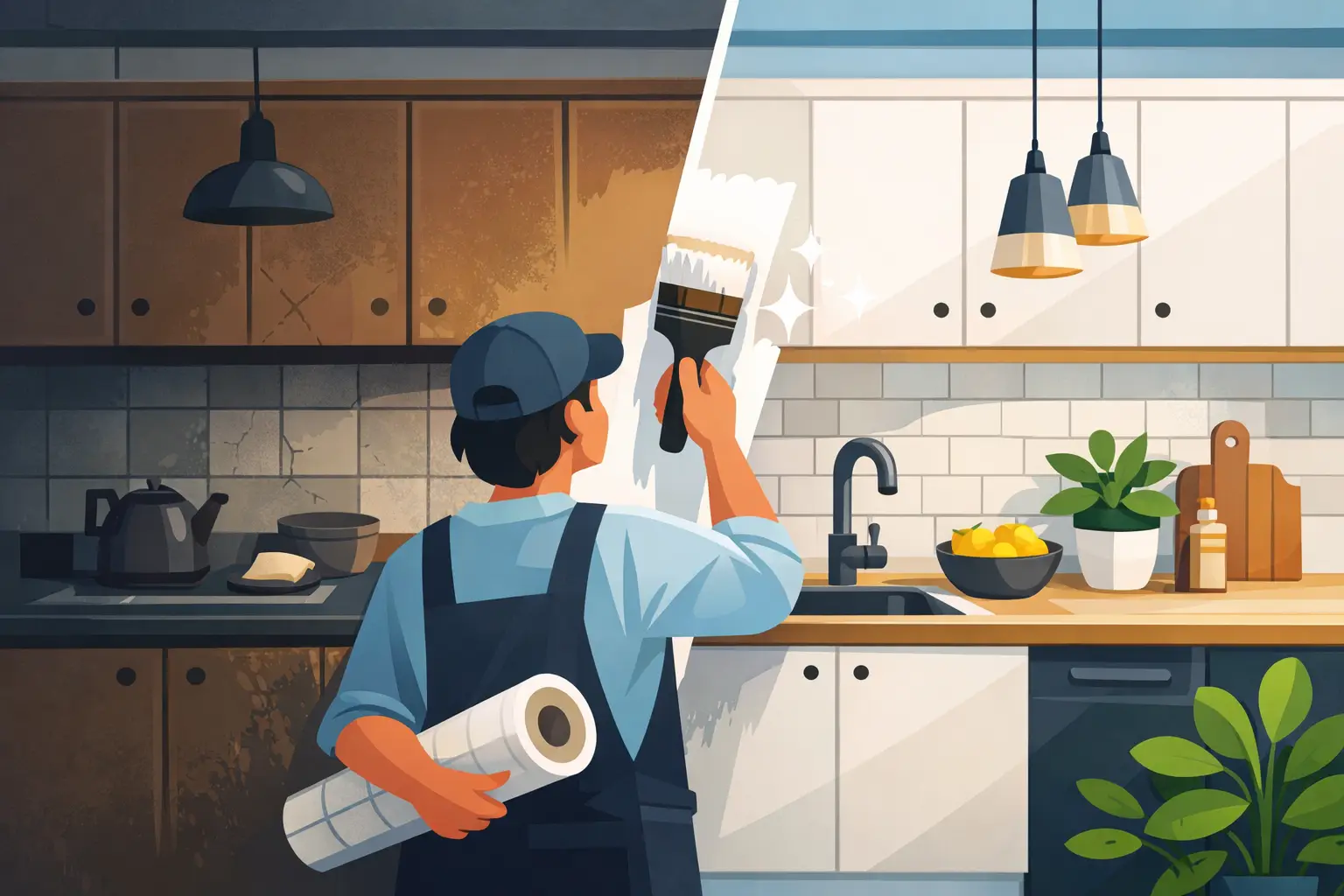
For homeowners in Dublin and nearby areas, this is often one of the main reasons cabinet spraying appeals. You get a professional transformation without the cost, waste, and drawn-out hassle of ripping out a perfectly serviceable kitchen. The timeline is measured in days rather than weeks of building work, and the visual change can be dramatic.
If you are weighing up your options, the right question is not only how fast the job can be done. It is how well it can be done within a sensible timeframe. A beautifully sprayed kitchen should feel like a fresh start, not a rushed compromise. Give the process the time it needs, and you will enjoy the difference every day after.