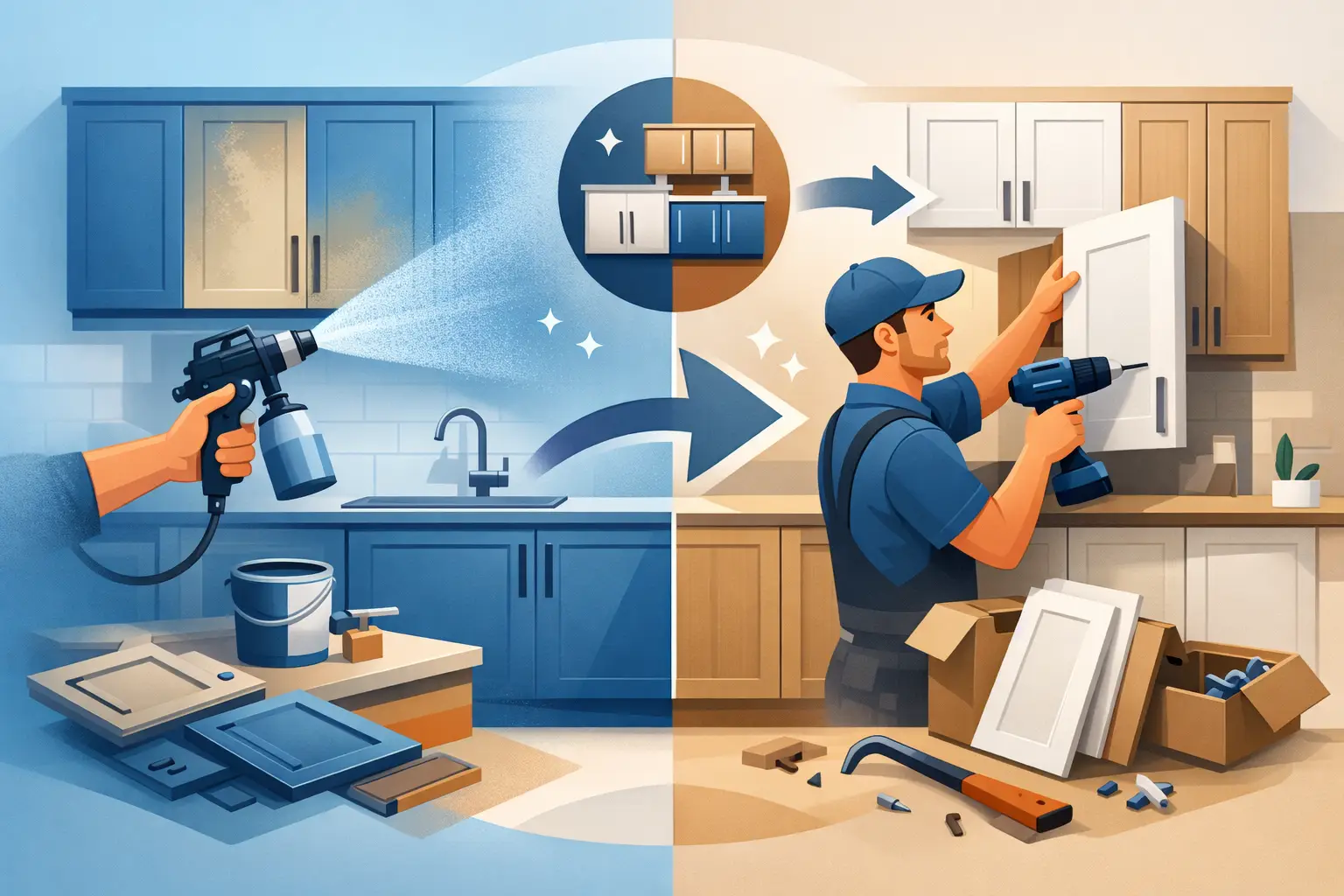
A dated kitchen does not always need to be stripped out to feel completely new. For many homeowners, the decision to respray or replace kitchen units comes down to one practical question: are the existing cabinets worth saving? If the layout works, the doors are sound and the carcasses are still sturdy, a professional respray can create a stunning change without the cost, waste and upheaval of a full replacement.
The right choice depends on the condition of your kitchen, the changes you want to make and how long you plan to stay in the property. A fresh finish can transform tired oak, cream, vinyl-wrapped or painted cabinets, but it cannot solve every underlying problem. Looking honestly at what is behind the doors is the best place to begin.
Respray or replace kitchen units: what is the real difference?
Replacing a kitchen usually means removing cabinet doors, units, worktops and often flooring or wall finishes too. It gives you freedom to redesign the layout, add storage or move appliances, but it can involve trades, deliveries, plumbing and electrical work. Costs can rise quickly once those connected jobs begin.
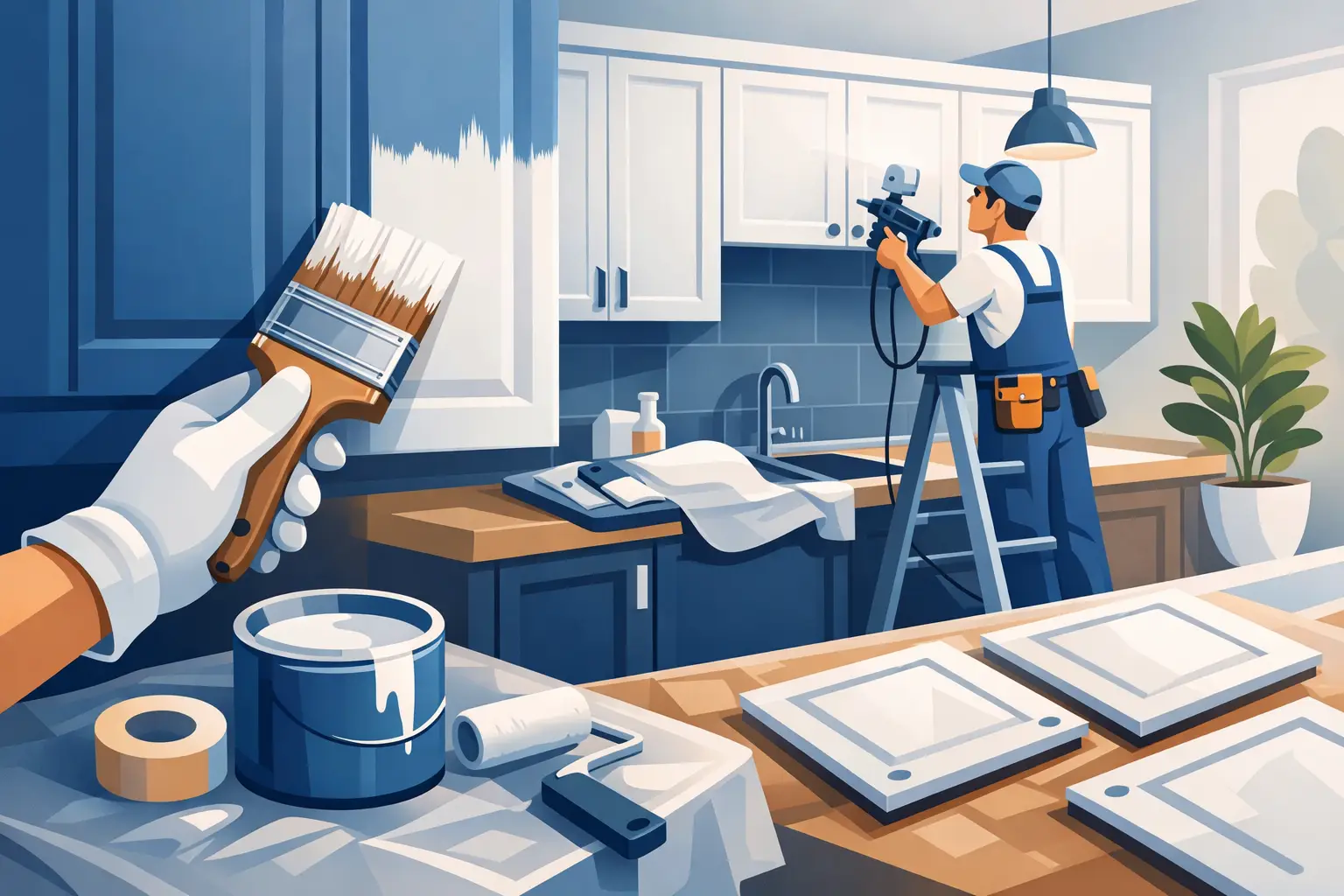
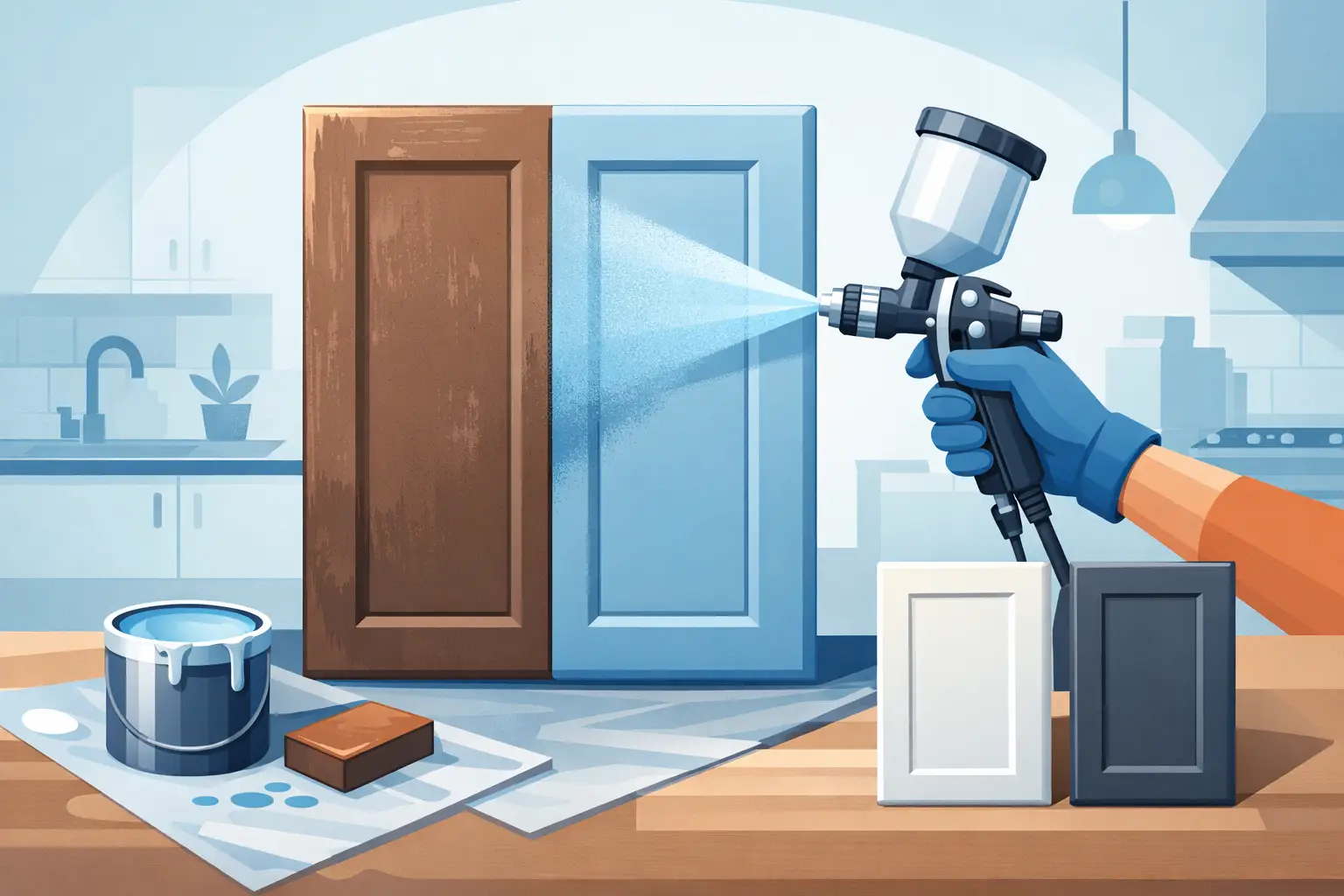
Respraying works with what is already there. Cabinet doors, drawer fronts and visible panels are professionally prepared, primed and sprayed in your chosen colour and finish. The process is designed to give an even, durable, factory-style appearance rather than the brush marks and uneven coverage often associated with painting cabinets at home.
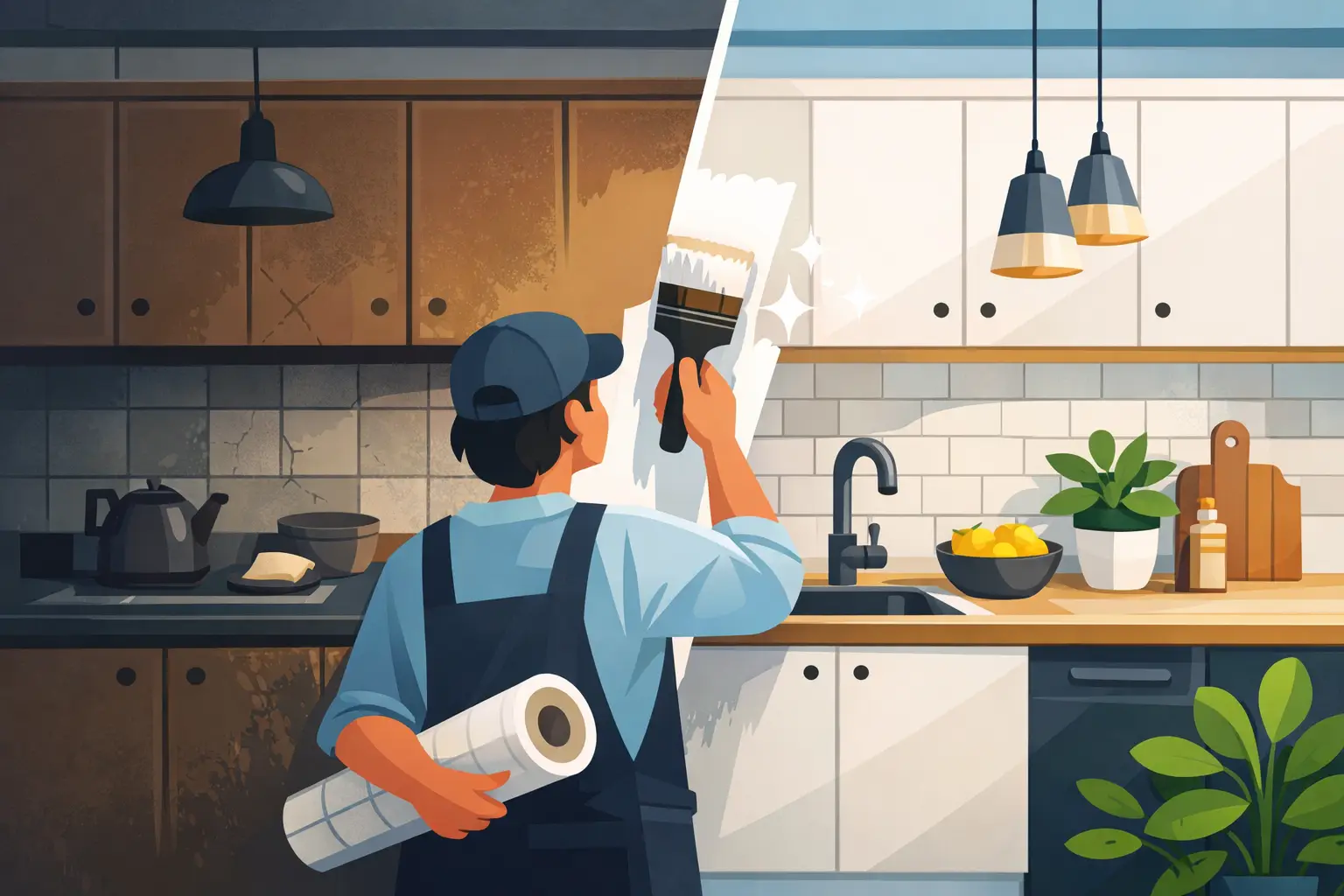
For a kitchen that is fundamentally functional but visually tired, this is often the more affordable and eco-friendly route. You retain sound cabinetry, avoid sending usable materials to landfill and gain a fresh look with far less disruption to daily life.
Start with the condition of the cabinets
The strongest reason to respray is that your existing units are well built. Many older kitchens have solid cabinet carcasses that are stronger than people expect. Hinges may need adjustment, handles may need replacing and a few doors may require minor repairs, but these are normally manageable issues.
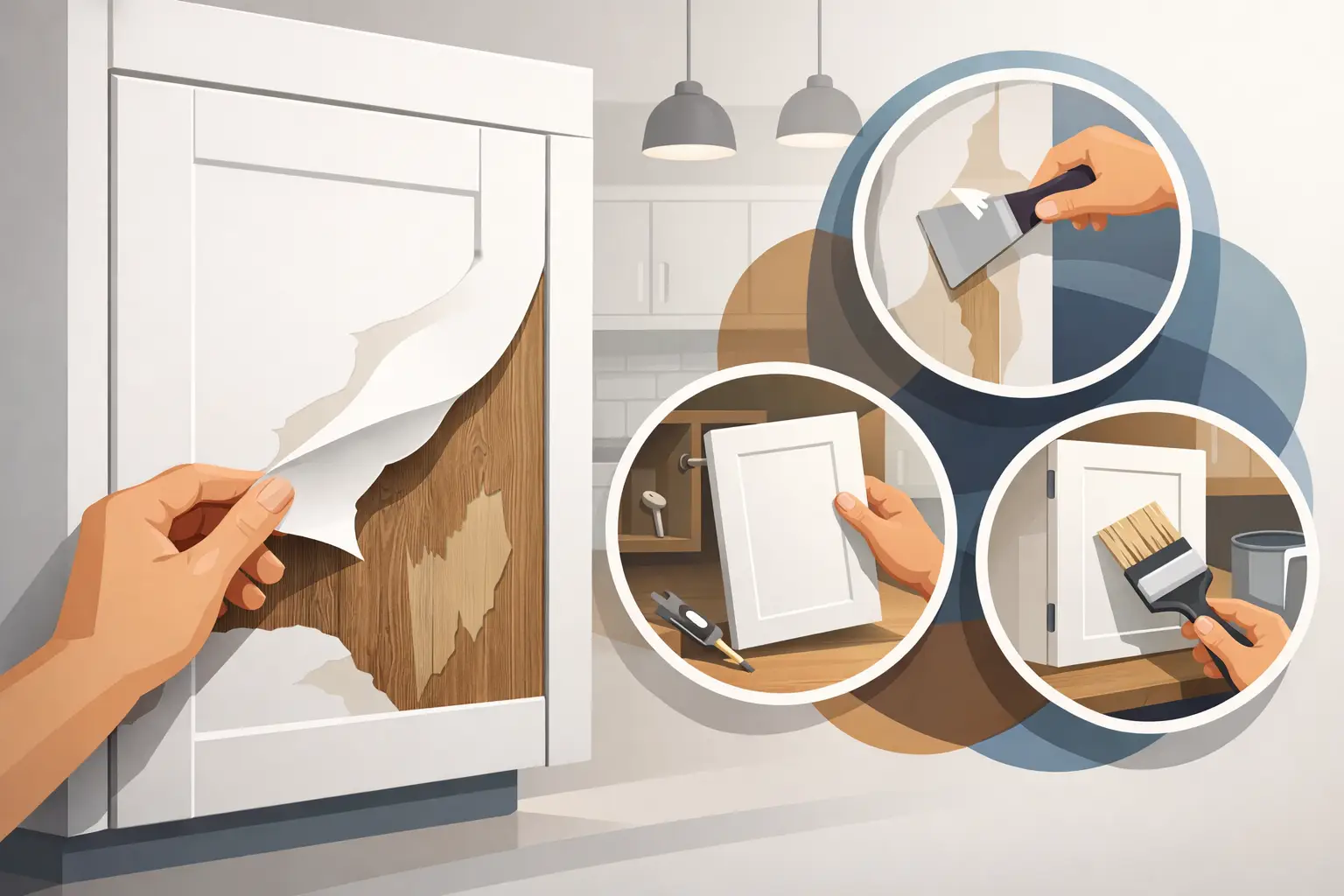
A professional assessment should look beyond surface appearance. Small chips, faded colour, grease marks and light scratches are cosmetic problems. They can usually be dealt with during careful preparation. Even a dated door profile can look much more current in a modern matt neutral, a deep blue, soft green or a clean off-white.
Replacement is more sensible where cabinets have widespread water damage, swollen chipboard, crumbling edges, unstable fixings or warped doors. Persistent leaks under the sink, for example, can damage a unit from the inside out. Respraying a compromised surface may improve its appearance briefly, but it will not restore structural strength.
It is also worth replacing if the kitchen no longer functions for your household. If you need additional cupboards, wider drawers, a new island or a different appliance layout, respraying alone cannot create that change. In these cases, a partial redesign may offer better long-term value than refreshing a layout you already find frustrating.
Consider the cost beyond the initial quote
A replacement kitchen is not simply the price of cabinets. The final figure may include removal and disposal, new worktops, fitting, plumbing, electrics, tiling, flooring, decorating and temporary arrangements while the room is out of use. These costs are justified when a full redesign is needed, but they should be part of the comparison from the beginning.
Respraying is typically far more cost-effective because the cabinet structure remains in place. You are paying for expert preparation and a high-quality finish rather than a new set of units and the work involved in installing them. This can leave room in the budget for details that make a noticeable difference, such as new handles, a tap, lighting or a refreshed worktop.
The cheapest option is not always the best value, however. A low-cost paint job without thorough cleaning, sanding, priming and controlled spraying can peel, chip or show imperfections quickly. A trusted professional service focuses on surface preparation because that is what supports the finish over time.
Think about disruption in a busy home
A kitchen replacement can be worthwhile, but it requires patience. Depending on the project, you may be without a usable kitchen for weeks. There can be dust, noise, multiple tradespeople and delays if a component arrives late or an unexpected issue appears after old units are removed.
Respraying is a more contained transformation. The aim is to refresh the visible parts of the kitchen efficiently while protecting the surrounding home. For households balancing work, school runs and everyday cooking, avoiding a prolonged renovation can be a major advantage.
This is particularly relevant when the property is otherwise finished and you do not want to disturb floors, splashbacks or appliances that still suit the room. A change of cabinet colour can alter the entire feel of the space without forcing you to redecorate everything around it.
The finish matters as much as the colour
Choosing a colour is exciting, but sheen and durability deserve equal attention. A matt finish can give cabinets a calm, contemporary appearance, while satin has a gentle lustre and can be a practical choice for a hard-working family kitchen. Higher-gloss finishes reflect more light and can suit compact or darker rooms, although they may show fingerprints more readily.
The existing kitchen also influences the best colour. Deep shades can make a large, bright room feel elegant and grounded. Lighter tones can lift a narrow galley kitchen or a space with limited natural light. If you are selling in the near future, timeless neutrals tend to appeal broadly, while a well-chosen accent colour on an island or tall bank of units can still add personality.
A respray does not have to stop at cupboard doors. If a worn worktop, tiled splashback or dated floor is holding back the result, spray granite can provide a coordinated new surface without the need to remove everything. This can be a useful middle ground where the kitchen layout is right but several finishes need attention.
When a hybrid approach makes most sense
The decision is not always entirely respray or entirely replace kitchen components. Some of the best results come from keeping what works and replacing only what does not. You might retain strong base units and respray the doors, then install a new worktop. Or you may replace a damaged sink cabinet, update handles and respray the remaining cabinetry for a consistent finish.
This approach is especially useful when one area has suffered water damage but the rest of the kitchen is in excellent condition. It can also help if you want one practical improvement, such as better drawer storage, without turning a cosmetic refresh into a complete building project.
A professional can advise whether replacement doors are needed in isolated areas or whether repairs and respraying will provide the better result. The key is not to replace perfectly usable materials simply because their colour has gone out of fashion.
Questions to ask before making your choice
Before committing, look at your kitchen at its busiest time of day. Are there enough cupboards? Do doors close properly? Is the worktop serviceable? Is there evidence of swelling, damp or persistent mould? These answers separate visual frustrations from structural and layout problems.
You should also ask what you want the project to achieve. If the goal is a fresh, modern kitchen that feels cleaner, brighter and more aligned with your home, respraying is often an excellent fit. If the goal is to move walls, reconfigure appliances or solve a lack of storage, replacement may be the more realistic investment.
For homeowners in Dublin and nearby counties, Dublin Kitchen Respray provides expert advice based on the actual condition of the kitchen rather than a one-size-fits-all answer. A clear assessment helps you spend on the improvements that will matter most.
A kitchen should earn its place in your home every day. When the units are sound, respraying lets you keep the practical foundations you already have and enjoy a beautiful new finish without treating a working kitchen as waste.