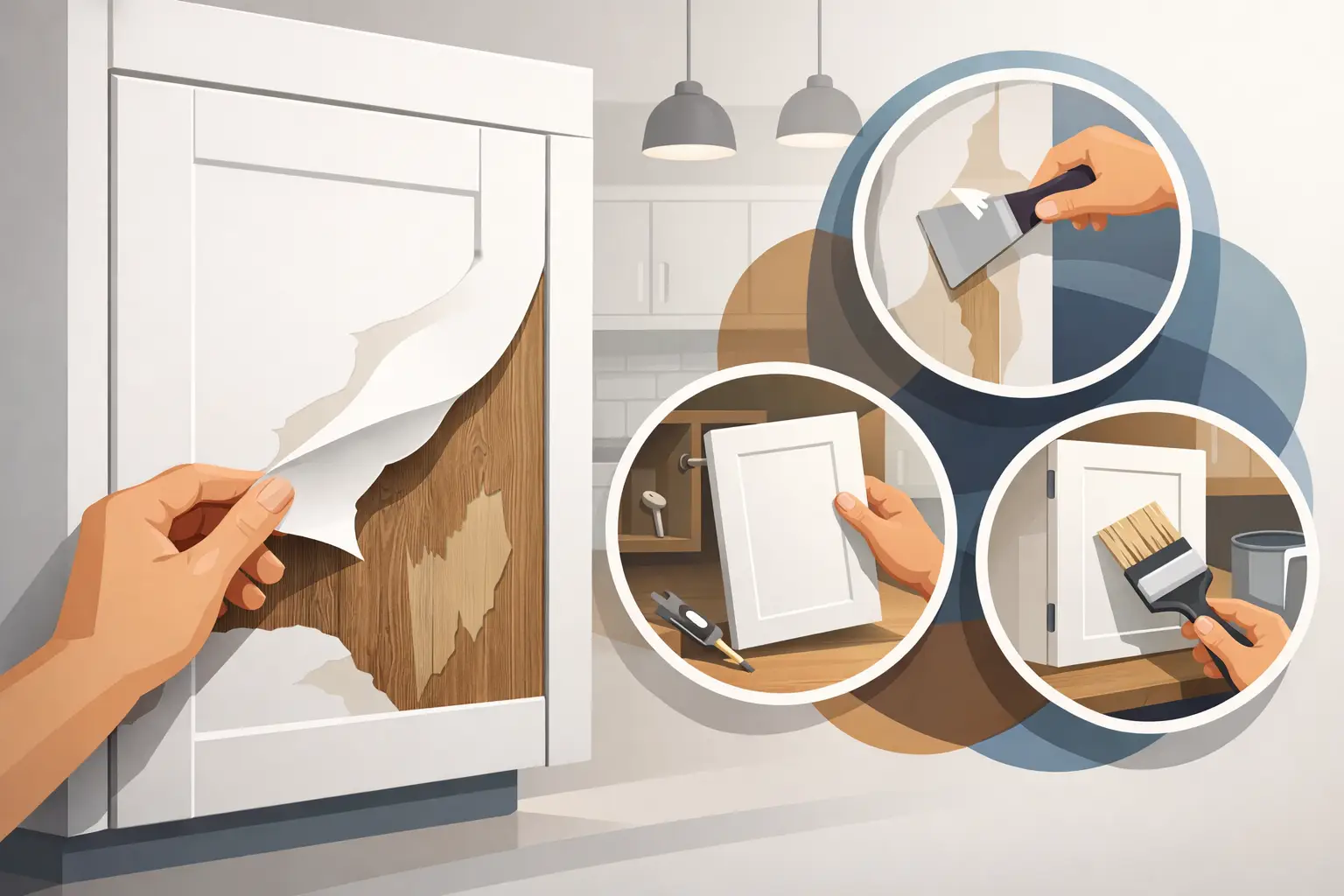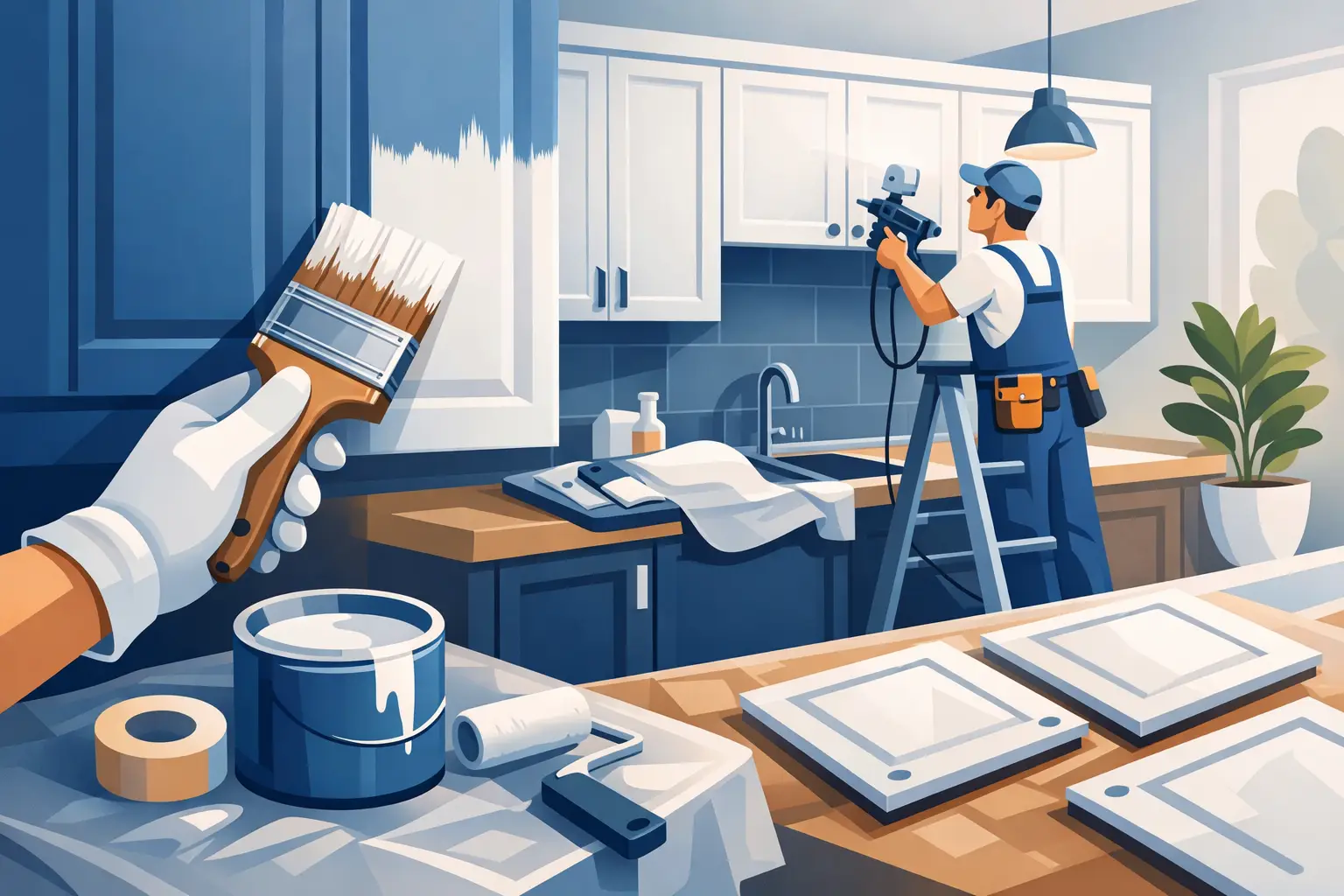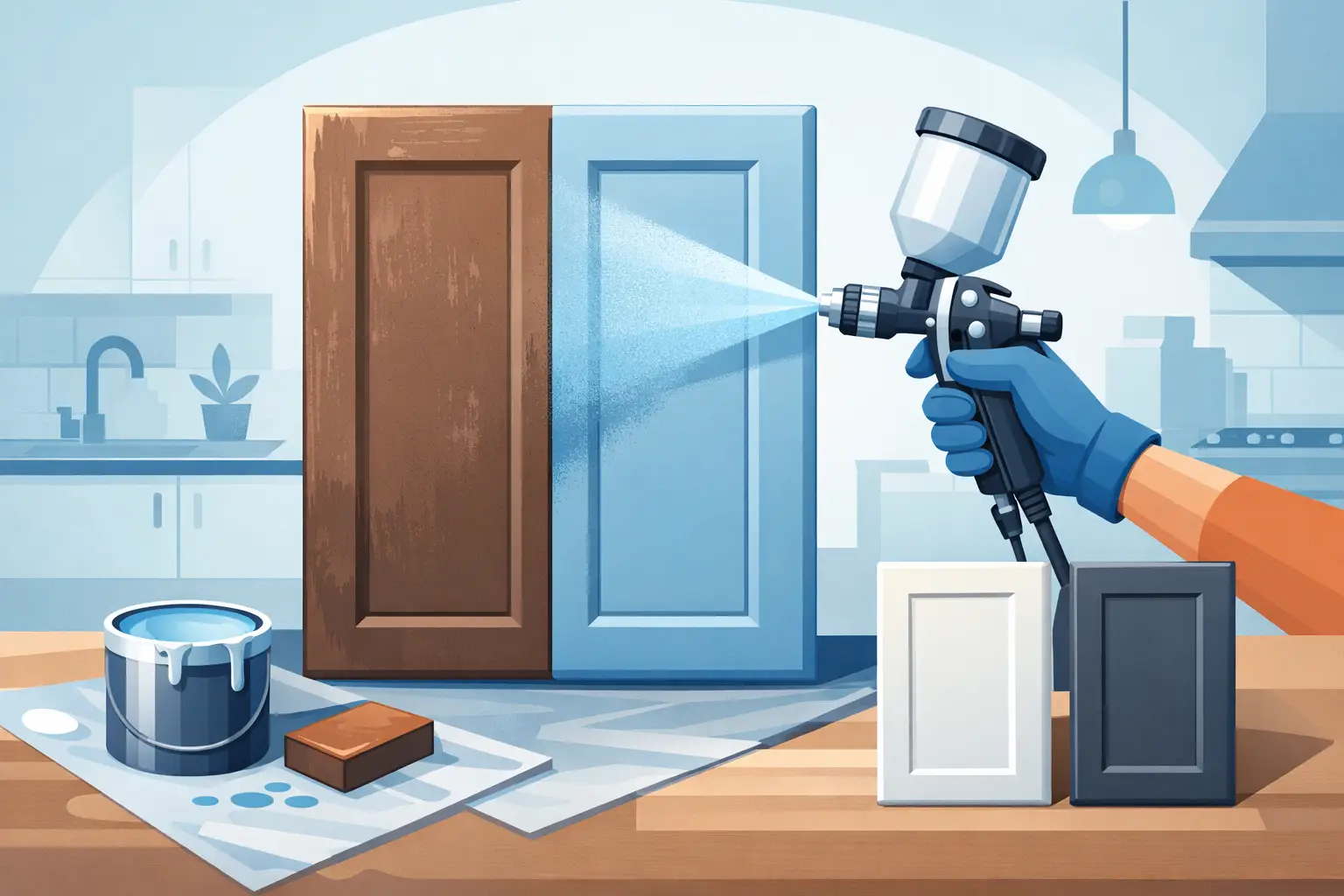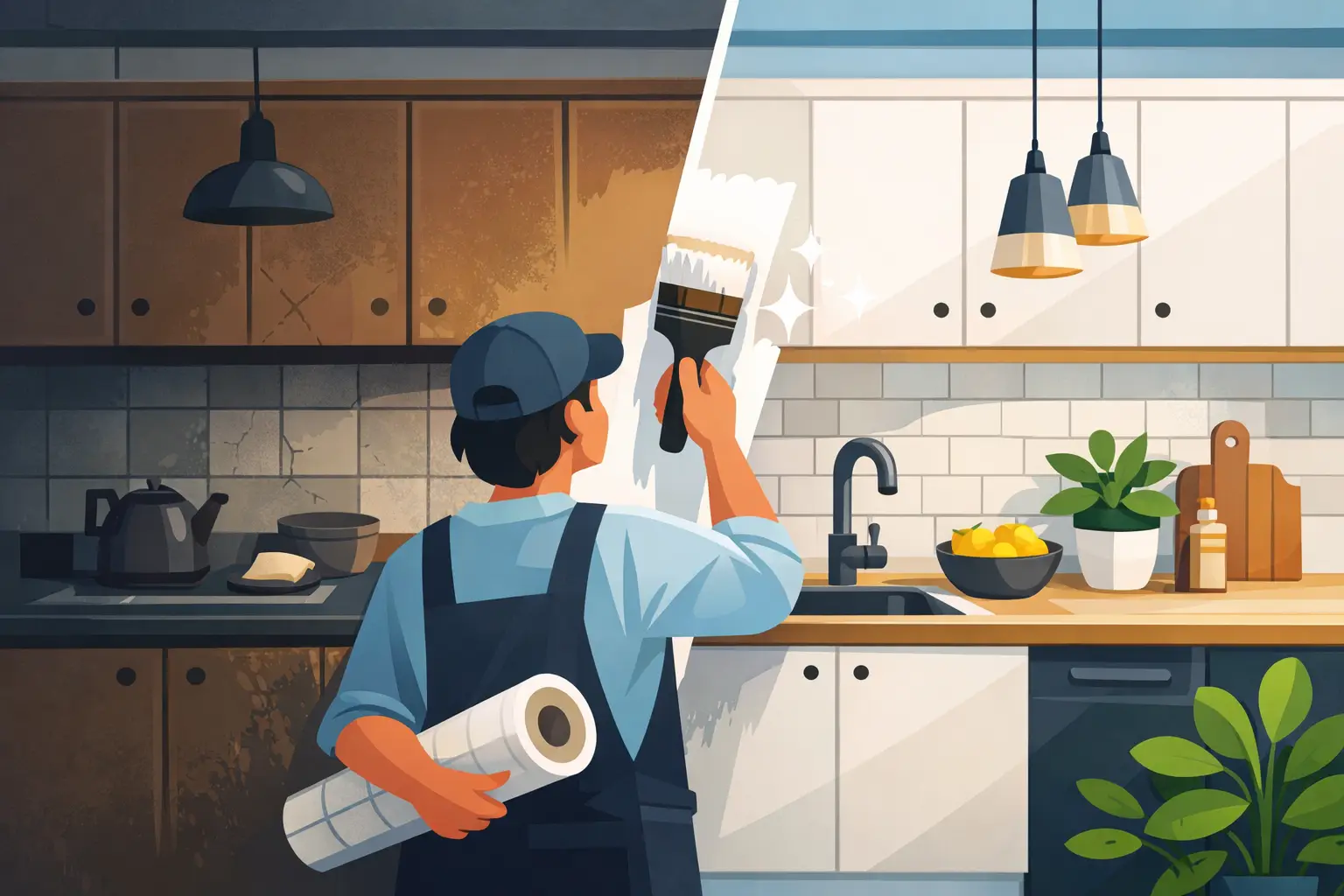
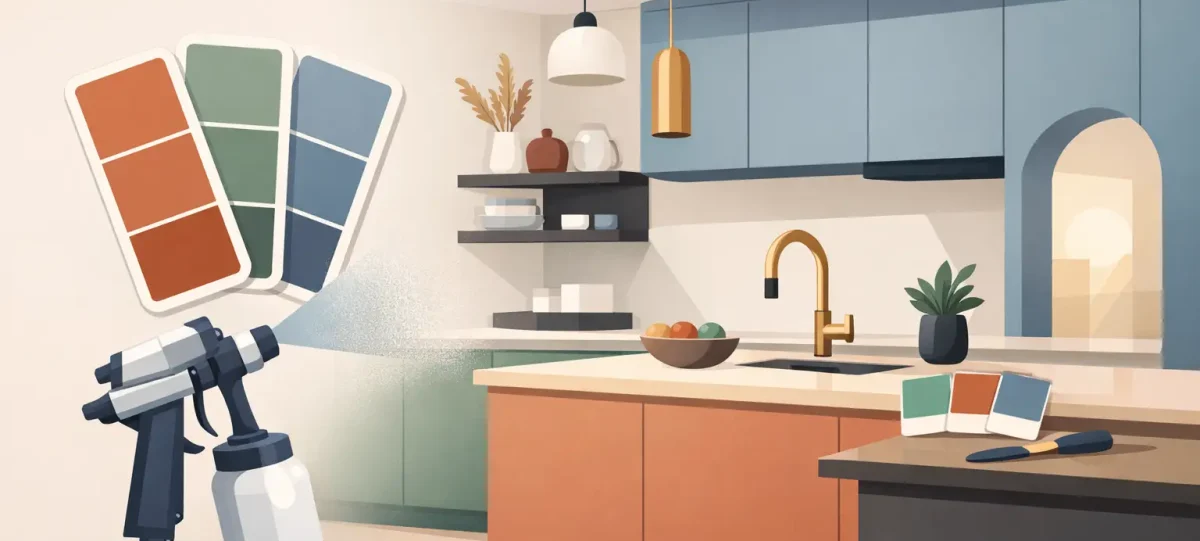
A kitchen can feel dated long before it stops working well. That is exactly why kitchen respray colour trends matter – they give homeowners a way to modernise the room they use most, without the cost, waste and upheaval of tearing everything out.
For many homes, the smartest update is not a new kitchen at all. It is choosing the right colour for the cabinets you already have, then having them professionally resprayed for a clean, durable finish. The difference can be striking, but the best results come from understanding which colours are current, which ones have staying power, and which shades actually suit your light, layout and worktops.
Kitchen respray colour trends are moving warmer
For years, cool greys dominated fitted kitchens. They looked neat and modern, but many spaces ended up feeling flat or a little clinical, especially in homes with limited natural light. One of the clearest kitchen respray colour trends now is a shift towards warmth.
That does not mean bold terracotta cabinets in every home. More often, it means softer off-whites, mushroom tones, putty shades, taupe, greige with a warmer base, and creamy neutrals that sit comfortably with timber floors and stone-effect worktops. These colours feel calm and expensive without trying too hard.
They also work well in Irish homes, where daylight can vary hugely from room to room. A cool white that looks crisp in a showroom may appear stark on a grey afternoon. A warmer neutral is usually more forgiving and easier to live with.
Green remains a favourite, but the shade matters
Green has been popular for several years, and it is still one of the safest ways to add personality without dating the kitchen too quickly. The key change is in the tone. Bright, heavily saturated greens are giving way to more grounded shades.
Sage is still a strong choice for homeowners who want something softer than grey but more interesting than beige. It pairs beautifully with brass, black handles and natural wood accents. In smaller kitchens, it can add colour without overwhelming the room.
Deeper greens such as olive, eucalyptus and muted forest tones are also gaining ground. These shades bring richness and depth, particularly on shaker-style doors or larger kitchens with good light. They suit homes that want a classic finish rather than a trend-led one.
There is a trade-off, though. Darker green can look superb in a spacious kitchen, but in a narrow or poorly lit room it may make the space feel more enclosed. That is where a professional eye helps. Sometimes the right answer is green on lower units and a lighter neutral on tall cupboards or walls.
Blue is becoming more refined
Blue never really disappears from kitchen design, but its mood changes. The strongest kitchen respray colour trends in blue are moving away from bright navy and towards softer, more complex shades.
Dusty blue, slate blue and blue-grey tones are proving especially popular because they are versatile. They can feel contemporary in a handleless kitchen or more traditional on detailed cabinetry. They also sit comfortably with both chrome and warm metallic hardware.
For homeowners who want a darker statement, inky blue still has a place. It can give cabinets a smart, tailored look, especially when balanced with lighter walls and worktops. But it does demand care. Very dark blue shows fingerprints, splashes and general wear more readily than mid-tone colours, so it is not always the most practical option for busy family kitchens.
Soft neutrals are replacing stark white
White kitchens still have appeal, particularly for smaller spaces where brightness is important. Yet pure brilliant white is no longer the automatic choice it once was. Softer neutrals are taking over because they create a more welcoming, lived-in finish.
Think chalk, ivory, almond and warm stone rather than clinical white. These shades keep the room light while adding a little softness to the overall look. They are especially effective when paired with spray granite worktops or existing tiled splashbacks that need the cabinets to tie everything together.
This matters if you are updating rather than fully renovating. A respray should make the whole kitchen feel coherent, not just make the doors look newer than everything around them. Subtle neutrals tend to bridge old and new finishes more successfully.
Black and charcoal still work, in the right kitchen
Dark kitchens continue to attract attention, and there is no denying they can look stunning. Matt black, graphite and charcoal resprays create a premium feel and can transform dated units into something far more architectural.
Still, this is one of those trends where practicality has to come first. Dark colours can reduce the sense of space, particularly in kitchens with limited daylight or low ceilings. They also show dust, grease and marks more clearly. For some households, that is a fair trade for the impact they deliver. For others, it becomes frustrating quite quickly.
A balanced approach often works best. Charcoal on an island or lower cabinets can provide contrast without making the whole room feel heavy. Paired with pale walls and brighter surfaces, it can be dramatic without becoming oppressive.
Earthy shades are quietly growing in popularity
One of the more interesting shifts in kitchen respray colour trends is the rise of earthy, understated colours. Muted clay, soft beige, sand, oat and even gentle caramel tones are appearing more often, especially in homes that lean towards natural materials and a calmer interior style.
These shades are less about making a statement and more about creating atmosphere. They work particularly well in open-plan spaces where the kitchen needs to connect with living and dining areas rather than stand apart from them.
The reason they are catching on is simple. They feel easy to live with. They bring warmth, they hide day-to-day marks better than very pale finishes, and they often age more gracefully than sharper trend colours.
Finish matters as much as colour
When people talk about colour trends, the conversation usually stops at the shade itself. In practice, finish has a huge effect on the final result. A warm neutral in a flat matt finish looks very different from the same colour in a soft satin.
For most kitchens, a low-sheen or satin finish is the most practical balance. It looks modern, reflects just enough light, and is easier to maintain than a completely flat finish. High gloss can still suit certain contemporary kitchens, but it is far less dominant than it used to be.
This is where professional respraying proves its value. The finish needs to be consistent, durable and appropriate for the daily wear a kitchen takes. A beautiful colour can still disappoint if the surface quality is poor.
How to choose a trend that still looks right in five years
Following kitchen respray colour trends does not mean chasing whatever is fashionable for a few months. The better approach is to use trends as a guide, then narrow your choice based on your home.
Start with the parts of the kitchen you are not changing. Flooring, worktops, wall tiles and room orientation all affect how a paint colour will behave. A shade that looks stylish in a large south-facing kitchen may feel dull in a smaller space facing north.
Then think about the style of the cabinetry. Traditional doors can carry deeper and more classic shades well, while ultra-modern doors often suit softer neutrals, muted greys or refined blues. Hardware matters too. Brass can warm up green and beige tones, while black fittings sharpen cooler or darker colours.
It is also worth being honest about maintenance. If you have young children, cook daily or simply do not want to be constantly wiping cupboard fronts, mid-tones and warmer neutrals are often the most forgiving choice.
What homeowners are choosing now
Across Dublin and surrounding areas, many homeowners are looking for colours that feel current but not risky. That is why sage, olive, warm greige, soft stone and muted blue continue to perform so well. They update the kitchen clearly, but they do not force the rest of the room into a complete redesign.
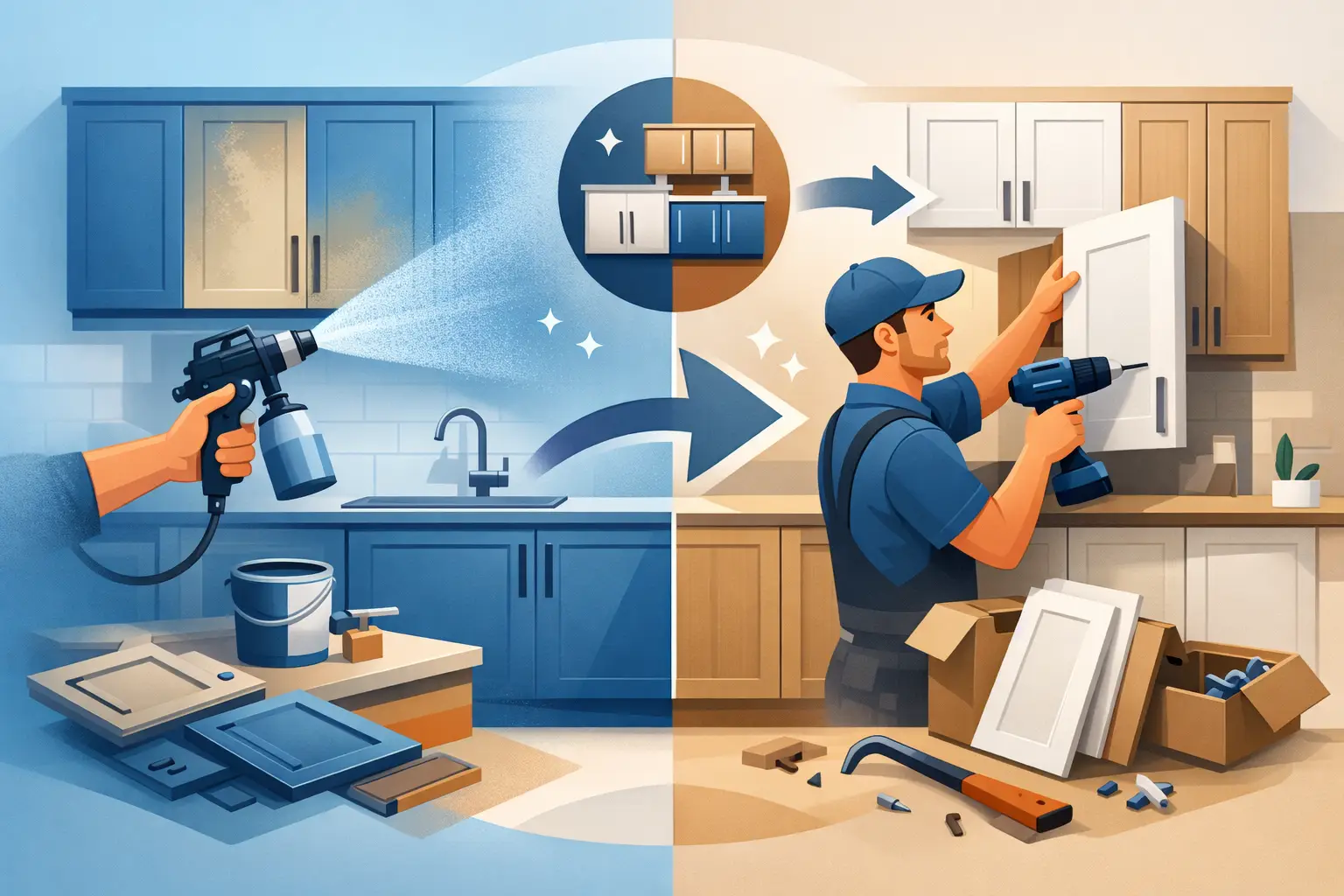
That balance is a big part of why respraying is so appealing. You can achieve a professional, like-new finish in a colour that transforms the space, while keeping the bones of a kitchen that still functions perfectly well. It is affordable, far less disruptive than replacement, and a much more eco-friendly way to achieve a fresh look.
The best colour trend is not always the boldest or the most photographed. It is the one that makes your kitchen feel brighter, smarter and more enjoyable to use every day. If a respray can do that while saving time, money and unnecessary waste, it is more than a trend – it is a very sensible upgrade.