A kitchen cupboard door can look spotless one month and tired the next. Steam, grease, knocks from school bags, and constant wiping all test the finish every single day. That is why choosing the best paint for kitchen cabinets is less about the shade card and more about how that paint performs in a hardworking room.
For most homeowners, the real question is not simply which tin to buy. It is which type of coating will leave cabinets looking smooth, staying durable, and resisting chips around handles and edges. The answer depends on the cabinet material, the finish you want, and whether you are painting by hand or having the units professionally sprayed.
What makes the best paint for kitchen cabinets?
Kitchen cabinets need a coating that can cope with moisture, grease, cleaning products and daily wear. Ordinary wall paint is not designed for that. Even if it looks fine at first, it usually marks too easily and struggles on high-touch surfaces.
The best paint for kitchen cabinets is usually a hard-wearing trim or specialist cabinet coating with strong adhesion and a washable finish. In practical terms, that means a paint that bonds properly to previously painted doors, MDF, solid timber, or laminate once the surface has been prepared correctly.
Durability matters, but so does appearance. Cabinets sit at eye level, so brush marks, roller texture and uneven sheen are far more noticeable than on skirting boards. A quality coating should level well and dry to a consistent finish. That is one reason sprayed finishes are so popular when homeowners want a factory-like result.
The main paint types to consider
There is no single magic product that suits every kitchen. Different paint systems have different strengths, and the right one often depends on balancing finish, drying time, smell, and long-term toughness.
Water-based paints
Modern water-based paints have improved significantly. The best ones dry faster, have lower odour, and are less likely to yellow over time than older oil-based alternatives. For busy homes, that lower odour can be a real advantage, especially when the kitchen remains in use during the work.
A good water-based cabinet paint can produce an excellent result, but quality varies. Cheaper options may scratch more easily before they fully cure, and some do not grip laminate or glossy surfaces well without the correct primer underneath.
Oil-based paints
Oil-based paints have traditionally been valued for their hard finish and smooth flow. They can still perform well on cabinetry, particularly where durability is the top priority. The trade-off is the stronger smell, longer drying time, and tendency to yellow, especially on lighter colours.
For many modern kitchen updates, homeowners now lean towards high-quality water-based systems or professional spray coatings that offer durability without the drawbacks of older oil-based products.
Specialist cabinet and joinery coatings
These are often the strongest option for a long-lasting finish. Professional-grade joinery coatings are designed specifically for woodwork and cabinetry, and many are applied by spray rather than brush or roller. They tend to offer better adhesion, smoother texture and stronger resistance to chipping and staining.
This is often where a professional respray service stands apart from a DIY attempt. The coating itself is only part of the story, but it is a major one.
Finish matters as much as the paint itself
When people ask about paint, they are often really asking about sheen. Do you want a soft modern look, or something with more shine that is easier to wipe down?
Matt, satin or gloss?
Matt can look stylish, particularly in contemporary kitchens, but very flat finishes are less forgiving in a room that sees spills and fingerprints. They can also be harder to clean without leaving marks.
Satin or eggshell is usually the sweet spot for kitchen cabinets. It gives a smooth, refined look without the sharp shine of gloss, while still being practical enough for regular cleaning. Gloss is the toughest in some cases and reflects more light, but it also highlights every imperfection in the door surface.
For that reason, many professional cabinet refinishing projects favour a satin-style finish. It looks current, feels premium, and works well in both traditional and modern kitchens.
Why preparation changes the result
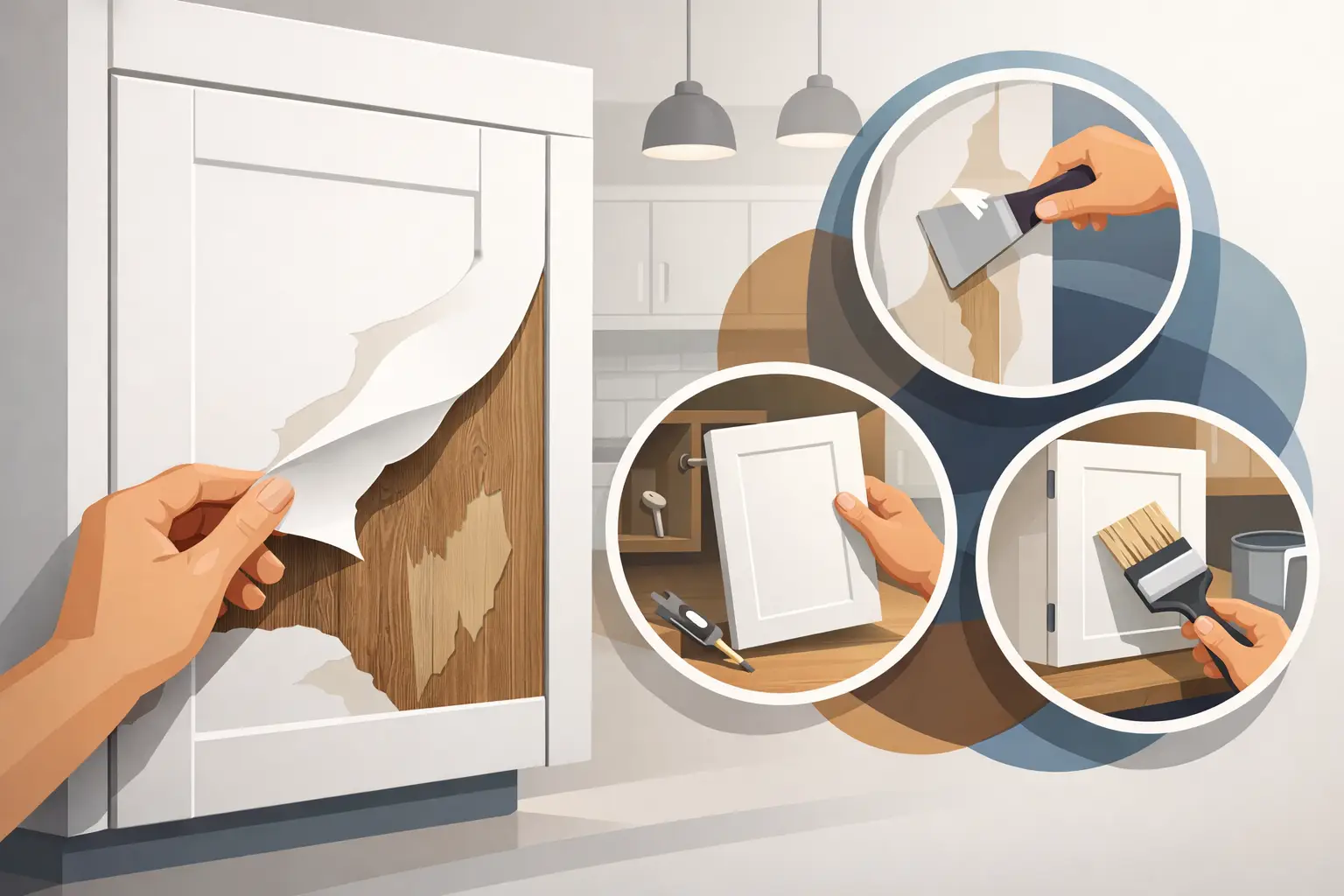
Even the best paint will fail on a poorly prepared surface. Peeling, chipping and patchy adhesion usually come back to prep rather than the topcoat alone.
Kitchen cabinets collect invisible layers of grease and residue, especially around handles, cookers and extractor areas. These need to be thoroughly cleaned and degreased before any sanding or priming begins. If not, the new coating may sit on top of contamination rather than bonding to the cabinet itself.
After cleaning, surfaces often need sanding to dull the existing finish and create a key. Some materials, such as laminate, foil-wrapped doors or high-gloss units, are especially demanding. They usually need the right bonding primer before any colour coat is applied.
That is why one-size-fits-all advice can be misleading. A painted timber shaker door and a smooth MDF slab door may both be kitchen cabinets, but they do not always respond the same way to the same products.
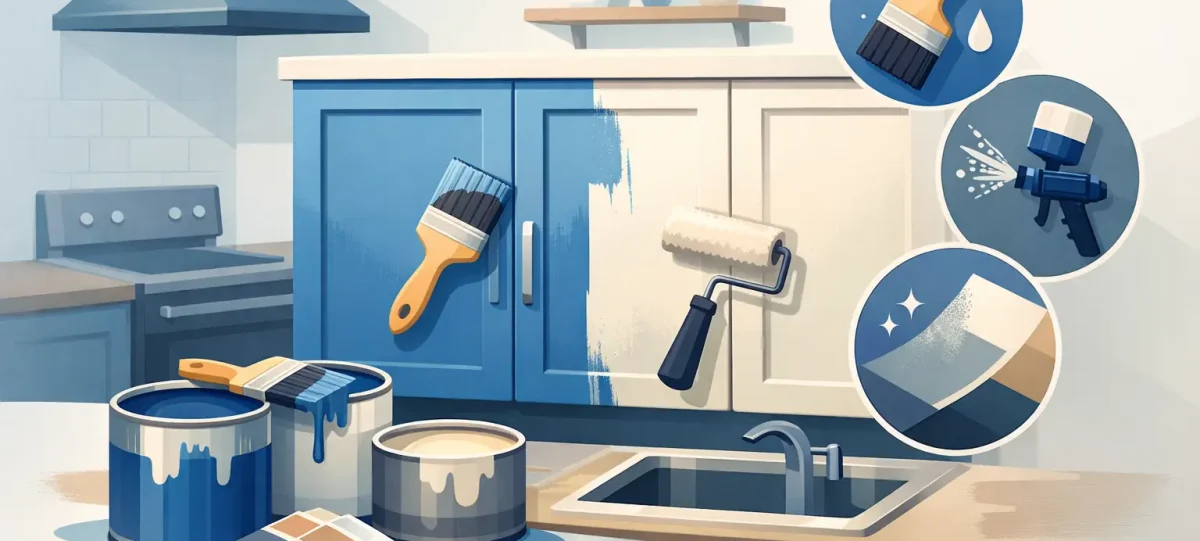
Brush, roller or spray?
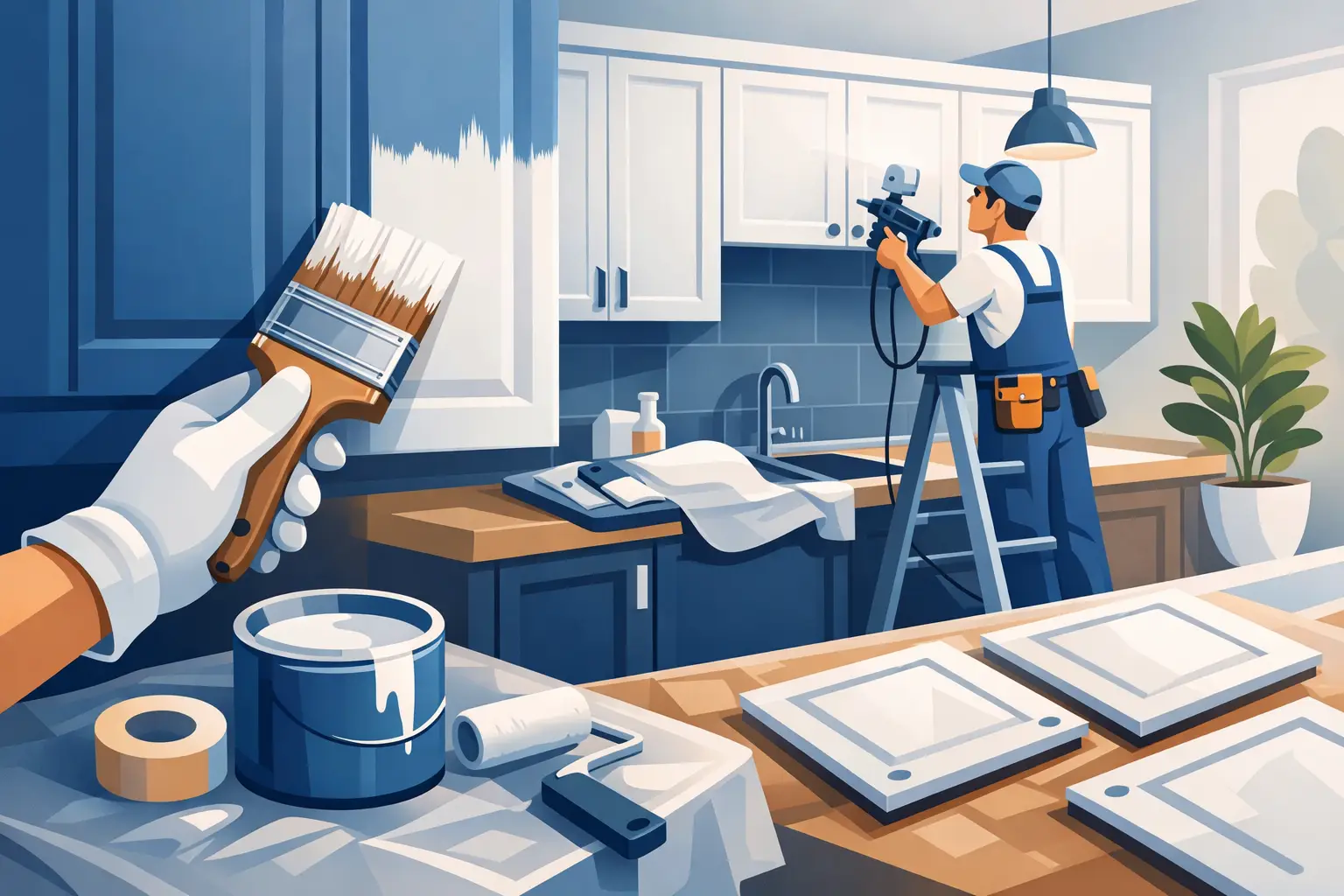
This is where expectations matter. If you want a quick refresh in a utility room or rental property, careful hand painting may be enough. If you want a like-new finish in the main kitchen, spraying usually gives a superior result.
Brushes and rollers can work, but they nearly always leave some texture. On detailed doors this may be less obvious, but on flat contemporary panels it tends to stand out. Drying times between coats can also leave the kitchen out of action for longer than expected.
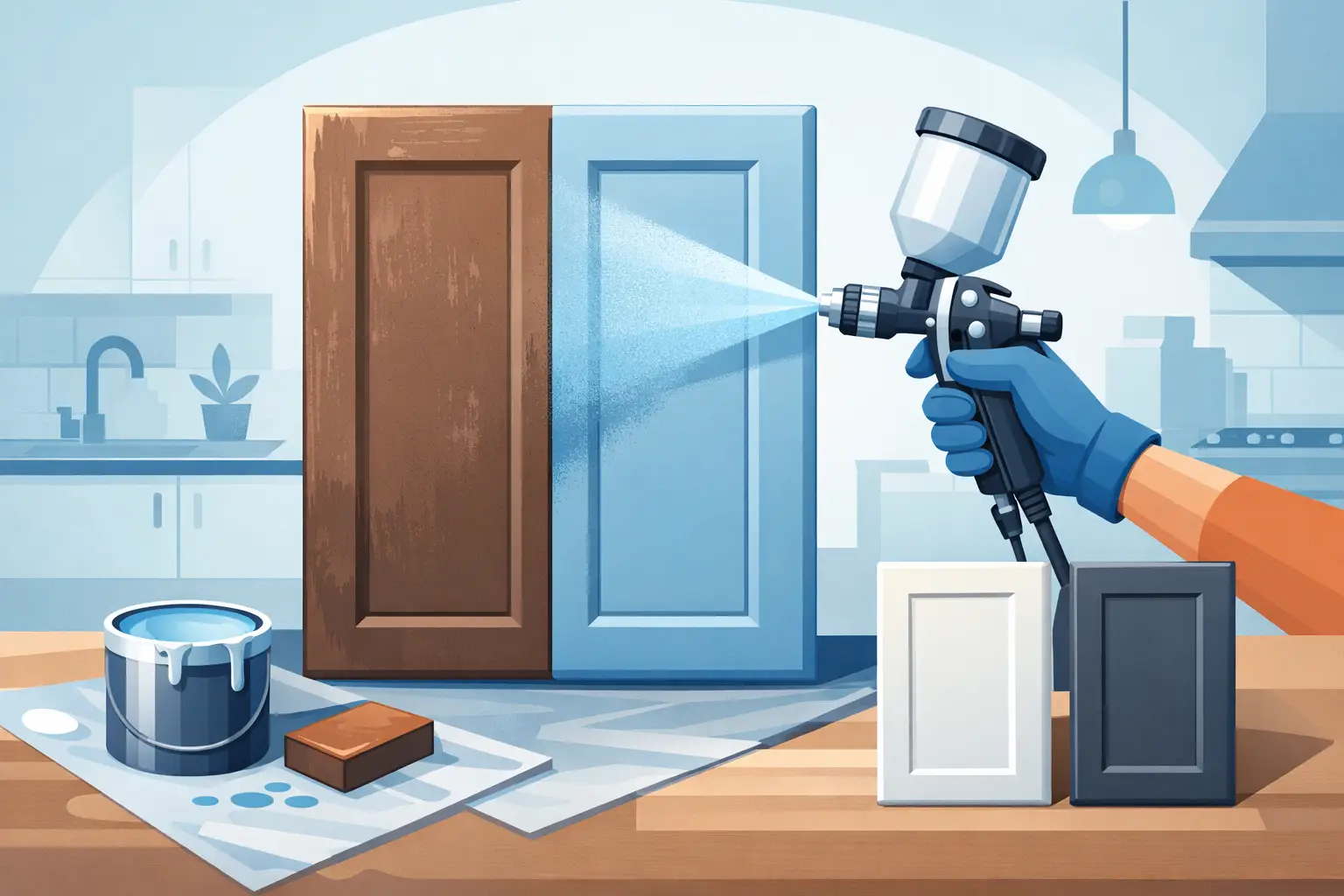
Why sprayed finishes are often the better choice
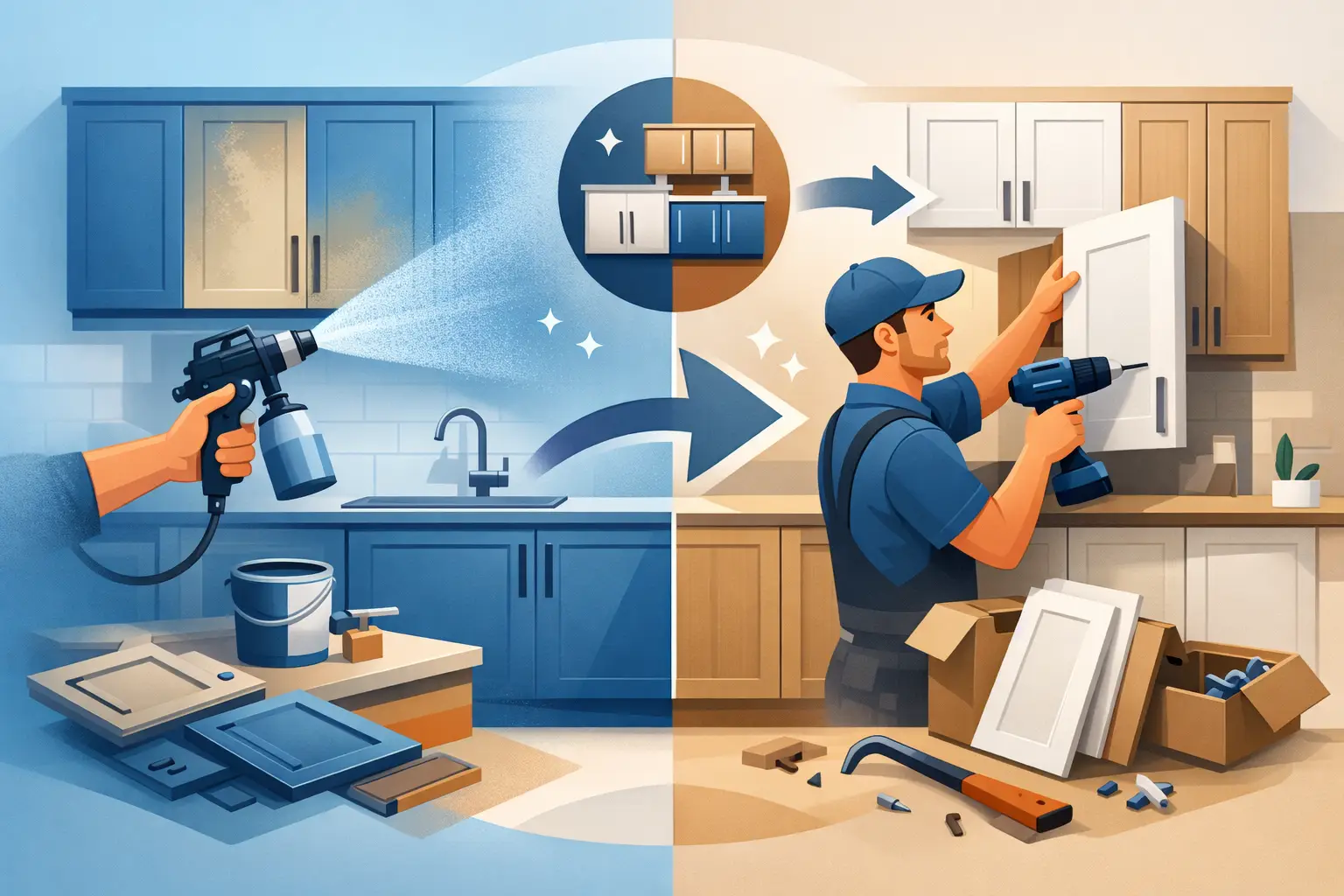
Spraying produces a finer, more even coating with fewer visible marks. It also helps the paint reach profiled details and edges more consistently. When paired with proper preparation and professional-grade coatings, the finish is closer to what you would expect from a new factory-painted door.
For homeowners upgrading an existing kitchen instead of replacing it, this matters. The room can look dramatically more expensive without the waste, disruption and cost of a full refit. That is one reason professional respraying has become such a trusted option for clients who want a stunning transformation with practical value.
Common mistakes when choosing cabinet paint
One of the biggest mistakes is choosing based on colour alone. Shade is important, but performance comes first. A beautiful cream or deep green will not stay looking smart if the coating chips around the handles after a few months.
Another common issue is underestimating curing time. Paint may feel dry to the touch quite quickly but still be vulnerable to dents, sticking and scratches for days or even weeks. In a busy family kitchen, that can be frustrating.
There is also the temptation to skip primer. On the wrong surface, that shortcut can cost far more in the long run. Cabinets need a system, not just a topcoat.
So, what is the best paint for kitchen cabinets in real terms?
If you are painting cabinets yourself, the best option is usually a high-quality specialist cabinet or trim paint with a suitable primer underneath and a satin finish on top. That gives a sensible balance of appearance, washability and durability.
If you want the best overall result, especially on a fitted kitchen that forms a major part of the home, a professional spray-applied joinery coating is often the stronger choice. It tends to look smoother, last longer and cope better with the daily wear that kitchen units face.
For homeowners in Dublin and surrounding areas who want to update their kitchen without the upheaval of replacement, this approach often makes the most sense. It is more affordable than a full renovation, more eco-friendly than ripping out perfectly usable cabinets, and far more refined than a rushed DIY repaint.
The right finish should not just look good on day one. It should still look clean, even and well cared for after countless breakfasts, busy evenings and one too many fingerprints on the pantry door. Choose paint with that standard in mind, and your kitchen will reward you for it.