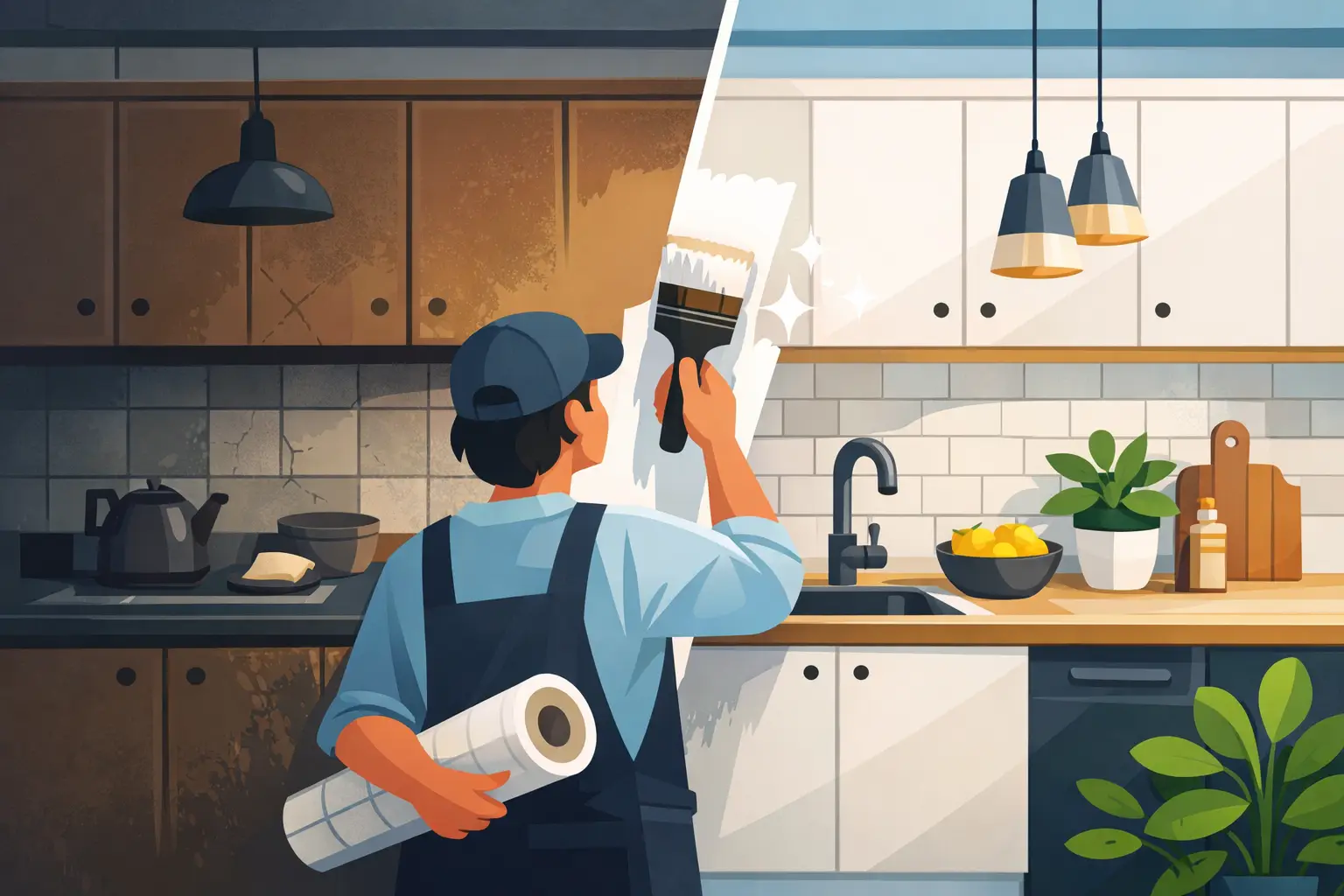
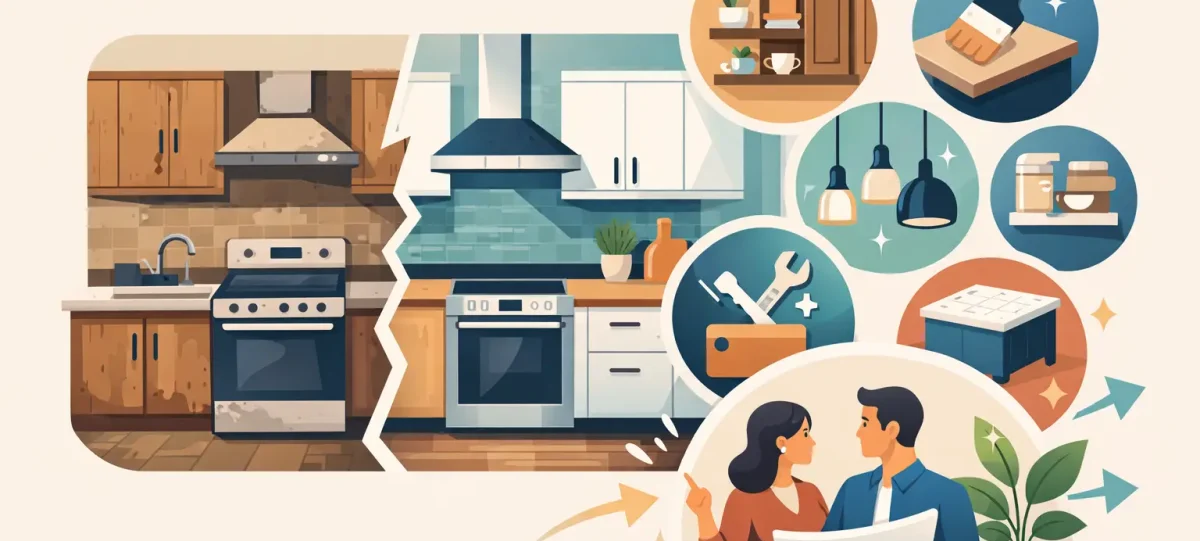
If your kitchen looks tired but the layout still works, a full refit may be more than you need. The best alternatives to kitchen replacement can refresh the room, improve day-to-day use and save a significant amount of money, all without turning your home upside down for weeks.
For many homeowners, the real issue is not that the kitchen has failed. It is that the doors look dated, the surfaces have lost their finish, or the whole space no longer suits the rest of the house. That is where targeted upgrades make far more sense than ripping everything out and starting again.
Why look for the best alternatives to kitchen replacement?
A complete kitchen renovation can be worthwhile when cabinets are structurally damaged, the layout is poor, or plumbing and electrics need major changes. But those cases are not as common as people think. In plenty of homes, the cabinets are solid, the storage is adequate and the kitchen simply needs a new look.
Replacing a kitchen comes with obvious cost, but the hidden disruption is often just as frustrating. There is dust, noise, trades moving in and out, limited access to cooking facilities and a project timeline that can stretch longer than expected. If you want a stunning result without that level of upheaval, alternatives are well worth considering.
There is also the environmental side. Keeping well-built units and improving what you already own reduces waste and avoids sending usable materials to landfill. For homeowners who care about value and sustainability, that matters.
1. Cabinet respraying
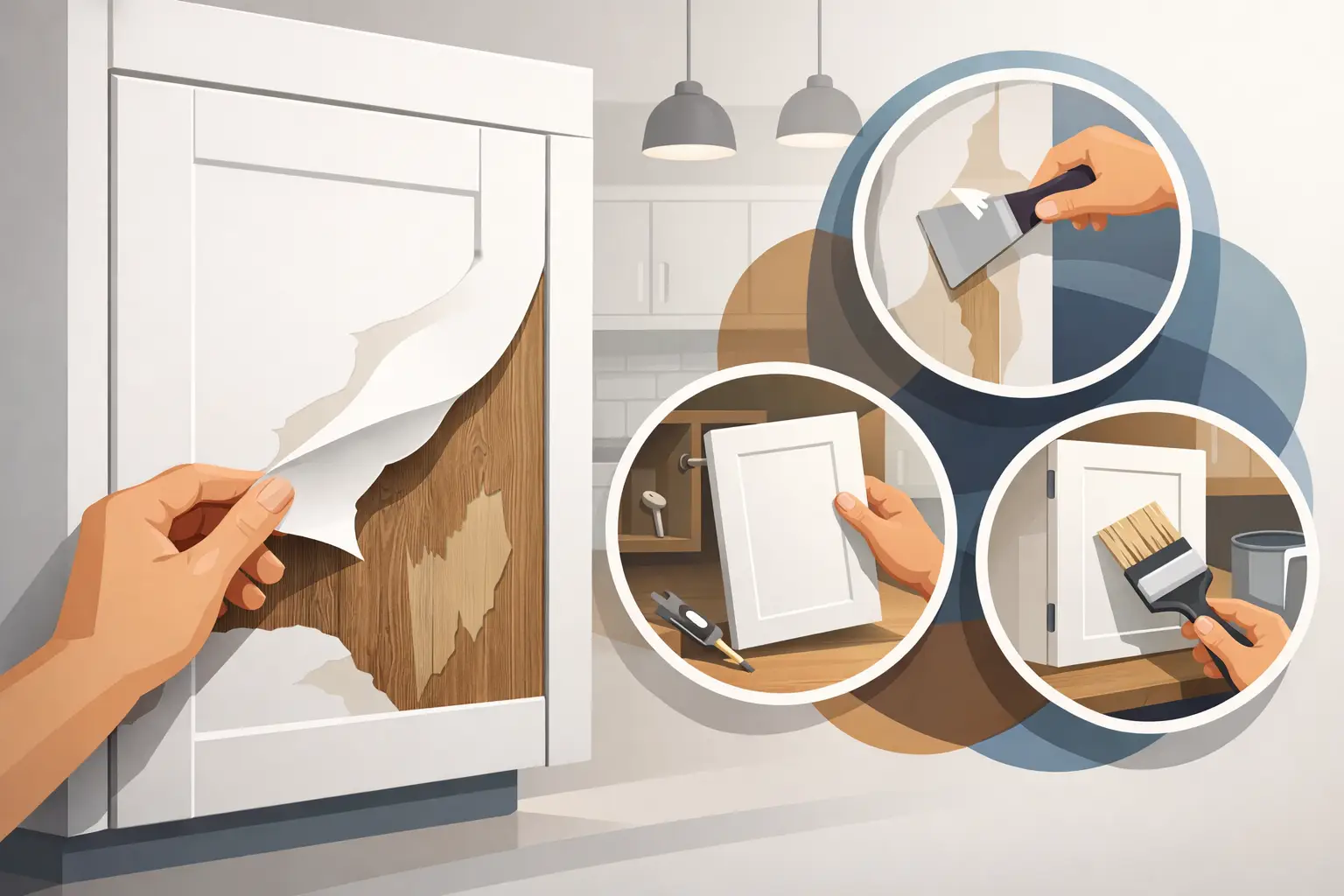
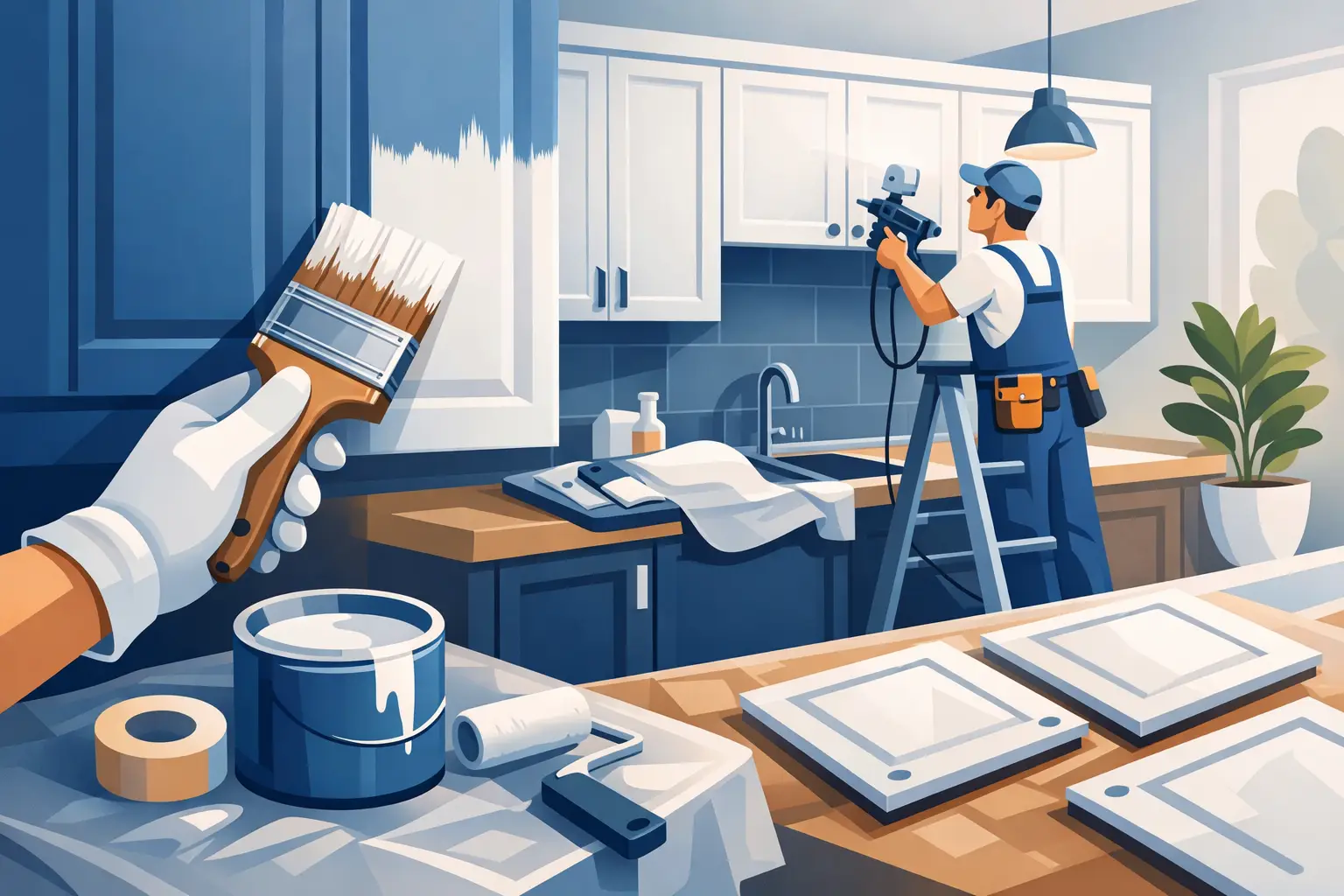
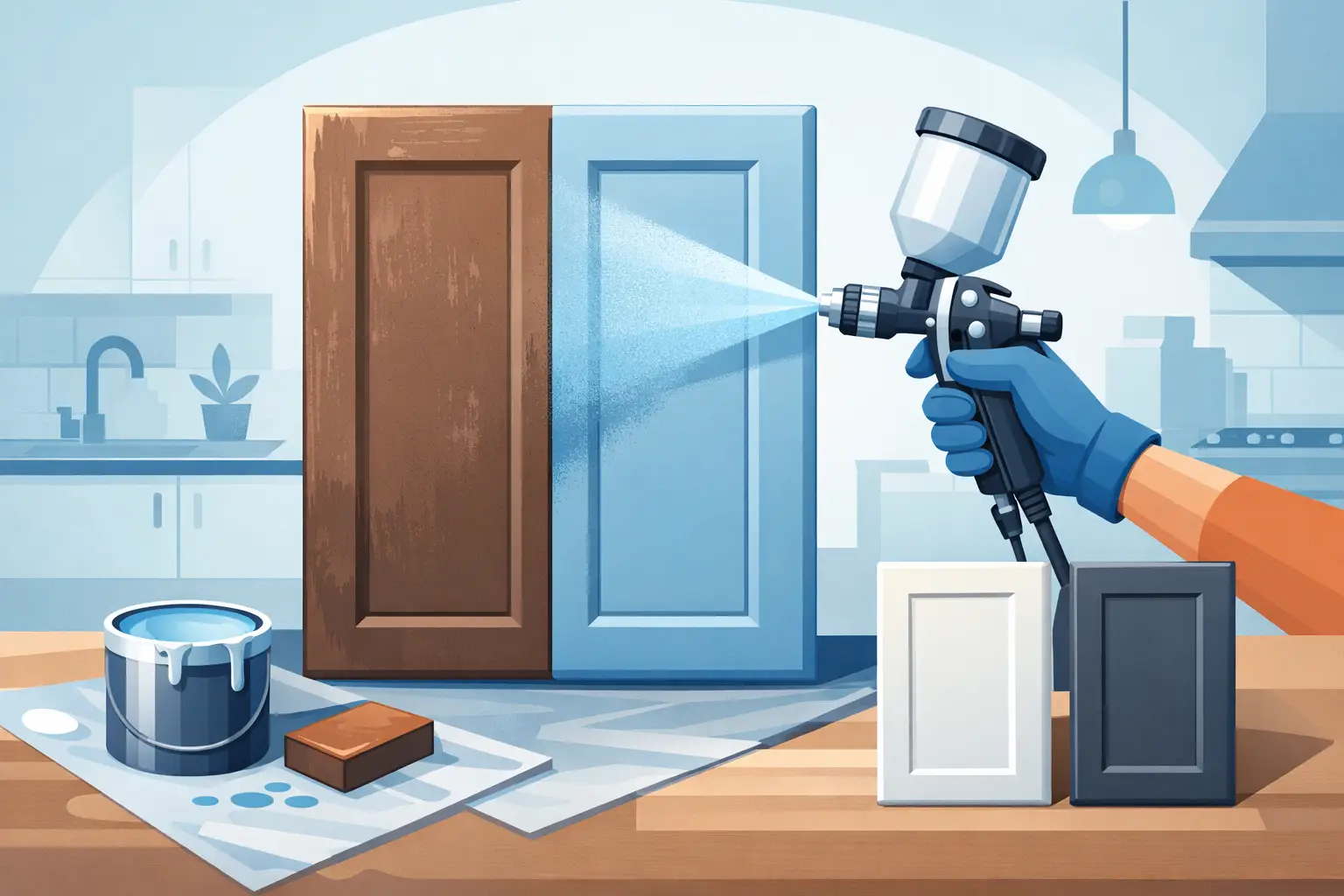
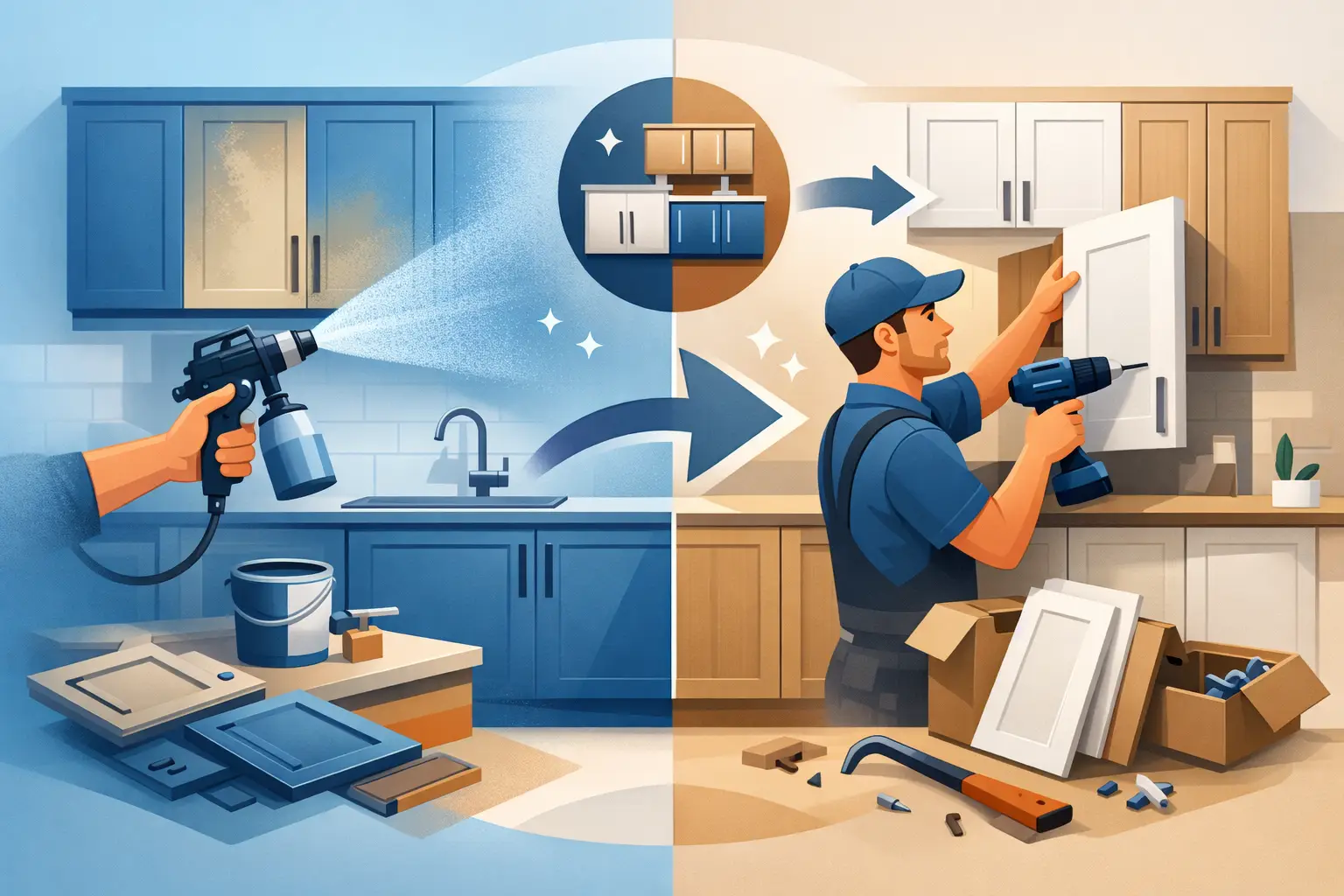
Cabinet respraying is often the strongest option when the bones of the kitchen are good. Instead of replacing doors and carcasses, the existing surfaces are professionally prepared, primed and spray-finished in a new colour. The result is a smooth, factory-style finish that can completely change the feel of the room.
This works particularly well if your cabinets are sturdy but the finish is dated, yellowed or marked through years of use. A darker timber effect can become a clean modern neutral. Gloss doors can be updated to a more contemporary matt look. Even a simple shift from cream to soft white or warm greige can make the entire space feel brighter and more current.
The main advantage is value. You retain the kitchen you already have, avoid the cost of demolition and achieve a dramatic visual transformation at a fraction of the price of replacement. Turnaround is usually much quicker too, which matters if you are managing family life or working from home.
That said, respraying is only as good as the preparation and materials behind it. A rushed job can chip or wear poorly. A professional finish should be hard-wearing, consistent and suited to kitchen conditions, where moisture, grease and frequent cleaning are part of daily life.
2. Replacing kitchen doors and drawer fronts
If the cabinet frames are in good condition but the doors are beyond saving, replacing just the fronts can be a sensible middle ground. This gives you a fresh style and colour while keeping the main structure in place.
It can be a good solution when you want a design change rather than simply a finish change. For example, flat slab doors can be swapped for a shaker profile, or old routed styles can be updated with a simpler, cleaner look. New handles or handleless options can sharpen the effect.
The trade-off is cost. Door replacement is generally dearer than respraying because you are buying new components. It can still be far more affordable than a full kitchen replacement, but it is not always the cheapest route. It also depends on whether your cabinet sizes are standard or more awkward to match.
3. Spray granite for worktops and hard surfaces
Worktops often age faster than cabinets. Burns, chips, staining and dated patterns can make an otherwise decent kitchen feel past its best. Replacing worktops can be effective, but it also creates added labour and can disturb splashbacks, sinks and appliances.
A spray granite finish offers another way forward. This specialised coating is designed to transform existing worktops and other hard surfaces, creating the look of stone without the cost and disruption of fitting brand-new materials. It can also be used on splashbacks, tiles and even other areas of the home where durable decorative finishes are needed.
For homeowners who want a premium appearance on a practical budget, this is one of the most appealing alternatives. The visual improvement is immediate, and the savings compared with stone replacement can be considerable. As with any surface upgrade, the condition of the substrate matters. If a worktop is swollen, unstable or structurally failing, coating over it will not solve the underlying issue.
4. Updating handles, hinges and small details
Not every kitchen needs a major intervention. Sometimes the space feels dated because of the details rather than the cabinetry itself. Worn chrome handles, tarnished knobs and tired soft-close mechanisms can quietly age the whole room.
Changing handles can alter the style surprisingly quickly. Slim black pulls create a more contemporary look, brushed brass can add warmth, and simple stainless steel often suits a clean, practical design. Replacing old hinges or adjusting misaligned doors also improves how the kitchen feels to use.
On its own, this may not be enough if colours and surfaces are still dragging the room down. But paired with respraying or new worktops, it helps create a finished, intentional result rather than a half-updated one.
5. Retiling or refinishing splashbacks
Splashbacks can date a kitchen faster than almost anything else. Busy patterns, old-fashioned colours or damaged grout lines pull attention in the wrong direction. Yet because they cover a relatively small area, they are often one of the easiest features to change.
New tiles can refresh the room, but refinishing existing tiles can be even more efficient when the goal is speed and minimal disruption. A simpler, cleaner splashback usually helps the whole kitchen feel calmer and more expensive. If your cabinets and worktops are being updated too, this can tie everything together beautifully.
It is worth thinking about balance here. If every surface is changed at once, the kitchen can start creeping towards full renovation costs. The best results usually come from improving the features that have the biggest visual impact, rather than replacing everything for the sake of it.
6. Better lighting and a smarter paint scheme
Poor lighting can make a perfectly decent kitchen look flat, yellow or gloomy. Before assuming the room itself needs replacing, look at how it is lit. Under-cabinet lighting, better ceiling fittings and warmer, more flattering bulbs can transform both the look and function of the space.
Wall colour matters too. Kitchens often feel older because surrounding walls, woodwork and ceilings have not been refreshed in years. A professional repaint in the right tone can make existing cabinets and surfaces appear newer straight away. This is especially effective if the current scheme is too dark, too cold or fighting against the cabinetry.
Lighting and paint will not disguise major wear and tear, but they are excellent supporting upgrades. When done alongside cabinet respraying or surface refinishing, they help the whole room feel coherent.
7. Improving storage instead of replacing units
Sometimes the frustration with a kitchen is about usability rather than looks. Deep cupboards become black holes, corner units are awkward, and drawers do not make the best use of space. In those situations, replacing the entire kitchen may be excessive.
Adding pull-out organisers, internal drawer systems or better shelving can make the existing kitchen work much harder. This is particularly useful in family homes where the layout itself is fine, but daily life would be easier with more practical storage.
It will not deliver the visual impact of a respray or new worktop finish, but it can be the smartest investment if function is the main issue. Often the strongest approach is combining practical improvements with cosmetic ones.
How to choose the right alternative
The best alternatives to kitchen replacement depend on what is actually wrong with your current kitchen. If the cabinets are solid and you dislike the appearance, respraying is usually the standout option. If the fronts are damaged beyond repair, door replacement may be more suitable. If the worktops are the weak point, a spray granite finish can make the biggest difference.
It also comes down to budget, timescale and how long you plan to stay in the property. If you want a trusted, affordable upgrade before enjoying the home for years to come, quality refinishing gives excellent value. If you are preparing to sell, the aim may be to create a cleaner, more modern impression without overspending.
A professional assessment helps because it separates what needs replacing from what simply needs expert attention. That is often where homeowners save the most money – not by choosing the cheapest option, but by choosing the right one.
A kitchen does not have to be brand new to feel stunning, practical and well cared for. Sometimes the smartest move is not starting again, but making much better use of what is already there.