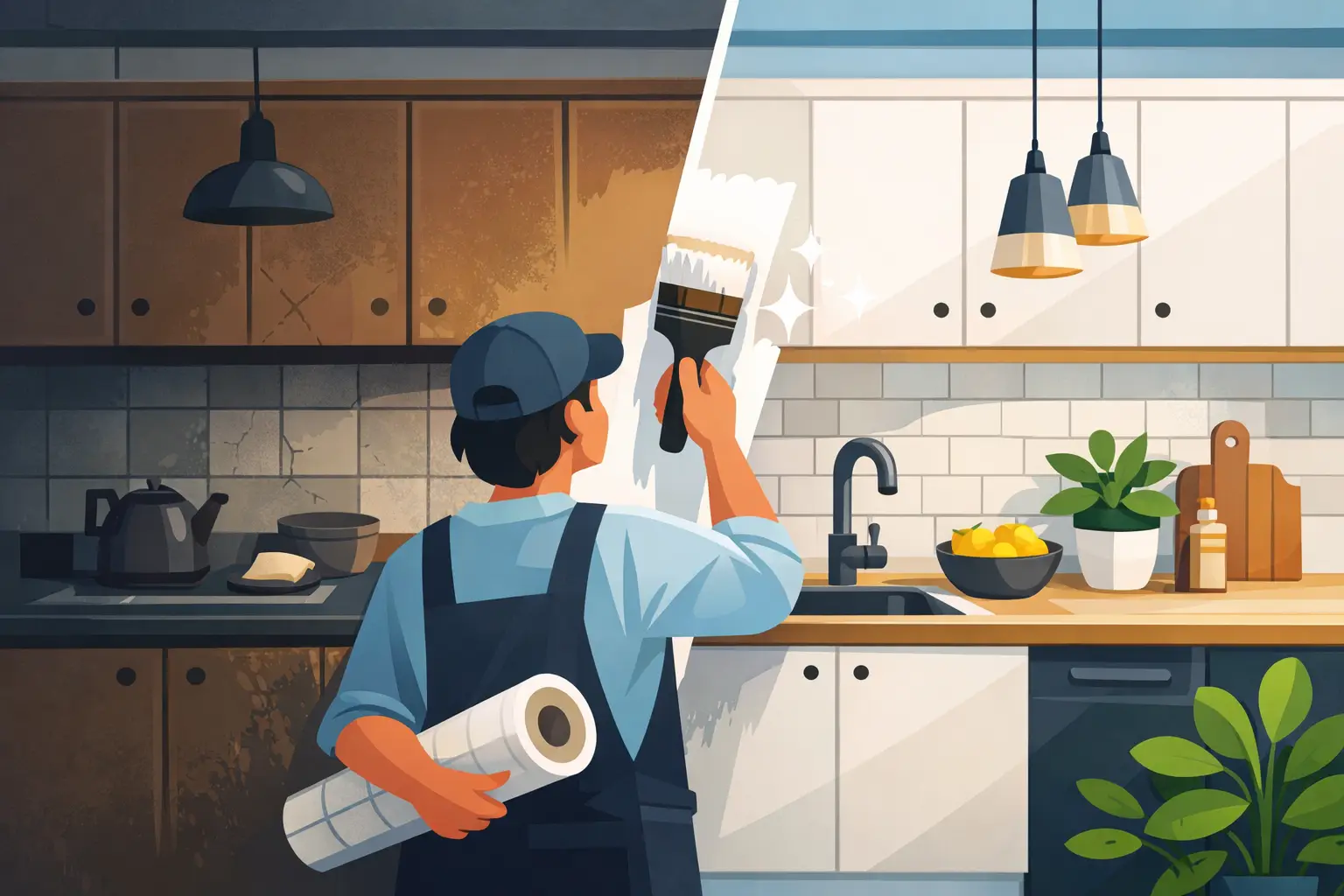

A small kitchen can feel dated faster than a large one. When every cabinet door, end panel and plinth sits close together, tired colours, chipped edges and worn finishes are far more obvious. That is exactly why a small kitchen respray before after transformation can be so striking. The footprint stays the same, but the room feels cleaner, brighter and far more considered.
For many homeowners, the appeal is simple. You keep the kitchen layout that already works, avoid the upheaval of a full rip-out, and still achieve a finish that looks dramatically refreshed. In smaller homes, terraces, semis and compact modern properties alike, that balance of value and visual impact matters.
Why small kitchens change so dramatically after respraying
In a large kitchen, the eye moves across multiple zones. In a smaller kitchen, every surface carries more visual weight. That means cabinet colour, sheen level and surface condition have an outsized effect on the whole room.
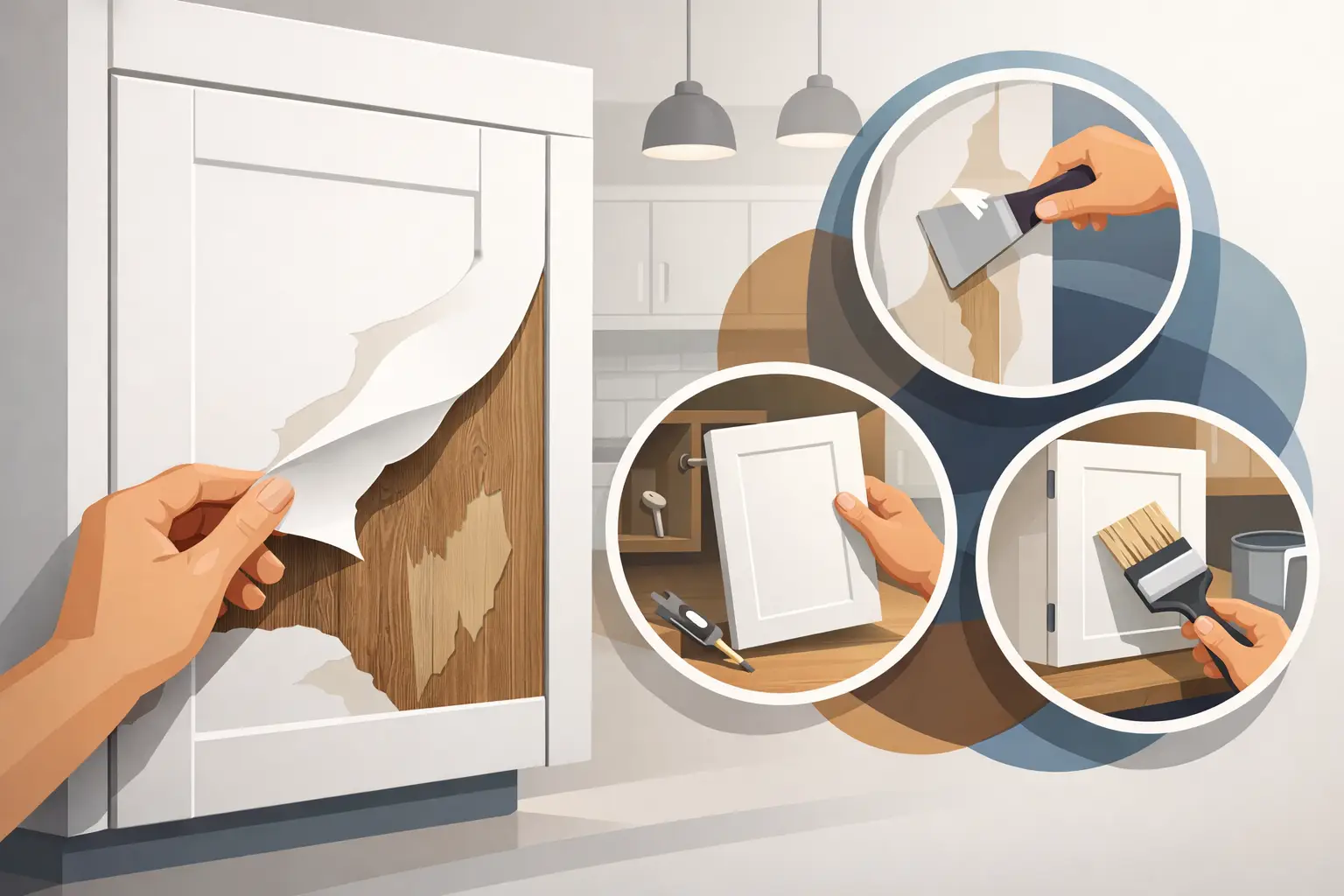
Before respraying, a small kitchen often suffers from one of three common issues. The first is heaviness – darker timber tones or yellowing cream doors can make the room feel closed in. The second is inconsistency – replacement doors, sun fading or patch repairs leave the finish looking uneven. The third is simple wear – scuffs around handles, peeling edges and greasy build-up that no amount of cleaning truly fixes.
After a professional respray, those same cabinets can reflect light properly, create visual continuity and sharpen the overall look of the space. Even without moving a single unit, the kitchen usually feels larger because the finish is fresh, uniform and suited to the room.
Small kitchen respray before after – what really changes?
The biggest change is not just colour. It is how the whole kitchen reads at a glance.
A before-and-after project in a small kitchen typically improves brightness first. Lighter shades such as soft white, warm greige, pale sage or muted stone tend to bounce more natural and artificial light around the room. That can make narrow galley kitchens or compact U-shaped layouts feel less cramped.
The second change is visual neatness. Older doors often carry years of tiny dents, scratches and areas of dullness. Once properly prepared and professionally sprayed, the finish becomes smoother and more consistent. That gives cabinetry a factory-finish look which is difficult to achieve with brush painting.
The third change is style. Many small kitchens are perfectly functional but stuck in the look of another decade. A respray updates the appearance without disturbing worktops, appliances or tiling if those elements are still in good condition. For homeowners who want a more modern space without paying for a full renovation, this is often the difference that makes the kitchen feel current again.
What the “before” usually looks like
In practical terms, most small kitchen respray projects start with cabinets that are structurally sound but cosmetically tired. The doors still open and close properly. The carcasses are solid. The layout works for everyday life. The issue is that the kitchen no longer feels like a room you enjoy spending time in.
Gloss finishes can date quickly if the tone has fallen out of favour. Matt finishes can look flat when they become marked. Timber-effect doors may make a compact room feel darker than it needs to be. In many cases, handles, hinges and internals are still worth keeping, but the visible surfaces let the whole kitchen down.
That is the ideal point for respraying. If the cabinets themselves are in good order, replacing them can be unnecessary spend. A professional respray focuses the budget where it shows most.
What the “after” should look like
A strong small kitchen respray before after result should never look like a shortcut. It should look intentional.
The best finished projects have an even, durable coating with clean coverage on doors, drawer fronts, panels and detailed edges. The colour suits the available light. The sheen level feels right for the style of the home. Most importantly, the kitchen still looks like it belongs in the property – just a much smarter version of itself.
There is also a practical side to a good result. In a smaller kitchen, cabinets are handled constantly because everything is within reach. That makes finish quality especially important. Proper preparation and professional spraying help ensure the new surface stands up well to regular use, cleaning and day-to-day wear.
Choosing colours for a better before-and-after result
Colour choice has a huge impact in compact kitchens, but brighter does not always mean better. It depends on the room, the light and the surrounding finishes.
If the kitchen receives little natural light, softer off-whites and warm neutrals often work better than stark brilliant white, which can feel cold. If the room already has plenty of light, deeper tones such as navy, forest green or charcoal may still work beautifully, especially when balanced with lighter walls or worktops.
For many homeowners, the most successful route sits in the middle. Taupe, mushroom, cashmere, sage and warm grey tend to update the space without chasing a short-lived trend. They also pair well with existing tiles, flooring and work surfaces, which matters when you are not replacing the entire kitchen.
This is where expert advice makes a difference. A colour that looks lovely on a sample card can behave very differently across a full run of units in a small room. The goal is not simply to pick a fashionable shade. It is to choose a finish that improves the whole space.
Why respraying often makes more sense than replacing
A full kitchen renovation has its place, especially if units are damaged, storage is poor or the layout no longer works. But many small kitchens do not need that level of intervention.
If the cabinet structure is sound, respraying is often the more sensible option. It is more affordable, far less disruptive and considerably faster than a complete refit. There is no need to strip the room back unnecessarily when the issue is mainly visual. For busy households, that reduced disruption is a major advantage.
There is also the environmental benefit. Keeping existing cabinetry out of landfill and extending the life of usable materials is a more eco-friendly approach. For homeowners who want a home improvement that feels responsible as well as cost-effective, that matters.
The process behind a professional finish
Great before-and-after results come from preparation, not luck. That is where the difference lies between a finish that looks impressive for a few weeks and one that continues to perform well.
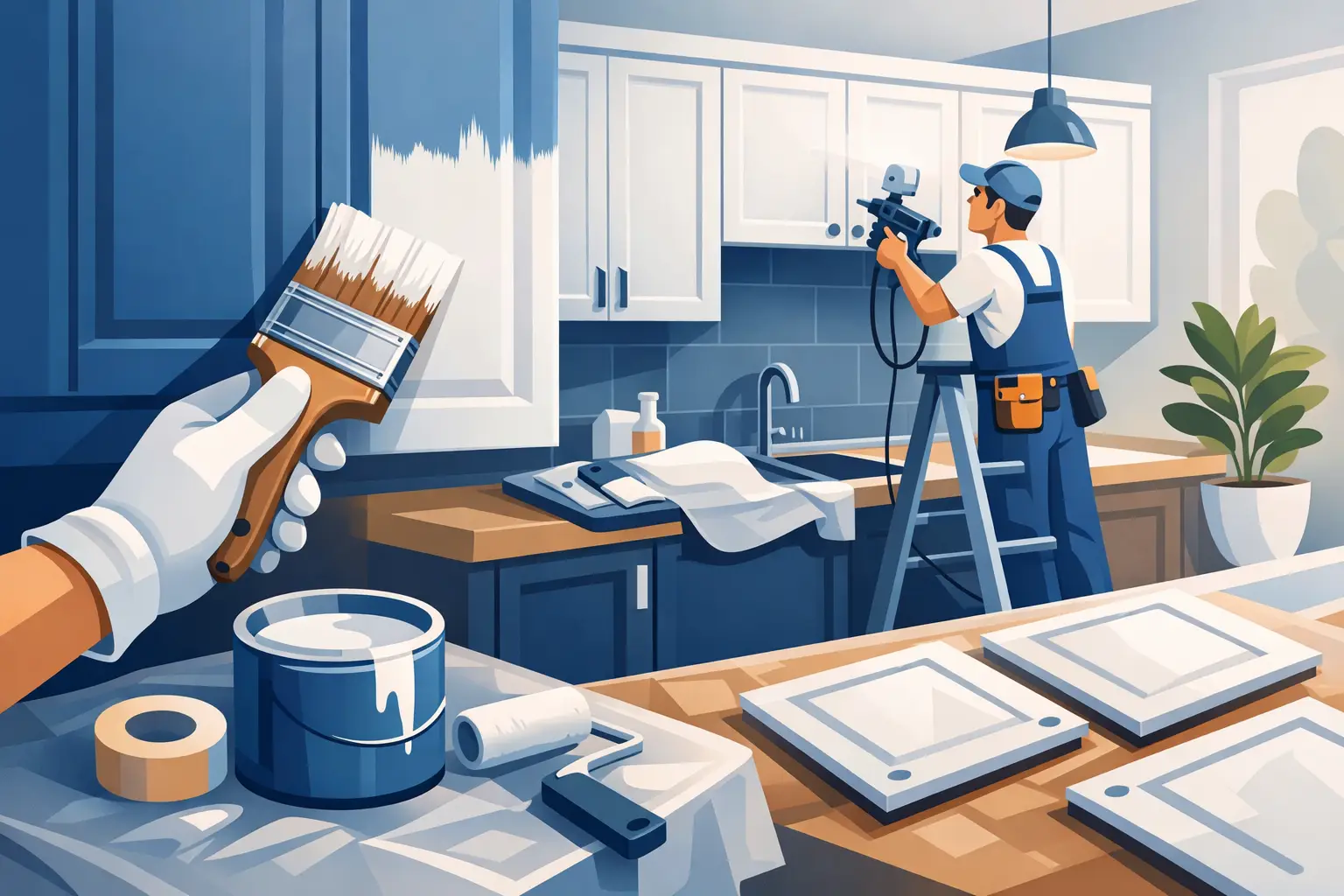
A professional kitchen respray involves careful cleaning, degreasing, sanding, repair work where needed, and proper priming before the topcoat is applied. Doors and drawers are treated with close attention to detail, and fixed elements are masked thoroughly to protect the rest of the room.
Spraying creates a smoother and more refined finish than most on-site brush or roller methods. On smaller kitchens in particular, that smoothness is immediately noticeable because the viewer is always close to the cabinetry. Every edge, groove and panel line matters.
Is every small kitchen suitable for respraying?
Not always, and it is better to be honest about that.
If cabinet doors are swollen from water damage, if the foil wrap is failing badly, or if the underlying boards are structurally compromised, replacement may be the better option for some parts of the kitchen. Likewise, if the homeowner wants a completely different layout, new storage solutions or major building work, respraying alone will not solve those issues.
But where the kitchen is basically sound, a respray can deliver excellent value. In homes across Dublin and surrounding areas, that is often the sweet spot – a kitchen that works perfectly well but looks far older than it should.
What homeowners tend to notice most afterwards
The comments after a completed project are often surprisingly similar. People say the kitchen feels bigger, lighter and cleaner. They say it no longer looks tired. They notice that the room feels more in keeping with the rest of the home.
That reaction is not just about aesthetics. Small kitchens play hard-working roles in daily life. When the room looks fresh and properly finished, it changes how enjoyable it is to use. Morning coffee, school lunches, evening cooking – the routines stay the same, but the space around them feels lifted.
For homeowners considering a change, that is the real value of a small kitchen respray before after project. It is not about pretending the kitchen is brand new. It is about making the most of what is already there and turning a compact, worn room into one that feels stylish, durable and well cared for.
If your kitchen layout still suits your life but the finish no longer suits your home, respraying is often the smartest next step – practical, affordable and capable of a genuinely stunning result.