A spray granite worktop can make a tired kitchen look newly fitted, but day-to-day habits decide how long that fresh finish lasts. If you are wondering how to maintain spray granite worktops without fuss, the good news is that the routine is straightforward. The key is gentle cleaning, sensible heat protection, and dealing with spills before they sit for too long.
For many homeowners, the appeal of spray granite is obvious. You get the look of a solid stone-style finish without the cost, upheaval, and waste of replacing perfectly sound worktops. It is an affordable and eco-friendly way to transform a kitchen, but like any quality finish, it responds best to the right aftercare.
How to maintain spray granite worktops day to day
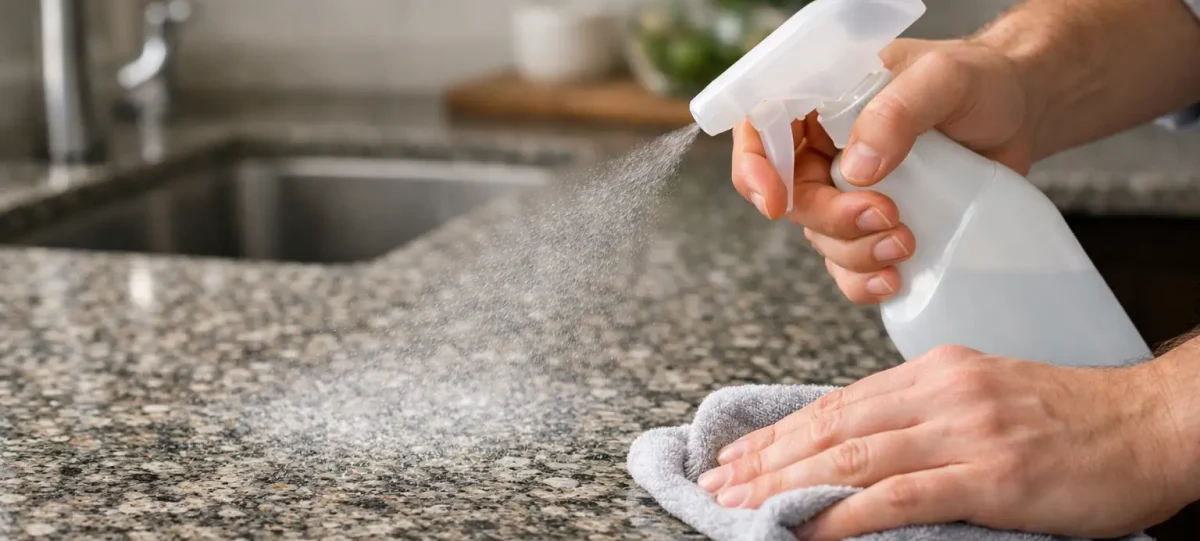
Daily maintenance should feel easy, not like another household chore. In most kitchens, a soft microfibre cloth, warm water, and a mild washing-up liquid are enough to remove crumbs, grease, and everyday marks. Wipe the surface, then go over it again with a clean damp cloth to remove any residue, and finish by drying with a soft towel.
That last step matters more than many people realise. Leaving water to air dry can sometimes cause dull patches or streaking, especially in hard water areas. A quick buff keeps the finish looking cleaner and more even.
It is worth avoiding the temptation to use strong multi-purpose sprays for every job. Products with harsh solvents, bleach, abrasive particles, or high acidity can gradually wear the protective topcoat. A surface can still look fine at first, then start losing its even sheen over time. Gentle products used consistently will usually give better long-term results than aggressive cleaners used occasionally.
The cleaners and tools to use – and avoid
Spray granite is designed to be durable, but durable does not mean indestructible. The safest approach is to treat it as a premium decorative finish rather than a surface that can take anything.
Soft cloths, microfibre cloths, and non-scratch sponges are ideal. They lift grease without scraping the coating. Mild soap solutions work well for routine wiping, and for heavier kitchen residue, a cleaner specifically described as suitable for coated or delicate hard surfaces is usually the better choice.
What should be kept away from the worktop is just as important. Scourers, wire pads, cream abrasives, and stiff brushes can all mark the finish. Strong degreasers may seem useful near the hob, but repeated use can damage the surface protection. The same goes for neat bleach, oven cleaner, limescale remover, and undiluted disinfectants unless the product is clearly safe for this type of finish.
If you are trying a new product, test it first on a small, less visible area. That simple habit can prevent a larger problem.
Heat, moisture and everyday kitchen use
One of the most common mistakes with any refinished or coated worktop is assuming it can handle direct heat in the same way as a thick slab of natural stone. It depends on the system used and the condition of the surface, but as a rule, hot pans, roasting trays, and heated appliances should never be placed directly on spray granite.
Use trivets, heat mats, or pan stands every time. It is a small step that protects the finish from heat stress, discolouration, or blistering. Kettles, air fryers, and slow cookers also deserve a bit of thought. If they release steam regularly in one spot, the surrounding area can be exposed to ongoing moisture and heat. Giving these appliances some breathing space helps preserve the coating.
Moisture itself is usually not a problem when surfaces are cleaned and dried normally, but standing water should not be left around sinks, taps, or joins for long periods. Wipe away pooled water and keep an eye on any edges or seams. Good maintenance is often less about dramatic damage and more about preventing slow wear in the busiest parts of the kitchen.
Dealing with spills before they stain
Most spills are not an emergency, but they should not be ignored. Tea, coffee, red wine, curry sauce, cooking oils, tomato-based foods, and strongly coloured liquids all have the potential to leave marks if left to sit. The safest response is to blot and wipe as soon as possible rather than scrubbing after the fact.
For greasy spills, warm water with a little mild detergent will usually do the job. For coloured food splashes, wipe first with a damp cloth, then clean the area again gently to make sure no residue remains. If a mark lingers, avoid attacking it with something abrasive. A gentler repeat clean is far better than wearing the finish down in one go.
It is also sensible to use chopping boards for food preparation, especially with ingredients that contain strong pigments or acids. Lemon juice, vinegar, beetroot, turmeric, and similar kitchen staples can all be harder on decorative finishes than people expect.
How to maintain spray granite worktops without causing wear
Good maintenance is really about reducing friction, impact, and chemical stress. That means using boards for chopping, lifting heavy cookware rather than dragging it, and avoiding the habit of sliding ceramic dishes, small appliances, or metal containers across the surface.
Even small repeated actions can create visible wear in the same area over time. Around the sink, near the kettle, and beside the hob, worktops tend to take the most punishment. If you notice these zones becoming duller, the answer is usually not stronger cleaning. More often, it is a sign that the area needs gentler treatment and better protection in daily use.
There is also a balance to strike between cleanliness and over-cleaning. Wiping down after meals and cooking is sensible. Heavy chemical cleaning several times a day is not. A professional finish lasts longest when it is cared for consistently rather than constantly scrubbed.
What to do about minor marks and dull patches
Now and then, homeowners notice a slight scuff, a faint stain, or a patch that no longer looks as even as the rest of the top. The right response depends on what caused it.
If the issue is residue build-up, a careful clean with a mild surface-safe product may restore the appearance. If it is a light surface mark, rubbing too hard can make it worse. And if the finish has genuinely been scratched, etched, or heat-marked, home remedies can be risky. Internet advice often suggests bicarbonate of soda pastes, magic erasers, or solvent-based products, but these can do more harm than good on specialist sprayed finishes.
This is where professional advice is worth having. A trusted specialist can tell the difference between a removable mark and actual coating damage. In some cases, a localised repair may be possible. In others, touching it up poorly can make the area more obvious.
When professional aftercare makes sense
Most spray granite worktops do not need constant professional attention, but there are times when expert help is the smart option. If you see peeling, deeper scratches, chips, bubbling, or persistent staining that does not respond to gentle cleaning, it is best not to experiment.
A professional assessment can save money in the long run, particularly if the problem is still small. For homeowners in Dublin and the surrounding counties, using an experienced company such as Dublin Kitchen Respray can also give reassurance that any repair advice matches the original type of finish and expected wear.
That matters because not all worktop coatings are identical. The right care routine can vary slightly depending on the exact products, preparation, and topcoat used during installation. A tailored answer is always better than a generic one.
A simple routine that keeps the finish looking stunning
In practical terms, the best routine is this: wipe daily with a soft cloth and mild soap, dry the surface after cleaning, clean up spills promptly, use chopping boards, and never place hot items directly on the worktop. Add a little extra care around sinks and high-use cooking areas, and you will avoid most common problems.
Spray granite is popular for good reason. It gives homeowners a professional, affordable way to refresh their kitchen without the cost and disruption of full replacement. Treated properly, it keeps that smart stone-look finish for years and continues to justify the decision to respray rather than rip out and start again.
A worktop does not need complicated care to stay impressive. Usually, it just needs the sort of steady, sensible attention that fits naturally into everyday kitchen life.