A worktop usually tells the truth about a kitchen. Cabinet doors can still look respectable, the floor may be freshly cleaned, but a dull surface with scratches, burns and worn patches gives the whole room a tired feel. If you are wondering how to restore worn worktops, the right answer depends on what they are made from, how badly they are damaged and whether you want a quick cosmetic improvement or a long-lasting finish.
In many homes, the problem is not that the worktop has reached the end of its life. It is that years of use have left it looking older than the rest of the kitchen. That distinction matters, because restoration can often give you a stunning result at a far more affordable cost than full replacement.
How to restore worn worktops without wasting money
The first step is resisting the temptation to treat every worktop the same. Laminate, solid wood, quartz, granite and composite surfaces all wear differently, and each one responds to different repair methods. What works beautifully on timber can ruin laminate, and a heavy-duty sanding job that seems sensible in theory can make a surface worse in practice.
Start by looking closely at the damage in natural light. Faded areas, light scratches and loss of shine are usually surface-level issues. Deep chips, swollen edges, burns, lifted joints or water damage around the sink are more serious. If the substrate underneath has failed, no amount of polish will deliver a professional result for long.
A trusted approach is to divide the condition into three levels. Cosmetic wear can often be cleaned and revived. Moderate damage may need filling, sanding or refinishing. Severe wear usually calls for a specialist restoration service or replacement, depending on the material and age of the worktop.
Identify the material before you do anything else
Laminate worktops
Laminate is common because it is practical and cost-effective, but it does have limits. If the top layer is scratched or faded, you can improve its appearance with careful cleaning and minor repair products designed for laminate. If it has bubbled, lifted or taken on water around seams, restoration becomes more difficult. Once moisture gets beneath the surface, the underlying board often swells and that damage rarely disappears.
Solid wood worktops
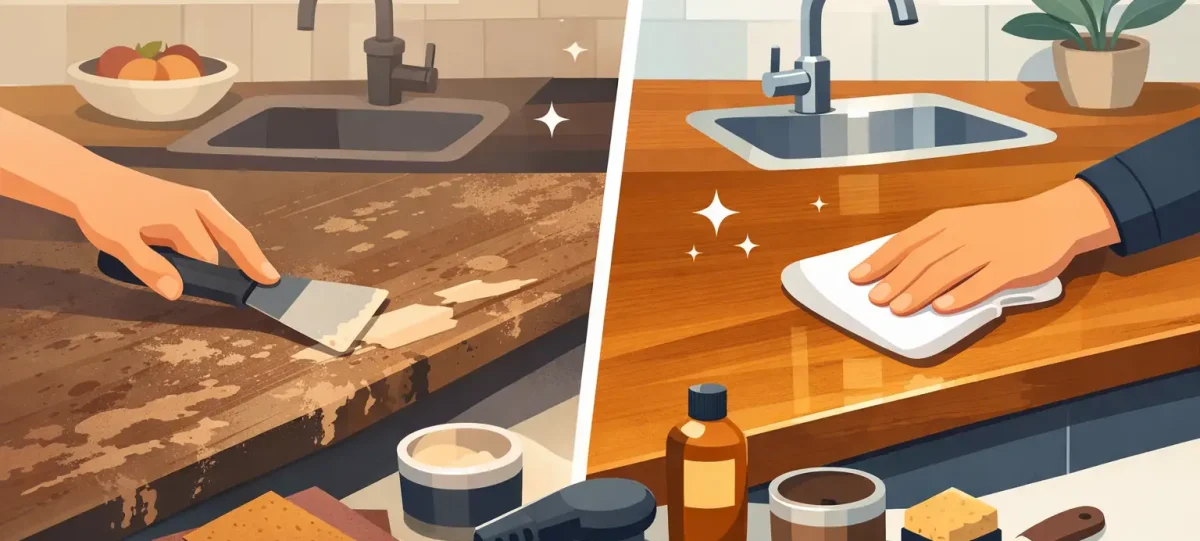
Wood is the most restorable of the lot. Scratches, stains, faded finish and minor burns can often be sanded back and re-oiled or resealed. The trade-off is that timber needs proper aftercare. If you restore it beautifully and then leave water sitting around the sink, the worn look returns faster than most people expect.
Stone and composite worktops
Quartz, granite and similar surfaces can often be improved, but not always with a simple DIY kit. Etching, dullness and fine scratches may be treatable. Cracks, chips and resin damage usually need professional attention. Stone tends to punish guesswork, especially when the wrong cleaner or abrasive pad has already taken the shine off.
Start with a proper deep clean
Before deciding a surface is beyond saving, clean it thoroughly. Grease, old polish, limescale and ingrained dirt can make a worktop look more worn than it really is. Use a non-abrasive cleaner suited to the material, and pay particular attention to corners, sink edges and the area around the hob.
Avoid harsh scourers and bleach-heavy products unless the manufacturer specifically recommends them. On many surfaces, the damage people describe as wear is partly the result of cleaning with products that are too aggressive. A professional-looking finish always starts with gentle, methodical preparation.
Once the surface is clean and dry, reassess it. If the colour is still patchy, the shine is gone and scratches remain obvious, you will know you are looking at actual wear rather than surface grime.
Repair what can be repaired
Small chips and scratches can often be improved with repair compounds, wax fillers or colour-matched kits, particularly on laminate and stone-effect finishes. These are best for isolated marks rather than widespread deterioration. Done carefully, they can make damage far less noticeable. Done badly, they can draw attention to it.
With wood, the process is more forgiving. Light sanding can remove shallow scratches and heat marks, and deeper imperfections can sometimes be filled before the entire top is refinished. The key is consistency. Spot-sanding one patch too heavily often leaves a visible dip or colour variation.
Burn marks are a mixed case. On wood, there is often some scope for sanding back, unless the burn is deep. On laminate, a burn usually means the decorative layer is permanently damaged. That is when homeowners often start comparing piecemeal fixes with a full surface transformation.
How to restore worn worktops with refinishing
Refinishing is where real visual improvement happens, but only if the chosen method suits the surface.
Re-oiling or resealing wood
Solid wood worktops respond well to sanding followed by fresh oil or sealant. This can restore colour, enrich the grain and give the surface a cared-for, high-end appearance. It is one of the most effective restoration routes because you are not just masking wear, you are renewing the finish itself.
That said, good preparation matters. Sanding must be even, dust must be removed properly and the new finish needs enough curing time. Rush the job and the result can feel sticky, uneven or prone to marks.
Specialist coating or respraying for tired surfaces
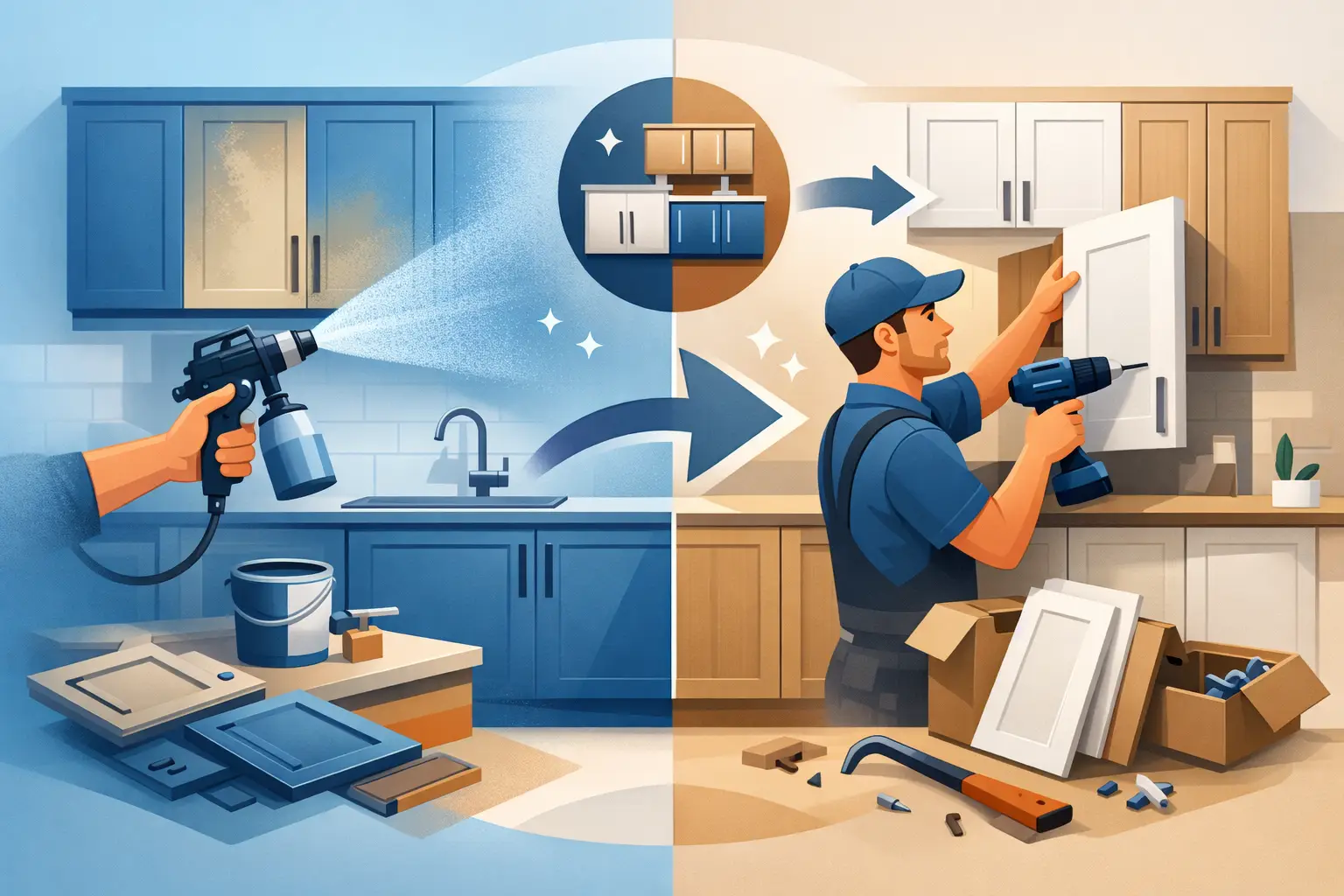
For laminate or heavily dated worktops that are structurally sound but visibly worn, a specialist coating system can be a very smart option. This is particularly relevant when the goal is to change both the condition and the appearance without ripping out the kitchen.
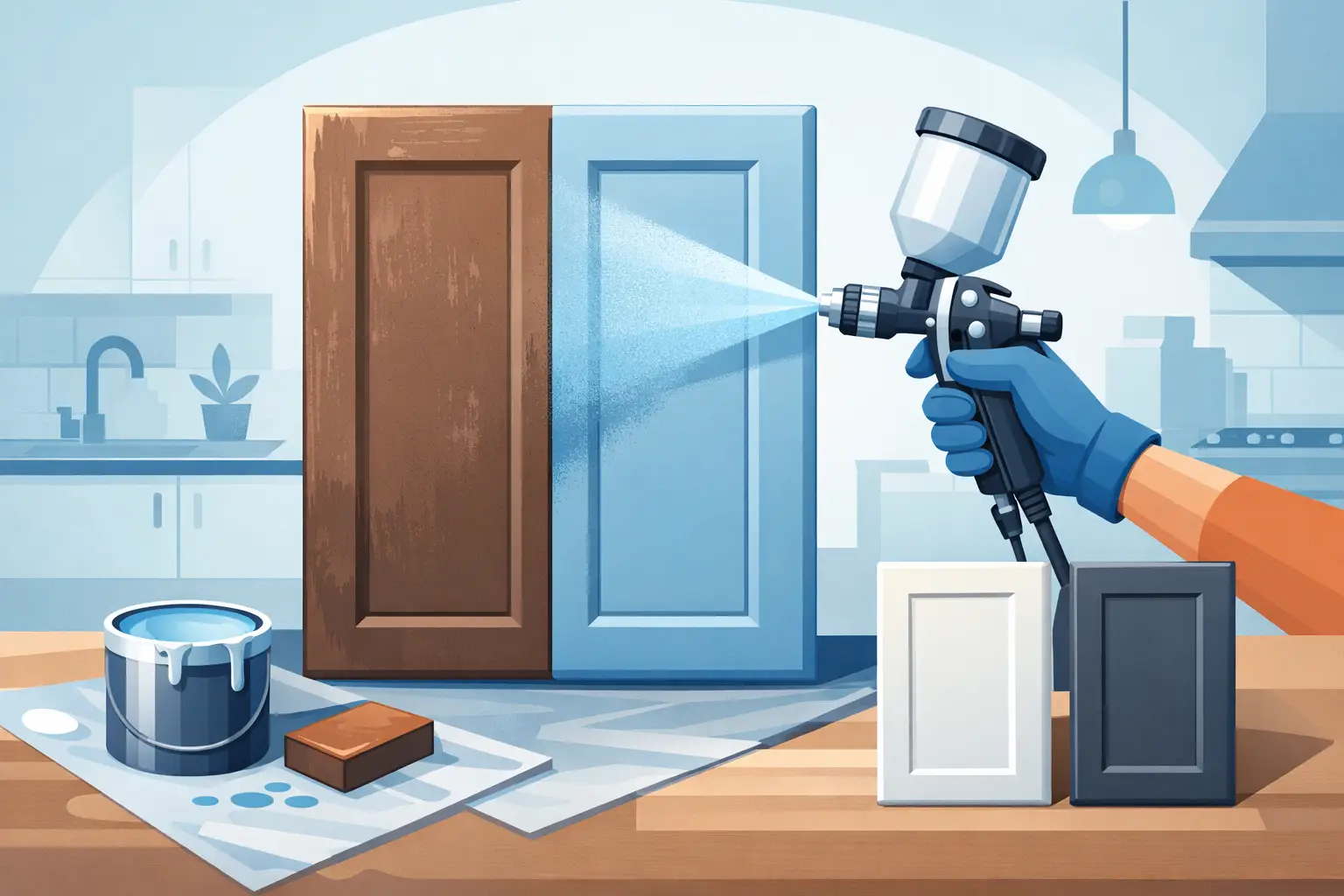
A professional spray granite finish, for example, can restore the look of worn worktops while giving them a fresh, modern stone-style appearance. For homeowners who want a durable, affordable upgrade with less disruption, this route often makes more sense than living with patch repairs or paying for a full replacement. It is also a more eco-friendly choice, because the existing worktop remains in place rather than going straight to waste.
When DIY makes sense and when it does not
There is nothing wrong with a sensible DIY fix if the damage is minor and you are confident with the material. Cleaning, re-oiling timber and touching up very small marks can be worthwhile weekend jobs. The danger comes when a worktop needs a finish that has to look even across the whole kitchen.
That is where many home repairs fall short. Brush marks, mismatched filler, uneven sheen and visible repair lines tend to stand out more on broad horizontal surfaces. Worktops get strong light, daily use and close inspection, so imperfections are harder to hide than they are on a skirting board or spare shelf.
Professional restoration is usually the better investment if the kitchen is otherwise in good condition and you want the finished result to look intentional rather than improved-but-still-tired.
Signs your worktop needs more than a basic repair
If the worktop is soft around the sink, badly swollen at the edges, cracked through, or separating at joints, restoration options become narrower. In those cases, surface treatment alone will not solve the underlying issue. You may still be able to refurbish parts of the kitchen cost-effectively, but the worktop itself may need a more substantial solution.
There is also the style question. Sometimes a worktop is technically repairable but still dates the room. Heavy speckled laminate from an older kitchen, for instance, may not suit updated cabinets or a newly resprayed finish. Restoring condition is one thing. Restoring the overall look of the kitchen is another.
The cost question homeowners always ask
Replacing worktops can be expensive, and the bill rarely stops at the material itself. There may be plumbing disconnection, tiling touch-ups, waste removal and the general disruption that comes with invasive work. That is why restoration appeals to so many homeowners across Dublin and surrounding areas who want a professional transformation without turning the kitchen upside down.
The best option depends on the age of the surface, the extent of wear and the look you want at the end. A simple timber refresh may be enough. A specialist sprayed finish may offer better value if the whole surface is tired. Full replacement is usually the last step, not the first.
A better way to think about worn worktops
Instead of asking whether a worktop can be made perfect again, ask whether it can be made attractive, durable and right for the rest of your kitchen. In many cases, that is a far more realistic and cost-effective goal. A professional restoration does not need to pretend the kitchen is brand new. It needs to make the space feel cared for, current and ready for years more daily use.
If your worktops are worn but the kitchen itself still works well, that is often the sweet spot for restoration. With the right method, you can keep what is sound, improve what is tired and avoid replacing far more than necessary.