That moment you realise your kitchen still works perfectly… but looks tired, scuffed, and a bit dated. Most homeowners around Dublin, Wicklow, Kildare, Meath and Louth don’t want weeks of upheaval (or a skip outside the house) just to get a space that feels fresh again. The good news is that “new kitchen” impact often comes down to surfaces: what you touch, see, and clean every day.
Below are kitchen surface transformation ideas that focus on changing the look and performance of what you already have—cabinet doors, worktops, splashbacks and the small details that pull it all together. Some options are DIY-friendly; others are best handled by professionals if you want a flawless, durable finish.
Start with the surfaces you live with daily
Kitchen surfaces fall into two camps: high-contact (doors, drawers, handles, worktops) and high-visibility (splashbacks, end panels, plinths). If your budget is tight or you want the fastest turnaround, prioritise the high-contact items first. A worktop and door refresh can make the entire room feel upgraded, even if your carcasses and layout stay exactly the same.
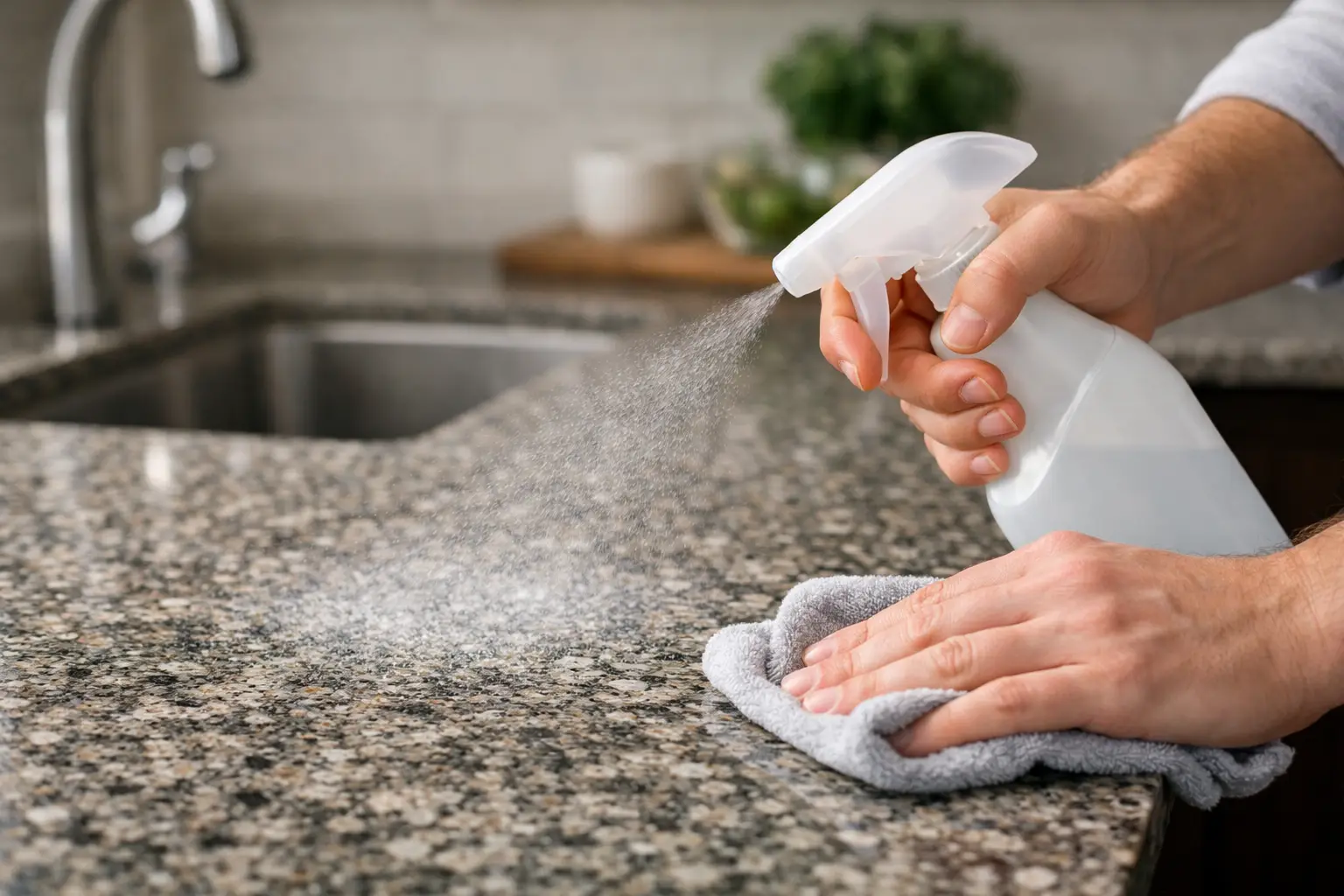
There’s also a practical angle. Fresh finishes can be easier to wipe, more resistant to staining, and less prone to showing fingerprints—worth considering if the kitchen is a genuine family hub.
Cabinet doors: the fastest way to change the whole kitchen
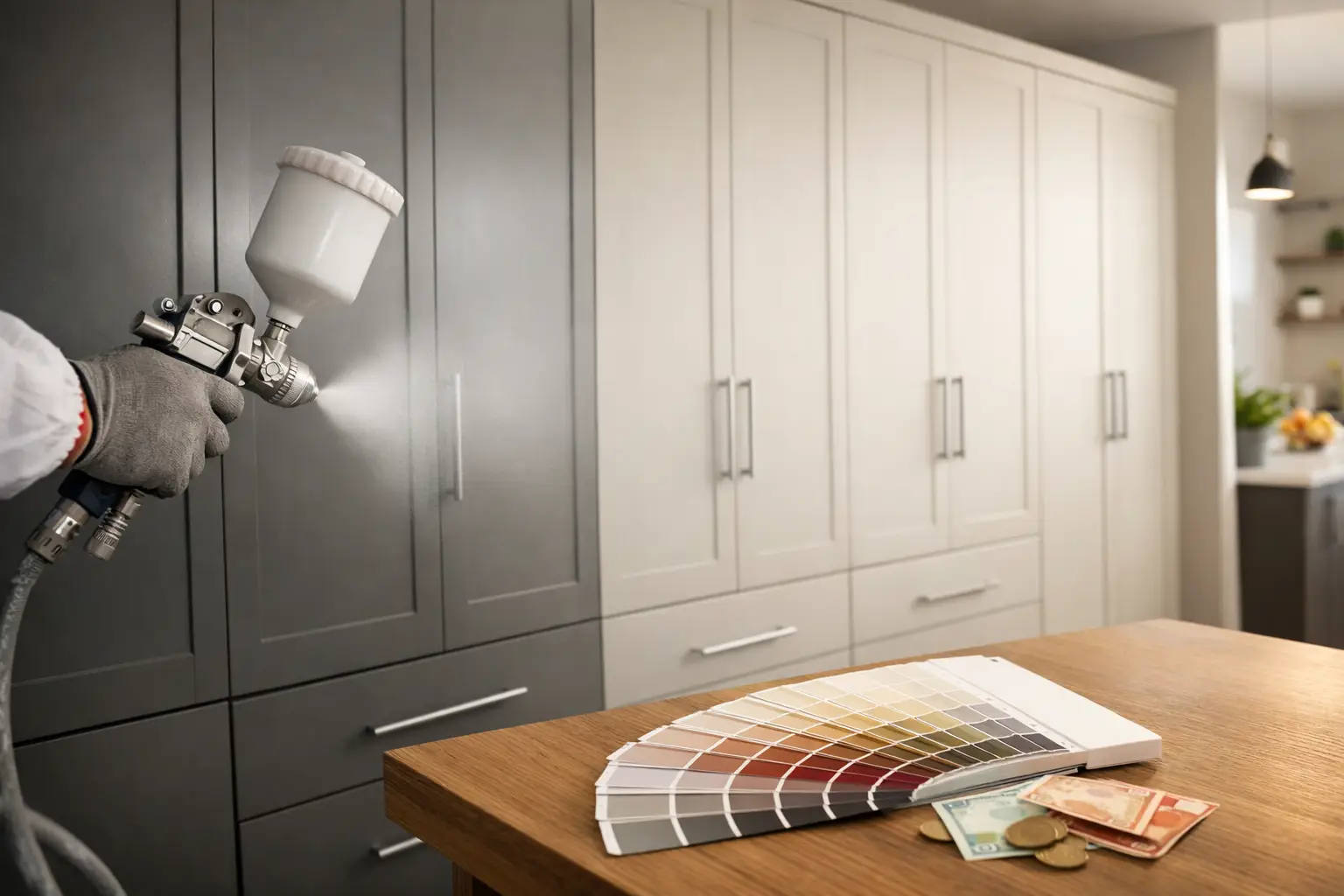
If your cabinets are structurally sound but visually dated, respraying is one of the most effective transformations available. It avoids the cost and waste of replacement, and it’s ideal for modernising older kitchens that have solid frames but tired finishes.
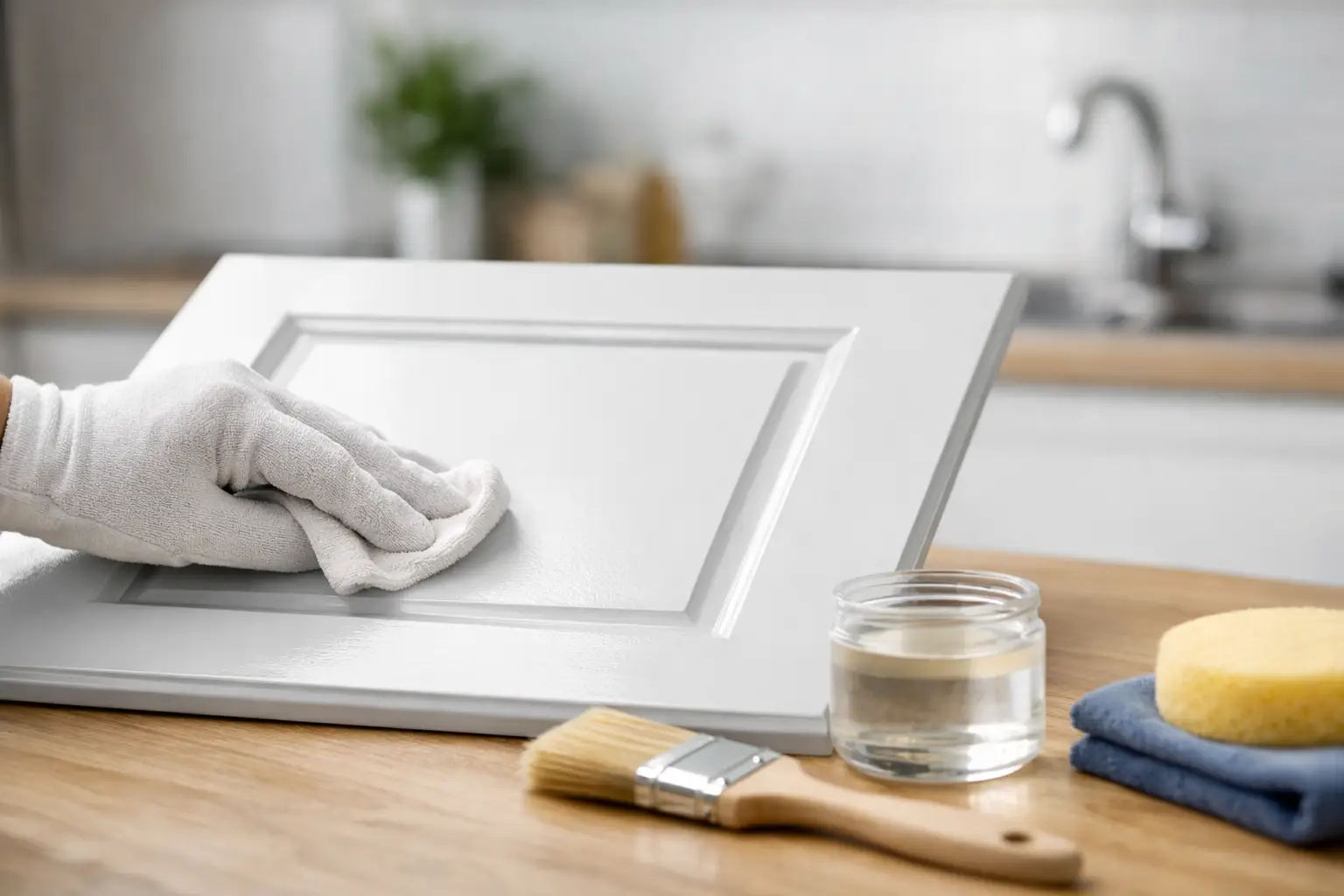
A professional respray typically involves proper degreasing, sanding or keying, priming, and then spraying durable coatings in controlled conditions. The result is a consistent finish across flat doors, shaker profiles, trims and panels—something brushes and rollers often struggle to match.
Colour choice is where the “it depends” comes in. Deep tones (charcoal, forest green, inky blue) can look stunning and premium, but they’ll show dust and chips sooner in very busy homes. Soft neutrals (warm whites, greiges, muted stone) are forgiving and help smaller kitchens feel more open. If you love colour but want practicality, consider colour on base units and a lighter tone up top.
Don’t forget end panels, plinths and fillers
A common mistake is refreshing doors but leaving end panels or plinths untouched. Your eye reads those areas as part of the cabinetry, so any mismatch can make a new finish feel less “complete”. If you’re investing in a transformation, treat cabinetry as a full system, not just the doors.
Worktops: change the feel, not the layout
Worktops take the most punishment—hot mugs, sharp knives, spilled tea, and constant wiping. When they start to look worn, the kitchen feels older than it is.
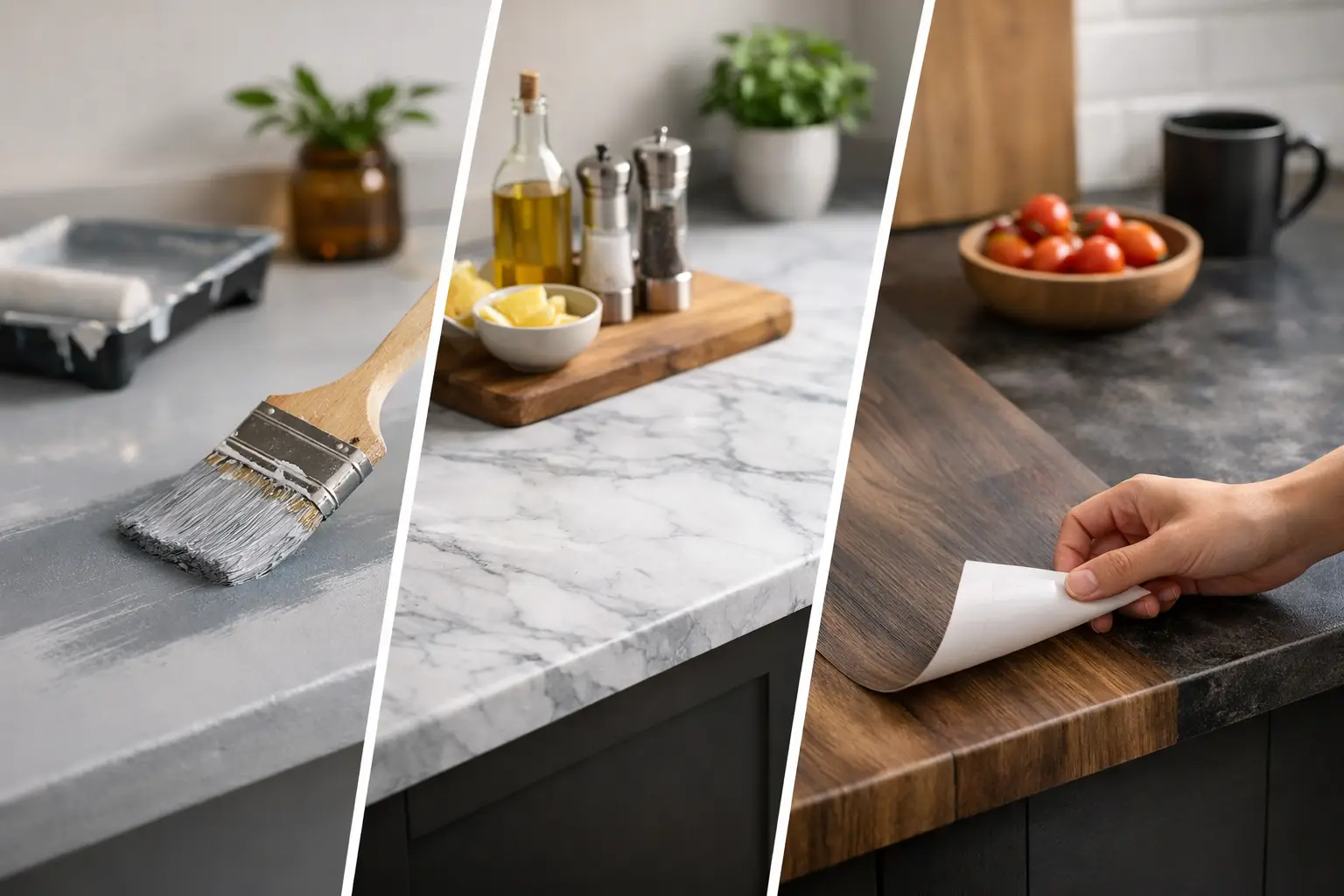
Replacement is one route, but it’s disruptive and can trigger extra costs (plumbing, tiling, sink changes). If your current top is structurally fine, a surface upgrade can deliver a big visual jump with far less hassle.
Spray granite: the stone look without the demolition
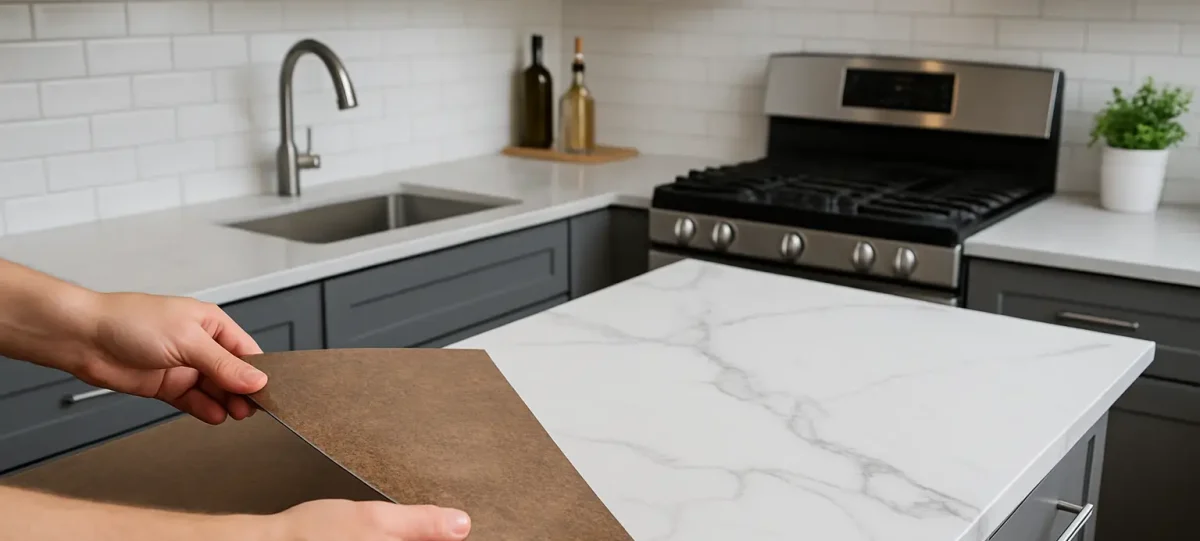
If you want the look of granite or quartz but don’t want to lift out existing tops, spray granite is worth considering. Done properly, it creates a textured, stone-like finish with a protective topcoat designed for kitchen life.
This option suits homeowners who want a premium look on a sensible budget, especially when paired with newly resprayed cabinets. It’s also a practical choice when you’d rather avoid the waste of ripping out usable materials.
Trade-offs matter here: if your worktop has swelling chipboard, deep water damage, or movement at joints, a coating won’t solve that underlying issue. In those cases, repair or replacement may be the wiser investment.
Splashbacks: the “small area, big impact” surface
Splashbacks are visual by nature—you notice them the moment you walk into the room. They’re also a brilliant place to add personality without committing to bold cabinets.
Large-format panels in a clean, modern finish can make a kitchen feel calmer and easier to maintain than busy grout lines. If you love the character of tile, consider larger tiles with a slim grout line to keep cleaning manageable.
If your splashback sits behind the hob, make sure any material you choose is heat-appropriate. Some decorative panels look fantastic but aren’t suited to direct heat zones, so always match the surface to the reality of cooking.
Hardware: a low-cost surface change that reads as “designer”
Handles are small but powerful. Swapping them changes the style language instantly—traditional to modern, plain to premium.
Brushed brass can add warmth to neutral kitchens, but it does show fingerprints more than you’d expect in a busy household. Satin nickel and brushed stainless are practical, timeless choices. Matt black looks sharp, though it can show greasy marks if you’re constantly grabbing handles mid-cook.
If you’re changing handles, measure carefully. Matching existing hole centres can save you from filling and re-drilling, which is particularly important on shaker doors where placement is more noticeable.
Sinks and taps: the “touchpoints” that make a kitchen feel new
A tired tap can make a freshly painted kitchen still feel a bit old. Upgrading the tap and sink is one of those satisfying changes you’ll appreciate every day.
Choose based on how you use the kitchen. A pull-out spray tap is brilliant for rinsing and cleaning the sink itself, but it’s only as good as the water pressure and the quality of the mechanism. Composite sinks hide scratches better than polished stainless, while stainless is hard-wearing and suits almost any style.
It’s worth checking your existing cut-out before you fall in love with a new sink. Some swaps are straightforward; others require worktop cutting, which may affect whether a surface coating is suitable.
Floor and kickspace coordination: keep the eye moving
You don’t always need to replace flooring to improve the overall look, but you do need a plan. If your floor has a strong pattern, calm surfaces elsewhere will feel more balanced. If the floor is plain, you can afford a bolder cabinet colour or splashback.
Plinths (kickboards) are often overlooked, yet they sit right in your line of sight. Updating them to match the new cabinet finish can stop the kitchen looking “part old, part new”.
Lighting makes surfaces look better (or worse)
Surface transformations live or die by lighting. Under-cabinet lighting shows off worktops and makes prep areas genuinely more usable. Warm white lighting tends to flatter most paint colours and wood tones; very cool lighting can make whites look harsh and greys feel flat.
If you’re respraying cabinets or upgrading a worktop, consider replacing outdated bulbs or fittings at the same time. It’s one of the cheapest ways to make your new surfaces look their best.
The “one change too far” problem: balance matters
With any makeover, there’s a tipping point where too many finishes compete. A practical rule is to keep to two main surface statements and let everything else support them.
For example, if you choose a dramatic cabinet colour, keep worktops simpler and choose a quiet splashback. If you go for a bold stone-effect worktop, allow the cabinetry to be more restrained so the kitchen doesn’t feel busy.
DIY vs professional: where to be honest with yourself
Some surface changes are satisfying weekend jobs: swapping handles, changing a tap, replacing a light fitting (with an electrician where needed). Others are less forgiving.
Painting kitchen doors by hand can work in low-traffic spaces, but kitchens are hard on paint: steam, grease, constant wiping and knocks. A sprayed finish is generally smoother and more durable, especially on detailed profiles.
Likewise, worktop upgrades that involve coatings or stone-effect finishes need proper preparation and curing time. Rushing the process is where peeling, chipping and uneven texture tend to show.
If you want a professional, affordable, eco-friendly transformation without replacing a functioning kitchen, Dublin Kitchen Respray specialises in cabinet respraying and spray granite worktops—ideal when you want big visual change with minimal disruption.
A realistic way to plan your transformation
If you’re deciding where to spend, start by standing in the doorway and asking what your eye hits first. Usually it’s cabinet doors and worktops. Then think about what annoys you daily: sticky drawers, hard-to-clean grout, a tap that splashes everywhere. Prioritising surfaces that bother you in real life is how you end up with a kitchen that feels better, not just looks better.
Choose materials and finishes that suit how you cook, how often you clean, and who uses the space. The best transformations aren’t the most dramatic; they’re the ones that still look stunning on a wet Tuesday evening when dinner’s on and the kitchen is doing its job.