You can usually tell when a kitchen cabinet respray review is written five minutes after the fitters leave. It is all excitement and fresh paint smell – but it tells you very little about what you actually want to know: will the finish still look sharp after six months of cooking, cleaning, fingerprints, and the odd knock from a saucepan?
If you are weighing up a respray in Dublin or the surrounding counties, customer feedback is one of the quickest ways to separate a professional job from a “looks grand for now” job. The trick is knowing which comments are meaningful, which are just feel-good, and which questions reviews often fail to answer.
What customer reviews really reveal about a respray
A kitchen cabinet respray is a craft process with variables: existing cabinet condition, door profile, previous coatings, humidity, ventilation, colour choice, and how much prep is needed to create a durable bond. Most homeowners only see the before-and-after. Reviews, when you read them properly, give you a window into everything in between.
The most useful reviews talk about specifics: how the team protected floors and worktops, whether they removed doors and hardware, how consistent the colour looks in different light, and what the finish feels like to the touch. Vague praise like “great job” is pleasant, but it does not help you compare one service to another.
Just as importantly, reviews reveal expectations. Some customers want a showroom-perfect finish on twenty-year-old doors with deep damage. A trusted professional will explain what can and cannot be achieved without replacing or repairing parts first. When you see reviews that mention honest advice, that is often a stronger sign of quality than any photo.
Reading customer reviews kitchen cabinet respray like a pro
When people search for customer reviews kitchen cabinet respray services, they are often trying to answer one question: “Will I regret this?” A more useful approach is to break reviews into themes and look for consistency across them.
Prep and protection: the quiet part of a brilliant finish
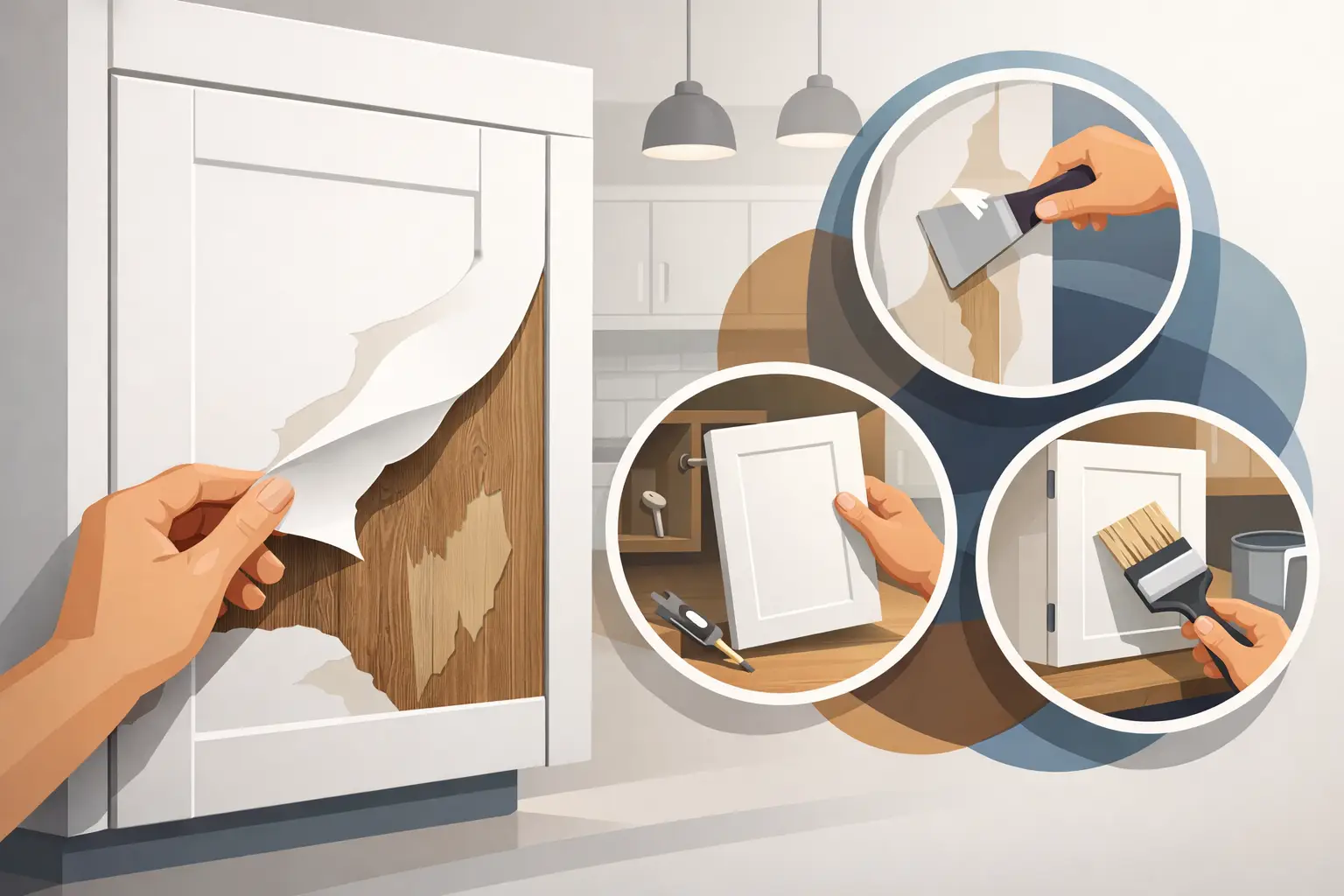
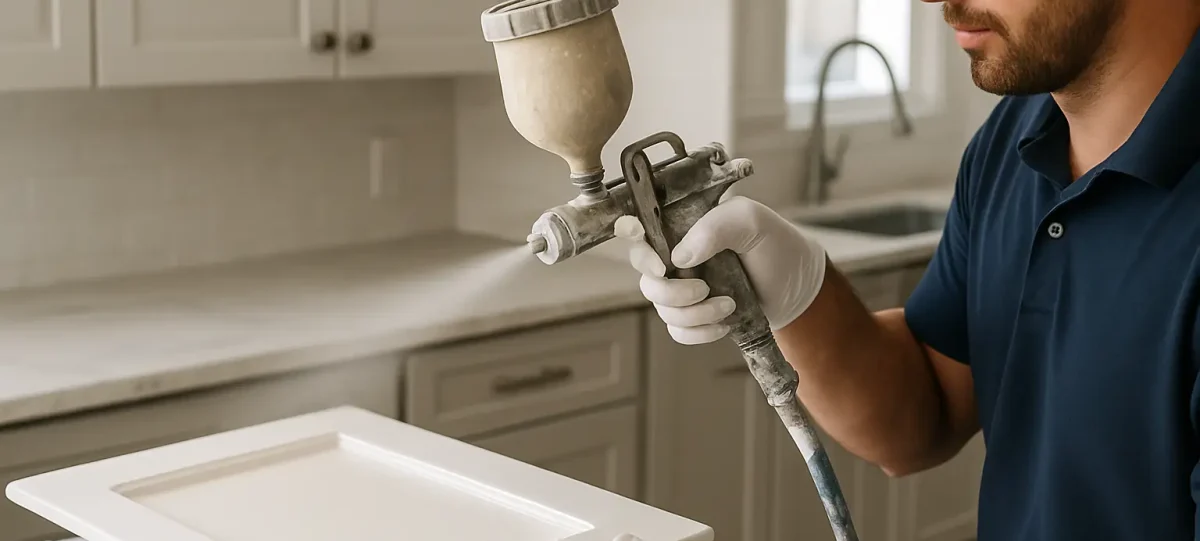
The best resprays are won before a spray gun comes out. Reviews worth their weight in gold mention sanding, degreasing, masking, and careful handling of doors. If multiple customers independently mention that their kitchen was left tidy each evening, or that adjacent rooms were protected from dust, you are likely dealing with a professional outfit.
A common trade-off appears here. Thorough prep takes time. Some companies promise an ultra-fast turnaround, but if reviews hint at rushed work or paint on hinges and handles, that speed may have come at a cost.
The finish: what “factory-like” actually means
Look for details about the final surface. Customers might describe a smooth, even sheen, clean edges, and consistent colour across door fronts and frames. Mentions of “orange peel” texture, roughness, or visible brush marks are red flags for spraying work.
Do not over-focus on ultra-close-up photos posted online. Lighting and phone cameras can exaggerate tiny surface variations. Instead, trust patterns in language. If ten reviews mention “like new” and “stunning finish” and none mention touch-ups, that tells a clearer story than one overly zoomed image.
Durability: the reviews that matter most are rarely immediate
The limitation of online reviews is timing. Many are posted within a week. What you really want is feedback that references weeks or months later: how it cleans, whether it chips, whether the finish marks easily, and how it handles heat and steam.
If you do not see many long-term comments, look for clues that the company uses durable coatings and a proper curing process. Reviews that mention guidance on aftercare – when to start wiping down, what cleaners to avoid, and how long to wait before heavy use – often correlate with better longevity.
Communication and disruption: the lived experience
Homeowners in Dublin, Wicklow, Kildare, Meath and Louth tend to choose respraying because they want a transformation without the upheaval of a full renovation. Reviews that mention punctuality, clear scheduling, and a tidy work area are not fluff – they directly affect your week.
Pay attention to how reviewers describe problem-solving. A professional team will run into the occasional surprise: a door that is more damaged than expected, a hinge that has stripped, a colour that looks different under warm LEDs. When a review says the team “talked it through” and “sorted it on the spot”, that is a strong indicator you will be looked after.
Red flags in respray reviews (and what they really mean)
Not every negative review should scare you off. One harsh comment among dozens of detailed positives can simply be a mismatch of expectations. But there are patterns you should take seriously.
Repeated mentions of overspray, mess, or strong lingering odours can suggest poor containment and ventilation. Complaints about paint peeling around handles or along edges often point to insufficient prep or curing time. If customers talk about “touch-ups straight away” or “chips after a few weeks”, that is worth digging into.
Also watch for reviews that sound oddly similar, overly generic, or posted in clusters on the same day. Genuine feedback usually varies in tone and detail. Real people mention the parts of the kitchen that bothered them most – greasy cooker-side cupboards, worn sink units, yellowed whites – and what improved afterwards.
What reviewers rarely mention – so you should ask
Even detailed customer reviews can skip over technical factors that matter. If you are getting quotes, ask a few direct questions so you are not relying on guesswork.
First, ask what happens to doors and drawer fronts. Some services spray on-site, others take doors away for controlled spraying. Each can work well, but the method should match your kitchen layout, your timeline, and the finish you are after.
Next, ask about the products being used and why. A trusted professional can explain the coating system in plain English: adhesion, durability, sheen level, and expected care. You do not need a chemistry lesson, but you do deserve a clear reason your finish will last.
Finally, ask how repairs are handled. Respraying does not magically remove dents, swollen MDF, or delamination. The best outcomes happen when minor repairs are addressed upfront and expectations are set honestly.
Why positive reviews often mention value, not just price
A respray is popular because it is an affordable alternative to ripping out a perfectly serviceable kitchen. The strongest reviews do not just say “good price”. They say something like: the kitchen looks completely different, it was finished quickly, and it saved the cost and disruption of a full refit.
That is the value equation. It includes the quality of the finish, the time saved, the waste avoided, and the fact you can keep your existing layout. For many homeowners, that matters as much as the number on the quote.
If you care about sustainability, reviews can be useful here too. Customers sometimes mention they liked keeping their cabinets out of landfill or extending the life of their kitchen. A respray is one of the few home improvements where the eco-friendly choice can also be the smarter financial choice.
Turning reviews into a confident decision
Reviews should not replace seeing real work, but they can steer you towards the right questions. After you shortlist a service, ask to see before-and-after examples similar to your kitchen style – shaker doors, high gloss slabs, wood grain finishes, or older painted units. Compare what reviewers praised with what you see in those results.
If you want a quick, like-new transformation with a professional finish and minimal disruption, choose a team whose reviews repeatedly mention prep, cleanliness, consistent colour, and clear communication. Those are the boring-sounding details that lead to the stunning-looking kitchen.
For homeowners considering a trusted local specialist, Dublin Kitchen Respray has built its reputation on exactly those fundamentals: expert preparation, durable finishes, and an affordable, eco-friendly alternative to replacement.
A final thought to keep you grounded: the best review is the one written after the kitchen has been properly lived in. When you read feedback, picture yourself wiping down the doors on a Tuesday evening, not admiring them on day one – that is where the right choice proves itself.