Freshly resprayed cabinet doors can completely change a kitchen, but the finish only stays stunning if it is treated properly from day one. If you are wondering how to protect resprayed cabinet doors, the key is not complicated cleaning routines or expensive products. It is understanding how a new sprayed finish cures, what can damage it early on, and how small daily habits make a real difference.
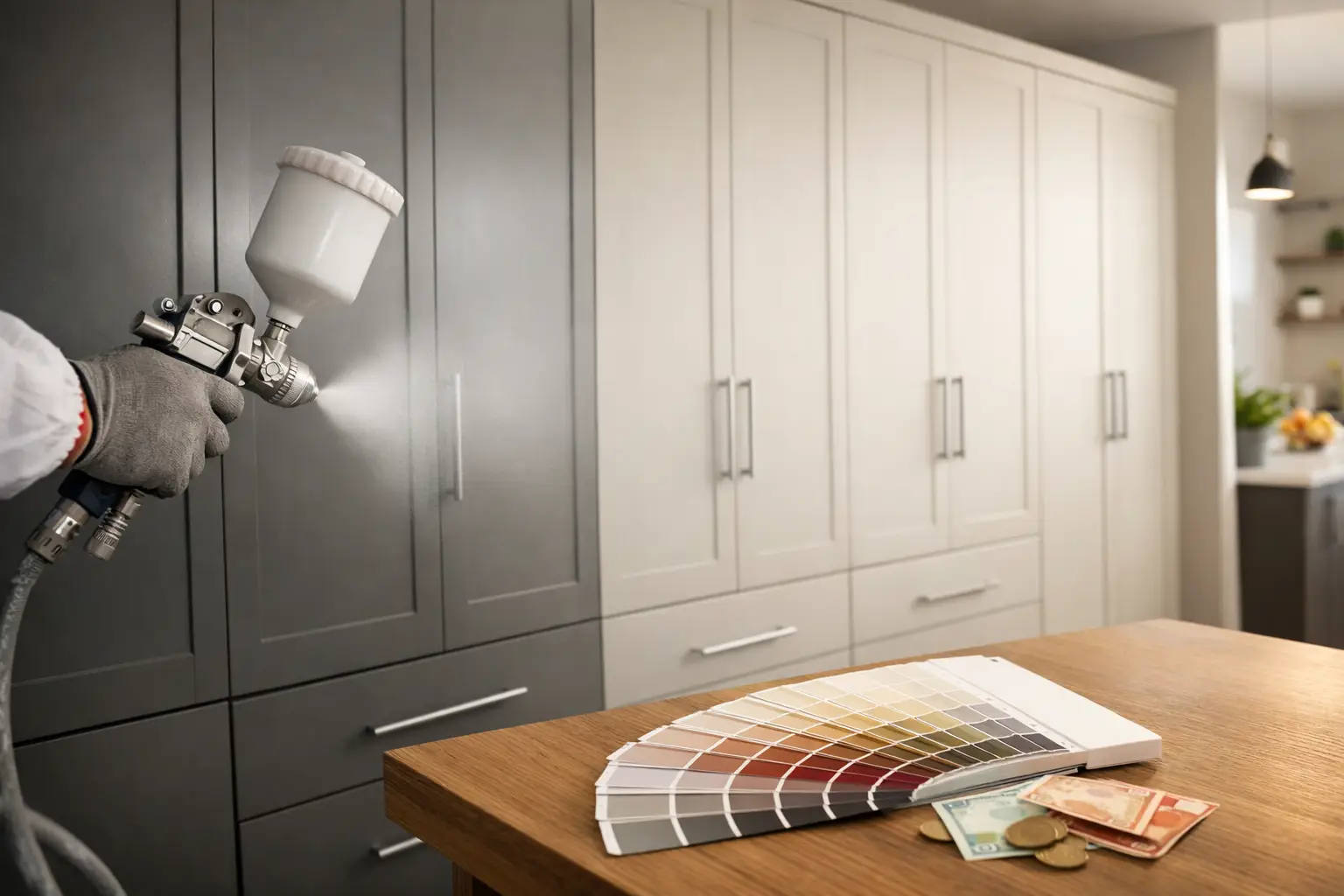
A professional respray gives your existing kitchen a like-new appearance without the cost and disruption of replacing perfectly good units. That said, a resprayed surface is not indestructible simply because it looks flawless. Like any high-quality painted finish, it performs best when it is allowed to harden fully and is cared for with the right approach.
How to protect resprayed cabinet doors in the first few weeks
The first few weeks matter more than most homeowners realise. A cabinet door may feel dry to the touch within a short period, but that is not the same as being fully cured. Curing is the stage where the coating reaches its proper hardness and durability. During this time, the finish can be more vulnerable to knocks, sticking, moisture and harsh cleaning.
This is why gentle use is so important straight after a respray. Open doors carefully rather than pulling them quickly from the corners. Try not to let handles bang against nearby surfaces, and avoid stacking items against cabinet fronts. If a door or drawer feels slightly resistant, do not force it. New finishes can sometimes take a little time to settle, especially in busy kitchens where heat and humidity fluctuate through the day.
It also helps to keep the room well ventilated. Good airflow supports the curing process and prevents moisture from lingering on surfaces. In Irish homes, where kitchens can experience regular swings between cool mornings and warmer cooking periods, that extra ventilation can make a noticeable difference.
Be careful with heat, steam and moisture
One of the most common threats to a resprayed kitchen is not impact damage. It is moisture exposure over time. Kettles, boiling pots, dishwashers and ovens all release heat and steam, and if that moisture sits repeatedly on the same area, it can shorten the life of the finish.
Cabinet doors near kettles and cookers deserve extra attention. If steam regularly rises onto the painted surface, wipe it away once the area cools. The same goes for cabinet fronts beside an integrated dishwasher. When a wash cycle ends, it is better to let the steam disperse gradually rather than opening the appliance fully and directing a rush of hot moisture straight at the nearest doors.
Heat is similar. A durable sprayed coating is designed for normal kitchen use, but prolonged direct heat is another matter. Small appliances such as air fryers, toasters and coffee machines should not sit so close to cabinet ends or doors that heat is constantly blasting one spot. Moving an appliance a few inches forward can prevent long-term trouble.
The right way to clean resprayed cabinet doors
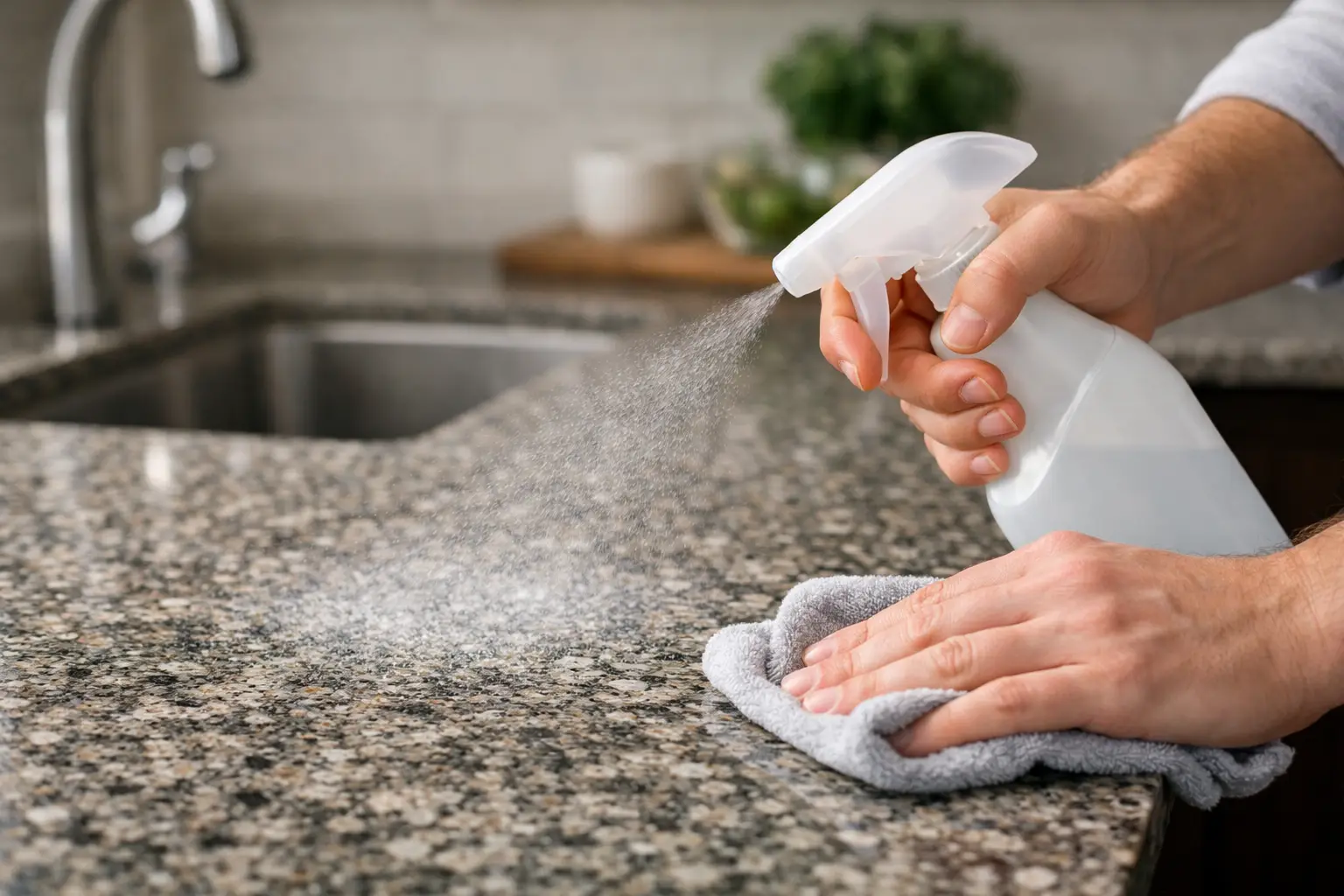
When people ask how to protect resprayed cabinet doors, cleaning is usually where the biggest mistakes happen. Many off-the-shelf kitchen sprays are simply too aggressive. Products that cut through grease quickly often contain chemicals that can dull, soften or mark a painted finish over time.
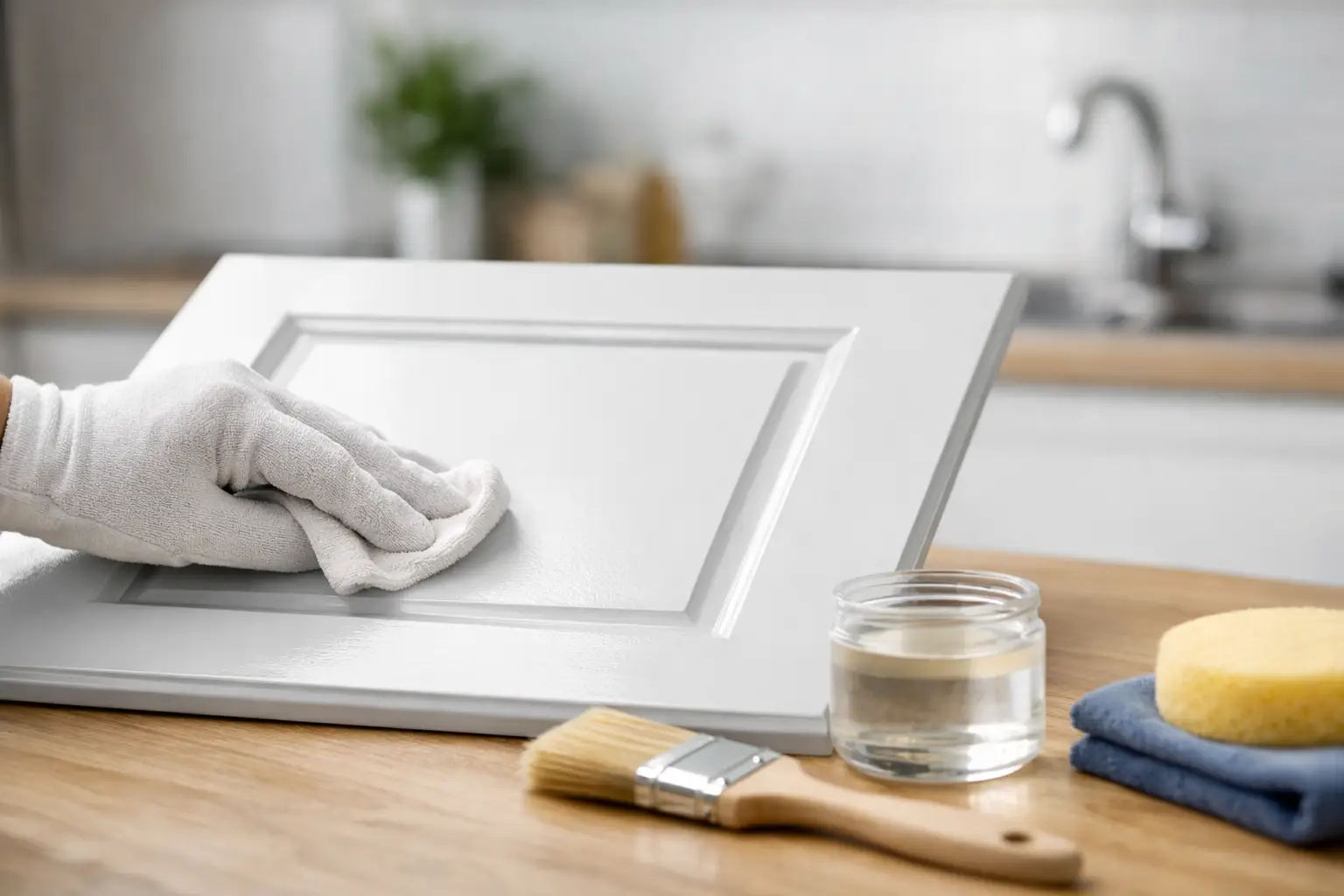
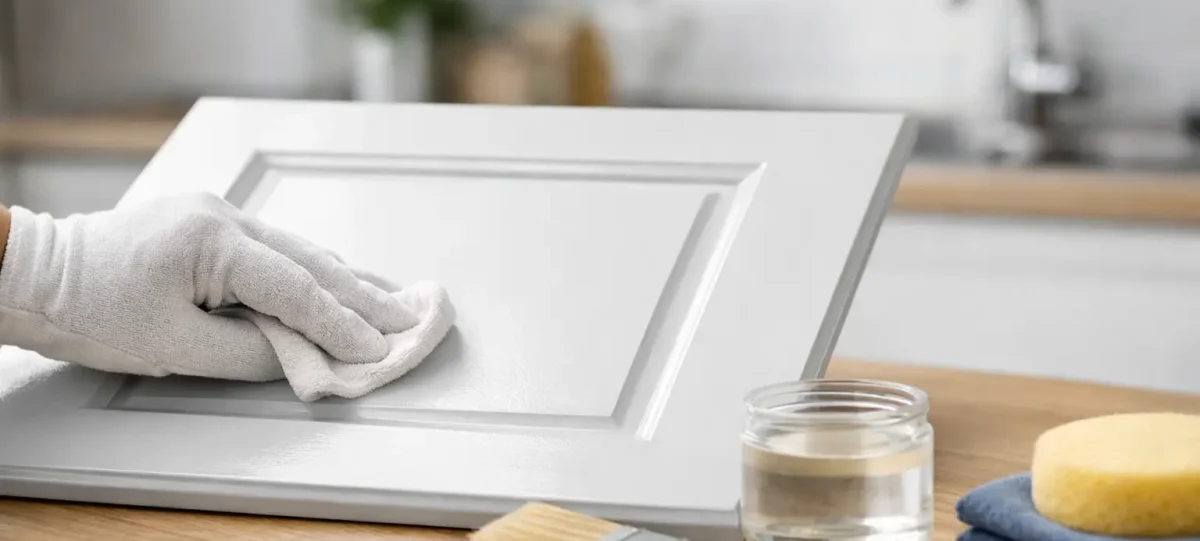
For day-to-day cleaning, a soft microfibre cloth and warm water are usually enough. If you need a bit more cleaning power, use a small amount of mild washing-up liquid diluted in water. Wipe gently rather than scrubbing, then dry the surface with a clean soft cloth. That last step matters. Leaving water to evaporate on its own can encourage streaking and moisture build-up around edges.
Avoid abrasive pads, cream cleaners, bleach-based products and anything described as heavy-duty degreaser. These may be suitable for tiles, sinks or worktops, but cabinet doors are a different surface. Even if damage is not obvious straight away, repeated use can reduce sheen and wear down the protective integrity of the finish.
If grease builds up around handles or near the hob, deal with it sooner rather than later. Fresh residue lifts off much more easily than old, hardened grease. Gentle, regular wiping is far safer than occasional harsh scrubbing.
Everyday habits that prevent chips and marks
Long-term protection often comes down to ordinary kitchen behaviour. The finish on resprayed doors is strong, but repeated contact in the wrong places can still leave its mark. Rings, watches, belt buckles and even shopping bags brushed against lower units can cause avoidable scuffs.
Using handles properly instead of catching the edge of the door with fingertips helps more than people think. Oils from hands build up over time, especially on lighter shades, and pulling on corners can place unnecessary stress on one point. Soft-close hinges also help reduce impact, though even with these fitted, slamming doors is never a good idea.
Children’s ride-on toys, pet bowls and vacuum cleaners are other common culprits around lower cabinets. None of these are dramatic hazards on their own, but repeated knocks in the same area can eventually chip a finish. Being mindful of traffic around the kitchen is part of protecting the result you have invested in.
What to do if something spills or splashes
Not every splash is a crisis, but quick action is always best. Tea, coffee, sauces, oils and cleaning liquids should be wiped away as soon as possible with a damp soft cloth, then dried. The longer a spill sits, the more chance it has to stain, soften or leave a residue on the surface.
Acidic splashes deserve particular care. Things like vinegar, lemon juice and tomato-based sauces can be surprisingly harsh if left in place. The same applies to strong household cleaners. If any of these land on a cabinet door, remove them promptly and do not rub hard.
If you notice a mark that does not lift easily, resist the urge to experiment with stronger products. Test methods that work on laminate or stone are not automatically suitable here. A professional finish should be treated like a quality painted surface, not a utility board that can take endless abrasion.
It depends on the finish and where the doors are used
Not every kitchen sees the same level of wear. A guest utility room will naturally have a gentler life than a family kitchen used from breakfast through to late evening. Darker shades may show dust, fingerprints or fine marks more readily, while very light colours may reveal cooking residue sooner. Matt finishes can be especially elegant, but they sometimes need slightly more thoughtful handling than lower-maintenance satin surfaces.
This is where expert preparation and spraying make such a difference. A properly prepared and professionally applied finish gives you the best possible starting point. Even so, aftercare still plays a role. No surface is completely maintenance-free, particularly in a hard-working kitchen.
For homeowners in Dublin and the surrounding counties, that practical balance often matters as much as appearance. You want a finish that looks exceptional, but you also want one that stands up to everyday life. The best results come from combining a trusted respray service with sensible aftercare at home.
When to ask for advice
If a door starts to feel tacky, shows unusual marks, or seems vulnerable in a specific area near heat or moisture, it is worth asking for professional advice rather than guessing. Early guidance can prevent a small issue from becoming permanent damage.
At Dublin Kitchen Respray, aftercare is part of the overall service because a beautiful finish should stay beautiful. Homeowners often focus on the transformation itself, but the real value is in how well that finish performs months and years later.
Protecting resprayed cabinet doors is really about respecting the finish. Clean them gently, keep heat and steam under control, and treat the first few weeks with patience. Do that, and your kitchen will keep that fresh, professional look long after the spraying is done.