Older kitchen cabinets often look worse than their actual condition. Scratched doors, faded colours, and worn finishes can make an entire kitchen feel outdated. However, visible wear does not always mean the cabinets need replacing. Understanding their condition helps homeowners make better renovation decisions.
For homeowners considering a kitchen respray in Ballyfermot, the first step involves examining existing cabinetry. A professional assessment can reveal whether the cabinets remain suitable for refinishing. The right approach depends on structural condition, surface materials, and previous damage.
Start With the Cabinet Structure, Not the Colour
A kitchen's appearance rarely reveals the complete condition of its cabinets. Doors might look dated while the supporting units remain perfectly functional. Before considering a kitchen respray, examine the cabinet boxes, joints, shelves, and hinges.
Open each cupboard and check whether its structure feels stable. Look for swelling, loose joints, sagging shelves, or persistent moisture damage. These problems may require repairs before any cosmetic work begins.
Five Signs Your Kitchen Cabinets May Be Worth Keeping
Not every worn cabinet needs a complete replacement. Several practical indicators can help determine whether existing units deserve another life.
- Solid cabinet boxes: Units remain stable without significant movement or structural damage.
- Functional doors: Doors open smoothly and maintain their original shape.
- Limited surface wear: Scratches, fading, and minor chips affect appearance rather than strength.
- Suitable materials: Existing surfaces can accept appropriate preparation and compatible coatings.
- Practical layout: Cupboard positions and storage arrangements still meet household needs.
When these conditions apply, a kitchen respray may offer a sensible alternative. However, material compatibility and previous coatings still require professional inspection.
Cosmetic Wear Versus Structural Damage
Understanding this difference prevents unnecessary spending and disappointing results. Cosmetic wear affects how cabinets look without compromising their essential function. Structural damage affects stability, alignment, or the material beneath the finish.
Common cosmetic problems include faded colours, light scratches, and worn decorative coatings. These issues may respond well to careful surface preparation and refinishing. A kitchen respray can improve appearance when the underlying material remains sound.
However, swollen boards, severe water damage, and failing joints need different attention. Applying fresh paint cannot restore weakened materials or repair unstable cabinet boxes. Damaged components may require replacement before refinishing becomes worthwhile.
Which Cabinet Materials Can Be Resprayed?
Cabinet materials influence preparation methods, coating selection, and potential results. Solid timber, MDF, and previously painted surfaces may all be suitable. Their condition and existing finish determine the appropriate treatment.
Laminate and factory coated doors require particular attention to surface adhesion. Some damaged or peeling finishes may need removal or specialist preparation. A kitchen respray should never begin without checking coating compatibility.
Thermofoil doors also require careful inspection, especially around lifting edges. Loose coverings can undermine the durability of a newly applied finish. Identifying these problems early helps establish realistic expectations.
When Keeping Your Cabinets Makes Financial Sense
Replacing an entire kitchen involves more than purchasing new doors. Installation, removal, disposal, and additional adjustments can increase project costs. Retaining sound cabinetry may reduce unnecessary work and material waste.
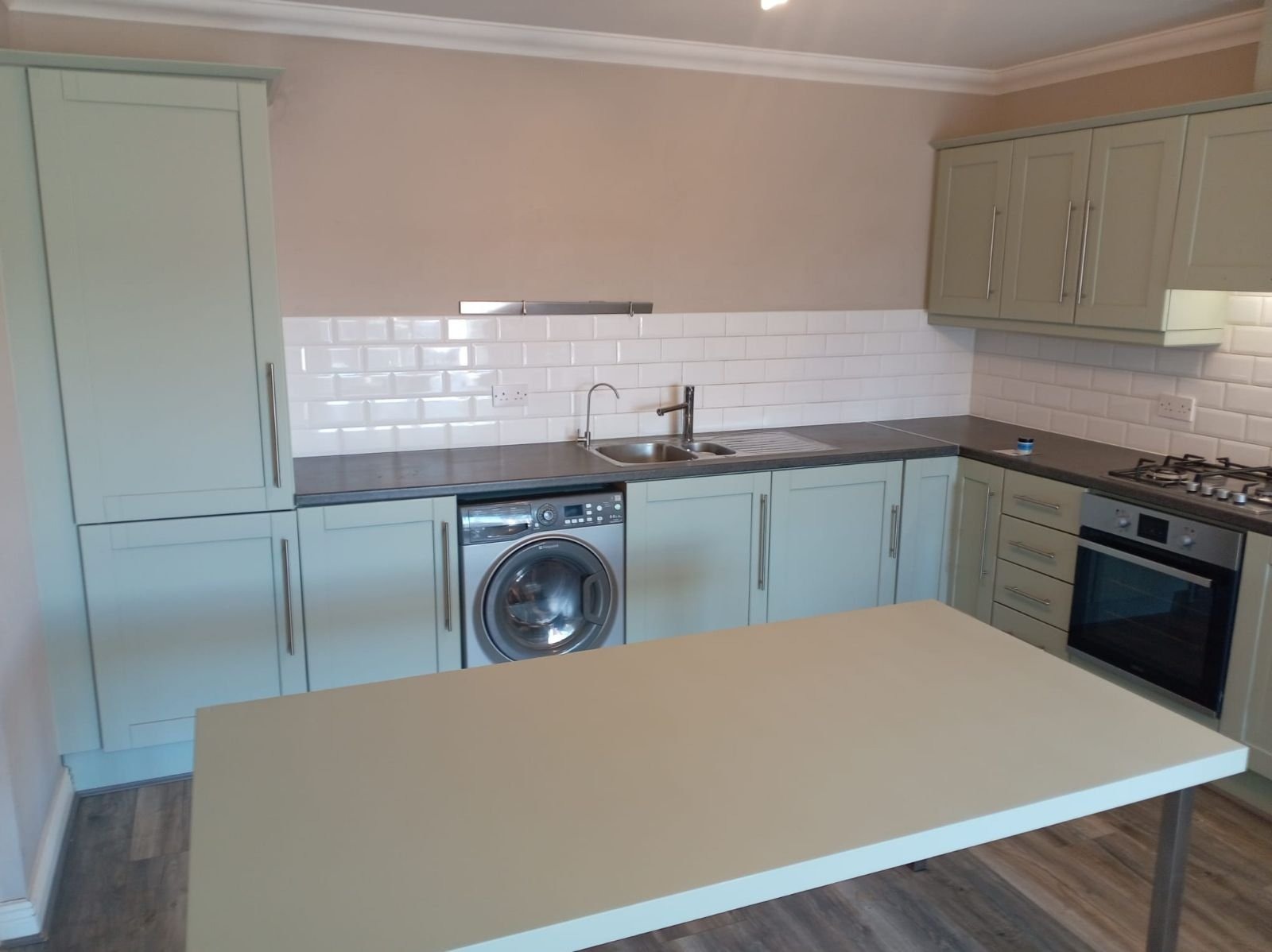
A kitchen respray focuses on improving suitable existing surfaces. This approach makes particular sense when storage and layout remain practical. Homeowners can refresh visible finishes without changing functioning cabinet structures.
However, respraying does not automatically represent the cheapest solution. Extensive repairs, unsuitable surfaces, or major layout changes can affect overall value. Comparing the complete project scope supports a more informed decision.
What Happens Before Professional Respraying?
Successful refinishing depends heavily on preparation rather than colour alone. Each cabinet surface needs inspection before the finishing process begins. Existing grease, damaged coatings, and loose fittings can affect the outcome.
Professional preparation may involve cleaning, degreasing, sanding, and repairing minor imperfections. Suitable primers and coatings are then selected according to surface requirements. A kitchen respray also needs appropriate drying and curing conditions.
Homeowners should ask how doors, drawers, and fixed cabinet sections will be handled. They should also confirm preparation requirements and expected access restrictions. Clear planning helps reduce disruption during the project.
Give Your Existing Kitchen a Fair Assessment
Older cabinets deserve careful inspection before being removed. Their condition matters more than outdated colours or minor surface imperfections. A suitable kitchen respray can renew their appearance while retaining useful cabinetry.
Dublin Kitchen Respray helps homeowners explore practical options for updating existing kitchen cabinets. The team can assess whether professional refinishing suits your current surfaces. Call 087 661 4038 to discuss your Ballyfermot kitchen and request further guidance.
Related reading
Related posts
6 Small Kitchen Updates That Can Transform the Look of Harold's Cross Homes
A kitchen does not need a complete renovation to feel noticeably different. Sometimes, outdated finishes and small visual details create most of the problem.
Read moreMatte vs Satin Kitchen Cabinets: Which Finish Works Better for Sandyford Homes?
Choosing a cabinet colour is only half the decision when updating your kitchen. The finish determines how surfaces reflect light, reveal marks, and respond to daily use.
Read more