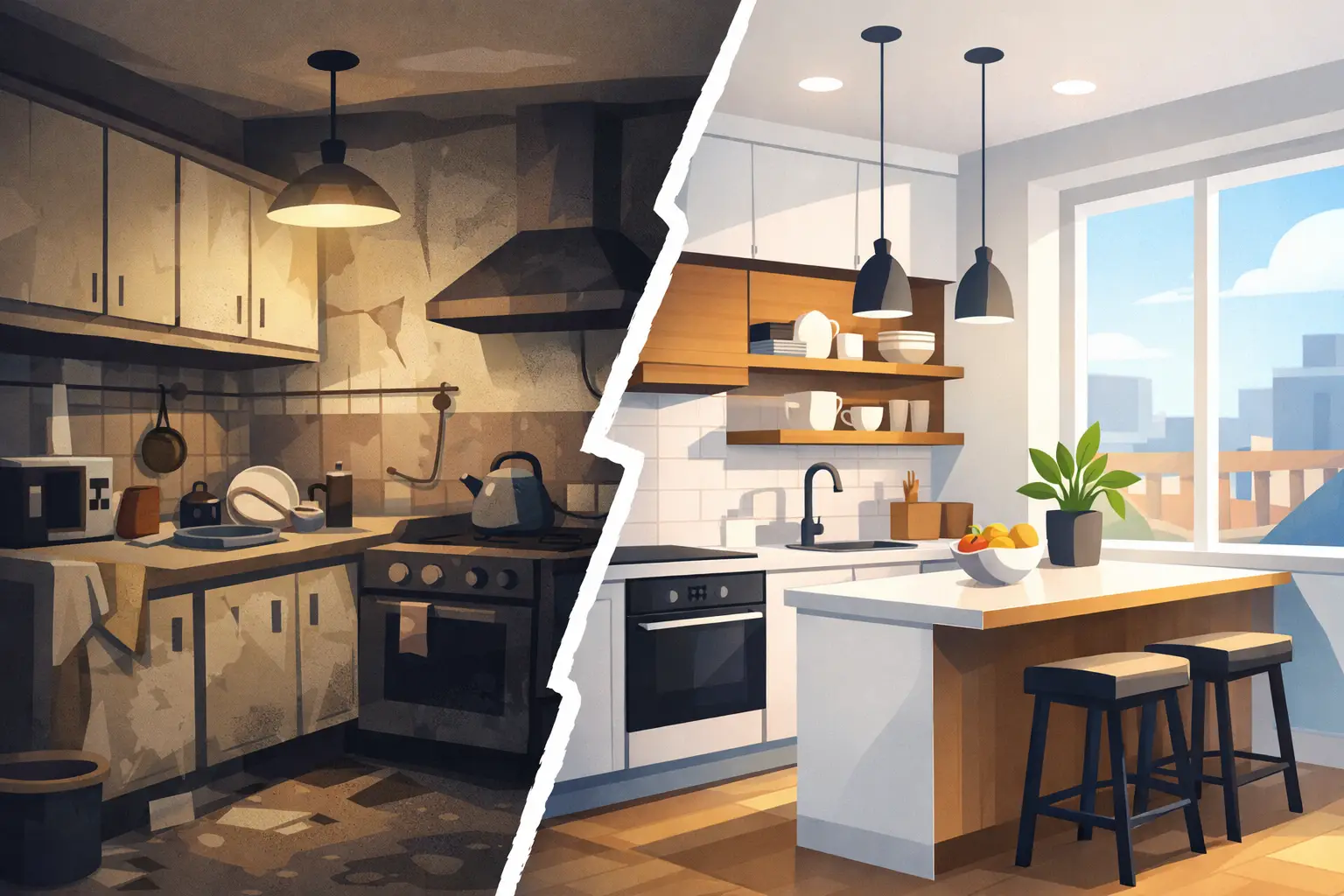
A compact kitchen can feel dated far sooner than it becomes unusable. In this small kitchen transformation case study, the layout remained practical, the cabinet boxes were sound, and the homeowner wanted a brighter, more refined finish without the cost, waste or disruption of replacing everything.
This is a representative example of the type of project often seen in Dublin homes: a hardworking kitchen with limited floor space, older door colours and surfaces that no longer suited the rest of the house. The solution was not to start again. It was to make the existing kitchen work harder visually.
The starting point: a kitchen that felt smaller than it was
The kitchen had a familiar compact galley-style footprint. Base and wall cabinets provided enough storage, but the dark timber-effect doors absorbed light. Matching panels, dated handles and a tired worktop made the room feel enclosed, particularly on overcast days.
Replacing the kitchen would have meant removing cabinetry that was still structurally sound, potentially altering plumbing and electrics, and living with a much longer programme of work. For many homeowners, that level of disruption is difficult to justify when the real issue is appearance rather than function.
Before recommending respraying, a professional assessment should always consider the condition of the doors, drawers, hinges and cabinet carcasses. Respraying is an excellent option where units are stable and in good repair. It is not a shortcut for cabinets affected by severe water damage, swelling chipboard or persistent structural problems. Addressing those issues first protects the quality of the final result.
The design brief for this small kitchen transformation
The homeowner wanted the kitchen to look more spacious while retaining a warm, lived-in feel. Stark white was considered, but a softer warm neutral was chosen for the cabinetry. This gave the room a cleaner, lighter appearance without making it feel cold.
Colour matters more in a small kitchen than it does in a large one. Darker cabinetry can be striking, but it needs generous natural light and enough open space around it. In a narrower room, pale neutrals, muted greys and gentle greige tones tend to reflect light more effectively and allow the eye to move around the space.
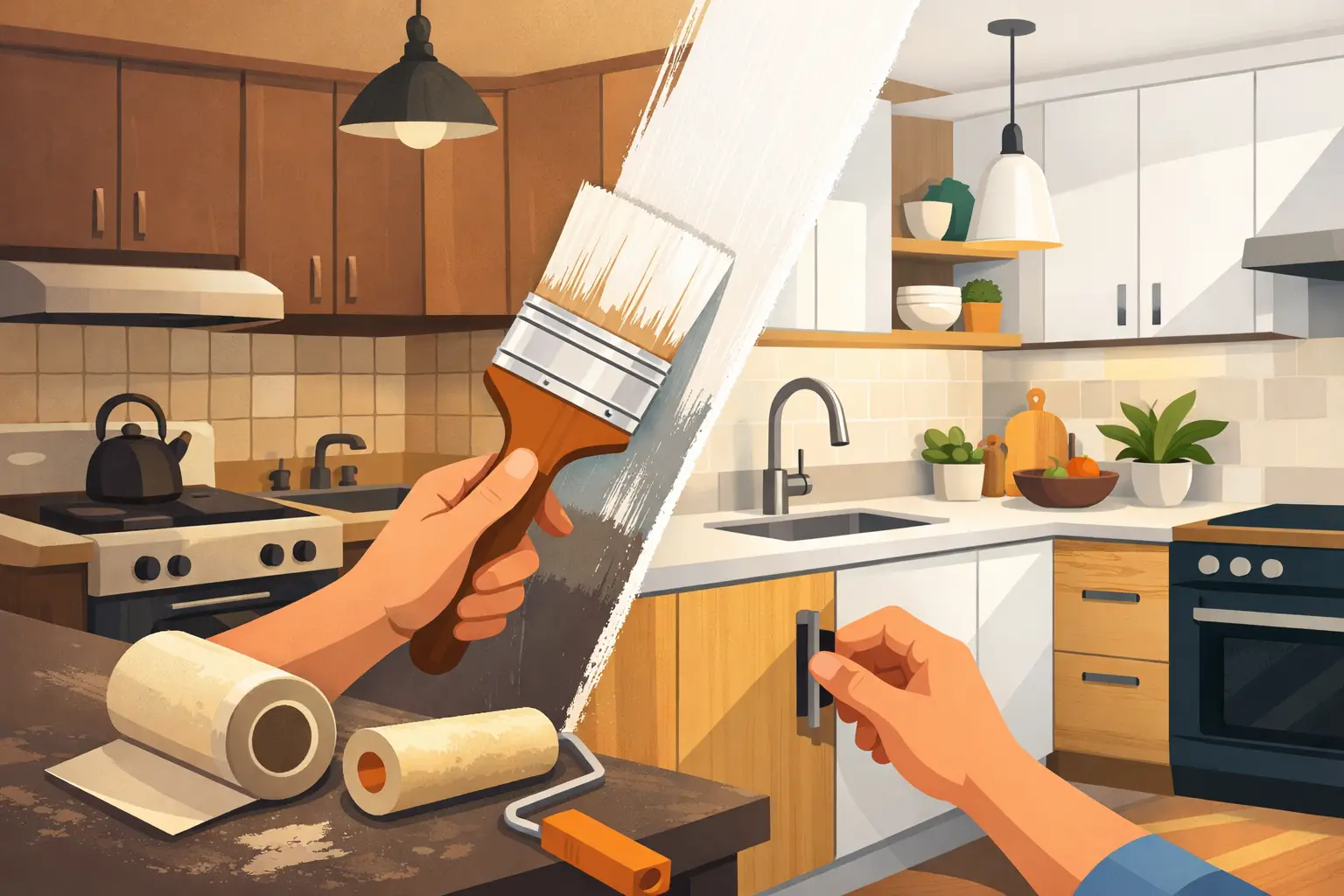
The new cabinet colour was paired with modern brushed-metal handles. This was a relatively modest change, yet it gave the doors a more current profile. Retaining the existing door style kept costs sensible, while the updated finish and hardware changed how the entire kitchen read at first glance.
The worktop was also assessed. If a worktop is badly damaged or badly fitted, replacement may be the right choice. Where it is sound but visually dated, spray granite can offer a practical alternative. This durable decorative coating can refresh suitable worktops and create a coordinated look with the newly sprayed cabinetry.
How the respray process protected the kitchen
A quality kitchen respray relies on preparation, not simply applying a new coat of paint. The difference is particularly noticeable in a small room, where every door edge, panel and handle position is close to view.
Preparation came first
Doors and drawer fronts were carefully removed where appropriate, then cleaned and prepared to remove grease, cooking residue and everyday build-up. Surfaces were repaired where minor imperfections could be corrected, sanded to create a sound base, and masked with care to protect surrounding areas.
This stage is not glamorous, but it is where durability begins. Kitchens deal with heat, moisture, fingerprints and frequent cleaning. Skipping proper preparation can leave a finish vulnerable to peeling, chipping or uneven coverage.
A professional sprayed finish changed the surface, not the layout
Once prepared, the cabinetry received a professional sprayed coating designed to provide an even, like-new appearance. Unlike brush-applied paint, spraying can produce a smooth, consistent finish across broad door faces and detailed edges when carried out by experienced specialists.
The existing layout was left in place. That meant no unnecessary demolition, no need to replace functional cabinet boxes and no major upheaval to plumbing or appliances. For a busy household, keeping the core kitchen intact is often as valuable as the visual improvement itself.
At Dublin Kitchen Respray, this approach is centred on renewing sound surfaces with expert preparation and durable finishes, rather than treating replacement as the default answer.
The finished room: brighter, calmer and more considered
The transformation did not create extra square metres, but it changed the sense of space. The lighter cabinet finish reflected available daylight, while the reduced contrast between doors, panels and refreshed surfaces made the kitchen feel less busy.
New handles added definition without visual clutter. The homeowner retained familiar storage arrangements and appliance positions, so the kitchen remained easy to use from day one. That is an often-overlooked advantage of respraying: the room can look dramatically different without requiring the household to relearn how it works.
The project also avoided the waste associated with discarding serviceable cabinetry. Choosing to improve rather than replace can be an eco-friendly decision, particularly where the cabinet carcasses have years of useful life left. Less material sent away from site and fewer new products required can make a meaningful difference.
What this case study shows about small kitchens
A successful small kitchen transformation is rarely about adding more features. It is about removing the visual weight that makes the room feel cramped. A considered cabinet colour, a well-finished surface and hardware that suits the style of the home can achieve more than a costly redesign with too many competing elements.
That said, respraying is not automatically the best route for every kitchen. If you need more storage, a different cooking layout, accessible worktop heights or major appliance changes, a full redesign may be worth considering. Respraying improves the appearance and extends the life of existing units; it does not alter their internal capacity or structural arrangement.
For homeowners who like their layout but dislike its appearance, the value is clear. Costs are usually lower than a complete replacement, disruption is reduced, and a trusted professional can help identify finishes that will remain practical as well as attractive. A matte or satin cabinet finish, for example, may suit a contemporary look, while the exact choice should account for light levels, cleaning preferences and how heavily the kitchen is used.
Planning your own compact kitchen refresh
Begin by looking beyond the door colour. Check whether the cabinetry is sound, whether the worktop can be renewed, and whether changing handles, lighting or a splashback would strengthen the finished scheme. Taking this wider view prevents a new cabinet colour from sitting beside surfaces that still make the room feel dated.
It is also sensible to bring samples into the kitchen before choosing a final shade. Colours can look very different under cool morning light, warm evening lighting and the practical lights used for cooking. A finish that feels understated in a showroom may look much stronger in a small room.
The best transformations respect what already works. When the structure is good, an affordable respray can give a compact kitchen the polished, cared-for appearance it deserves – with less waste, less disruption and a result that feels at home from the moment you step inside.