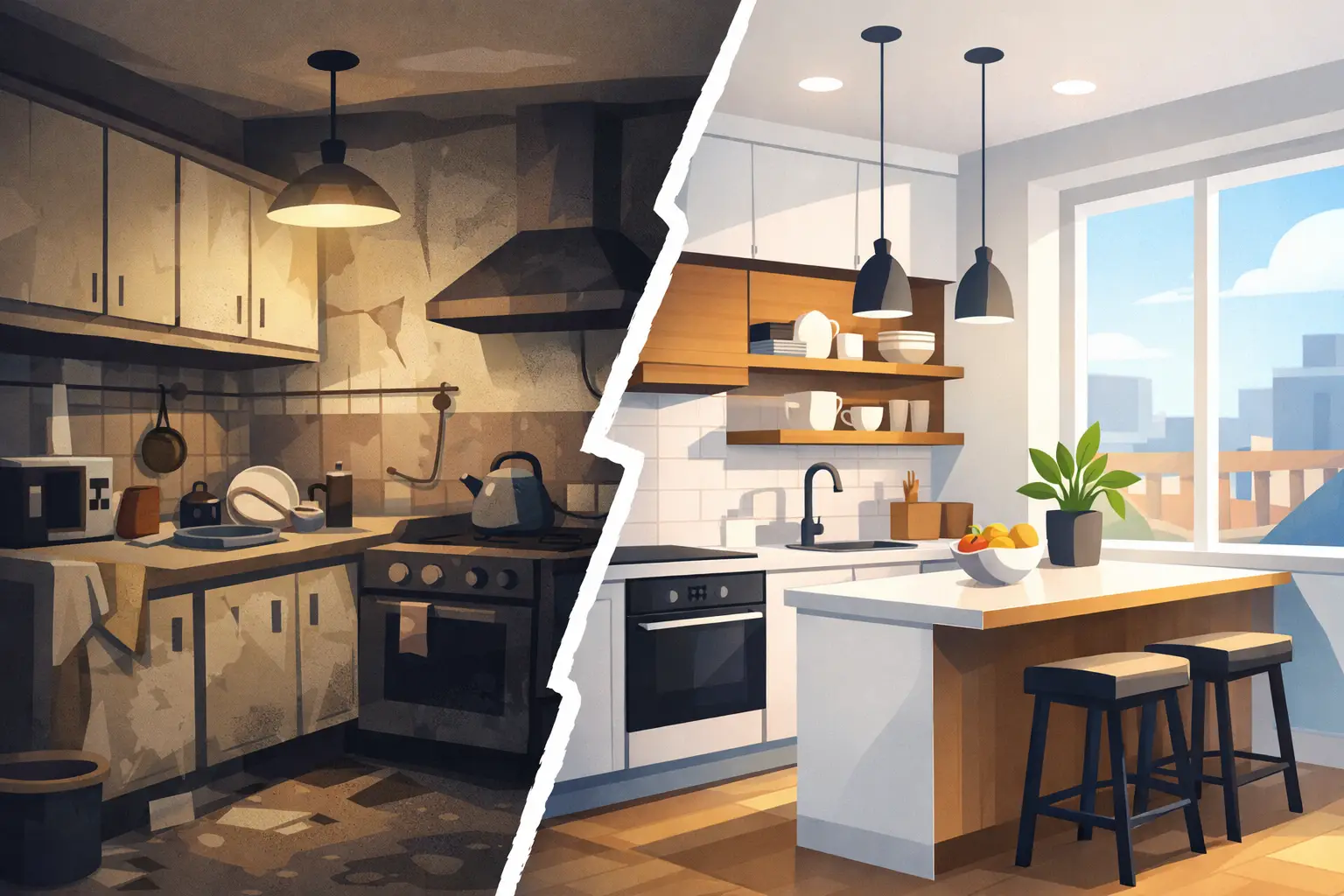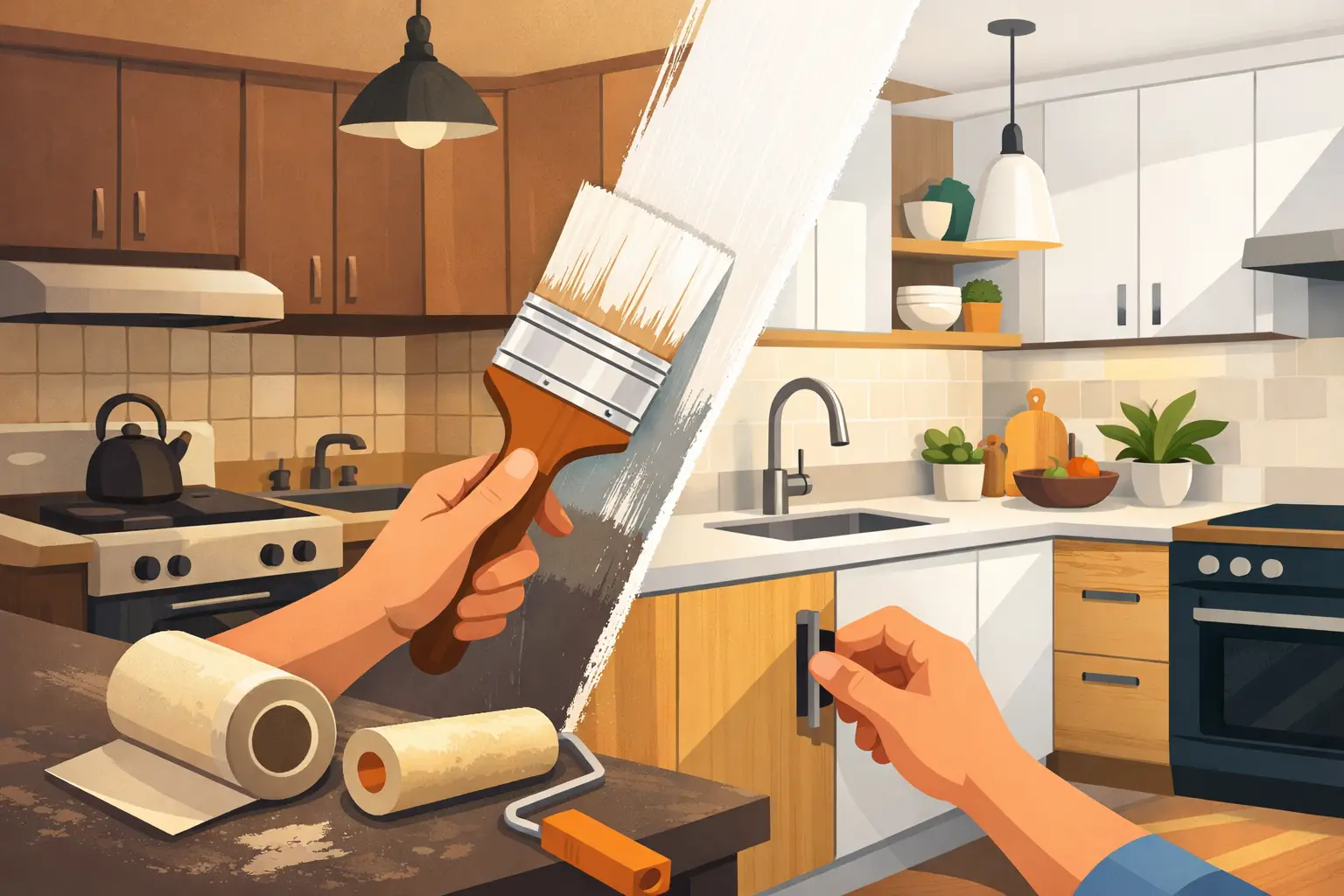

A kitchen can feel dated long before it stops working. Worn cabinet doors, an awkward colour scheme or tired worktops can make the room less enjoyable, even when the layout, storage and appliances are still doing their job. This kitchen makeover planning guide will help you decide what deserves investment, what can be refreshed, and how to achieve a striking result without turning your home upside down.
Start Your Kitchen Makeover Planning Guide with the Problem
Before choosing paint colours, handles or splashbacks, take a practical look at what is not working. Stand in the kitchen at the busiest time of day and notice where the friction is. Is there too little preparation space? Are cupboard doors chipped but the cabinet units themselves solid? Is the room dark, cluttered or difficult to clean?
Separate functional problems from cosmetic ones. A leaking sink unit, unsafe electrics, damaged hinges or poor ventilation need proper repair. By contrast, faded door fronts, dated oak finishes, scratched laminate surfaces and unfashionable tiles are often appearance issues that do not require a full replacement.
This distinction is where budgets are won or lost. Replacing a kitchen because its finish is tired can mean paying for new units, removal, disposal, plumbing and fitting when much of the existing kitchen has years of life left. Keeping sound cabinetry and updating the visible surfaces is usually quicker, more affordable and far less wasteful.
Decide Whether to Replace, Repair or Respray
The right approach depends on the condition of your existing kitchen, not simply its age. Cabinet respraying is an excellent option when doors and panels are structurally sound, but their colour or finish no longer suits the home. Professional preparation and spray application can create a smooth, durable, like-new finish that brush painting rarely achieves.
Replacement makes more sense if units have widespread water damage, swollen chipboard, severe structural movement or a layout that genuinely cannot meet your needs. It may also be necessary where you need to move major services or create a completely different kitchen footprint.
There is a useful middle ground for many homeowners. Keep the cabinet carcasses, refresh doors and end panels, replace worn handles, and update selected surfaces. A spray granite finish can also transform suitable worktops, tiles, splashbacks and other hard surfaces, helping the whole room feel considered rather than partly renovated.
For homes across Dublin and nearby counties, this approach can be particularly appealing where a full refurbishment would mean weeks of disruption. The aim is not to cut corners. It is to spend money where it changes the everyday experience of the room.
Set a Budget Around Priorities, Not a Wish List
A realistic budget should include the work you need, the improvements you value and a sensible contingency. Start with three categories: essential repairs, high-impact visual changes and optional extras. This stops a simple facelift from growing into a project with no financial boundary.
Your highest-impact spend is often on the largest visible surfaces. Cabinet fronts usually dominate the room, followed by worktops, splashbacks and flooring. Changing these elements thoughtfully can alter the entire character of the kitchen, even if the sink, oven and unit layout remain in place.
Allow for small details too. New handles, tapware, lighting, kickboards and a fresh wall colour can strengthen the finished look. However, avoid buying every accessory at the beginning. Once the cabinets and surfaces are refreshed, you may find that fewer additions are needed than expected.
Keep a contingency of around 10 to 15 per cent for hidden repairs or decisions that become clear once work begins. A modest allowance is especially sensible in older properties, where plumbing, tiling and wall conditions can reveal surprises.
Choose a Look That Will Still Suit Your Home
Trend-led kitchens can be beautiful, but a makeover should not feel dated after one season. Begin with the fixed features you are keeping, such as flooring, window frames, appliances and the amount of natural light. These set useful boundaries for your palette.
Light colours can make a compact or north-facing kitchen feel more open. Warm whites, soft greys and muted greens tend to work well in period and contemporary homes alike. Dark navy, charcoal or deep green cabinetry can add real drama, but usually benefits from good lighting and enough visual space around it.
If you want a bolder colour, consider using it on lower cabinets or an island while keeping wall units lighter. This gives depth without making the room feel closed in. Handle choice matters as well: brushed brass adds warmth, black creates contrast, while simple chrome is a quieter and versatile option.
Samples are worth viewing in the actual kitchen at different times of day. A shade that looks crisp under showroom lighting may appear cool, yellow or unexpectedly dark at home. Professional advice on finish and sheen can prevent expensive second thoughts.
Plan the surfaces as one scheme
Cabinets, worktops and splashbacks should relate to each other rather than compete. If cabinetry has a strong colour, a calmer worktop and splashback often bring balance. If you prefer pale cabinets, a textured or darker surface can provide character.
Consider maintenance as carefully as appearance. Highly patterned finishes may hide everyday marks well, while very dark matt surfaces can show dust, fingerprints or limescale depending on the material and lighting. The best choice is one you will be happy to live with, not simply one that photographs well.
Improve Storage Before You Change the Layout
Many kitchens feel too small because the storage is inefficient, not because the room lacks cabinets. Empty each cupboard before planning and be honest about what is used. Duplicate utensils, out-of-date food and awkwardly stored appliances consume valuable space.
Then consider practical upgrades. Drawer organisers, pull-out bins, shelf inserts, pan storage and improved internal lighting can make existing units work harder. If cabinets are being refreshed, it is an ideal time to replace tired hinges, adjust door alignment and make sure drawers run properly.
Changing the layout can be worthwhile when it solves a clear daily problem, such as no landing space beside the hob or fridge. But moving sinks, ovens and plumbing raises cost and complexity quickly. If the work triangle already functions well, retaining it leaves more budget for a high-quality finish.
Plan Around How Work Will Affect Daily Life
A good makeover plan includes the household, not just the kitchen. Ask how long each stage will take, which areas will be inaccessible and whether appliances can remain in use. A targeted respray and surface refresh generally causes less upheaval than removing and rebuilding the entire room, but preparation still matters.
Clear worktops and cupboards well in advance. Put everyday essentials in labelled boxes, create a temporary tea and breakfast station, and keep pets and children away from the work area. If you are replacing handles or adding lighting yourself, schedule those jobs after the main finish has cured rather than trying to coordinate too many trades at once.
Quality preparation is non-negotiable. Professional surface cleaning, repairs, sanding or keying where required, masking and controlled spray application are what allow the new finish to look refined and last. The visible transformation may happen quickly, but it relies on careful work before the first coat is applied.
Ask the Questions That Protect Your Investment
When comparing kitchen makeover providers, ask what preparation is included, which surfaces are suitable, how repairs are handled and what aftercare is recommended. Request clarity about the expected timeline and whether the finish is designed for the demands of a working kitchen.
It is also reasonable to ask about colour matching, sheen options and examples of similar completed work. A trusted specialist should explain limitations honestly. For example, respraying cannot fix fundamentally damaged cabinets, and some surfaces may need repair or replacement before they can be refinished.
Dublin Kitchen Respray focuses on restoring existing cabinetry and surfaces with professional, durable finishes, helping homeowners achieve a stunning change while reducing unnecessary waste. That combination of craftsmanship and practical value is often the strongest case for refurbishment.
A well-planned makeover should leave you with a kitchen that feels more like your home, not a costly compromise. Start with what is sound, choose changes that improve everyday use, and give the finish the care it deserves. The result can be a fresh, affordable kitchen you are pleased to walk into every morning.