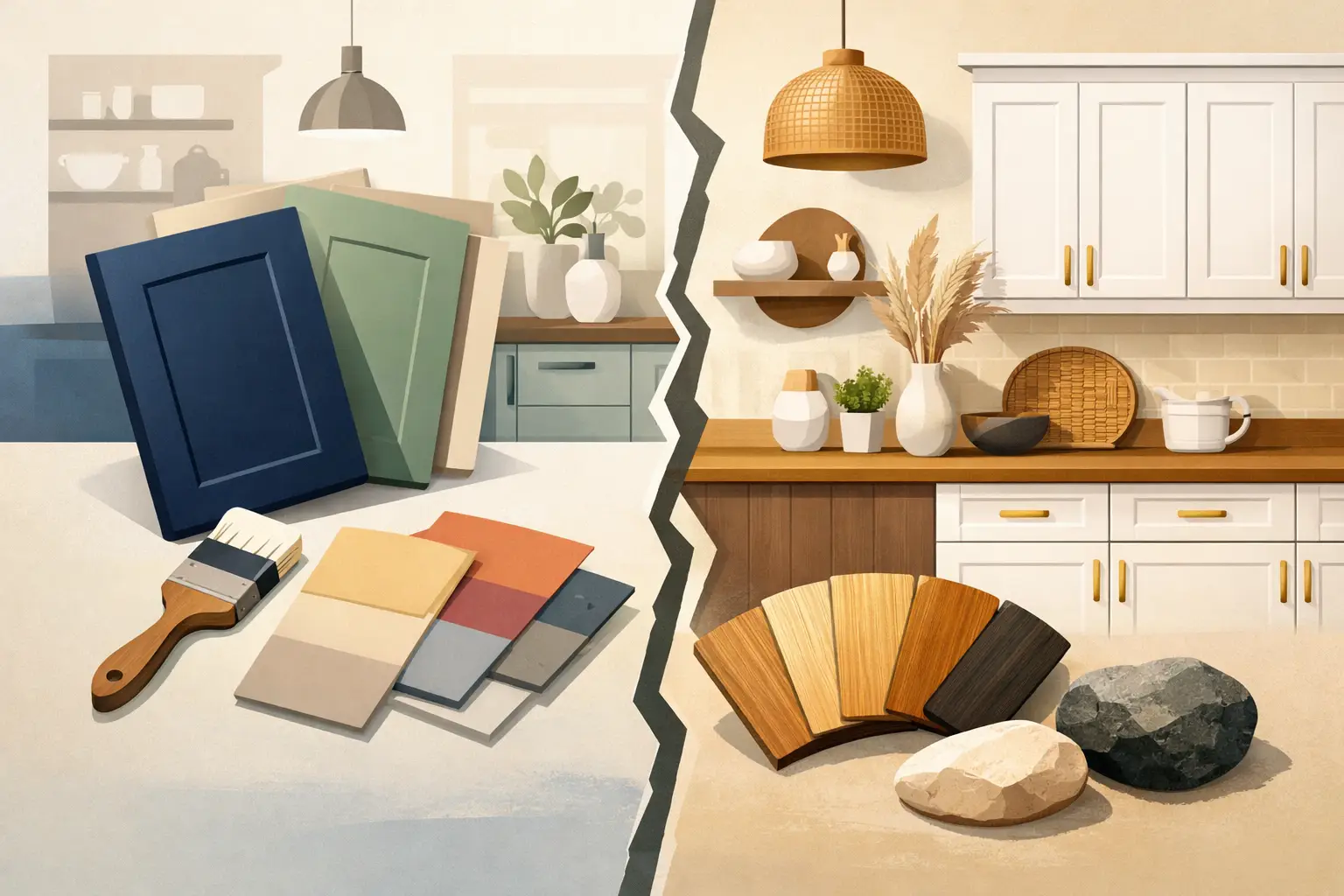
A kitchen can look dated long before the cabinet doors have reached the end of their useful life. That is why kitchen cabinet colours versus trends is not simply a question of choosing the latest shade from a paint chart. It is about deciding what will feel right in your home each morning, work with the light you actually have, and still look considered when the next interiors trend arrives.
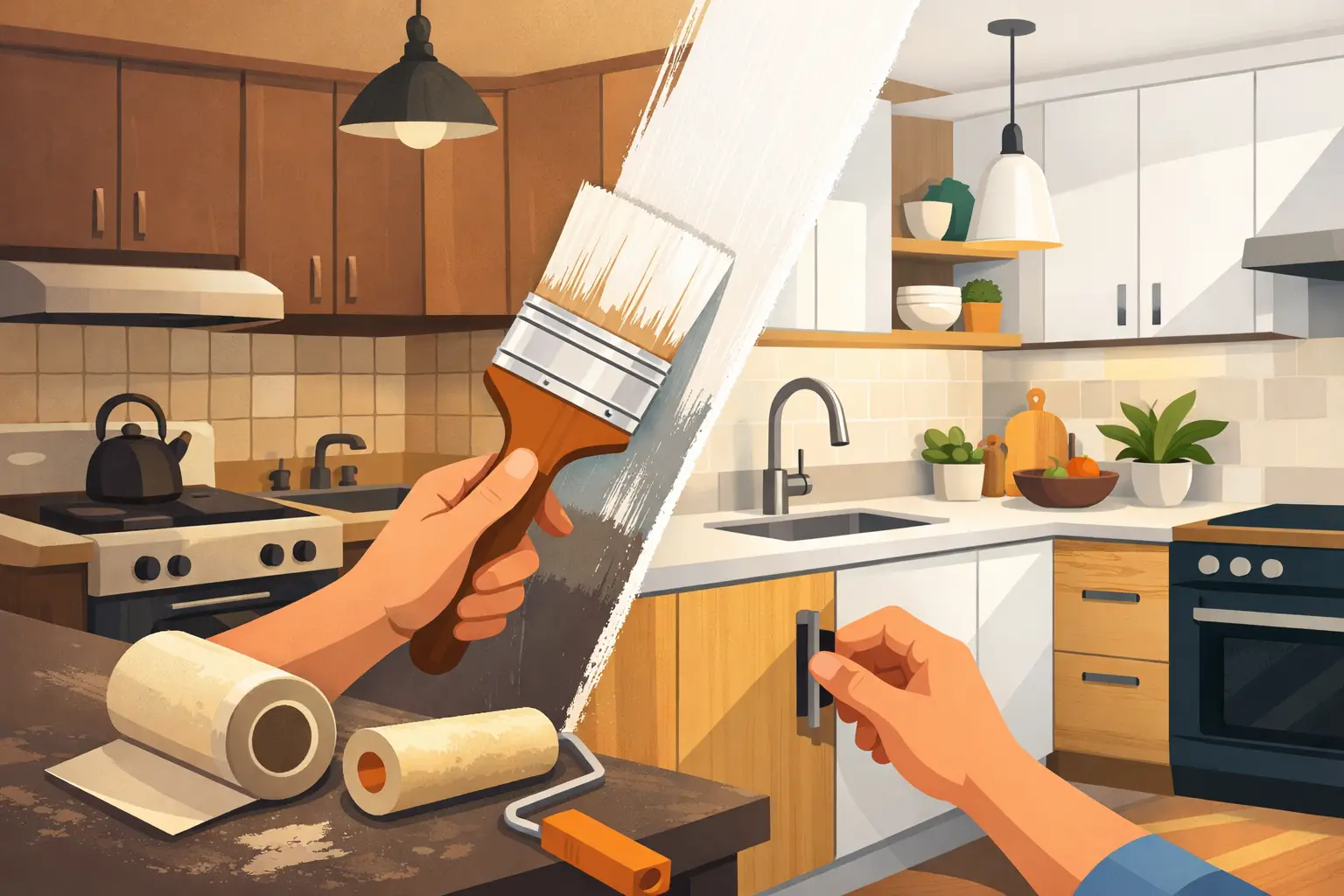
For homeowners planning a kitchen refresh rather than a full replacement, colour has an outsized effect. A professional respray can turn solid but tired cabinetry into a striking, like-new feature without the cost, waste or disruption of removing a perfectly functional kitchen. The best choice is rarely the loudest colour online. It is the one that balances personal taste with lasting practicality.
Kitchen Cabinet Colours Versus Trends: The Real Choice
Trends are useful because they show what is possible. They can introduce warmer neutrals, richer greens, tactile matt finishes and more confident contrast. But a trend is not a rule, and it should not force a colour into a kitchen where it does not belong.
The more helpful question is whether a colour has enough flexibility to work with the fixed elements of your room. Worktops, splashbacks, flooring, tiles, wall colours and handles all influence the result. Repainting cabinets in a fashionable shade while leaving clashing surfaces untouched can make the kitchen feel less cohesive, not more current.
Timeless does not have to mean plain white or safe grey. A colour becomes enduring when it suits the architecture and light of the home, has a level of warmth or depth, and can be restyled with smaller changes over time. Handles, bar stools, lighting and accessories are much easier to update than cabinet fronts.
In many Dublin homes, natural light varies considerably from room to room. A north-facing kitchen may make a cool grey feel stark, while the same shade in a bright extension can look crisp and refined. This is why viewing samples in the kitchen itself, at different times of day, matters more than judging a colour under showroom lighting.
Colours With Lasting Appeal
Warm whites remain a strong choice for good reason. They brighten compact kitchens, pair easily with timber, stone and metallic details, and give you freedom to alter the surrounding décor later. The key is choosing the right undertone. A white with a soft cream, mushroom or grey base often feels more welcoming than a brilliant, clinical white.
Greige, taupe and mushroom tones offer a similarly flexible route, particularly where homeowners want a calm, high-end look without the coolness that can come from pale grey. These shades sit comfortably beside oak floors, light quartz worktops and brushed brass or black handles. They also tend to disguise everyday marks better than very pale painted doors.
Deep blue, forest green and charcoal are now established choices rather than short-lived novelties. Used well, they add character and can make a kitchen feel more tailored. Navy cabinetry works particularly well with pale worktops and warm timber accents, while an olive or muted green can soften a modern kitchen and connect it to a garden view.
The trade-off is that dark shades absorb light. In a small kitchen with limited daylight, painting every cabinet in near-black or deep green may make the room feel enclosed. A two-tone approach can solve this: use the stronger shade on lower cabinets or a kitchen island, then keep wall units lighter. You retain the personality of a bold colour without losing brightness.
Which Cabinet Trends Need More Care?
Some trends are better introduced in ways that are easy to change. Highly saturated colours, very cool pale greys and dramatic black-on-black schemes can look exceptional in the right home, but they are less forgiving. A bright cobalt or terracotta kitchen may be exactly right for an owner who loves it, yet it is a more personal choice and can limit flexibility if you later sell or let the property.
There is nothing wrong with choosing a statement colour. The mistake is choosing it only because it is popular this season. Ask whether you have liked the shade for years, whether it works with your existing surfaces, and whether you would still enjoy it after the photographs and social posts have moved on.
Matt finishes are also popular for their contemporary, soft appearance. They can give resprayed cabinetry a sophisticated, furniture-quality feel. However, very flat matt finishes can show fingerprints or grease marks more readily on frequently used doors. A professional finish and sensible colour selection help, but a busy family kitchen may benefit from a tone that is not too dark or too pale.
Start With What Cannot Easily Change
Before deciding on a cabinet colour, assess the elements that are staying. The worktop is usually the most influential. Warm timber or beige stone works beautifully with creamy whites, olive greens, soft black and muted blues. Cool white quartz with grey veining can support cleaner whites, charcoal, navy or a carefully selected grey.
Look closely at the splashback and floor too. If patterned tiles are a key feature, simple cabinetry often lets them stand out without creating visual clutter. If the room has plain, neutral tiles, cabinet colour can carry more of the design interest.
Hardware deserves attention because it changes how a colour reads. Brushed brass brings warmth to navy, green, taupe and black. Chrome or brushed nickel gives pale neutrals and cool blues a sharper finish. Black handles can look smart against white, mushroom and timber tones, but too many black elements in a dark kitchen can feel heavy.
This is also where respraying offers a practical advantage. Rather than replacing doors, units and carcasses that still work well, homeowners can update the visible finish and hardware while retaining the kitchen’s layout. It is an affordable, eco-friendly way to make a substantial visual change without filling a skip with usable materials.
A Sensible Way to Choose Your Colour
Start with your daily experience, not a trend forecast. Consider how often you cook, whether children or pets use the kitchen, how much natural light enters the room and how open the kitchen is to adjoining living spaces. A colour that looks calm in an enclosed kitchen may need to relate more carefully to the furniture and wall colours in an open-plan area.
Next, narrow your options to three shades and view large samples beside the worktop, floor and splashback. Check them in morning daylight, on a dull afternoon and under your evening lighting. Paint colours have undertones that can become surprisingly obvious once they cover a full bank of cabinets.
Then consider proportion. If you love a fashionable deep tone but are unsure about committing to it, place it on an island, pantry unit or lower cabinets. If you prefer a pale shade but worry it may feel bland, introduce contrast through handles, worktops or a spray granite finish on an existing surface. Thoughtful contrast often delivers more impact than a dramatic cabinet colour alone.
Finally, choose quality over a quick cosmetic fix. Kitchen cabinets face steam, cooking residue, knocks and repeated cleaning. An expert respray process is designed to provide a durable, even finish that looks intentional rather than painted over. Preparation, careful masking and suitable coatings make the difference between a short-lived update and a result you can enjoy for years.
When Respraying Makes the Most Sense
Respraying is ideal when cabinet doors and carcasses are structurally sound but the finish is scratched, faded, dated or simply no longer to your taste. It is also a strong option when you like the kitchen’s storage and layout but want it to feel brighter, more modern or better aligned with the rest of your home.
For homeowners across Dublin and the surrounding counties, it can offer a faster route to a high-quality transformation than a full renovation. Dublin Kitchen Respray can help assess whether your existing cabinets are suitable and advise on finishes that complement your worktops, tiles and overall style.
The most successful kitchens are not designed to chase every new shade. They are designed around the people who use them. Choose a cabinet colour that makes your space feel more like home, then let a professional finish give that choice the lasting quality it deserves.