If your kitchen feels dated but the layout still works, learning how to refresh kitchen doors is often the smartest place to start. Doors take up most of the visual space in a kitchen, so when they look tired, chipped or simply stuck in another decade, the whole room can feel past its best – even when the cabinets themselves are still sound.
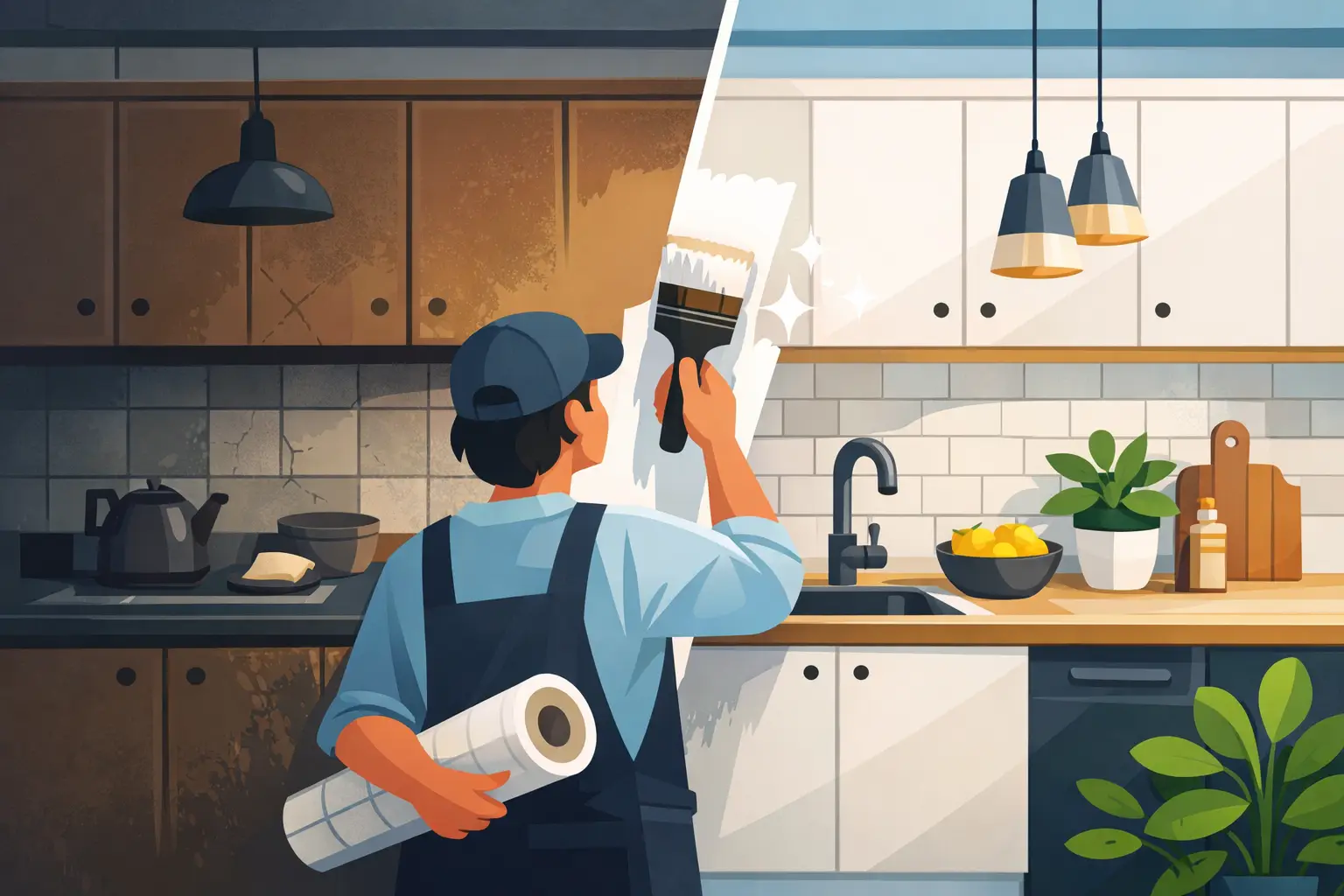
That is why many homeowners look at the doors first rather than jumping straight to a full renovation. It is a more affordable way to improve the look of the room, it creates far less disruption, and it can dramatically change the overall finish of the kitchen in a short space of time. The key is choosing the right method for the condition of your doors, the finish you want, and how long you expect the result to last.
How to refresh kitchen doors without replacing the whole kitchen
There is no single answer to how to refresh kitchen doors because not every kitchen starts from the same point. Solid wood doors in good condition can often be restored beautifully. Older laminate or MDF doors may need a different approach. Some kitchens respond well to repainting, while others are better suited to professional respraying or a full door replacement with the existing cabinets kept in place.
What matters most is the structure underneath. If the cabinet boxes are stable, aligned and in decent condition, replacing the entire kitchen is often unnecessary. In many homes, the carcasses have years of life left in them. The visible wear tends to sit on the fronts – faded finishes, greasy edges, peeling vinyl, worn handles and hinges that have lost their smooth movement.
Refreshing the doors allows you to focus your budget where it has the biggest visual effect. It also avoids the mess, waste and expense that usually come with ripping out a functional kitchen.
Start by checking what your doors are made from
Before choosing a finish, it helps to understand the surface you are dealing with. Timber doors usually offer the most flexibility. They can be sanded, repaired and refinished with good results, especially if the detail is not too intricate.
MDF doors can also be updated, but they need careful preparation. If the edges have swollen from moisture or the surface is damaged, the final finish will only ever be as good as the repair work underneath.
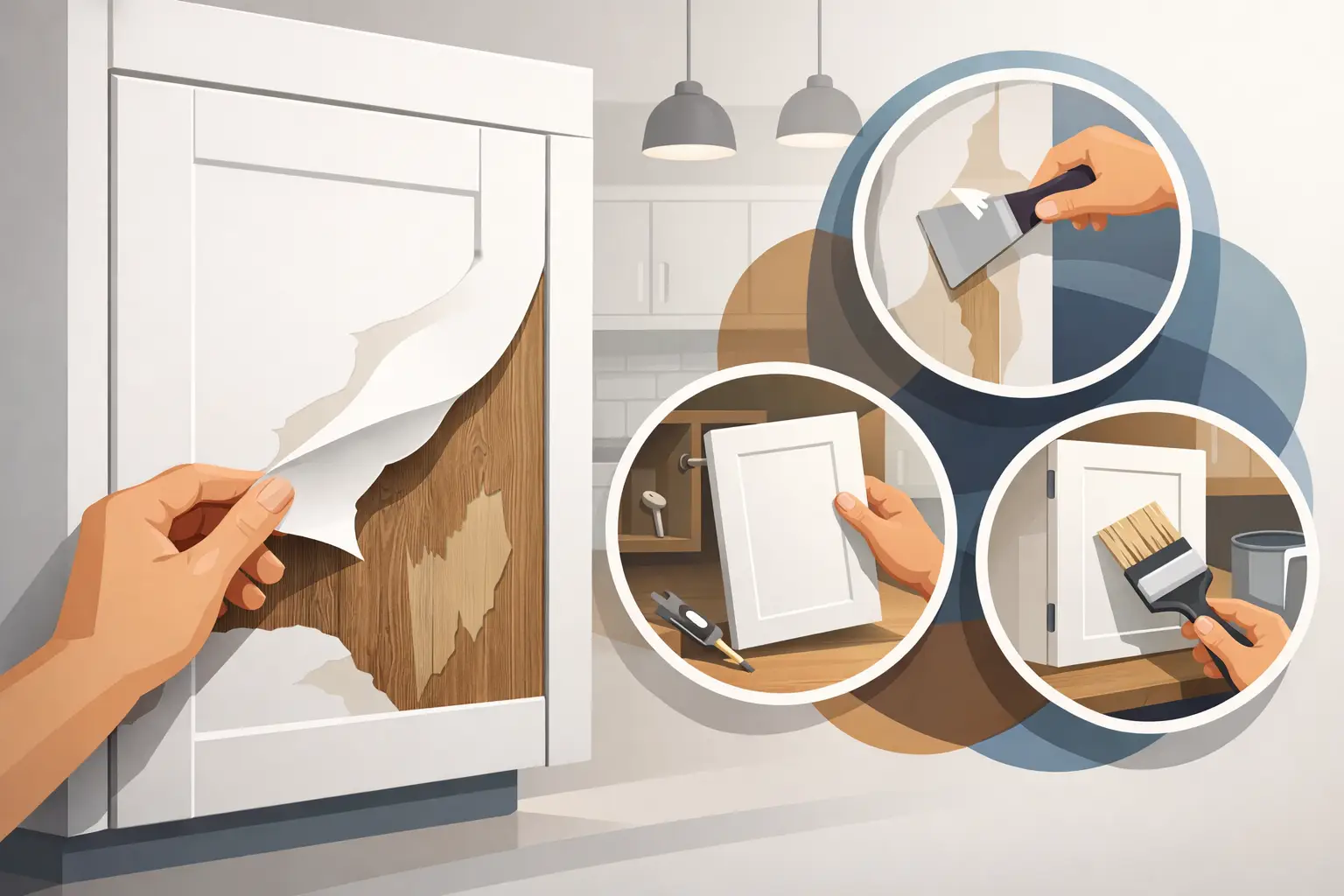
Vinyl-wrapped doors are often the trickiest. Once the wrap starts lifting or bubbling, patch repairs rarely look convincing for long. In some cases, they can be professionally stripped and refinished. In others, replacement is the more sensible route.
Laminate doors sit somewhere in the middle. They can sometimes be painted or sprayed with the correct preparation and primers, but this is not a job where shortcuts pay off. Kitchens are hard-working spaces, and poor adhesion shows up quickly around handles, corners and lower cabinets.
Painting kitchen doors yourself
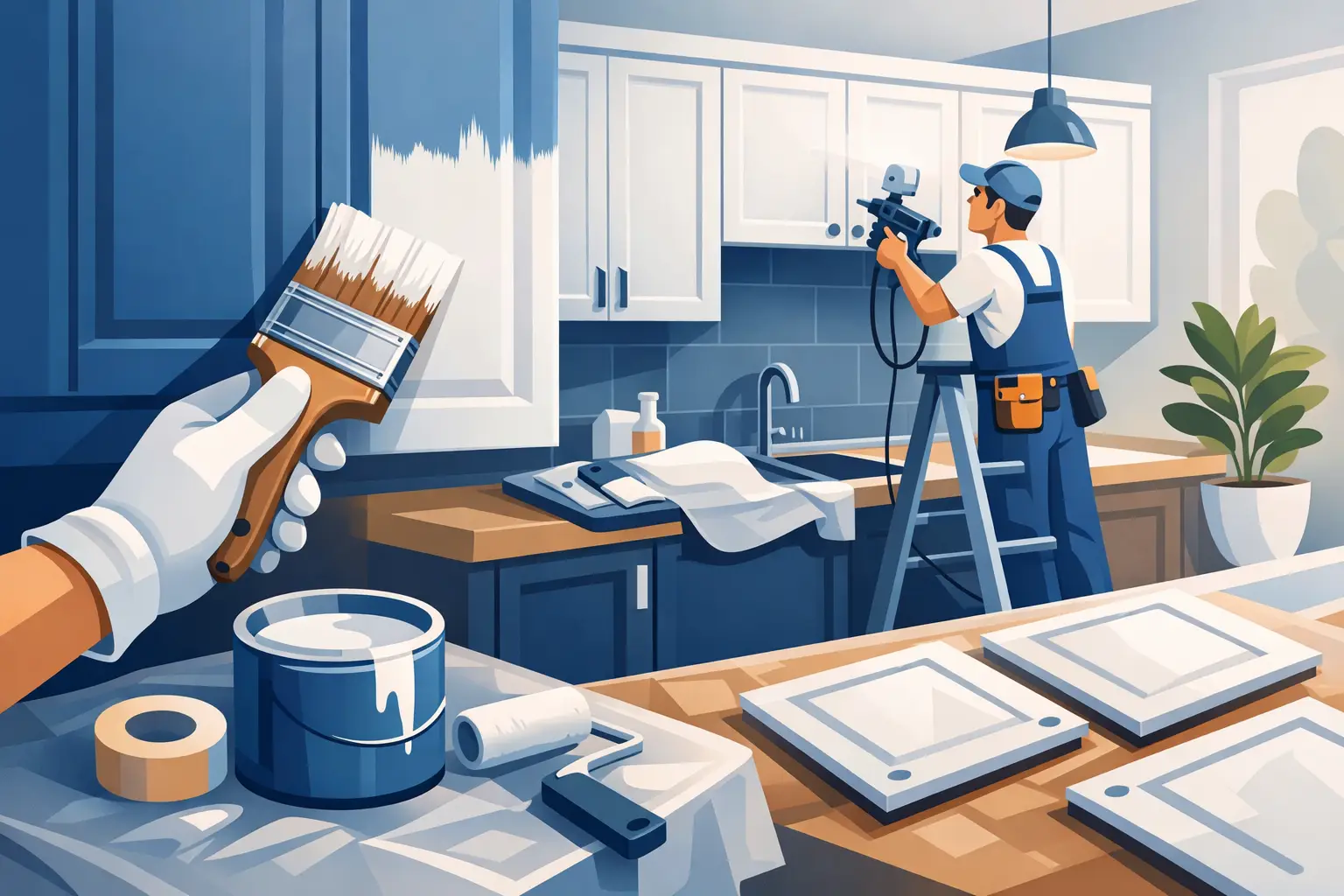
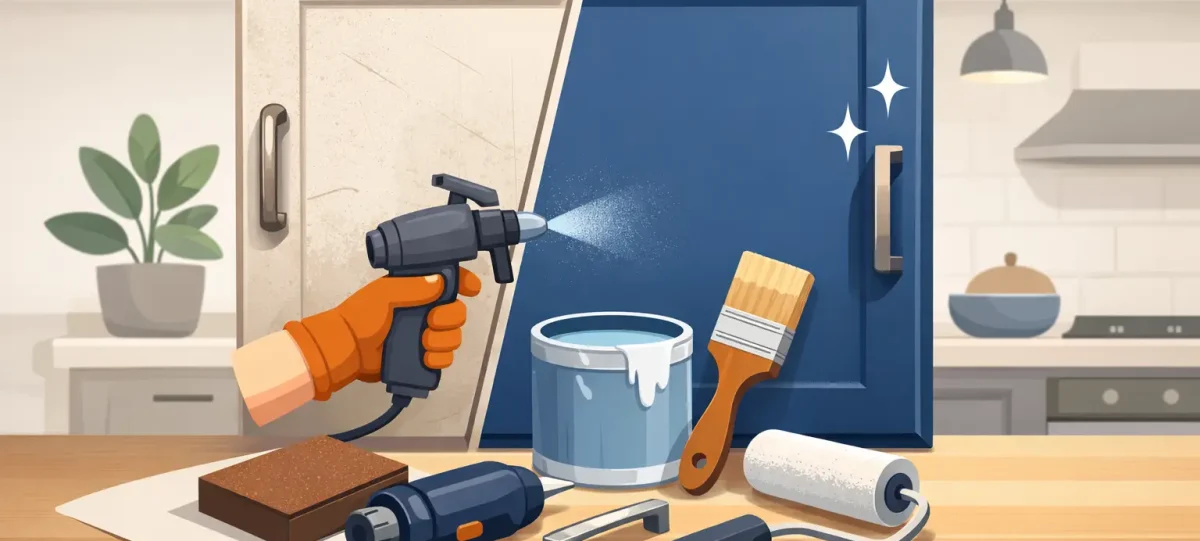
If your goal is a budget-friendly refresh and the doors are in reasonably good condition, painting can work well. It is usually the first option people consider because it seems straightforward, and for simple flat doors it can make a noticeable improvement.
The challenge is in the preparation. Kitchen doors collect grease, polish residue and general household grime, and if any of that stays on the surface, the new coating can struggle to bond properly. Doors need a thorough degrease, light sanding where required, and the right primer for the material. A topcoat designed for cabinetry is also worth using, as ordinary wall paint will not cope with daily wear.
The finish matters too. A brush and roller can produce a respectable result, but they rarely match the smooth, factory-style finish most homeowners want in a modern kitchen. You may also find that darker shades highlight brush marks and surface imperfections more than expected.
For a utility room or a smaller kitchen with simple doors, a DIY paint job can be worthwhile. For the main kitchen, especially in a home where presentation matters, it often comes down to whether you want good enough or genuinely polished.
Professional respraying for a like-new finish
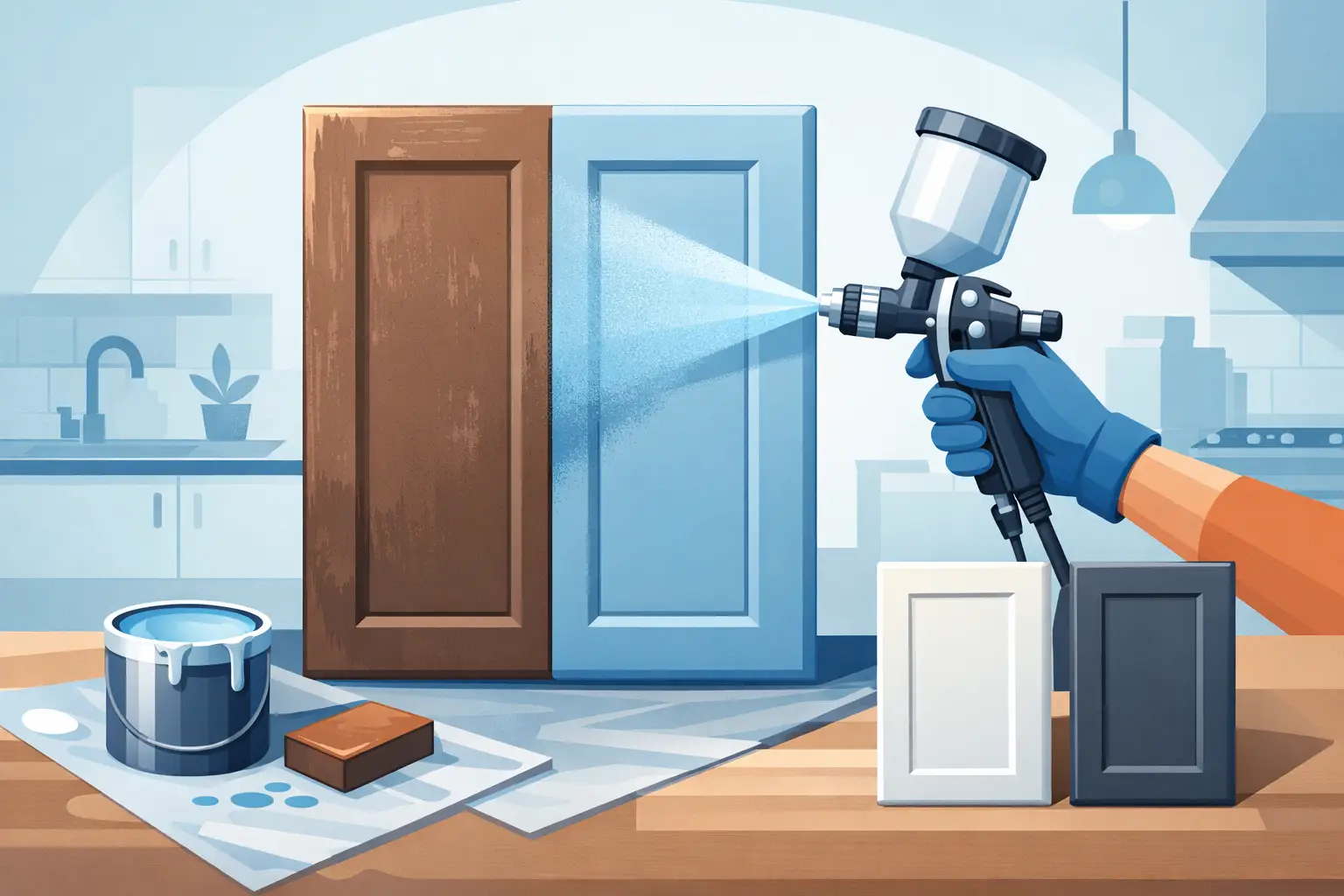
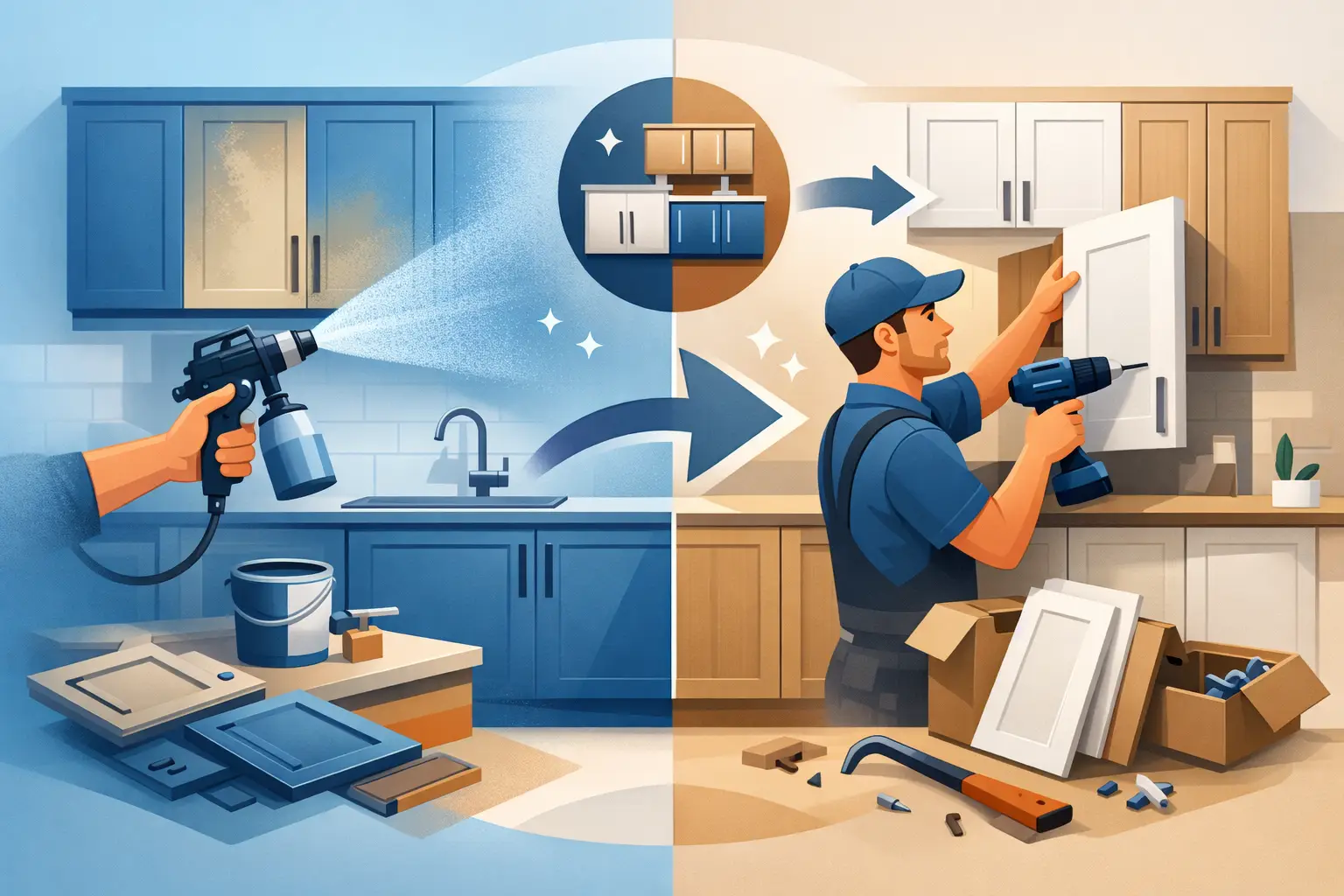
For many homeowners, respraying is the most effective answer to how to refresh kitchen doors while keeping costs sensible. It gives existing doors a completely new look without the upheaval of replacing the kitchen, and when done properly, the finish is hard-wearing, consistent and far more refined than most hand-painted alternatives.
Professional respraying is not just about changing the colour. It is a preparation-led process. Doors are removed, cleaned thoroughly, repaired where needed, sanded and primed with materials suited to the surface. The topcoats are then sprayed evenly to create a durable finish that looks clean and contemporary rather than obviously refurbished.
This route suits homeowners who want a premium result without a full renovation budget. It is also particularly useful when the kitchen layout works well and the quality of the cabinetry is worth preserving. In many cases, changing the door colour from dated oak or cream to a fresh neutral, soft green, navy or warm grey completely changes the room.
There is an eco-friendly advantage as well. Keeping existing units and improving what is already there reduces waste and avoids sending usable materials to landfill. For households trying to balance style, value and sustainability, that makes respraying especially appealing.
When replacing the doors makes more sense
Sometimes refreshing does mean changing the doors entirely. If they are warped, badly chipped, water-damaged or covered in failing vinyl, refinishing may not deliver the standard you want. In that case, new doors fitted onto the existing cabinets can still give you the look of a new kitchen without the cost of replacing everything.
This option sits between a cosmetic update and a full refit. It can be a good choice if you want to change the door style as well as the colour, perhaps moving from a dated routed design to a more current shaker or slab finish.
The trade-off is cost. New doors are usually more expensive than repainting or respraying, and accurate measuring is essential. Hinges, alignment and filler panels all need to work together for the result to look intentional rather than pieced together.
The details that make refreshed doors look better
Once the doors are improved, the supporting details become much more noticeable. Handles are an obvious example. Changing old brass, chrome or worn bar handles can sharpen the entire kitchen for a relatively small spend. The same goes for soft-close hinges if the existing ones have become stiff or uneven.
Plinths, cornices and end panels can also make a difference. If the doors are updated but the surrounding trim is still faded or damaged, the kitchen can look half-finished. Matching or refinishing those elements helps the whole room feel considered.
Colour choice deserves proper thought too. Lighter shades can lift a dark kitchen and make the room feel larger, but they may show marks more easily around high-use areas. Darker colours can look stunning and expensive, though they tend to show fingerprints and need enough natural or artificial light to work well.
A professional will usually advise based on your room, not just current trends. That matters because the right colour in a showroom is not always the right colour in a north-facing kitchen at home.
How to decide which route is right for you
The best method depends on three things – condition, expectations and budget. If your doors are structurally sound and you simply want a fresher look, painting or respraying may be all you need. If the finish is failing but the cabinets are still strong, professional respraying often gives the best balance of appearance, durability and value.
If the doors themselves are beyond repair, replacing only the fronts can still save a substantial amount compared with a full kitchen renovation. And if you are already unhappy with the layout, storage or condition of the cabinets, that is when a wider refurbishment starts to make more sense.
For many homes across Dublin and the surrounding counties, a door-led refresh is the practical sweet spot. It transforms the look of the kitchen, avoids weeks of upheaval, and keeps a tighter hold on costs without compromising on appearance.
A kitchen does not have to be ripped out to feel new again. Sometimes the smartest improvement is simply giving the most visible part of it the expert attention it deserves.