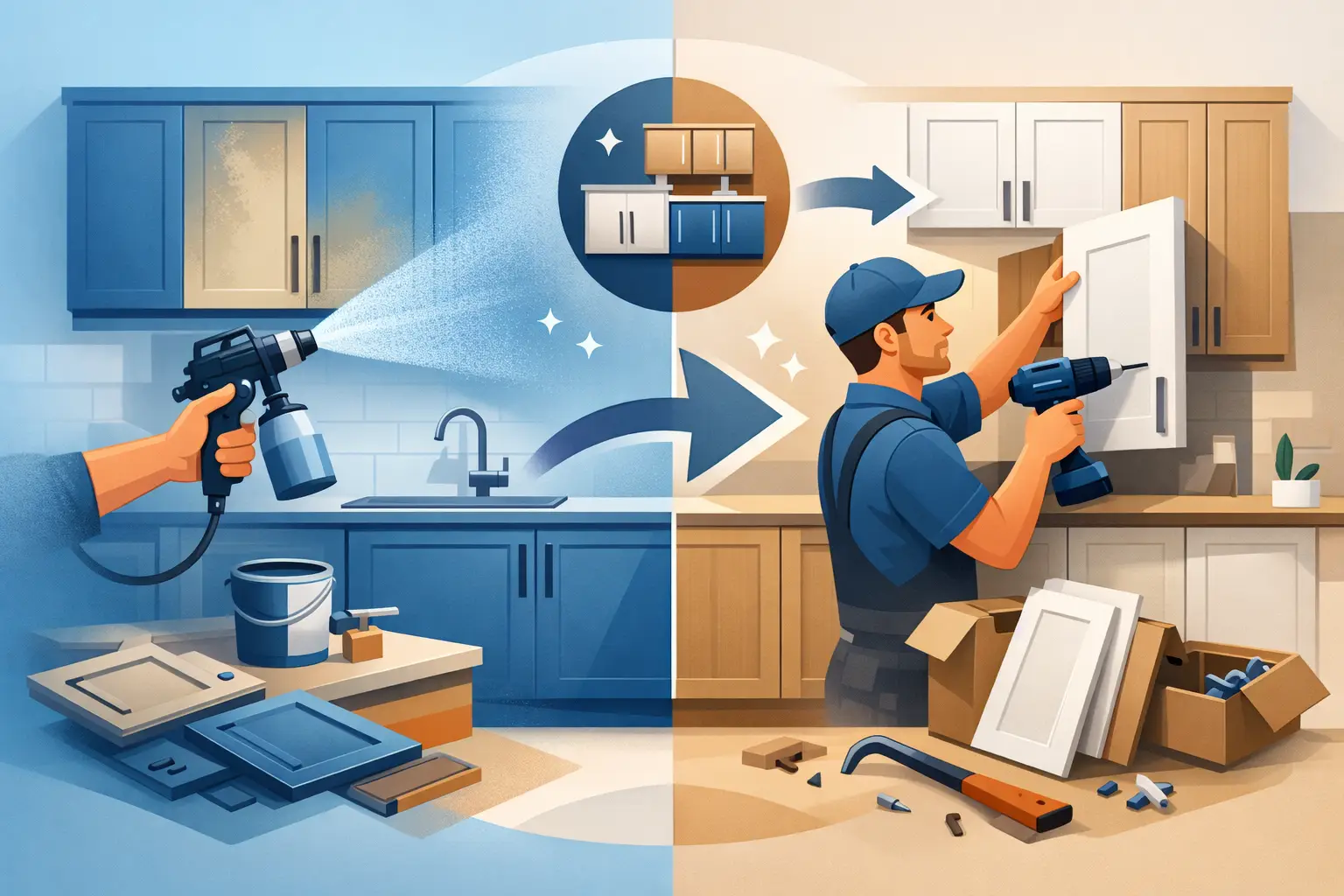
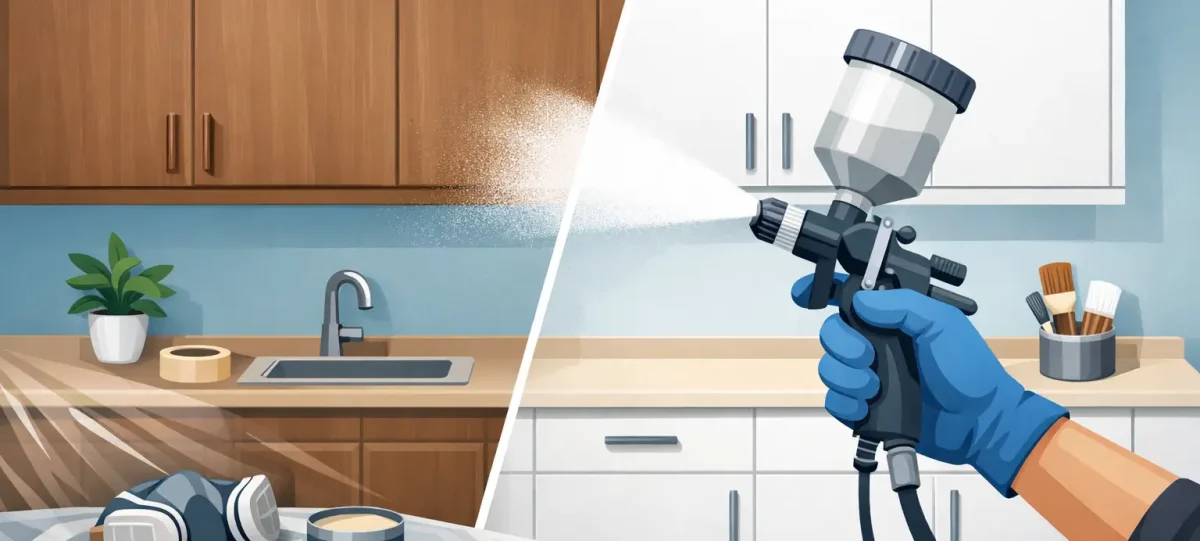
Laminate doors can make a kitchen look tired long before the cabinets are actually worn out. If the layout still works and the units are structurally sound, learning how to respray laminate cabinets can be a smart way to refresh the room without the cost, mess and waste of a full replacement.
The key is understanding that laminate is not timber. It has a smooth, non-porous surface, which means paint will only perform well if the preparation and coating system are right. A rushed job often looks acceptable for a few weeks, then chips around handles, peels at edges or starts to show grease marks that will not clean off properly.
Can laminate cabinets be resprayed?
Yes, laminate cabinets can be resprayed, and when done correctly the finish can look remarkably close to a factory finish. That said, not every kitchen is an ideal candidate. If the laminate is lifting badly, the core material is swollen from water damage, or the doors are cracked, respraying may improve the look only temporarily. In those cases, repair work or replacement doors may make more sense.
For most kitchens, though, respraying is an affordable and eco-friendly alternative to ripping everything out. You keep the existing cabinetry, avoid unnecessary waste and still achieve a stunning change in colour and overall style.
How to respray laminate cabinets for a durable finish
A durable result comes down to process. Good spray equipment matters, but surface preparation matters more.
Start with a proper assessment
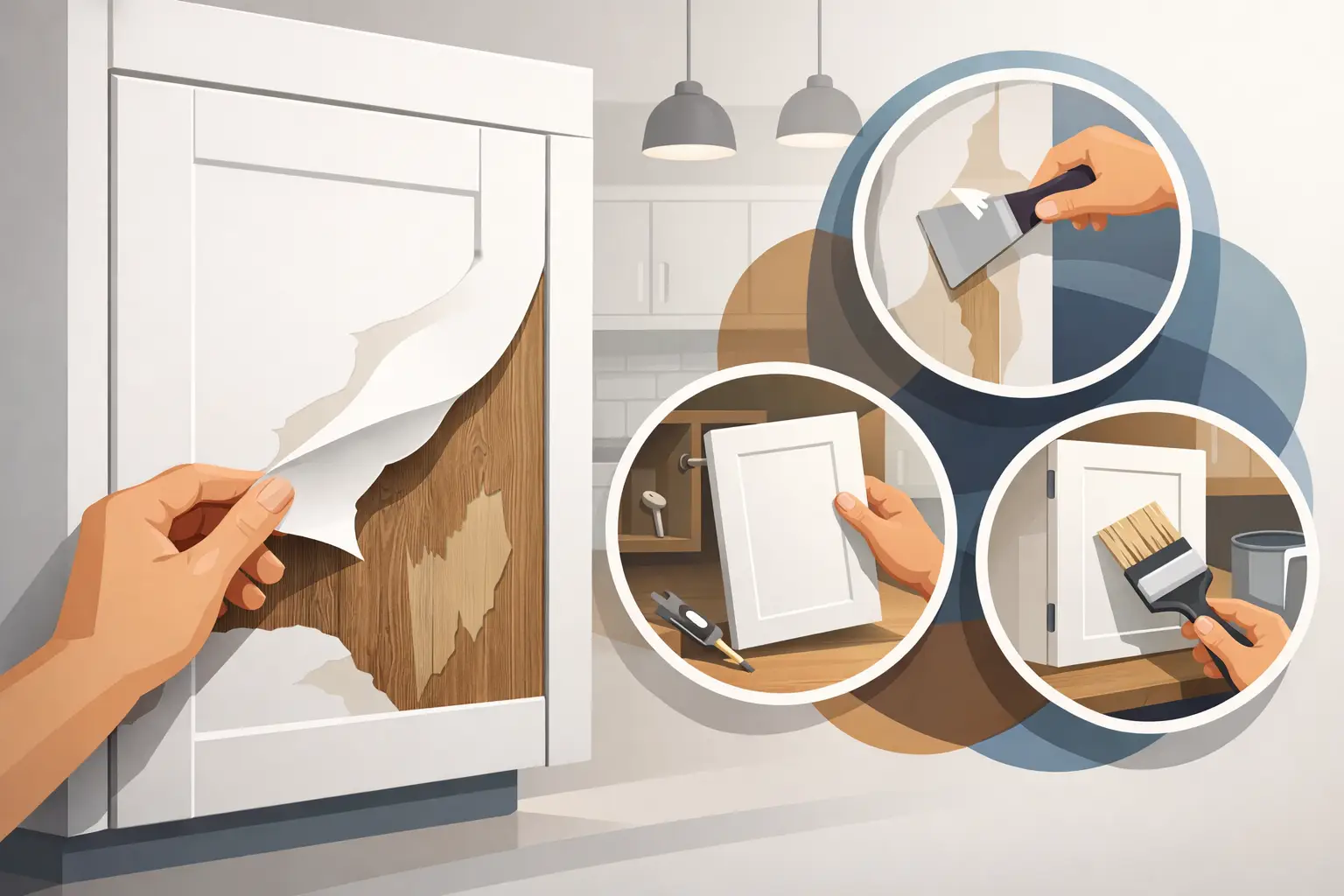
Before any sanding or spraying begins, check the condition of every door and panel. Look closely at corners, hinge holes and the lower edges near sinks or dishwashers. These are the places where moisture damage tends to show first. If the board beneath the laminate has expanded, no paint system will hide that for long.
It is also worth deciding whether you want to respray just the doors or the full visible kitchen, including end panels, plinths and cornices. A mismatch between freshly sprayed doors and aged surrounding panels can make the job feel unfinished.
Clean more thoroughly than you think you need to
This is the stage many DIY attempts get wrong. Kitchen cabinets collect layers of grease, polish, cooking residue and hand oils, especially around handles and above the hob. Even if the doors look clean, contamination can stop primer from bonding properly.
Use a suitable degreasing cleaner and work methodically over every surface. Pay particular attention to edges and routed details. Once cleaned, rinse if required by the product instructions and allow everything to dry fully before moving on.
Sand lightly, but with purpose
Laminate does not need aggressive sanding, and heavy sanding can do more harm than good. The goal is not to remove the laminate but to create a key for the primer. A light, even abrade with fine abrasive paper is usually enough.
Be careful around edges, as these areas are easiest to damage. After sanding, remove all dust completely. Any fine dust left on the surface can spoil the sprayed finish and reduce adhesion.
Use the right primer for laminate
If you want to know how to respray laminate cabinets successfully, this is where the answer really sits. Standard wall primer or a generic wood undercoat is not enough. Laminate needs a high-adhesion primer designed for slick, hard surfaces.
A professional-grade bonding primer gives the topcoat something reliable to grip to. Without it, even a beautiful sprayed finish can fail quickly with normal kitchen use. This is especially true on doors that are opened several times a day.
Apply a suitable spray topcoat
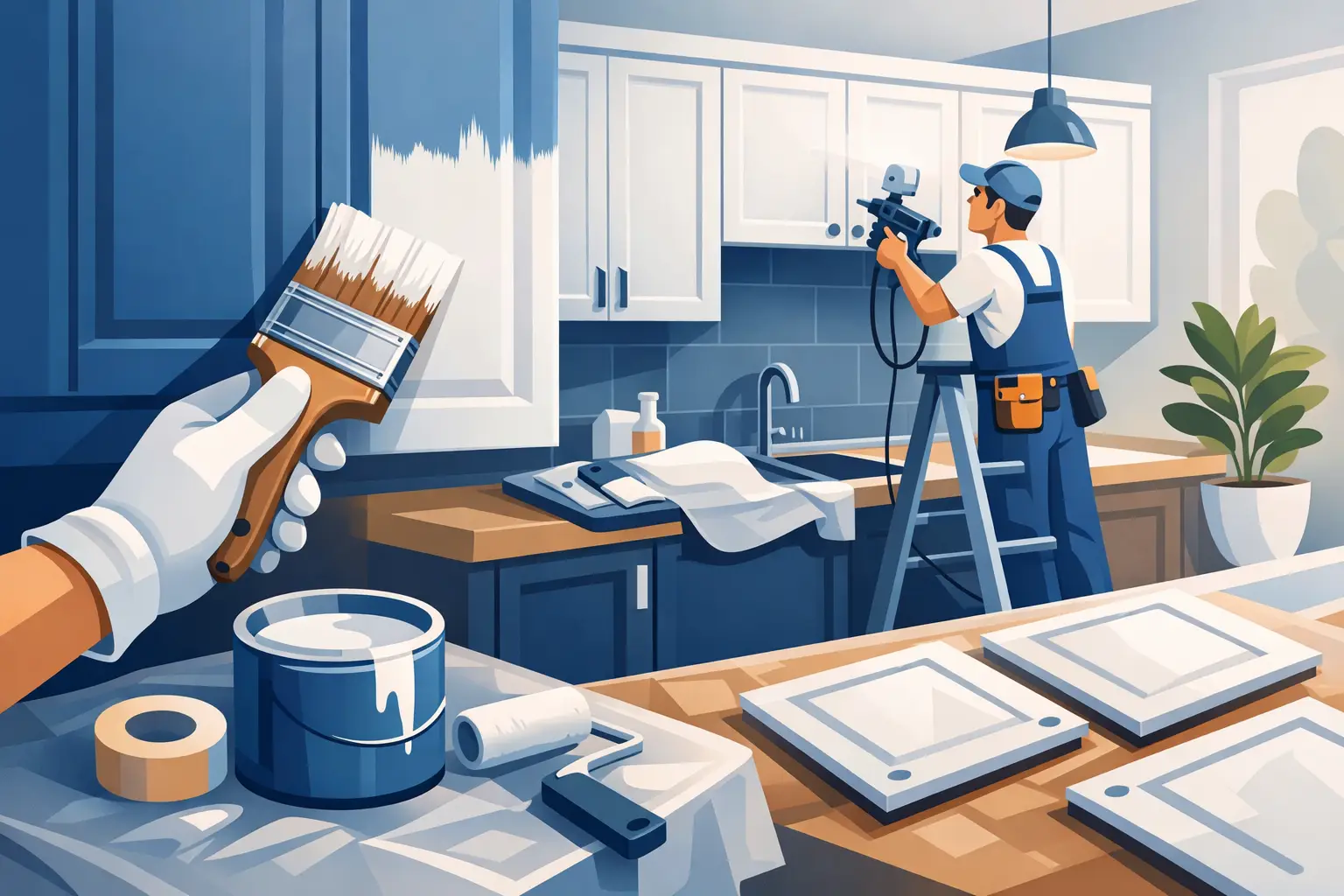
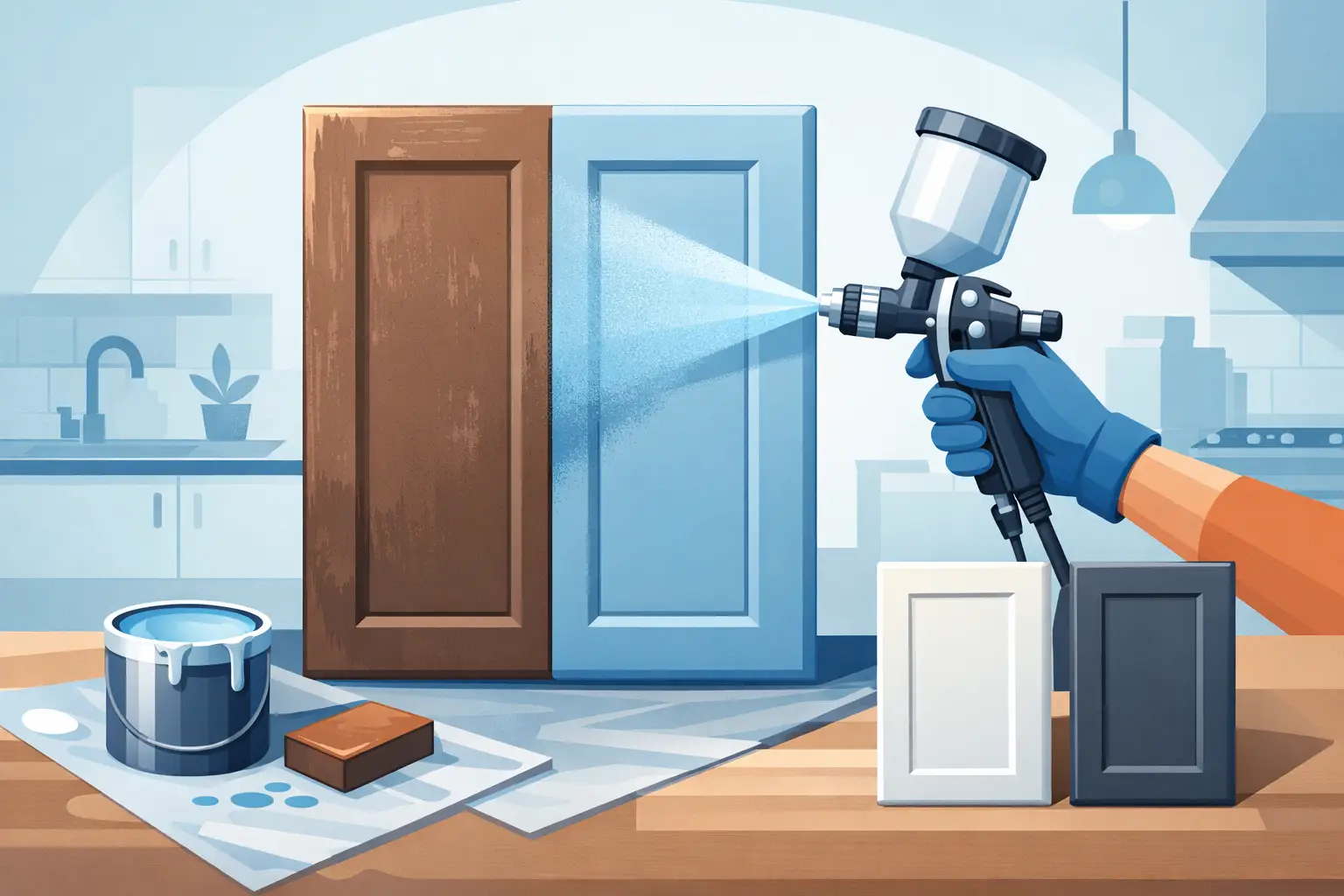
Once primed and cured correctly, the cabinets need a hard-wearing topcoat that suits kitchen conditions. That means resistance to moisture, cleaning, heat fluctuations and daily handling. Professional spray finishes tend to outperform brush-applied products because they create a smoother, more even coating with better consistency across large surfaces.
The finish you choose also matters. Matt shades are popular, but they can sometimes mark more easily than satin or low-sheen finishes. If you have a busy family kitchen, a slightly more forgiving sheen level may be the better option.
What can go wrong when respraying laminate cabinets?
Most failures are predictable. Peeling usually points to poor cleaning or the wrong primer. Chipping around handles often means the coating has not fully cured before reassembly or use. A rough finish usually comes from dust contamination, poor spray technique or unsuitable drying conditions.
Temperature and humidity can also affect the result. If cabinets are sprayed in a cold, damp space, drying times slow down and the finish may not level properly. That is one reason professional respraying often delivers a more refined and durable result than a home setup in a garage or shed.
There is also the issue of edges. Laminate edges, particularly on older doors, can be more vulnerable to impact and wear. These need careful preparation and coating, and even then, high-contact areas will always need thoughtful handling.
DIY or professional cabinet respray?
It depends on your expectations. If you are refreshing utility room units or a rental property kitchen and you are comfortable with prep work, masking and spray equipment, a DIY approach can be worthwhile. You may achieve a decent cosmetic improvement at a lower upfront cost.
If, however, you want a smooth, consistent, like-new finish in the heart of your home, professional spraying is often the better investment. Kitchens are unforgiving spaces. Every flaw catches the light, and every weak point gets tested by steam, spills and repeated use.
A trusted specialist will usually remove doors properly, prepare surfaces with the correct system, spray in controlled conditions and reinstall everything with care. That tends to produce a cleaner finish, sharper coverage on edges and better long-term performance. For homeowners in Dublin and surrounding areas, this can be especially appealing when the goal is to upgrade the kitchen quickly without the disruption of a full renovation.
Choosing the right colour and finish
Colour choice affects more than style. Lighter shades can brighten a small or shaded kitchen, while darker colours add depth and contrast but may show fingerprints more readily. Warm neutrals remain a safe choice for resale appeal, but strong greens, navy tones and soft greys have become popular because they feel current without being too trend-led.
Finish level deserves the same thought. Ultra-matt looks elegant, but it is not always the most practical choice in a hardworking kitchen. Satin or soft-sheen finishes are often easier to maintain while still looking refined.
If the worktops, splashback and flooring are staying as they are, make sure the new cabinet colour works with them. A cabinet respray should make the whole kitchen feel more cohesive, not just make the doors look newer than everything else around them.
Is respraying laminate cabinets worth it?
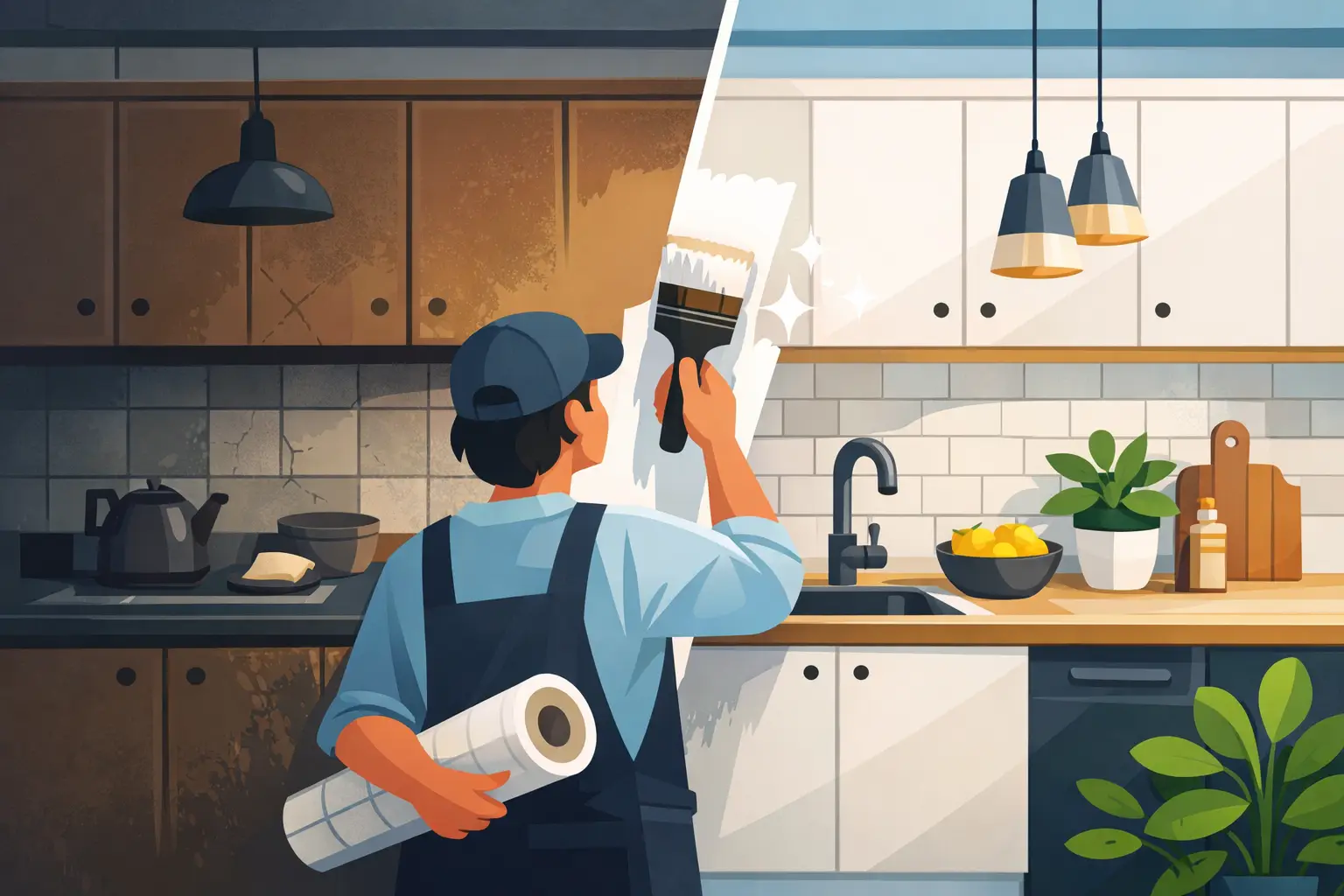
In many cases, yes. If your cabinet boxes are sound and the design still suits your home, respraying can deliver excellent value. You get a visible transformation at a fraction of the price of replacing the kitchen, and the process is usually much quicker.
There is also a sustainability benefit that matters to many homeowners. Keeping existing cabinets out of landfill and improving what you already have is often the more responsible choice. When done professionally, it does not feel like a compromise. It feels like a smart upgrade.
That said, it is not a cure-all. If your kitchen has serious structural wear, poor layout, broken hinges throughout or extensive water damage, respraying may only address the surface problem. The best results happen when the cabinetry is fundamentally worth saving.
How long does a laminate cabinet respray last?
A well-executed job can last for years, but longevity depends on the condition of the original doors, the quality of the coating system and how the kitchen is used. A careful household will naturally get longer from the finish than a very high-traffic family kitchen with constant knocks and heavy cleaning.
Maintenance is straightforward. Clean with a soft cloth and mild cleaner, avoid abrasive pads and try not to let water sit on edges for long periods. Treated well, a professionally sprayed finish should stay looking fresh and polished for a long time.
If you are weighing up how to respray laminate cabinets, the most useful question is not whether paint will stick for a day, but whether the finish will still look good after a year of real kitchen life. That is where preparation, product choice and workmanship make all the difference.
A tired kitchen does not always need to be replaced to feel new again. Sometimes the better option is to keep what works, improve what shows, and give the space a finish that looks every bit as considered as the rest of your home.