A wardrobe can take up an entire wall, so its colour has far more impact than many homeowners expect. Choosing the best wardrobe door colours for bedrooms is not just about picking a shade you like on a sample card. It is about how that colour behaves in morning light, how it sits beside your flooring, and whether it still feels right six months from now.
In most bedrooms, wardrobe doors act almost like a second set of walls. Get the colour right and the room feels calmer, brighter and more expensive. Get it wrong and even a well-furnished bedroom can feel heavy or disjointed. That is why colour choice deserves the same care as your paint, flooring or headboard.
How to choose the best wardrobe door colours for bedrooms
The right shade depends on three things – light, room size and the look you want to create. A small bedroom with limited natural light usually benefits from lighter wardrobe doors that bounce light back into the room. A larger bedroom can carry deeper tones without feeling closed in.
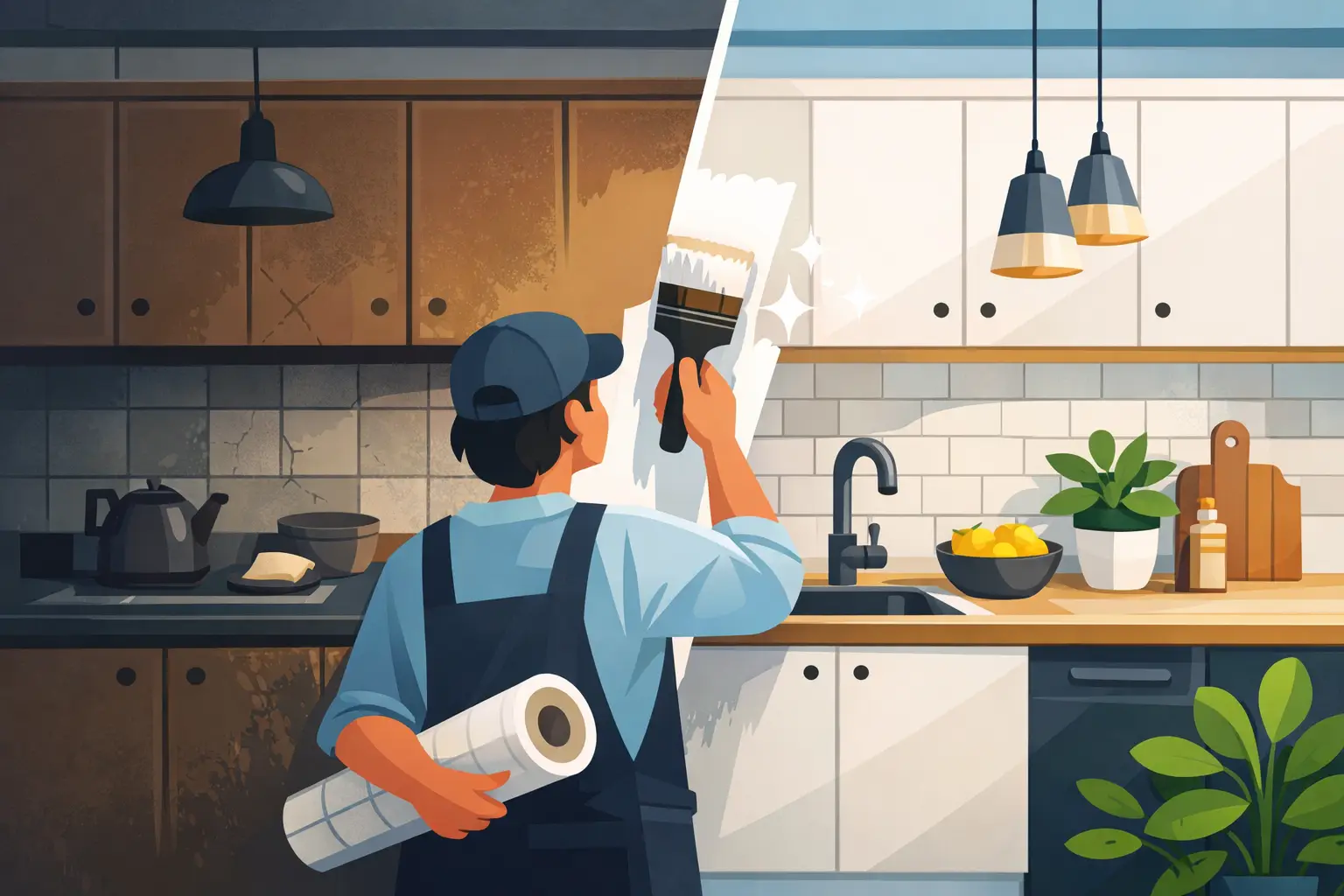
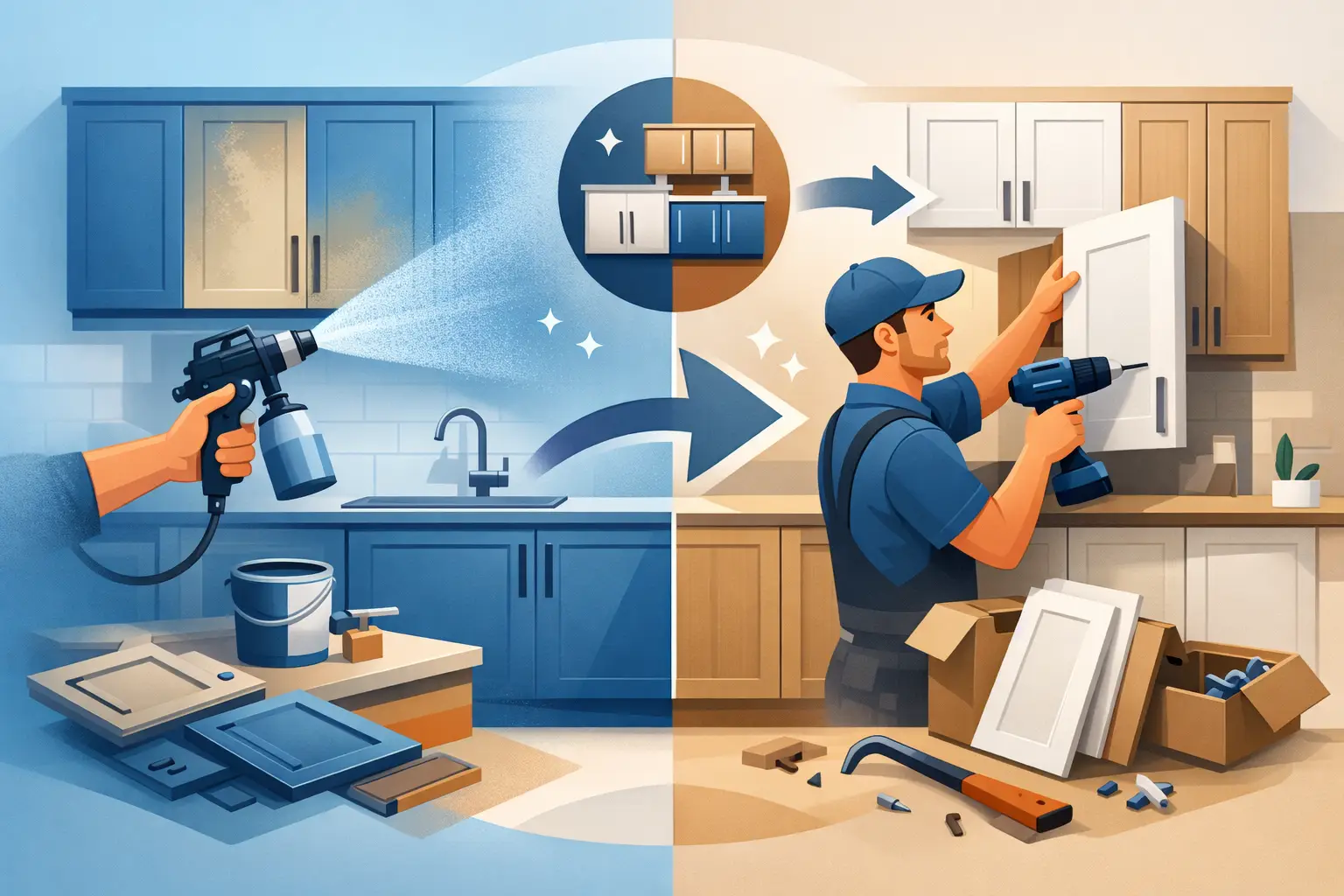
It is also worth thinking about permanence. Wall paint is relatively easy to change. Wardrobe doors are more dominant, and changing them entirely is costly and disruptive. For many homeowners, especially those improving a bedroom without taking on a full renovation, respraying existing wardrobe doors is a practical way to achieve a professional finish in a colour that suits the space better.
If you are choosing between a safe option and a bold one, the answer is often somewhere in the middle. Timeless does not have to mean plain, and statement colours work best when they still complement the rest of the room.
Soft white wardrobe doors
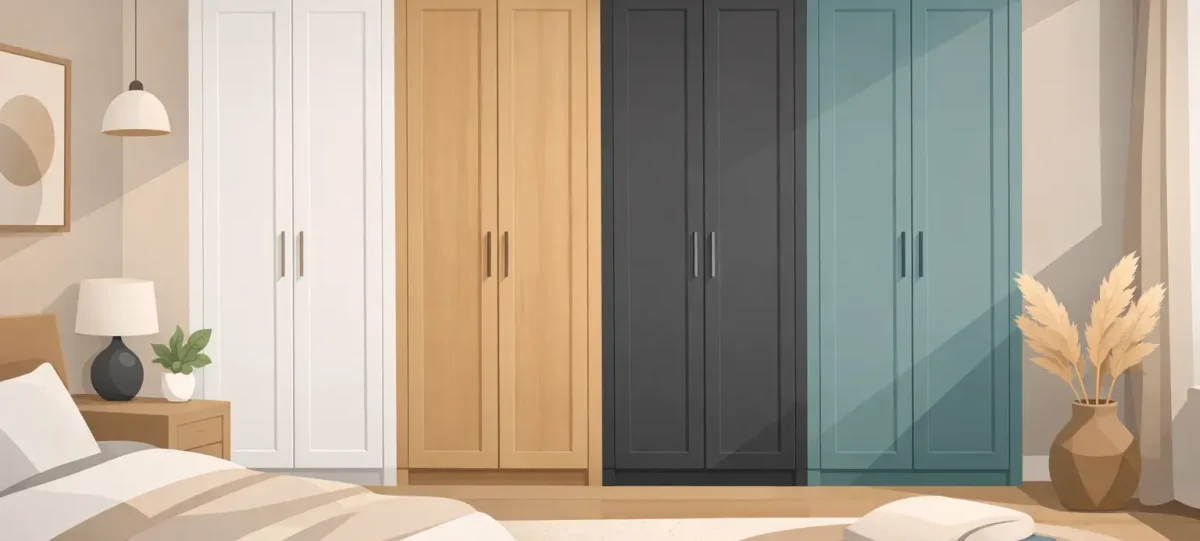
Soft white remains one of the most reliable choices for bedrooms. It creates a clean, fresh look without the sharpness that can sometimes make brilliant white feel clinical. In homes where daylight changes significantly through the day, a softer white tends to be more forgiving and more comfortable to live with.
This colour works particularly well in smaller bedrooms, box rooms and guest rooms. It helps wardrobes blend into the walls rather than dominate them. If your bedroom includes warm flooring, cream textiles or brass details, a warm white will usually feel more balanced than a stark one.
The trade-off is maintenance. White wardrobe doors can show fingerprints, scuffs and everyday marks more readily than mid-tone shades. That said, with a durable professional finish, they still remain one of the most practical and popular options.
Warm greige and taupe
If white feels a little too predictable, greige and taupe offer a more refined alternative. These shades sit between grey and beige, which makes them especially adaptable. They suit modern bedrooms, classic interiors and everything in between.
What makes these colours so effective is their softness. They add warmth without making the room feel dark. They also pair well with natural woods, upholstered beds and layered neutral schemes, which is why they are often among the best wardrobe door colours for bedrooms designed to feel restful rather than showy.
It does matter which undertone you choose. Some greiges lean cool and can feel flat in north-facing rooms. Others carry a warmer base that gives the space a more inviting look. Testing the tone against your wall colour, carpet and curtains is always worthwhile.
Light grey for a contemporary finish
Light grey has been a favourite in fitted furniture for years, and for good reason. It gives wardrobes a smart, updated feel without pushing the room into trend-led territory. For homeowners who want something more modern than cream but not as dark as anthracite, light grey sits in a comfortable middle ground.
This shade works particularly well in bedrooms with crisp white walls, pale timber flooring or black accent details. It can also make older wardrobes feel much more current when resprayed professionally.
The caution with grey is that it can feel chilly if the room lacks warmth elsewhere. In a bedroom with cool lighting, silver-toned fabrics and little natural sunlight, some greys can make the room feel less relaxing. Adding texture through bedding, rugs and wood finishes helps counterbalance that.
Sage green and muted greens
Green has become a strong choice for bedrooms because it naturally lends itself to calm, restorative spaces. Sage, eucalyptus and other muted greens bring personality without overwhelming the room. They feel fresh, elegant and surprisingly versatile.
These colours suit homeowners who want a subtle point of difference from standard neutrals. They work beautifully with off-white walls, oak furniture and soft natural fabrics. In period homes or bedrooms with traditional detailing, muted green wardrobe doors can look especially at home.
Green is not as universally flexible as white or taupe, so the exact tone matters. A grey-green may feel understated and timeless, while a stronger olive can make more of a statement. The best approach is to choose a muted version that complements the architecture and light in the room rather than competing with it.
Navy and deep blue tones
Darker wardrobe doors can look stunning in the right bedroom, and navy is often the safest way to go bold. It brings depth and sophistication, especially in larger rooms with decent natural light. Used well, it can make fitted wardrobes feel bespoke and high-end.
Navy works particularly well with brushed brass handles, warm timber accents and soft white or stone-coloured walls. It can suit both classic and contemporary bedrooms depending on the finish and surrounding details.
Still, dark colours are more demanding. In a compact room, they may make wardrobes appear heavier and more prominent. If your bedroom already feels short on light, navy could deepen that effect. It is a strong choice, but not one to choose simply because it looks good in a showroom or on social media.
Charcoal and black – dramatic but considered
Charcoal and black wardrobe doors can look exceptionally smart, but they are best used with care. In the right setting, they create contrast, drama and a tailored finish. They are particularly effective in spacious main bedrooms with high ceilings, generous light or a clearly defined modern design scheme.
The appeal is obvious. Dark wardrobe doors can disguise panel lines, make hardware stand out beautifully and create a luxury feel. For some homes, they are exactly the right choice.
The downside is that they rarely disappear into a room. They become a feature. That is not a problem if the rest of the space supports them, but in a smaller bedroom they can feel visually heavy. Dust, fingerprints and smudges can also be more visible on very dark finishes, depending on sheen.
Should wardrobe doors match the walls?
Not always. Matching wardrobe doors to the walls can be very effective in smaller bedrooms because it makes the room feel more cohesive and less broken up. If the wardrobes cover a large section of wall, colour matching can create a calm, built-in look.
A slight contrast, however, often adds more depth. For example, off-white walls with warm taupe wardrobe doors can feel more layered and intentional than a single flat colour throughout. The decision depends on whether you want the wardrobes to blend in or contribute to the room’s design.
If your bedroom already includes strong patterns, dark furniture or bold paint, quieter wardrobe colours usually work best. If the rest of the scheme is simple, the wardrobe colour has more room to speak.
Finish matters as much as colour
Colour gets most of the attention, but finish changes how that colour reads. A matt or low-sheen finish tends to look more contemporary and understated in bedrooms. It softens the appearance of wardrobe doors and avoids excess glare under artificial light.
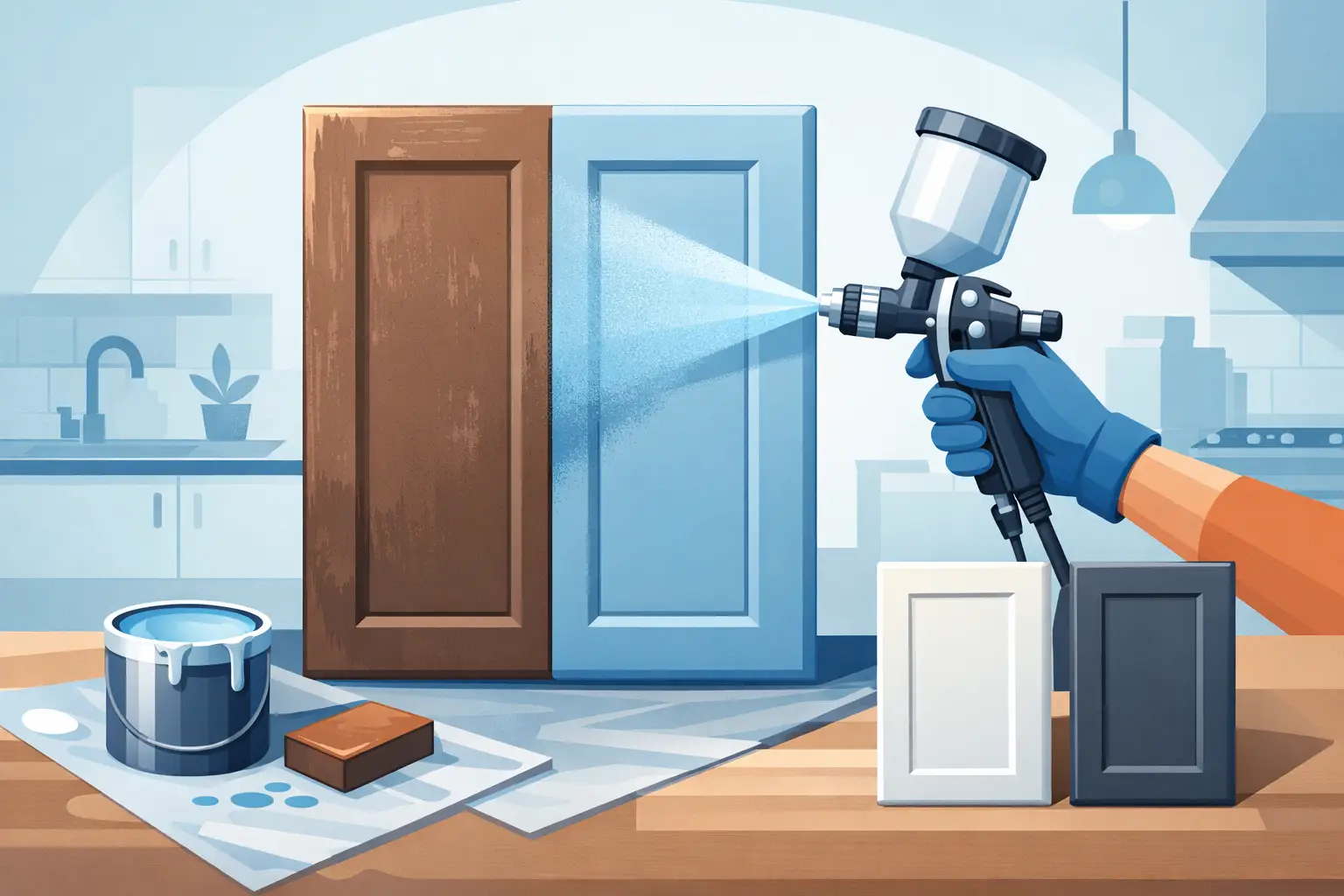
Higher sheen finishes reflect more light, which can be useful in darker rooms, but they also highlight imperfections more easily. For older wardrobe doors being refreshed rather than replaced, a professionally applied finish can make a significant difference to the final result and durability.
This is where expert preparation matters. Even the best shade can disappoint if the surface underneath has not been handled properly.
A practical way to refresh existing wardrobes
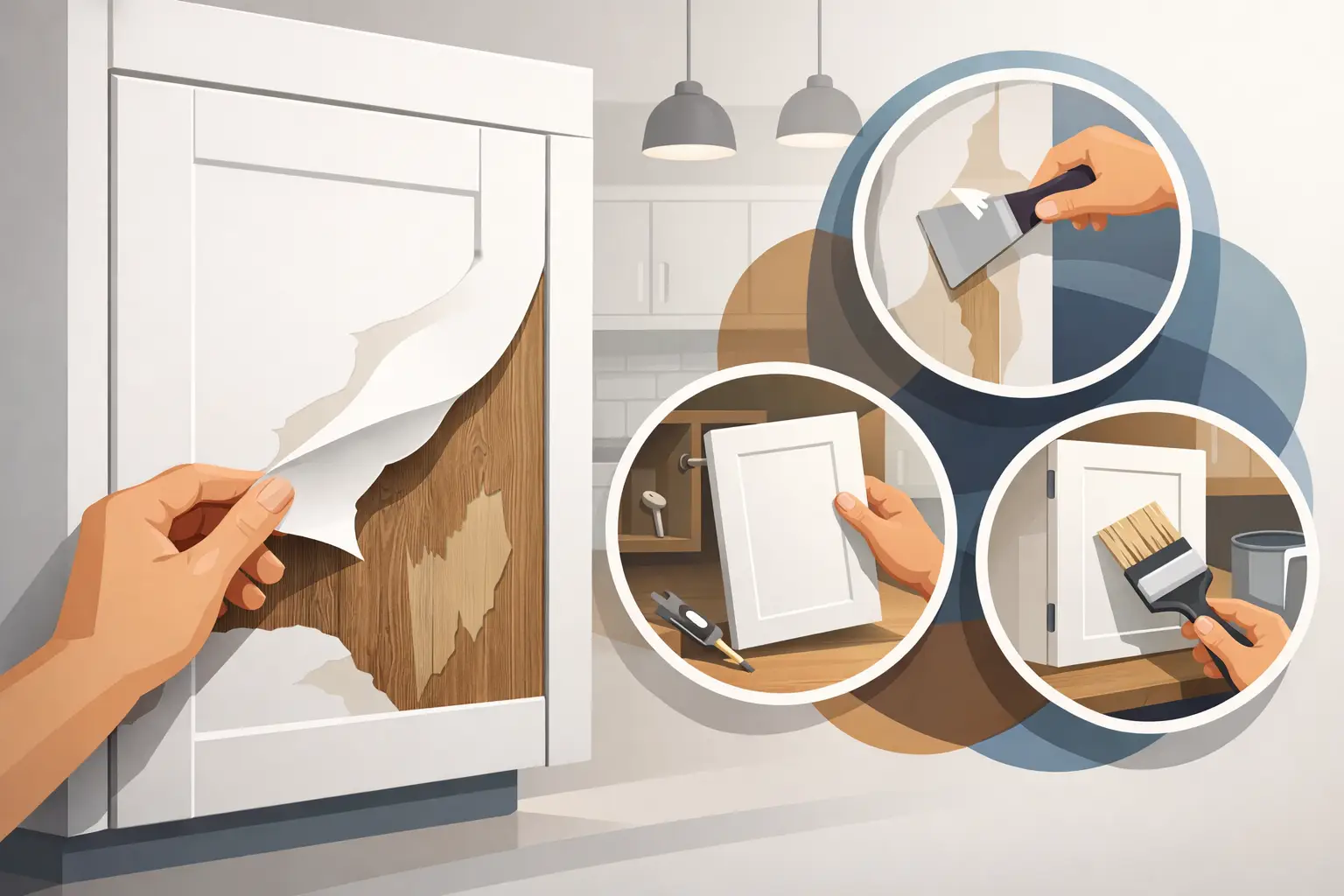
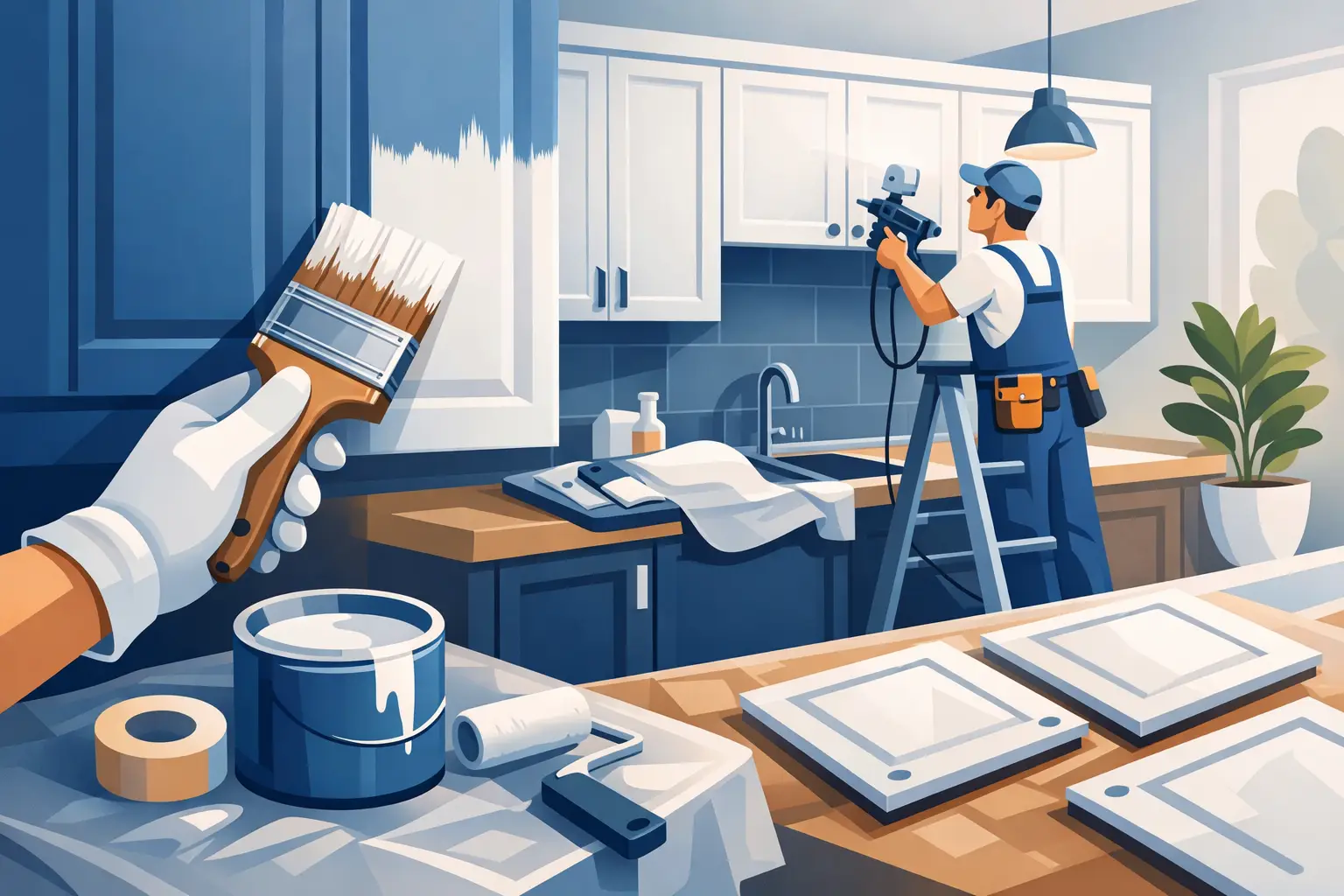
For many households, replacing fitted wardrobes simply to change the colour makes little financial sense. If the structure is sound, respraying offers a cost-effective way to update the entire bedroom without the upheaval of ripping units out and starting again.
A professional respray gives you far more control over the final look than trying to work around dated finishes or colours that no longer suit the room. It is also an eco-friendly option, which appeals to homeowners who want a stunning result without unnecessary waste. That practical balance between appearance, budget and disruption is exactly why more people are reconsidering what they already have rather than replacing it.
If you are narrowing down your options, start with the room itself rather than the trend forecast. Look at your light, your flooring and the mood you want at the end of the day. The best colour is the one that makes your bedroom feel settled the moment you walk in.