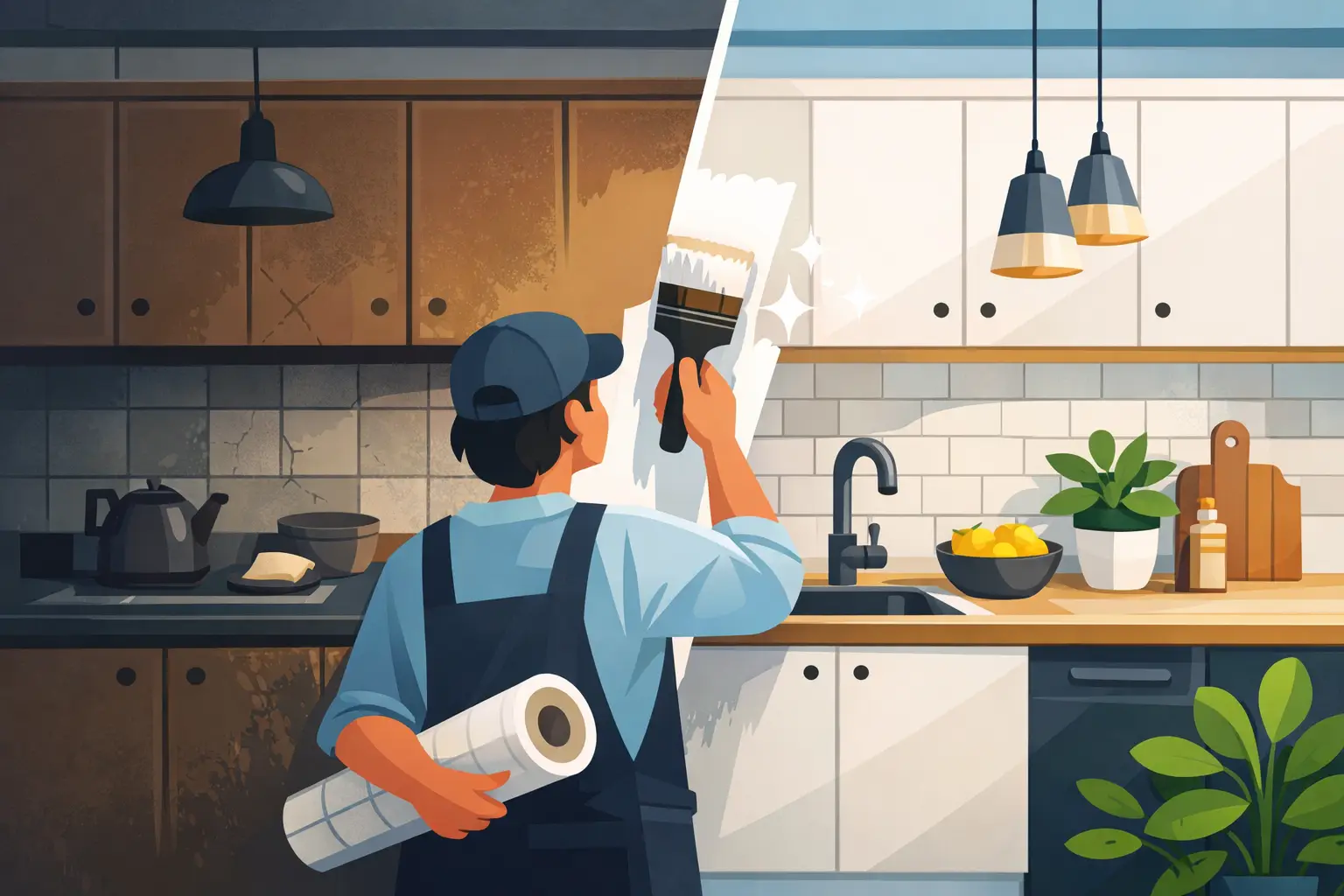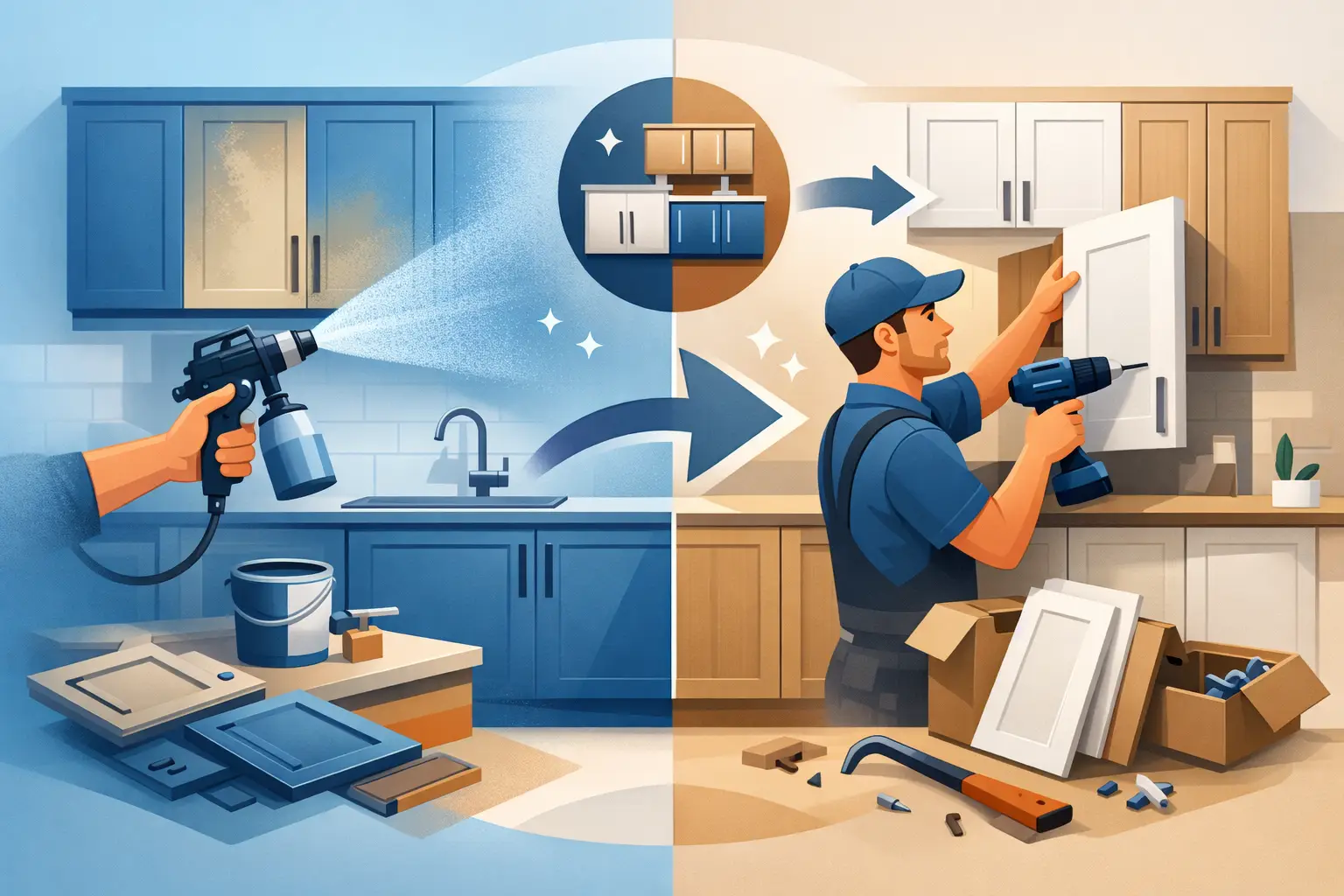
A kitchen can look tired long before it actually needs replacing. If your doors are sound but the finish is dated, the real question is not whether to rip everything out – it is whether cabinet respraying vs vinyl wrapping makes more sense for your home, budget and expectations.
For many homeowners across Dublin and the surrounding counties, both options promise a quicker, more affordable alternative to a full renovation. But they are not equal in how they look, how they wear, or how long they last. The right choice depends on the condition of your cabinets, the finish you want, and how much daily use your kitchen gets.
Cabinet respraying vs vinyl wrapping: what is the difference?
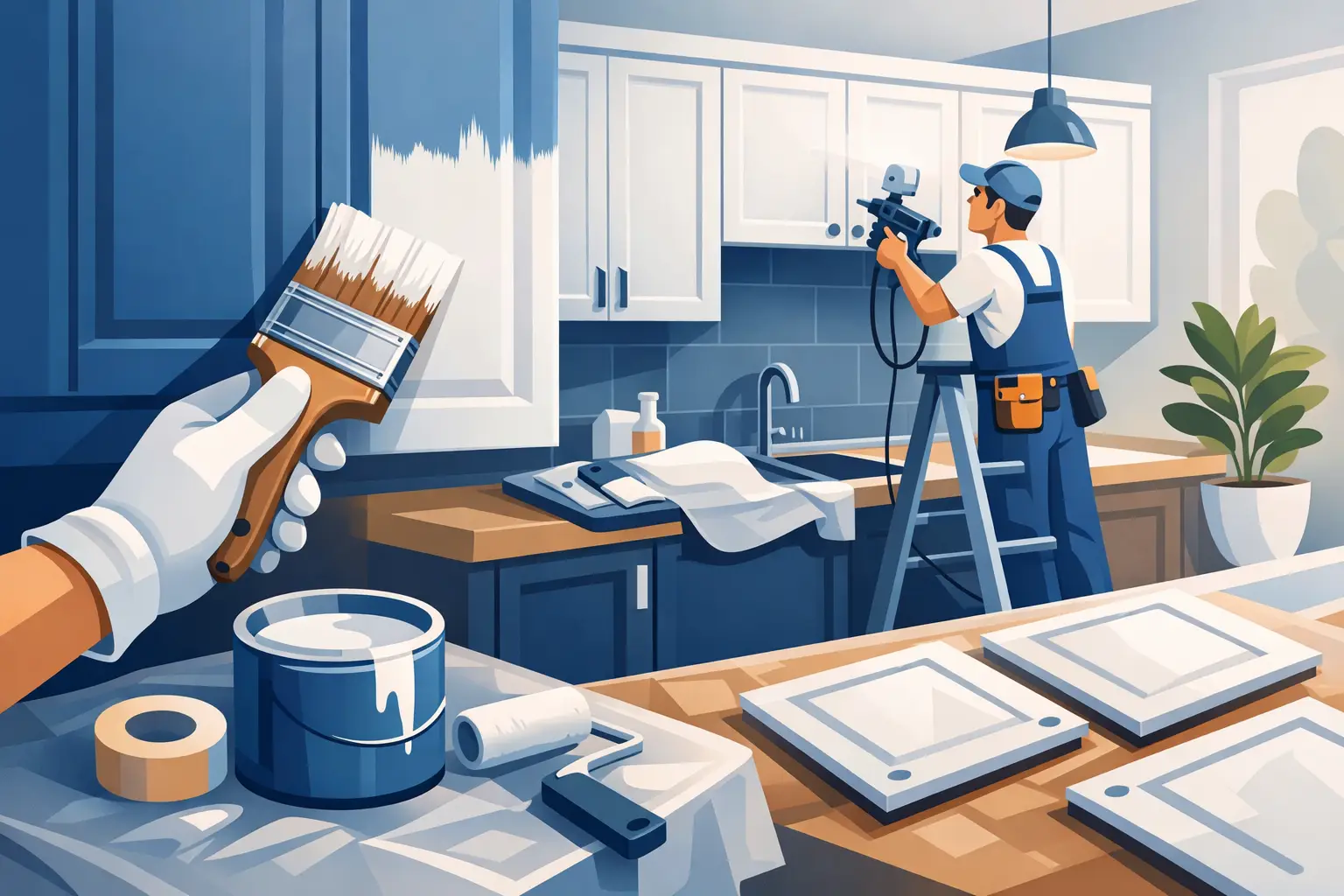
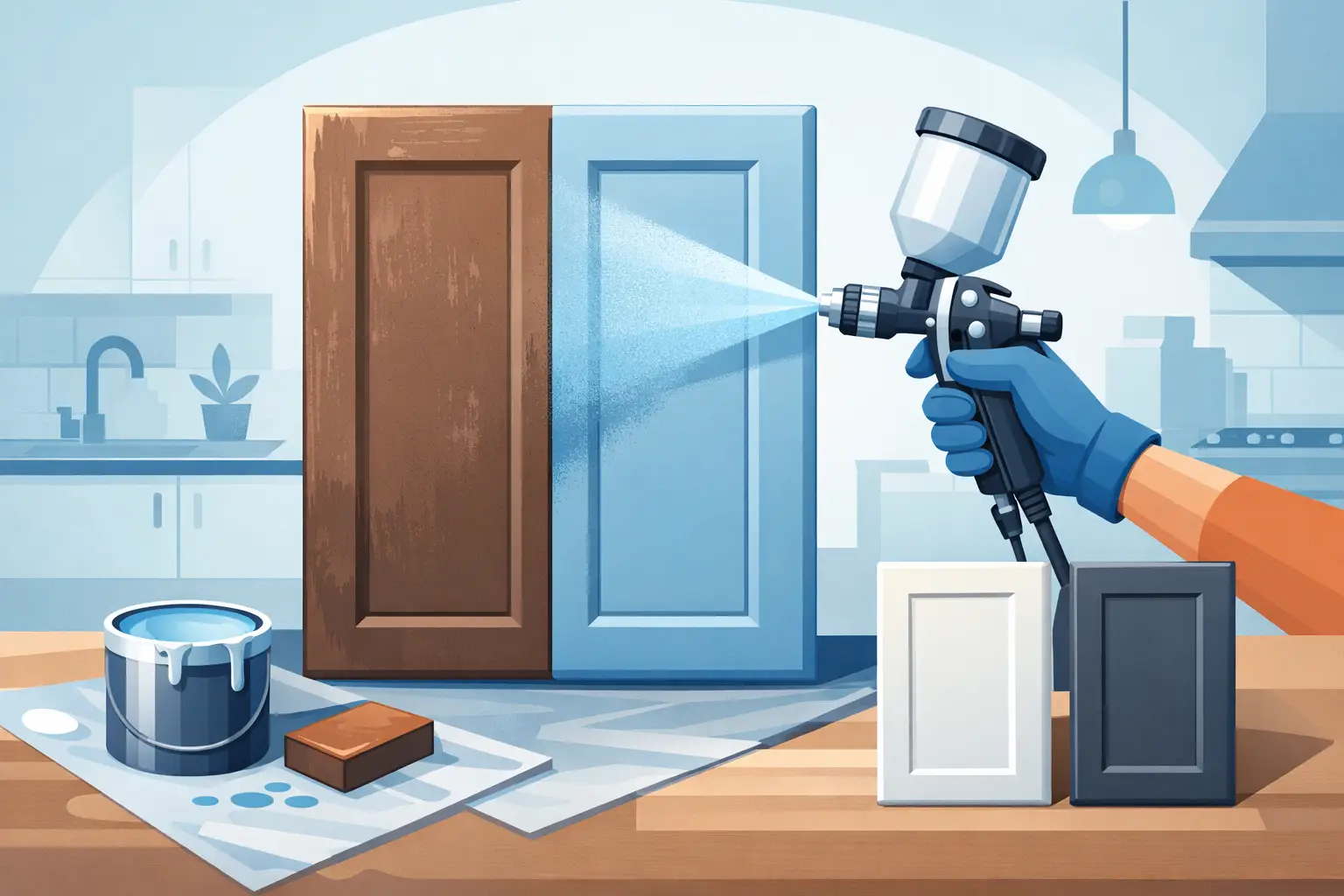
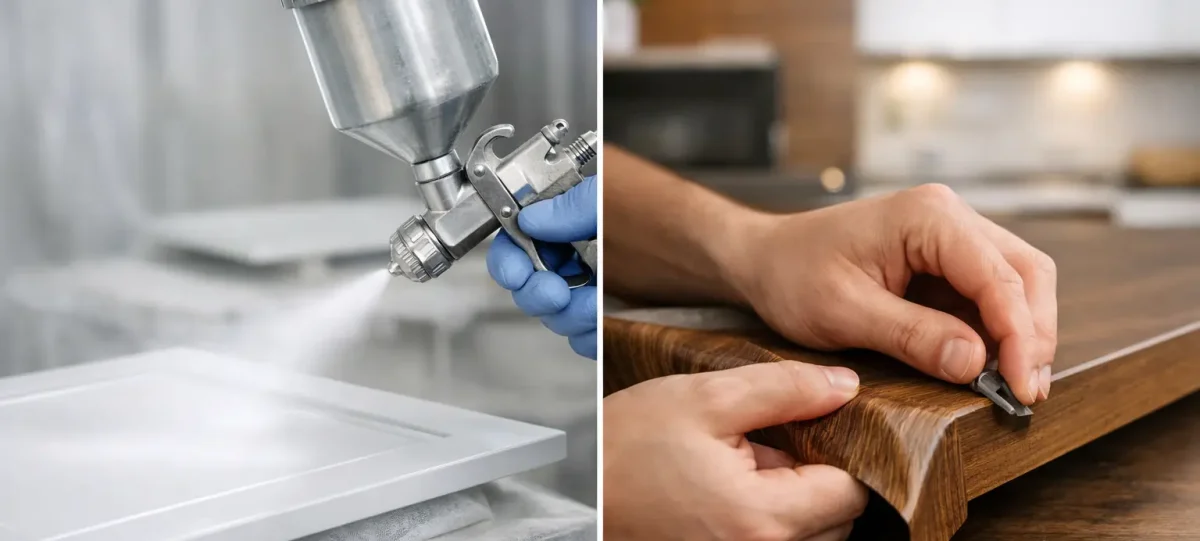
Cabinet respraying is a refinishing process. Existing kitchen doors, drawer fronts and often fixed panels are cleaned, prepared, sanded, primed and spray painted with specialist coatings designed for cabinetry. The aim is to create a smooth, factory-style finish that gives your kitchen a fresh, updated appearance without replacing the units.
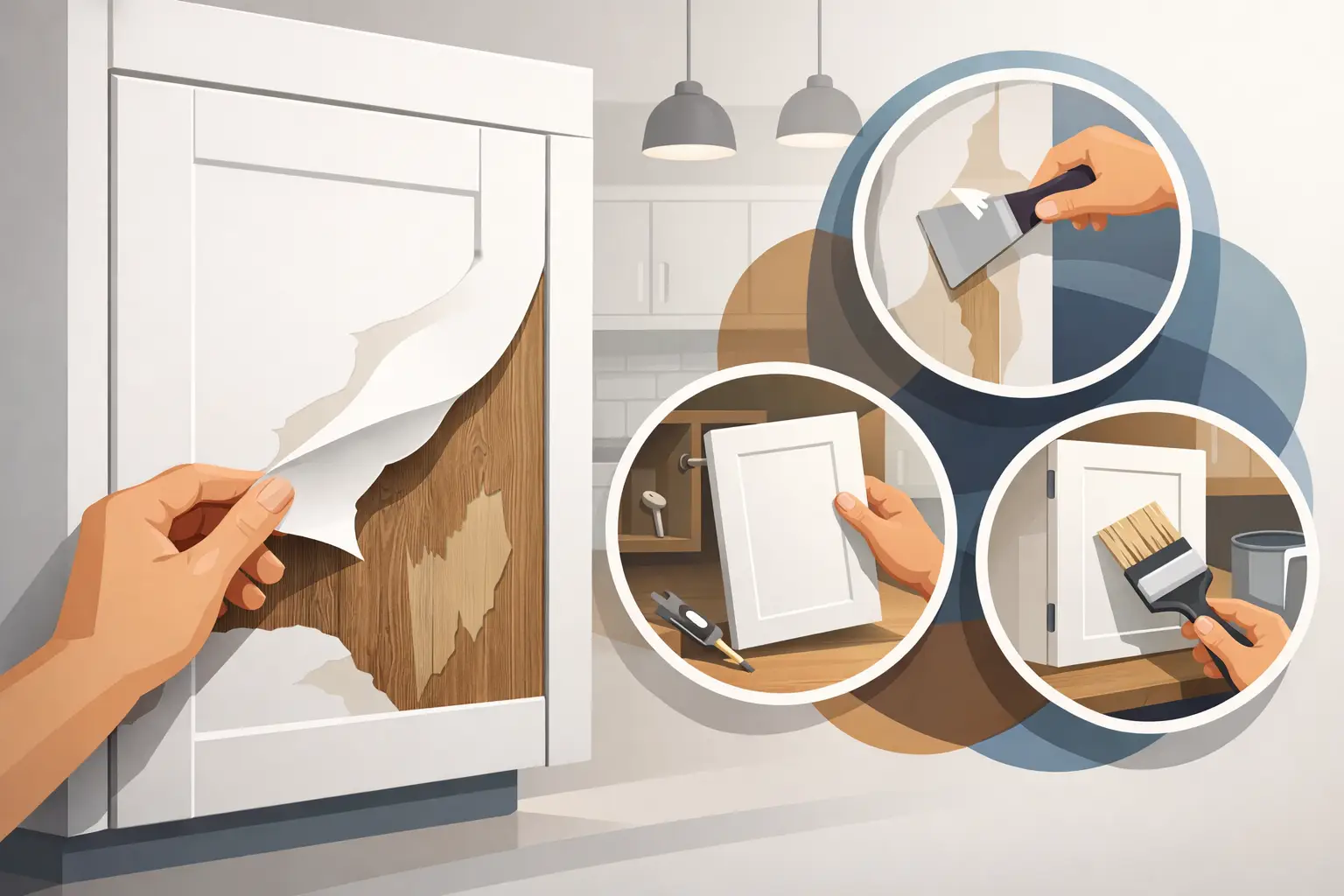
Vinyl wrapping works differently. A thin adhesive film is applied over cabinet surfaces to change the look. It can mimic matt colours, gloss colours, woodgrain and other effects. In simple terms, respraying changes the finish by coating the surface, while wrapping covers it with a layer of film.
That difference affects everything else – appearance, longevity, repairability and suitability for busy kitchens.
Which looks better in a real kitchen?
If appearance is the priority, respraying usually gives the more premium result. A professional spray finish sits evenly across the surface and around detailed edges, producing a consistent look that feels much closer to a newly manufactured door. This matters in kitchens where light catches every angle, especially on shaker doors or bespoke joinery.
Vinyl wrapping can look smart at first, particularly on flat slab doors. It offers a neat visual change and plenty of design options. However, because it is a film applied over the surface, it can sometimes look less refined on corners, profiled edges or older doors with wear. In high-traffic family kitchens, those details become more noticeable over time.
If you want a finish that looks less like a cover-up and more like a full refresh, respraying has the advantage.
Finish options and colour flexibility
One of the strongest points in favour of respraying is colour choice. You are not limited to a standard wrapped range. That gives homeowners far more freedom to match the kitchen to wall colours, flooring or adjoining living spaces. Whether you want a classic off-white, a deep navy island, a soft greige or a contemporary dark green, spray finishes are much more flexible.
Wrapping has options too, but the choice is tied to the films available. If you find a wrap colour you love, that may suit you perfectly. If you are trying to achieve a very specific look, respraying is usually the better fit.
Durability matters more than people think
A kitchen is one of the hardest-working rooms in the house. Heat, steam, grease, cleaning products and constant handling all take their toll. That is why durability should carry more weight than a simple before-and-after photo.
A professionally resprayed kitchen can be highly durable when the preparation is done properly and the right coatings are used. The finish bonds to the prepared surface rather than sitting as a film on top. In practical terms, that usually means better resistance to peeling at edges and corners – the areas that often fail first.
Vinyl wrapping can perform well in lighter-use areas, but kitchens tend to expose its weak points. Edges near kettles, ovens, dishwashers and sinks can be vulnerable to lifting if heat and moisture get underneath the film. Once that starts, the problem often spreads.
This does not mean wrapping always fails quickly. It means its lifespan is more sensitive to placement, care and the quality of installation. For a busy kitchen used every day, respraying is generally the more dependable long-term option.
What about chips, peeling and wear?
No finish is indestructible. Resprayed cabinets can chip if they are knocked hard enough, just as any painted surface can. The difference is that small areas can often be touched in locally by a skilled professional, depending on the damage and the finish.
With vinyl wrapping, damage often shows up as lifting, bubbling or peeling rather than a simple mark. Once the adhesive bond is compromised, patch repairs are less straightforward. In some cases, a full panel may need to be rewrapped to restore a tidy result.
For homeowners who want a finish that can age more gracefully, respraying tends to be the safer choice.
Cost: cheaper now or better value over time?
Vinyl wrapping is sometimes chosen because it appears to be the lower-cost option upfront. For certain wardrobes, utility rooms or low-wear spaces, that can make sense. If the goal is a quick cosmetic update and the surfaces are ideal for wrapping, it may offer acceptable value.
But kitchens are different. If a cheaper finish needs attention sooner, the saving can disappear quickly. Respraying often represents better value over time because it combines a high-end appearance with stronger durability. For homeowners who want to refresh their kitchen once and enjoy it for years, this matters.
There is also the issue of what you are transforming. If your existing cabinets are structurally sound, respraying lets you retain what is already working, avoid unnecessary waste and achieve a dramatic visual improvement for far less than replacing the kitchen outright. That balance of cost, quality and sustainability is why more households are considering refinishing rather than renovation.
Cabinet respraying vs vinyl wrapping for older kitchens
Older kitchens need honest assessment. If doors are warped, laminate is already failing, or surfaces are badly damaged, neither respraying nor wrapping will perform well without the right preparation or replacement of selected parts. The best result always starts with the condition of the substrate underneath.
That said, respraying is often the stronger option for solid older cabinetry that has simply dated in colour or sheen. Many kitchens fitted years ago were made with good-quality units that only need a cosmetic update. In those cases, professional respraying can bring them back to life beautifully.
Wrapping is less forgiving on imperfect surfaces. Any flaws beneath the film can affect the final look, and ageing edges can make adhesion less reliable. So if your kitchen is older but fundamentally well built, respraying is usually the more trustworthy route.
Disruption, timescales and day-to-day practicality
Homeowners often assume any kitchen makeover will be messy and drawn out. Compared with a full replacement, both respraying and wrapping are far less disruptive. You keep your existing layout, avoid major building work and sidestep the stress of a complete refit.
Respraying does involve a careful preparation process, and that is a good thing. Proper cleaning, sanding and priming are what create a durable finish. A professional team will manage this efficiently, with clear steps and realistic timescales.
Wrapping can be quick to install, but speed should not be the only measure. A finish that goes on fast but struggles around heat and moisture may not be the best practical choice in the room you use most.
So which should you choose?
If you want the short answer, most kitchen homeowners will be better served by cabinet respraying. It usually delivers the smarter finish, the stronger long-term performance and the better overall value. It is particularly well suited to quality existing cabinets that need a fresh, modern look without the cost and upheaval of replacement.
Vinyl wrapping still has a place. It can work for certain flat surfaces, lower-demand rooms or homeowners whose priority is the lowest initial outlay. But in kitchens, where wear is constant and first impressions matter, its limitations are harder to ignore.
For that reason, many customers who compare the two end up leaning towards a professional spray finish. It feels more permanent, looks more refined and aligns better with the standard people want in the heart of the home. At Dublin Kitchen Respray, that is exactly why so many homeowners choose respraying as an affordable, eco-friendly alternative to a full renovation.
The best kitchen update is the one that still looks right after the novelty wears off – and that usually comes down to choosing a finish built for real daily life.