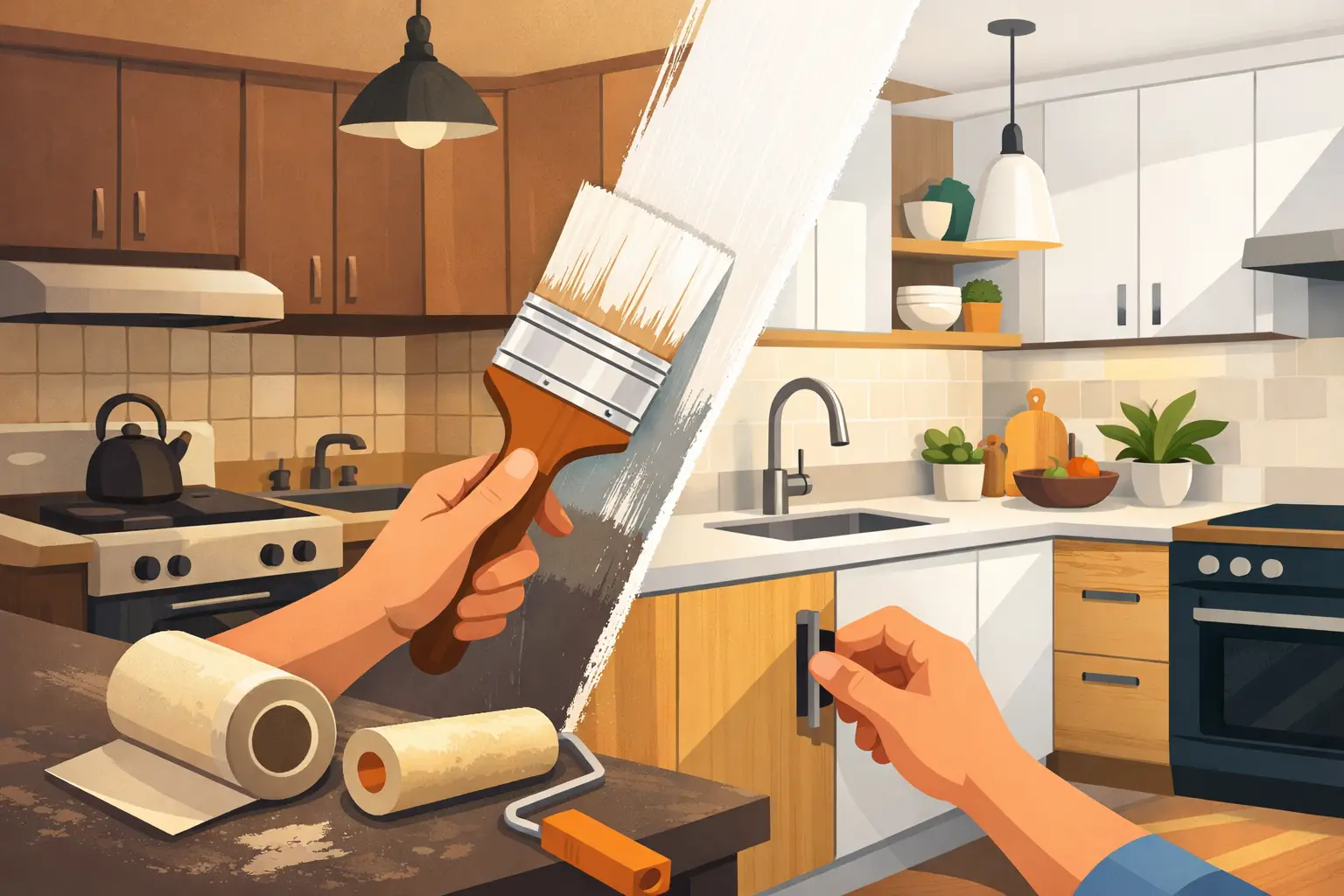

You can usually tell when a kitchen is “tired” before you can put your finger on why. The doors look a bit dull no matter how much you clean them. The colour feels dated. The worktop has that permanent, slightly worn look that makes the whole room feel older than it is. And then comes the big question: do you really need to rip it all out to get that fresh, like-new feel?
For many homeowners, the answer is no. The most cost-effective kitchen renovations in Dublin are often the ones that keep what’s already working – solid cabinets, a layout that suits your day-to-day, and fittings that don’t actually need replacing – and focus budget where it makes the biggest visual and practical difference.
What “cost-effective” really means in Dublin kitchens
A cost-effective renovation is not the cheapest option on paper. It is the option that gives you the strongest improvement per euro spent, without creating problems later.
In Dublin and the surrounding counties, there are a few realities worth planning around. Labour availability can affect timelines, and kitchen downtime can quickly become the hidden cost that nobody budgets for. If you have kids, a busy job, or you simply enjoy using your kitchen every day, weeks of disruption can cost you in takeaway dinners, stress, and lost time.
So cost-effective typically means three things: minimal disruption, maximum visible impact, and durability. You want finishes that stand up to real life – cooking steam, cleaning, and constant handling – and you want choices that won’t look dated again in two years.
Start with the layout – change it only if you must
If your kitchen layout works, keep it. Moving plumbing, petrol lines, and electrics is where budgets inflate quickly. It also adds complexity, which adds time. There are cases where a layout change is worth it – for example, a cramped galley where you can’t open the dishwasher and a press door at the same time, or a space where the fridge blocks a walkway.
But if the “problem” is mostly cosmetic, it’s far more cost-effective to focus on the surfaces you see and touch every day. Fresh doors and drawers visually reset the whole room. Worktops and splashbacks do the same. Lighting can make even a modest kitchen feel sharper and more modern.
The practical test is simple: if you like where everything is, don’t pay to move it.
The biggest visual win: respray, don’t replace
Cabinet replacement is one of the most expensive parts of a traditional remodel, and it is often unnecessary. Many kitchens in Dublin have strong cabinet carcasses that will last for years – it’s the exterior finish that lets them down.
Professional respraying is a genuine renovation route, not a “quick cover-up”. Done properly, it involves careful preparation, cleaning, degreasing, sanding, priming, and then applying specialist coatings for a smooth, durable finish. The difference, visually, is dramatic: the kitchen looks newly fitted, but you avoid the waste, mess, and cost of removing and disposing of existing units.
It also gives you real freedom with colour. Whether you want a clean contemporary shade, a warm neutral, or something bolder for a period home, respraying can bring the tone of the entire space up to date without changing the bones of the kitchen.
If you’re weighing up cost-effective kitchen renovations Dublin homeowners actually stick with, this is the workhorse option: high impact, controlled budget, and typically far less disruption than a full refit.
Worktops: know when to refresh and when to replace
Worktops take the most daily punishment. If yours is swollen from water damage, badly burned, or coming away at the joints, replacement may be the sensible call.
However, many people are surprised at how far a worktop transformation can go without the upheaval of a full tear-out. If the structure is sound but the surface is dated, specialist coatings and finishes can update the look with far less mess than removal. A spray granite finish, for example, can give you a contemporary stone-style appearance and a tough, easy-to-clean surface.
The trade-off is that not every worktop is a candidate. If the substrate has failed, coating over it will not fix the underlying issue. A professional assessment matters here because a cost-effective decision is only cost-effective if it lasts.
Don’t underestimate hardware and small details
If your cabinet doors look better but your handles are scuffed or overly ornate, the kitchen can still feel “half done”. New handles are one of the cheapest ways to modernise the look, and they’re also a chance to improve daily use.
Soft-close hinges and drawer runners are another quiet upgrade that pays you back every day. If your cabinets are solid but the hinges are tired, replacing the hardware can make the whole kitchen feel more premium. It is a small line item compared with replacing cabinets entirely, and it’s often the difference between a kitchen that looks improved and one that feels improved.
The same goes for sealing and finishing touches. A neat silicone line around sinks and splashbacks, tidy end panels, and clean edges are the details that make an affordable renovation look professional.
Lighting: the upgrade that makes everything look more expensive
Lighting is often the missing piece in budget renovations. It affects how colours read, how clean the space looks, and how enjoyable it is to cook and socialise.
If you have a single ceiling light doing all the work, you’ll get shadows on worktops and a flat feel in the room. Under-cabinet lighting is one of the best value upgrades because it adds task light exactly where you need it, and it highlights your new cabinet finish.
Switching to warmer or cooler bulbs (depending on your chosen colours) can also change the whole mood. The key is to plan lighting alongside your colour choices, not after. A beautiful neutral can look grey and cold under the wrong light, and a crisp white can look yellow in warm lighting. Getting that balance right makes the renovation feel intentional.
Appliances: keep what’s working, replace what’s costing you
Appliances can swallow a budget quickly, so be strategic. If your fridge, oven, and hob are reliable and suit your cooking habits, there’s no rule that says they must be replaced to “justify” a renovation.
But it is worth replacing appliances that are driving up bills, failing frequently, or genuinely limiting how you use the kitchen. The cost-effective approach is to prioritise what you touch most and what affects running costs. A new extractor that actually clears steam and odours can do more for comfort than an expensive gadget you rarely use.
Also consider the visual integration. Sometimes simply changing a few front-facing elements – for example, matching finishes or updating a visible freestanding appliance – can make the kitchen feel more coherent without replacing everything.
Sustainability is not just a nice extra
There’s a growing preference in Dublin for renovations that don’t create unnecessary waste. Keeping cabinetry and updating the finish is one of the most eco-friendly options available because you avoid sending large volumes of chipboard, MDF, and fittings to disposal.
This is not only about feeling good. It also aligns with practical value: if your existing kitchen is structurally sound, replacing it is often paying for a second version of something you already have.
A cost-effective renovation respects what’s already in place and improves it. That tends to be the most sustainable route as well.
Timing, disruption, and how to plan for a smoother job
A renovation that looks affordable can become expensive if it drags on. When planning, ask yourself what you can live without and for how long. If you work from home or have a busy household, a drawn-out project can be the real budget breaker.
If you’re respraying cabinets or upgrading worktops, plan your kitchen use for those days. Clear worktops, empty the relevant cupboards, and decide where the kettle and toaster will go temporarily. A little preparation helps the work move quickly and keeps your home tidy.
Also be realistic about drying and curing times. A professional finish needs the right conditions to harden properly. Rushing the final stages, or putting everything back too soon, can lead to marks and knocks that then feel like “poor quality”, when really it was impatience.
Choosing a contractor: what to look for beyond price
Price matters, but it is only one part of cost-effectiveness. A low quote can become expensive if prep is skipped, if materials are not suited to kitchen conditions, or if the job needs redoing.
Look for a provider that can explain their process clearly and talk you through trade-offs. For example, some finishes are tougher but less forgiving on certain colours; some colours hide fingerprints better; some worktop solutions are ideal for light use but not for heavy chopping without boards. A trusted professional will help you choose what fits your household, not just what looks good in photos.
You should also expect straightforward guidance on timelines and what you need to do before the team arrives. Reliability and attention to detail are not “nice to have” in a kitchen – they are the difference between a stunning finish and constant little annoyances.
If you want a proven route that focuses on transforming what you already have, Dublin Kitchen Respray specialises in professional cabinet respraying, wardrobe respraying, and spray granite worktop finishes – a practical alternative to full replacement for many homes across Dublin and nearby counties.
A realistic way to set a budget that holds
Rather than starting with a single number, set your budget in layers. Decide what you must fix (for example, damaged doors, failing hinges, a stained worktop), then choose one “impact” upgrade (such as a new colour scheme via respray, or upgraded lighting), then leave a small cushion for the surprises that always appear once work begins.
This approach keeps you in control. It also stops you from spending on items that don’t change the experience of the kitchen. If your goal is a space that feels clean, modern, and enjoyable, put your money into the things you see and touch, and resist the temptation to chase trends that don’t suit the house.
A helpful final thought: if your kitchen is fundamentally sound, treat the renovation like a refresh with standards, not a demolition. The best results often come from doing fewer things, properly, and then enjoying the kitchen you already had – just brought back to life.