You can tell when kitchen cabinets have hit that awkward stage: the doors still work, the layout still suits your life, but everything looks tired. Maybe the white has yellowed, the wood tone feels dated, or the old lacquer shows every fingerprint. The good news is you do not need builders in your home for weeks to get a kitchen that feels new again. The fastest improvements come from changing what you see and touch every day – colour, sheen, handles and surfaces – while keeping the cabinetry you already own.
What “quick” really means for kitchen cabinets
When people ask for quick kitchen cabinet transformations, they usually mean one of two things. They either want a visible change in a weekend, or they want a professional job that is completed in a short timeframe without the disruption of a full renovation. Both are valid, but they come with different trade-offs.
A DIY refresh can be quick to start, but it is not always quick to finish if you include drying times, sanding, correcting drips and rehanging doors. A professional respray is normally faster in terms of calendar days and daily disruption, but it requires planning a slot and being comfortable with a team handling the prep and finish. The best option depends on your budget, your tolerance for dust and downtime, and how long you want the finish to last.
The fastest high-impact changes (and when they work)
Change the hardware and fix the “wonky” bits
If your cabinets are structurally sound, a handle swap can make them look unexpectedly current. Brushed brass warms up cooler kitchens, black handles sharpen painted cabinetry, and classic chrome suits almost anything. If you do this, do not ignore the small functional issues that make a kitchen feel old: hinges that squeak, doors that sit unevenly, and drawers that drag.
This is the quickest win because it is low mess and low risk. The limitation is obvious: it will not hide worn varnish, peeling foil, water damage around the sink unit, or scratches on the door fronts.
Deep clean and revive what is already there
Grease, cooking residue and cleaning-product build-up flatten the look of cabinet doors and can even change the apparent colour. A proper degrease, a gentle scrub around profiles and corners, and a careful rinse can bring back definition.
This approach is only worth doing if the finish is intact. If you have bubbling laminate, cracked lacquer or doors that have absorbed moisture, cleaning will highlight the problem rather than solve it.
Add lighting that flatters the cabinetry
Under-cabinet lighting is one of the most overlooked “make it feel new” upgrades. Warm white lighting can make a cream or oak kitchen feel richer, while neutral white lighting can sharpen greys and modern colours.
Lighting will not fix dated doors, but it can make a resprayed or refreshed kitchen look more expensive. It is also a good step if you plan to respray later and want immediate improvement now.
Paint, wrap, or respray? The real differences
DIY painting: affordable, but preparation is everything
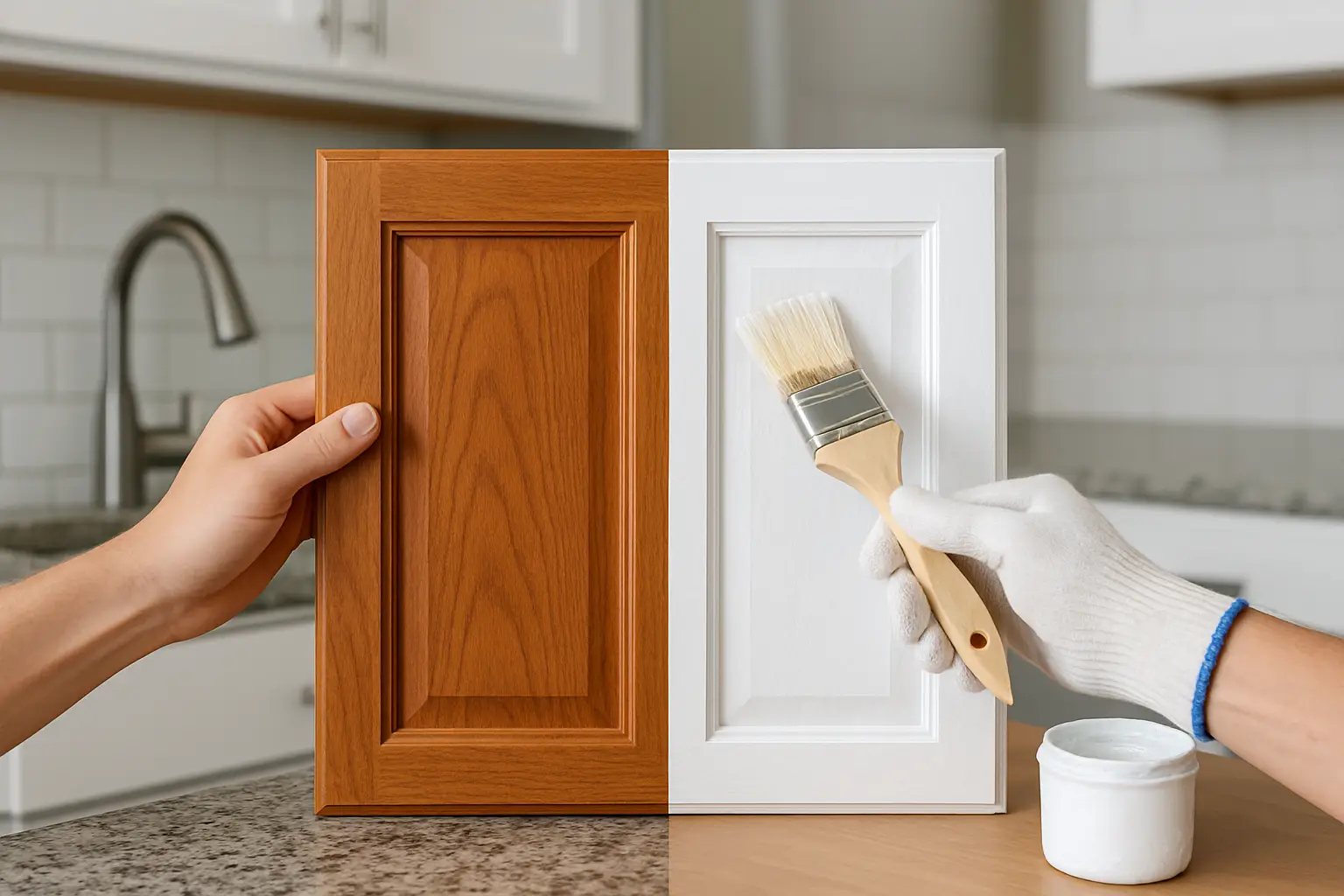
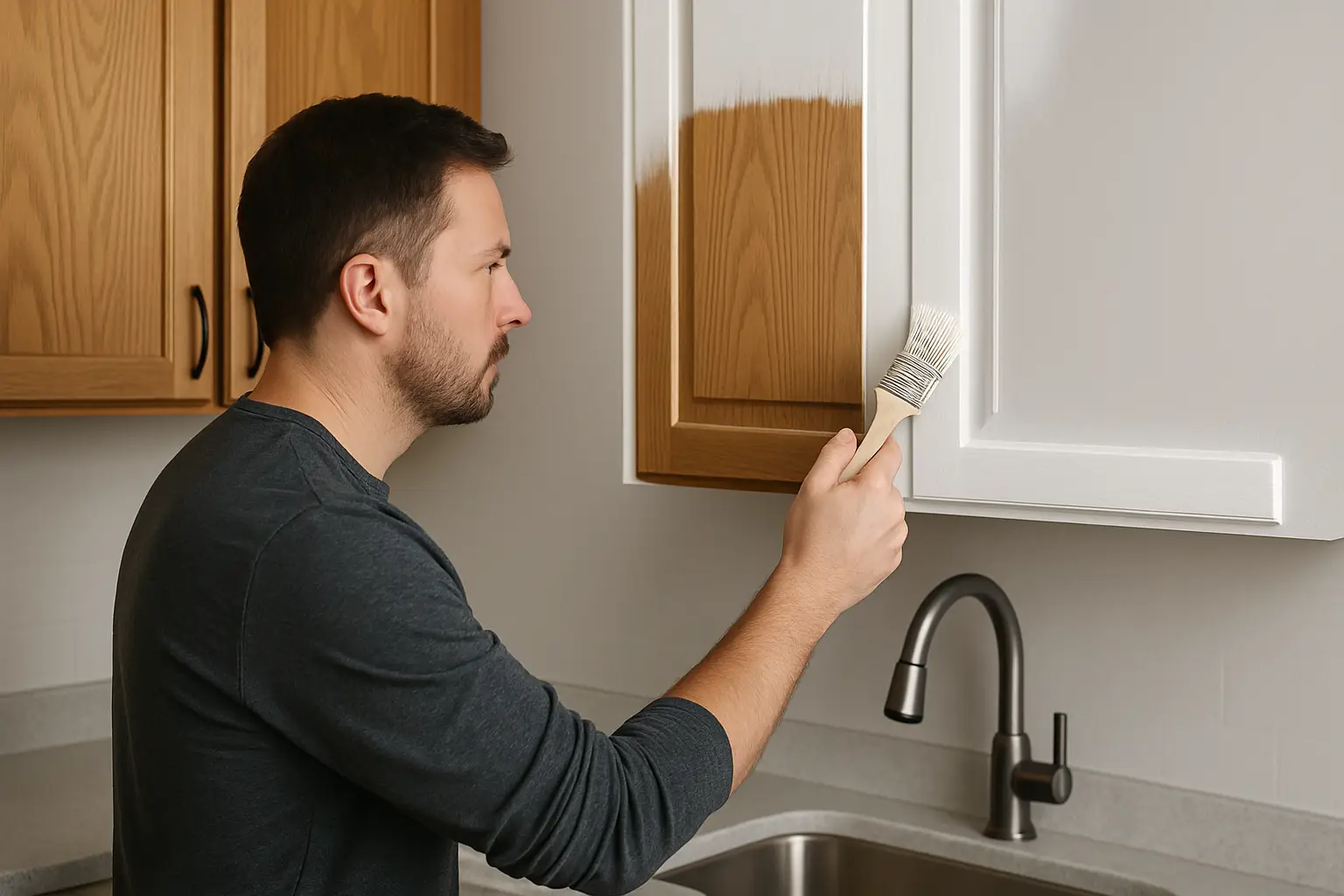
Painting cabinets yourself can work, especially on flat doors in good condition. The catch is that kitchens are punishing environments. Steam, heat, constant wiping and greasy hands will test any finish.
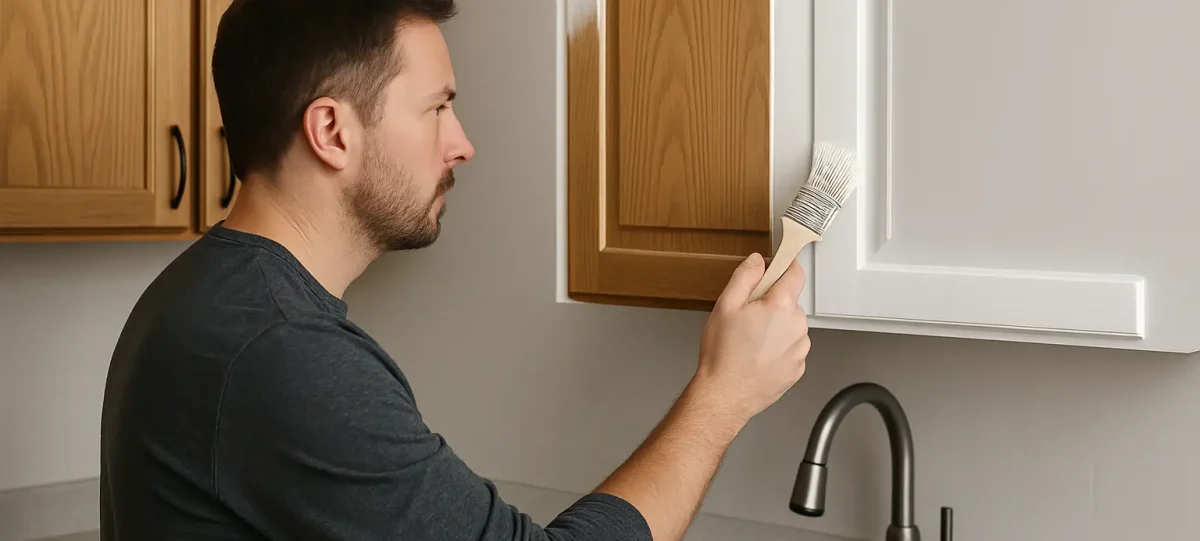
If you paint, the prep needs to be serious: remove doors, degrease thoroughly, sand to key the surface, use the right primer for the existing finish, and allow proper curing time before you put everything back into heavy use. The most common disappointment we see is not the colour choice – it is chipping around handles, tackiness where doors stick, and brush marks that look fine at first but become more noticeable in daylight.
DIY painting is best when you enjoy the process and can accept that touch-ups may be part of life. It is less suitable if you want a factory-smooth finish or you have detailed shaker profiles where brushwork can build up.
Vinyl wrapping: fast look, mixed longevity
Wrapping can deliver an instant change and a very clean look from a distance. It can be a good option for short-term updates, rentals, or where budgets are tight.
The “it depends” factor is heat and moisture. Around kettles, ovens and dishwashers, edges can lift if the adhesive is stressed. Wrapping also struggles to disguise dents and chips, because the surface underneath still dictates the final appearance.
If you consider wrapping, pay attention to edge finishing and corners. The fastest-looking job is not always the longest-lasting one.
Professional respraying: the quickest route to a like-new finish
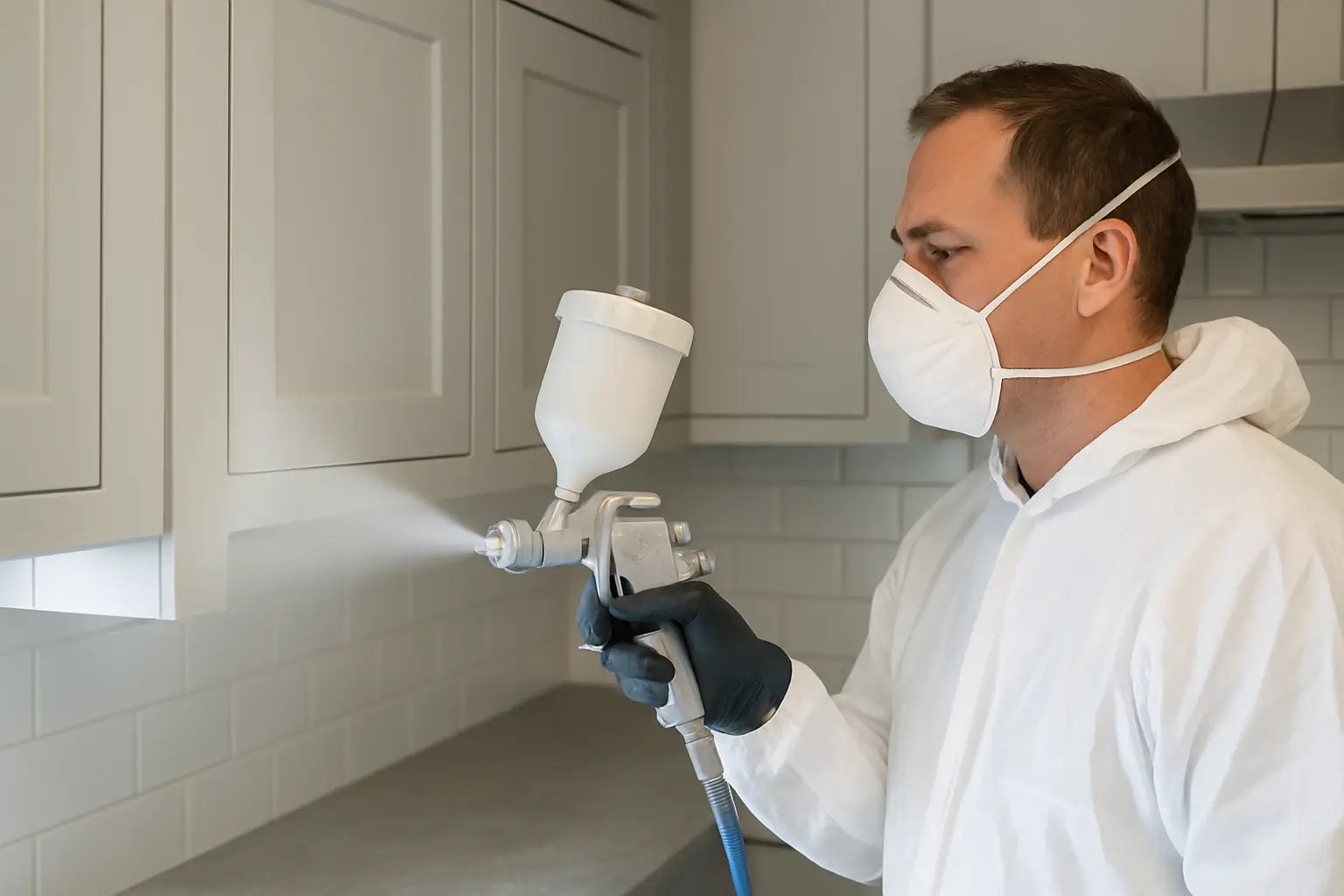
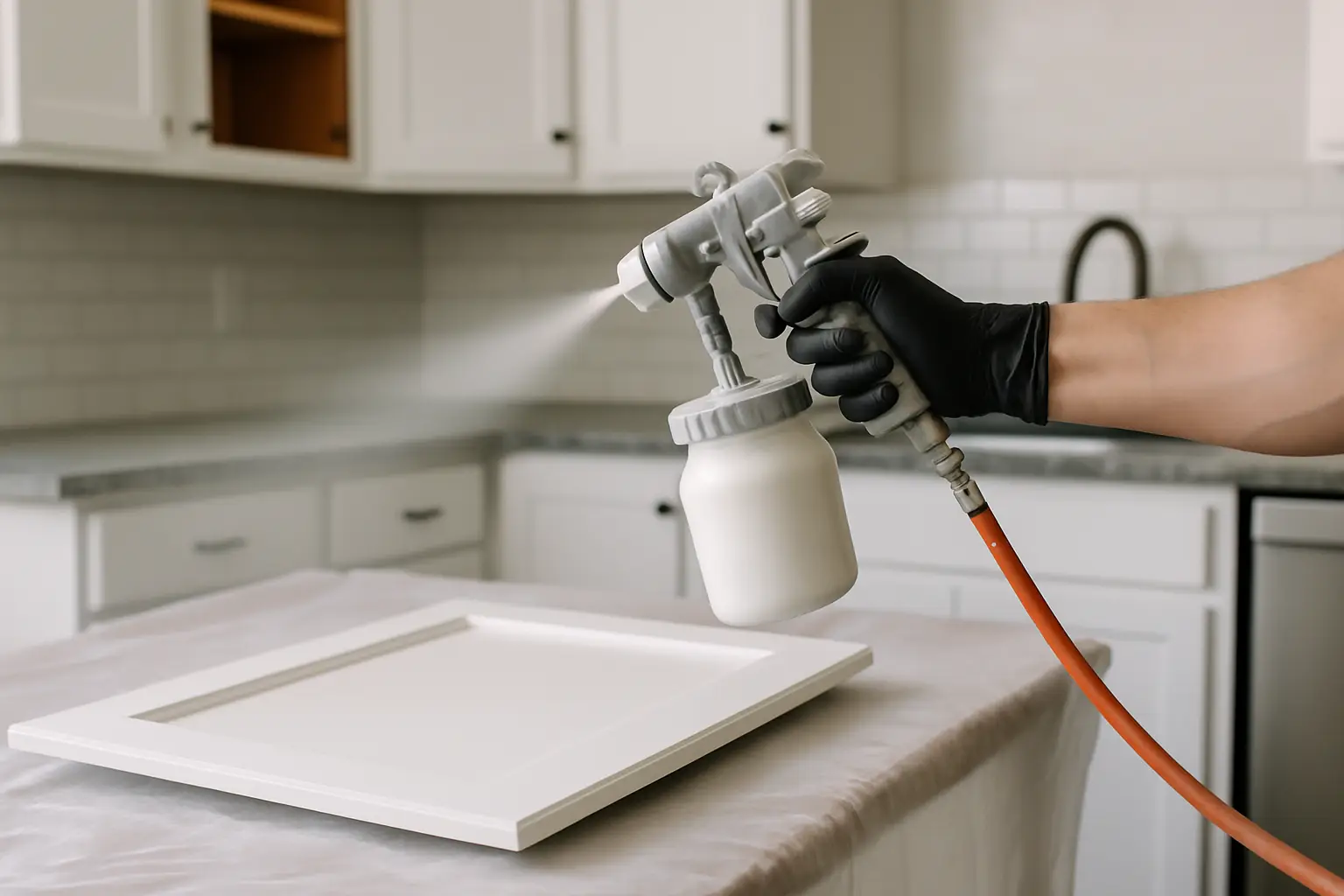
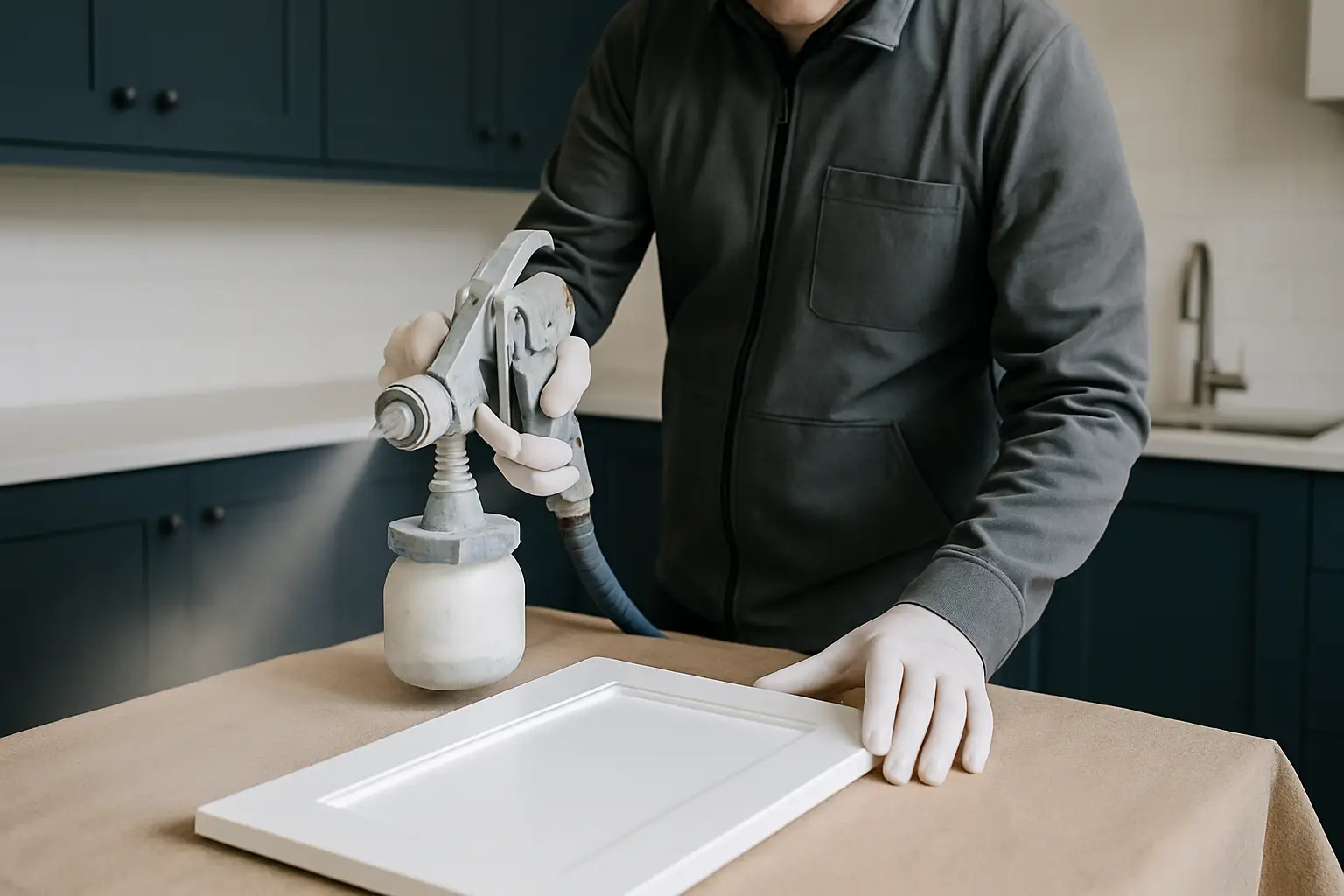
For homeowners who want quick kitchen cabinet transformations without the tell-tale signs of DIY, professional respraying tends to be the sweet spot. The core difference is not just the sprayer – it is the full system: controlled preparation, the correct primers for the existing substrate, and a durable topcoat applied evenly for a smooth, consistent finish.
Respraying is especially effective when you like your kitchen layout, but the colour, sheen or wear level has started to date the room. It is also a more eco-friendly approach than ripping out units that still have years of life left.
If you are in Dublin or the surrounding counties and want an expert, trusted team to handle the process end to end, Dublin Kitchen Respray specialises in professional cabinet respraying designed to look stunning and stand up to everyday use.
Choosing colours and finishes that make the kitchen feel bigger
Colour choice is where quick changes become high-impact. If your kitchen is north-facing or naturally dim, very cool whites and greys can read flat. Warmer whites, soft greiges and muted sage tones often make the space feel more welcoming.
For smaller kitchens, the trick is not always “go as light as possible”. A slightly deeper tone on lower cabinets with lighter uppers can add depth and reduce the “all one block” look. If your kitchen is open-plan, consider how the cabinet colour sits next to your flooring and living area furniture – the fastest transformation is the one that looks intentional with the rest of the home.
Finish matters as much as colour. High gloss can look sharp but shows fingerprints. Ultra-matt can look modern but may show scuffs in high-traffic family kitchens. Satin is often a practical middle ground, giving a clean, contemporary look without being too reflective.
Worktops and splash areas: the multiplier effect
Cabinets rarely exist in isolation. A cabinet colour change will be limited if the worktop and splashback are still shouting “2006”. You do not necessarily need to replace them to get a cohesive result.
If your worktop is structurally sound but visually dated, refinishing options can be worth exploring. The aim is alignment: cabinet colour, worktop tone and wall colour should support one another rather than compete. Even a fresh, washable paint on the walls and a modern tap can make newly finished cabinets look like part of a full renovation.
Be honest about what is damaged, though. Swollen chipboard around the sink, crumbling end panels, or delaminating door fronts may need repair or replacement before any new finish will behave properly.
How to plan a “quick” transformation without surprises
The speed of the result often comes down to decisions made before any work starts. If you want the change to feel effortless, measure your existing handle hole spacing before you buy hardware, decide whether you want soft-close hinges, and pick your colour using real samples in your kitchen lighting.
It also helps to empty the cabinets you use most often and create a short-term “kitchen essentials” box. Even when work is completed quickly, reducing daily clutter makes the whole experience calmer.
Finally, set expectations about durability. A quick cosmetic change can still be professional and long-lasting, but only if the preparation is treated as the main job, not an afterthought. That is why shortcuts like skipping degreasing or rushing cure times often lead to disappointment months later, not days later.
When a respray is not the right answer
A professional finish can do a lot, but it cannot make poor-quality, failing doors behave like new forever. If cabinet doors are warped from moisture, if the carcasses are breaking down, or if the layout no longer works for your household, a deeper renovation may be the better investment.
Likewise, if you are planning structural changes – moving plumbing, taking out walls, relocating appliances – it makes sense to do that first and finish surfaces afterwards. The quickest transformation is not always the smartest sequence.
A kitchen that feels fresh should also feel functional. If the cabinets look beautiful but the bin is in the wrong place or the drawers do not open smoothly, you will still feel the kitchen is “not quite right”.
Quick kitchen cabinet transformations that still look premium
The difference between “quick” and “rushed” is consistency. Consistent colour across all doors, a smooth finish without texture, crisp edges, and hardware that sits straight all make the kitchen read as high-quality, even if you have not changed the layout at all.
If you only take one approach, choose the one that fixes the thing you notice most often. For some homes that is the yellowed finish. For others it is dated handles, poor lighting, or a worktop that drags everything down. The most satisfying transformations are the ones that feel tailored to how you actually use the kitchen, not just what looks good in a photo.
A helpful way to think about it is this: keep what works, improve what dates the room, and invest in the finishes you touch every day – doors, handles and work surfaces. When those elements feel right, the whole kitchen follows suit.