Walk into a well-loved Dublin kitchen on a weekday morning and you will see what most design magazines miss – fingerprints, steam from the kettle, sunlight hitting doors at an angle, and the reality of cupboards being opened a hundred times a day. That is exactly why cabinet finishes are having such a moment. Homeowners are no longer choosing a finish because it looks good for a photo. They are choosing one that still looks good after school lunches, Sunday roasts, and a winter of central heating.
Below, we will unpack the latest trends in kitchen cabinet finishes with a practical lens – what they look like, why people are choosing them, and where the trade-offs sit. If you are considering updating your kitchen without replacing perfectly solid units, these finish trends matter even more, because the finish is what makes the whole space feel new.
The latest trends in kitchen cabinet finishes – and why they’re shifting
The biggest shift is away from high-shine surfaces that show every mark, and towards finishes that feel calmer, softer, and more natural in everyday light. That does not mean everyone wants a fully flat, chalky look. Instead, the trend is towards balanced sheen levels and colours that make a kitchen feel warm and intentional.
Another driver is sustainability and value. Many homeowners in Dublin, Wicklow, Kildare, Meath and Louth are choosing to upgrade what they already have rather than rip out cabinetry that is structurally sound. When you keep your existing doors and carcasses, the finish becomes the hero of the transformation – it is the difference between “same kitchen” and “stunning new space”.
Matte and “low-sheen” finishes that hide the day-to-day
Matte is still highly requested, but the smarter version of matte is what we see most often: a durable, low-sheen finish that reads as matte until light hits it. Homeowners like it because it softens the look of large banks of cabinetry, particularly in open-plan rooms where the kitchen is always on show.
The practical upside is straightforward: low-sheen finishes are far more forgiving than gloss when it comes to smudges and small surface imperfections. The trade-off is that very flat finishes can show burnishing (slight shiny patches) over time on the most-handled areas, like around integrated bin doors or the fridge housing. That is why the specific coating system, curing time, and surface preparation matter as much as the sheen level.
If your household is busy, you do not need to rule out matte – you just want a professional-grade finish that is designed to stand up to cleaning and constant use.
Soft-satin is the quiet workhorse
If there is one finish that suits real Irish kitchens year-round, it is satin. Not glossy, not chalk-flat – just a gentle sheen that makes colours look rich and makes doors easier to wipe down. Satin is also a safe bet in kitchens that get limited natural light, because it lifts the room without turning cabinets into mirrors.
Design-wise, satin works across styles. It looks clean and contemporary on slab doors, but it also complements shaker kitchens beautifully because it highlights the profile without shouting. The only “it depends” here is how reflective you want the cabinetry to be in a bright, south-facing kitchen. In very sunny rooms, a slightly lower sheen can feel calmer.
Deep, grounded colours (and the return of warm neutrals)
White kitchens are not disappearing, but the all-white, high-gloss look is no longer the default. Colour is back, and it is more considered.
Deep greens, inky blues, and charcoal tones are popular because they feel established and timeless – especially in period homes or houses with darker floors. Done well, they read as premium without being flashy. They also pair beautifully with brass, antique bronze, or black hardware.
At the same time, warm neutrals are taking over from cool greys. Think softer taupes, mushroom tones, warm greige, and creamy off-whites. These shades cope better with Ireland’s changing light and they sit more naturally alongside timber, stone-look floors, and warmer metals.
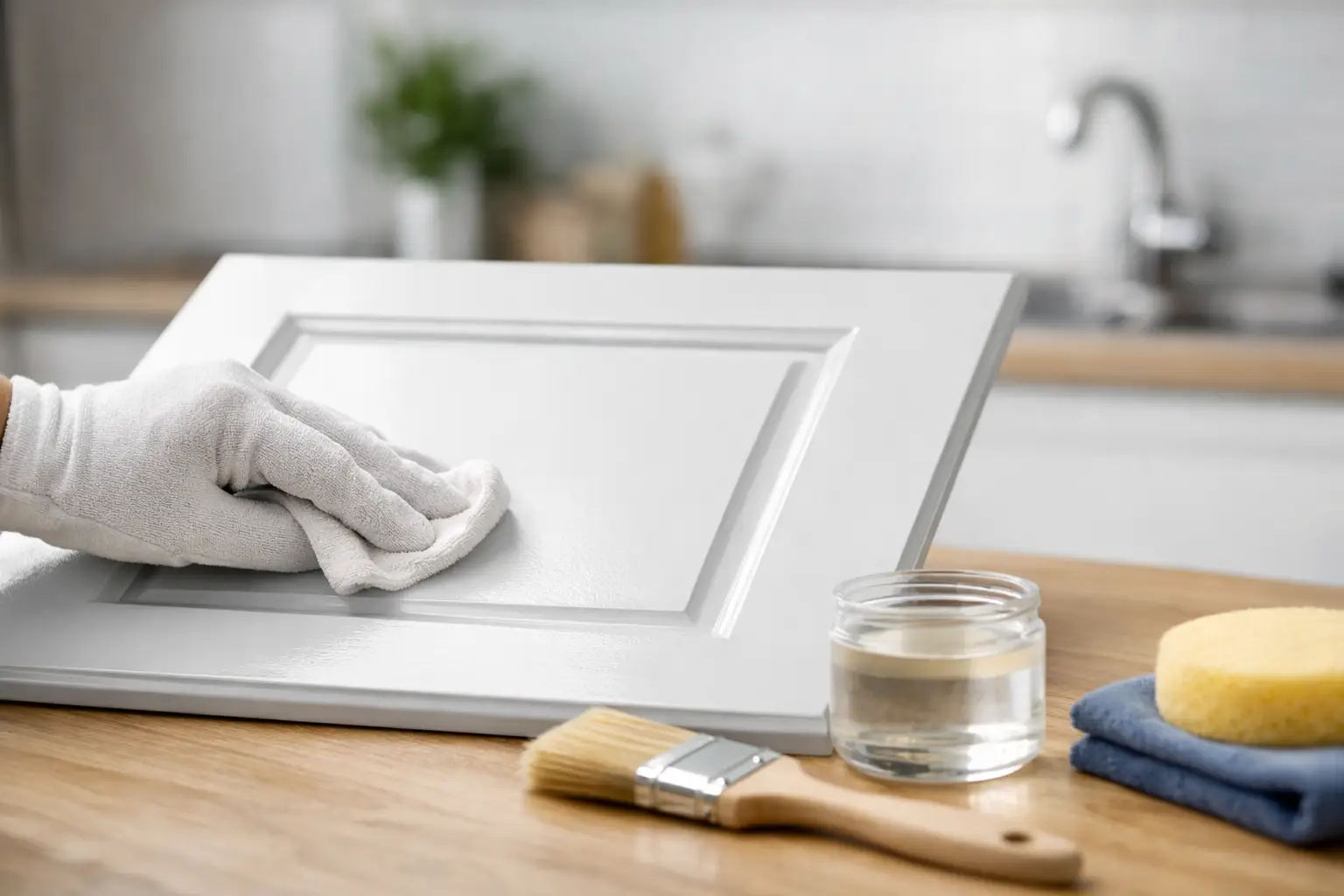
A practical note: darker colours can make poor preparation more obvious, because light rakes across the surface and catches any unevenness. If your doors have dents, old brush marks, or years of wear, the prep stage is what makes a dark respray look crisp rather than patchy.
Two-tone kitchens that feel designed, not busy
Two-tone is no longer a novelty. The modern approach is more subtle: a darker colour on the island or lower cabinets, paired with a lighter shade above. This keeps the kitchen grounded while avoiding the “wall of cabinetry” effect.
For many homes, it is also a practical layout decision. Lower cabinets take the most knocks, so using a mid-tone or darker colour below can disguise everyday scuffs better than a pale shade would. Upper cabinets can stay lighter to keep the room open.
The trade-off is that two-tone needs coordination. Worktops, splashbacks, flooring, and even appliances all influence whether it feels cohesive. If you are unsure, start with two shades from the same colour family (for example, a deeper green below and a softer sage above) rather than two competing statements.
Wood-effect and natural looks – without the heavy orange tone
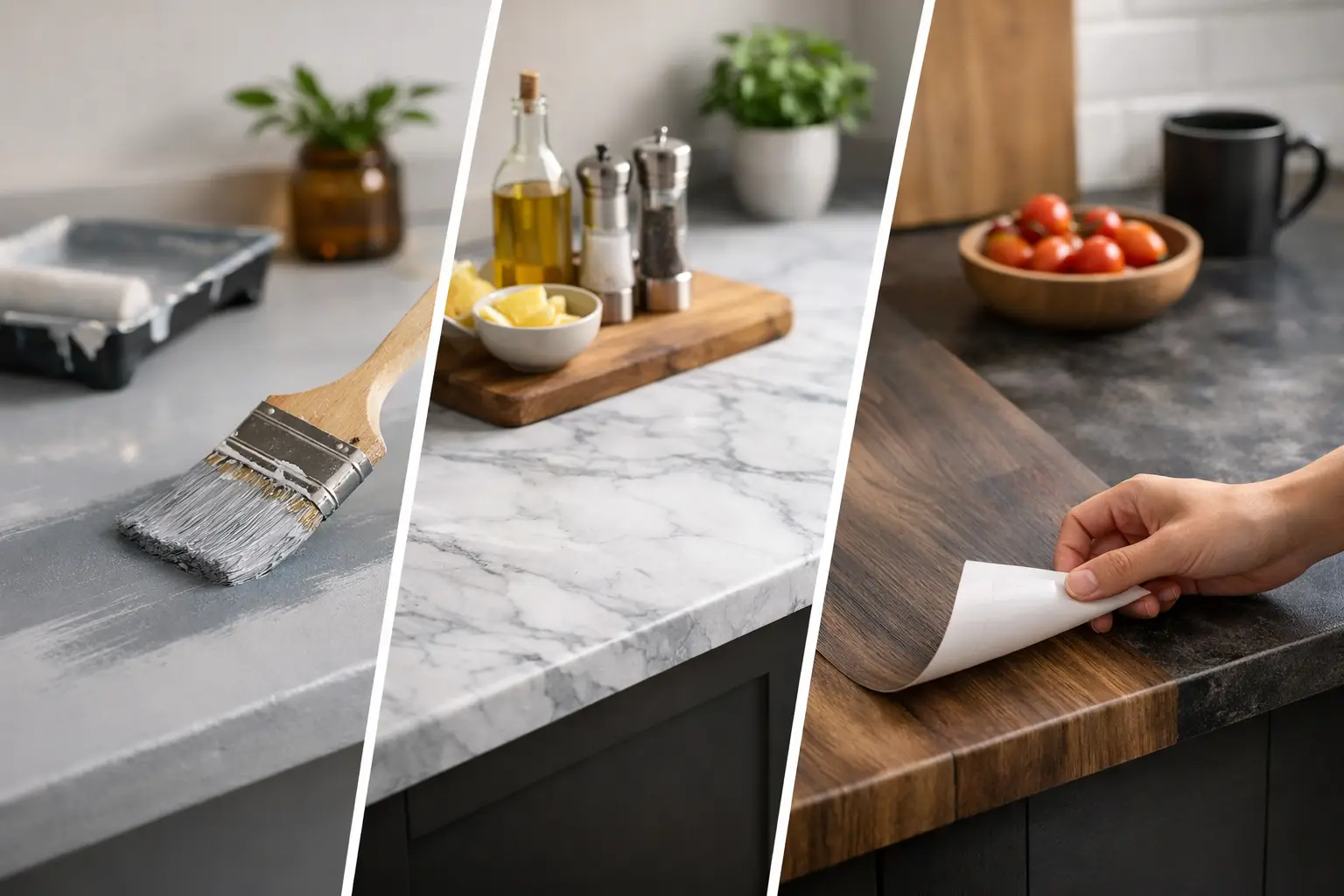
Natural finishes are trending, but not the shiny, orange-leaning varnishes many people associate with older kitchens. The look now is lighter, calmer, and closer to raw timber or softly oiled wood.
If you love the idea of a timber kitchen but you do not want the upkeep of natural wood, the current trend is to combine painted cabinetry with a wood feature – for example, timber shelving, a wood island panel, or warmer handles that bring in that organic feel.
In terms of finishes, the key is restraint. Too much grain or too much contrast can feel busy, especially in smaller kitchens. A balanced, natural palette tends to age better.
Texture is in – but it has to be cleanable
Homeowners are asking for finishes that feel more tactile and less “plasticky”. That can mean a slightly brushed look, a softer sheen, or a coating that has a more natural depth.
What you do not want in a kitchen is texture that traps grease and is difficult to wipe down around the hob area. So while heavily textured, ultra-porous looks might appear in trend-led interiors, most families are better served by a smooth, professional coating that gives the impression of softness without sacrificing cleanability.
If you are tempted by a very flat, chalky aesthetic, consider using it on areas that see less direct handling, and choosing a more practical sheen for the most-used doors.
Handle choices are shaping the finish trend
Finishes do not live in isolation. Handles and edge details change the entire feel of the same colour.
We are seeing more homeowners either commit to statement hardware (aged brass, knurled textures, soft black) or go the other way with handleless rails and clean lines. Both directions push finishes towards either richer, deeper tones or calmer neutrals.
One practical consideration is that handleless kitchens can show more touch marks where hands naturally pull at the door edge. If you love the minimal look, choose a finish that is forgiving to fingerprints and easy to clean, and make sure the door edges are properly protected.
The “like-new” lacquered look (without a full renovation)
A trend we hear repeatedly is not about a specific colour – it is about the expectation of quality. Homeowners want cabinets to look factory-finished, with consistent sheen, smooth edges, and durability that stands up to normal life.
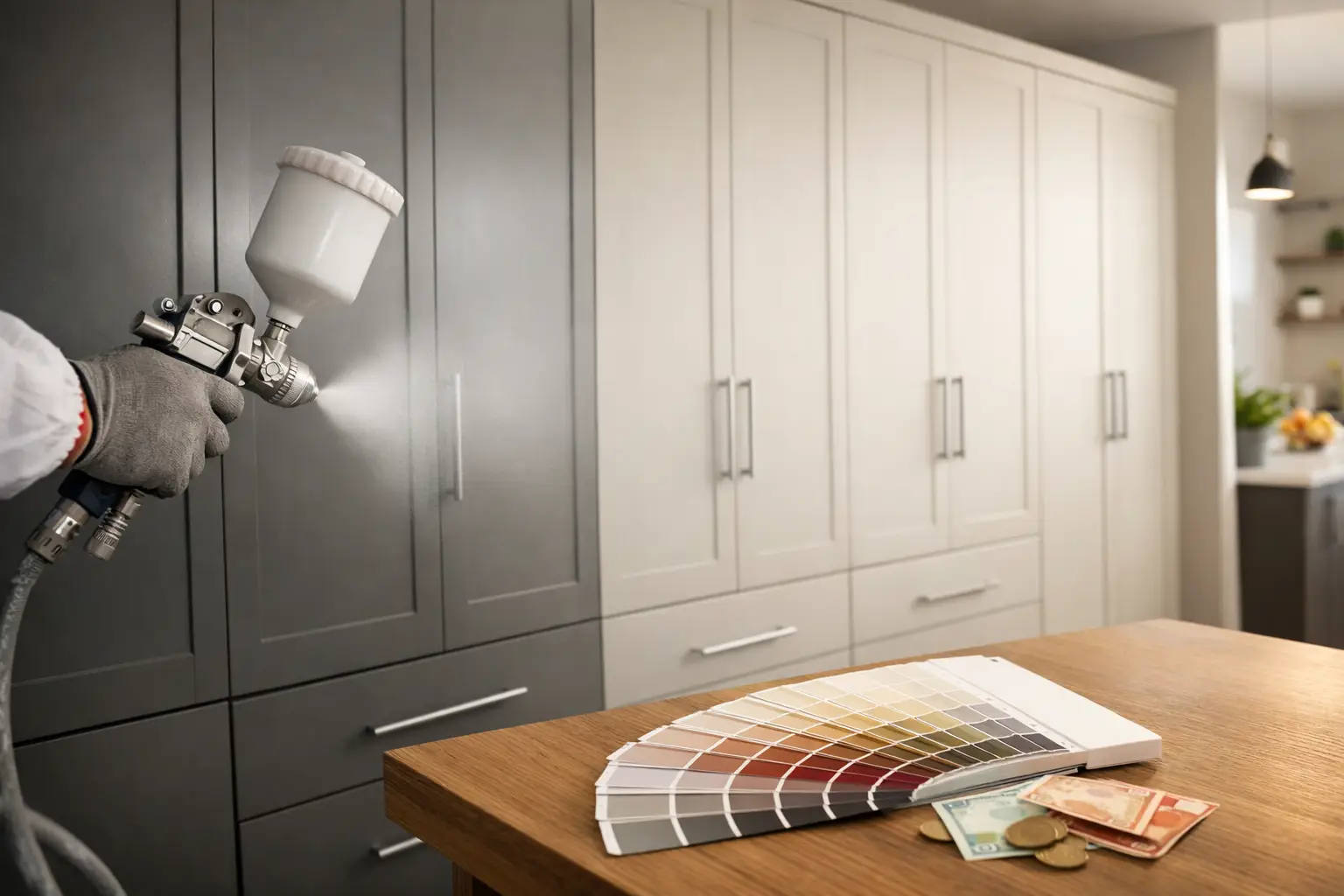
This is where professional spraying comes into its own. A properly applied spray finish can transform existing cabinetry so it looks and feels like a new kitchen, without the disruption, waste, and cost of a rip-out. For many households, that is the sweet spot: a stunning result, done efficiently, and kinder to the environment.
If you are exploring a respray in the Dublin area, Dublin Kitchen Respray focuses on professional cabinet finishes designed to be durable and affordable, while keeping your existing kitchen in place.
Choosing a finish that suits your home (not just the trend)
Trends are helpful, but your kitchen has its own set of rules: light levels, how you cook, whether you have young children, and how much time you want to spend wiping doors.
If your kitchen gets strong daylight, very glossy finishes can feel harsh and show every mark. If your kitchen is darker, an ultra-matte black might look dramatic in theory but can flatten the space unless you have good lighting and lighter worktops.
Think about where wear happens in your home. The bin area, the sink run, and the fridge housing take the most abuse. Choosing a slightly more forgiving sheen and a colour that is not too pale in these zones can keep the kitchen looking freshly finished for longer.
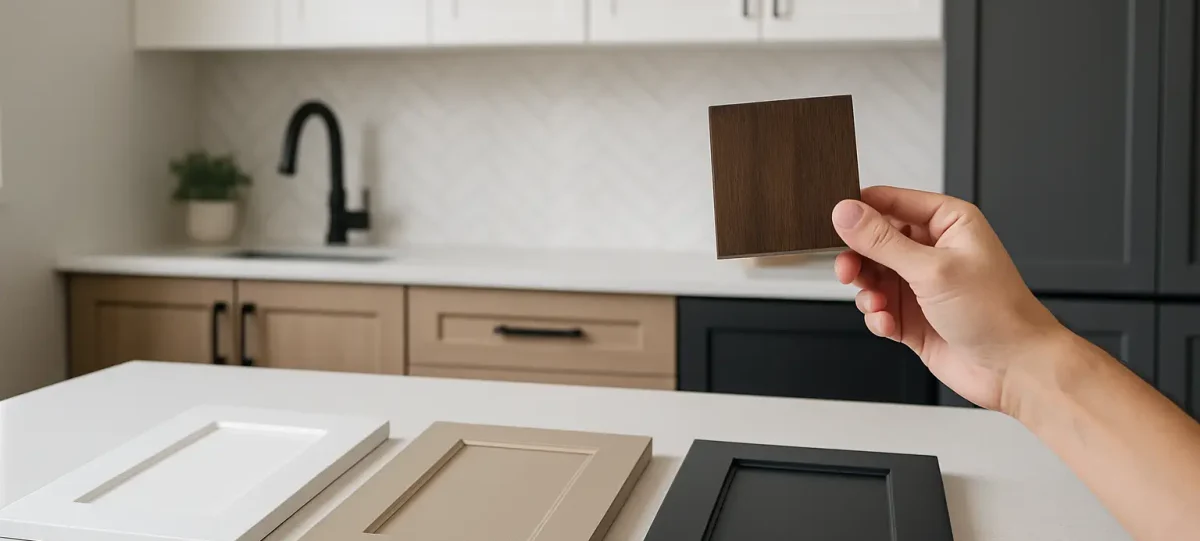
Finally, do not underestimate how much the finish changes once it is on every door. A colour that looks perfect on a small swatch can feel overpowering across a whole run of units, while a subtle neutral can suddenly look intentional and high-end when it is applied consistently.
A helpful closing thought: pick a finish that you will still enjoy on an ordinary Tuesday evening – because that is when a kitchen earns its keep, and when the right cabinet finish quietly proves it was the right decision.