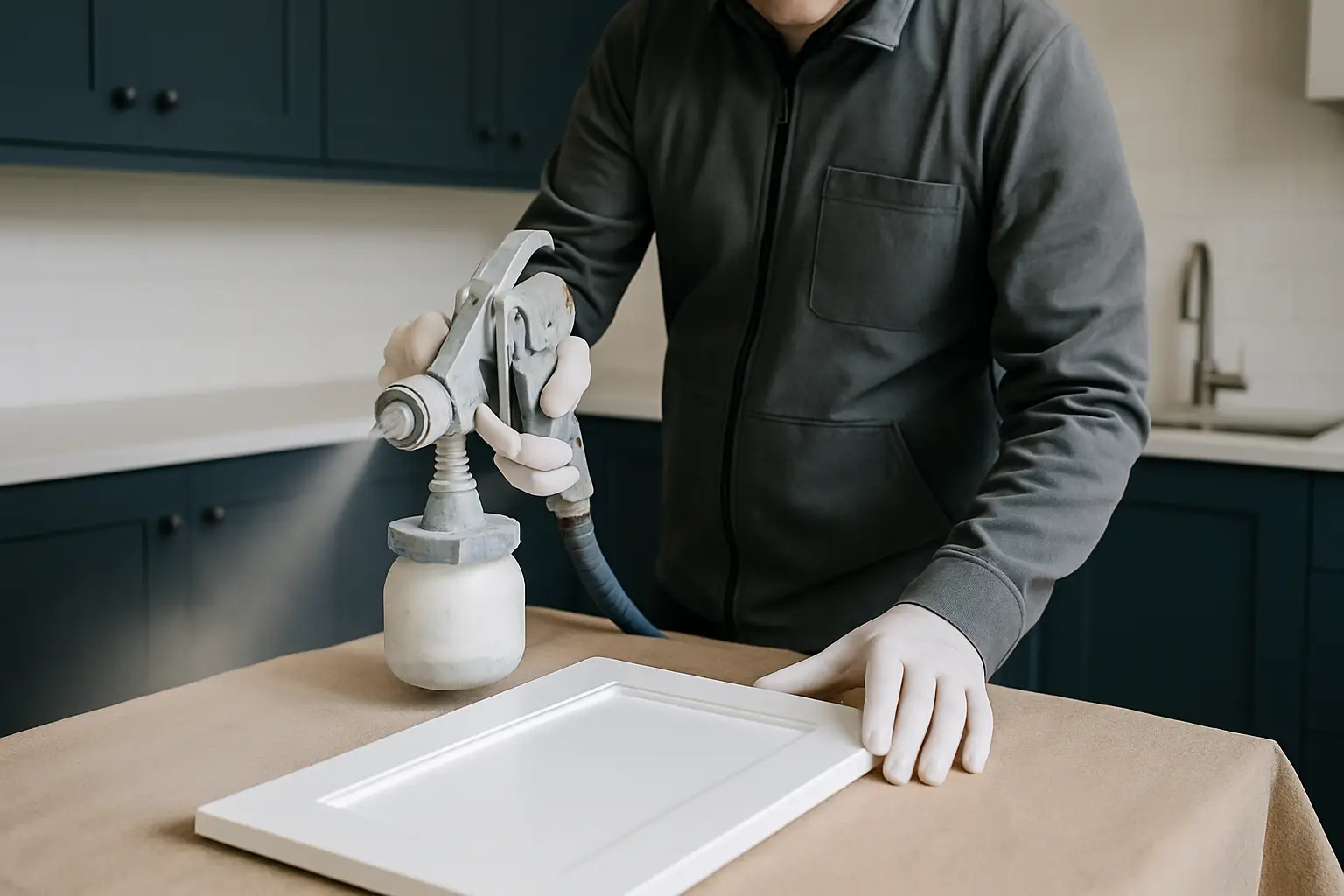

If you have ever priced a full kitchen replacement in Dublin, you will know the moment the numbers stop being “a nice upgrade” and start being “a major project”. Cabinet respraying sits in the sweet spot – a dramatic visual change, minimal disruption, and a budget that stays focused on what you actually see and touch every day.
Kitchen cabinet respray cost Dublin: what most homeowners pay
The honest answer is that kitchen cabinet respraying is priced per kitchen, not per wish list. The final figure depends on how many doors you have, what condition they are in, and how far you want to take the transformation (just doors, or doors plus frames, panels, plinths and end panels).
In Dublin and the surrounding counties, most homeowners land somewhere in the low four figures for a standard family kitchen when they choose a professional, on-site respray. Smaller kitchens with fewer doors can come in below that, while larger kitchens with a lot of cabinetry, tall units, islands and detailed panelling will naturally sit higher. If you are comparing prices, make sure you are comparing like with like: some quotes cover doors only, while others include frames, cornices, kickboards and all the fiddly bits that make the finished kitchen look truly “factory fresh”.
A useful way to think about cost is this: the price is less about the paint itself and more about preparation, spray setup, labour time and quality control. A respray that lasts is built on what happens before the colour goes on.
What drives the price up or down
A good quote should feel transparent. If it is not clear what is included, you are left guessing – and that is usually where disappointment starts. These are the biggest factors that influence pricing in real Dublin kitchens.
How much cabinetry you have (and how it is built)
More doors, drawers and panels means more time: removal, labelling, sanding, priming, spraying, curing and re-fitting. Kitchens with an island often carry extra work because you have multiple visible sides, end panels and decorative trims that need the same level finish as the doors.
Construction matters too. Flat slab doors are straightforward. Shaker doors and heavily detailed profiles take longer because every groove needs proper keying and consistent coverage, without flooding the detail with paint.
Doors only vs doors plus frames
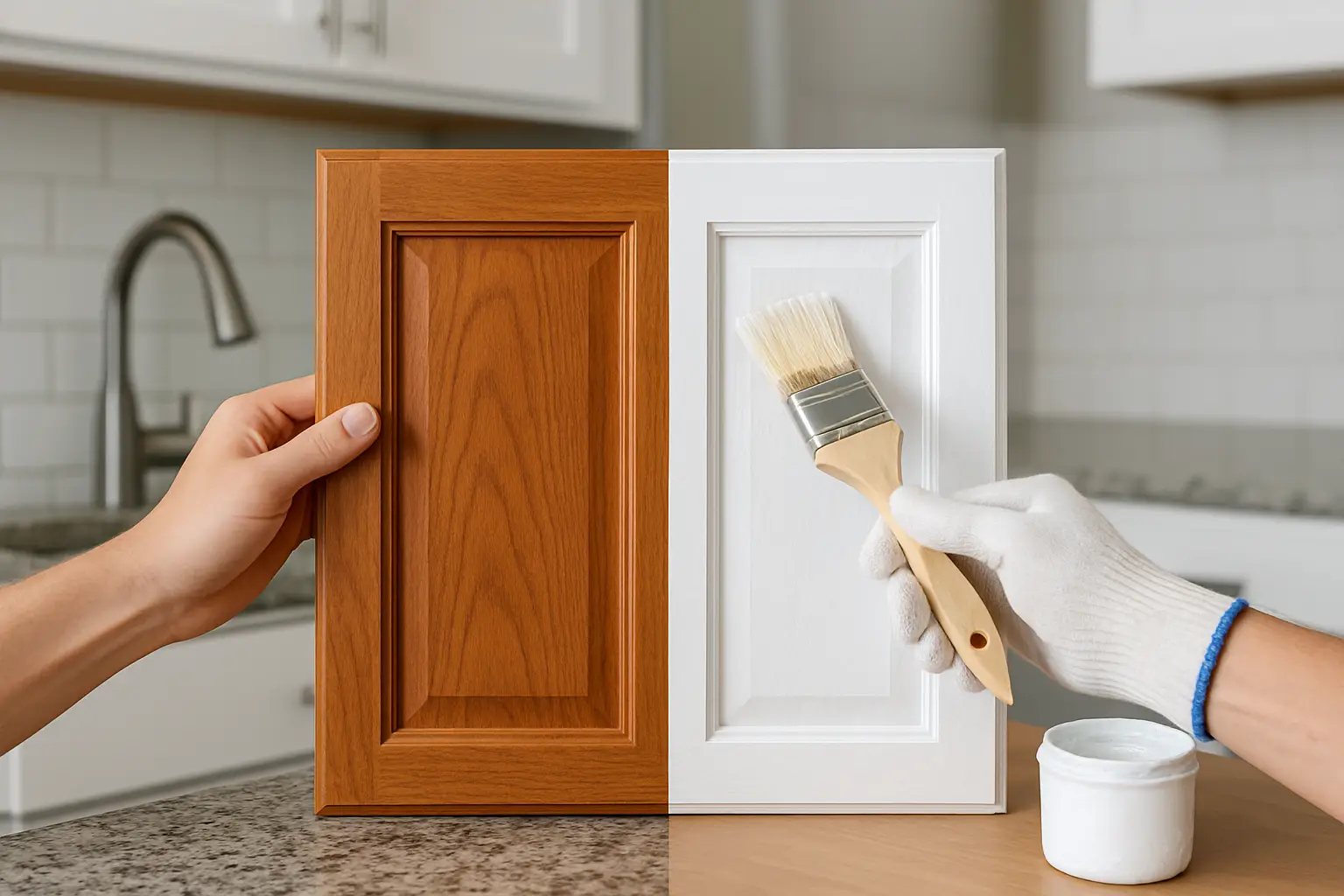
A “doors only” respray can look good if your frames are already close in colour and in great condition. But if you are changing shade (for example, oak to a soft white or deep graphite), leaving the frames untouched can make the whole kitchen look slightly unfinished. Spraying the frames and visible side panels costs more, but it is often the difference between “freshened up” and “fully transformed”.
Condition: grease, chips, peeling and previous paint
Kitchens work hard. Built-up grease around handles, water marks near the sink and small chips along drawer edges are common – and all of it needs attention.
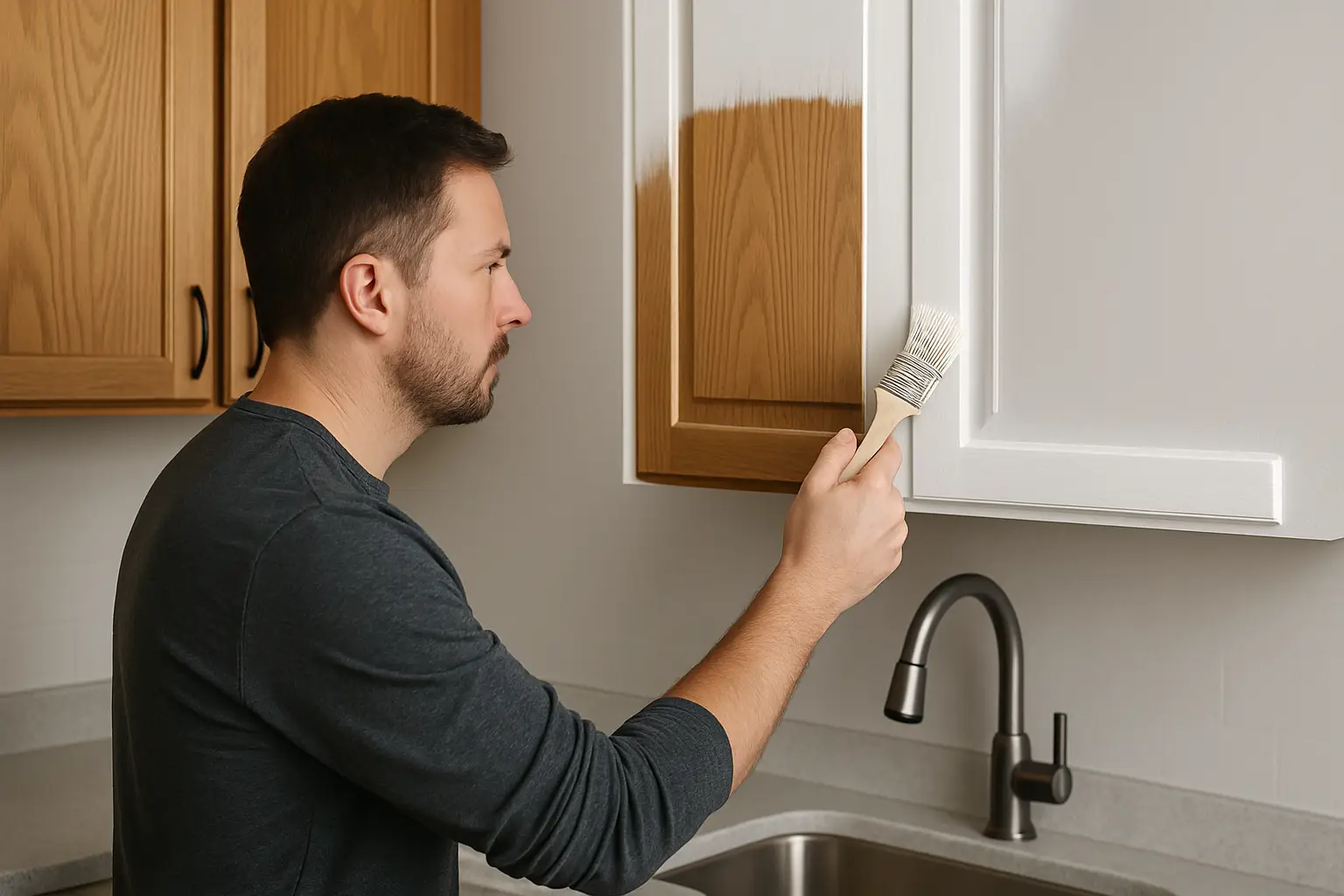
If doors are already painted and the finish is failing, the prep stage becomes more involved. A trusted professional will not simply spray over a flaky surface, because it will fail again. Proper degreasing, sanding and the right primers are what protect your investment.
Colour changes and finish level
Colour choice is not just aesthetic – it affects the process. Going from a dark finish to a light one can need extra priming or additional coats for consistent coverage. Finish level matters too: matt, satin and gloss behave differently under light, and some finishes show more imperfections if the prep is rushed.
If you want a very specific shade match, that can also influence the quote because mixing and testing takes time. It is worth it when you have a particular vision or you are tying the kitchen into flooring, wall colour or a new worktop.
Access, layout and site conditions
Dublin homes range from modern open-plan builds to older terraced houses with tighter access. Parking, stairs, narrow kitchens and ventilation can all affect setup time. A professional team will plan for this, protect floors and worktops properly, and keep disruption low – but it is still labour, and labour is part of cost.
Why professional respraying costs what it costs
It is tempting to compare respraying to “painting cupboards”. They are not the same job.
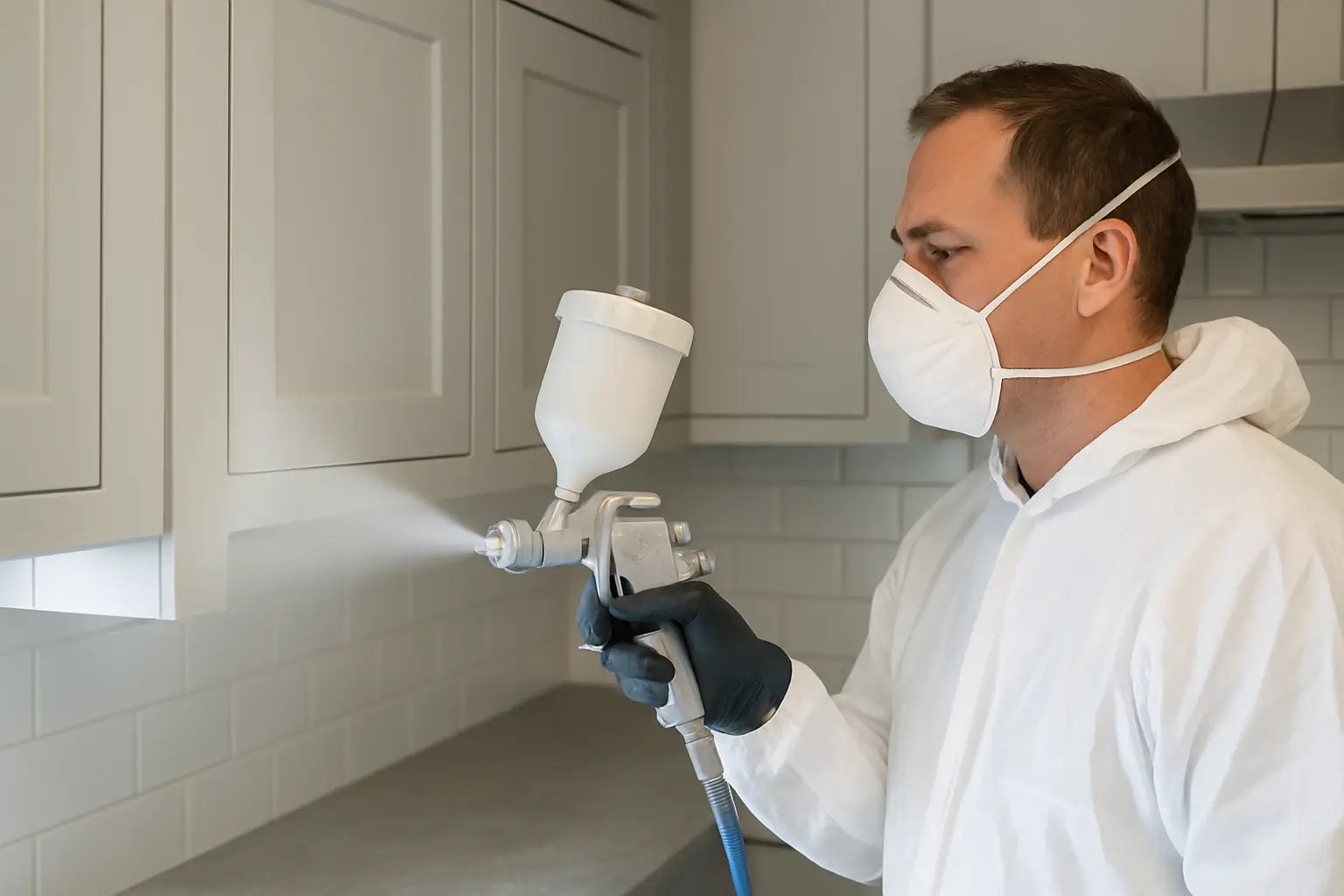
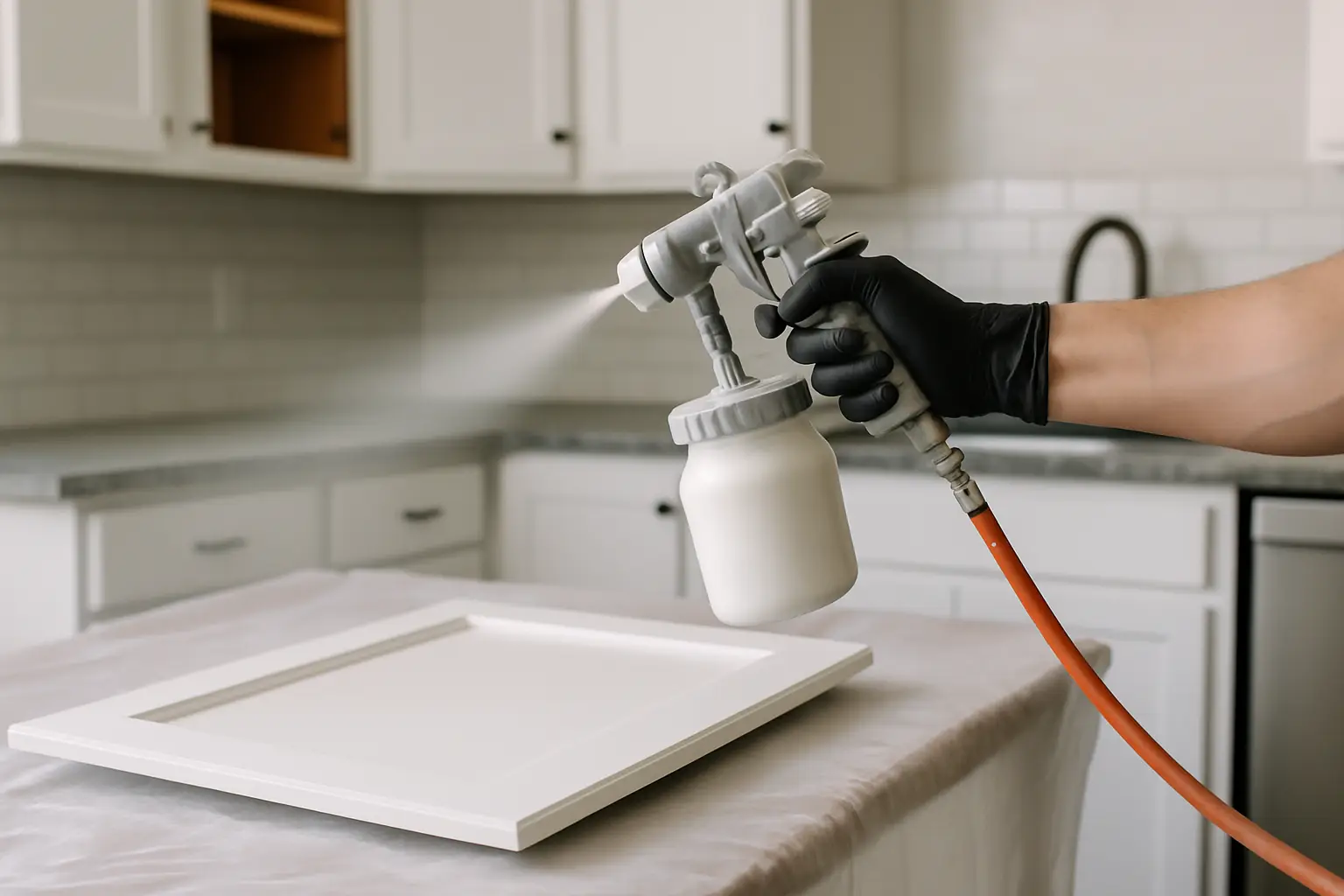
A professional kitchen respray is a controlled finishing process designed to produce a smooth, durable surface that stands up to daily use. That means thorough degreasing, careful sanding to create the right key, using primers that grip properly, and applying sprayed coatings evenly so the finish cures hard rather than staying soft and prone to scratching.
The other difference is protection and cleanliness. Spraying is fast, but only when the area is masked correctly and the workflow is organised. Done well, you can keep your kitchen functional and avoid the extended disruption of a rip-out and refit.
Respraying vs replacing: the real value calculation
If your cabinet carcasses are structurally sound, respraying is one of the most cost-effective ways to get a “new kitchen” look. You are not paying for new units, new hinges across the board, disposal, skip hire, or the domino effect that sometimes follows a full renovation (plastering, flooring changes, electrics, splashback work, and so on).
There are trade-offs. Respraying will not fix poor layout, lack of storage, or damaged chipboard that has swollen from water. If doors are warped, hinges are failing, or units are coming away from walls, those issues need to be addressed first. A professional will tell you when respraying is the right solution and when you would be better putting money towards joinery or replacement.
For many Dublin homeowners, the best approach is a smart combination: respray the cabinets, update handles, and consider a worktop refresh. If you want a bigger visual leap without the upheaval, services like spray granite for worktops can be a strong partner to cabinet respraying, especially when the existing worktop is dated but still structurally fine.
How to get an accurate quote (without wasting time)
The quickest way to get a realistic price is to give clear information from the start. A few well-lit photos taken straight on, plus one wide shot of the whole kitchen, helps a professional estimate scope. Count the number of doors and drawers, and note any extras like an island, tall pantry units, glass-fronted doors, or integrated appliances.
Be honest about condition. If the doors have peeling paint, sticky residue, or water damage, say so. A reputable company is not judging your kitchen – they are planning the correct preparation so the finish lasts.
It also helps to mention your goal: are you aiming for a simple refresh in a similar tone, or a complete change from timber to a modern painted finish? The more specific you are, the more accurate the quote and the smoother the job.
Common cost surprises (and how to avoid them)
The biggest surprise is usually what is not included. Before you book, ask whether frames, end panels, plinths and kickboards are part of the price, and whether the inside faces of doors are included. Some homeowners only want the externals, which can reduce cost, but it is best decided upfront.
Handles are another one. Re-using old handles is fine if they suit the new colour, but many people choose to swap them once they see the kitchen taking shape. New handles are a relatively small cost that can make the whole room feel more current, but check hole spacing so you do not end up filling and re-drilling every door.
Finally, curing time matters. A finish can look dry quickly but still be curing underneath. A professional will advise how long to wait before heavy cleaning and how to treat the cabinets in the first couple of weeks so the coating hardens properly.
Choosing a respray company in Dublin: what “good” looks like
A trusted, professional provider will explain their prep and products in plain English, not hide behind vague promises. You should expect careful masking, tidy working practices, and a clear plan for how doors are handled, labelled and re-fitted.
You should also look for consistency in finish. The goal is a smooth surface with crisp edges and no heavy build-up in corners. If you can, ask to see photos of completed kitchens similar to yours – not just close-ups, but full-room shots that show frames, end panels and how everything ties together.
If you are looking for an experienced local team, Dublin Kitchen Respray has been respraying kitchens since 1999, with a focus on durable finishes, quick turnaround, and an eco-friendly alternative to replacing perfectly good units.
A realistic expectation: what respraying can and cannot do
Respraying is brilliant at transforming the look of a kitchen, but it does not change the underlying design. If your doors are dated, respraying modernises the colour and finish, not the door profile. If you want a more contemporary style, some homeowners choose to replace doors and then have everything colour-matched and sprayed for a unified result – a middle path between respray-only and full renovation.
It is also worth being realistic about wear points. Even the best finishes will show life eventually on the most-used edges, especially around bins and corner cupboards. The benefit of a professionally sprayed kitchen is that the surface is tough and maintainable, and future touch-ups are far more achievable than starting again.
Closing thought: if your kitchen works well but looks tired, spend your budget where it shows – on a finish that makes you enjoy the room again every time you walk in.