You only notice kitchen paint when it fails.
It starts as a shiny patch where hands always reach, then a little nick near the bin, then a door edge that looks tired no matter how often you clean it. So the real question homeowners ask us is not “Will it look good on day one?” It is: will it still look good when the kitchen is doing what kitchens do every day.
So, how long does kitchen respraying last?
A professionally resprayed kitchen can look excellent for 7 to 10 years in a typical family home, and often longer when it is cared for and used normally. In lighter-use households, it is not unusual to see a finish still performing strongly at 10 to 15 years. In very high-wear kitchens – think busy family routines, lots of cooking, frequent cleaning, and constant traffic – a realistic expectation is 5 to 8 years before you may want a refresh on the most handled areas.
Those ranges are deliberately honest because durability is not a single number. It is the result of preparation, materials, application, curing, and day-to-day habits. Get those right and respraying is a genuinely cost-effective alternative to replacing a kitchen.
What actually determines lifespan?
A resprayed finish is not just “paint on doors”. It is a coating system that needs to bond properly, level nicely, and resist moisture, heat, grease, and cleaning. Several factors move the needle.
1) Preparation – the part you do not see
Prep is where longevity is won or lost. Every kitchen door has a history: polish residues, cooking oils, silicone, hand creams, years of cleaning sprays, and sometimes a previous DIY coat. If these contaminants are not properly removed, the new finish may look perfect at first but can chip or peel sooner.
Proper preparation typically involves careful degreasing, thorough sanding or deglossing, dust control, and using a suitable primer or adhesion promoter for the surface (for example, foil-wrapped doors behave differently to bare timber). This is why a trusted professional process matters – the finish can only be as strong as what it is bonded to.
2) The type of surface being sprayed
Solid wood, MDF, veneered panels, and laminated or thermofoil doors all accept coatings differently. MDF and timber generally respray very well. Laminates can also last beautifully, but they are less forgiving and rely heavily on the right preparation and primer selection.
If doors are already swelling from water ingress, delaminating, or physically damaged, respraying can still improve appearance but may not magically outlast the underlying issue. Sometimes a small repair or replacing a handful of problematic doors is the smart move before spraying.
3) The coating system and finish level
Not all coatings are equal. A kitchen needs a hard-wearing, cleanable finish with good chemical resistance. The choice of primer and topcoat, plus how many coats are applied, affects both the look and the life.
Finish level plays a role too. Very high-gloss surfaces can show scratches and fingerprints more readily, even if the coating is technically durable. Satin and matt finishes are popular because they hide everyday marks better while still looking premium.
4) Application conditions and curing
Temperature, humidity, and dust control matter. Spraying in the right conditions helps the coating lay down evenly and cure properly. Even after it feels dry, coatings continue to harden over time.
That curing period is where many kitchens are accidentally “damaged” without anyone realising. Slamming doors, scrubbing marks, or sticking hooks to new surfaces too soon can shorten the life of the finish.
5) Your kitchen’s real-world wear and tear
A kitchen used gently will always look newer for longer than one that is the hub of the home. The highest wear areas are predictable: handles, door edges, the sink unit, the bin cabinet, and the drawers that get yanked open with wet hands.
If you have young children, pets, or a layout where people brush past cabinetry constantly, you should expect more knocks – not a failure of respraying, just normal life.
How long does kitchen respraying last in busy family homes?
In most Dublin-area family kitchens, we see the finish stay strong for years, with the first signs of wear showing up on a small number of hotspots rather than the whole kitchen. A practical way to think about lifespan is this: the coating is designed to last, but the kitchen’s “touch points” are what will age first.
If you want your respray to look its best for the longest time, small choices make a big difference. Soft-close hinges reduce impact. Good handles reduce nail scratches around the edges. Even wiping up splashes quickly around the sink can prevent water working its way into joints.
Signs your respray is still healthy (and what is normal)
A durable respray does not need to look absolutely perfect to be doing its job. Minor micro-scratches in strong light are normal in any painted finish over time. What you do not want to see is widespread peeling, bubbling, or flaking.
If you notice a small chip at a door edge, that is often from a knock rather than a coating failure. Catch it early and it can sometimes be touched in neatly, preventing moisture getting into the substrate.
How to make a resprayed kitchen last longer
A lot of longevity is decided before you ever pick up a cloth. But once the kitchen is back in use, care is straightforward.
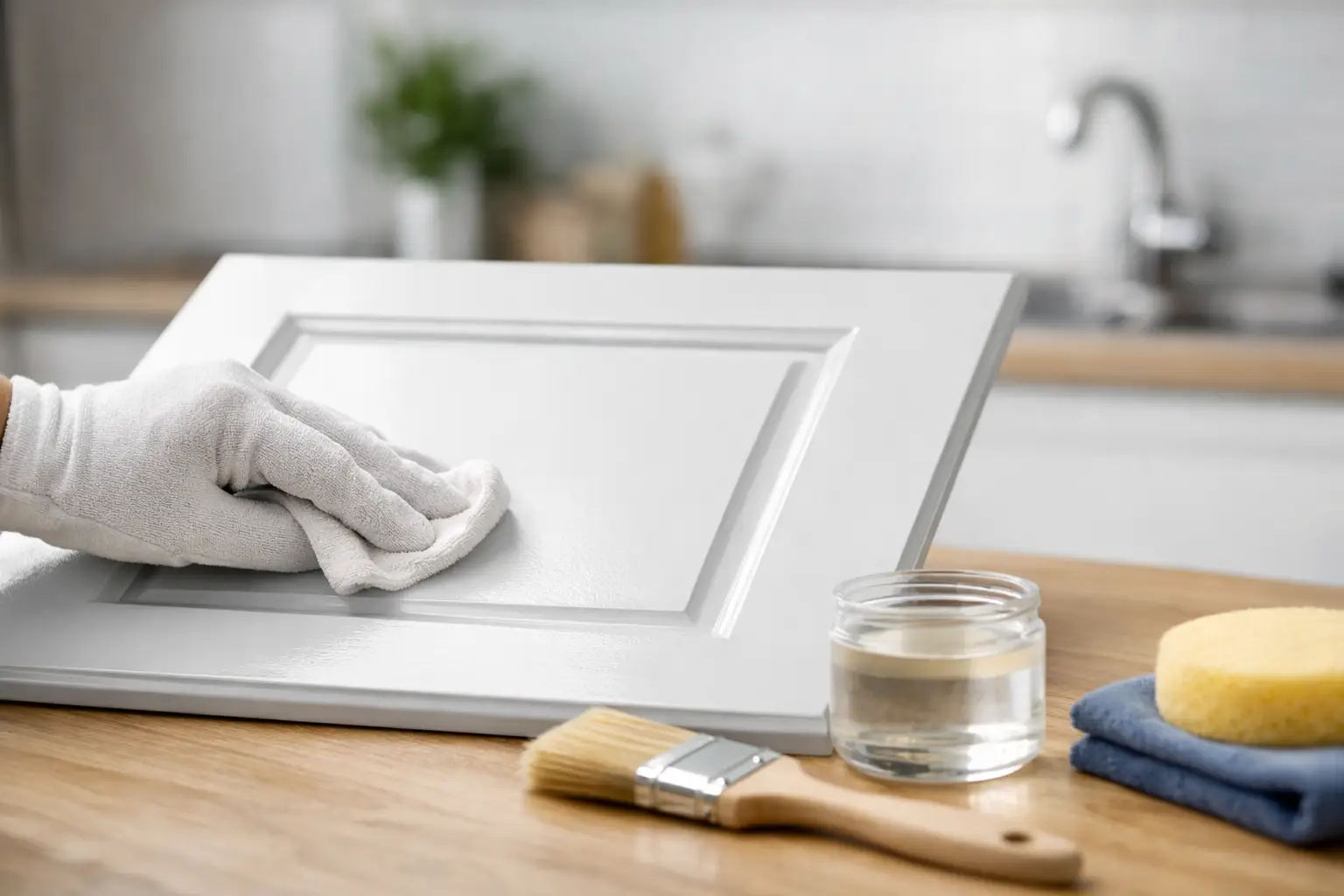
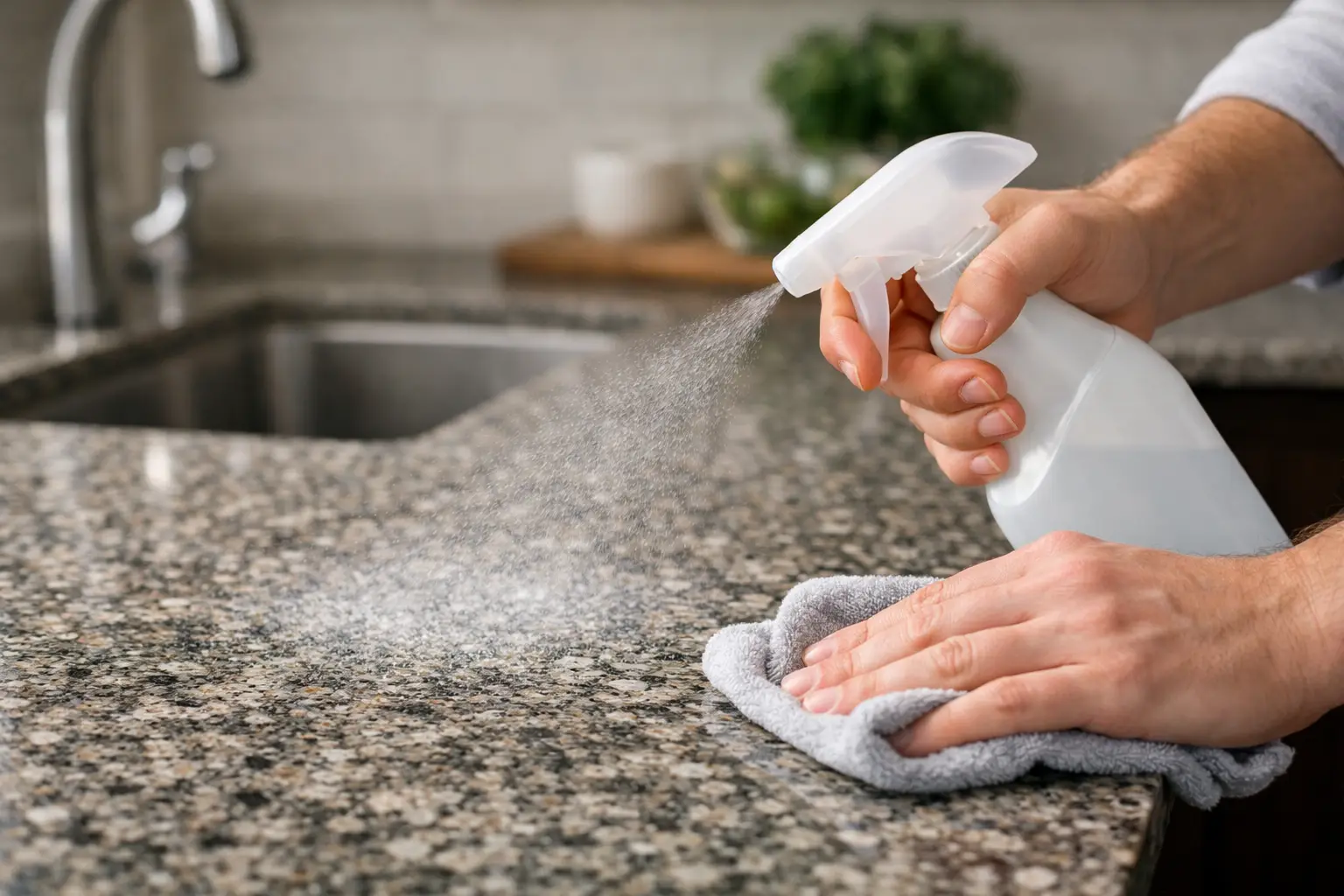
For regular cleaning, use a soft microfibre cloth with warm water and a mild washing-up liquid. Avoid anything abrasive. Cream cleaners and scouring pads will dull the finish and can create tiny scratches that collect grime.
Be cautious with harsh degreasers and bleach-based sprays. Even if they do not strip the coating, repeated use can reduce sheen and make the surface look tired earlier than it should.
Heat and steam are also part of kitchen life, but they need managing. Use the extractor fan when cooking, and try not to let steam from a kettle or pot vent directly onto cabinet edges for long periods. Around the sink, wipe standing water rather than leaving it to sit on seams.
The first couple of weeks after respraying are especially important. Treat the finish gently while it is curing: avoid sticky hooks, minimise heavy wiping, and do not lean sharp objects against doors.
Respraying vs replacing – what lifespan really means for value
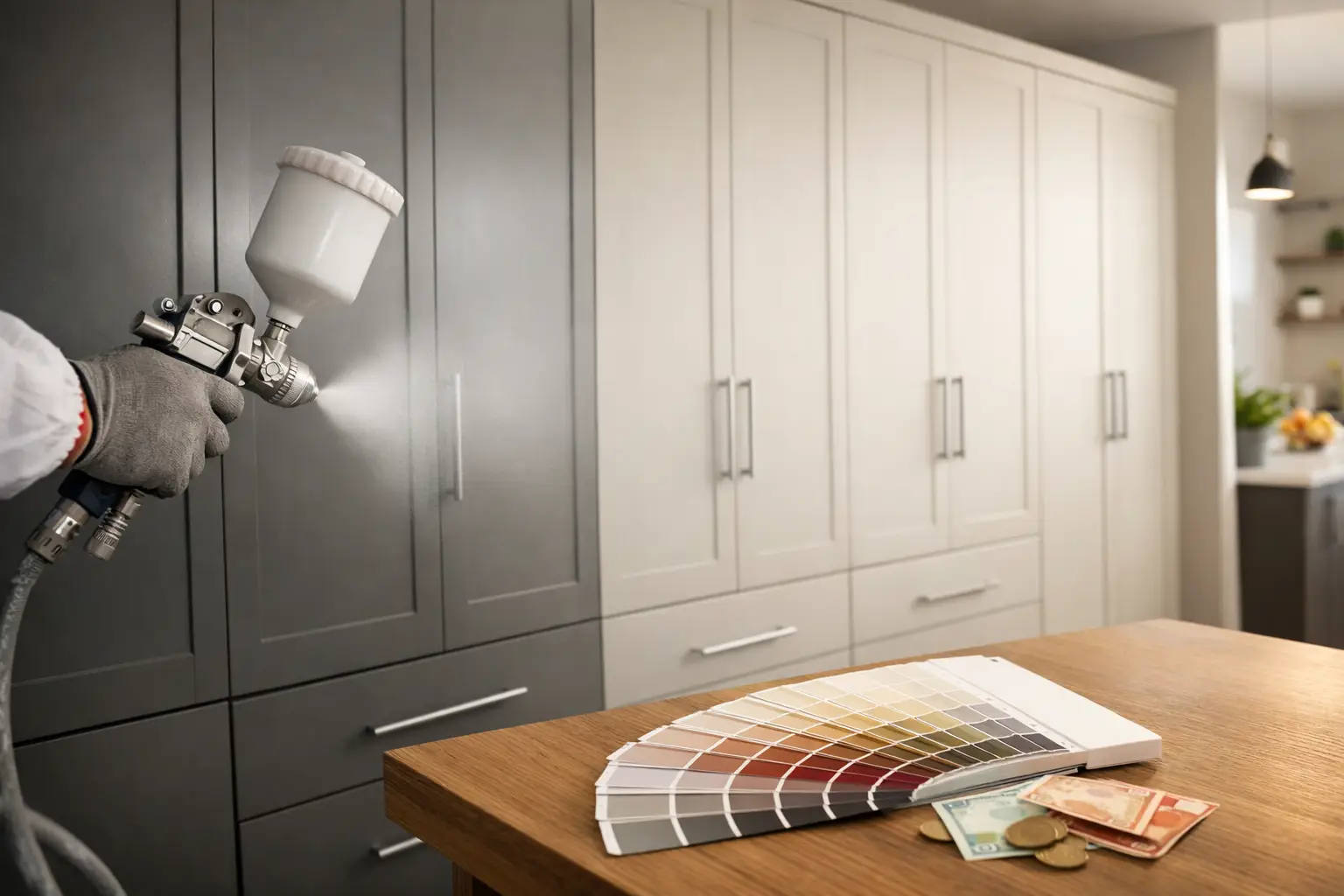
A full kitchen replacement can last a long time, but it comes with significant cost, disruption, and waste. Respraying is different: it is about extending the life of what you already have, delivering a stunning visual change without ripping out serviceable units.
For many homeowners, the value calculation is simple. If a professional respray gives you the look you want for a decade or more at a fraction of the cost of replacement, it is an affordable upgrade that makes sense. It is also a more eco-friendly choice because you keep perfectly functional cabinetry out of landfill and reduce the demand for new materials.
When respraying may not be the best answer
A trusted professional should be upfront here. Respraying is ideal when cabinets are structurally sound but cosmetically dated. If units are falling apart, badly swollen from leaks, or poorly laid out for your needs, spraying will not solve the underlying problem.
Likewise, if doors are very cheap foil-wrapped types that are already lifting at the edges, the best long-term solution might involve replacing doors first, then spraying for a consistent finish.
What a professional process should include
If you are comparing quotes, ask what is included rather than focusing only on the headline price. Longevity is usually tied to the less glamorous parts: thorough degreasing, careful sanding, the right primers, controlled spraying, and sensible curing guidance.
A professional team should also talk you through realistic expectations for your particular kitchen – how many people use it, your current door material, and which areas will get the most wear. That kind of detail is often the difference between a finish that stays sharp for years and one that disappoints early.
If you are considering a trusted local service, Dublin Kitchen Respray has been transforming kitchens across Dublin and the surrounding counties since 1999, with an approach built around professional preparation, durable finishes, and minimal disruption.
The honest answer to “how long will it last?”
Kitchen respraying lasts a long time when it is done properly and treated sensibly, but it is not a forcefield. It is a hard-wearing finish designed for real homes, and it will age in the places your kitchen works hardest.
If you focus on quality preparation, choose a practical finish, and adopt simple cleaning habits, you can enjoy a like-new look for many years – and every time you walk in, it will feel like you made the right upgrade, not just a quick cosmetic fix.