A kitchen can start to feel tired long before it stops working. Maybe the doors are dated, the worktop has a few battle scars, and the whole room looks darker than it should. The usual answer is to rip it out and start again – but that is often the least eco-friendly (and most disruptive) route.
Eco-friendly kitchen renovation solutions are really about one simple shift: prioritising what you can keep, then upgrading the parts that genuinely need attention. Done well, you get a kitchen that looks like new, costs less than a full refit, and avoids sending perfectly serviceable materials to landfill.
Start with the greenest choice: keep what still works
If your cabinet boxes are solid, your layout functions, and your plumbing and electrics are safe, you are already sitting on the most sustainable renovation strategy available: reuse.
The biggest environmental impact in many kitchen projects is the manufacturing and transport of new units, plus the waste created when old cabinetry, worktops, tiles, and fittings are stripped out. A thoughtful renovation focuses first on cosmetic and performance upgrades that extend the life of what you have.
That does not mean tolerating a kitchen you do not like. It means being precise about what is actually worn out versus what is simply out of style.
Cabinet respraying: a high-impact, low-waste transformation
Cabinet doors and drawer fronts dominate what you see. When they look shabby, the whole kitchen feels past its best, even if the units themselves are structurally sound.
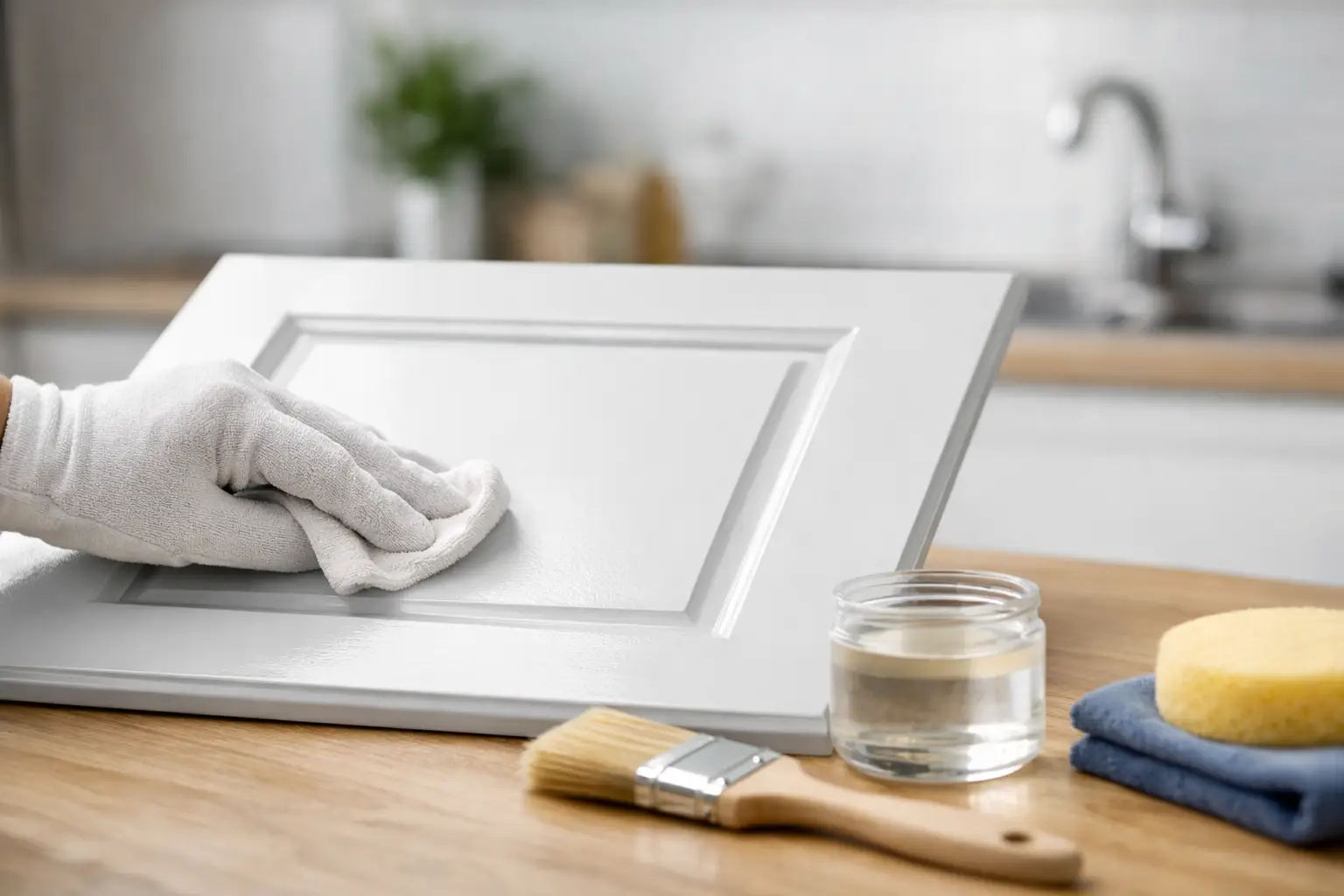
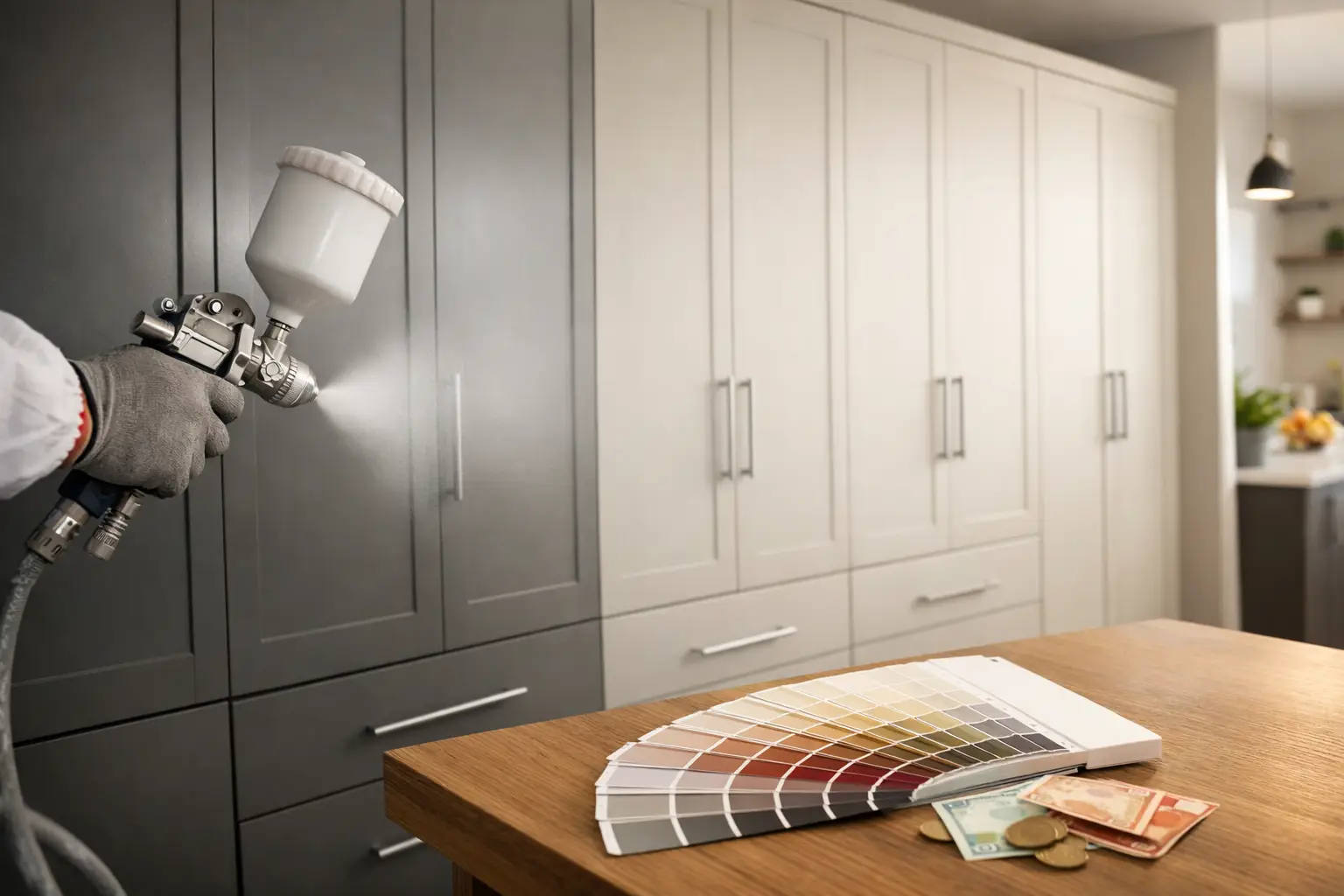
Professional respraying is one of the most effective eco-friendly kitchen renovation solutions because it avoids replacement while delivering a factory-smooth finish. Instead of new MDF doors being manufactured, wrapped, delivered, installed, and disposed of later, you are extending the lifespan of what is already in your home.
A proper respray is not a quick coat of paint. Preparation is everything: thorough degreasing, careful sanding, repairs where needed, and a professional spray application designed for durability in a high-use space. The result is a hardwearing finish that stands up to daily cooking, cleaning, and family life.
Colour choice is where you can modernise instantly. Soft neutrals brighten small Dublin kitchens; deeper tones like navy or forest green can make a larger room feel more designed. If you are unsure, consider a two-tone approach – lighter uppers, darker lowers – which can look bespoke without changing the footprint.
If you are in Dublin or surrounding counties and want a trusted, professional finish without the upheaval of a full rip-out, Dublin Kitchen Respray specialises in exactly this sort of stunning, affordable upgrade.
Refresh worktops without replacing everything
Worktops take the most punishment. Chips, burns, and stains are common, and replacing them can be expensive and waste-heavy – especially if it triggers additional changes such as plumbing adjustments or new splashbacks.
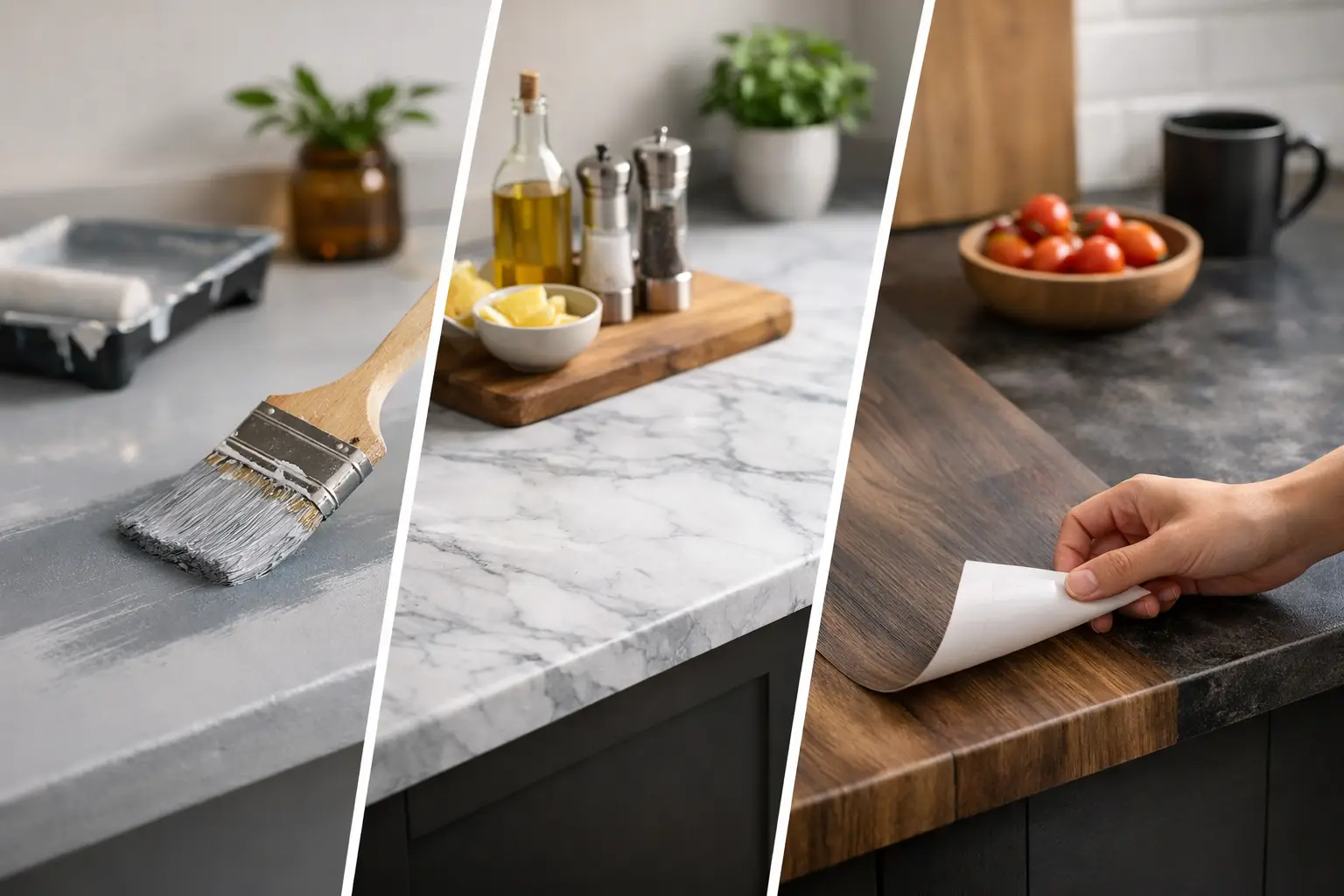
In some kitchens, the most eco-friendly option is repair. Small chips in laminate or stone can often be filled and refinished well enough to extend the life of the surface. When the look is the issue rather than the structure, resurfacing options can deliver a dramatic change with far less waste than a full replacement.
Spray-applied worktop finishes (including spray granite systems) are gaining popularity for good reason: they can update the appearance of existing surfaces, reduce disruption, and help you avoid sending a large slab of material to landfill. The key trade-off is suitability – it depends on the condition of the existing worktop and how you use your kitchen. A household that cooks heavily every day will need a finish that is properly specified, professionally applied, and maintained as advised.
If your worktop is genuinely failing (swollen chipboard, major delamination, or persistent water damage around the sink), replacement may be the sensible long-term decision. When you do replace, consider durability first. A surface that lasts 20 years is usually greener than one that needs changing after five, even if the upfront cost is higher.
Choose finishes that are safer for your home
Eco-friendly is not only about waste. It is also about indoor air quality. Kitchens are enclosed spaces where we spend a lot of time, often with heat and moisture in the mix. Some products release more volatile organic compounds (VOCs) than others, particularly during application and curing.
When selecting paints, lacquers, adhesives, or sealants, ask about low-VOC options and curing times. A professional provider should be able to explain what is being used, how the area is protected, and when the kitchen is safe to use normally again.
There is a practical angle too: the right product system is not just “greener”, it is more durable. A finish that chips easily becomes a repeat job, which is wasteful in its own way.
Upgrade lighting for immediate efficiency (and better mood)
Lighting is an underrated part of renovation. Older kitchens often rely on a single central fitting that casts shadows over work areas. Improving lighting can make the space feel cleaner and more modern, and it is one of the quickest ways to cut energy use.
LED downlights or an LED panel can reduce electricity consumption, and under-cabinet LED strips make food prep safer and more pleasant. If you are already updating cabinet finishes, it is a smart time to consider discreet lighting additions because the visual impact is so strong.
A small note of realism: if your kitchen wiring is older, you may need an electrician to confirm what is possible. Safety comes first, and a sustainable renovation should never compromise that.
Keep appliances only when replacement is truly worthwhile
It is tempting to replace appliances simply to match a new look. From an environmental standpoint, that only makes sense if the existing appliance is inefficient, unreliable, or unsuitable for your household.
If your fridge-freezer is running constantly, your oven heats unevenly, or your dishwasher leaves you rewashing items, upgrading to a more efficient model can reduce energy and water use over time. But if everything works well, keeping what you have and improving the kitchen around it is often the greener choice.
If you do replace, measure carefully and plan for longevity. The most sustainable appliance is the one you will not be forced to replace early because it does not fit your needs.
Save the floor if you can (or choose the right replacement)
Kitchen floors get replaced frequently because they date the room. But many floors can be cleaned, re-sealed, or refreshed.
Timber or engineered wood may be re-sanded and re-finished, depending on thickness and condition. Tile can sometimes be revived with deep cleaning and grout restoration rather than replacement. Even when replacement is needed, consider hardwearing options that cope with moisture and heavy footfall. A floor that looks good but fails quickly is a false economy.
Water-saving changes that do not feel like a compromise
Eco upgrades should not make your kitchen less enjoyable. Water-saving taps and aerators can reduce water use without killing water pressure. Fixing slow leaks, replacing worn seals, and ensuring your dishwasher is correctly loaded and maintained all contribute too.
If you are changing a sink, think about practicality and lifespan. A slightly more expensive, well-made sink that resists scratching and staining can be the greener option because it will not need replacing in a few years.
Waste and disruption: plan like a professional
Sustainable renovation is as much about planning as products. If you are doing multiple improvements, coordinate them to reduce repeat visits, repeated deliveries, and unnecessary waste.
A good example is pairing a cabinet refresh with new handles and improved lighting. You get a complete visual change without touching the carcasses, and you avoid the skip on the driveway.
For any unavoidable waste, separate what can be recycled. Metal handles, clean cardboard packaging, and certain timber items may be diverted from landfill with a bit of organisation. If you are hiring trades, ask how waste is handled and whether materials are recycled where possible.
The honest trade-offs: when replacement is the greener move
There are times when “keep everything” is not the right answer. If cabinets are water-damaged, swollen, or structurally unstable, respraying will not solve the underlying problem. If a layout forces you to use the kitchen inefficiently (for example, poor ventilation leading to persistent damp), strategic changes may improve energy use and indoor air quality.
The key is to replace with intention. Replace what is failing, keep what is sound, and invest in quality where it matters – hinges that do not sag, a finish that does not peel, and materials that will not need redoing after a short time.
A realistic way to get a kitchen you love – without the landfill
An eco-friendly kitchen renovation is not about chasing perfection. It is about making smart, professional choices that respect your budget, your time, and the materials already in your home.
If you are standing in your kitchen thinking, “It is fine, I just don’t like it anymore,” that is often good news. It usually means you can achieve a like-new look through targeted upgrades – especially cabinet and worktop refreshes – and keep the heavy demolition out of the plan.
Choose the improvements that will still make sense in five and ten years, and you will feel the difference every day you make a cup of tea – not because you replaced everything, but because you upgraded what mattered most.