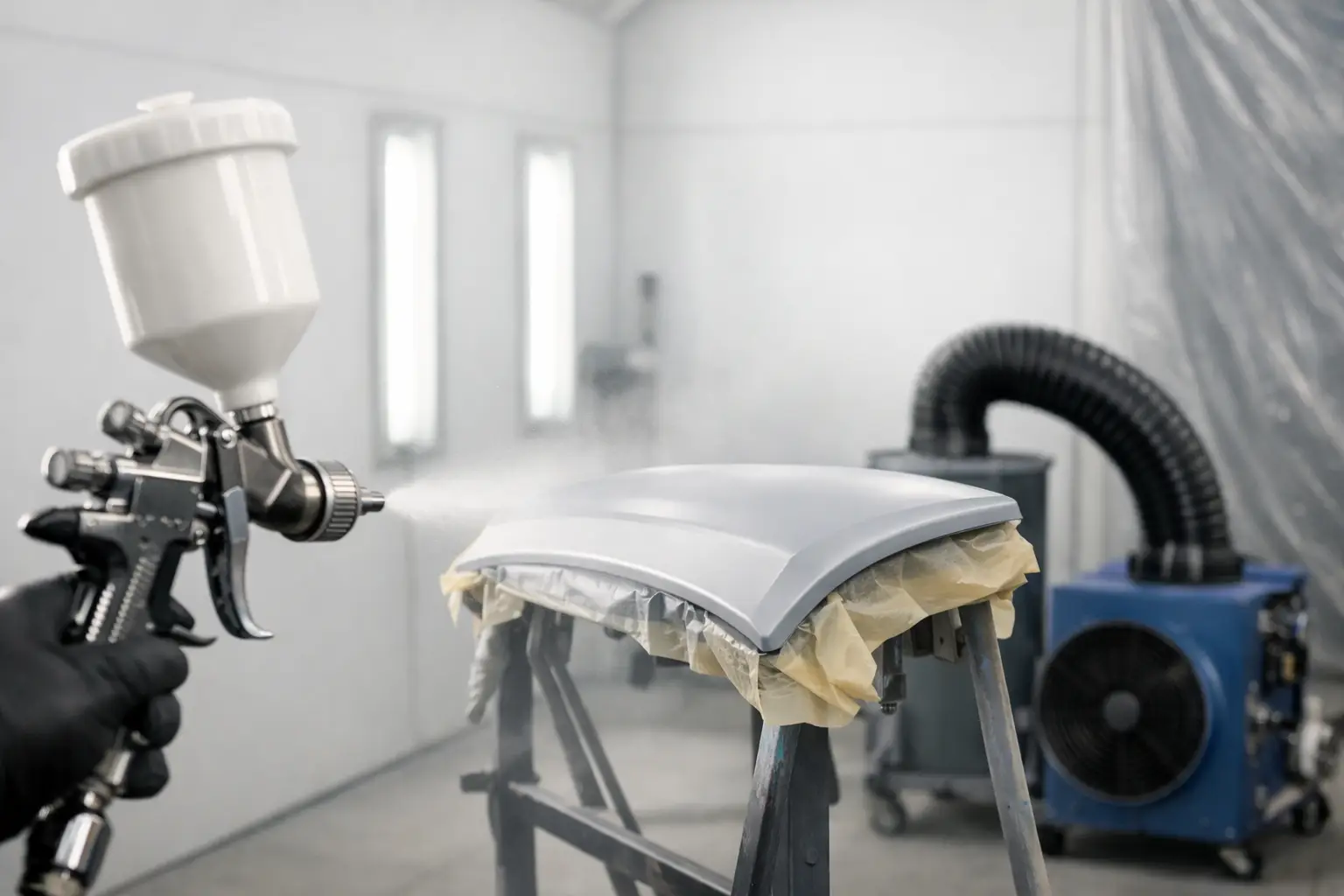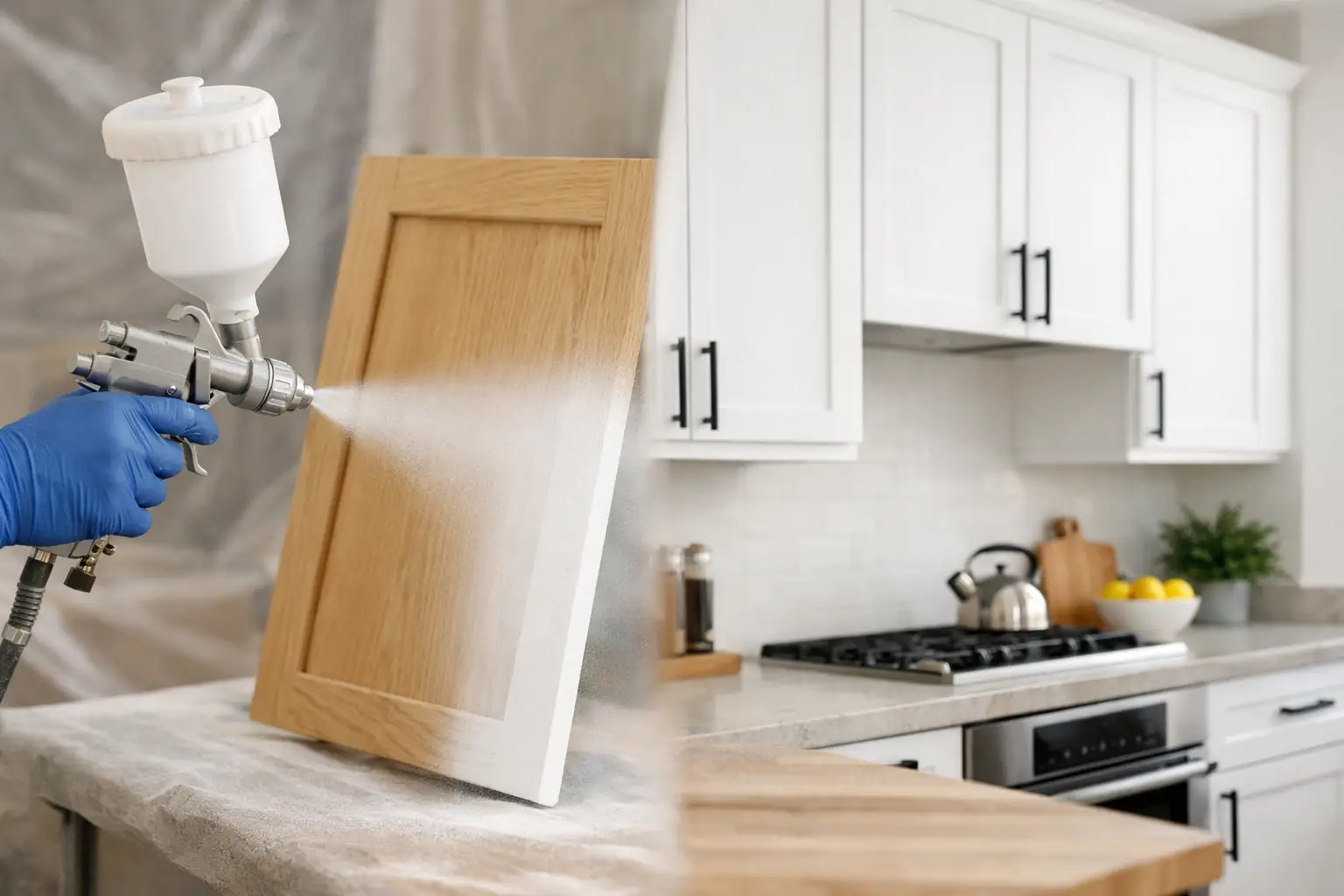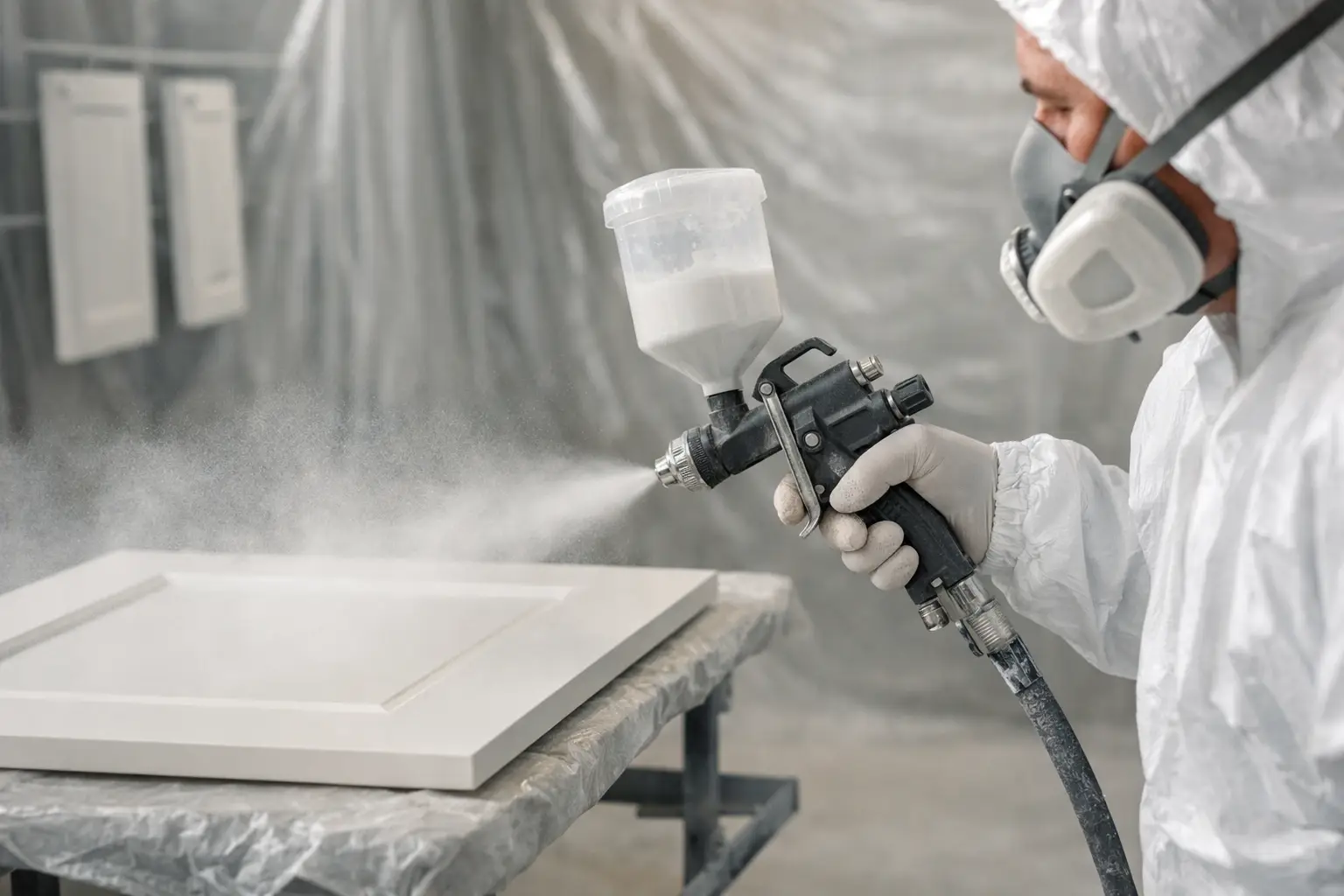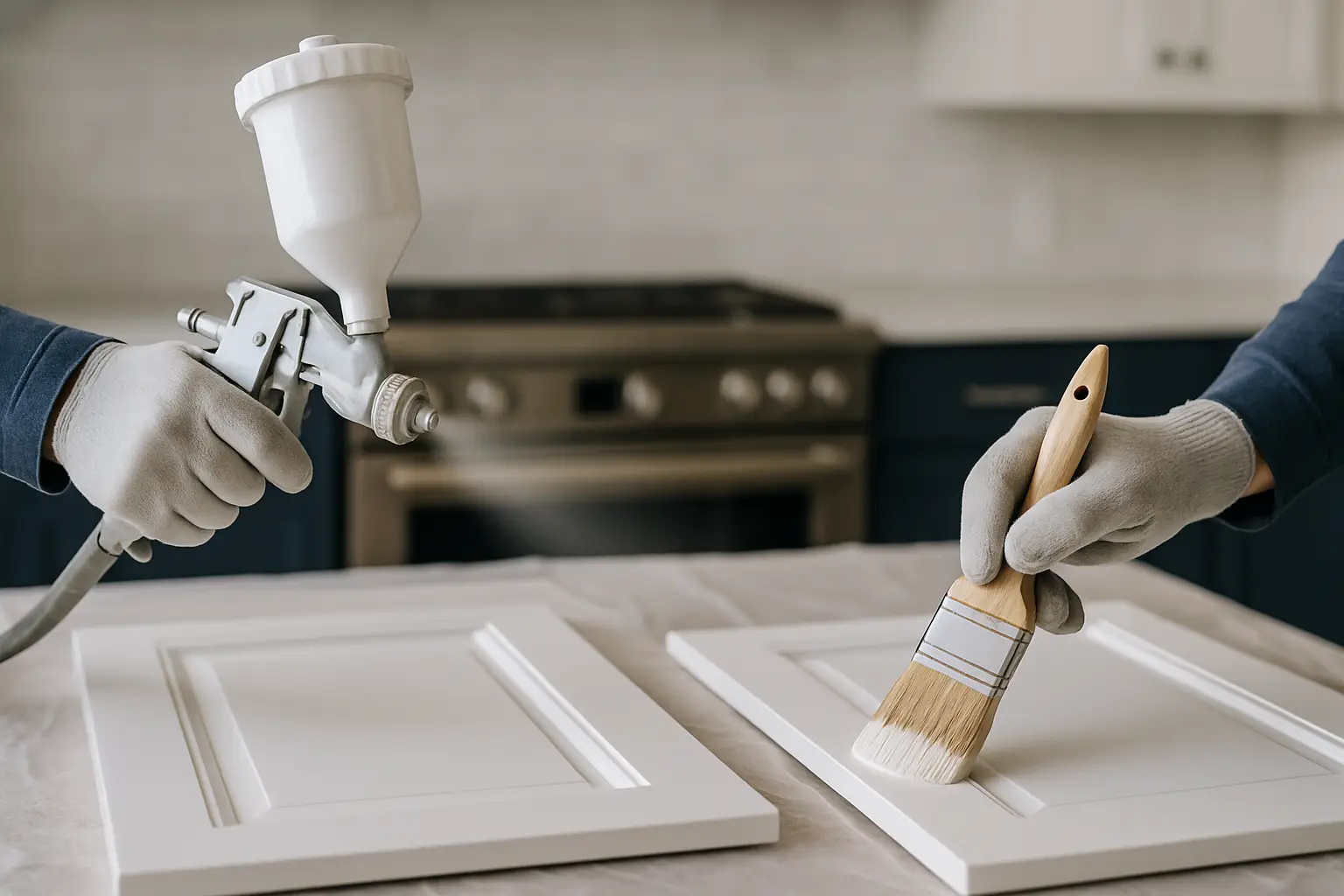
A beautiful sprayed kitchen can be let down by one tiny problem – dust. A single speck caught in the topcoat is enough to spoil an otherwise flawless door, and once you see it, you cannot unsee it. That is why a proper dust free kitchen spraying setup is not a luxury or a nice extra. It is the difference between a finish that looks newly fitted and one that still feels like a compromise.
For homeowners considering a kitchen respray, this matters because the quality of the working environment directly affects the final result. For professionals, it matters even more. Great paint and expert technique still need the right setup behind them.
What a dust free kitchen spraying setup really means
A dust free kitchen spraying setup does not mean working in a magical space with zero particles in the air. In practice, it means controlling dust so effectively that it does not land in the coating while surfaces are being sprayed and cured. That control comes from preparation, isolation, airflow, cleanliness and timing.
This is where many DIY efforts fall short. People often focus on the spray gun and the paint system, but not on the room itself. Kitchens are especially tricky because they collect grease, cooking residue, fluff, pet hair and general household dust. Even when the room looks clean, the air can still be full of contamination waiting to settle into wet paint.
Why kitchens are harder to spray than other rooms
Kitchen cabinetry sits in one of the busiest parts of the home. There is steam, heat, airborne grease and constant use. That means surfaces need more thorough degreasing before any primer goes on, but it also means the environment needs tighter control during the spraying stage.
Floors, worktops, plinths, handles, hinges and adjacent rooms all play a part. Open-plan homes can make things harder again because air movement is less predictable. If someone opens a back door halfway through spraying, or walks through the area in socks carrying dust, the finish can be affected in seconds.
That is why a professional setup is built around containment rather than convenience.
The core elements of a dust free kitchen spraying setup
At the heart of any reliable setup are four things – a clean spray zone, controlled airflow, correct masking and disciplined process. Miss one of those and the risk of contamination rises quickly.
The spray zone should be isolated from the rest of the property as much as possible. In some cases, doors and drawer fronts are removed and sprayed off-site in a dedicated workshop environment. This is often the best option for achieving a factory-style finish because the space is designed specifically for dust control. On-site spraying can still produce excellent results, but only when the area is carefully enclosed and managed.
Controlled airflow is equally important. If the air is still, overspray can hang and settle where it should not. If there is too much uncontrolled movement, dust gets pulled into the wet coating. The goal is steady, filtered air movement that removes airborne particles without creating turbulence.
Masking is not just about protecting appliances and walls. Good masking helps define the spray environment itself. Floors are covered, openings are sealed and unnecessary exposure is removed. A rushed masking job nearly always shows up later.
Then there is process. Even a well-prepared area can be compromised by poor habits. Wearing lint-shedding clothing, sanding nearby during spraying, or bringing in dusty tools at the wrong moment can undo hours of preparation.
Setting up the space properly
The first step is a deep clean. Not a quick wipe-down – a proper clean of every nearby surface, including skirting, ledges, light fittings and the tops of units. Kitchens hold more hidden residue than most people expect, and grease traps dust very effectively.
Once the area is cleaned, surfaces due to be sprayed must be degreased thoroughly and allowed to dry fully. After that, the room should be left alone long enough for any disturbed dust to settle before final wipe-downs begin.
Many professional sprayers use tack cloths, anti-dust wipes and vacuum systems fitted with suitable filtration. The reason is simple. Dry dusting often moves particles around rather than removing them. A proper extraction vacuum captures debris at source, especially during sanding stages.
When possible, sanding should be completed before the final spray environment is established. If further abrasion is needed between coats, it should be light, controlled and followed by another careful clean.
Airflow, extraction and filtration
This is where quality setups separate themselves from makeshift ones. A dust free kitchen spraying setup relies on planned airflow. Clean air should enter the space in a controlled way, and contaminated air should be extracted safely.
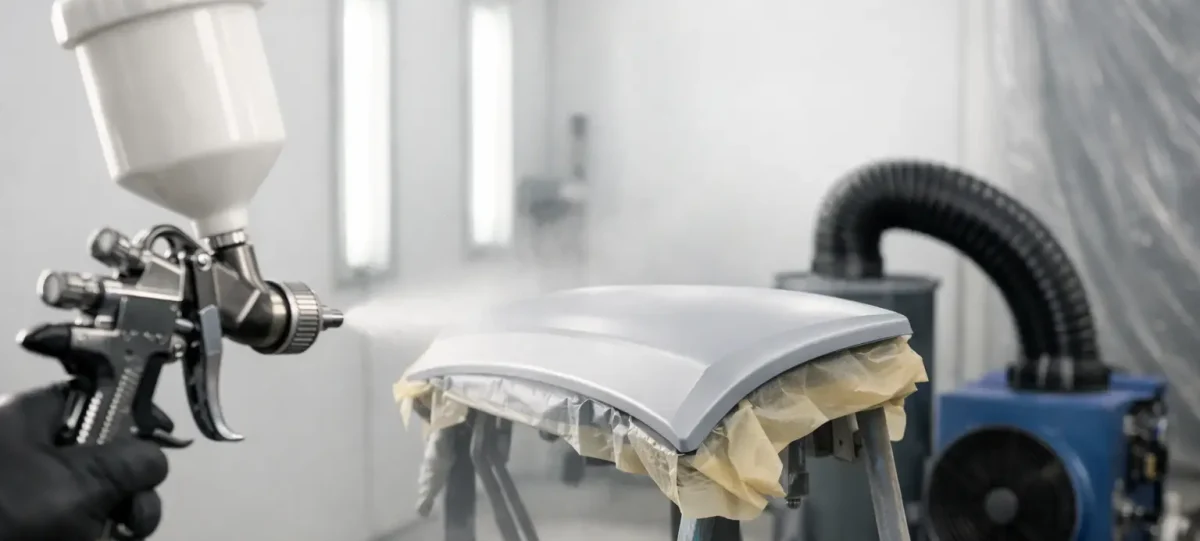
In a workshop, this may involve filtered intake, extraction fans and a purpose-built spray booth or enclosed spraying bay. On-site, temporary screening and extraction equipment can create a contained working area, though the exact arrangement depends on the property and the scope of work.
The key is balance. Too little extraction and overspray hangs in the air. Too much, and you risk pulling fresh dust into the zone through gaps and doorways. It depends on the layout, but the principle stays the same – filtered in, filtered out, and no random draughts.
Heating also plays a part. If the space is too cold or damp, coatings can stay tacky for longer, giving dust more time to settle. If heating is introduced carelessly, fans and blowers can stir contamination into the air. Professional results come from stable conditions rather than trying to rush the drying process.
Why off-site spraying often gives the best finish
For many kitchen respray projects, removing doors and drawer fronts for spraying in a controlled workshop is the smartest option. It reduces the amount of spraying that needs to happen inside the home and allows coatings to be applied and cured in a cleaner environment.
That does not mean every element must leave the property. Fixed frames and end panels can be prepared and sprayed on-site with the right containment, while movable components are finished off-site. This hybrid approach often gives homeowners the best balance of convenience and finish quality.
It is also one reason trusted specialists can transform a kitchen without the cost and disruption of full replacement. A well-run respray process protects what is already there, improves the appearance dramatically and avoids unnecessary waste.
Common mistakes that create dust problems
The most common mistake is underestimating the room. People assume a domestic kitchen can be sprayed like a spare bedroom or garage unit. It cannot. The contamination load is usually higher, and the standard expected is far more visible.
Another mistake is poor sequencing. If cleaning, sanding, masking and spraying overlap in the wrong order, dust keeps being reintroduced. The setup must move from dirty work to clean work in a clear progression.
There is also the issue of access. If family members, pets or tradespeople pass through the area during coating and curing, contamination risk rises straight away. A professional team plans around this and communicates clearly so the space stays protected.
Finally, some setups rely too heavily on paint to hide defects. Good coatings are durable and attractive, but they are not miracle products. Dust control still matters, no matter how advanced the primer or topcoat system is.
What homeowners should ask before booking
If you are comparing kitchen respray providers, it is worth asking how they manage dust control rather than simply asking what paint they use. The answer will tell you a great deal about their standards.
Ask whether doors are sprayed on-site or off-site, how the kitchen is masked, what extraction system is used and how surfaces are cleaned before coating. You can also ask how they handle drying and curing, because a clean application can still be spoiled if the area is reopened too early.
An expert company should be able to explain this clearly without overcomplicating it. At Dublin Kitchen Respray, that kind of process-led approach is central to achieving the stunning, durable finishes homeowners expect from a professional service.
The finish is only as good as the environment
A sprayed kitchen should look smooth, even and refined, not almost right from a distance. That level of finish comes from craftsmanship, but also from discipline behind the scenes. A true dust free kitchen spraying setup is less about gadgets and more about control – of the room, the air, the sequence and the working habits.
If you are investing in a kitchen respray, it is worth paying attention to how the setup is managed, not just the shade card or the price. The right environment protects the finish from the first coat to full cure, and that is what helps a refreshed kitchen feel genuinely new rather than simply repainted.
A great respray should make you notice the colour and finish, not the flaws left behind.