When a kitchen door starts peeling, it rarely stops at one corner. The loose edge catches steam, cleaning products and everyday handling, and before long the finish looks tired across the whole run. If you are wondering how to fix peeling kitchen doors, the right answer depends on what is actually peeling – the vinyl wrap, the paint, or the laminate surface itself.
That distinction matters because some repairs are worth doing and some only buy you a few months. A neat-looking patch can still fail quickly if the board underneath has swollen or the adhesive has already broken down across multiple doors. The good news is that many kitchens can be restored without the cost and disruption of a full replacement, provided the underlying cabinets are still sound.
Why kitchen doors peel in the first place
Peeling usually starts with heat, moisture or age. Doors beside kettles, ovens and dishwashers tend to go first because repeated temperature changes weaken adhesives and finishes over time. In many modern kitchens, vinyl-wrapped MDF doors are especially vulnerable at the edges, where steam can creep in and lift the surface.
Poor-quality past repairs can make things worse. If someone has tried to glue a loose section with the wrong adhesive, or painted over a failing wrap without proper preparation, the finish often lifts again. Harsh cleaning chemicals also play a part. Products that seem harmless on worktops can gradually attack paint or soften glues on cabinet doors.
There is also the simple fact of wear. Kitchens work hard, and after years of opening, closing, wiping and cooking, some finishes reach the end of their lifespan. That does not always mean the kitchen itself needs replacing.
How to fix peeling kitchen doors based on the material
The first step is to identify the door type. A vinyl-wrapped door has a thin plastic foil bonded over an MDF core. A painted door may be solid timber, MDF or another board material with a sprayed or brushed finish. A laminate door has a harder decorative layer bonded to a board underneath.
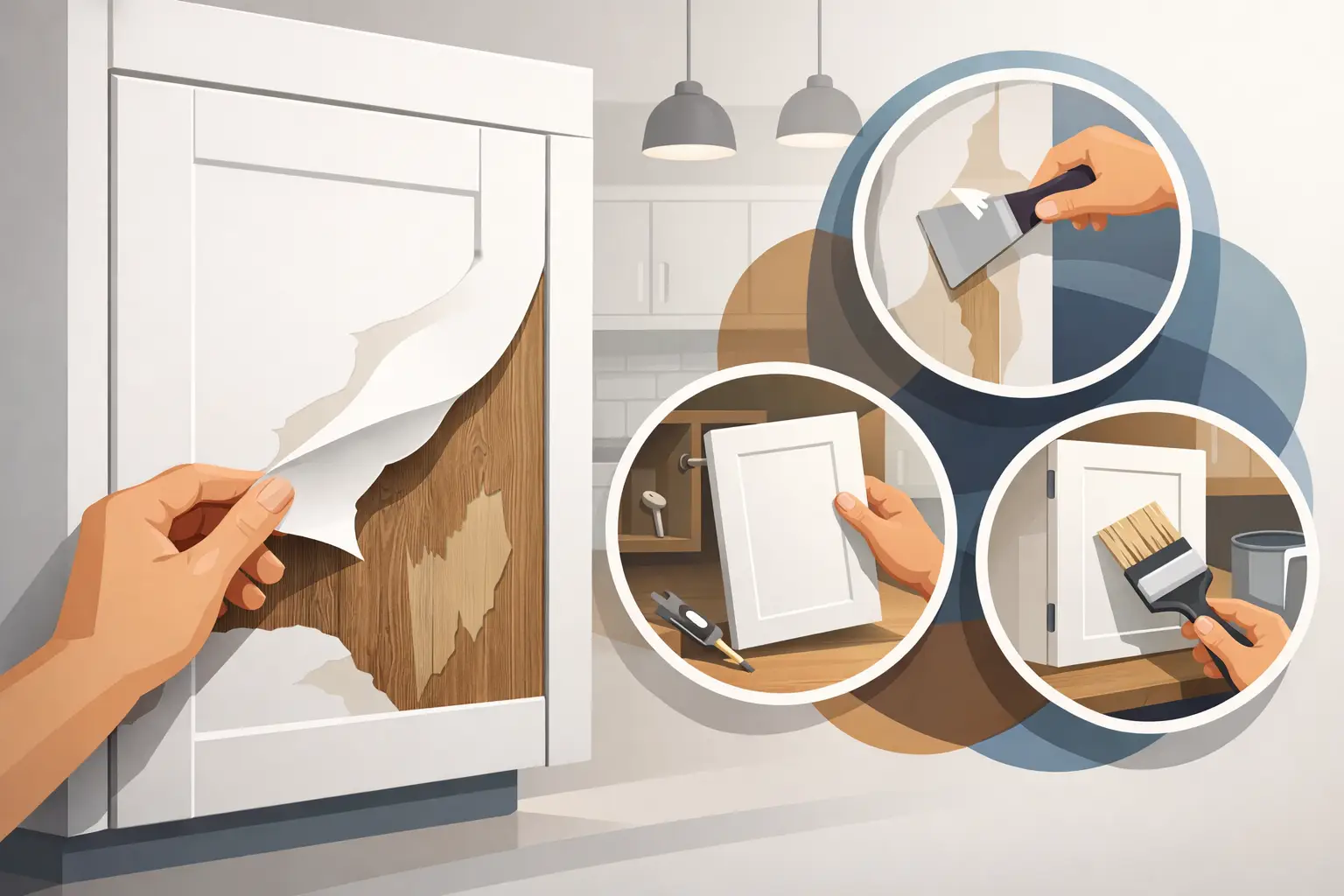
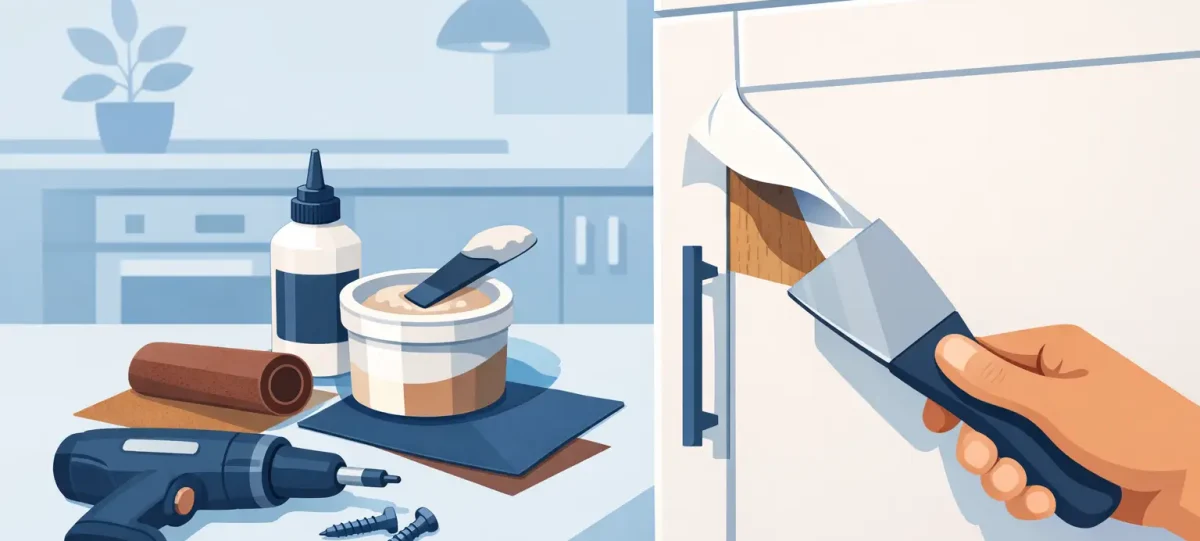
If the vinyl wrap is just lifting slightly at one edge and the MDF beneath is dry and smooth, a local repair may work. The old adhesive needs to be cleaned off carefully, the area dried fully, and a suitable adhesive applied sparingly before pressing the wrap back into place. Too much glue can create ridges, while too much heat from a domestic hairdryer can distort the vinyl rather than soften it helpfully. Even when done carefully, this sort of repair is best seen as a limited fix.
If the paint is peeling rather than the wrap, you have more options. Loose paint should be scraped back to a firm edge, the surface sanded smooth, and any chips or dents filled before priming and recoating. The challenge is matching the existing finish. A repaired patch may still stand out if the original colour has faded or if the sheen level is slightly different.
Laminate is trickier. Small lifted corners can sometimes be rebonded, but once laminate starts cracking or bubbling, a lasting invisible repair is difficult. In those cases, refinishing the full door or replacing the door front is usually more realistic than trying to disguise a local failure.
When a DIY repair is worth trying
A homeowner can often deal with minor peeling if the damage is isolated. One loose corner on a single door, with no swelling underneath and no signs of wider failure, is the sort of job that can be tackled carefully at home. The same goes for a small patch of flaking paint on a hand-painted or previously painted door, assuming you are prepared for some trial and error with colour matching.
Preparation is what makes or breaks the result. The surface must be clean, dry and stable before any glue, filler or paint goes near it. Rushing this stage is the main reason repairs fail early. Kitchens are humid environments, so even slightly trapped moisture can cause the finish to lift again.
It is also worth being realistic about visibility. A repair on a low-use pantry door may be perfectly acceptable. A patch on the main eye-level doors, especially in a modern kitchen with a flat satin finish, can be much harder to hide.
When repair is likely to fail
If several doors are peeling, the issue is rarely just one bad spot. That usually points to age-related adhesive failure, exposure to steam or a broader manufacturing issue with the original finish. Gluing down each corner one by one becomes time-consuming, and the overall appearance still suffers if edges look uneven or slightly puckered.
Swollen MDF is another warning sign. Once moisture has got into the board and caused it to expand, pushing the surface back down will not restore a clean profile. You may manage to stick it for a while, but the shape underneath has already changed.
The same applies when doors are peeling near ovens, integrated dishwashers or kettles. Those areas keep facing the same heat and moisture that caused the problem in the first place. Unless the finish is properly redone, any quick fix is likely to be temporary.
Respraying versus replacing kitchen doors
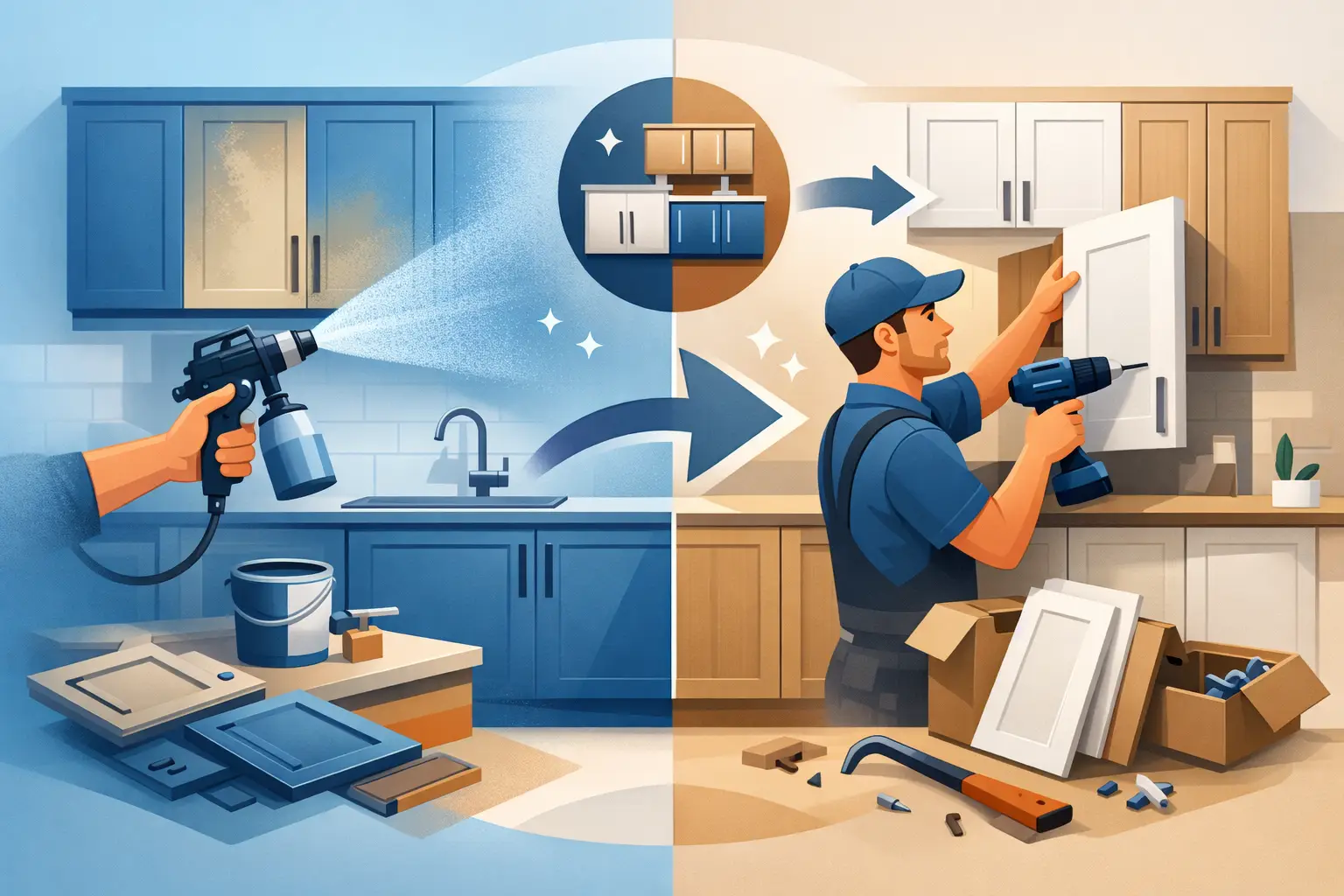
For many homeowners, this is the real decision. If the cabinets are structurally sound and the layout still works, replacing the whole kitchen can be hard to justify. New doors are one option, but they are not always as straightforward as they seem. Sizes, hinge positions, profiles and colour consistency can all complicate the process, particularly in older kitchens.
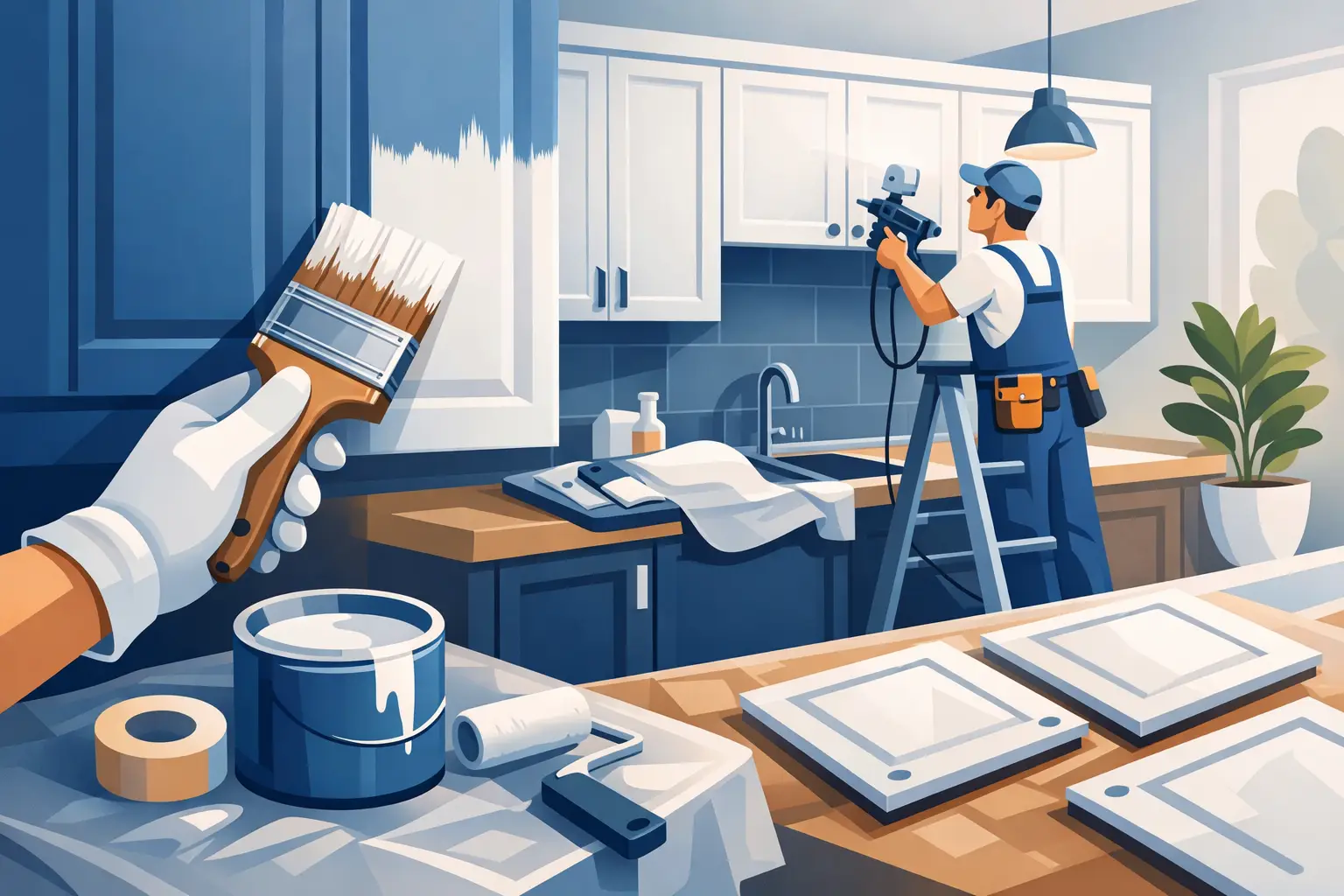
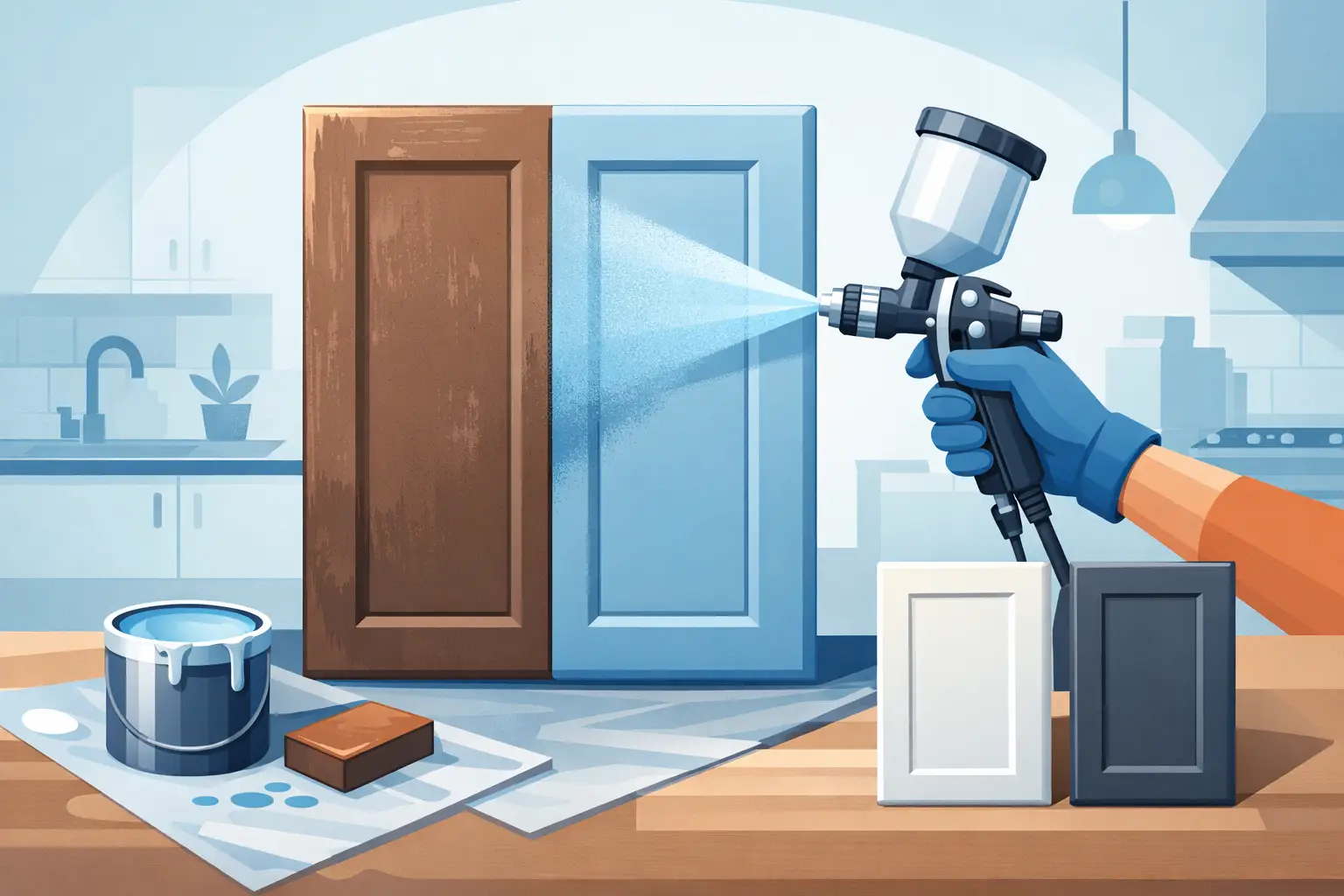
Professional respraying is often the more practical route when the aim is to restore the kitchen properly without a full renovation. It works especially well for painted timber or MDF doors, and for kitchens where the look is dated but the cabinetry itself is still in good condition. A professional finish gives a more even, durable result than most brush or roller work, with less mess and far less upheaval than replacing units.
There is an eco-friendly benefit too. Keeping good cabinets in place reduces waste and avoids replacing materials that still have years of life left in them. For homeowners who want a stunning update without the cost of ripping everything out, that balance of value and finish is hard to ignore.
What a professional assessment will look at
A trusted specialist will not just look at the peeling section. They will assess the condition of the door material, the extent of moisture damage, the age of the finish and whether a repair will hold up in a working kitchen. This is where experience matters.
A door that looks recoverable at first glance may actually be better replaced if the substrate is compromised. Equally, a kitchen that seems beyond help may be an excellent candidate for respraying once the failing finish is removed and the surfaces are properly prepared. The difference comes down to craftsmanship and honest advice.
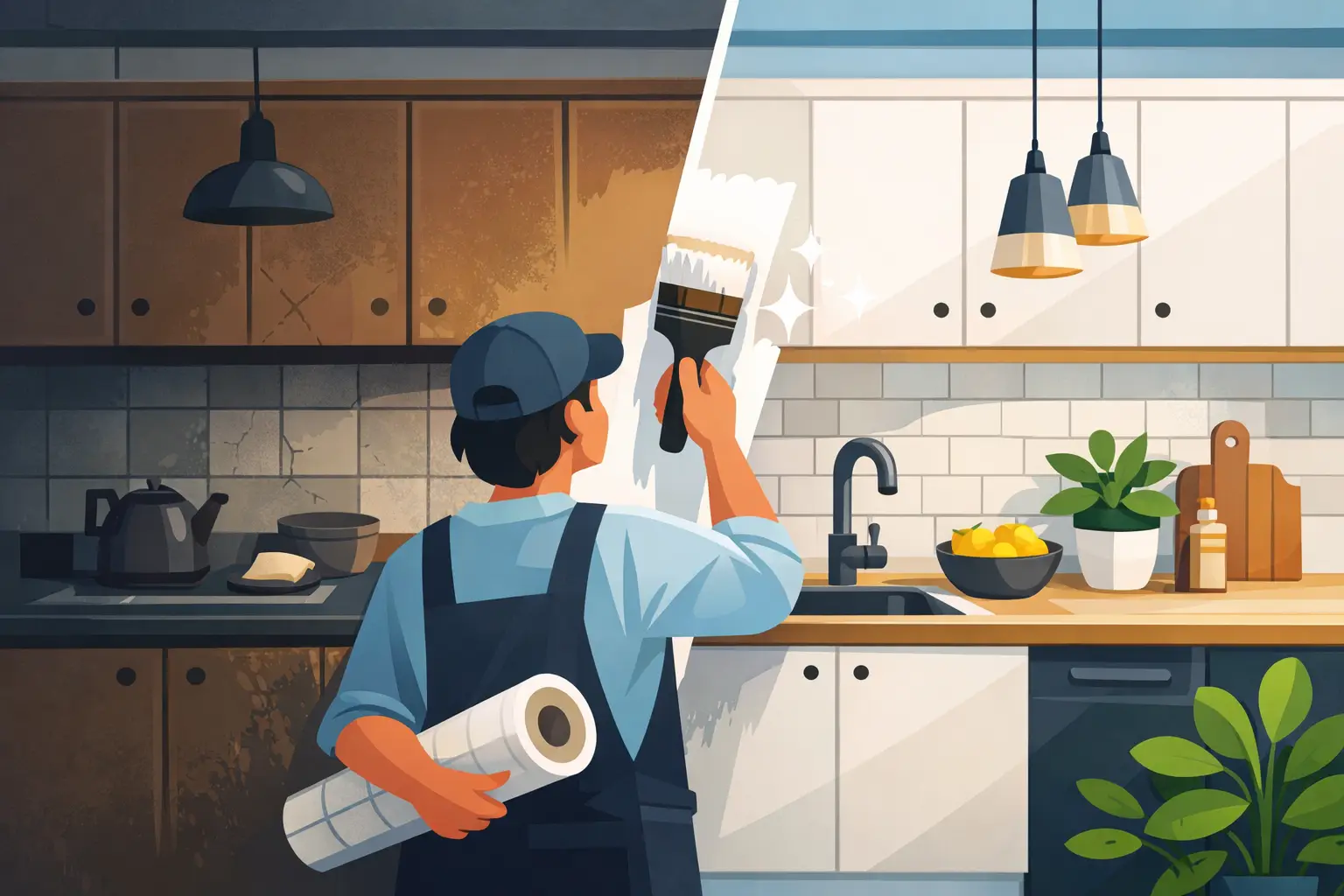
In homes across Dublin, Wicklow, Meath, Kildare and surrounding areas, we often see customers assume they need a full new kitchen when the carcasses are still perfectly serviceable. In many cases, a professional refinishing approach delivers the fresh, like-new look they want at a fraction of the cost.
How to prevent peeling from happening again
Once doors have been repaired or refinished, a few habits make a real difference. Try to keep steam to a minimum around vulnerable areas by using extractor fans properly and opening dishwasher doors with care. Avoid letting kettles vent directly onto cabinet edges.
Cleaning products should be gentle rather than aggressive. A soft cloth and mild cleaner are usually enough. Strong degreasers, abrasive pads and soaking wet cloths can shorten the life of even a good finish.
It also helps to deal with small issues early. A slightly lifted edge is far easier to address than a fully separated face. Waiting often turns a repairable problem into a bigger refinishing job.
The smart way to decide
If you are looking at one isolated peeling spot, a careful repair may be enough. If you are seeing repeated failures, swelling, bubbling or multiple damaged doors, it is usually more cost-effective to stop patching and consider a proper refinishing solution instead.
The aim is not just to stick something back down. It is to restore a kitchen so it looks clean, durable and professionally finished for years rather than weeks. Sometimes that means a minor repair. Sometimes it means respraying. And sometimes the most affordable choice is the one that avoids doing the same job twice.
A peeling door does not always mean the end of your kitchen – but it is often a sign that the finish needs more than a quick fix.