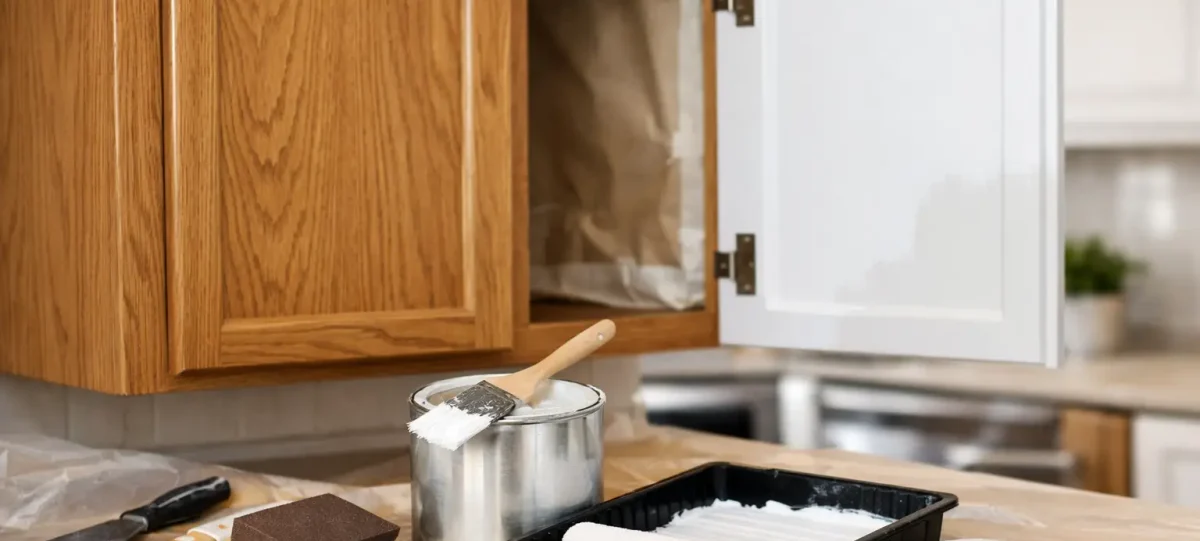
Oak cabinets usually tell on you. Even when the layout still works and the doors are solid, that heavy orange grain can make the whole kitchen feel older than it is. If you are looking into how to repaint oak kitchen cabinets, the good news is that you do not need to rip everything out to get a cleaner, brighter result. The challenge is not the paint itself. It is handling oak’s open grain properly so the finish looks fresh rather than obviously painted.
For many homeowners, that is where the real decision sits. You can repaint oak cabinets yourself with care, patience and the right products, or you can bring in a professional respray team when you want a factory-style finish with less disruption. Either way, understanding the process helps you avoid the common problems: visible grain lines, peeling around handles, patchy sheen and doors that chip too easily after a few months.
Why oak needs a different approach
Oak is not like painting a smooth MDF door or a previously sprayed surface. It has a pronounced grain pattern, and that texture tends to show through if you skip preparation or use the wrong primer. Some homeowners like a little grain to remain visible because it keeps a natural character. Others want a flatter, more contemporary painted look. Both are possible, but they require different levels of prep.
This is why repainting oak is rarely just a case of sanding lightly and putting on two coats of eggshell. The timber contains tannins, the grain can telegraph through topcoats, and kitchen cabinets take daily wear from steam, grease, cleaning products and constant handling. A finish that looks fine in the utility room may not hold up well on busy kitchen doors.
How to repaint oak kitchen cabinets properly
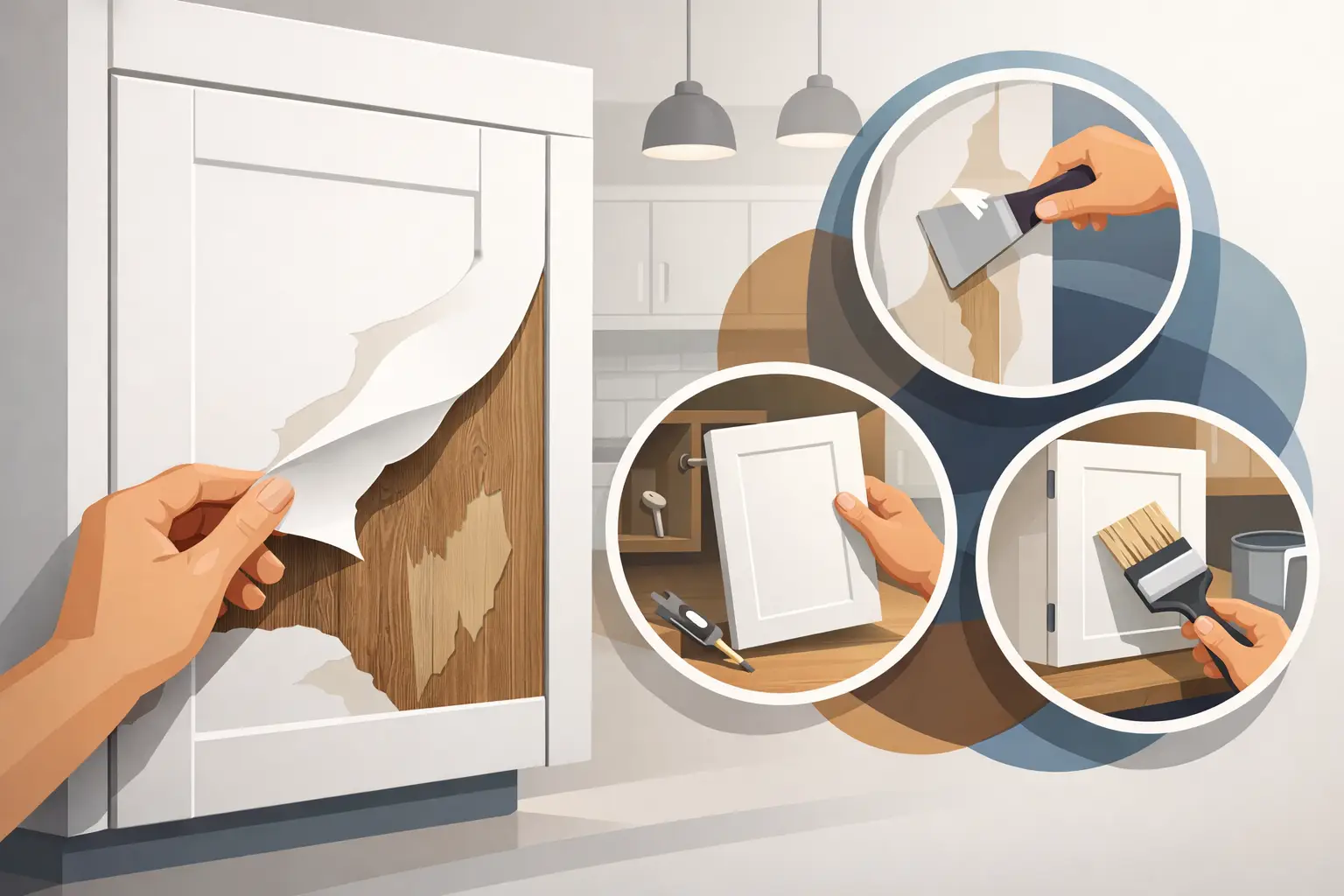
The first stage is preparation, and this is where most of the lasting quality comes from. Remove the doors, hinges, handles and drawers if possible, and label everything carefully. It saves a surprising amount of time when it comes to refitting. Clean every surface thoroughly with a degreasing cleaner, especially around cooker-side units and door edges where hand oils build up.
Once the cabinets are clean and dry, inspect them honestly. If the oak has deep grain and you want a very smooth painted finish, you will usually need a grain filler. If you are happy for some texture to remain, you may be able to move straight to sanding and primer. That trade-off matters. Filling the grain takes more time, but it gives a more refined result, especially in lighter colours such as off-white, stone or pale grey.
Sanding should key the surface rather than gouge it. A medium grit followed by a finer grit is typically enough. You are not trying to strip every trace of the previous finish unless it is failing badly. You are creating a sound surface for primer to grip. Dust removal matters just as much as sanding itself, so vacuum thoroughly and wipe down with a tack cloth or lint-free cloth before priming.
Priming oak cabinets
Primer is non-negotiable on oak. A standard wall primer will not do the job. You need a high-adhesion primer suitable for timber, ideally one that also helps block tannin bleed. Without it, yellowish or brown staining can creep through the paint, particularly on lighter shades.
Apply the primer evenly and allow proper drying time. Rushing this stage often causes problems later, from poor adhesion to a finish that marks too easily. After the primer dries, a light sand helps flatten raised grain and keeps the surface smooth. In some cases, especially with heavily grained oak, a second primer coat makes sense.
Choosing the right paint
Not all cabinet paint performs equally. Kitchens need a durable coating that can handle cleaning and everyday knocks. Water-based paints have improved significantly and are popular because they dry faster and have lower odour, but some solvent-based or hybrid systems still offer excellent hardness and flow. The right choice depends on the look you want, how much wear the kitchen gets and how confident you are applying it.
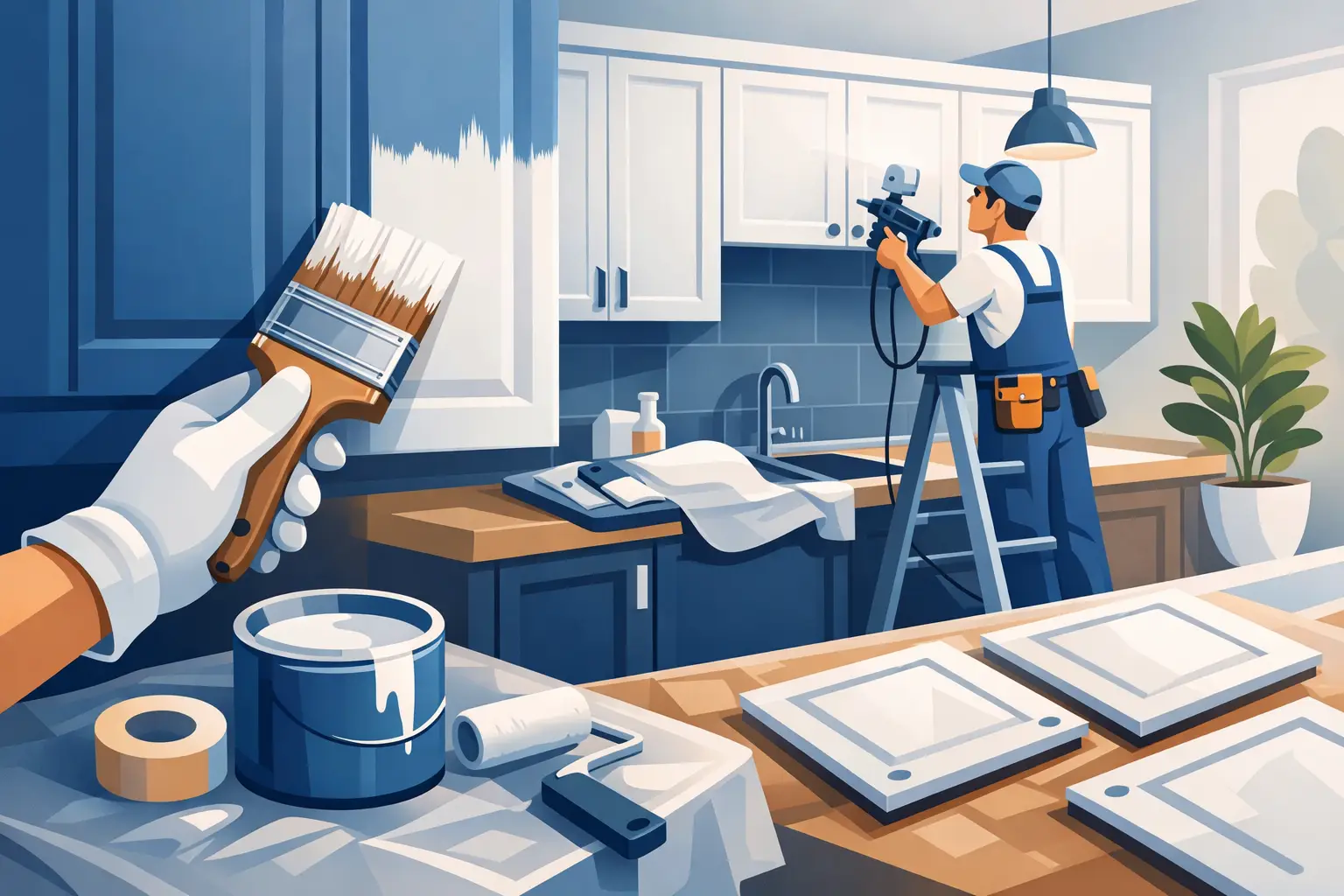
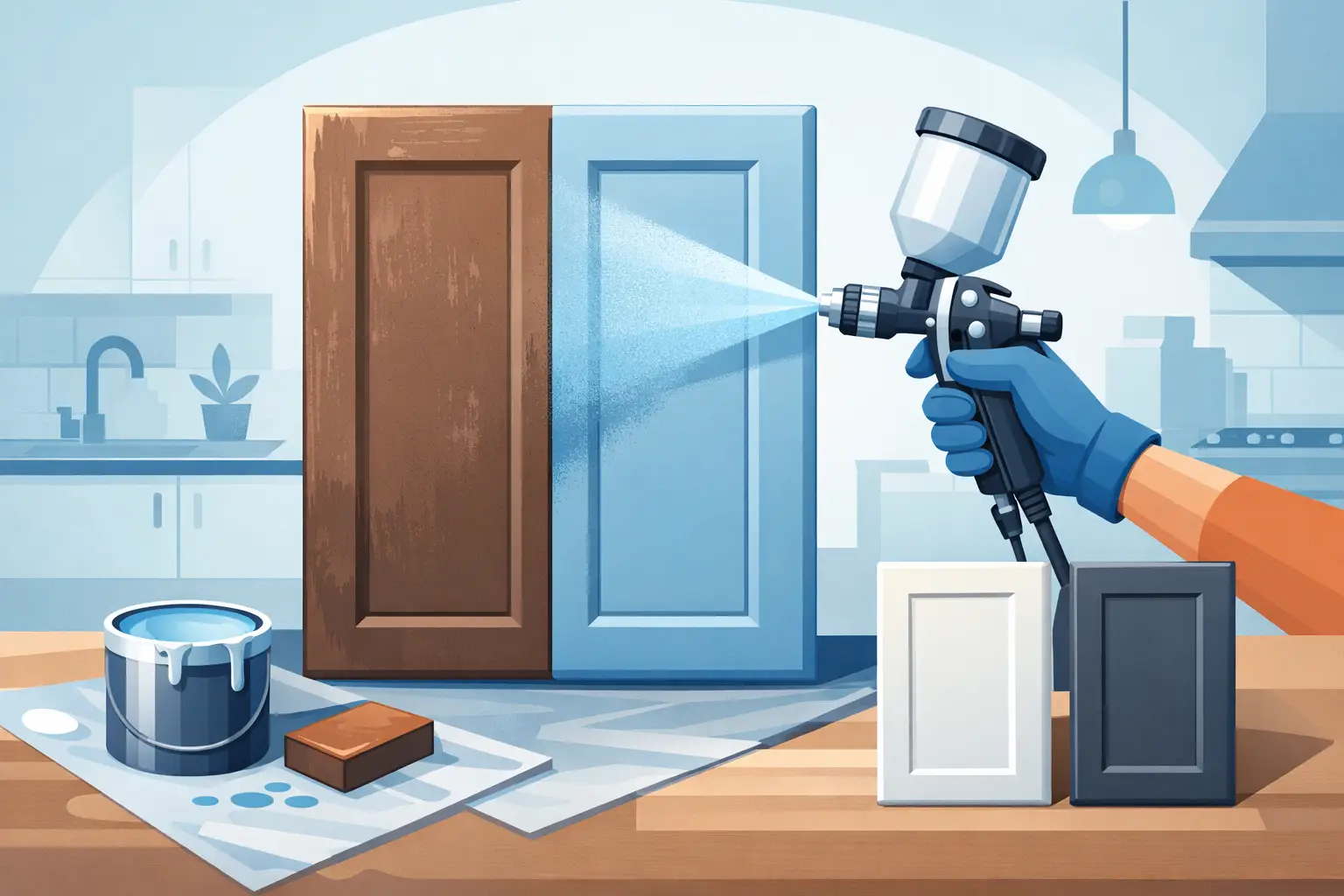
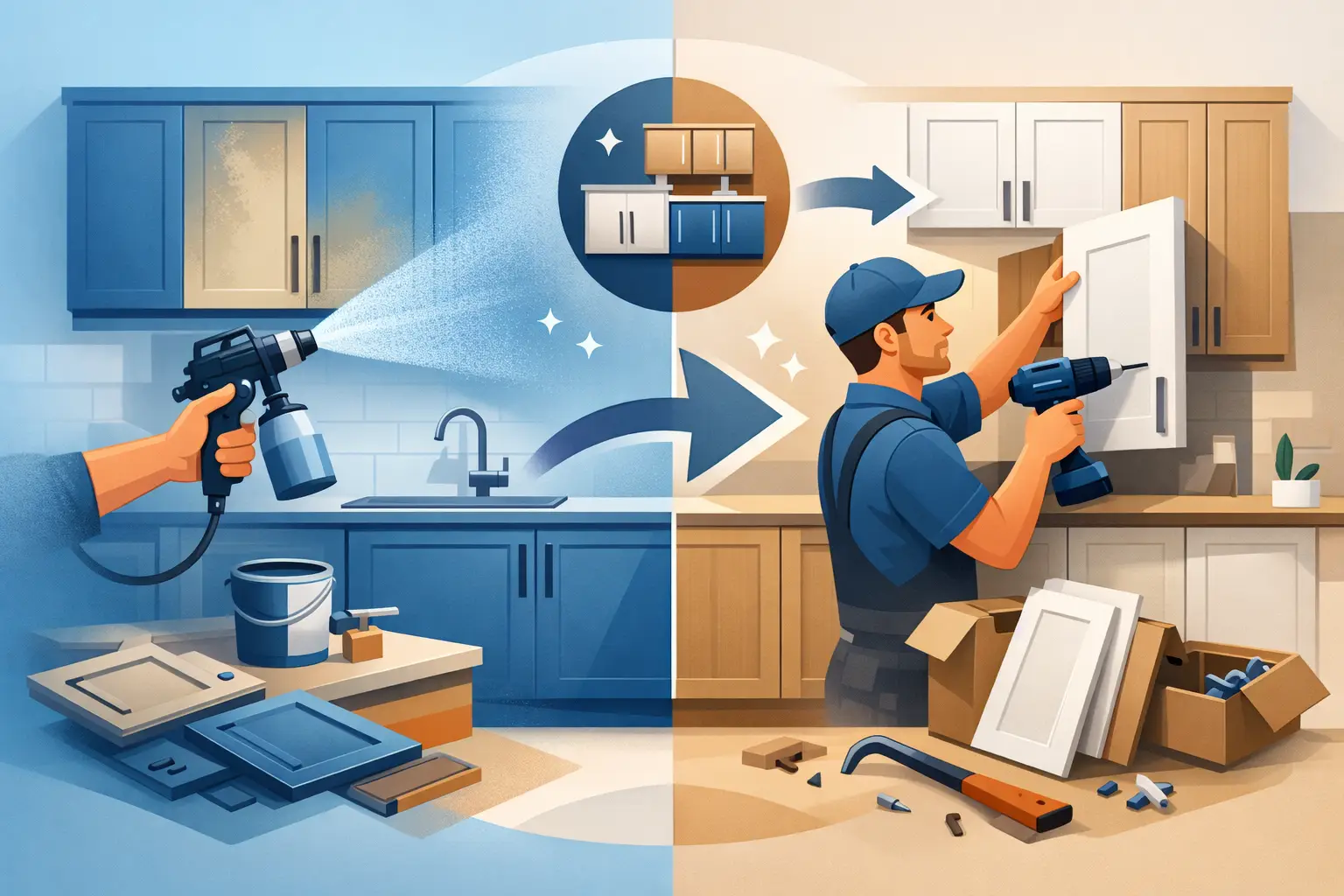
Brush painting can work for a tidy update, but it tends to leave more texture and can emphasise grain on oak. Foam rollers can improve the finish on flat sections, though detailed profiles remain harder to coat evenly. Spray application generally gives the smoothest, most consistent result, which is why professional respraying is often the preferred option for homeowners who want a like-new appearance.
Colour choices that suit oak cabinets
When repainting oak, colour choice is not only about taste. It also affects how much of the grain remains visible. Very dark colours can look striking and modern, but they tend to show dust, fingerprints and chips more readily. Very pale colours brighten the room beautifully, though they can make grain texture more noticeable if the prep has been rushed.
Soft whites, warm greys, greige tones and muted greens remain popular because they balance brightness with practicality. In homes across Dublin, Wicklow, Kildare and surrounding areas, these shades often work well with existing flooring and worktops, which means you can refresh the entire kitchen without replacing everything around it.
The biggest mistakes to avoid
The most common mistake is underestimating the cleaning stage. Kitchen cabinets collect more grease than most people realise, and paint will not bond properly to residue. The second is skipping a specialist primer. The third is expecting oak grain to disappear under paint alone. It will not.
Another issue is curing time. Cabinets may feel dry to the touch within hours, but that does not mean they are ready for full use. Refitting doors too soon or cleaning them aggressively in the first week can damage an otherwise good finish. Patience pays off here.
Poor environment control can also affect results. Painting in a dusty garage, a damp room or changing temperatures can lead to nibs, uneven sheen or slower drying. That is one reason professionally controlled spraying often produces a better and more durable finish than a DIY job done in makeshift conditions.
DIY painting or professional respraying?
This depends on your priorities. If your main goal is to improve the look of the kitchen on a modest budget and you do not mind investing your own time, repainting oak cabinets yourself can be worthwhile. It suits homeowners who are comfortable with careful prep and realistic about the finish they can achieve.
If, however, you want a highly consistent finish across all doors and drawer fronts, professional respraying is usually the stronger option. It is particularly worthwhile when the kitchen is a central feature of the home and you want the result to look intentional rather than simply improved. A professional team can also assess whether the grain should be partially retained or reduced further, and advise on coatings that hold up well in a busy family kitchen.
That is where experience makes a visible difference. Since 1999, Dublin Kitchen Respray has worked with homeowners who want an affordable alternative to replacing solid cabinets, especially when the bones of the kitchen are still sound but the finish feels dated. For many oak kitchens, respraying offers the best balance of value, durability and appearance.
How long does the finish last?
A properly prepared and coated oak cabinet can look excellent for years, but lifespan depends on use and product quality. A lightly used kitchen in a couple’s home will naturally see less wear than a busy family kitchen where doors are opened constantly and surfaces are wiped down several times a day.
Maintenance also plays a part. Gentle cleaning with non-abrasive products helps preserve the finish. Harsh scourers, strong solvents and repeated knocks from rings or heavy utensils will shorten the life of any painted surface, whether it was brushed, rolled or sprayed.
Is repainting oak cabinets worth it?
In many cases, yes. Oak cabinets are often structurally excellent, and repainting them can transform the room at a fraction of the cost of a full renovation. It is also a more eco-friendly choice, because you are keeping solid cabinetry in place rather than sending it to landfill.
The key is being clear about the result you want. If you want a simple refresh, DIY may be enough. If you want a smooth, durable finish that lifts the whole kitchen and complements the rest of your home, a professional respray is usually the smarter investment. Either way, oak can absolutely be updated beautifully – provided the grain, primer and finish are treated with the respect they deserve.
A dated oak kitchen does not always need replacing. Sometimes it simply needs expert preparation, the right finish and a clear eye for what will make the space feel current again.