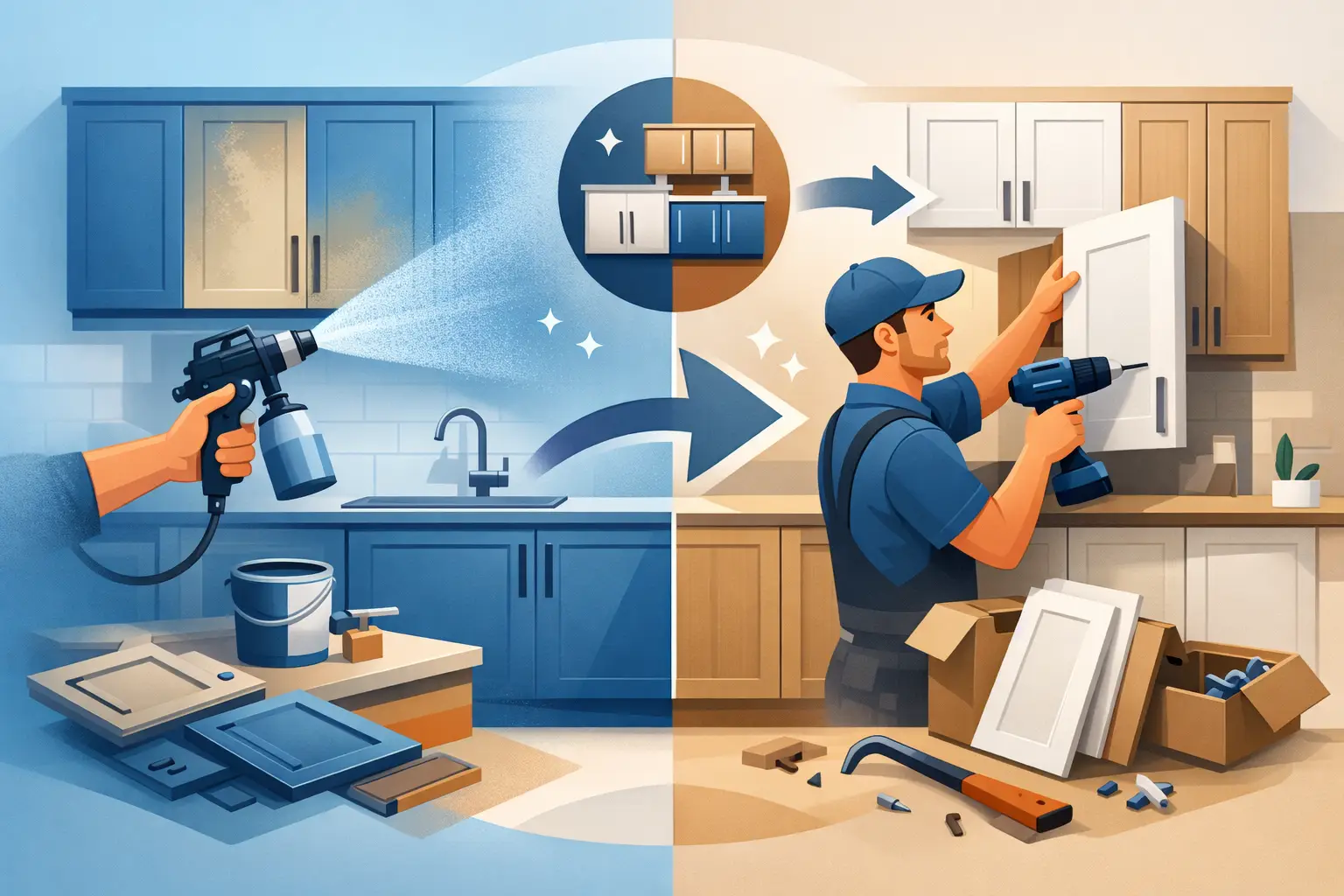
If your worktops are dragging the whole kitchen down, replacing them is not your only option. For many homeowners across Dublin and the surrounding counties, the real decision is simpler and smarter – spray granite vs epoxy worktops.
Both promise a fresh look without the cost and upheaval of a full renovation. But they are not the same product, and they do not perform in quite the same way once real life gets involved. Hot pans, spilled tea, school lunches, cleaning sprays, and constant daily use tend to reveal the strengths and weaknesses fairly quickly.
Spray granite vs epoxy worktops: what is the difference?
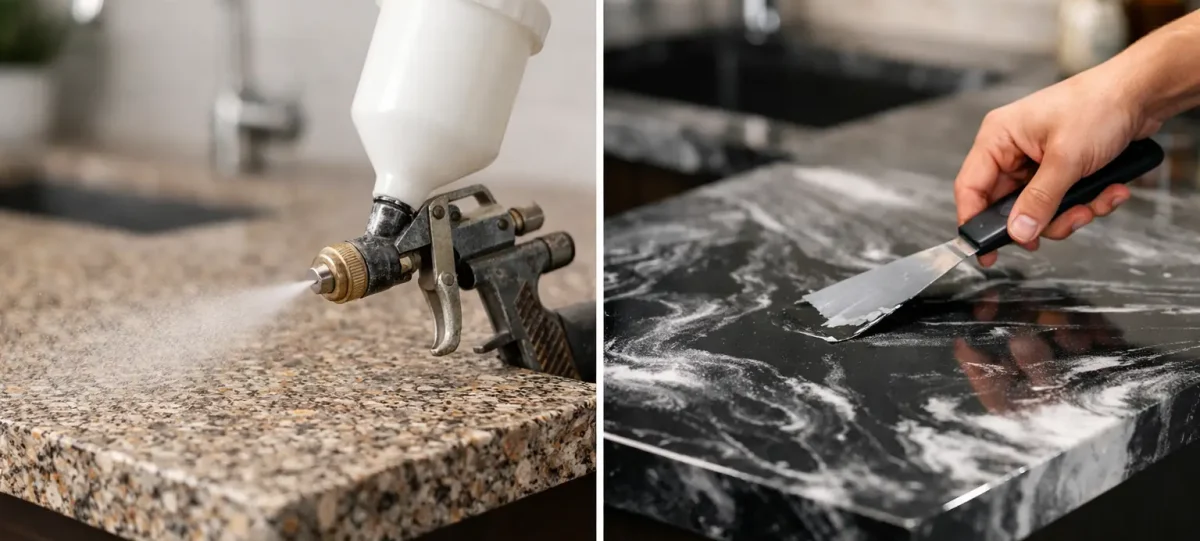
Spray granite is a specialist sprayed coating designed to recreate the appearance and texture of natural stone. It is applied professionally to existing worktops, creating a hard-wearing decorative finish that looks far more like granite or stone than a flat painted surface. It is especially popular with homeowners who want a premium, updated look without tearing out perfectly usable worktops.
Epoxy worktops are created using a resin system that is poured or spread over the surface. Epoxy can produce a glossy, dramatic finish and is often chosen for decorative effects, such as marbling or high-shine contemporary styles. It can look striking when first completed, but the result depends heavily on preparation, application skill, and how the surface is used afterwards.
On paper, both options sound appealing. In practice, the better choice usually comes down to the look you want, how you use your kitchen, and whether you value long-term practicality over visual impact alone.
Appearance and finish in everyday kitchens
For most homeowners, appearance is the starting point. You want your worktop to look clean, current, and in keeping with the rest of the kitchen.
Spray granite tends to suit a wider range of kitchen styles because it gives a natural stone effect rather than a highly decorative resin look. It works well in classic kitchens, shaker kitchens, and modern spaces where you want texture and depth without the surface looking overly polished or artificial. The finish is refined and understated, which is often exactly what people want when updating an existing kitchen rather than designing a showroom feature.
Epoxy has a different visual character. It is usually glossier, bolder, and more obviously decorative. That can be an advantage if you want a statement worktop, but it can also date more quickly or feel less natural in a family kitchen. Some epoxy finishes can look excellent in photographs and less convincing in person, especially if the application is uneven or the style is too trend-led.
This is one of the biggest trade-offs in the spray granite vs epoxy worktops discussion. If you want a surface that mimics stone in a subtle, believable way, spray granite usually comes out ahead. If you want shine and a more dramatic effect, epoxy may appeal more.
Durability matters more than first impressions
A worktop is one of the hardest-working surfaces in the home. It has to cope with repeated wiping, food preparation, accidental knocks, moisture, and changing temperatures. That is where technical differences matter.
A professionally applied spray granite finish is designed with durability in mind. It offers a tough coating that stands up well to everyday kitchen use, and because it is intended as a practical resurfacing system, it balances appearance with resilience. For busy households, that reliability is a major advantage.
Epoxy can also be durable, but it has a few more variables. Some epoxy surfaces are prone to scratching, yellowing over time, or showing wear in high-use areas. Gloss finishes, in particular, can make marks and imperfections more noticeable. Heat can also be a concern, depending on the resin system used and how much direct exposure the surface gets.
That does not mean epoxy always performs poorly. It means the margin for error is smaller. A worktop can look superb at the start and still become frustrating if every scratch catches the light.
Heat, stains and maintenance
In real kitchens, practicality tends to win. A finish that looks good but demands constant caution is rarely the affordable solution it first appears to be.
Spray granite is generally chosen by homeowners who want a low-fuss upgrade. The texture and stone-style appearance help disguise minor day-to-day wear better than a very glossy resin surface. That makes it especially suitable for family kitchens where the room is used properly rather than preserved for display.
Epoxy worktops often need a bit more care to keep them looking their best. Depending on the finish, they may show fingerprints, smears, scratches, or dull patches more readily. Some lighter or high-gloss epoxy surfaces can also highlight staining or discolouration over time if they are not maintained carefully.
Heat resistance is another point worth weighing up honestly. No resurfaced worktop should be treated as indestructible, and trivets are always sensible. But if you regularly place hot items down in a hurry, you need a finish that copes well with the pace of normal kitchen life. That is often where professionally finished spray granite feels like the safer, more dependable choice.
Cost and value over time
Anyone comparing these options is usually trying to avoid the expense of full worktop replacement, so value matters.
Both spray granite and epoxy can cost less than fitting brand-new stone or composite worktops. The difference is in what you get for that spend. Spray granite is usually a value-driven choice because it updates the existing surface with a premium look while keeping disruption low. You are not paying for demolition, disposal, or the wider knock-on costs that often come with replacement.
Epoxy pricing can vary widely depending on the design, thickness, and level of decorative work involved. A simple finish may be affordable, but more complex bespoke looks can quickly move away from the budget-friendly territory many homeowners had in mind. If repairs are needed later, colour and pattern matching can also be less straightforward.
For homeowners who want a professional transformation that feels proportionate to the rest of the kitchen, spray granite often delivers the better long-term balance of cost, finish, and reliability.
Disruption, installation and the quality of the result
One of the main reasons people resurface rather than replace is to avoid weeks of mess. That makes the process almost as important as the finish itself.
Spray granite is a practical option because it is specifically designed as a refurbishment solution. Done properly, it allows existing worktops to be transformed with far less disruption than a full rip-out. That matters if you want your kitchen updated quickly and professionally, without turning the house upside down.
Epoxy can also be applied over existing surfaces, but it is often more sensitive to environmental conditions and application technique. Issues such as bubbles, uneven curing, excessive thickness, or visible imperfections can affect the final result. In other words, the finish may be only as good as the process behind it.
That is why experience counts. A trusted specialist will know how to prepare the surface correctly, apply the product evenly, and create a finish that not only looks stunning on day one but still performs well after months of use.
Which option suits your kitchen best?
When homeowners ask about spray granite vs epoxy worktops, the best answer is usually based on priorities rather than trends.
If you want a worktop finish that feels natural, practical, and suited to everyday family life, spray granite is often the stronger choice. It offers a stone-inspired appearance, strong durability, and a more understated look that works across different kitchen styles.
If your main goal is a glossy, decorative surface with a more bespoke visual effect, epoxy may suit you better. That said, it is worth going in with clear expectations about maintenance, wear, and how the finish will look once it is no longer brand new.
For many homes, especially where the kitchen is used constantly and needs to look smart without being precious, spray granite tends to offer the more balanced result.
Why professional application makes the difference
This is not the sort of surface upgrade where shortcuts pay off. Preparation, product quality, and application standards all shape the final finish. A poor job can leave even a promising material looking second-rate.
That is why homeowners often choose a specialist rather than experimenting with off-the-shelf systems. A professional service gives you consistency, proper surface preparation, and a finish tailored to the demands of a real kitchen. At Dublin Kitchen Respray, that focus on expert workmanship and affordable transformation is exactly what makes resurfacing such an appealing alternative to replacement.
The right choice should leave your kitchen looking refreshed, not make you nervous every time you set down a saucepan. If you want a worktop that earns its place in a busy home, choose the finish that still makes sense after the first week, not just the first glance.