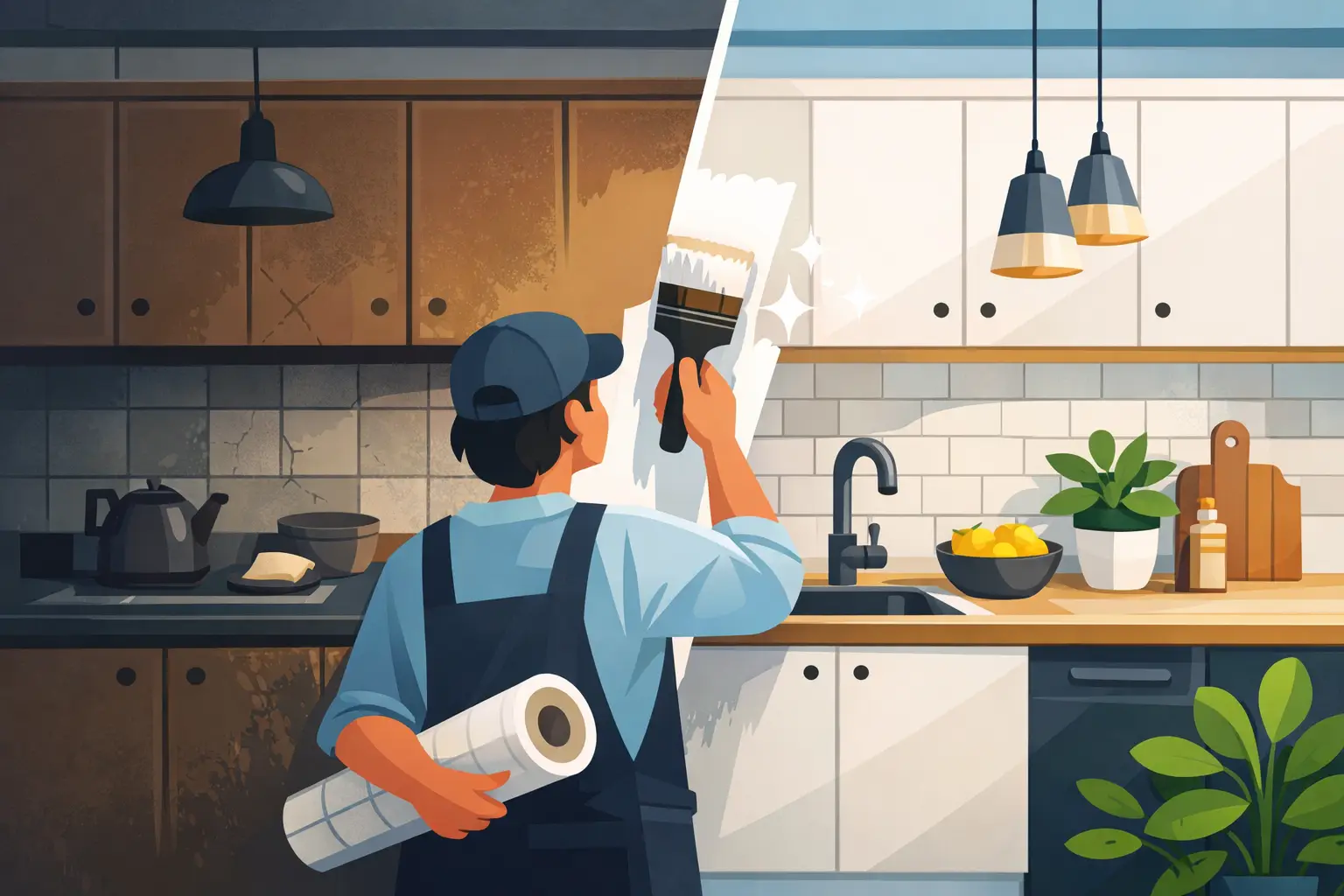
That moment you notice the kitchen looks tired usually happens in the small details: the doors feel a bit sticky, the glossy finish has dulled around the handles, and the colour that once felt modern suddenly dates the whole room. The good news is you do not need a full rip-out to get a like-new look. For many Dublin homes, the smart decision sits in the middle ground – kitchen cabinet resurfacing and painting.
This is where homeowners often get stuck. They hear terms like “resurfacing”, “respraying”, “refacing”, and “painting” used interchangeably, and it is not always clear what each involves or what actually lasts. The right choice depends on the condition of your cabinets, the finish you want, and how much disruption you are willing to tolerate.
What kitchen cabinet resurfacing and painting actually mean
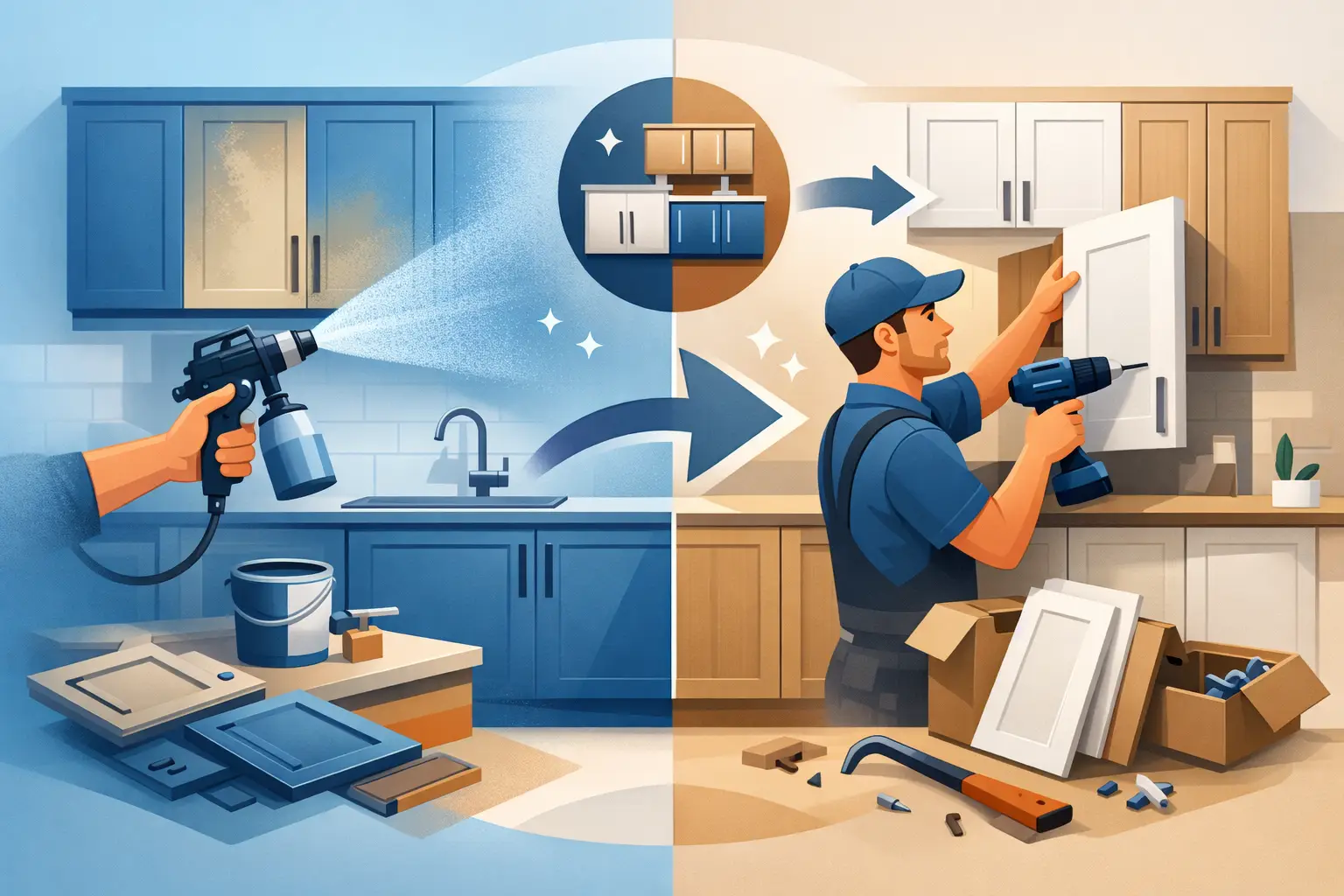
In plain terms, painting changes the look of what you already have by applying a new coating to your existing doors and frames. Resurfacing changes both the look and the surface itself – usually by adding a new skin or veneer, or by replacing certain visible components while keeping the original cabinet boxes.
In Irish kitchens, you will typically see these approaches:
Painting (including professional respraying)
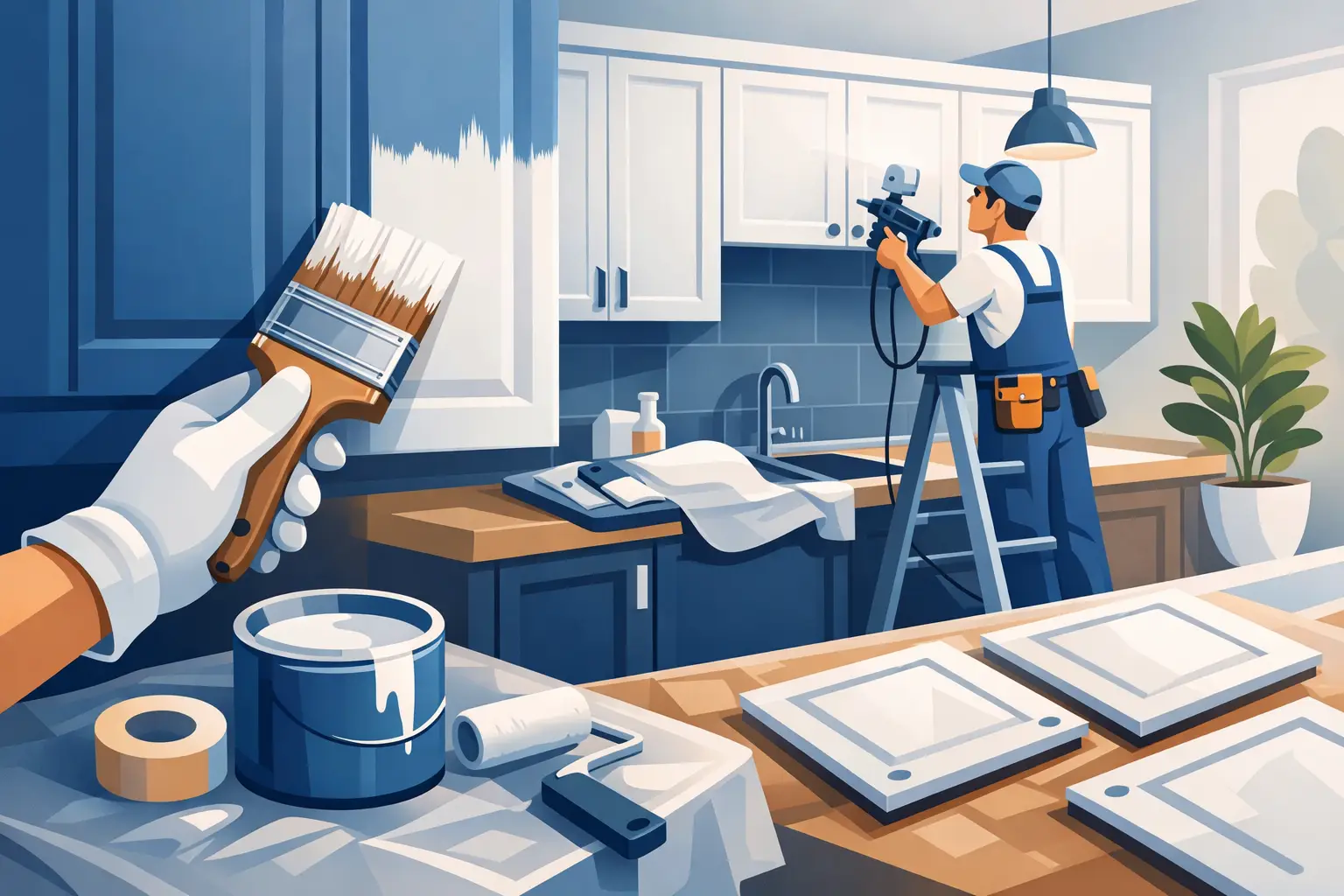
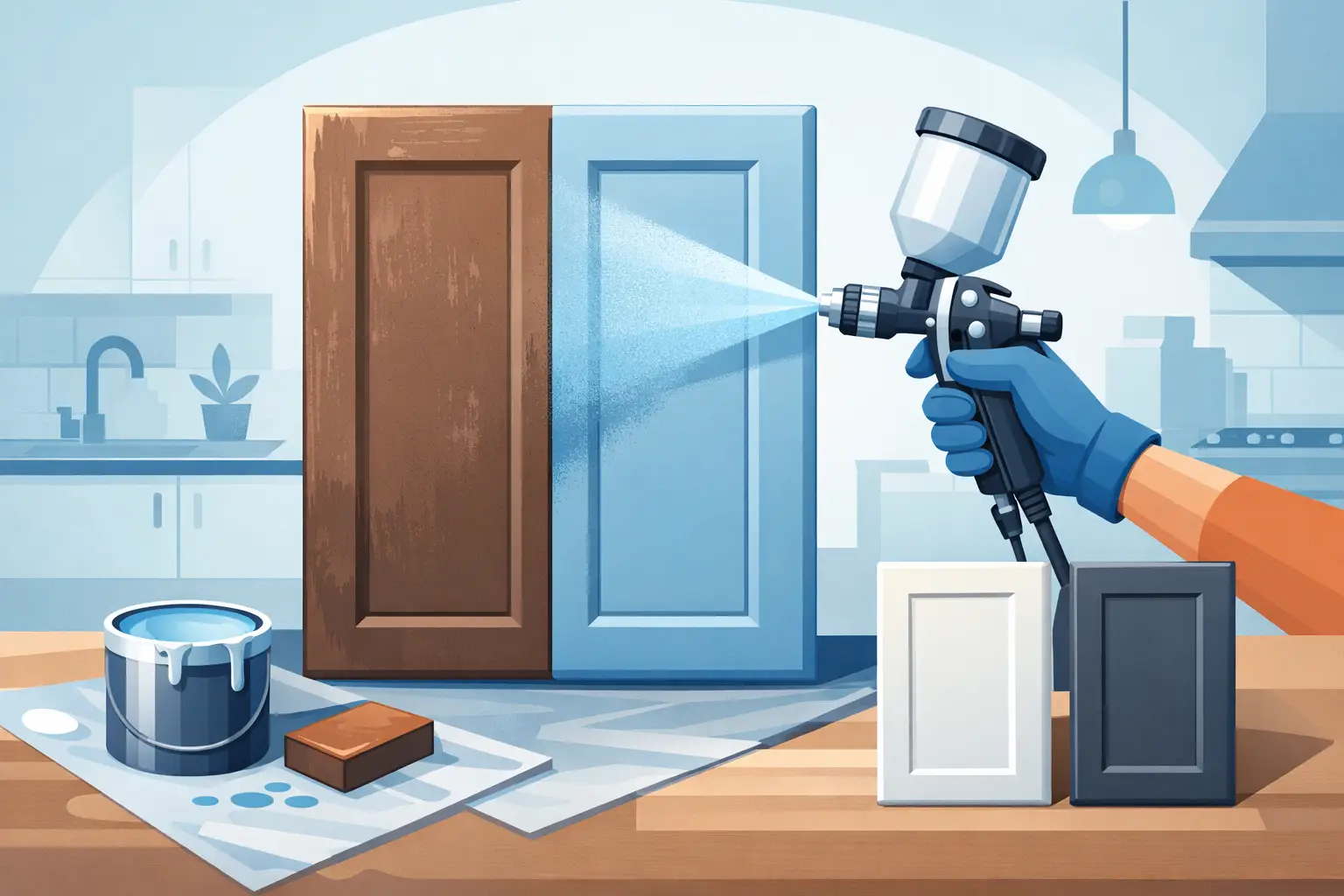
Painting can be done with a brush and roller, but a professional sprayed finish is a different standard altogether. Spraying lays down a smoother, more consistent coating with fewer marks, and it can be built up in durable layers that handle everyday use.
A high-quality respray starts long before any paint goes on. It is about preparation, adhesion, and the right products for kitchen conditions – heat, steam, grease, and frequent cleaning.
Resurfacing (often called refacing)
Resurfacing usually means keeping the cabinet carcasses and changing the exterior surfaces. That might involve new door fronts, new drawer fronts, and a matching veneer or laminate applied to exposed frames. It can be a strong option when your cabinet layout works well but your doors are dated, damaged, or a style you no longer like.
Resurfacing can also include swapping handles, soft-close hinges, end panels, or cornices to modernise the overall look. The “new kitchen” feel often comes from these details as much as from the door colour.
When painting is the better choice
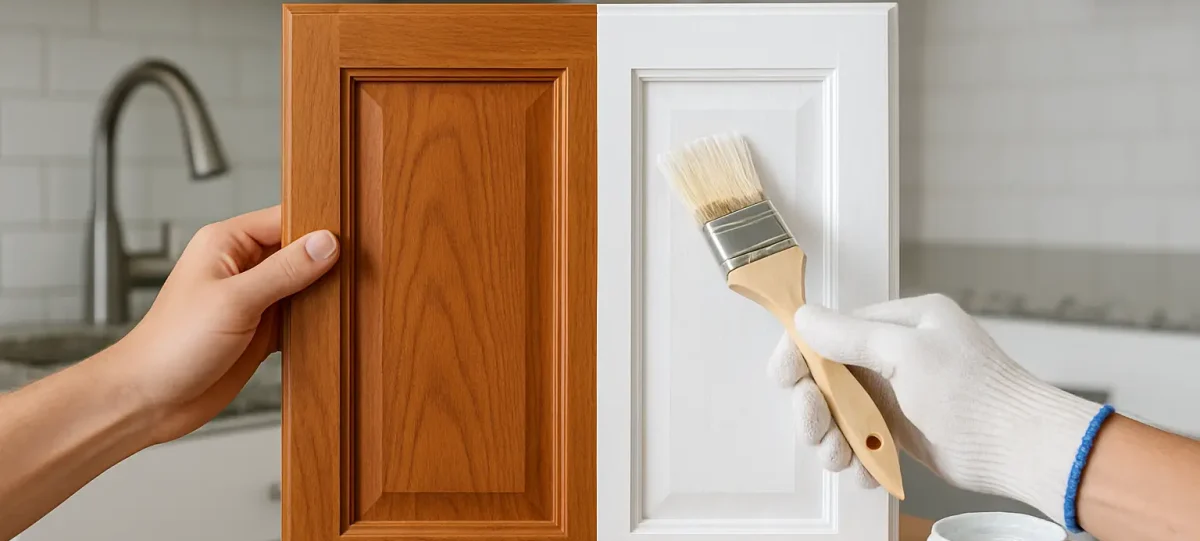
If your cabinet doors are structurally sound, painting is usually the most cost-effective route to a dramatic improvement. It is particularly suited to timber, MDF, and previously painted doors that have not swollen from water damage.
Paint (or a professional sprayed coating) makes sense when you want a colour change, a cleaner finish, or a more contemporary sheen level – matte, satin, or a subtle sheen that looks modern but still wipes clean. It is also a great fit when you like your door style, but the finish has yellowed, scratched, or simply feels a bit lifeless.
There is a practical advantage too: repainting or respraying avoids the waste of removing serviceable cabinetry. For homeowners who care about sustainability, upgrading what you already have is a genuinely eco-friendly choice, not a marketing line.
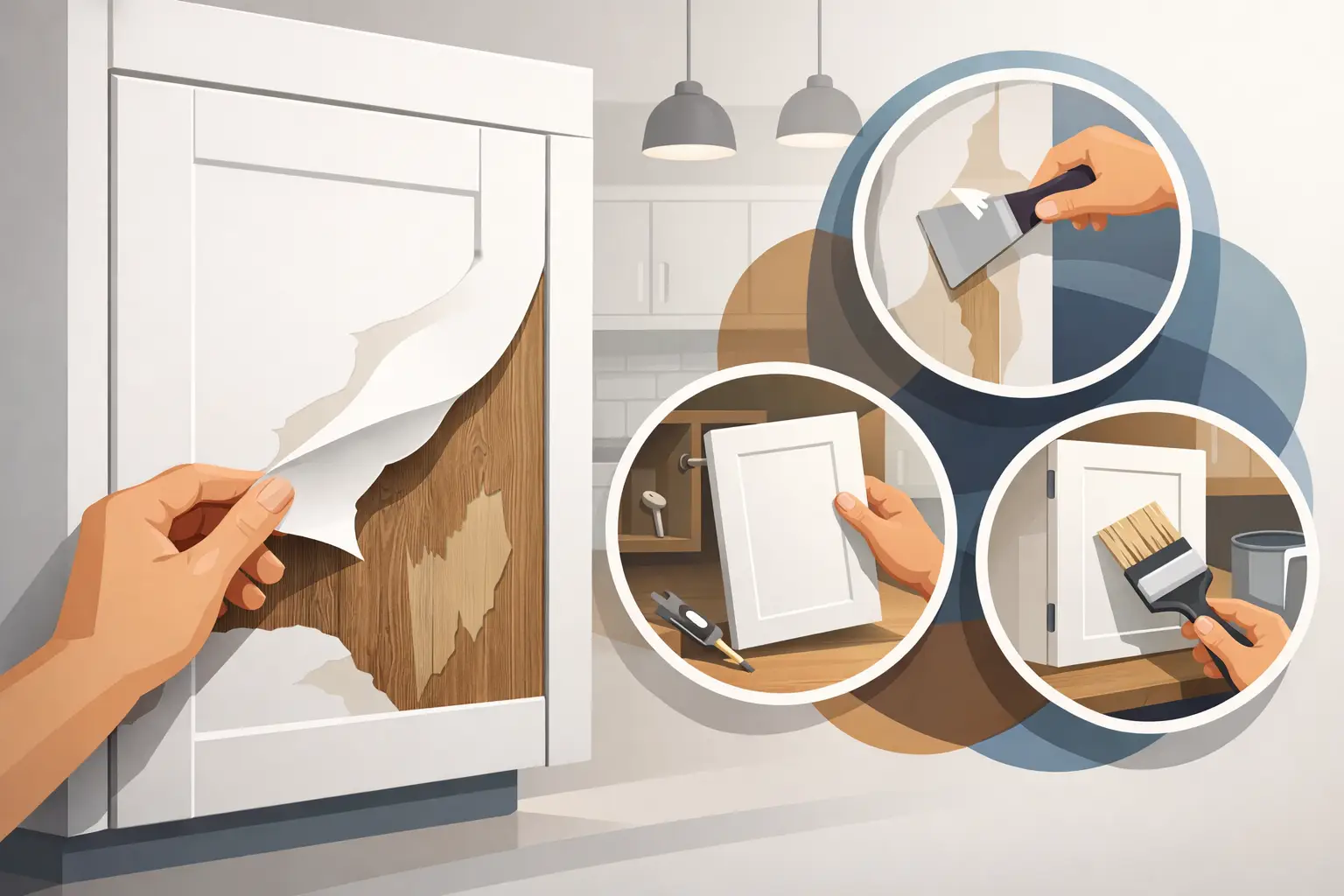
The trade-off is that painting will not fix fundamental issues. If the doors are badly warped, delaminating, or the edges are blown from years of moisture, a fresh coating will not magically make them flat again. You will still see the underlying problem, just in a new colour.
When resurfacing makes more sense
Resurfacing earns its keep when the surface itself is the issue. If you have foil-wrapped doors that are peeling at the corners, laminate that is lifting, or a style that feels impossible to rescue with paint alone, replacing door fronts can be the more satisfying result.
Resurfacing is also a strong option if you want a specific door profile that paint cannot create. For example, changing from an old-fashioned routed door to a clean, modern slab door is not a “paint job” – it is a joinery choice.
The trade-off is cost and coordination. New doors, hinges, and panels add material costs, and colour matching between different surfaces needs care. It can still be far cheaper than a full renovation, but it is generally more involved than respraying existing doors.
The real decider: what are your cabinets made of?
A lot of Dublin homes have a mix of materials across decades of updates. Before you choose resurfacing or painting, it helps to know what you are dealing with.
Solid timber doors usually paint beautifully, and a sprayed finish can look stunning while keeping the character of the door. MDF doors are also excellent candidates for spraying provided the edges are in good condition and properly sealed.
Thermofoil or vinyl-wrapped doors are trickier. If the wrap is intact and well bonded, a specialist system may work, but if it is already lifting, you are fighting physics. In those cases, resurfacing with new door fronts is often the more reliable solution.
If you are unsure, a professional assessment is worth it. A trusted expert will tell you what will last, not just what will look good on day one.
Finish quality: why preparation matters more than paint
Homeowners often ask what paint brand is “best”. In kitchens, the finish is much more about the system than any single tin. Adhesion is everything. If the surface is not cleaned, degreased, keyed, and primed correctly, the topcoat is only as strong as the layer underneath.
Professional cabinet respraying typically involves removing doors and drawers, labelling everything so it goes back perfectly, deep cleaning, sanding or mechanical keying, then applying primers and topcoats designed for cabinetry. This is where durability comes from. The coating needs to resist fingernails, heat near the hob, and constant wiping around handles.
Brush painting can work, but it is far more sensitive to dust, brush marks, and uneven thickness – especially on flat shaker panels where imperfections show quickly under kitchen lighting.
Cost, timing, and disruption in real homes
For many families, the biggest question is not just “What will it cost?” but “How long will my kitchen be out of action?”
Painting or professional respraying is typically faster and less disruptive than replacing cabinets, because the kitchen stays largely intact. Doors can often be taken away or sprayed with controlled processes, while the frames are prepped and finished efficiently. Your appliances, worktops, and plumbing usually stay put.
Resurfacing can still be relatively quick compared with a full refit, but there is more measuring, ordering, and fitting involved. If you are changing door sizes, hinge placements, or adding panels to hide gaps, allow extra time.
The best approach is the one that respects how you live. If you have a busy household, minimal disruption might matter as much as the final look.
Colour and sheen: making it look intentional
A freshly finished kitchen can look “done” or it can look like a quick fix. The difference is usually colour choice and sheen level.
Soft whites and warm neutrals suit many Irish kitchens because our natural light can be changeable. Greys can be beautiful, but the undertone matters – a grey that looks calm in a showroom can read blue in a north-facing room. Deep colours like navy or forest green look striking, but they demand tidy lines and good lighting to avoid feeling heavy.
Sheen is practical as well as aesthetic. Matte hides minor surface imperfections but can show marks more easily depending on the product. Satin is often the sweet spot for cabinets – refined, wipeable, and forgiving.
If you are also updating handles, treat them as part of the colour plan. A modern handle in the right finish can make a classic door feel contemporary without changing the door style at all.
Common mistakes that shorten the life of a painted finish
Most premature chipping and peeling comes from avoidable issues rather than “bad paint”. The usual culprits are poor degreasing, rushing between coats, and skipping the right primer for the existing surface.
Another issue is reinstalling doors before the coating has cured properly. Paint can feel dry to the touch but still be soft underneath. In a kitchen, that means the area around handles takes a beating in the first week, right when the finish is most vulnerable.
Finally, cleaning products matter. Harsh abrasives can dull a new finish quickly. A gentle cleaner and a soft cloth will keep cabinets looking fresh far longer.
Choosing the right professional for the job
A professional finish is not only about spray equipment. It is about process control, surface prep, and a careful eye for detail. Ask how the doors will be prepared, what coating system will be used, and how long you should wait before heavy cleaning. A reliable provider will be clear about trade-offs too – for example, when resurfacing is the smarter choice than painting.
If you are based in Dublin or nearby counties and want a high-quality, durable sprayed finish without the upheaval of a full renovation, Dublin Kitchen Respray specialises in professional kitchen and cabinet respraying with an efficient, customer-focused approach.
A useful way to decide
If your cabinets are solid and you like the layout, painting or respraying is often the most affordable route to a stunning transformation. If the surfaces are failing, the doors are beyond saving, or you want a completely different door style, resurfacing can be the better long-term answer.
Either way, treat it like an investment in how your home feels every day. When the finish is done properly and the choices suit the space, you will notice it in the quiet moments – the way the light hits the doors in the morning, the ease of cleaning, and the simple relief of a kitchen that feels like it belongs in your home again.