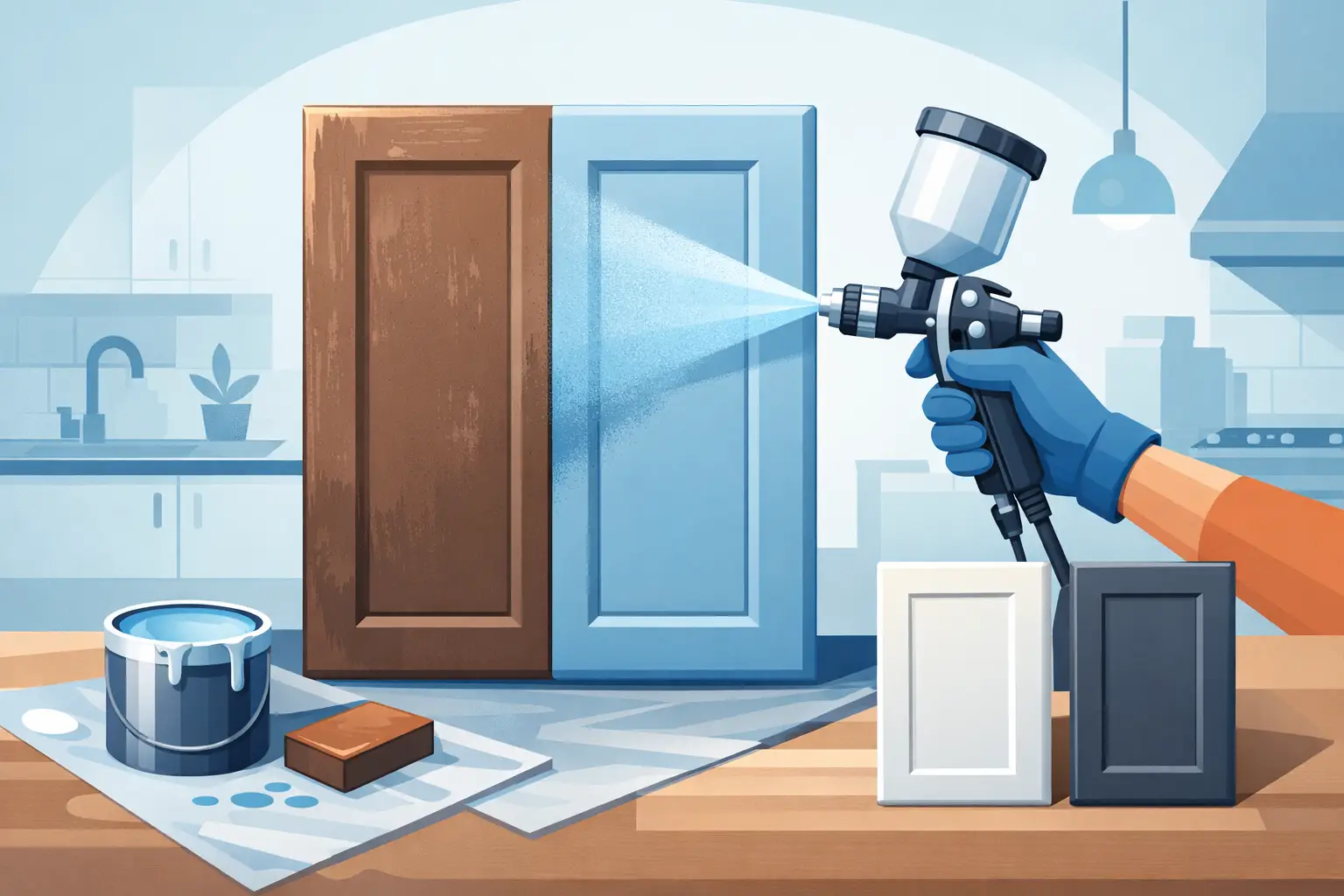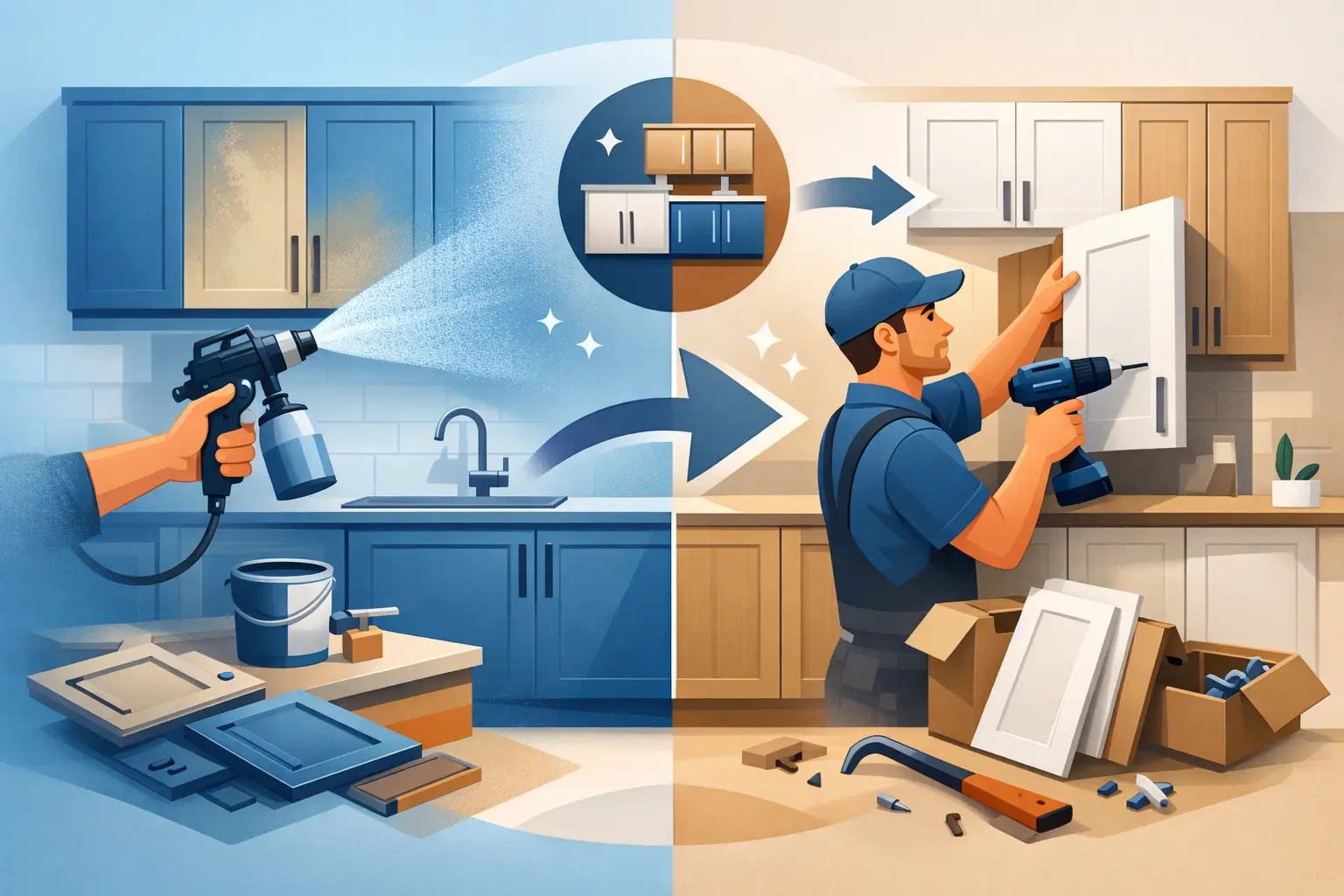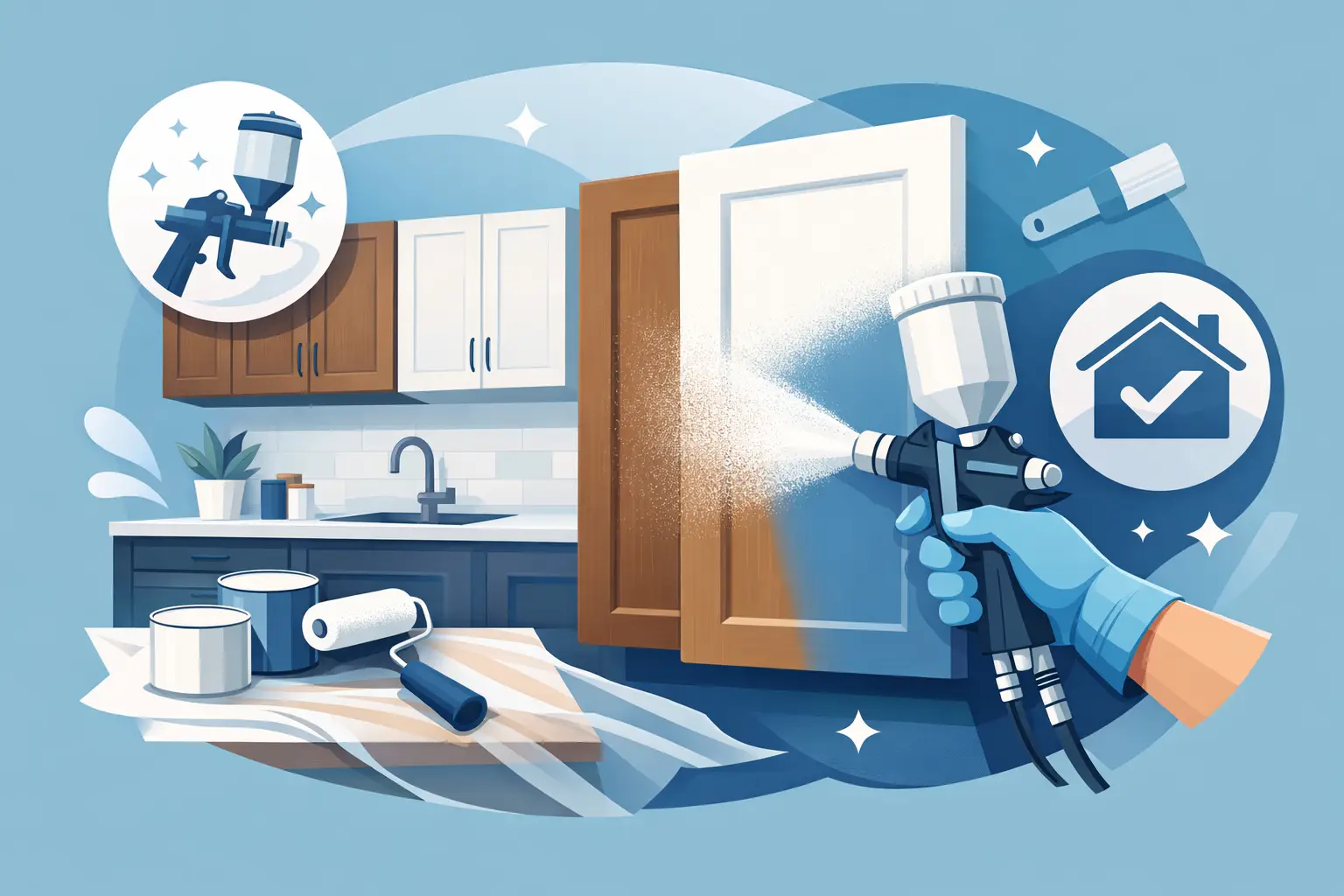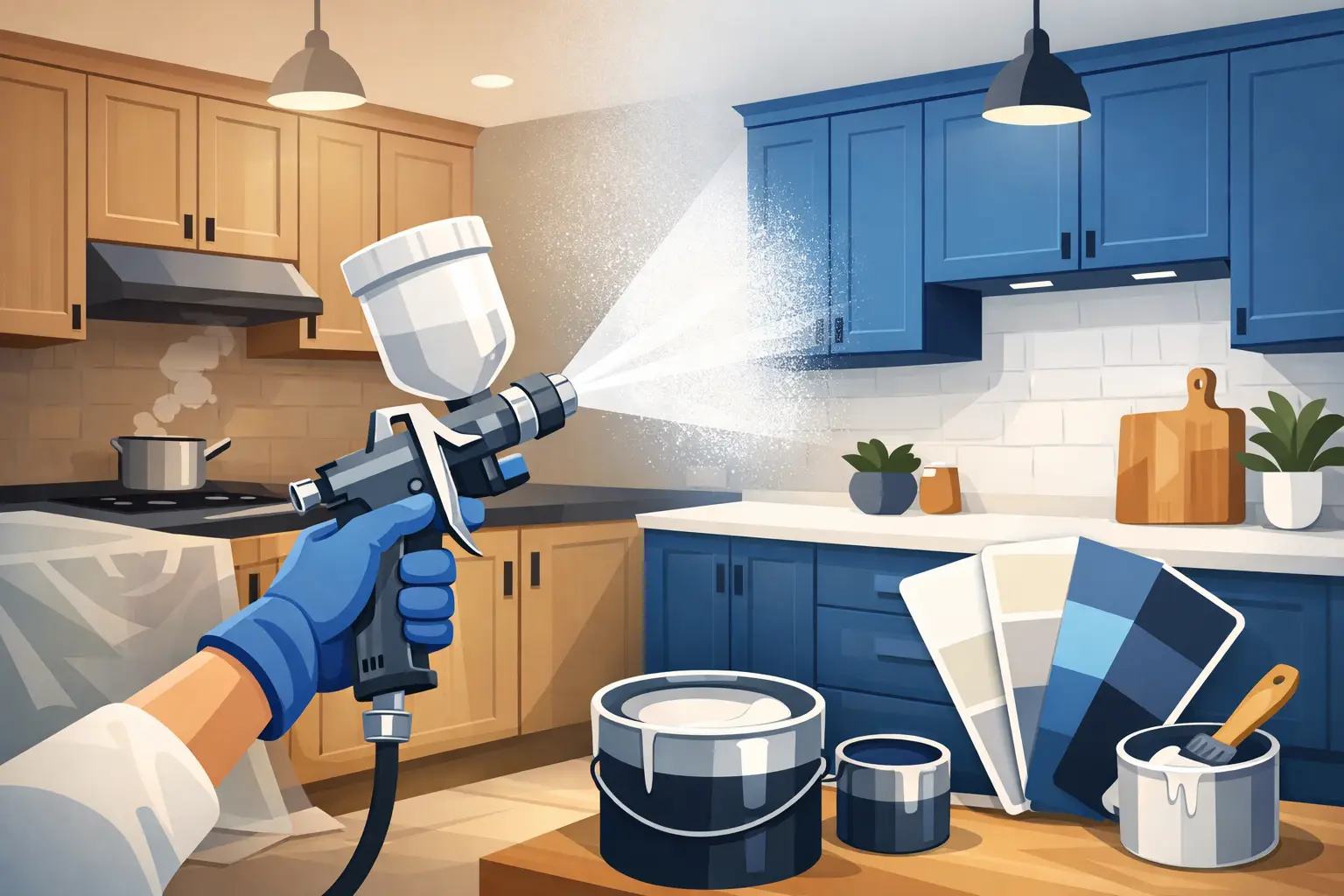
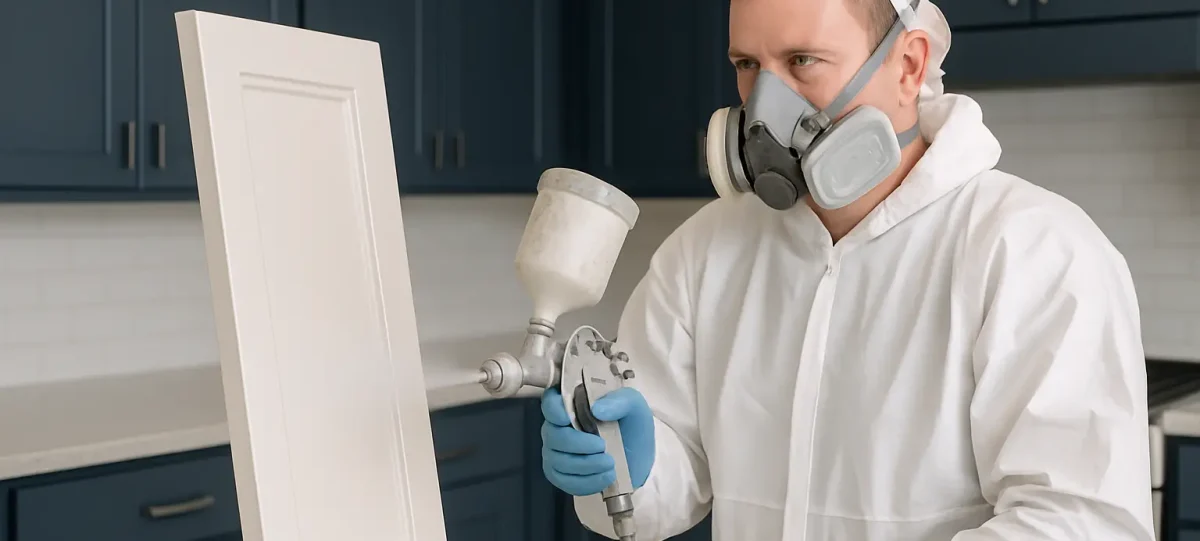
That moment you notice the wear is usually the tipping point – a shiny patch where hands always reach, a chipped corner by the bin, or a door that looks dull no matter how much you clean it. If your cabinet boxes are sound but the finish has had its day, respraying can give you a genuinely like-new look without the disruption and waste of a full replacement.
The sticking point for most homeowners is not whether to respray, but which finish to choose. “Kitchen cabinet spray finish options” can sound like small differences on paper, yet they behave very differently once they are living in a busy Irish kitchen with steam, heat, cooking grease, kids, pets, and constant wiping down. Below is a clear, practical breakdown of the main spray systems, what they are best at, and where the trade-offs show up.
What really matters in kitchen cabinet spray finish options
A good finish is not just about the colour or the sheen. It is a system: preparation, primer, topcoat chemistry, curing time, and how the film handles daily wear.
Durability is usually the first priority. Kitchens get knocked by pans, hoover handles, and belt buckles. That means you want a finish with strong adhesion, good chemical resistance, and a film that does not soften when warm or when cleaned.
Washability comes next. If you cook often, you will wipe doors more than you think. Some finishes tolerate repeated cleaning with mild detergents, while others can burnish (go shiny in patches) or mark if you scrub.
Finally, there is the look and feel. The “best” coating in a lab can still disappoint if it looks too plastic, too flat, or shows every fingerprint. Your ideal finish depends on how you use your kitchen and what kind of appearance you love.
The main finish families, explained like a homeowner
Spray finishes for cabinetry fall into a few common families. The chemistry affects how the coating cures, how hard it gets, and how it stands up to cleaning.
Water-based acrylic or acrylic enamel
Water-based systems have improved massively in recent years. A quality water-based acrylic or acrylic enamel can produce a beautiful, consistent finish with low odour, and it is a strong choice for homeowners who prioritise an eco-friendlier approach.
Where it shines is colour stability. Whites and pale neutrals tend to stay cleaner-looking over time, with less risk of yellowing compared with some older solvent systems. It is also typically easier to live with during application because the smell is milder.
The trade-off is that water-based coatings can be more sensitive to early handling until fully cured. They may feel dry quickly, but curing can take longer, which matters on doors and drawer fronts that are opened all day. For households that are hard on cabinetry, we usually steer towards a tougher system unless the preference is strongly for water-based.
Solvent-based lacquer
Lacquer is often chosen for its smoothness and that “factory finish” look. It lays down nicely and can be sprayed to a very even sheen. It also dries quickly, which helps with turnaround times.
In real kitchens, the key question is chemical resistance. Some lacquer systems can be more vulnerable to certain cleaning products, or to repeated wiping in high-touch areas, leading to burnishing or dull patches. Lacquer can still be a professional option when paired with the right primer and used in the right home, but it is not the automatic best choice for every family kitchen.
If you love a sleek, sprayed look and you are disciplined with gentle cleaning, lacquer can be a strong match. If your cleaning style is more “give it a proper scrub”, you may be better served by a more chemically resistant topcoat.
Polyurethane
Polyurethane is known for toughness. It is commonly specified where abrasion resistance and washability are priorities, which is exactly what most kitchens need. A good polyurethane topcoat resists marking better than many basic paints, and it tends to hold up well to regular wiping.
The look can be anything from modern matt through to satin and gloss. Many homeowners in Dublin and the surrounding counties prefer matt or satin because it looks contemporary while hiding minor imperfections better than gloss.
The trade-off is that some polyurethane systems can have stronger odour during application, and certain formulations can show a little more yellowing over time in very light colours. That does not mean “avoid polyurethane”, it simply means match the product to the colour choice and the kitchen’s light levels.
2K (two-pack) systems
If you want the short version, 2K systems are the heavy hitters. “2K” means two components are mixed before spraying, and the coating cures through a chemical reaction rather than just drying. That generally produces a harder, more chemically resistant film.
For busy homes, 2K finishes are often the best-performing option because they stand up to cleaning, knocks, and high-touch use with less risk of premature wear. They are also excellent for achieving a truly consistent sheen across all doors and panels.
The trade-off is that 2K coatings require strict mixing ratios, controlled application, and proper curing conditions. This is where professional process matters, because the finish is only as good as the prep, the application environment, and the curing time allowed before heavy use.
Sheen levels: matt, satin, or gloss?
Most homeowners think sheen is purely a style choice, but it also changes how forgiving the finish is.
Matt finishes are modern and excellent at disguising minor surface imperfections. They also reduce glare in bright kitchens. The downside is that very flat matts can show oily fingerprints more readily on darker colours, and some ultra-matt coatings can burnish if scrubbed.
Satin is the most popular “happy medium”. It reflects a little light, looks clean and fresh, and is generally more resilient in day-to-day wiping. If you are unsure, satin is often the safest decision.
Gloss is the most reflective and can look stunning in the right kitchen, especially with modern lines. It does, however, highlight dents, brush marks (if any), and uneven substrate more than matt or satin. Gloss also shows fingerprints more quickly, which matters on handleless doors.
The overlooked factor: what’s underneath the topcoat
Most failed kitchen resprays are not “bad paint” problems. They are adhesion problems.
Cabinet doors often have years of polish residue, cooking oils, and silicone-based cleaners sitting on the surface. If those contaminants are not properly removed, the best topcoat in the world can struggle to bond. Likewise, glossy factory finishes and laminates require the correct mechanical abrasion and bonding primer. The primer is not the boring layer. It is the layer that decides whether your respray lasts.
If your kitchen includes a mix of materials – solid timber doors, MDF, foil-wrapped doors, and perhaps a laminate end panel – the primer and prep approach may need to change from piece to piece. That is why a professional assessment is worth it, particularly when you are investing in a long-lasting finish.
Matching the finish to your kitchen and lifestyle
If you cook daily, have children, or treat the kitchen as the centre of the home, you will likely appreciate a tougher topcoat like a quality polyurethane or a 2K system in a satin sheen. It is the combination that tends to cope best with constant use while still looking stylish.
If your priority is low odour and an eco-friendlier approach, and your kitchen does not take a battering, a premium water-based system can be a very satisfying option, especially for whites and light neutrals.
If you are chasing a very sleek, contemporary look and you are careful with cleaning products, lacquer can still be a contender. The key is to be honest about how the kitchen is used and cleaned. The wrong match is where disappointment happens.
Colour choice affects performance more than people expect
Deep charcoals, navies, and blacks look stunning, but they are less forgiving. Fingerprints, micro-scratches, and burnishing show up more on dark tones, particularly in matt finishes. That does not mean you should avoid dark colours, just that the finish needs to be chosen with that reality in mind and the cleaning approach should be gentle.
Whites and pale greys are timeless and usually easier to keep looking consistent. If you are worried about yellowing, ask for a system designed for colour stability in light shades.
What a professional respray should feel like
A trusted respray service should be able to explain what finish system they are using, why it suits your kitchen, and how you should care for it once cured. You should also expect transparency about cure times. “Dry” is not the same as “fully hardened”, and treating doors gently in the early days can make a real difference.
At Dublin Kitchen Respray, we focus on professional preparation and durable spray systems that deliver a stunning, affordable transformation without the upheaval of a full refit – a practical choice for homeowners who want a high-end look and a finish that holds up in real life.
The best finish is the one you do not have to think about after it is done. Choose the system that matches your kitchen’s pace, pick a sheen you will enjoy living with, and you will get that satisfying feeling every time you walk in: it looks new, and it stays that way.