You only notice cabinet paint when it goes wrong. Brush marks that catch the light. A sticky door edge that never quite stops feeling tacky. Chips around the handles after a few months of everyday use. If you are investing in a kitchen refresh, the real question is not just colour – it is the method.
When homeowners ask about spray painting vs hand painting cabinets, they are usually trying to balance three things: a finish that looks factory-new, a process that will not turn the house upside down, and a result that lasts in a busy family kitchen. The right choice depends on your cabinet style, your tolerance for disruption, and the standard of finish you expect.
Spray painting vs hand painting cabinets: what is actually different?
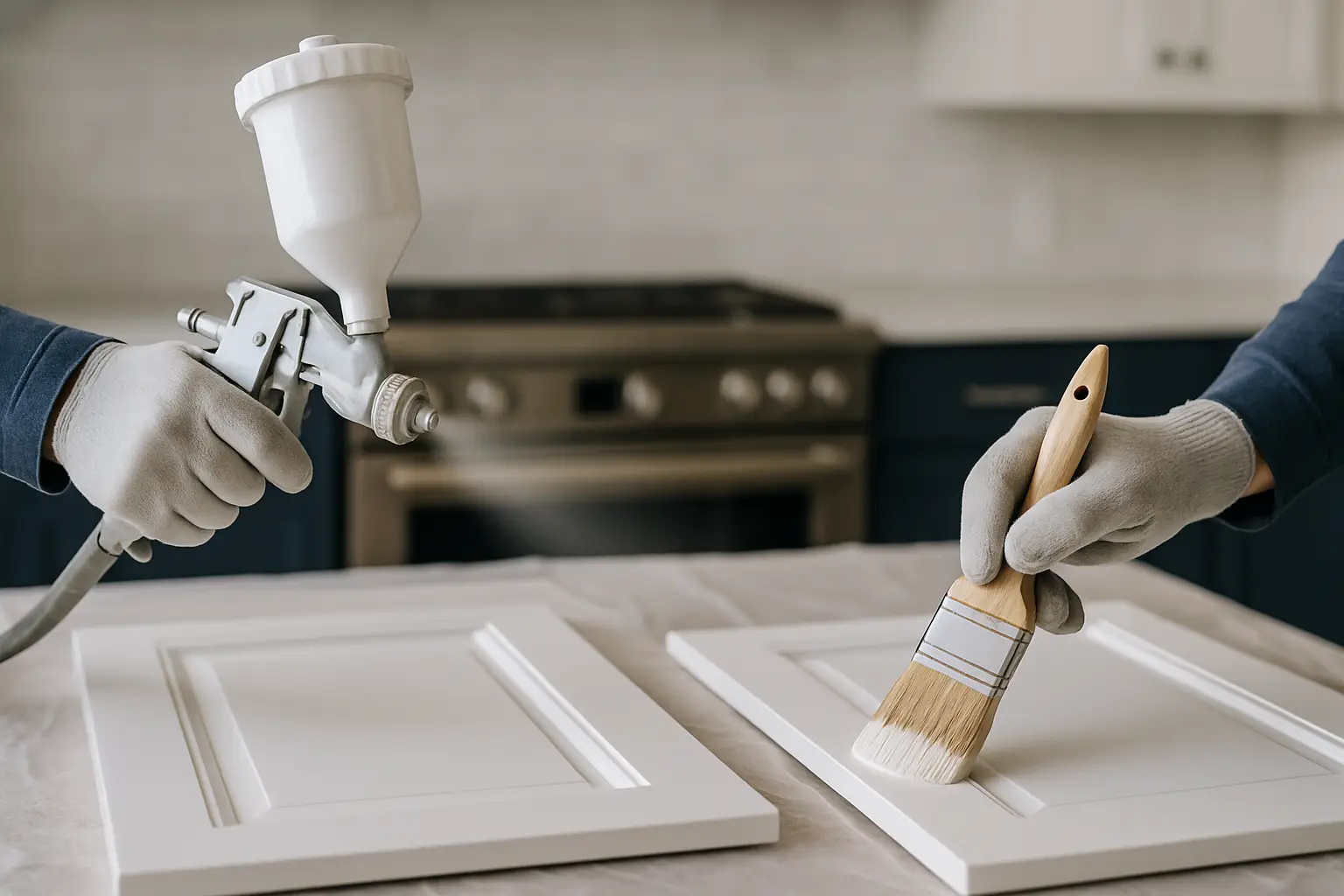
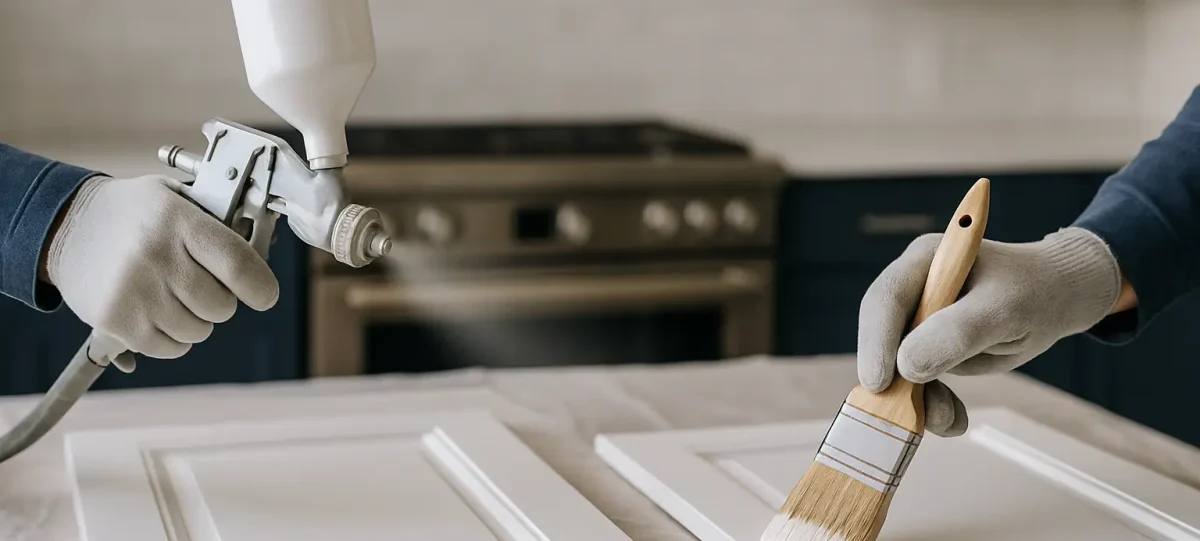
Hand painting means applying paint with a brush and, sometimes, a small roller. It is usually done with water-based enamel or cabinet paint designed to level out and harden. A careful painter will work in thin coats, sand between coats, and allow generous drying time.
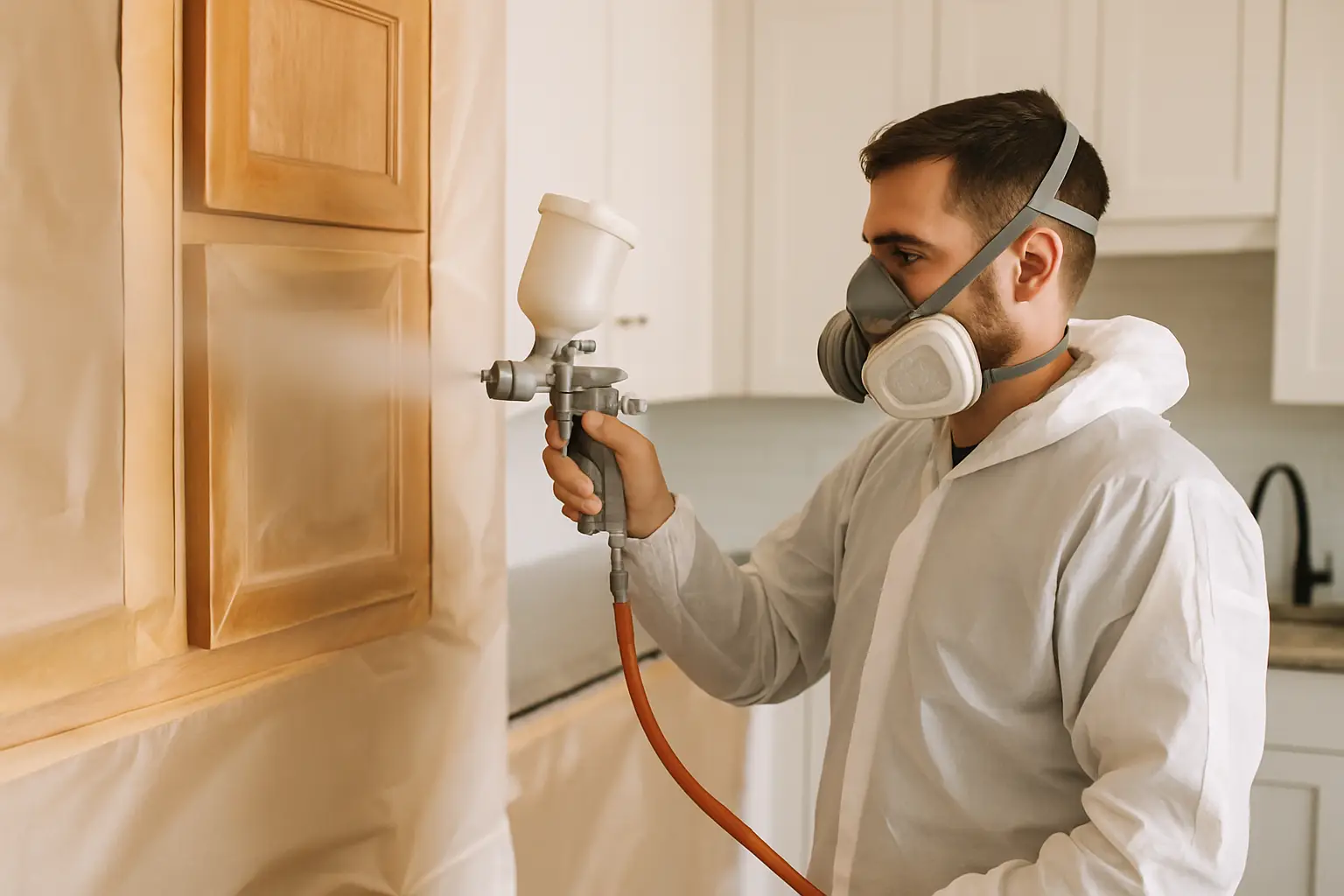
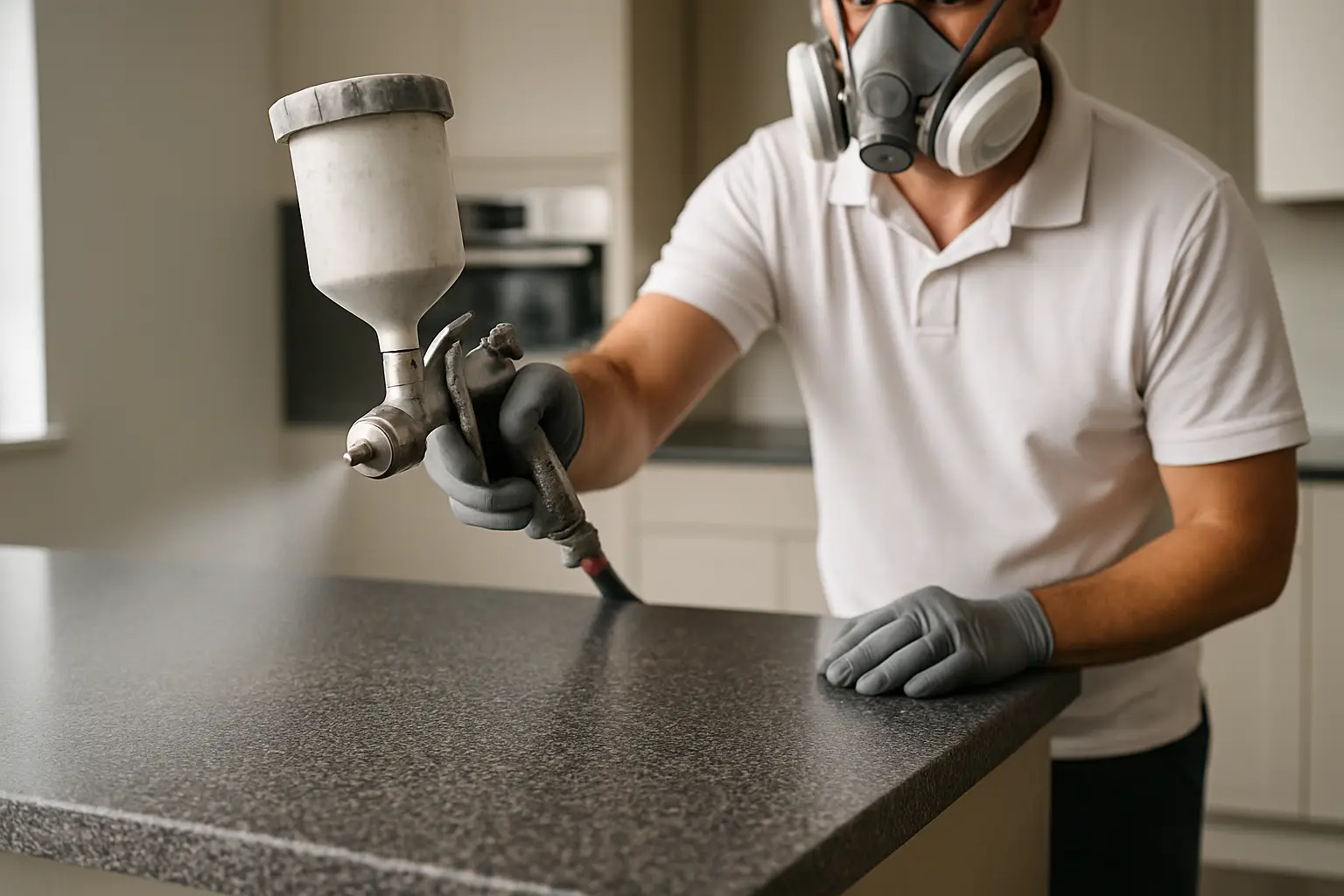
Spray painting applies a fine, even mist of coating through a spray gun. In professional cabinet resprays, doors and drawer fronts are typically removed, cleaned and degreased, mechanically sanded, primed, and sprayed in controlled conditions. The main aim is consistency – even coverage on flat areas, into profiles, and around edges without visible texture.
Both methods can look good when done properly. The difference is how reliably you can achieve that smooth, uniform look across dozens of doors, and how well the finish stands up to constant handling.
The finish: smoothness, texture and light
If your kitchen gets strong daylight or you have under-cabinet lighting, paint texture becomes far more obvious. Hand painting nearly always leaves some evidence of application, even with excellent products. Modern cabinet paints do self-level, but they cannot completely erase brush strokes on detailed profiles, and small roller stipple can show on large, flat doors.
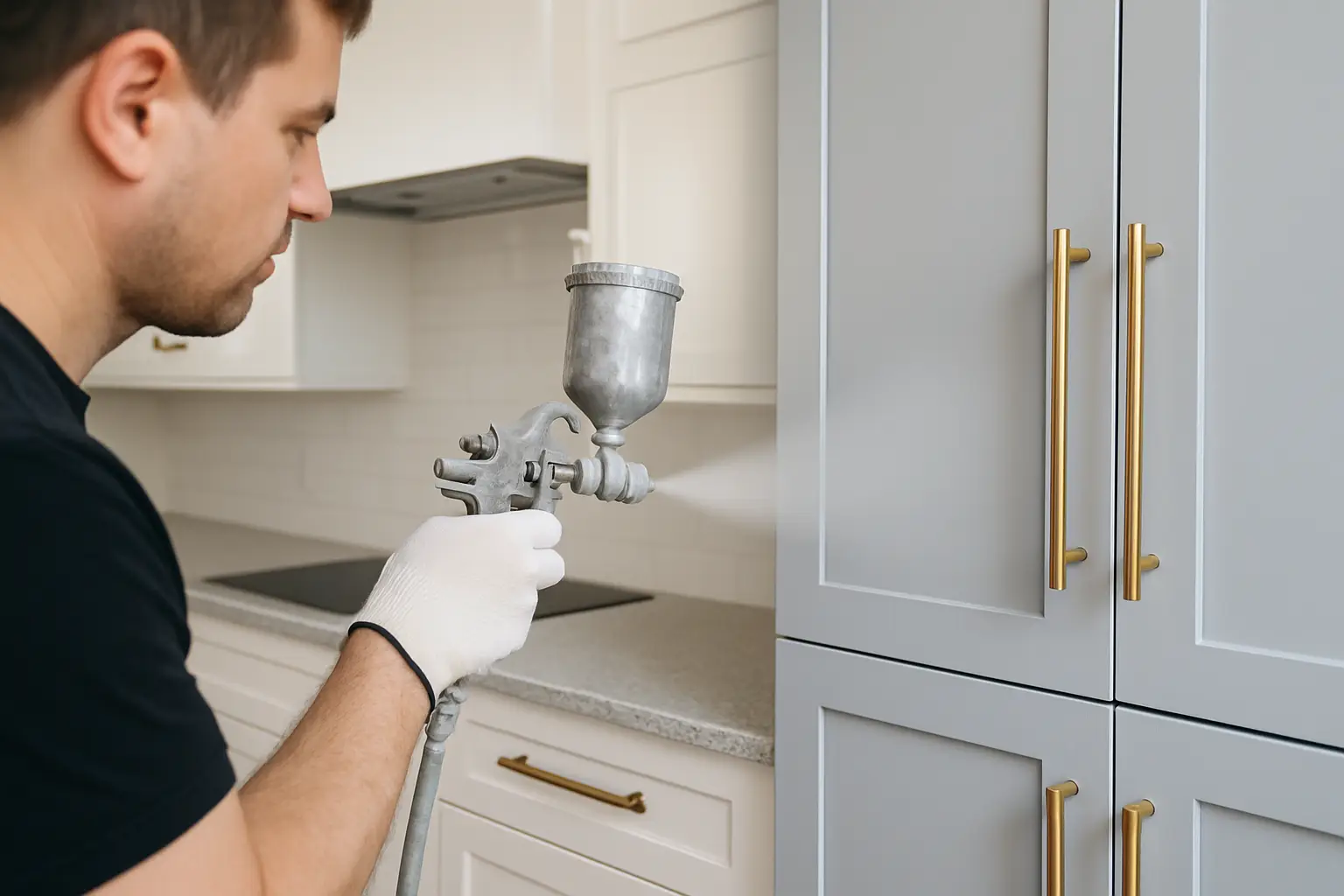
Spraying is designed for that “new kitchen” appearance – smooth, even colour with no lap marks. On slab doors (flat fronts) especially, spraying is usually the easier route to a uniform finish because there is no physical contact dragging paint across the surface.
There is a trade-off. Sprayed finishes can show surface flaws more readily. If doors have dents, raised grain, or old paint ridges that were never properly sanded out, a sprayed topcoat will not hide them. The preparation has to match the finish you want.
Durability: what stands up to Irish kitchens?
Kitchens in Dublin and the surrounding counties take a beating. Steam, heat from the hob, constant hand contact, frequent wiping, and the occasional bump from a hoover or a schoolbag swung too close. Durability is about two things: the coating system (primer and topcoat) and how it bonds to the surface.
Hand painting can be durable, but it is easier to apply the paint too thickly at edges and corners, which can lead to chipping. Drying time is also critical. Doors that feel dry to the touch can still be soft underneath, and if they are rehung too soon the paint can stick at contact points.
Professional spraying tends to produce a more even film build – not too heavy on edges, not too thin on profiles – which helps the finish cure consistently. A properly cured sprayed finish is typically more resistant to scuffs around handles and less likely to “print” (show marks) where doors meet frames.
That said, durability is not automatic. Spraying over grease, silicone residue, or glossy surfaces without proper prep will fail quickly. The method cannot compensate for skipped steps.
Prep work: where most DIY jobs win or lose
Preparation is not glamorous, but it is the whole job.
With hand painting, the temptation is to clean lightly, scuff sand, and paint. In a kitchen, light cleaning is rarely enough. Cooking residue can be invisible but still prevent primer from bonding. Even a small amount left around handles and mouldings can cause peeling.
With spraying, the prep is usually more structured because the process depends on it: thorough degreasing, sanding to create a key, repairing chips, and using the correct primer for the cabinet material (often MDF, painted timber, or laminate). If your cabinets are laminate or melamine, primer choice becomes even more important. These surfaces can be resprayed successfully, but they need adhesion-promoting primers and careful technique.
If you are comparing quotes or deciding whether to paint yourself, ask one simple question: what preparation steps are included and how long are they allowing for curing? A kitchen can look fantastic on day one and disappoint by month three if the prep was rushed.
Speed and disruption: how much of your kitchen is “out of action”?
Hand painting usually happens in place, which means you can keep some level of kitchen use. But it also means the room becomes a work zone for longer. You will have drying times between coats, and you may be living with doors off hinges or taped-up areas for days.
Spraying can be faster in terms of on-site disruption because doors are removed, sprayed, and rehung once cured. A professional team will mask and protect the space, then work efficiently to reduce downtime. The exact timeline depends on the size of the kitchen and the curing schedule, but the goal is a quick transformation without a full renovation.
If you have a busy household, children, pets, or limited space to store doors while paint dries, spraying with an organised process often feels less intrusive overall.
Mess, fumes and ventilation
Hand painting is simpler from a containment point of view. You can isolate the area, open windows, and manage odour with low-VOC paints. The “mess” is more about drips, sanding dust, and keeping wet paint away from daily life.
Spraying requires more protection and skill to control overspray. In a professional setup, masking is meticulous and extraction or ventilation is planned so dust and mist do not settle where they should not. Done properly, your home is protected. Done poorly, you will find fine paint dust on surfaces you did not expect.
If you are considering DIY spraying, be realistic about space and equipment. Spraying in a garage without proper filtration and dust control can lead to nibs (tiny particles trapped in the finish), which then need cutting back and re-coating.
Cost: why the numbers can look surprising
Hand painting can appear cheaper because the tools are basic and you may be doing the labour yourself. If you are paying a painter, the cost depends on how much prep they include and whether they are painting both sides of doors, frames, and end panels properly.
Spraying is often priced higher upfront because of the equipment, the controlled process, and the time spent removing, preparing, and finishing doors evenly. But it can be better value when you factor in the finish standard and longevity. Repainting a failed DIY job in a year is not cost-effective, and neither is living with a finish that always looks “painted” rather than refreshed.
For homeowners trying to avoid a full kitchen replacement, respraying is usually positioned as the middle ground: far more affordable than a new kitchen, but capable of delivering that like-new look.
Which method suits your cabinet style?
Flat slab doors tend to highlight roller texture and brush strokes, especially in darker colours. Spraying is typically the better match if you want an even, modern finish.
Shaker and raised-panel doors can be hand painted successfully because a small amount of texture is less noticeable on profiles, and some homeowners actually like a softer, painted character. If you are aiming for a traditional look, hand painting can suit – as long as you accept that it will not look factory-sprayed.
For intricate detail, spraying often wins on consistency because it reaches into corners and beading without heavy build-up. With a brush, those same areas can pool or show drag marks unless the painter is very experienced.
What about colour changes and sheen levels?
Big colour shifts (for example, dark oak to soft white, or cream to deep green) are achievable with both methods, but they demand a proper primer and enough coats to avoid patchiness. Spraying makes it easier to build colour evenly, especially on edges and around hinge recesses.
Sheen also matters. Matt can look contemporary but may show marks more easily if the product is not designed for cabinets. Satin is popular because it is wipeable and forgiving. Gloss is durable but highlights imperfections. Spraying tends to give a cleaner look in higher sheens, where brush texture would otherwise catch the light.
When hand painting makes sense
Hand painting is a sensible choice if you are refreshing a small number of units, if you are comfortable with a slightly more textured finish, or if your priority is minimal setup and equipment. It can also work well in spaces where removing and transporting doors is impractical.
It is most successful when the painter is disciplined about prep, uses cabinet-specific products, sands between coats, and gives the paint time to cure before everything goes back into daily use.
When spraying is the better option
Spraying is usually the better fit when you want a smooth, professional finish across the whole kitchen, especially on modern flat doors or when you are going for a crisp, high-end colour change. It is also ideal when you want speed without the upheaval of a full renovation, and when you care about durability around handles, bins, and high-touch areas.
If you are based in Dublin or nearby counties and want that factory-style result without replacing your kitchen, Dublin Kitchen Respray specialises in cabinet respraying designed to be affordable, eco-friendly, and finished to a professional standard – with a process that keeps disruption low.
The decision to make before you pick up a brush or book a respray
Ask yourself what would disappoint you six months from now. If the honest answer is “seeing brush marks every time the light hits the doors” or “chips around the handles”, you are already leaning towards spraying. If the answer is “spending more than I need to for a modest refresh”, hand painting may be enough.
Either way, the best kitchens are not the ones with the fanciest paint. They are the ones where the finish quietly does its job, day after day, and you stop thinking about the cabinets altogether – because they simply look right.