A full kitchen refit is not the only way to make a dated space feel current. Kitchen worktop resurfacing trends 2026 are moving firmly towards smarter upgrades – finishes that look high end, last well in busy homes, and avoid the cost, waste and disruption of ripping everything out.
For homeowners across Dublin and the surrounding counties, that shift makes practical sense. People still want a stunning kitchen, but they are asking sharper questions about value, durability and how quickly the job can be completed. That is exactly why resurfacing is gaining ground. It gives existing worktops a fresh, contemporary finish without turning the kitchen into a building site for weeks.
What kitchen worktop resurfacing trends 2026 tell us
The biggest change is not just about colour. It is about attitude. In recent years, many homeowners chased showroom perfection with complete replacements. In 2026, the stronger trend is thoughtful renovation – keeping what is structurally sound and improving the finish to suit modern tastes.
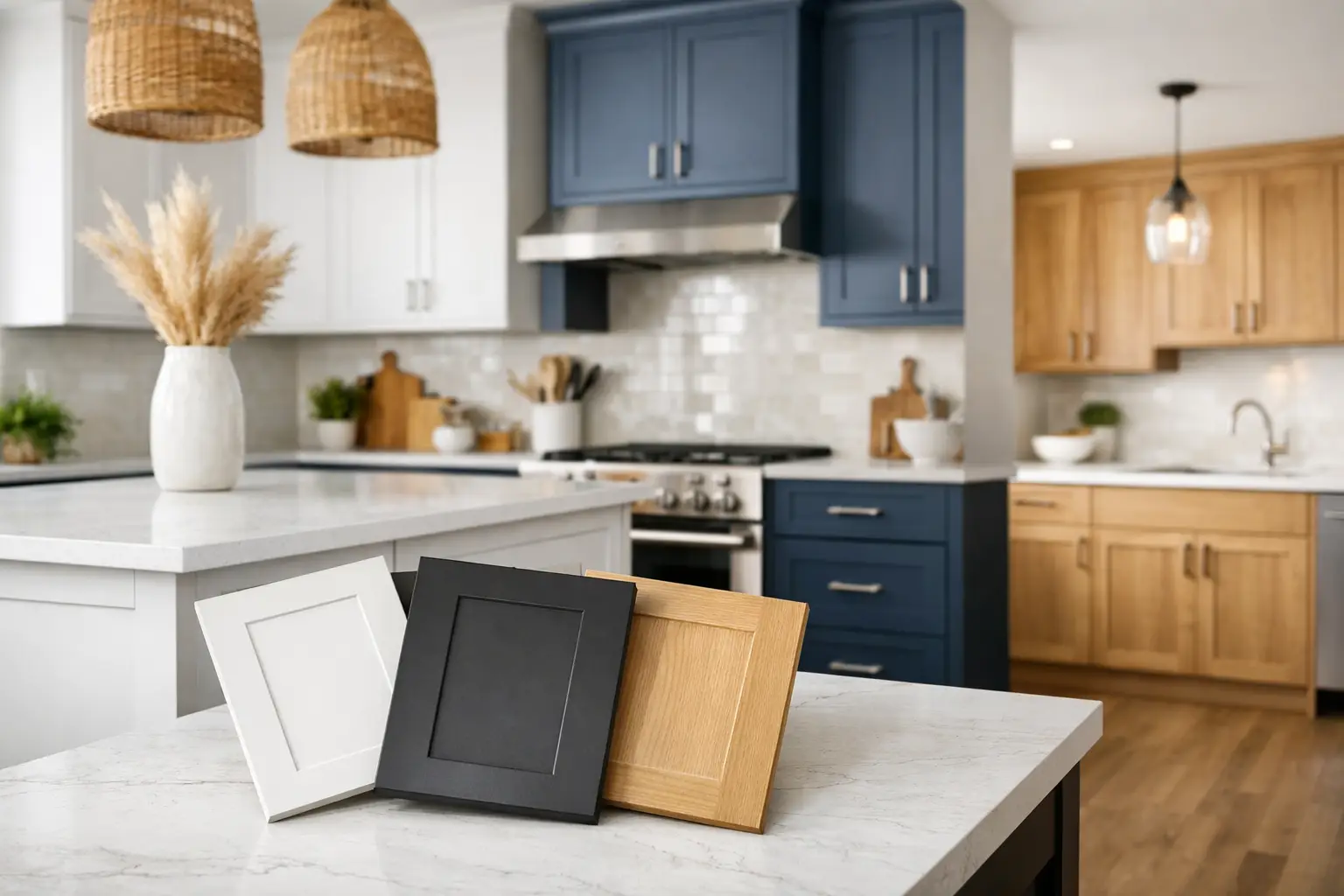
That means resurfacing is no longer seen as a compromise. When done professionally, it is a design choice in its own right. Customers want surfaces that look refined, feel easy to live with and stand up to family life. They also want a result that works with resprayed cabinetry, updated handles and better lighting, rather than one expensive element carrying the entire room.
There is also a clear sustainability angle. Replacing worktops creates waste, involves more materials and often leads to knock-on costs. Resurfacing appeals to homeowners who want an eco-friendly route without lowering their standards.
Stone-effect finishes are leading the market
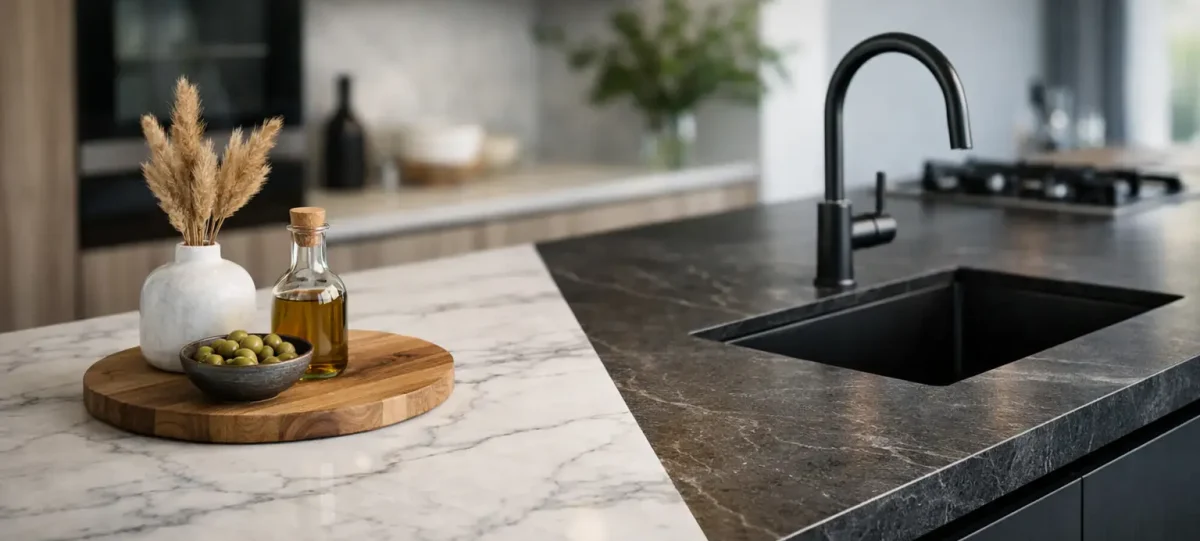
If one finish defines 2026, it is the stone look. Not the overly glossy, artificial effect that can feel dated, but softer, more believable surfaces inspired by granite, slate and lightly textured mineral tones.
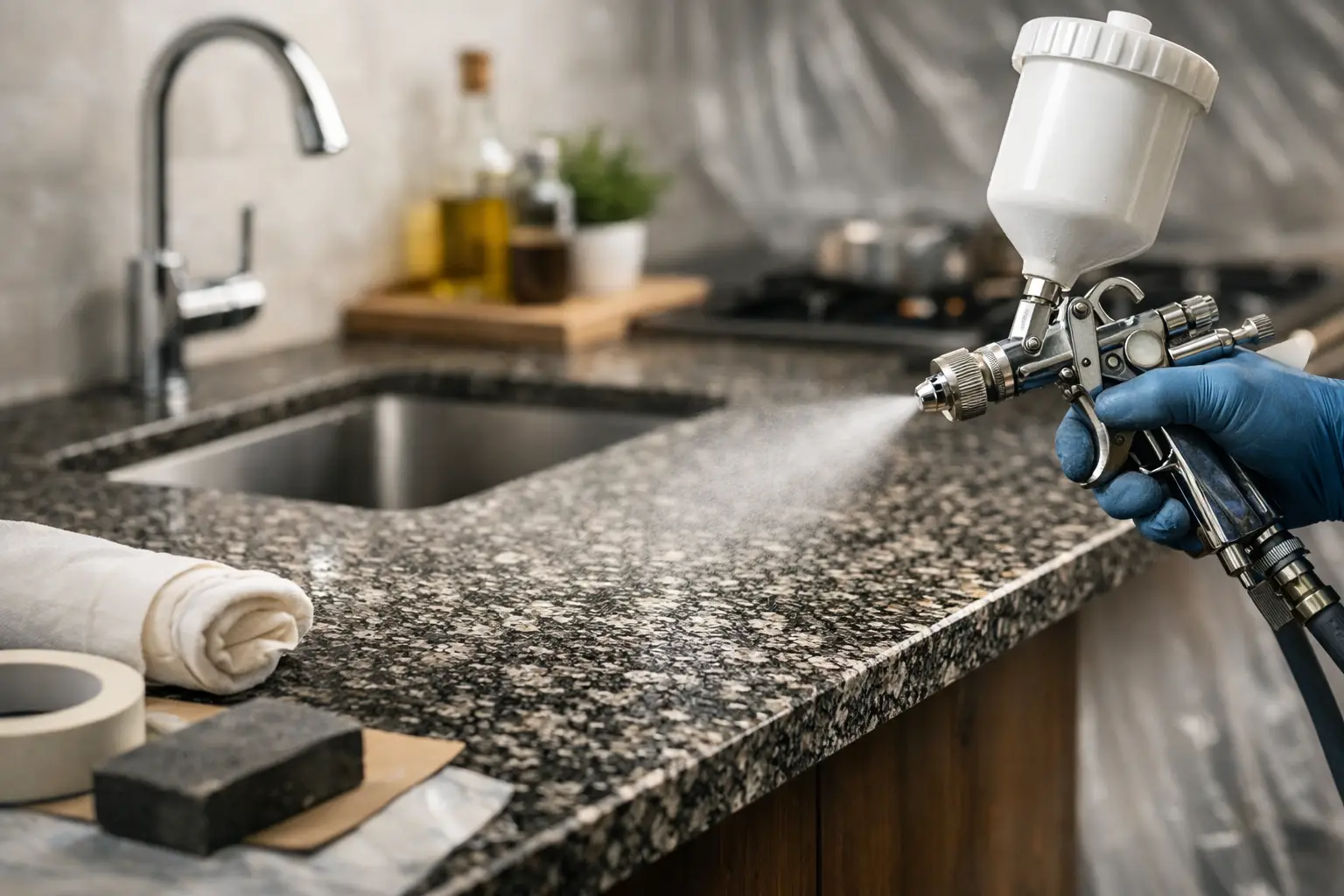
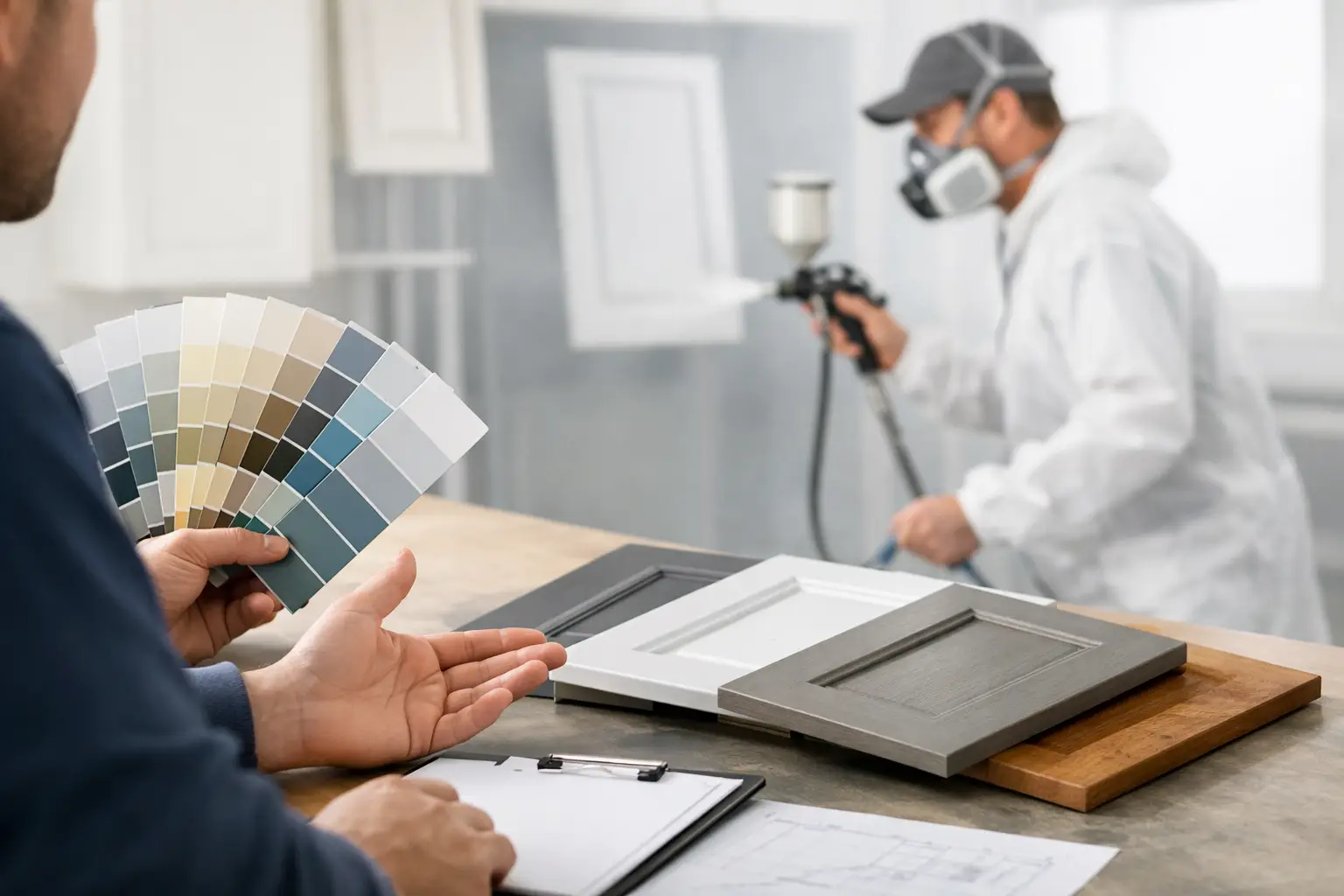
This is where spray-applied specialist finishes are having a real moment. They offer the visual depth people associate with natural stone, but without the cost and upheaval of a full replacement. For households that want the kitchen to feel more premium, this trend hits the mark.
The appeal is easy to understand. Stone-effect resurfacing works across a wide range of kitchen styles. In a classic shaker kitchen, it adds substance without overpowering the room. In a more modern kitchen, it creates a clean, architectural look. It is also forgiving in day-to-day use, especially compared with very dark, highly polished surfaces that tend to show every crumb, mark and fingerprint.
Matte and low-sheen finishes are replacing heavy gloss
Gloss still has its place, but worktops are moving in a different direction from doors and cabinetry. One of the strongest kitchen worktop resurfacing trends 2026 is the preference for matte or low-sheen finishes that feel more natural and less manufactured.
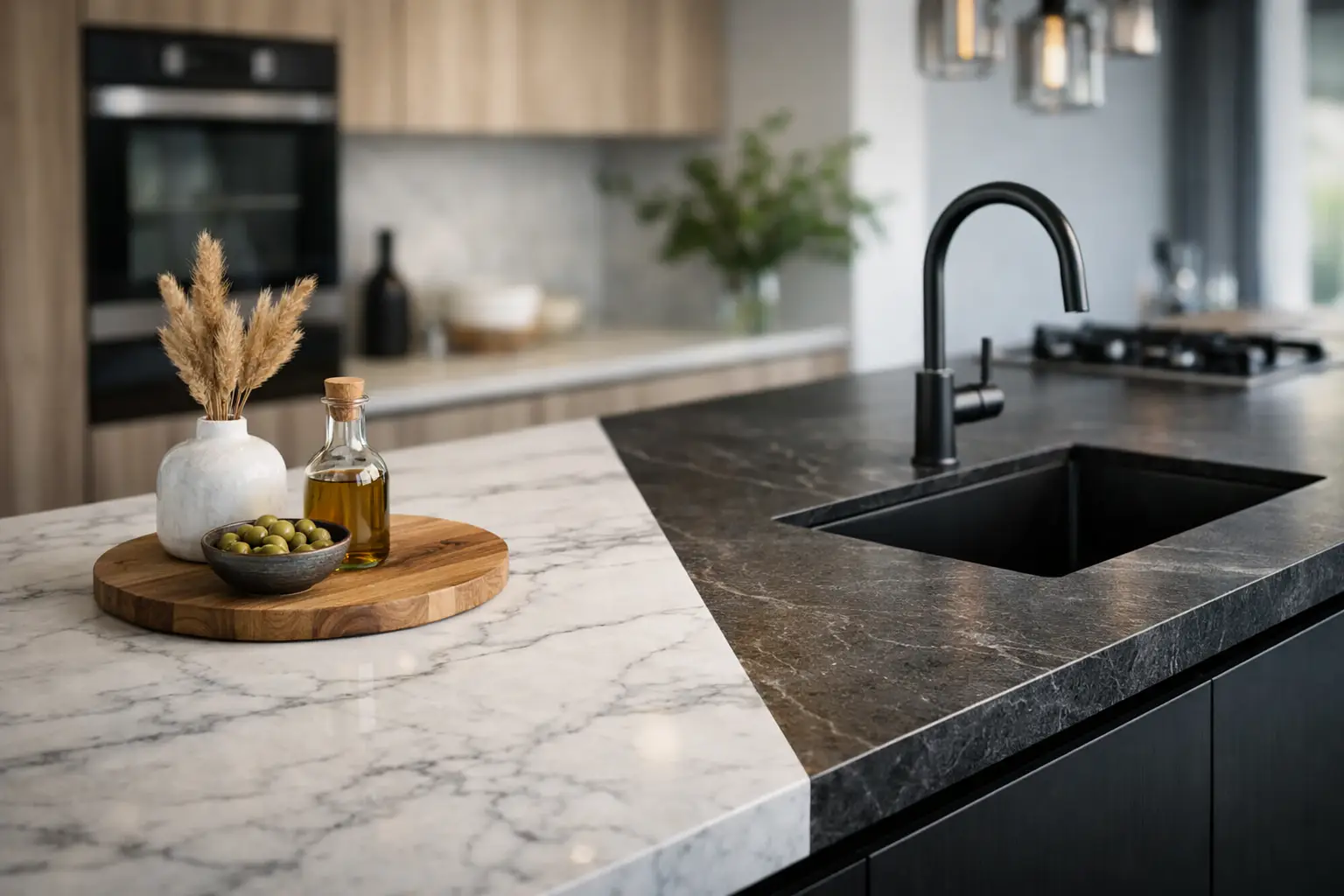
There are practical reasons for this. Matte surfaces tend to soften glare under strong kitchen lighting and often look more expensive. They also sit comfortably beside popular cabinet colours such as warm white, taupe, mushroom, olive and deep navy.
That said, it depends on the kitchen. In a smaller or darker room, a touch of sheen can help bounce light and prevent the space from feeling flat. The best result usually comes from balancing surfaces rather than making everything uniformly dull or shiny.
Warmer neutrals are overtaking cold greys
Cool grey had a long run, but 2026 is noticeably warmer. On worktops, homeowners are leaning towards greige, sand, soft taupe, off-white stone and earthy mid-tones. These shades make kitchens feel more welcoming and less clinical.
This does not mean bold colours are gone. Dark charcoal and deeper mineral shades still work well, particularly in larger kitchens with plenty of natural light. But the overall move is towards warmth and softness.
For many homes in Dublin, Wicklow, Kildare, Meath and Louth, this makes good design sense. Irish daylight changes so much through the year that a warmer worktop can help the kitchen feel brighter and more comfortable even on dull days. It is a subtle choice, but it has a big effect on how the room feels.
Texture is becoming more important
Another interesting shift is the growing interest in texture. Perfectly flat, uniform finishes can sometimes look too synthetic, especially in family kitchens where everything else has character. In 2026, resurfacing trends are favouring finishes with gentle visual movement and a more tactile appearance.
This does not mean heavily patterned surfaces. In fact, the opposite is often true. Customers are choosing restrained textures that add depth without making the worktop dominate the room. Speckled mineral effects, soft stone variation and finely layered finishes are popular because they hide everyday wear better than plain block colours.
It is a practical trend as much as a visual one. Kitchens are working spaces. A finish that disguises minor marks and daily use will usually age more gracefully.
Resurfacing is being chosen as part of a whole-kitchen refresh
One reason resurfacing is growing in popularity is that homeowners are thinking about the kitchen more holistically. Instead of spending most of the budget on brand-new worktops and leaving tired cabinets untouched, they are upgrading the visible surfaces together.
This approach often delivers a stronger result. A professionally resurfaced worktop paired with resprayed cupboards, updated handles and a fresh wall colour can completely change the kitchen for a fraction of the cost of replacement. It also avoids the mismatch that sometimes happens when one brand-new element makes everything around it look older.
For that reason, worktop resurfacing in 2026 is less of a standalone fix and more of a strategic design decision. It helps homeowners get a cohesive finish without unnecessary expense.
Durability is no longer a side issue
Style matters, but performance matters just as much. Homeowners are more informed now. They want to know how a resurfaced worktop will cope with daily wiping, food prep, family traffic and general wear.
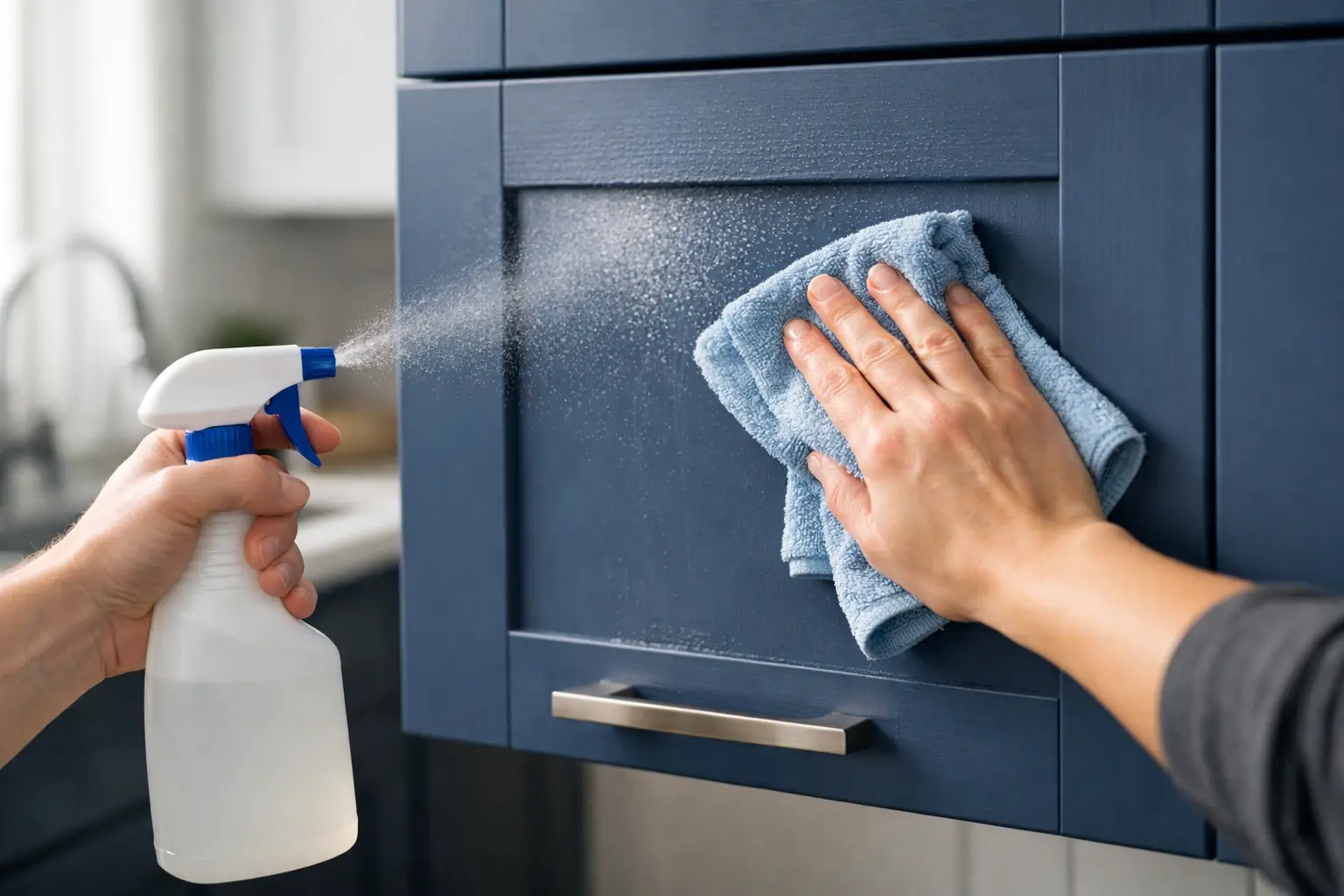
That is shaping the market. The finishes gaining traction in 2026 are not just attractive – they are selected because they offer a durable, easy-care surface when applied correctly. Professional preparation is a major part of that. Even the best coating will disappoint if the substrate is poorly prepared or the application is rushed.
This is where expert workmanship makes all the difference. A trusted specialist will look at the condition of the existing worktop, the type of surface involved and the level of use the kitchen gets. In some cases, resurfacing is an excellent solution. In others, if the underlying worktop is badly damaged or unstable, replacement may be the wiser route. Honest advice matters.
Bespoke finishes are edging out one-size-fits-all options
Homeowners are becoming more design-aware, and that shows in the finishes they choose. The trend is moving away from generic colours that could belong in any kitchen, towards tailored looks that suit the home.
That might mean choosing a worktop tone that picks up the veining in a splashback tile, complements timber flooring or balances the cabinet colour more carefully. It might also mean selecting a finish that feels understated enough to last beyond the latest fad.
Professional resurfacing supports that level of customisation. At Dublin Kitchen Respray, for example, spray granite finishes have become especially relevant for customers who want the visual impact of stone without the cost and disruption of replacing their existing worktops.
What this means for homeowners planning a kitchen update
If you are considering a kitchen refresh in 2026, the smartest trend to follow is not a colour chart. It is the move towards value-led improvement. Keep what still works. Upgrade what dates the room. Spend where the visual return is strongest.
That often makes resurfacing a very sensible option. It is faster than replacement, typically far more affordable, and much easier on the household. It can also be the better design choice if the aim is to transform the kitchen without creating a patchwork of old and new.
Still, the right finish depends on how you use the space. A busy family kitchen may benefit from a forgiving stone-effect texture in a mid-tone shade. A quieter, design-led kitchen might suit a cleaner, lighter matte finish. Neither is universally better. The best result is the one that fits the room, the light and the way you live.
The kitchens that will look best in 2026 are not necessarily the most expensive ones. They will be the kitchens where every surface has been chosen with care – practical, attractive and built to work hard for years to come.