You know the feeling: the kitchen works perfectly well, but it looks tired. The doors have gone a bit yellow at the edges, the handles feel dated, and the worktop has one stain that never really left. You start browsing “new kitchens” and suddenly you are pricing up disruption, dust, trades, and a bill that makes no sense when the cabinets themselves are still solid.
If that sounds familiar, you are exactly who a kitchen makeover without full renovation is for. The aim is simple: keep what is structurally sound, upgrade what you touch and see every day, and get a result that looks genuinely new – without weeks of upheaval.
Start with the question most people skip
Before you choose paint colours or handles, check whether your kitchen is a good candidate for a non-renovation makeover. In most Dublin homes (and across Wicklow, Kildare, Meath and Louth), the cabinet boxes are built to last far longer than the finish on the doors.
If the carcasses are firm, the hinges still hold properly, and the layout works for how you cook, you are in the sweet spot. If the layout is fundamentally wrong (no prep space, doors colliding, appliances in awkward places), then a partial reconfiguration might be worthwhile. A makeover can still help, but it will not fix a design that fights you every day.
The biggest visual win: respraying cabinet doors
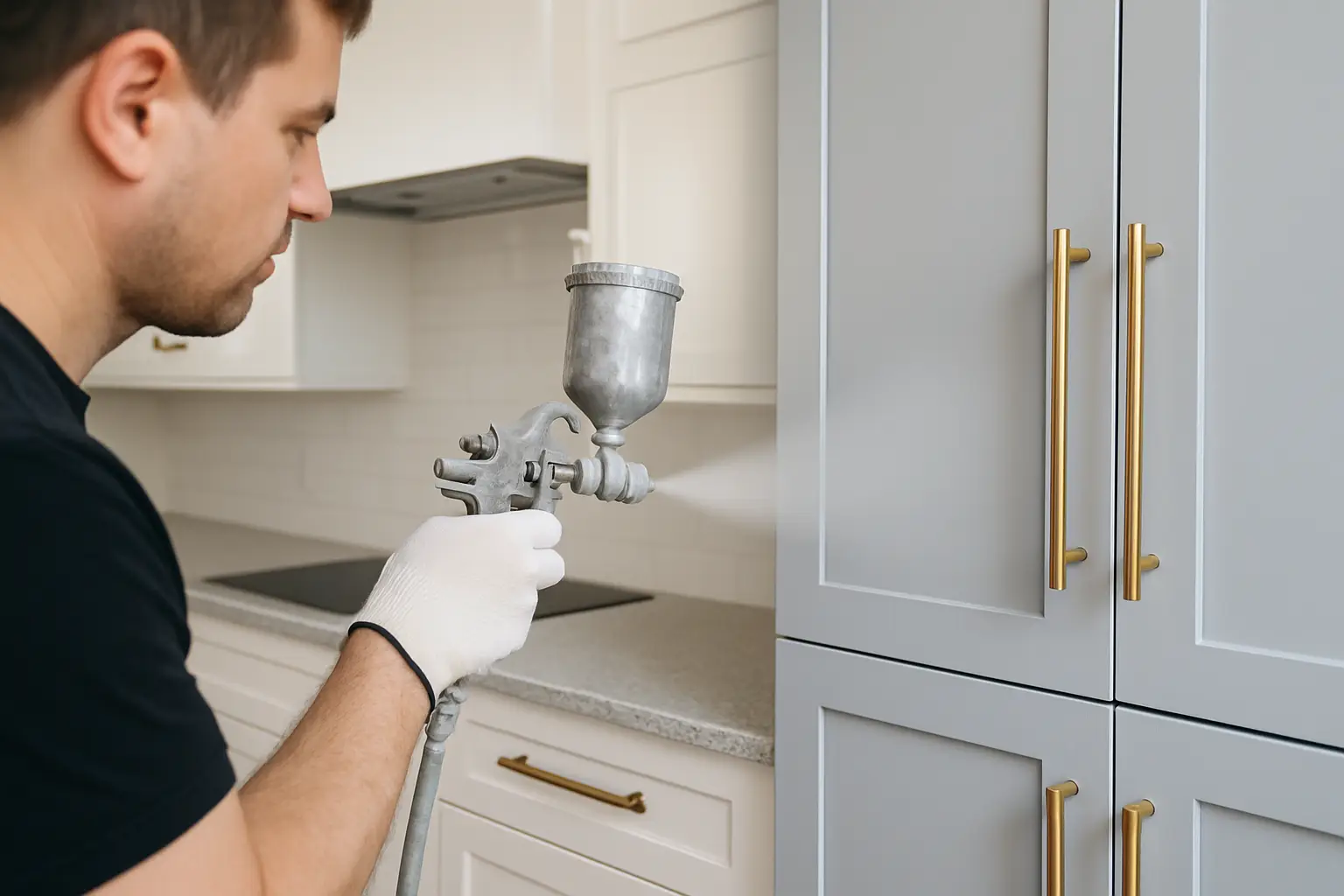
Most “old kitchen” cues come from surfaces that are front and centre: doors, drawer fronts, plinths and panels. When these are refreshed professionally, the kitchen instantly reads as cleaner, brighter and more modern.
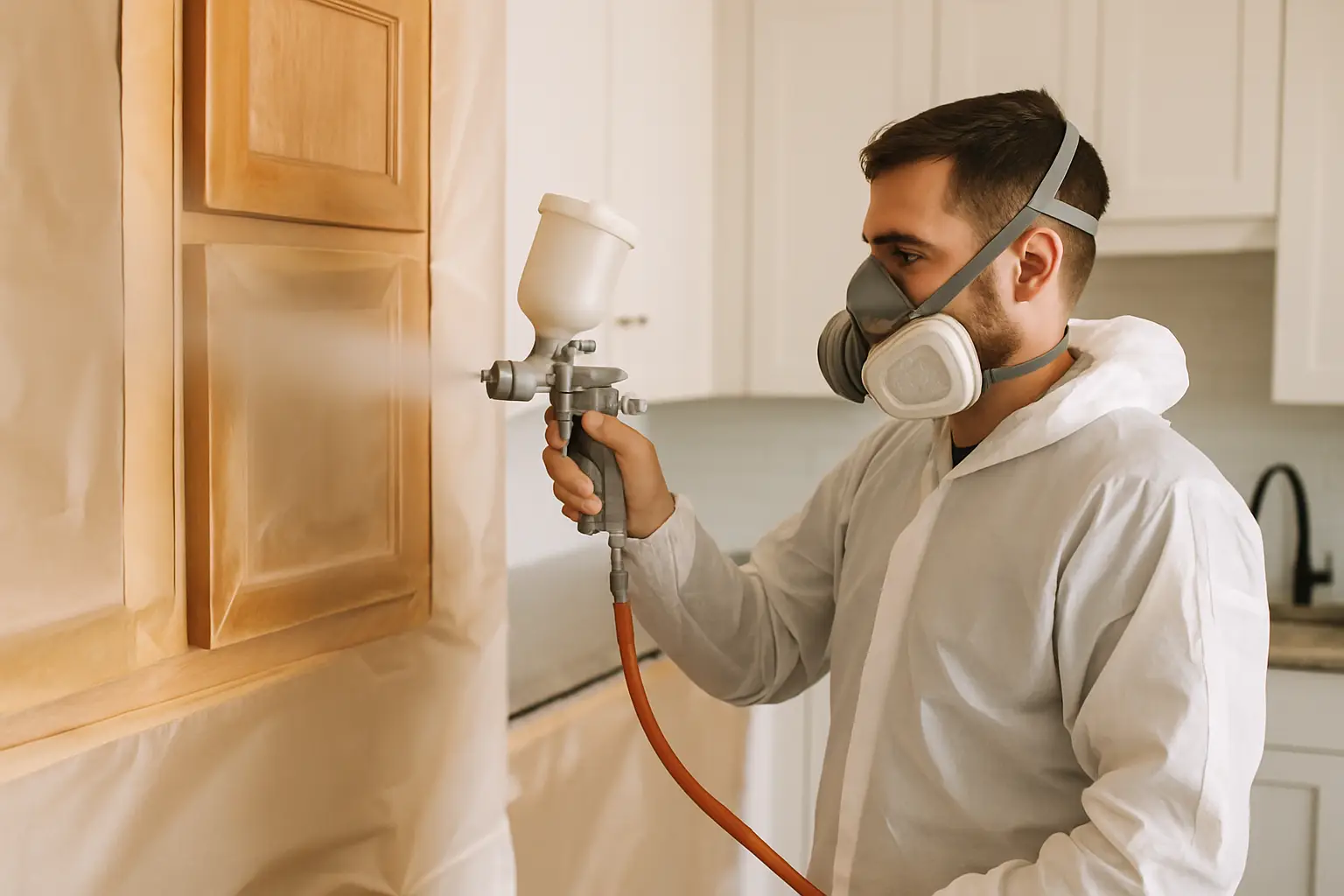
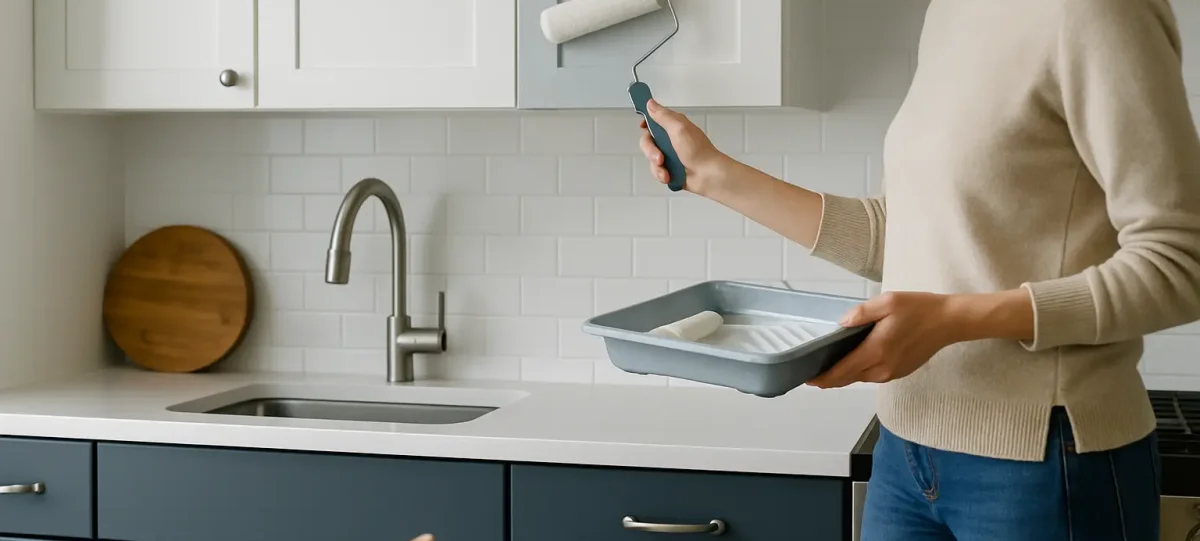
A proper respray is not the same as a quick DIY coat. Preparation is where the durability comes from: degreasing, sanding, repairing minor chips, priming correctly, then applying a hard-wearing sprayed finish that cures evenly. The difference is not just the look – it is how it holds up when you are wiping down doors around the hob or grabbing a drawer with wet hands.
Colour choice is where you can be strategic. If your kitchen is on the darker side (common in terraced houses and some extensions), lighter shades can make the whole room feel larger and calmer. If you have plenty of daylight, deeper tones can look confident and high-end, particularly when balanced with warm lighting and simpler hardware.
There is a trade-off: very dark matt finishes can show marks more easily than a satin, especially in busy family kitchens. If you love the look, it is still achievable – just pair it with practical expectations and a finish that suits your lifestyle.
Worktops: change the look without ripping out the kitchen
Worktops set the tone. A dated laminate or a chipped edge can drag down even beautifully painted doors. Replacing worktops can be disruptive, but there is a strong middle option many homeowners overlook: spray granite.
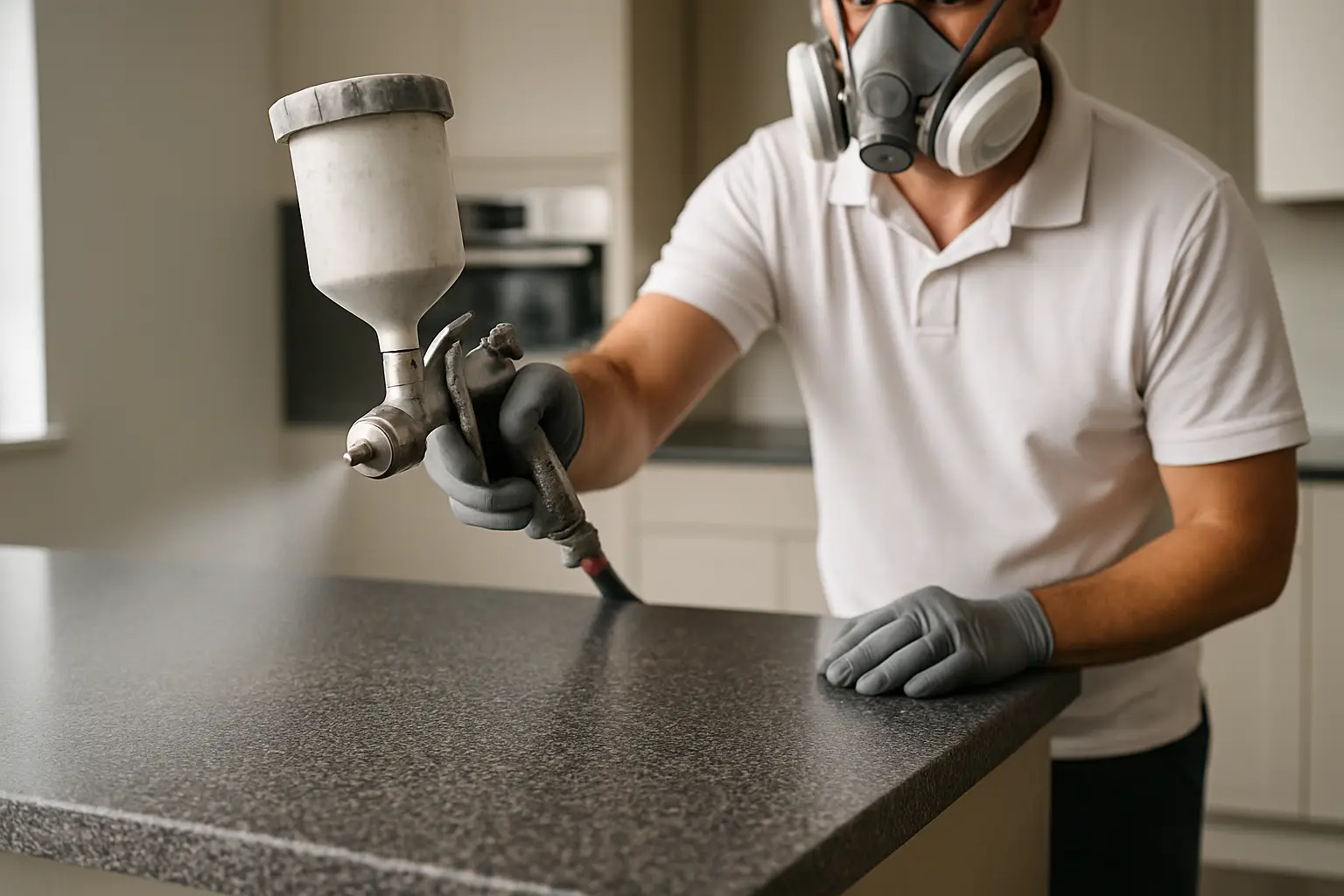
Spray granite gives the appearance of a stone-like surface with a durable, sealed finish and can often be applied without removing the existing worktop. It is a particularly sensible choice when the underlying surface is structurally fine but visually past its best.
This is one of those areas where “it depends” matters. If your worktop is swollen from water ingress around the sink, no coating will undo the damage – the substrate may need replacement. But if the worktop is stable and the problem is purely cosmetic, upgrading the finish can deliver a dramatic transformation for a fraction of the cost and disruption of new tops.
Hardware and small details that change everything
Once doors and worktops look fresh, the small elements start to matter more – in a good way. Handles, taps, and even socket covers become the finishing touches that make the kitchen feel intentionally updated.
Handles are the easiest place to modernise a kitchen on a sensible budget. If your existing handles are dated, swapping to a simpler bar handle, a discreet knob, or a handleless-style profile can shift the entire style from “early 2000s” to current. Just be mindful of hole positions. If you are changing the spacing, you may need to fill and refinish – which is best planned alongside respraying.
Taps are another high-impact upgrade because you use them constantly. A new tap can make the sink area feel cleaner and more contemporary, even if the sink stays the same. Choose something that suits how you live: pull-out spray taps are brilliant for washing large trays, while a simpler, solid design can be easier to keep spotless.
Lighting: the upgrade that makes new finishes look even better
Lighting is where many kitchens quietly fail. One ceiling pendant can leave shadows exactly where you prep food, and it can make new colours look flatter than they are.
Under-cabinet lighting is a practical upgrade that also reads as premium. It brightens worktops, highlights your new finish, and makes the kitchen feel more inviting in the evening. If you are respraying doors, it is a great moment to review lighting positions so the whole room works together.
Warm-white LEDs tend to be the safest choice for Irish homes because they flatter most paint colours and feel comfortable. Very cool lighting can make whites look stark and can emphasise imperfections.
Walls and splashbacks: keep it clean and deliberate
A full re-tile is not always necessary. If your tiles are intact but dated, consider whether a new wall colour and improved lighting will make them feel intentional again. If the splashback is the obvious weak point, replacing just that area can be a controlled, high-impact job.
For some kitchens, a simple glass or panel splashback behind the hob can modernise the space instantly and is easier to wipe down than grout-heavy tiling. If you do choose to repaint walls, use a durable, wipeable finish – kitchens are hard-working rooms.
The eco-friendly angle that also protects your budget
A kitchen makeover without full renovation is not only about cost. Keeping existing cabinetry and surfaces out of landfill is a genuinely eco-friendly choice. Manufacturing, transport, packaging, and disposal all carry environmental impact, even before a new kitchen is installed.
There is also a practical sustainability benefit: older kitchens are often sturdier than some modern flat-pack alternatives. If your current kitchen is well-built, upgrading the finish preserves quality you have already paid for.
What the process can look like in real life
Most homeowners want two things at once: a “like-new” result and minimal disruption. That is exactly why respraying is such a popular route.
Typically, doors and drawer fronts can be removed, prepared, and finished with professional spray equipment, then refitted with care so alignment is crisp and consistent. Done properly, it feels less like a building site and more like a controlled upgrade. If you are combining it with a worktop finish such as spray granite, the transformation can be even more dramatic, because the two biggest visual surfaces in the room change together.
If you are considering professional help, Dublin Kitchen Respray specialises in kitchen cabinet respraying, wardrobe respraying, and spray granite worktops, offering a trusted, affordable alternative to full renovation with a strong focus on durable finishes and a clean, efficient process.
A few honest trade-offs to keep expectations realistic
A makeover is powerful, but it is not magic. If your kitchen layout does not function, a new colour will not create more counter space. If hinges are worn out or drawers are collapsing, those mechanical parts need attention too. And if the underlying materials are damaged by water, you may need targeted replacements.
The good news is that most kitchens do not need everything replaced. Many simply need the right combination of surface upgrades, small fittings, and lighting to feel completely different.
How to choose what to do first
If you are not sure where to start, begin with the elements that visually dominate the room and are hardest to ignore day to day. For many homes, that is cabinet doors first, then worktops, then handles and lighting.
Take a few photos of your kitchen in natural daylight and again at night with the lights on. You will quickly see what looks tired and what is simply “fine”. A good makeover plan focuses spend where it changes the feel of the room, not where it is easiest to shop.
A kitchen should make daily life smoother, not become a never-ending project. If you can keep the bones, upgrade the surfaces, and make the room brighter and easier to live in, you will get the satisfaction of a new kitchen – without handing your home over to a renovation for weeks.