Kitchen cabinets rarely fail because the boxes suddenly stop working. More often, the kitchen starts to feel tired: the doors look dated, the finish has yellowed, hinges have seen better days, and the whole room feels like it is due for a change. The sustainable choice is usually the one that keeps what is already solid, upgrades what you touch every day, and avoids sending perfectly usable materials to landfill.
If you are weighing up kitchen cabinetry sustainability options, it helps to think in layers. There is the cabinet carcass (the box fixed to the wall), the doors and drawer fronts (what you see), the hardware (what you use), and the finish (what you clean). Sustainability improves dramatically when you replace or refresh only the layers that need it.
Start with the greenest option: keep the cabinet boxes
If your cabinet boxes are straight, dry, and firmly fixed, keeping them is almost always the lowest-waste route. A full rip-out creates a surprising volume of mixed waste – chipboard, laminates, adhesives, fixings – much of which is difficult to recycle.
A quick way to sense-check the boxes is to look for swelling around sinks and dishwashers, crumbling edges, persistent musty smells, or sagging shelves that cannot be adjusted. If those issues are localised (for example, one sink unit), you can often replace that single cabinet and still keep the rest of the kitchen. Sustainability is not all-or-nothing.
Kitchen cabinetry sustainability options that deliver real impact
1) Respray existing doors for a fresh, durable finish
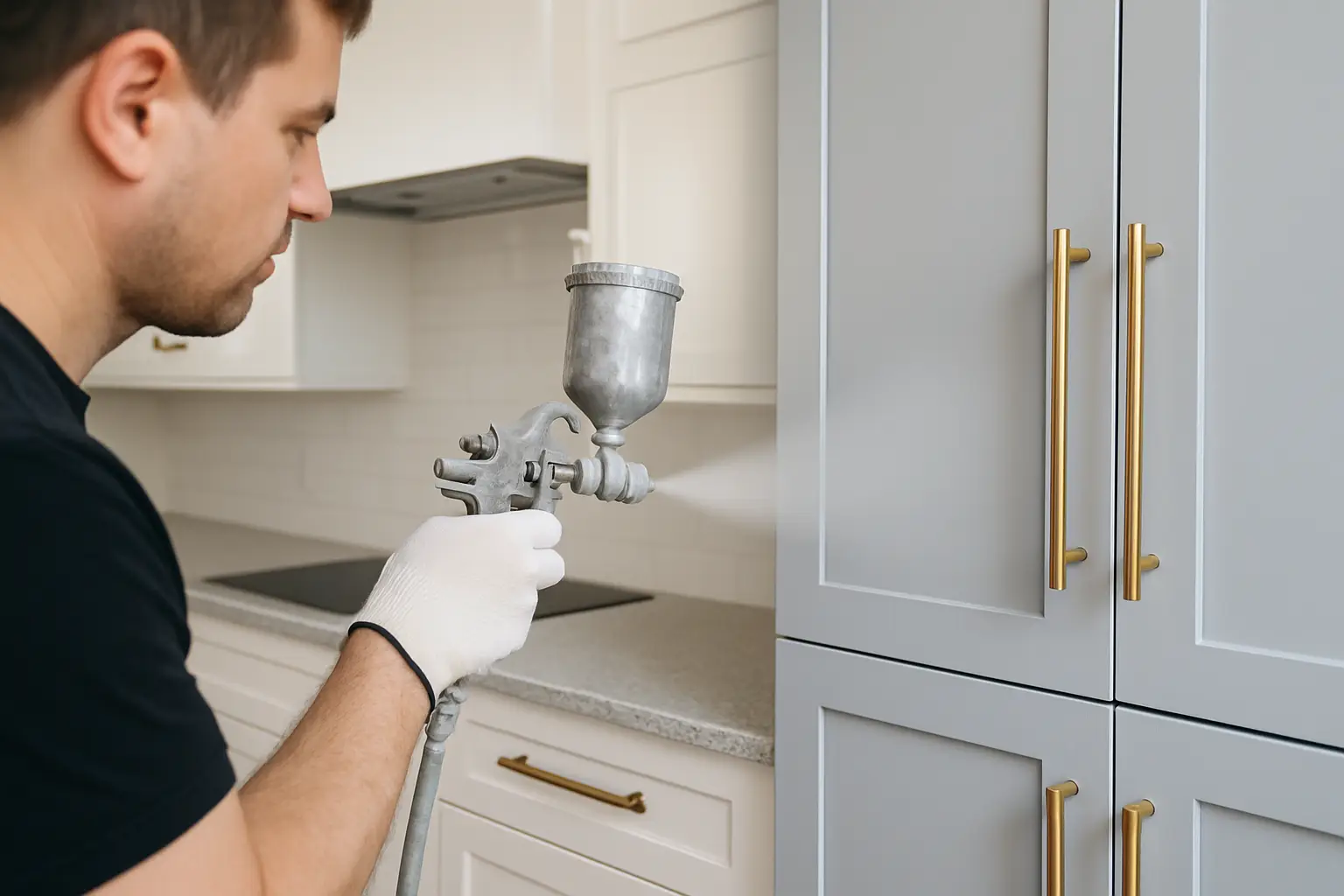
If your doors are structurally sound but visually dated, professional respraying is one of the most effective ways to cut waste while still getting a “new kitchen” feel. You avoid the material footprint of new doors and you avoid the disruption of a major installation.
The key trade-off is preparation. A sustainable finish still needs the right primers, careful sanding, and proper curing so it lasts. Done correctly, a sprayed finish can be tough enough for daily family life and easy to wipe clean without harsh chemicals.
For homeowners in Dublin and nearby counties who want an affordable, eco-friendly transformation without the upheaval of a full renovation, Dublin Kitchen Respray specialises in professional cabinet respraying that extends the life of existing kitchens.
2) Replace only the doors and drawer fronts (keep the carcasses)
If your cabinet boxes are good but the door style is not what you want, swapping doors can be a sensible middle path. It uses more material than respraying, but far less than replacing the entire kitchen.
To keep this option genuinely sustainable, ask what the new doors are made from and how they are finished. Solid timber can be excellent, but it is not automatically “greener” if it comes from poorly managed forests. MDF can be stable and long-lasting when well made, but it is typically harder to recycle and can involve more resins.
A practical approach is to choose a door that will not date quickly. Simple shaker styles and clean slab fronts tend to stay relevant longer, which reduces the chance you will want to change again in five years.
3) Choose low-VOC coatings, adhesives, and sealants
Indoor air quality is part of sustainability, especially in kitchens where heat and humidity are constant. Low-VOC paints, lacquers, and adhesives reduce off-gassing and can make the room more comfortable during and after work.
The nuance here is performance. Ultra-low odour products can be a good fit, but kitchens also need durability. You want a coating system designed for cabinetry – one that resists moisture, grease, and repeated cleaning. A finish that fails early is not sustainable, even if it looks good on day one.
4) Look for certified timber and transparent sourcing
When you do need to introduce new timber (doors, panels, end cheeks, plinths), sourcing matters. Certified wood from responsibly managed forests is a meaningful step because it links your purchase to forest stewardship and traceability.
This is where it depends on your priorities. If you are trying to reduce embodied carbon, locally sourced materials can help, but only if the production standards are solid. A long-lasting cabinet door made well and finished properly will usually beat a cheaper, “eco” door that warps, chips, or needs replacing.
5) Upgrade the hardware instead of the whole cabinet
Hinges that squeak, drawers that stick, and handles that catch clothing can make a kitchen feel older than it is. Replacing hardware is a small change with a big daily payoff.
Soft-close hinges and modern drawer runners can extend cabinet life by reducing slamming and misalignment. If you are changing handles, consider re-using existing holes to avoid filling and drilling – it is a small detail, but it reduces work and helps the finish stay cleaner.
Hardware also has a sustainability angle in durability. A well-made hinge that stays aligned for years is better than a budget hinge that needs constant adjustment or replacement.
6) Repair and reinforce where cabinets fail first
Cabinet sustainability is often about fixing the predictable weak points:
- Water damage around sinks and dishwashers
- Loose hinges pulling from worn screw holes
- Sagging shelves from heavy cookware
- Damaged kickboards from mops and shoes
Many of these issues can be repaired with targeted carpentry: reinforcing panels, replacing a single shelf, fitting metal repair plates for hinges, or improving ventilation and sealing around appliances. This kind of work is not glamorous, but it prevents minor deterioration from turning into a full replacement.
7) Think about the worktop as part of the system
Cabinetry does not exist in isolation. If you are keeping cabinets, you may still want to refresh the worktop. Replacing a worktop can add disruption and waste, but there are alternatives depending on the surface and condition.
If the structure is sound but the look is dated, refinishing can be a more sustainable route than replacement. The main trade-off is heat and scratch resistance: different finishes suit different cooking habits. If you regularly place hot trays on the counter, you will need a system designed for that, plus realistic day-to-day care.
8) Plan for disassembly and future upgrades
One of the most overlooked kitchen cabinetry sustainability options is designing your “new” look so it can be maintained. That means choosing finishes you can clean without aggressive chemicals, opting for replaceable parts (like individual drawer fronts), and avoiding unnecessary permanent bonding where a mechanical fixing would do.
If you are changing panels or adding cover panels, consider whether the next owner (or future you) could remove them without destroying the cabinet. Kitchens that can be updated in layers stay out of landfill.
9) Make layout changes only when they genuinely solve a problem
Reconfiguring a kitchen can be worth it – especially if the current layout causes daily frustration. But moving services (water, waste, electrics) adds cost, time, and materials.
If the layout mostly works, you will often get more sustainable value from improving storage: pull-out bins, corner solutions, internal drawers, or a better larder. These upgrades can reduce food waste by making items visible and accessible, and they can make the kitchen feel more “new” than you might expect.
How to choose the best option for your home
The right choice depends on what you are starting with and what matters most to you: budget, speed, durability, or the lowest possible waste.
If your cabinets are sturdy and you like the door style, respraying is usually the sweet spot – minimal waste, strong visual impact, and quick turnaround.
If the style is the issue but the boxes are solid, new doors can work well, especially when paired with better hinges and runners.
If there is widespread water damage, warped boxes, or persistent mould you cannot resolve, replacement might be the responsible route. Even then, you can still make sustainable choices through material selection, certified timber, and avoiding over-specifying features you do not need.
A practical checklist before you commit
Before you decide, take ten minutes and open every door and drawer. Look at the cabinet interiors as well as the fronts.
Notice whether the carcasses are square, whether shelves sit level, and whether doors align. Check around the sink base for swelling or softness. Think about how you actually use the kitchen: if you cook daily, you need finishes and hardware that cope with cleaning and moisture; if it is a light-use kitchen, you can prioritise certain aesthetics without compromising longevity.
Most importantly, choose an option you will still like in a decade. The most sustainable kitchen is the one you do not feel the urge to replace again.
A helpful closing thought: when you are offered a “brand new kitchen” for the price of a small car, pause and ask a quieter question – what can be expertly renewed instead? That is where the smartest savings and the biggest environmental wins usually sit.