If you are planning a cabinet respray, one of the first practical questions is not about colour at all. It is how long the kitchen will be out of action, and when doors, handles and work surfaces can be used as normal again.
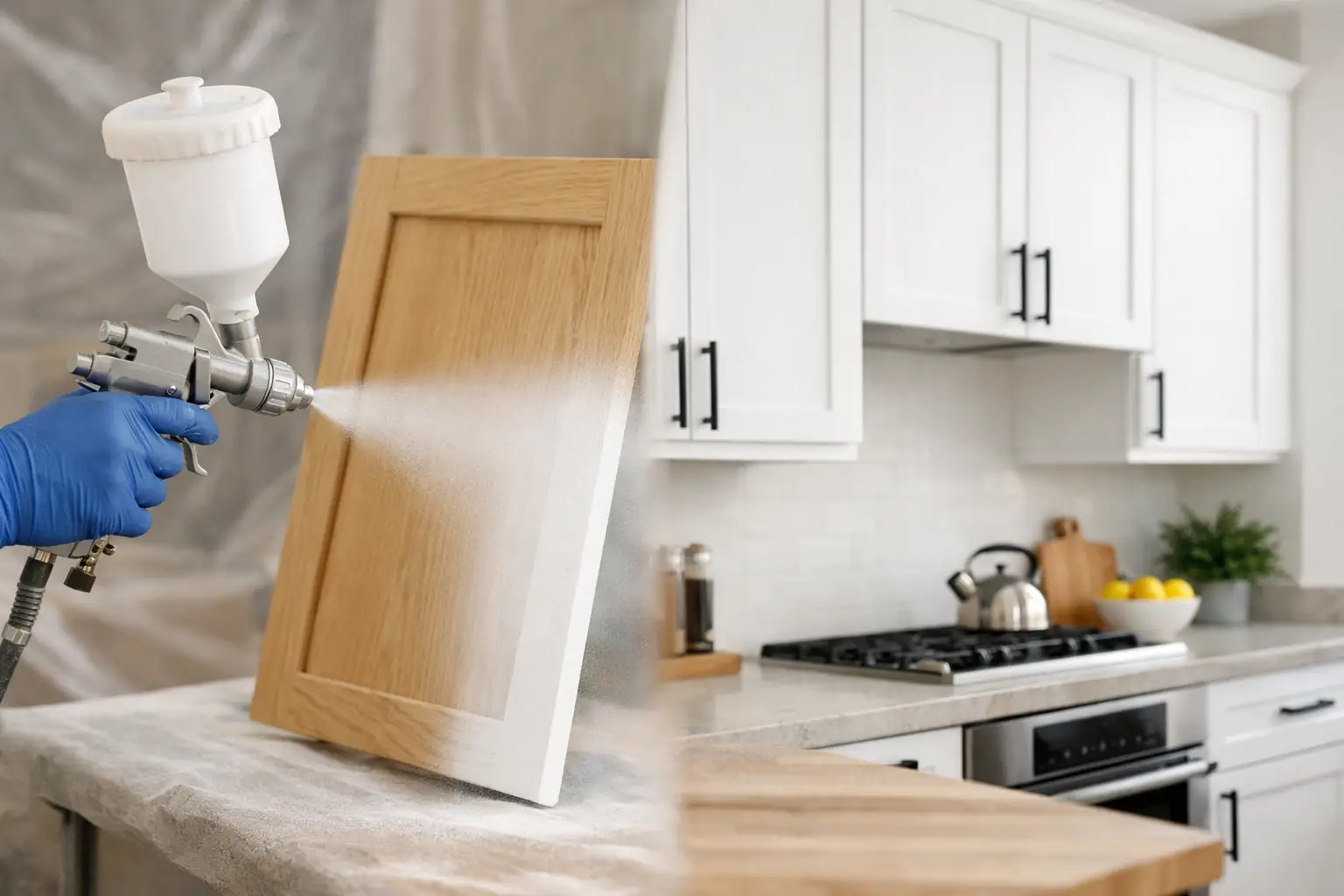
That is where kitchen cabinet respray drying time becomes more important than most people expect. A freshly sprayed finish can look ready within hours, but that does not always mean it is ready for daily use. Drying, hardening and full curing are not the same thing, and understanding the difference helps you avoid marks, chips and disappointment.
What kitchen cabinet respray drying time really means
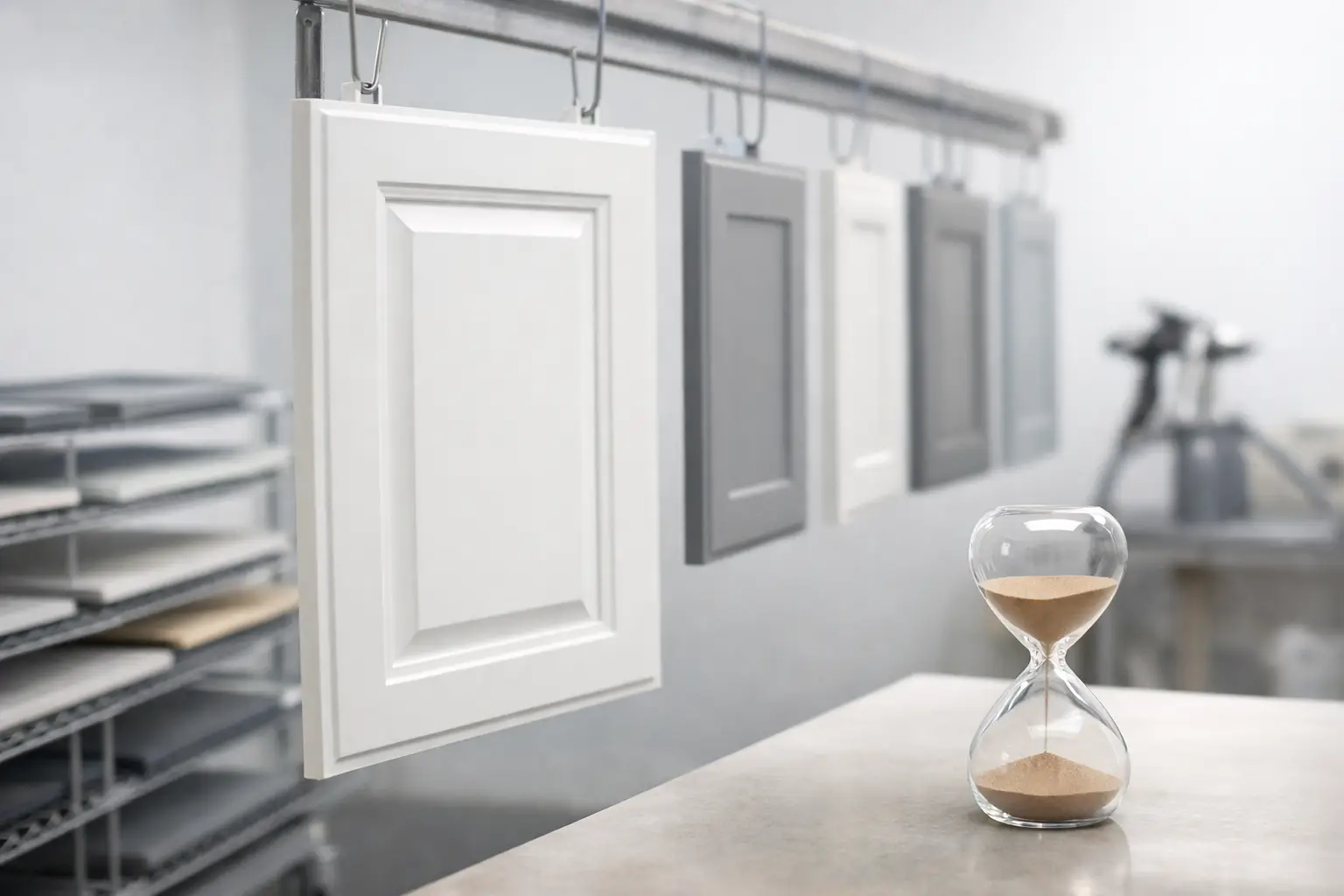
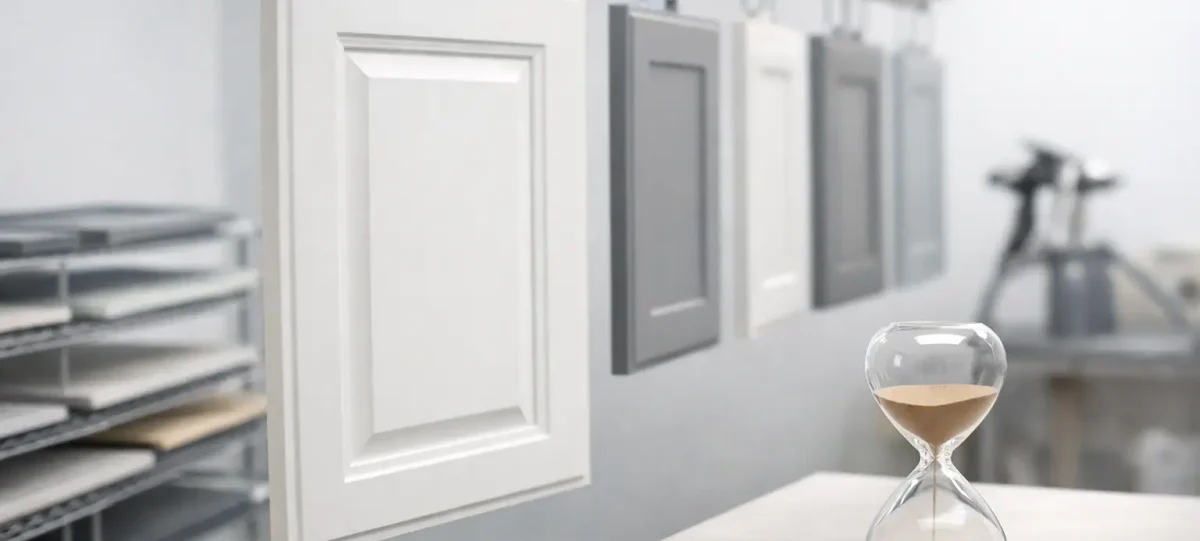
When people ask about drying time, they often mean three separate stages. The first is touch dry, which is when the surface no longer feels wet. The second is hard dry, when the paint has set enough for careful handling. The third is fully cured, when the coating has reached its best durability.
For kitchen cabinets, this distinction matters. Cupboard doors are handled constantly, especially around pulls, edges and corners. A surface may feel dry by the end of the day, yet still be vulnerable to fingernail marks, sticking or scuffing if used too soon.
In most professional spray projects, cabinets are touch dry within a few hours, ready for careful reassembly within a day, and fully cured over several days. The exact timing depends on the coating system, the preparation work and the conditions on site.
Typical drying times for sprayed kitchen cabinets
As a general guide, professionally sprayed cabinets often follow a fairly predictable timeline. Primer coats usually dry quickly, often within one to four hours depending on product and temperature. Topcoats may be touch dry in a similar window, but that does not mean they should be scrubbed, knocked or cleaned immediately.
A careful refit of doors and drawers is often possible after 24 hours. Light use may begin around that point as well, though it should still be gentle. Full curing commonly takes between five and fourteen days, sometimes longer in colder or more humid conditions.
This is why a trusted professional will not simply say, “It is dry.” They will explain what level of use is safe at each stage. That honesty matters because the best finish in the world can still be damaged if the kitchen is rushed back into service too quickly.
Why drying time can vary from one kitchen to another
No two kitchens dry at exactly the same rate. Even within the same house, a shaded utility room may behave differently from a bright south-facing kitchen.
Temperature is one of the biggest factors. Warmer conditions usually help paint dry and cure more quickly, while cold slows the process down. Humidity matters just as much. If there is too much moisture in the air, solvents or water in the coating evaporate more slowly, which extends the kitchen cabinet respray drying time.
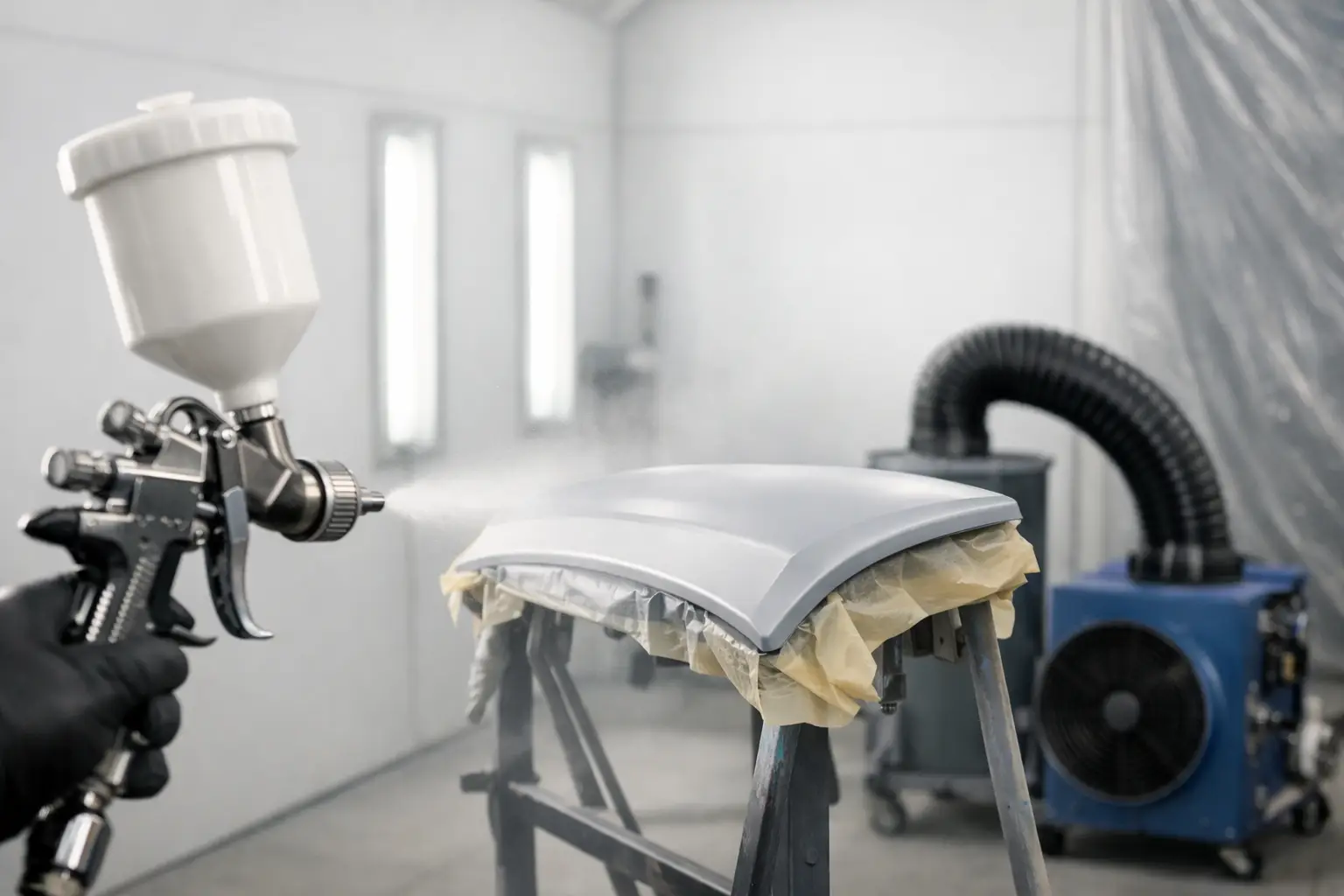
Airflow also plays a part. A well-ventilated room usually supports more even drying, though this needs to be controlled properly. Too much dust, draught or sudden temperature change can create problems of its own.
Then there is the substrate itself. Older cabinets may have layers of previous finishes, waxes or grease residue that need thorough preparation. If the prep is not done correctly, drying may be uneven and adhesion can suffer. Professional respraying is not only about applying paint neatly. It is about creating the right foundation so the finish dries and cures as it should.
The type of paint makes a difference
Different spray coatings behave differently, and this is one reason DIY timings found online can be misleading. Many consumer paints are made for convenience rather than long-term performance on hard-working kitchen doors.
A professional cabinet coating is designed to bond properly, level out cleanly and resist day-to-day wear. These systems often dry quickly enough for efficient project turnaround, but they still need proper curing time before they reach full hardness.
That trade-off is worth understanding. A product that dries very fast may help speed up installation, but if it does not provide the durability needed for a kitchen, the result will not last. On the other hand, a tougher system may require a little more patience before heavy use. For most homeowners, the goal is not simply the fastest possible dry time. It is a finish that looks stunning and stays that way.
Why professional prep shortens delays later
Preparation does not always get the attention it deserves, yet it has a direct effect on both finish quality and project timing. Cabinets need to be cleaned thoroughly to remove grease, cooking residue and household build-up. They may also need sanding, repairing and priming before any colour coat is applied.
If this stage is rushed, the topcoat may dry on the surface while hiding problems underneath. Peeling, poor adhesion or patchy coverage often trace back to inadequate prep rather than the spray finish itself.
A professional team plans the drying schedule around the entire job, not just the final coat. That means using compatible primers and topcoats, applying them in the correct conditions and allowing each stage enough time. It is a more reliable route to an affordable transformation because it avoids the cost and frustration of remedial work later.
When can you use the kitchen again?
This is the question most households in Dublin and surrounding counties really want answered. The short version is that you can usually return to light kitchen use quite quickly, but you should treat the cabinets with care for several days.
Once the doors and drawers have been refitted, avoid slamming them. Open them gently, especially at corners and edges. Do not hang damp tea towels over fresh doors, and do not use strong cleaning products straight away. If something splashes onto the surface, wipe it softly rather than scrubbing.
The busiest areas need the most patience. Bin cupboards, cutlery drawers and cabinets near the kettle tend to get constant handling. Those are often the first places to show wear if curing time is ignored.
For that reason, a professional respray service will usually give simple aftercare guidance. It is not about being overly cautious. It is about protecting the result while the finish reaches full strength.
How to avoid slowing the drying process at home
Once the spraying is complete, homeowners can help the finish along without interfering with it. Keep the room at a steady, moderate temperature if possible. Good ventilation is useful, but avoid creating dusty conditions. Try not to cook heavily in the space too soon, as steam and grease in the air are not ideal for a newly finished surface.
It is also wise to leave shelves, baskets and accessories out of cabinets until advised otherwise. Freshly painted internal edges can be more vulnerable than people realise. Small knocks from plates, pans or storage tubs can leave marks before the coating has cured properly.
Patience for a few days usually pays off for years. That is especially true in family kitchens where doors and drawers are used dozens of times each day.
Why realistic timelines matter more than quick promises
A very fast turnaround sounds attractive, but cabinet spraying should never be sold on speed alone. If a company promises a perfect finish with no real drying or curing allowance, it is fair to ask more questions.
Trusted specialists will be clear about what is possible and what depends on conditions. They will explain whether parts are being sprayed on site or off site, how long before refitting, and how soon the cabinets can handle normal use. That level of transparency builds confidence because it reflects a professional process rather than a rushed one.
At Dublin Kitchen Respray, that practical clarity is part of what homeowners value. A respray should feel efficient and low-disruption, but it should also be done properly so the finish remains durable, attractive and eco-friendly over time.
If you are comparing kitchen update options, drying time is worth asking about early. Not because a respray takes too long, but because the right process gives you something better than a quick cosmetic change. It gives you a kitchen that looks refreshed, feels professionally finished and stands up to everyday life once it has had the time it needs.