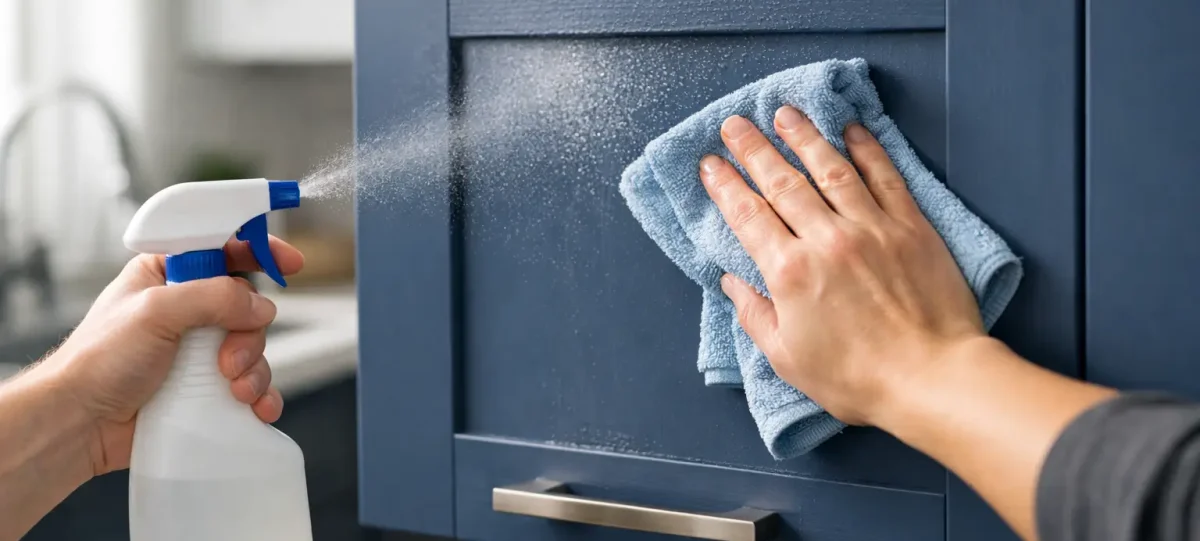
Freshly resprayed doors can make a kitchen look almost new again, but the finish only stays that way if it is cleaned with a bit of care. If you are wondering how to clean resprayed kitchen doors without dulling the sheen or marking the paint, the good news is that the routine is simple. What matters most is using the right cloth, the right cleaner, and a gentle touch.
A professional respray creates a hard-wearing finish, but it is still not the same as scrubbing a tiled floor or a stainless steel sink. Kitchen doors deal with grease, fingerprints, steam and the odd splash every day, so regular light cleaning is far better than letting dirt build up and then going at it with harsh products.
How to clean resprayed kitchen doors day to day
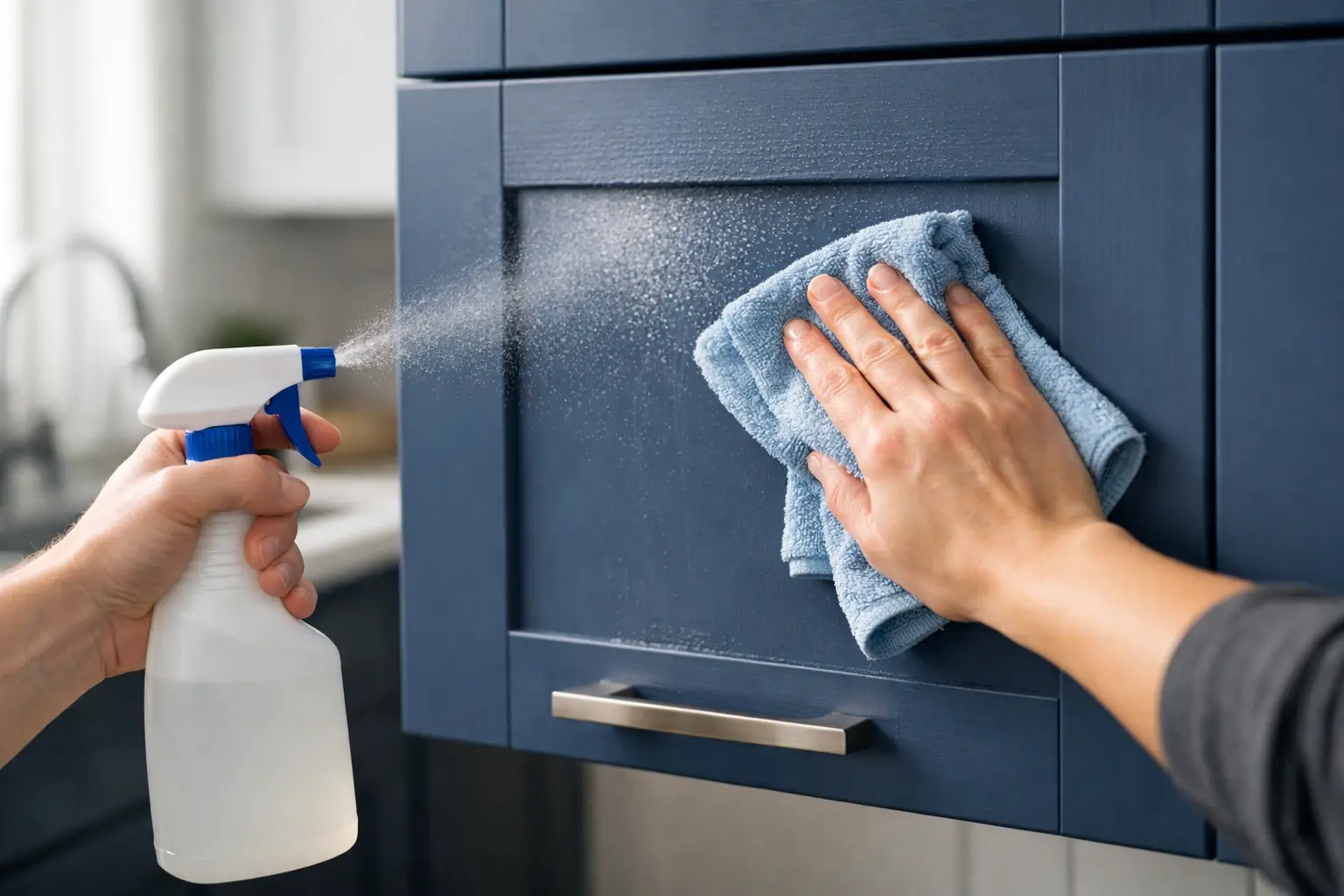
For everyday cleaning, warm water and a soft microfibre cloth are usually enough. Lightly dampen the cloth rather than soaking it, then wipe the door from top to bottom. This lifts dust, cooking residue and fingerprints without dragging grime across the surface.
After that, go over the door with a clean dry cloth. This step is often missed, but it makes a difference. It helps prevent streaks and stops moisture sitting around edges, handles or joints for longer than necessary.
If there is a bit more grease than usual, add a small amount of mild washing-up liquid to warm water. Keep the mix very diluted. You are not trying to create foam or leave behind soap residue – just enough cleaning power to break down the grease safely.
What products are safe on a resprayed finish?
The safest option is always a mild, non-abrasive cleaner. In most homes, that means diluted washing-up liquid or a gentle household cleaner labelled as suitable for painted surfaces. Anything too strong can soften, stain or gradually wear down the top layer of the finish.
As a rule, avoid bleach, cream cleaners, scouring pads, solvent-based sprays and anything marketed as heavy-duty degreaser. These can be too aggressive, especially if used often. Even if they do not cause instant damage, repeated use can leave the surface looking flat or patchy.
It is also wise to be careful with antibacterial sprays. Some are perfectly mild, while others contain stronger ingredients that are not ideal for painted cabinetry. If you are unsure, test a small hidden area first, such as the inside edge of a door.
Cloths matter more than most people think
A soft microfibre cloth is the best choice because it traps grease and dust without scratching. Old tea towels can work if they are very soft and lint-free, but rough fabrics can leave fine marks over time. Paper towels are best avoided for regular cleaning, as some types are more abrasive than they seem.
The same goes for sponges. The soft side may be fine, but the scouring side should never touch a resprayed kitchen door.
How to remove grease from resprayed kitchen doors
Grease tends to collect around handles, near the hob, and on doors closest to the cooker. It is better to tackle this gently and in stages rather than trying to strip it off in one go.
Start with a damp microfibre cloth and warm water. If that is not enough, use diluted washing-up liquid and wipe in small circular motions with very light pressure. Let the cleaner sit for a minute on the greasy patch if needed, then wipe again. Usually that is enough to loosen the residue.
If grease has built up over time, you may need to repeat the process rather than scrub harder. That is the trade-off with painted finishes – patience protects the look of the doors far better than force does.
Stubborn marks need a measured approach
Not every mark is grease. Sometimes what looks like dirt is actually a knock, a rub mark or wear around an edge. Before using any stronger product, check whether the mark is sitting on the surface or whether the finish itself has been affected.
If it is a surface mark, a mild cleaner and a soft cloth should shift it. If it does not, stop there. Continually rubbing one spot can create a shiny patch or wear through the topcoat, especially on high-touch areas.
What to avoid when cleaning resprayed doors
Knowing what not to do is just as useful as knowing how to clean resprayed kitchen doors. Most accidental damage comes from using the wrong product or cleaning too aggressively.
Avoid soaking the doors. Water should never be running down the front or collecting along the bottom edge. Painted doors are durable, but excess moisture around joins and corners is never a good idea.
Avoid abrasive cleaners and rough pads. They can leave fine scratches that catch the light and make the finish look tired.
Avoid furniture polish and wax-based products unless the finisher has specifically recommended them. These can leave a residue that attracts dust and makes future cleaning harder.
Avoid steam cleaners as well. Heat and moisture together can be too much for any painted surface, especially around edges and detailed profiles.
How often should resprayed kitchen doors be cleaned?
In a busy family kitchen, a light wipe once or twice a week is usually enough to keep doors looking their best. Areas near the hob may need more frequent attention, while doors used less often can simply be included in your normal cleaning routine.
A monthly deeper clean is a sensible approach. That means wiping all doors, drawer fronts and handle areas with a mild solution, then drying thoroughly. This prevents grease from settling in and keeps the finish looking consistently clean rather than patchy.
If you wait until the grime is obvious, cleaning becomes more difficult. Regular maintenance is easier, quicker and much kinder to the paint.
Caring for newly resprayed kitchen doors
If your kitchen has only recently been resprayed, aftercare matters even more. A newly cured finish can feel dry to the touch quite quickly, but full hardening takes longer. During that period, it is best to treat the doors gently.
That means no strong cleaners, no scrubbing, and no hanging damp cloths over door tops. Wipe off splashes promptly, especially tea, coffee, tomato-based sauces and oils. These are everyday kitchen spills, but the sooner they are removed, the better.
Professional resprayers will usually give guidance based on the paint system used, and it is worth following that advice closely. Different finishes can vary slightly in how they respond during the first days and weeks.
How to keep the finish looking good for longer
Cleaning is only part of the job. Day-to-day habits also affect how long resprayed doors stay looking stunning. Handles are there for a reason, so using them instead of pushing doors shut with your fingertips helps reduce grease marks. Good ventilation while cooking also cuts down on airborne grease settling on cabinetry.
It helps to wipe spills as they happen rather than at the end of the day. This is especially true for oils, sauces and sugary splashes. Left to sit, they become more stubborn and tempt people to use stronger cleaners than they really should.
If you have invested in a professional respray, it makes sense to protect that finish with simple upkeep. At Dublin Kitchen Respray, we often find that kitchens keep their freshly finished look for far longer when homeowners stick to a gentle routine rather than chasing a quick fix with harsh products.
When cleaning is not enough
Sometimes a door still looks worn even after it has been cleaned properly. In that case, the issue may not be dirt at all. Chips near handles, knocks on corners, or age-related wear can all affect the appearance of the finish.
That is where it helps to know the difference between maintenance and repair. Cleaning will remove residue and restore freshness, but it will not correct physical damage to the coating. If a door has lost its smooth look in one area, forcing the issue with stronger products will usually make it worse, not better.
A resprayed kitchen is designed to give you an affordable, long-lasting transformation without the disruption of replacement. Looking after that finish does not require specialist products or endless effort. Usually, a soft cloth, mild soap and a steady hand are all you need.
Treat the surface with the same care that went into spraying it, and your kitchen doors should stay clean, smart and professional-looking for years to come.