A skip outside the house is still the most common sign that a kitchen is being “done”. Doors, units, worktops, tiles – perfectly functional pieces are lifted out, binned, and replaced on a tight timeline.
That model is starting to look dated. Not because people have stopped wanting beautiful kitchens (they have not), but because homeowners across Dublin and the surrounding counties are getting sharper about waste, disruption, and long-term value. The future of sustainable kitchen renovations is less about ripping out and more about upgrading what you already own – with better materials, cleaner finishes, and smarter decisions that hold up for years.
The future of sustainable kitchen renovations: less demolition, more design
Sustainability in kitchens is often framed as “buy greener products”. In reality, the biggest environmental win usually comes before you choose a new tap or bin system – it comes from keeping the bones of the kitchen.
Most fitted kitchens, especially the ones commonly found in Irish homes from the late 90s onwards, were built with solid carcasses that can last decades. Doors and drawer fronts take the daily knocks. Handles go out of fashion. Worktops get scratched. None of that automatically means the kitchen has reached the end of its life.
As landfill costs rise and homeowners become more conscious of embodied carbon (the emissions already “spent” making and transporting the materials), the market is moving towards targeted transformations: refinishing, repairing, and upgrading key touchpoints rather than replacing everything.
That shift is also practical. A full remodel can take weeks, sometimes longer if trades are delayed. A focused upgrade can be far quicker, with less dust and fewer decisions that spiral the budget.
Why “reuse first” is becoming the default
Kitchen sustainability used to be a niche conversation. Now it is landing in the mainstream for a simple reason: the trade-offs are clearer.
If you replace an entire kitchen to get a new look, you may end up with “eco” surfaces but a mountain of waste. If you keep your existing cabinetry and update the visible finishes, you reduce disposal and avoid the hidden environmental cost of manufacturing and shipping replacements.
It does depend on the condition of what you have. If units are water-damaged, swollen, or structurally failing, repair might not be sensible. But in many homes, the core is sound and only the skin is tired.
That is why refinishing services are becoming central to the future of sustainable kitchen renovations. They sit in the sweet spot: high impact aesthetically, lower impact environmentally.
Low-VOC finishes and safer indoor air
The “green” part of a kitchen is not only about what you throw away. It is also about what you bring in.
We are seeing more attention on indoor air quality, particularly for families and anyone working from home where the kitchen is used all day. Paints, primers, adhesives, sealants, and composite boards can release volatile organic compounds (VOCs) for weeks or months.
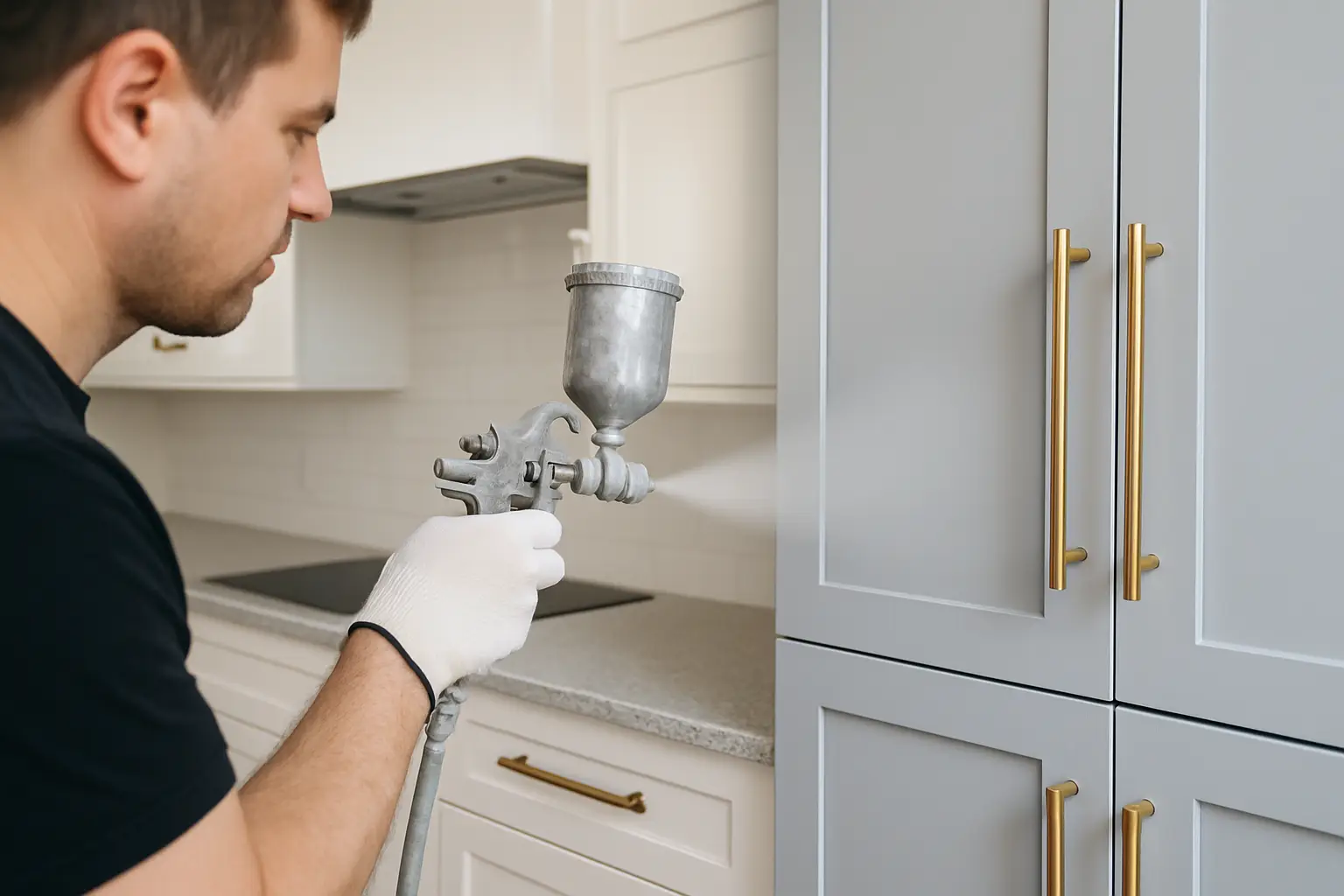
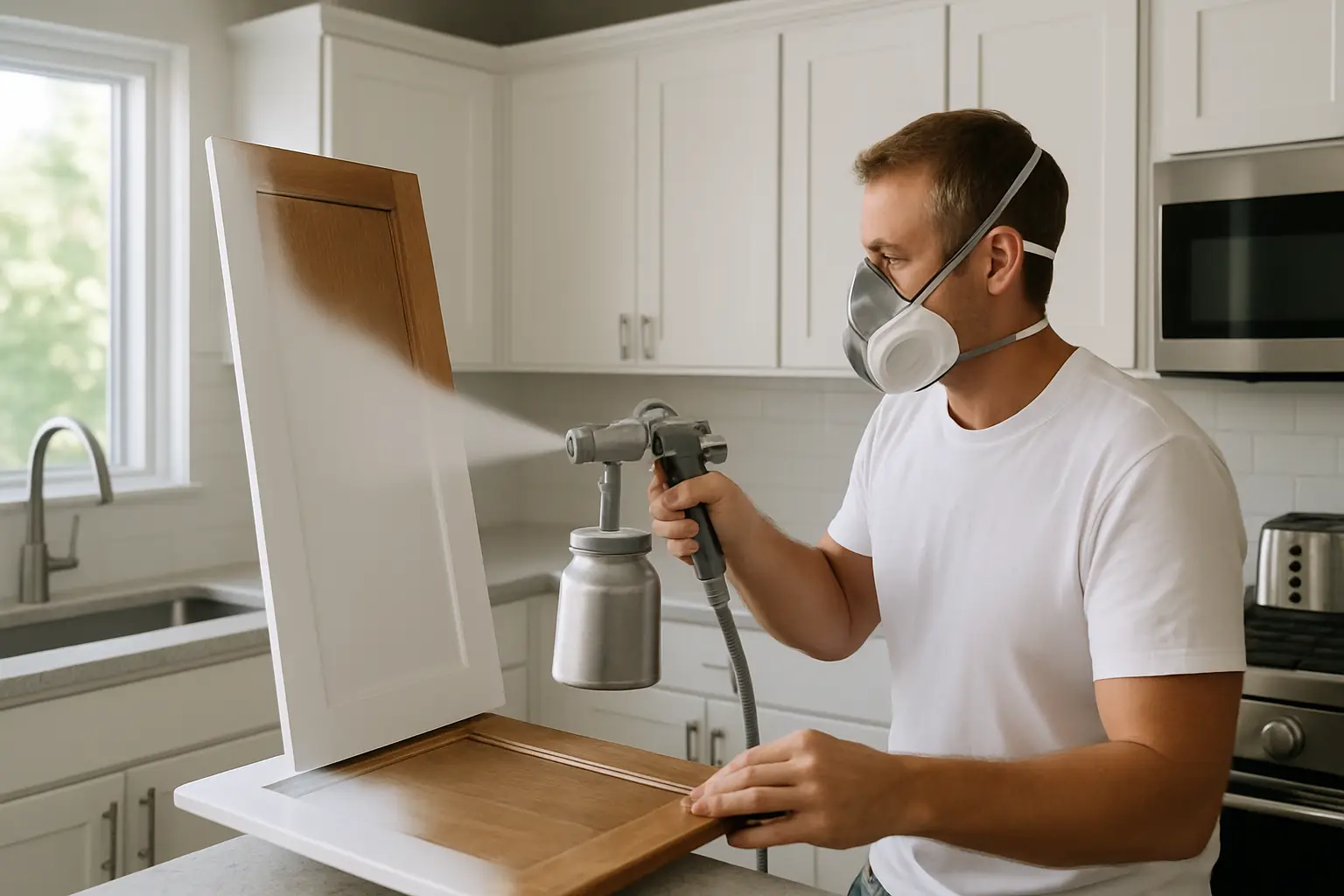
The direction of travel is clear: better products, better preparation, and better curing practices. Professional spray finishes, when done properly with suitable products and controlled application, can deliver a durable finish with a clean, even look – and with a growing emphasis on lower-odour, lower-VOC options.
There is a trade-off to be aware of. Not every “low-VOC” product performs the same way across every surface, especially in high-wear zones like kitchens. The future is not about chasing a label; it is about choosing finishes that balance durability, washability, and healthier chemistry.
Worktops will evolve, but replacement will not always be the greenest move
Worktops are often the first surface people want to change, because they dominate the look of the room. The sustainable route here is more nuanced than it seems.
Some new materials offer genuine benefits – longer life, better repairability, fewer toxic binders. But swapping a worktop simply because it is dated can still create avoidable waste.
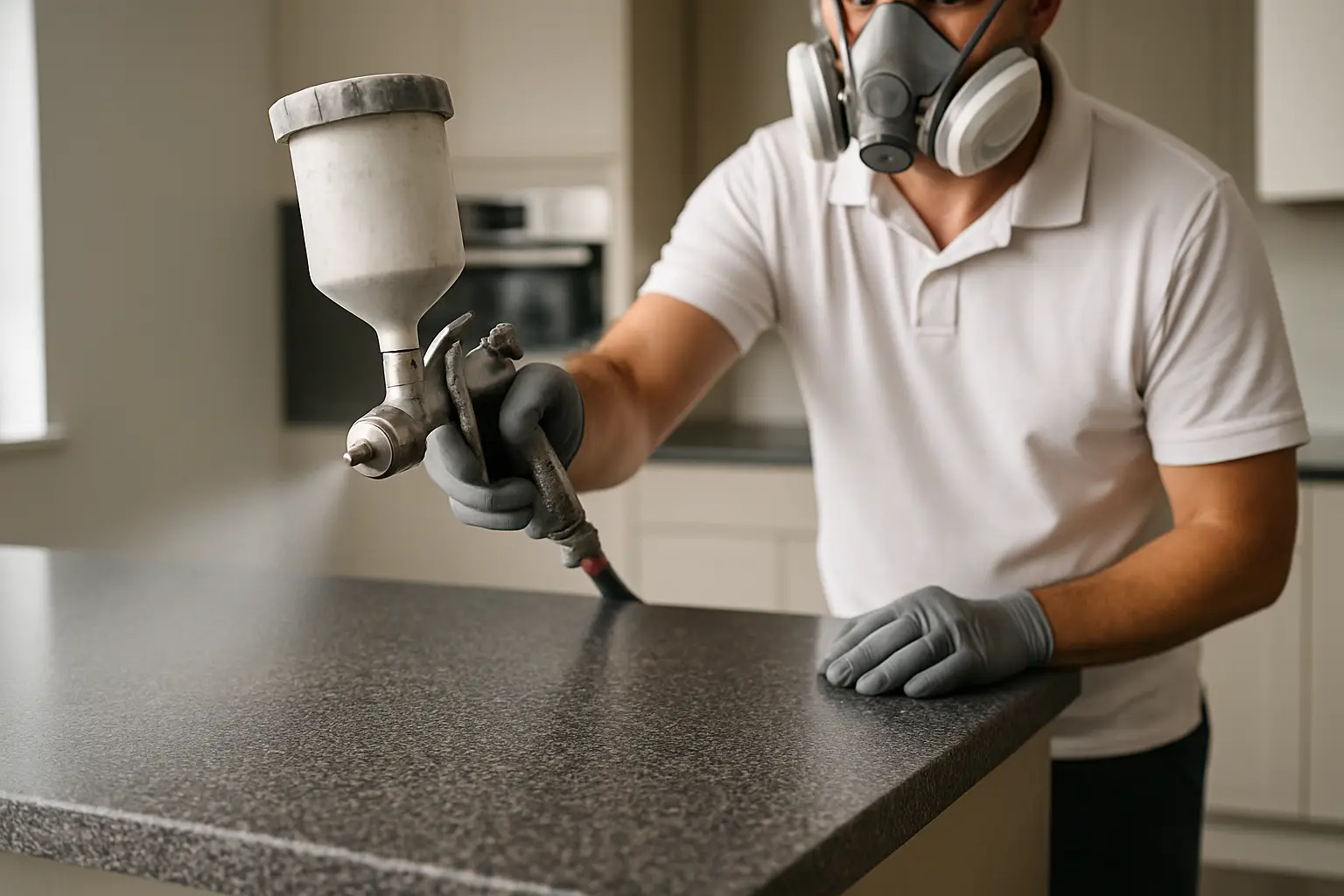
This is where surface renewal is gaining ground. Options that update the appearance of existing worktops, when appropriate for the substrate and the way the household uses the kitchen, can avoid removal and disposal. For homeowners who want a stone look without the upheaval, spray-applied finishes that mimic granite can be an affordable, eco-friendly compromise, provided they are applied by experienced professionals and maintained correctly.
Again, it depends. If a worktop is delaminating, heat-damaged, or has water ingress, replacement may be the more sensible long-term decision. Sustainability is not about doing the “green” option once; it is about choosing the option that lasts.
Circular design will influence everyday choices
“Circular” is a buzzword, but the idea behind it is simple: design so materials stay in use for longer, and can be repaired or refreshed rather than discarded.
In practical kitchen terms, expect more:
- Replaceable fronts and panels, where the structure stays but the visible elements can be updated.
- Standardised fittings, making it easier to swap hinges, runners, and handles without drilling new holes.
- Repair-friendly surfaces, with finishes that can be renewed locally rather than forcing full replacement.
Homeowners are also getting more comfortable mixing old and new. Keeping cabinetry, upgrading hinges, changing handles, adding better lighting, and updating the splashback can create a genuinely modern kitchen without the cost – or waste – of a full rip-out.
Smart efficiency upgrades that do not require a rebuild
Sustainable renovations are often imagined as technology-heavy. In reality, the best efficiency upgrades are usually quiet and simple.
Lighting is a good example. Moving to well-planned LED lighting reduces energy use and can dramatically improve how the kitchen feels. Task lighting under cabinets and warm ambient lighting can make existing finishes look more premium, which matters if your goal is to keep what you have.
Appliances are another area where the details matter. Replacing an old, inefficient fridge-freezer can reduce running costs, but only if the existing appliance is genuinely outdated or failing. If an appliance is still relatively efficient and working well, replacing it prematurely can cancel out the benefit because of manufacturing emissions.
The sustainable approach is staged: improve what is inefficient, keep what is still doing its job, and avoid “perfect on paper” upgrades that do not suit how you cook and live.
Aesthetics are moving towards longevity, not trends
One of the most overlooked sustainability problems in kitchens is fashion. If a kitchen is designed around a trend that dates quickly, it is more likely to be replaced.
The future look is less about statement finishes that lock you into a moment, and more about flexible foundations. Think timeless door styles, calm colours, and high-quality hardware – with the ability to refresh the colour later without changing the whole kitchen.
This is where professional respraying fits naturally. A well-prepped, expertly sprayed finish can completely change the kitchen’s character – from warm neutrals to modern greys, deep greens, or crisp whites – while keeping the structure in place. If, in five or eight years, you want a different tone, the same approach can extend the life again.
For homeowners in Dublin, Wicklow, Kildare, Meath, and Louth who want an affordable, eco-friendly transformation without weeks of disruption, services like Dublin Kitchen Respray reflect where the market is heading: reuse first, upgrade what matters, and get a like-new finish that lasts.
What to expect from the next wave of sustainable renovations
The most meaningful changes over the next few years will be less dramatic than a glossy “before and after” montage – but they will be more impactful.
We will see more transparency about materials and processes, because homeowners are asking better questions: What is this finish made of? How long will it last in a real kitchen? Can it be repaired? What happens to the old materials?
We will also see more hybrid projects. A homeowner might keep the cabinetry and update the doors, respray the frames, renew the worktop finish, improve storage internally, and upgrade lighting – all without touching the layout. The result can feel like a full renovation, but with a fraction of the waste.
And we will see sustainability judged by outcomes, not claims. The greenest kitchen is not the one with the most eco-labels. It is the one that stays in use, looks good, performs well, and does not need to be replaced again any time soon.
How to plan a sustainable kitchen upgrade that still feels exciting
If you are weighing up options, start with the parts you cannot easily change: the layout, plumbing positions, and the condition of the cabinet carcasses. If the layout works and the structure is solid, you are already in a strong position to renovate sustainably.
Next, focus on the “touch surfaces” that shape the look and daily experience: doors, drawer fronts, handles, worktops, and lighting. These are the areas where a targeted upgrade delivers the biggest visual return.
Finally, be honest about how you use the kitchen. A high-gloss finish might look stunning, but if you have small children or a busy household, you may prefer something more forgiving. A pale worktop may be beautiful, but if you bake daily, you might prioritise stain resistance and easy maintenance. Sustainable decisions are personal – the best choice is the one you will still be happy with after the novelty wears off.
A kitchen should not need to be “done” again simply because the style shifted. If you choose upgrade paths that allow for refreshing rather than replacing, you are not just keeping waste out of a skip. You are building a home that can change with you, one smart decision at a time.