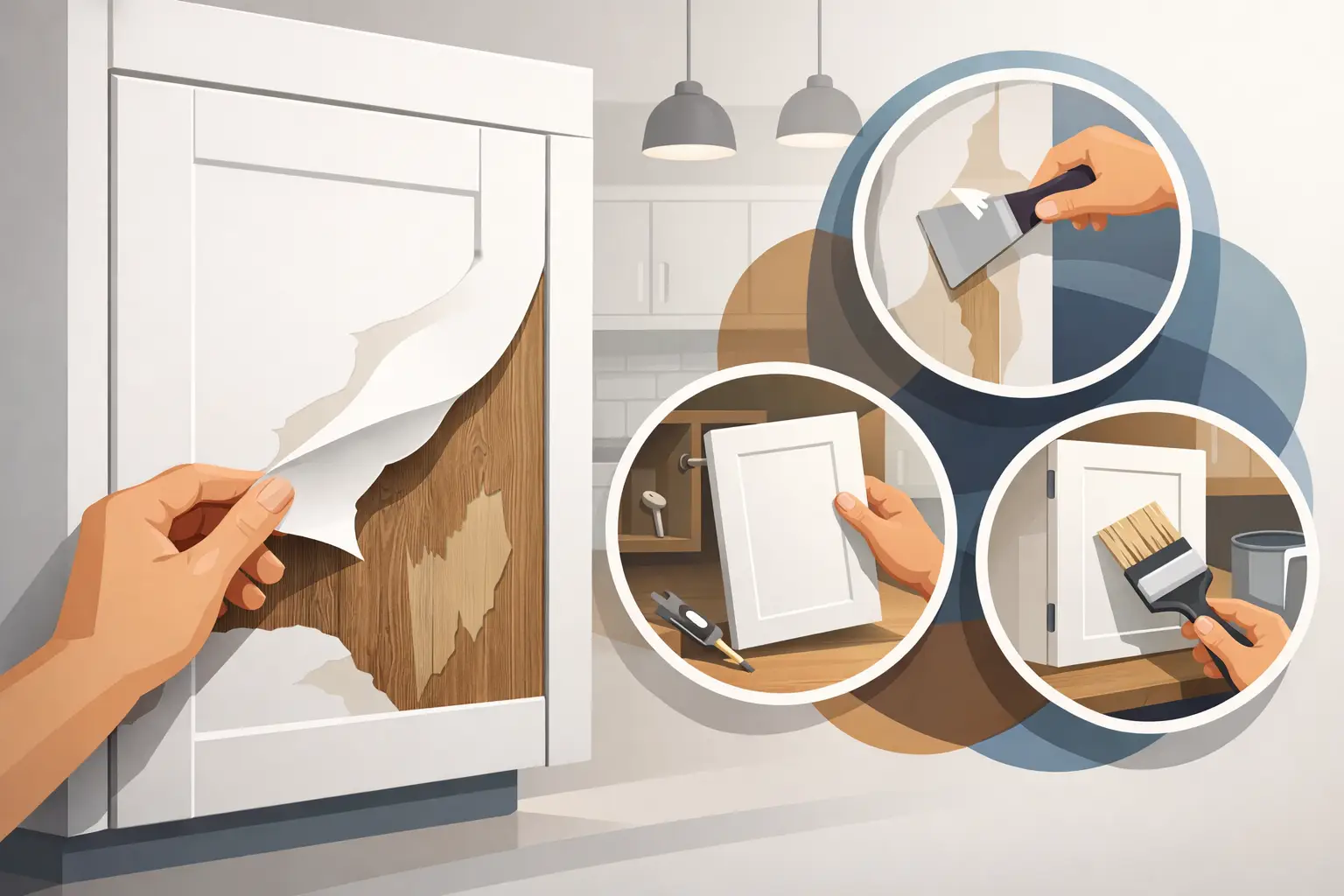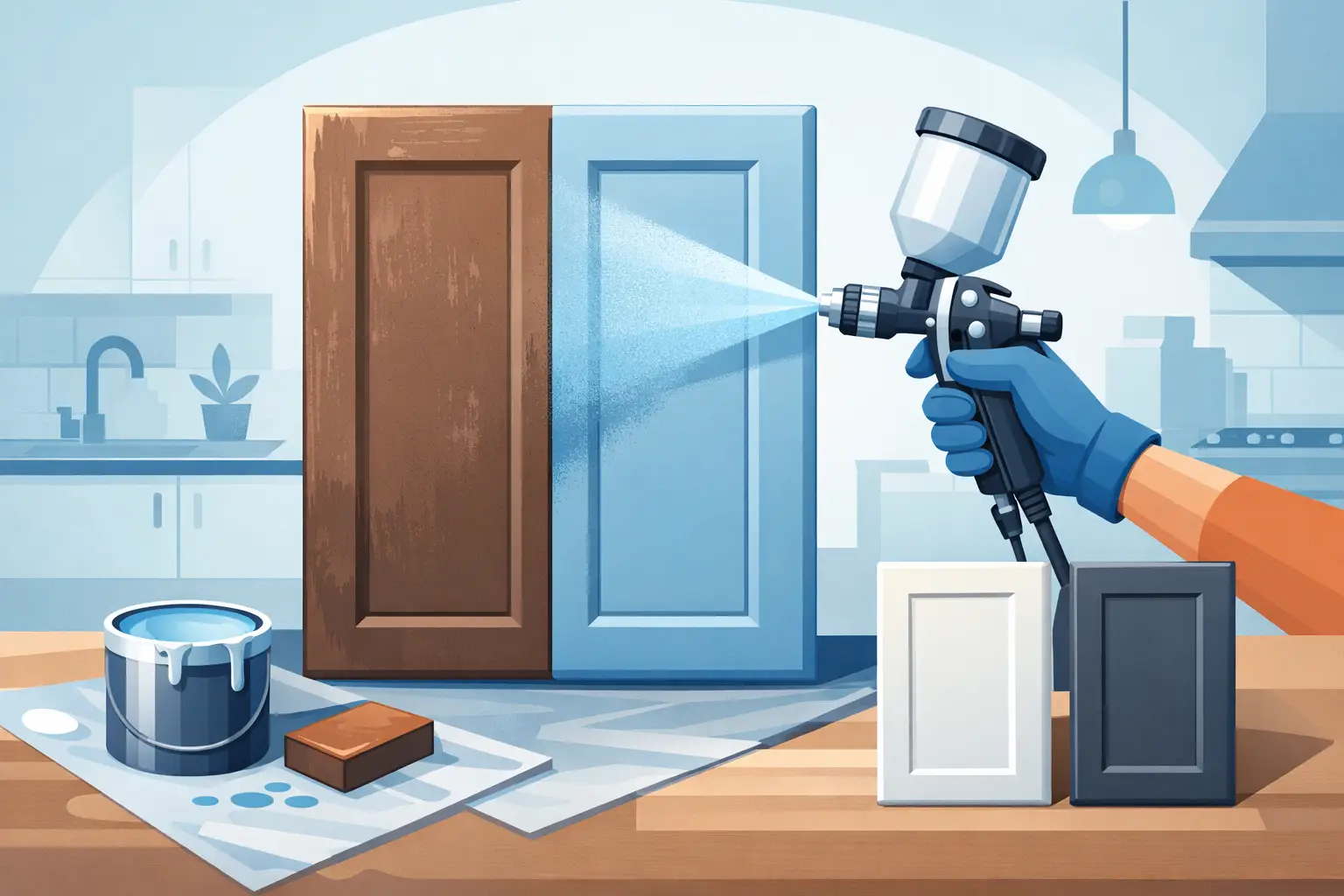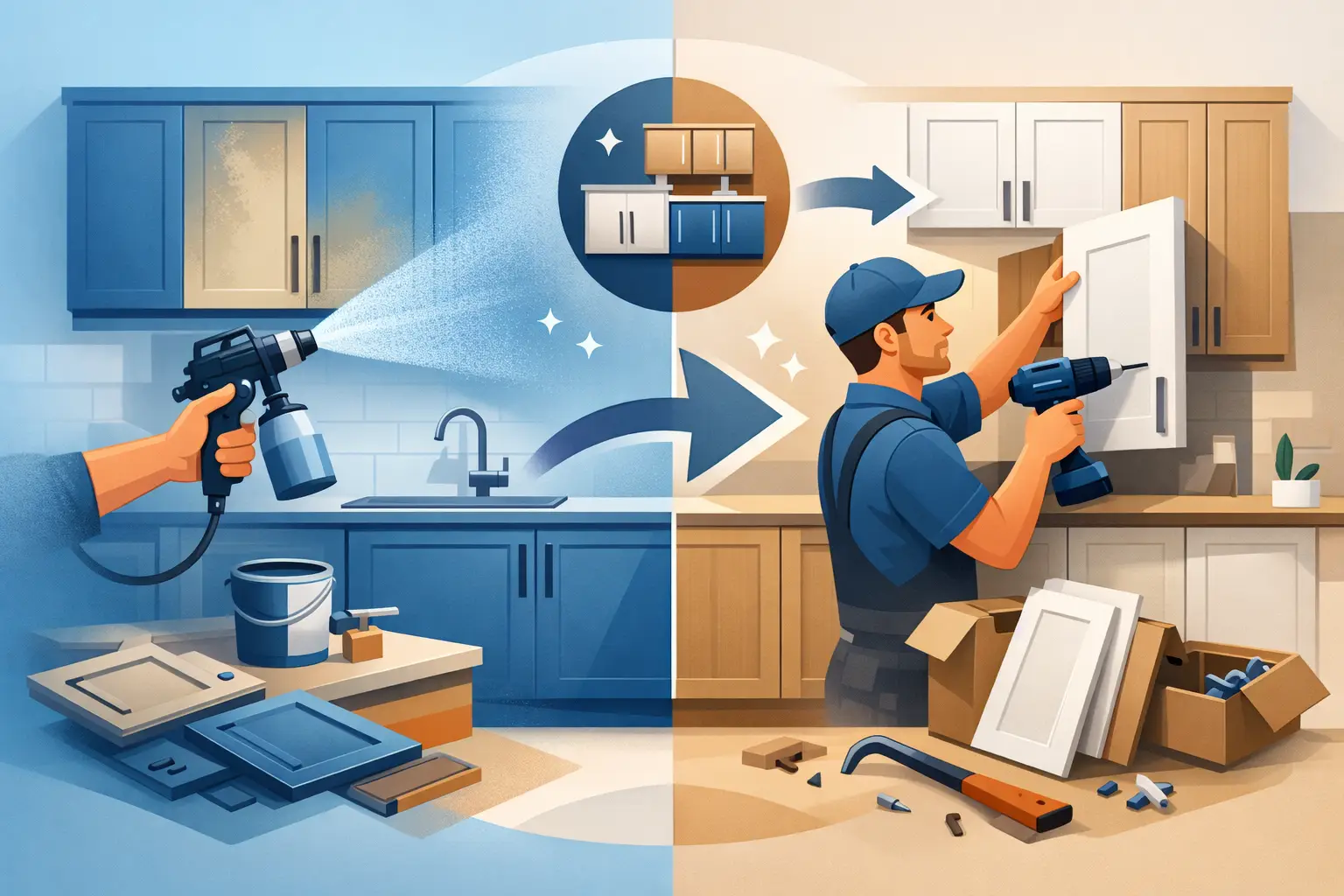
Grease has a habit of settling where you do not notice it at first – around handles, beside the hob, and along the top edges of doors. With sprayed finishes, the good news is that keeping them looking smart is usually straightforward. If you are wondering how to clean sprayed kitchen cabinets without damaging the finish, the key is gentle products, soft cloths, and a consistent routine rather than heavy scrubbing.
A professionally sprayed kitchen is designed to be durable, smooth, and easy to maintain. That said, sprayed cabinet doors are not the same as raw timber or cheap laminated panels, so they should not be treated with harsh household cleaners. A little care goes a long way, and in most homes that means light, regular cleaning instead of occasional deep cleaning with strong chemicals.
Why sprayed cabinets need a gentler approach
Sprayed kitchen cabinets have a refined painted finish that gives them their clean, modern look. That smooth surface is one of the reasons so many homeowners choose respraying instead of replacing a kitchen entirely. It looks stunning, it is affordable compared with a full renovation, and it extends the life of perfectly good cabinetry.
But any painted finish, even a professional one, will last longer if it is cleaned correctly. Abrasive pads, bleach-based sprays, and solvent-heavy degreasers can dull the sheen, mark the surface, or gradually weaken the topcoat. This does not mean sprayed cabinets are fragile. It simply means the best results come from the right method, not the strongest product in the cupboard.
How to clean sprayed kitchen cabinets day to day
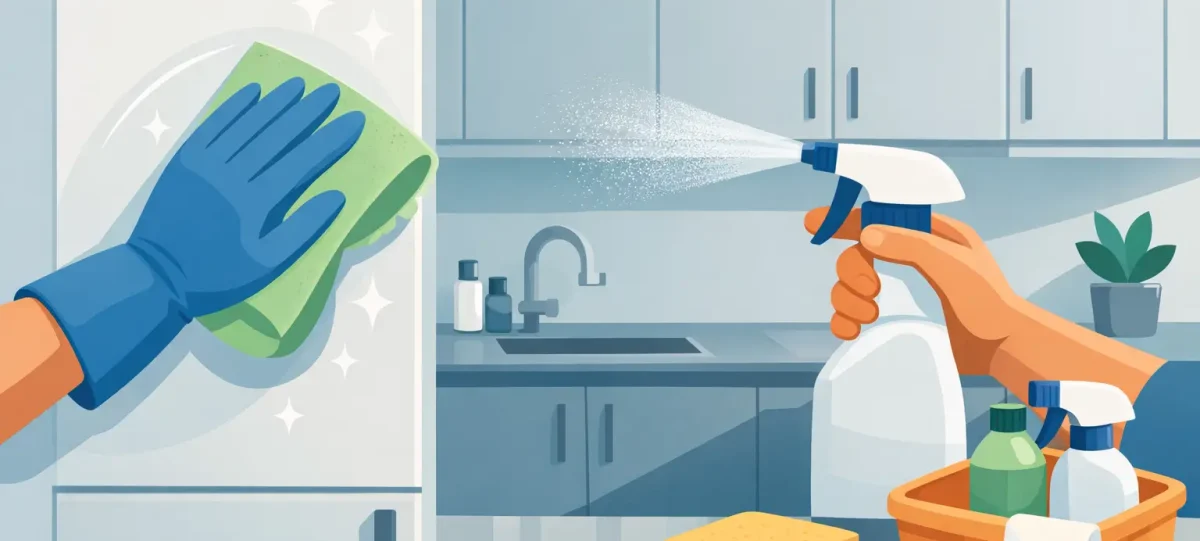
For routine cleaning, warm water with a small amount of mild washing-up liquid is usually enough. Dampen a soft microfibre cloth, wring it out well, and wipe the cabinet fronts gently. You want the cloth slightly damp, not wet. Excess water can gather around joints, handles, and edges, which is never ideal for any cabinet finish.
After wiping the surface, go over it with a second clean, dry cloth. This step is often skipped, but it makes a visible difference. Drying removes any light streaking and stops moisture from sitting on the surface longer than necessary.
If you keep on top of this once a week in high-use areas and less often elsewhere, your cabinets will usually stay in excellent condition. Areas near the cooker, extractor, bin cupboard, and kettle may need more attention because grease, steam, and fingerprints build up faster there.
The safest cleaning products to use
Mild is best. A gentle washing-up liquid diluted in warm water works well for most marks. For occasional greasy patches, you can use a small amount of pH-neutral cleaner, provided it is suitable for painted surfaces. If you are trying a new product, test it first on a less visible area such as the inside edge of a door.
What matters just as much as the product is what you avoid. Cream cleaners, scouring powders, rough sponges, furniture polish, and anything containing strong solvents are poor choices for sprayed cabinets. Some can leave a residue, while others can affect the finish itself.
How to remove grease from sprayed kitchen cabinets
Grease is the issue most people notice first, especially on lighter colours and around cooking zones. The temptation is to go straight in with a powerful kitchen degreaser. On sprayed cabinets, that can do more harm than good.
Instead, start with warm water and mild washing-up liquid. Hold a damp microfibre cloth over the greasy patch for a few seconds to soften the residue, then wipe gently. If the mark remains, repeat rather than scrubbing harder. In most cases, patience works better than force.
For more stubborn build-up, a slightly stronger but still gentle solution may help. A tiny amount of diluted white vinegar can sometimes cut through grease, but it should be used cautiously and not as your regular cleaner. Always wipe the area afterwards with plain water and dry it fully. If your cabinets have been professionally resprayed and you were given aftercare advice, that should always take priority.
Around handles and edges
Handles collect hand oils, food residue, and everyday grime. Clean around them with a soft cloth rather than a brush with stiff bristles. If dirt has gathered in small corners, a soft cotton bud or very soft toothbrush can help, but only with a light touch.
Door edges also deserve care. They are easy to overlook and easy to over-wet. Clean them with a barely damp cloth and dry them straight away.
What to avoid when cleaning resprayed doors
A lot of cabinet damage happens with good intentions. People want a spotless kitchen and reach for products designed for tiles, glass, or heavy oven grease. Those cleaners are often far too aggressive for painted cabinetry.
Avoid soaking cabinet doors, spraying cleaner directly onto the surface, or letting any product sit for too long. It is better to apply cleaner to the cloth first. This gives you more control and prevents drips from running into joins or hinges.
Steam cleaners are also best avoided. While they seem efficient, heat and moisture together can be too harsh around edges and detailed sections. The same goes for melamine sponges or magic erasers. They may feel soft, but they can act like a fine abrasive and leave dull patches.
If a mark does not come off easily, stop and reassess rather than pushing on. There is a difference between dirt sitting on the finish and damage within the finish. Cleaning can solve one, but not the other.
How to clean sprayed kitchen cabinets without streaks
Dark colours, matt finishes, and certain lighting can make streaks more obvious. Usually, streaking comes down to one of three things – too much product, a cloth that is too wet, or not drying afterwards.
Use less solution than you think you need. Work in small sections and buff dry with a clean microfibre cloth as you go. If you are still seeing marks, switch cloths. A cloth that already contains grease or cleaning residue will only move it around.
Hard water can also be a factor in some homes. If that sounds familiar, drying immediately becomes even more important.
Long-term care for a professional finish
The best way to preserve sprayed cabinets is not deep cleaning. It is prevention. Use the extractor when cooking, wipe splashes quickly, and do not let grease sit for weeks at a time. The longer residue remains on the surface, the more effort it takes to remove safely.
It also helps to be realistic about wear. A family kitchen in daily use will pick up the odd knock, fingerprint, or scuff, especially around integrated appliances and busy prep areas. That does not mean the finish is failing. It simply means the kitchen is being lived in. Regular care keeps that normal wear from turning into built-up grime.
In homes across Dublin and the surrounding counties, many homeowners choose respraying because it delivers a like-new look without the expense and disruption of replacement. Looking after that finish is part of protecting the value of the work.
When marks are not really dirt
Sometimes a cabinet looks patchy or marked, but cleaning does not improve it. In those cases, the issue may be surface wear, heat exposure, impact damage, or an older finish beginning to degrade. Grease and fingerprints sit on top of the coating. Chips, fading, and dull spots are different.
If you are unsure, clean the area gently first and view it in natural daylight. If the mark remains unchanged, more cleaning is unlikely to help. This is where expert advice can save you from making the problem worse with aggressive products.
A simple care routine that works
For most kitchens, the right routine is uncomplicated. Wipe high-use cabinet fronts weekly, tackle grease near the hob as needed, and dry surfaces after cleaning. Every so often, give less-used doors a quick once-over so dust and cooking residue do not settle unnoticed.
That approach is more effective than occasional heavy-duty cleaning sessions. It is also much kinder to the finish.
Well-finished sprayed cabinets are made to stand up to everyday life, and they should not feel high maintenance. Treat them with the same care you would give any quality painted surface – gentle cleaning, no harsh chemicals, and a bit of consistency. Done properly, your kitchen will keep its fresh, professional look for years, which is exactly what a resprayed finish is meant to deliver.