The first few weeks after a kitchen respray matter more than most people expect. A freshly sprayed finish can look stunning straight away, but this is the period when good habits make the biggest difference. This kitchen respray aftercare guide for durability is designed to help you protect that like-new finish, avoid accidental damage and keep your cabinets looking smart for years rather than months.
A professional respray is built to last, but durability is never just about the spray work itself. It is also about how the kitchen is used, cleaned and maintained day to day. The good news is that aftercare is not difficult. It simply needs a bit of consistency and an understanding of what a sprayed surface does and does not like.
Kitchen respray aftercare guide for durability: the first 30 days
The most important thing to remember is that a resprayed kitchen may be dry to the touch quite quickly, but full curing takes longer. Dry and cured are not the same. In the early stage, the surface is more vulnerable to pressure, scratches, strong cleaners and repeated contact around handles and edges.
During the first month, treat the cabinets with a lighter touch than usual. Open doors and drawers carefully rather than pulling them quickly. Avoid knocking pots, hoovers or shopping bags against the fronts. If you are putting the kitchen back into full use after the work is completed, do it gradually where possible.
This does not mean you cannot use your kitchen normally. It means being a little more mindful while the finish hardens fully. If you have children, it is worth keeping an eye on toy cars, school bags and anything else that tends to scrape past lower units.
Heat and steam also deserve attention in this early period. Try not to let kettles, air fryers, coffee machines or toasters blast hot air directly onto cabinet doors or side panels. A beautiful sprayed finish is durable, but repeated heat exposure in concentrated spots can shorten its life.
Cleaning without wearing the finish down
Most aftercare mistakes come from cleaning, not cooking. People often assume that if a surface is tough, it can handle anything. In reality, harsh products can dull the sheen, weaken the top layer or leave patchy areas over time.
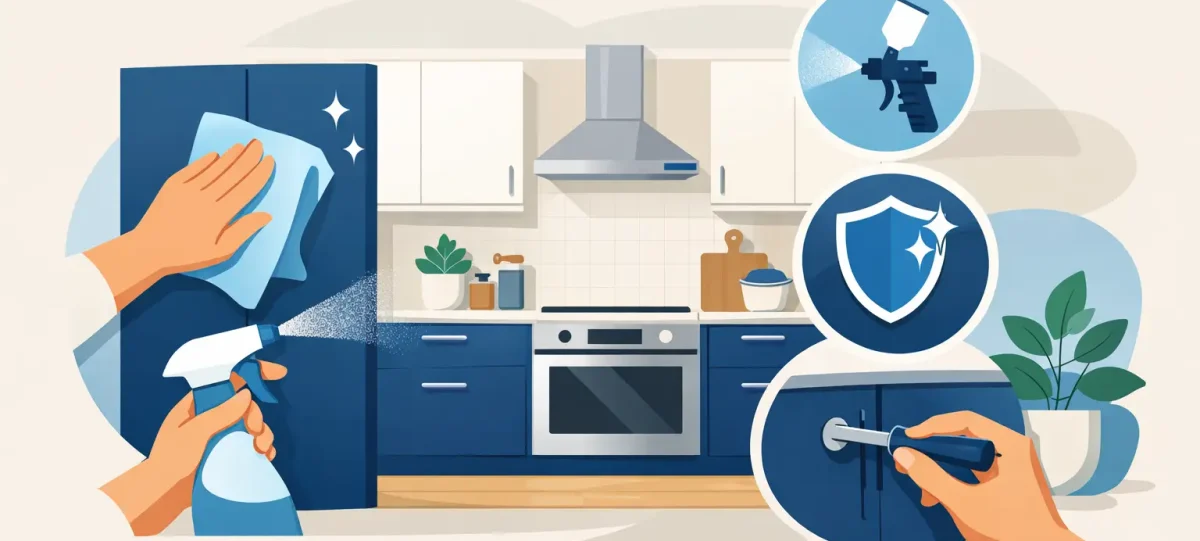
For routine cleaning, warm water with a small amount of mild washing-up liquid is usually enough. Use a soft microfibre cloth, wring it out well and wipe gently. Follow with a clean damp cloth to remove residue, then dry the area so moisture does not sit around edges, corners or joints.
What you should avoid is just as important. Abrasive pads, cream cleaners, bleach-heavy sprays and strong degreasers are too aggressive for regular use on sprayed cabinetry. Even some multi-surface products can be harsher than they sound, especially if they are designed for ovens, tiles or heavy-duty grease removal.
If you are unsure about a product, test it on a discreet area first. That is particularly sensible with matt finishes, which can show marks differently from satin or higher-sheen finishes. A cleaner that looks harmless on one door may leave another looking slightly uneven.
How often should you clean resprayed cabinets?
Little and often works best. Wiping away grease splashes, fingerprints and cooking residue as they appear is easier than letting buildup settle in. Once grime hardens, people naturally scrub harder, and that is when the surface takes unnecessary wear.
Around the hob, bin area and handle zones, more frequent cleaning may be needed. These are high-contact spots, and they age first if neglected. The aim is not constant polishing. It is simply preventing dirt from becoming stubborn.
Moisture, condensation and the hidden trouble spots
Kitchens are hard-working spaces, and moisture is part of daily life. Steam from pans, drips from the sink and condensation around appliances can all affect cabinetry if they are left unchecked. A sprayed finish gives excellent protection, but no surface benefits from prolonged damp.
The areas to watch most closely are around the sink unit, dishwasher, kettle station and integrated appliances. If water runs down a door front or pools near an edge, wipe it away rather than leaving it to dry naturally. Repeated exposure around joints and corners is where wear tends to show first.
Dishwashers deserve a special mention. When the cycle ends, opening the door fully straight away can send a wave of hot steam onto the underside of nearby worktops and the faces of adjoining units. If possible, let the steam settle briefly before unloading. It is a small habit, but over time it helps preserve the finish.
The same applies to boiling pots and kettles. Use extractor fans where you can, especially in compact kitchens where moisture hangs in the air. Good ventilation is one of the simplest ways to support long-term durability.
Daily habits that protect the finish
A resprayed kitchen does not need special treatment forever, but sensible habits make a visible difference. Handles are one example. If your kitchen has handles, use them rather than pushing doors shut with the palm of your hand. Natural oils from skin build up over time, particularly on lighter colours and matt surfaces.
If you have handless or push-to-open cabinetry, regular gentle wiping becomes more important because contact points are broader and more frequent. This is not a flaw in the finish. It is simply the reality of how certain kitchen styles are used.
Be careful with rings, watches, belt buckles and metal objects when leaning into cupboards or passing close to drawers. Lower cabinets often take the most accidental knocks. It is easy to think damage appears out of nowhere, when in fact it usually comes from repeated small impacts.
Another useful habit is not to hang damp tea towels over doors for long periods. It seems harmless, but trapped moisture and friction are not ideal companions for any painted or sprayed surface.
What to do about marks, chips and small issues
Even in a well-kept kitchen, life happens. A dropped tin, a sharp corner on a stool or a repeated knock in one spot can leave a mark. The key is not to overcorrect. Many homeowners make a minor issue worse by scrubbing too hard or trying a DIY touch-up with the wrong product.
If a mark appears, start with the gentlest approach first. Clean the area with a soft cloth and mild soapy water. If it remains, stop there before trying stronger products. Some marks sit on the surface and can be lifted safely, while others are small impact points that need a more considered repair.
Chips and deeper scratches are usually best assessed professionally, especially if you want the repair to blend properly. Colour match, sheen level and application method all matter. A quick fix from a hardware shop may stand out more than the original damage.
For homeowners in Dublin and nearby counties, getting advice early often prevents a minor blemish from becoming a larger cosmetic problem. A trusted specialist such as Dublin Kitchen Respray can usually tell from a photo whether a careful repair is worthwhile or whether simple cleaning is all that is needed.
Are some finishes easier to maintain than others?
Yes, to a degree. The right aftercare also depends on the finish you chose. Matt colours look contemporary and elegant, but they can show greasy fingerprints more readily than satin finishes. Higher-sheen surfaces may be easier to wipe clean, yet they can reveal scratches or smudges in stronger light.
That does not mean one option is better across the board. It depends on how you use your kitchen. A busy family kitchen may benefit from a finish that is forgiving and easy to clean, while a lower-traffic space can suit a more design-led look. Durability is partly about product quality and application, but it is also about choosing a finish that matches real life.
Darker shades can show dust, crumbs and water spots more clearly. Lighter colours can hide some of that but may make scuffs around high-contact areas more noticeable. Knowing this helps set realistic expectations, which is always better than assuming every finish behaves the same way.
Long-term care for a resprayed kitchen
Once the curing period has passed, long-term care becomes straightforward. Keep surfaces clean with mild products, wipe away moisture promptly and avoid exposing the cabinetry to repeated high heat. Check bumper pads, hinges and handles now and then as well. If a door starts closing awkwardly or rubbing, a simple adjustment can prevent unnecessary wear on the edges.
It also helps to think seasonally. In colder months, kitchens can collect more condensation. In warmer weather, stronger sunlight through windows may highlight smears and encourage people to clean more aggressively than needed. A gentle, consistent approach is always the safer one.
If you have had your kitchen resprayed as an affordable alternative to replacing it, aftercare is what protects that value. A professionally sprayed kitchen can continue to look fresh and refined for years, but only if everyday use supports the finish rather than slowly working against it.
A well-kept resprayed kitchen should never feel precious. It should feel lived in, practical and easy to enjoy. The best aftercare is simply a set of sensible habits that let the finish do its job while your kitchen gets on with doing its own.