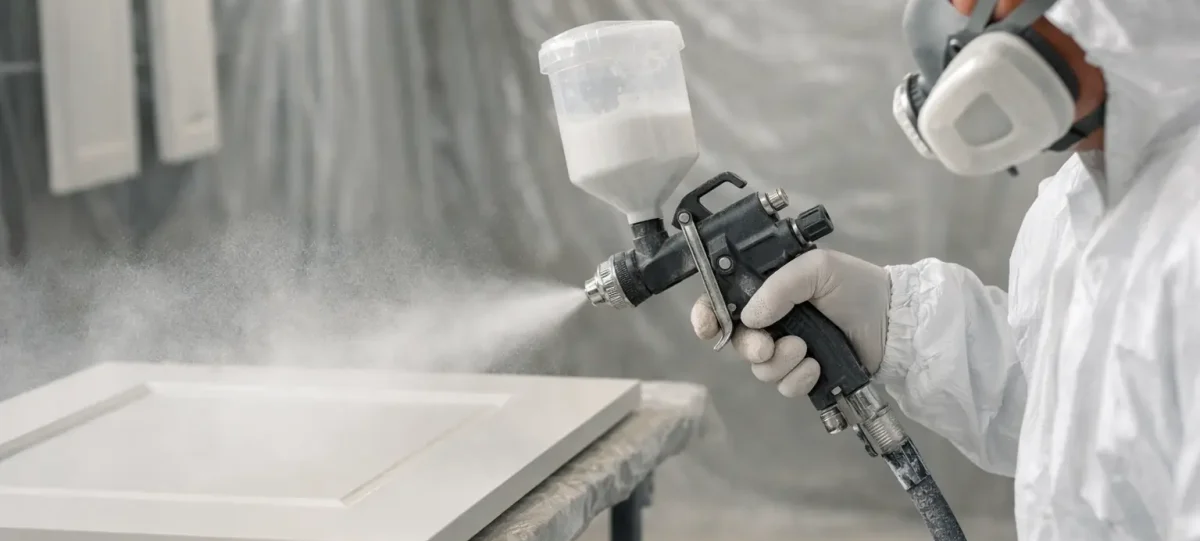
A kitchen can look spotless at 9am and still hide enough airborne dust to spoil a sprayed finish by lunchtime. That is the reality of cabinet respraying. When homeowners ask why one painted kitchen looks factory-smooth and another shows tiny nibs, specks or rough patches, dust control is usually the difference.
For a professional result, spraying technique matters, but preparation of the space matters just as much. Fine particles from floors, plinths, walls, textiles and even foot traffic can settle into wet paint in seconds. That is why kitchen cabinet respray dust control methods are not an optional extra. They are part of the finish itself.
Why dust control matters so much in cabinet respraying
Cabinet doors and drawer fronts are viewed up close. You see them in direct daylight, under-cabinet lighting and at awkward angles while cooking or cleaning. Small imperfections that would be ignored on a wall become obvious on smooth cabinetry.
Dust contamination can leave a finish feeling gritty, looking uneven or requiring extra flatting and recoating. That adds time, material cost and disruption. For homeowners, it can mean a longer project and a result that falls short of the fresh, refined look they expected.
There is also a practical issue. The cleaner the spraying environment, the more predictable the finish. Predictability is what allows a trusted respray company to deliver stunning results quickly, without turning the kitchen into a drawn-out renovation.
The most effective kitchen cabinet respray dust control methods
Good dust control starts before any primer or topcoat is mixed. The first step is a proper assessment of the room. Not every kitchen behaves the same. A busy family kitchen with open shelving, pets and adjoining living space needs a different containment approach from a newer closed-plan kitchen with hard flooring throughout.
Deep cleaning before masking
Dust control begins with cleaning, not masking tape. Surfaces above and around the cabinets need attention because settled dust will always find a way down. Cornices, light fittings, extractor housings, blind fittings and skirting boards are common problem areas.
Professional teams will usually vacuum first, then wipe down methodically. Dry dusting alone can simply put particles back into the air. Floors are especially important because walking through the room during prep and spraying can lift fine debris again and again.
Removing what can be removed
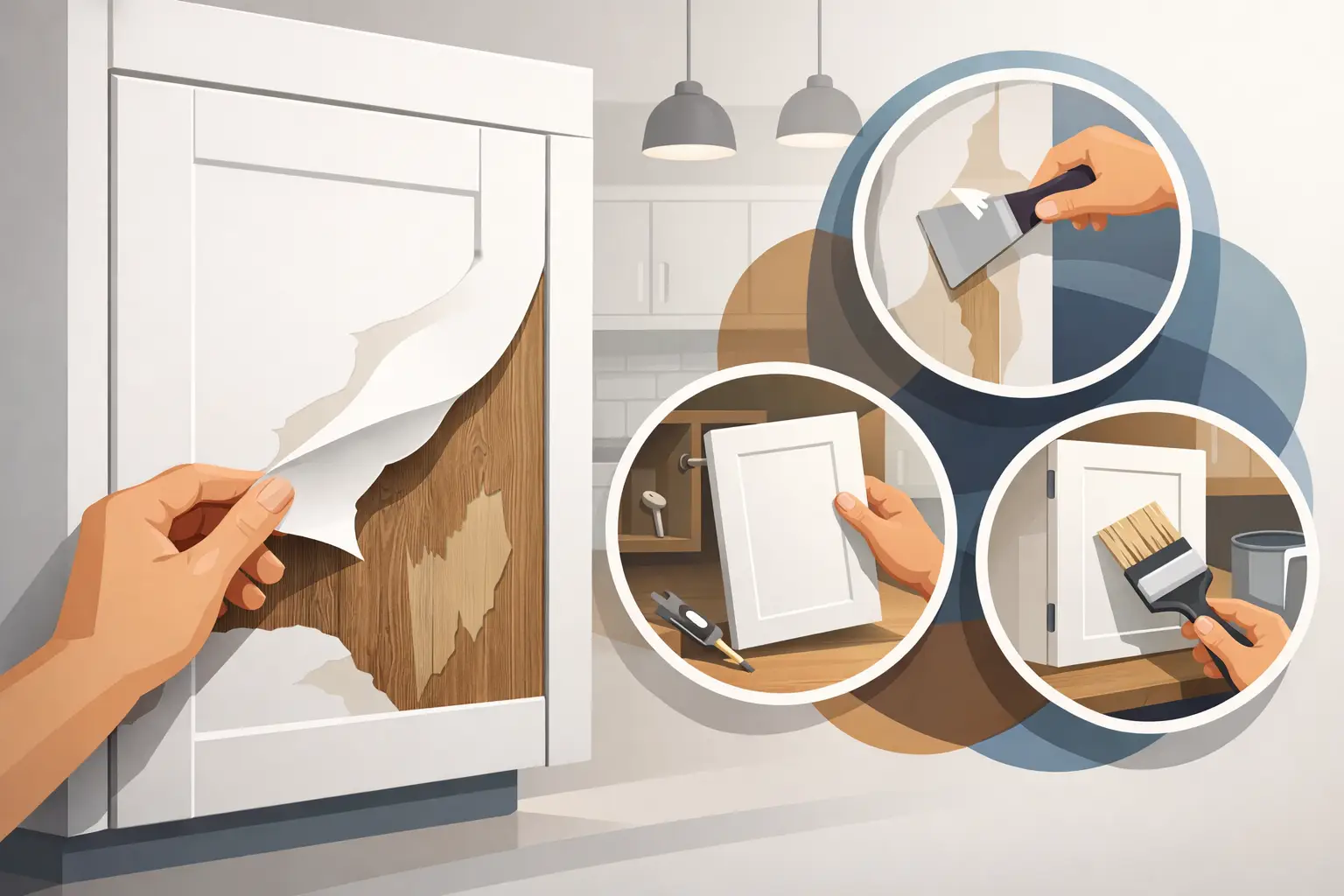
The cleanest spraying jobs are often the ones where more components are taken out of the room. Cabinet doors, drawer fronts and removable hardware are easier to spray in a controlled area than in a busy domestic space. This reduces the amount of airborne contamination around the finish while also allowing better access and consistency.
Fixed frames and end panels may still be sprayed on site, but reducing the number of surfaces sprayed in the kitchen itself makes dust control far easier. It also limits overspray risk and helps maintain a tidy working environment.
Careful masking and containment
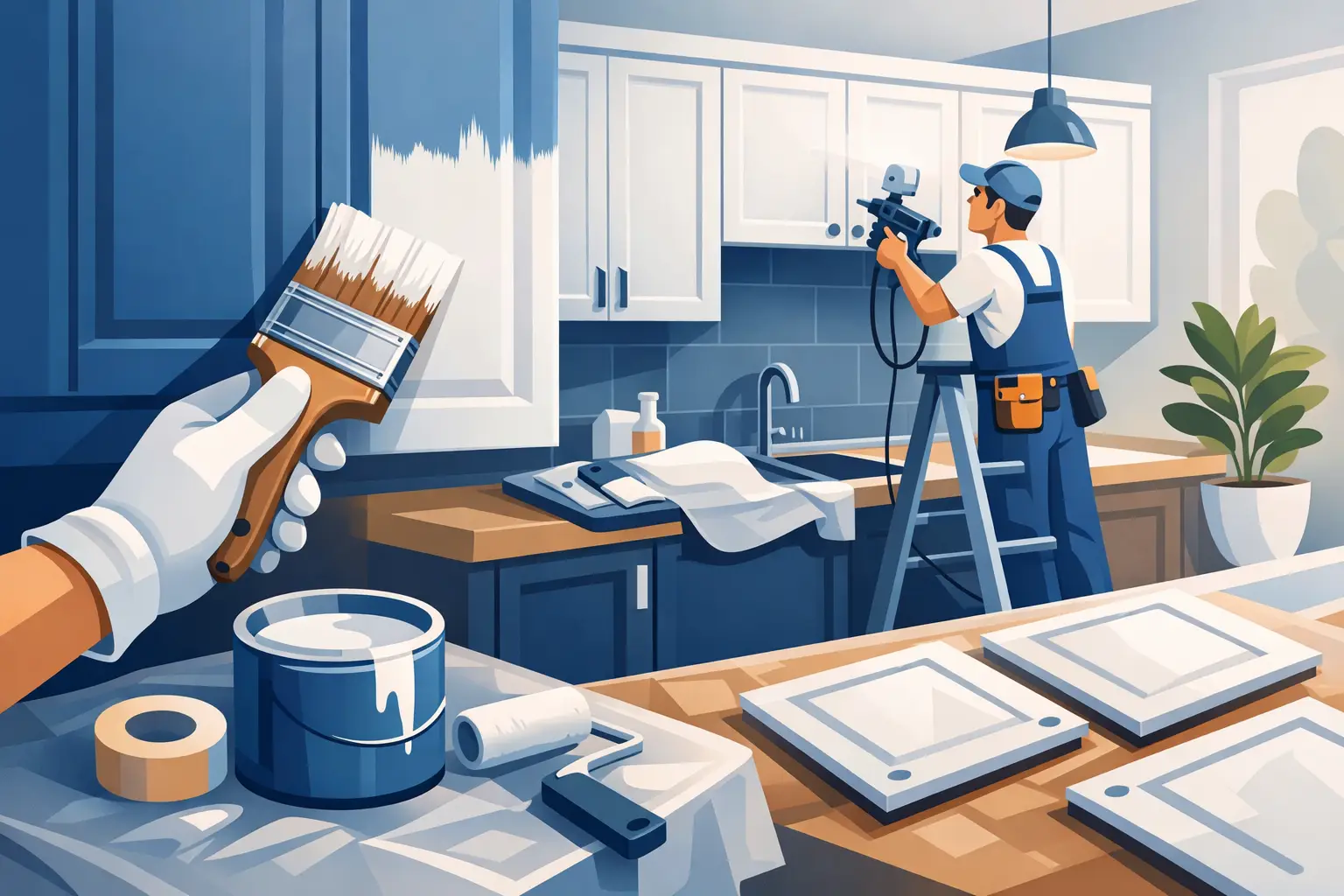
Masking is not just about protecting appliances and worktops. It is also about creating boundaries that keep dust out of the spray zone. Floors, adjacent rooms, open shelving, countertops and internal cabinet spaces all need proper covering.
Containment sheeting can help separate the active work area from the rest of the home. In some properties, especially open-plan homes in Dublin and surrounding counties, temporary screening is essential. Without it, normal household movement can carry dust into the area throughout the day.
Controlling airflow rather than guessing it
Air movement is one of the most misunderstood parts of cabinet spraying. Many people assume more airflow is always better. It is not that simple. If airflow is uncontrolled, it can drag dust from hallways, utility spaces or floor edges directly onto wet doors and frames.
The goal is managed ventilation. That may mean isolating the area, reducing unnecessary draughts and using extraction in a way that removes airborne particles without disturbing the coating. On some jobs, opening every window in the kitchen would actually make dust contamination worse.
Using the right equipment and clean materials
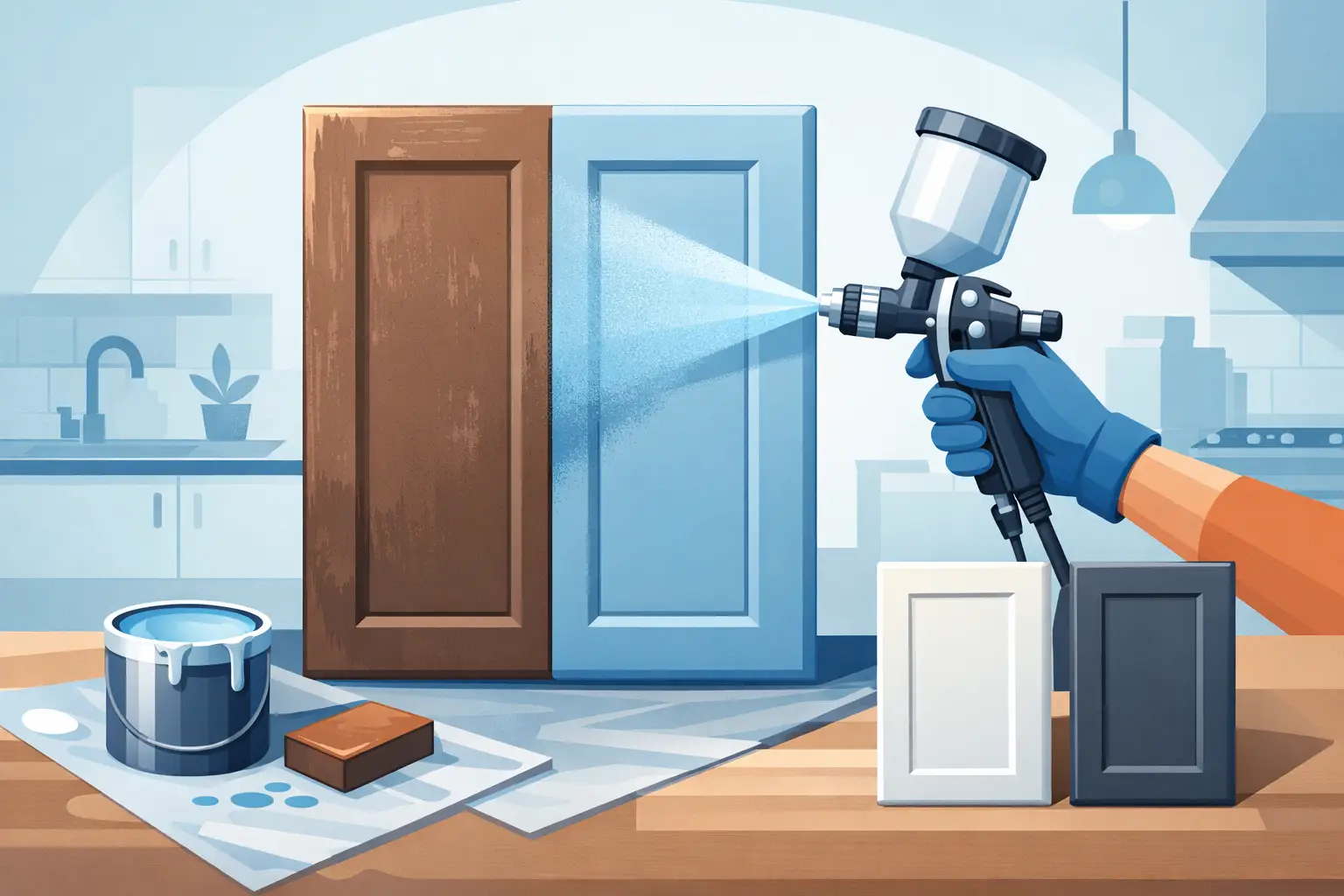
Professional spray equipment should be clean, well maintained and suited to fine finishing work. Hoses, guns, filters and pots all need attention. Dust can come from the room, but it can also come from contaminated equipment or poorly stored materials.
Tack cloths, lint-free wipes and filtered vacuum systems all play a part. Even workwear matters. Loose fibres from clothing can create the same kind of defects as household dust. The detail may sound small, but small details are exactly what define a smooth, durable finish.
Why on-site conditions change the method
Every kitchen has its own challenges. Older homes may have more settled dust in mouldings, textured ceilings or hidden gaps. Newer homes can still create issues if nearby building work, sanding or heavy outdoor traffic is stirring fine particles.
Humidity and temperature also affect dust behaviour. A dry room can allow particles to stay airborne longer. A room that is too warm may make coatings tack off quickly, which sounds helpful but can leave less time for levelling. The right setup depends on the property, the coating system and which parts of the kitchen are being sprayed in place.
This is why reliable respraying is not a one-size-fits-all service. The best results come from adapting the process to the room rather than forcing the room to suit a standard routine.
Common mistakes that lead to dusty finishes
The most common mistake is rushing the prep because the spraying itself looks like the skilled part. In truth, the finish is often decided before the spray gun is even switched on. If cleaning is rushed or masking is incomplete, defects usually follow.
Another issue is allowing too much movement through the space. Family kitchens are naturally high-traffic areas. People walking in and out, opening doors or using adjoining rooms can disturb settled debris. During active spraying and drying, restricting access makes a real difference.
There is also the temptation to keep touching the job. If a freshly sprayed surface picks up a tiny speck, trying to fix it immediately can do more harm than good. Professional refinishing often means letting the coat cure properly, then correcting any isolated issue in a controlled way rather than chasing perfection mid-application.
How professionals reduce disruption while keeping standards high
Homeowners often worry that dust control will mean days of upheaval. A well-run respray project should feel organised, not chaotic. The point of proper containment is not to make the process feel larger. It is to keep the work precise, efficient and respectful of the home.
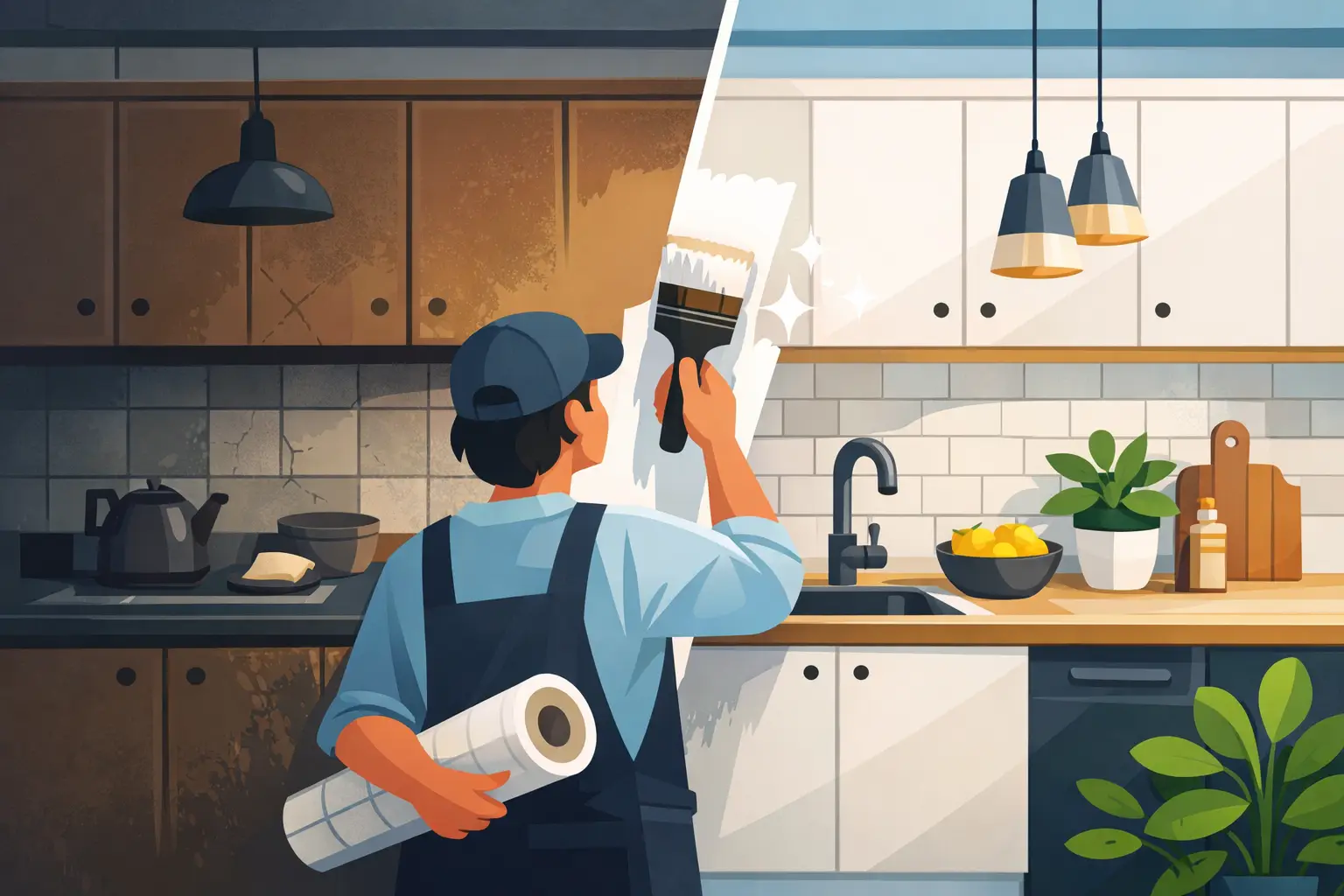
Experienced teams plan the sequence carefully. Cleaning, removal, masking, spraying and curing are coordinated to reduce both contamination and downtime. That is especially important for customers who want the visual impact of a renovated kitchen without the cost, waste and inconvenience of full replacement.
For many households, that balance is the real value of professional respraying. It delivers an affordable transformation while protecting the existing kitchen and avoiding unnecessary mess.
What homeowners can do before a respray appointment
A few simple steps can improve conditions before the team arrives. Clearing worktops, emptying nearby open shelves and removing decorative items reduces hidden dust traps. If possible, avoid vacuuming or sweeping immediately before spraying starts, as that can stir up particles unless the room then has time to settle.
Pets should be kept well away from the work area. Pet hair behaves like airborne dust and can travel farther than people expect. It also helps to minimise foot traffic in and out of the kitchen while work is underway.
If you are planning a cabinet respray, it is worth asking how the company approaches cleanliness and containment, not just colours and finishes. A professional answer should sound specific. Clean preparation, controlled airflow and careful masking are signs of a company that treats the finish seriously.
At Dublin Kitchen Respray, that attention to detail is part of delivering a professional, eco-friendly alternative to replacement kitchens. A stunning finish is never just about the final coat. It is built through expert preparation and trusted workmanship from the start.
A cleaner process leads to a better result
Dust control is rarely the part homeowners think about first, yet it is one of the clearest markers of quality. Anyone can talk about smooth finishes. The more important question is how that finish is protected while it is most vulnerable.
When kitchen cabinet respray dust control methods are handled properly, the project runs cleaner, the finish looks sharper and the whole experience feels more reassuring. That is the kind of craftsmanship worth choosing – careful, efficient and designed to leave your kitchen looking renewed rather than simply repainted.