
If you are thinking about refreshing your kitchen in Dublin, there is a good chance you have already priced a replacement and then had the same reaction most homeowners do: it is expensive, messy, and it creates a surprising amount of waste for something that often does not need to be ripped out.
That is why more people are asking a sensible question before they book anything: is a respray actually a greener option, or is it just a convenient one?
In many cases, an environmentally friendly kitchen respray is genuinely the more responsible choice, especially when your units are structurally sound and you are aiming for a long-lasting finish. But like most “eco” topics, the honest answer depends on materials, process, and how the finished kitchen is used and maintained.
This guide explains what makes respraying environmentally friendly, where the benefits are strongest, and what to ask so you can feel confident you are making a practical decision for your home.
What “environmentally friendly” means for a kitchen project
For kitchens, “environmentally friendly” is not a single feature. It is a combination of factors that add up:
How much material you throw away (and what ends up in landfill)
What coatings and products are used, including air quality considerations
How long the finished result lasts before it needs to be redone
How much manufacturing, transport, and packaging is involved
A sustainable kitchen makeover is usually the one that avoids unnecessary replacement, uses sensible materials, and lasts long enough that you are not repeating the job in a short time.
The biggest environmental win: reducing kitchen renovation waste
The clearest environmental advantage of respraying is waste reduction.
A full kitchen replacement often involves removing doors, frames, panels, sometimes worktops, and occasionally backsplash tiling. Even when parts can be recycled, a large portion typically becomes kitchen renovation waste because of mixed materials, adhesives, laminates, and damage during removal.
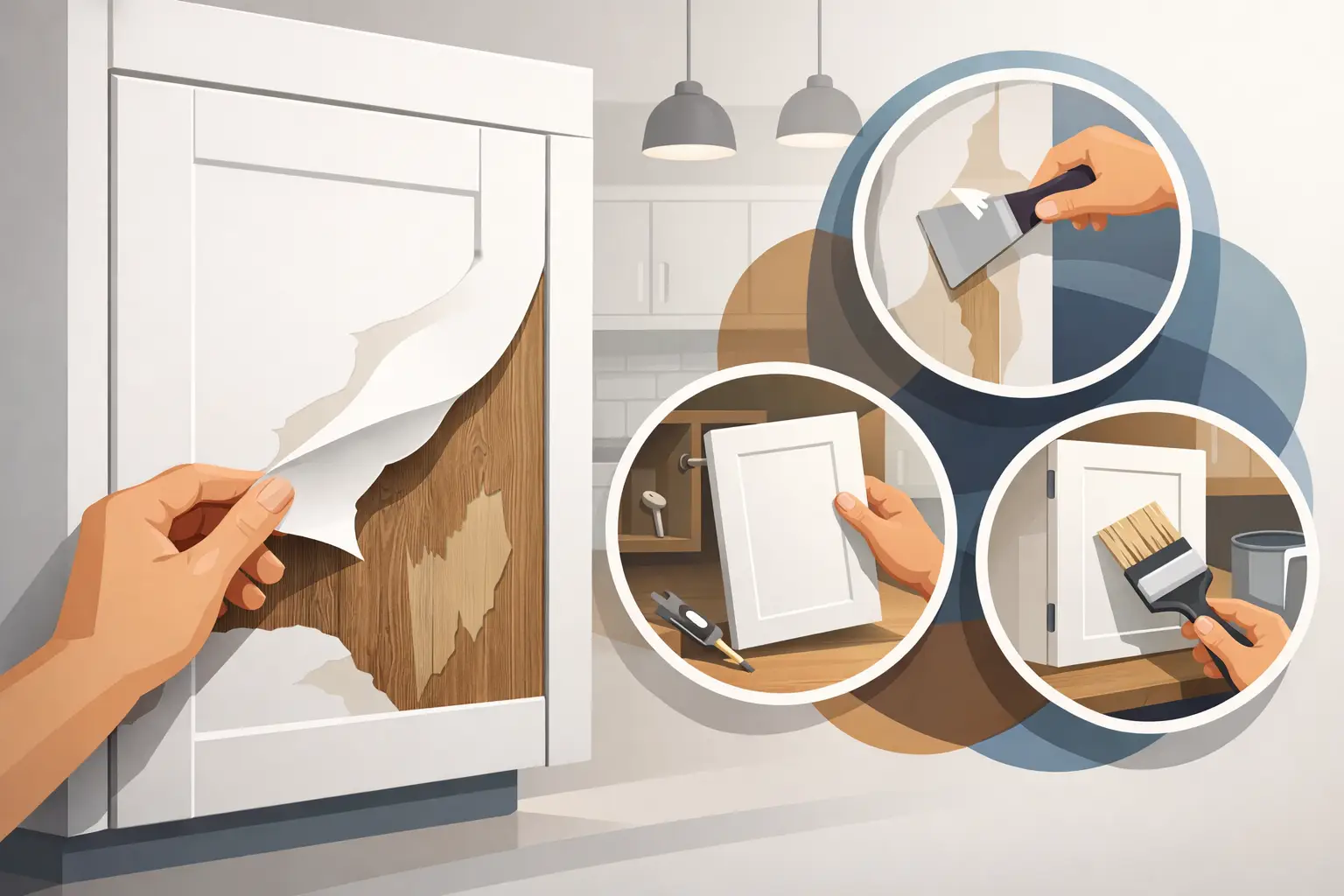
A respray, by design, keeps what already exists. When the underlying cabinets are solid, respraying avoids:
Skipping units that still have years of life left
Dumping hinges, drawer boxes, and internal fittings
Replacing materials that are not actually “worn out,” just dated
If your kitchen layout works and the cabinets are in decent shape, respraying is one of the most straightforward ways to upgrade the look without creating a pile of disposal bags at the end.
If you are specifically looking at refreshing doors and frames, the most direct option is a kitchen cabinet respray rather than replacing the units.
Less manufacturing, less transport, less packaging
A replacement kitchen does not only create waste in your home. It also has an upstream footprint.
New cabinets and worktops require raw materials, manufacturing energy, finishing processes, packaging, and transport. Even a “flat pack” solution involves a chain of production and delivery that adds emissions before it reaches your door.
A respray typically uses:
Your existing cabinet structure
A coating system applied on-site or with doors removed for controlled spraying
Protective materials for masking and surface preparation
There is still material used, but in most cases the overall footprint is significantly smaller than producing and shipping an entirely new kitchen.
This is especially true when you are working locally across Dublin and surrounding counties, because shorter travel distances and simpler logistics tend to reduce the impact further.
What about VOCs and indoor air quality?
This is where homeowners often pause, and it is a reasonable concern.
Paints and coatings can release volatile organic compounds, often shortened to VOCs. These compounds contribute to odour and can affect indoor air quality during application and curing.
A well-planned environmentally friendly kitchen respray typically addresses this in three ways:
Choosing modern products designed to be lower in VOCs
Applying coatings with proper ventilation and controlled conditions
Allowing adequate curing time before full heavy use
In practical terms, many homeowners are surprised at how manageable the process is when it is done professionally, with good preparation and a clear plan for airflow and drying.
If you are comparing options, it is worth asking specifically about low VOC kitchen paint or low-odour systems and what you should expect on day one versus after curing. A professional provider will explain it in simple, realistic terms rather than promising “no smell at all.”
Sustainability is also about longevity
The greenest renovation is the one you do once, not the one you repeat.
This is why durability matters so much. A finish that chips easily or stains quickly can push people back into replacement sooner than they planned, which cancels out a lot of the original environmental benefit.
Longevity comes down to:
Thorough degreasing and sanding
Correct primers and bonding layers for the surface
Careful finishing and protective topcoats
Adequate curing time
Sensible care in daily use
In other words, respraying can be environmentally friendly, but only if it is treated like a professional finishing job, not a quick cosmetic cover-up.
If your refresh includes worktops as well, choosing a durable finish matters just as much. Some homeowners opt for a stone-style surface upgrade such as a spray granite countertop finish to extend the life of existing worktops rather than replacing them.
Does respraying create any waste at all?
Yes, it does. A balanced view is important.
Respraying uses masking materials, abrasives, cleaning products, and coating containers. There can also be dust from preparation, and any responsible job should manage that carefully.
The environmental difference is that the waste from a respray is usually far smaller than the waste from removing and disposing of an entire kitchen. The goal is reduction, not perfection.
If you want the most eco-conscious process, ask how prep dust is controlled, how waste is handled, and what the curing guidance is. These questions reveal whether the provider is process-driven.
How to make your kitchen respray even more environmentally friendly
If you are trying to be intentional about the decision, a few small choices can improve the overall result.
Keep what still works
If your hinges and handles are in good condition, keeping them reduces extra material demand. If you do replace handles, choose something that will still suit your kitchen in five years, not just what is trending this month.
Choose colours that will age well
A sustainable kitchen makeover is often the one that still looks good after the novelty wears off. If you pick a finish that feels timeless to you, you are less likely to redo the kitchen again soon.
Protect the finish so it lasts
Use gentle cleaning methods, avoid harsh abrasives, and deal with moisture issues quickly. Small leaks under sinks are one of the most common reasons kitchens age poorly, regardless of finish.
Consider doing cabinets and worktops as one plan
A lot of “repeat renovation” happens when homeowners do one part of the kitchen, then feel forced to replace another part because it no longer matches. A coherent plan often reduces waste long term.
You can view the full range of options on the respray services page to decide what combination makes sense for your kitchen rather than doing it in fragments.
Dublin and surrounding counties: why respraying fits local housing well
Across Dublin, Wicklow, Kildare, Meath, and Louth, there are many kitchens where the cabinet structure is still strong. The kitchen works, the storage works, the layout works. It just looks tired, dated, or scuffed from years of use.
In that situation, respraying is one of the most sensible upgrades because it respects what is already built. Instead of removing serviceable units, you are extending their life and improving the look.
That combination is why “environmentally friendly” and “practical” often overlap in this category.
Questions to ask if you care about the environmental side
You do not need to become an expert, but these questions help you separate a careful operator from someone rushing jobs.
What coating system do you use, and is there a low VOC kitchen paint option?
How do you manage prep dust and protect the rest of the home?
What is the curing plan, and how should the kitchen be used during that period?
How do you handle waste from masking and materials after the job?
A professional answer should sound calm and specific, not defensive or vague.
So, is respraying environmentally friendly?
In most real Dublin kitchens where cabinets are structurally sound, yes. An environmentally friendly kitchen respray can significantly reduce kitchen renovation waste, avoid the footprint of manufacturing and shipping replacement units, and extend the life of what you already have.
The key is to choose a process that prioritises prep, materials, and durability. When those are done properly, respraying is not only the easier route, it is often the more responsible one too.
If you want advice based on your exact kitchen, the simplest next step is to share a few photos and your area for a realistic recommendation. You can do that here: contact Dublin Kitchen Respray.