You can usually tell what a kitchen will feel like to live with in five seconds: look at the cabinet doors. If they’re already showing fingerprints around the handles, or the light catches every tiny smear, that “new kitchen” feeling can fade fast. The good news is you don’t need to accept a daily wipe-down as the price of a stylish space. The right surface (and the right finish on that surface) can make cleaning genuinely easy.
This guide is written for homeowners who want kitchens that look smart in real life—not just on day one. We’ll look at what actually makes a cabinet surface low maintenance, which popular options behave best in busy Irish homes, and when a professional respray can be the most practical route.
What “easy maintenance” really means for cabinet surfaces
When people ask for easy maintenance kitchen cabinet surfaces, they’re usually reacting to one of three frustrations: marks that show instantly, grime that builds up around edges, or finishes that feel delicate. It helps to separate appearance from performance.
A surface can be hard-wearing but still show every fingerprint (high-gloss often does this). Another can disguise smears beautifully but be more prone to staining if you’re not careful (certain pale matt finishes can fall into that category if they’re not properly sealed). Easy maintenance is the sweet spot where the surface is smooth, sealed, and forgiving under normal kitchen use.
In practical terms, low-maintenance cabinet surfaces tend to share a few traits. They’re non-porous (so oils and sauces sit on top rather than soaking in), they’re reasonably scratch-resistant, and they don’t rely on a delicate top layer that can be damaged by everyday cleaning. Just as importantly, they’re finished well around profiles, corners, and handle areas—because those are the first places grime clings.
The quiet hero: finish level (matt vs satin vs gloss)
Most of the maintenance battle is won or lost with the sheen level, not the colour. If you’re choosing between matt, satin, or gloss, think about how your kitchen is used day to day.
Matt finishes can look modern and calm, and they’re excellent at hiding minor surface texture. They can also disguise fingerprints better than high gloss, but there’s a trade-off: cheaper matt finishes may “grab” marks and be harder to wipe clean, especially with greasy cooking. If you love matt, the quality of the coating matters hugely.
Satin is often the most liveable option. It has enough sheen to wipe clean easily, without broadcasting every touch. In family kitchens, satin tends to be the reliable middle ground: it looks premium, feels smooth, and copes well with repeated cleaning.
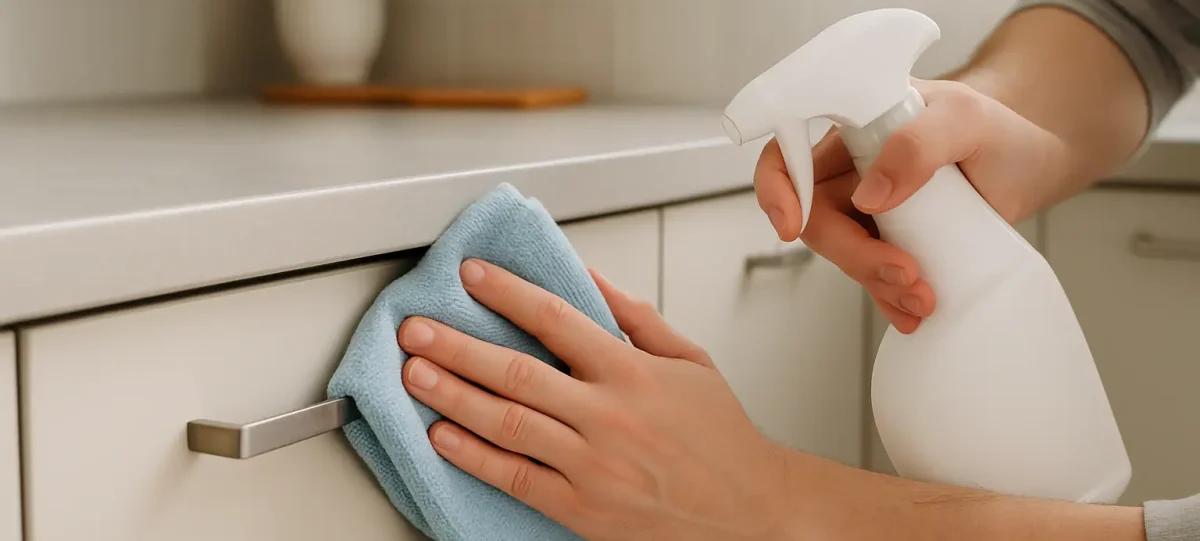
High gloss is the most wipeable in theory—because it’s very smooth—yet it’s the most honest about fingerprints, water spots, and micro-scratches. If you’re set on gloss, darker colours will show more, and handle placement becomes important. Proper cleaning technique matters too: a clean microfibre cloth and mild detergent, rather than abrasive pads that leave tiny scratches which then hold grime.
Popular cabinet surfaces and how they behave
Laminated doors (including melamine)
Laminated cabinet doors are common in Irish homes because they’re affordable and generally straightforward to look after. The surface is sealed and non-porous, so everyday splashes wipe off without drama.
The main downside is edge vulnerability. If moisture gets into a seam—around a sink run, dishwasher, or kettle area—the laminate can lift over time. Heat and steam are the usual culprits. For maintenance, the key is quick wipe-downs of standing water and avoiding harsh cleaners that can dull the finish.
Thermofoil (vinyl-wrapped) doors
Thermofoil can be very easy to clean when it’s intact. It’s smooth and tends to resist staining.
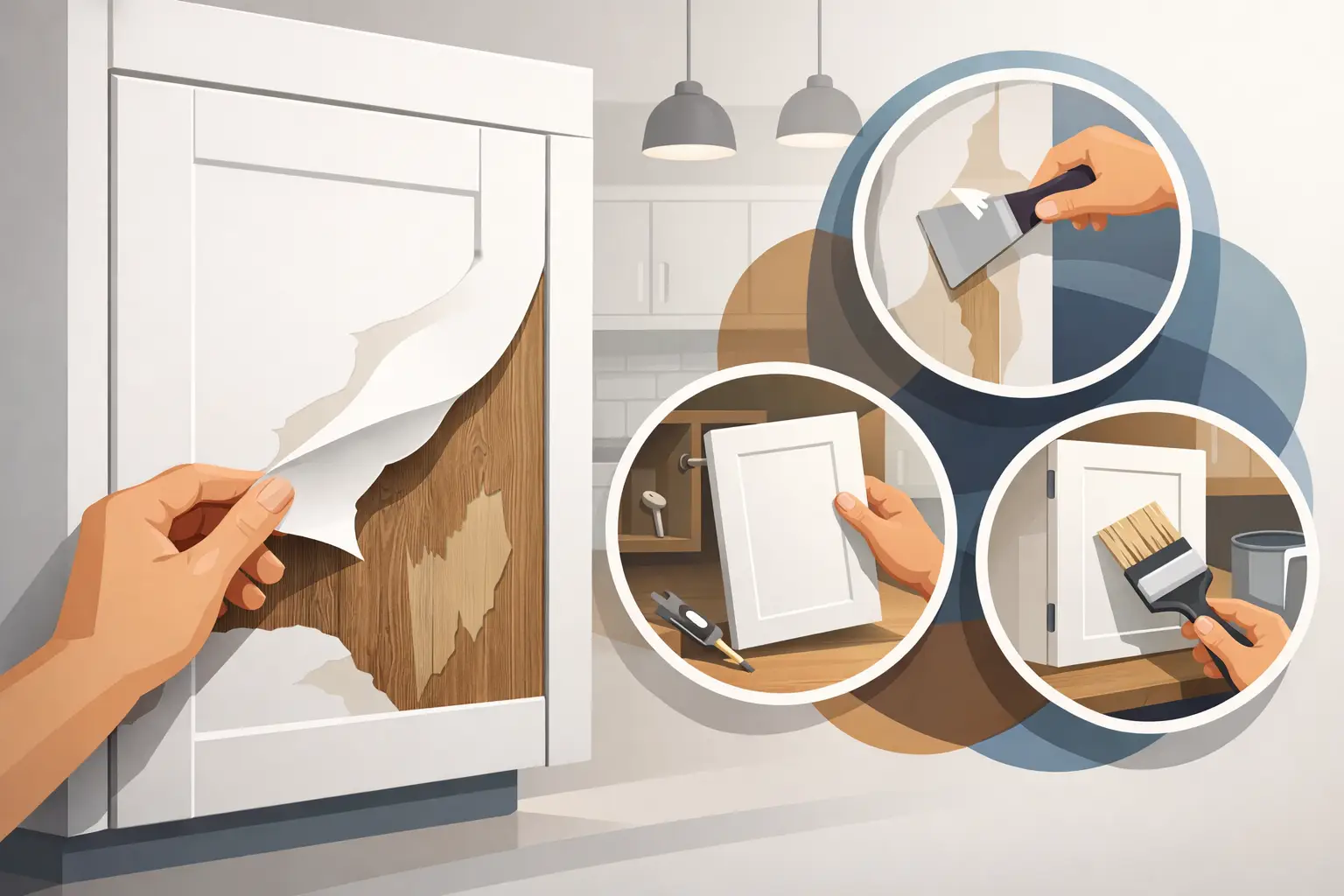
Where it can let you down is heat. Doors near ovens, dishwashers, or integrated coffee machines can see the foil loosen or peel. If you’ve had that happen, it’s not you—it’s the material. You can baby it, but you can’t fully change how it reacts to years of warmth.
Painted timber or MDF
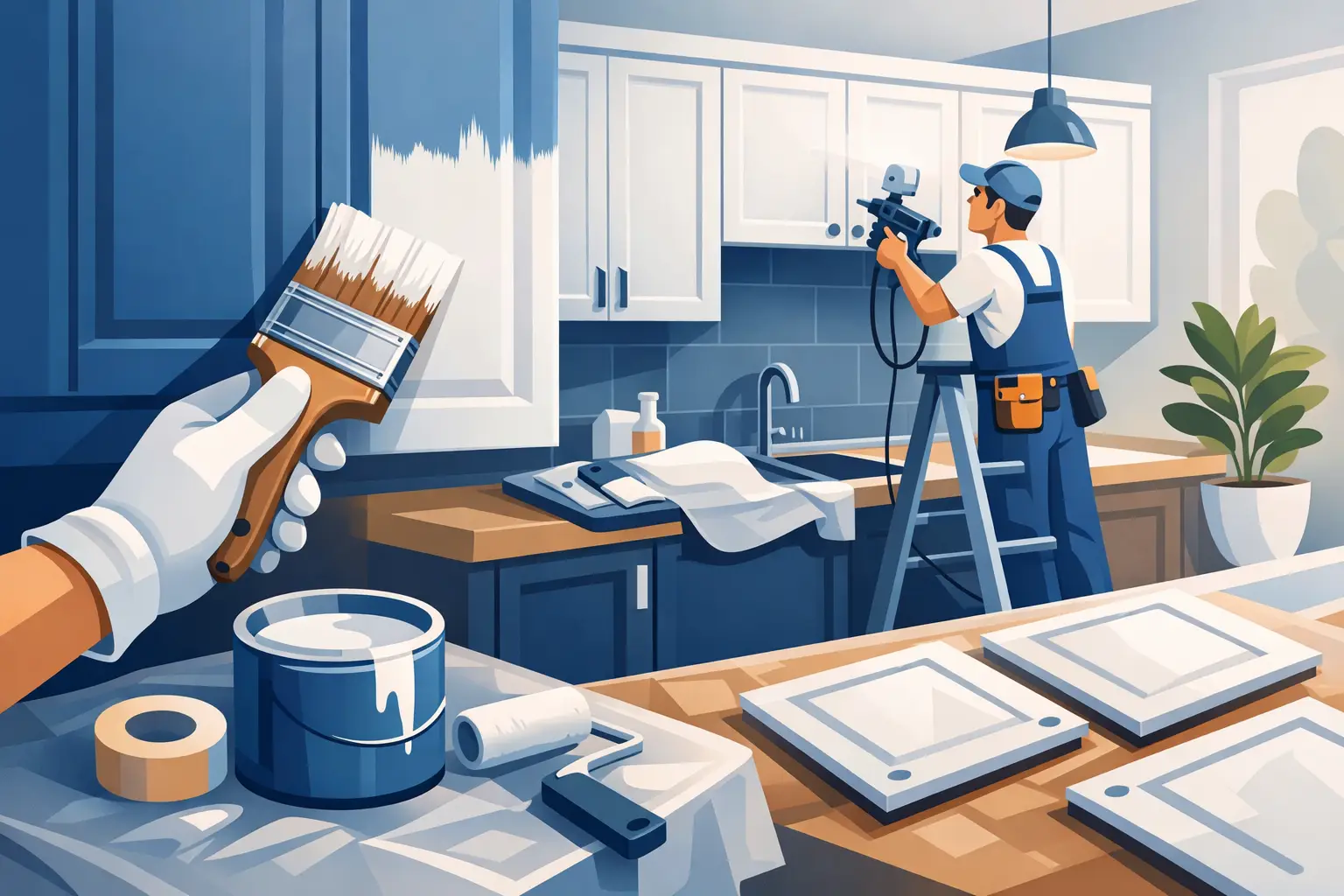
A painted door can be either wonderfully easy or annoyingly fussy, depending on the paint system and how well it was applied. Done properly, painted cabinetry gives you a sealed surface that cleans easily, and it’s easy to refresh when styles change.
The weak points are chips and wear around handles. If the coating is thin or the preparation was poor, you’ll see breakdown where hands touch most. That’s why professional prep (degreasing, sanding, priming correctly, and spraying an even coat) matters more than people expect.
Solid wood with lacquer or oil
Wood has warmth and character, but maintenance varies wildly. Lacquered wood can be relatively straightforward—wipeable, sealed, and stable. Oiled wood is more “alive”: it can handle light scuffs well, but it asks for occasional re-oiling and is less forgiving with splashes and stains.
If your priority is minimal upkeep, wood can still work, but it’s best when fully sealed and away from constant steam.
Acrylic and high-end polymer doors
Acrylic doors give that glass-like look with a smoother surface than many gloss laminates. They wipe clean easily and can look stunning in modern kitchens.
However, they can show fine scratches if cleaned with the wrong cloth or if grit is dragged across the surface. If you like acrylic, commit to gentle cleaning habits and keep an eye on high-traffic areas.
The most “forgiving” colours and textures
It’s tempting to choose a cabinet colour purely on style, but colour does affect perceived maintenance. Very dark shades (black, deep navy, charcoal) show dust, water marks, and fingerprints more readily, especially in gloss. Very bright whites can show food splashes around bins and prep areas, though they’re easier to visually “read” as clean.
Mid-tones—soft greys, warm neutrals, muted greens—tend to hide day-to-day smears best. Subtle texture can help too, but only if it’s not so textured that it traps grime. A smooth satin finish in a mid-tone is often the easiest combination for busy households.
Easy cleaning is also about the door style
Even with the right surface, intricate door profiles create extra edges for grease to collect. Flat slab doors are quickest to wipe. Shaker doors are still very manageable, but the inner frame can pick up grime if you cook often.
Handle choice matters more than most people realise. Knobs and pulls that give you space for your fingers reduce the amount you touch the door face, which means fewer fingerprints. If you like handleless styles, consider that you’ll naturally press the door surface more often.
If you want low maintenance, choose a finish that can be cleaned properly
A truly easy-care cabinet surface shouldn’t require special products. For most finishes, a mild detergent in warm water and a clean microfibre cloth is enough. The problems start when people have to “scrub” a surface to shift marks—because scrubbing either dulls the sheen, creates micro-scratches, or both.
Avoid abrasive creams and scouring pads on painted, acrylic, and gloss surfaces. Also be careful with aggressive degreasers. They can be fine occasionally, but frequent use can soften or haze certain coatings.
If your cabinets always look streaky, it’s often not the surface—it’s residue from too much product. A light clean followed by a second wipe with clean water, then drying, can make a surprising difference.
When respraying is the most practical low-maintenance upgrade
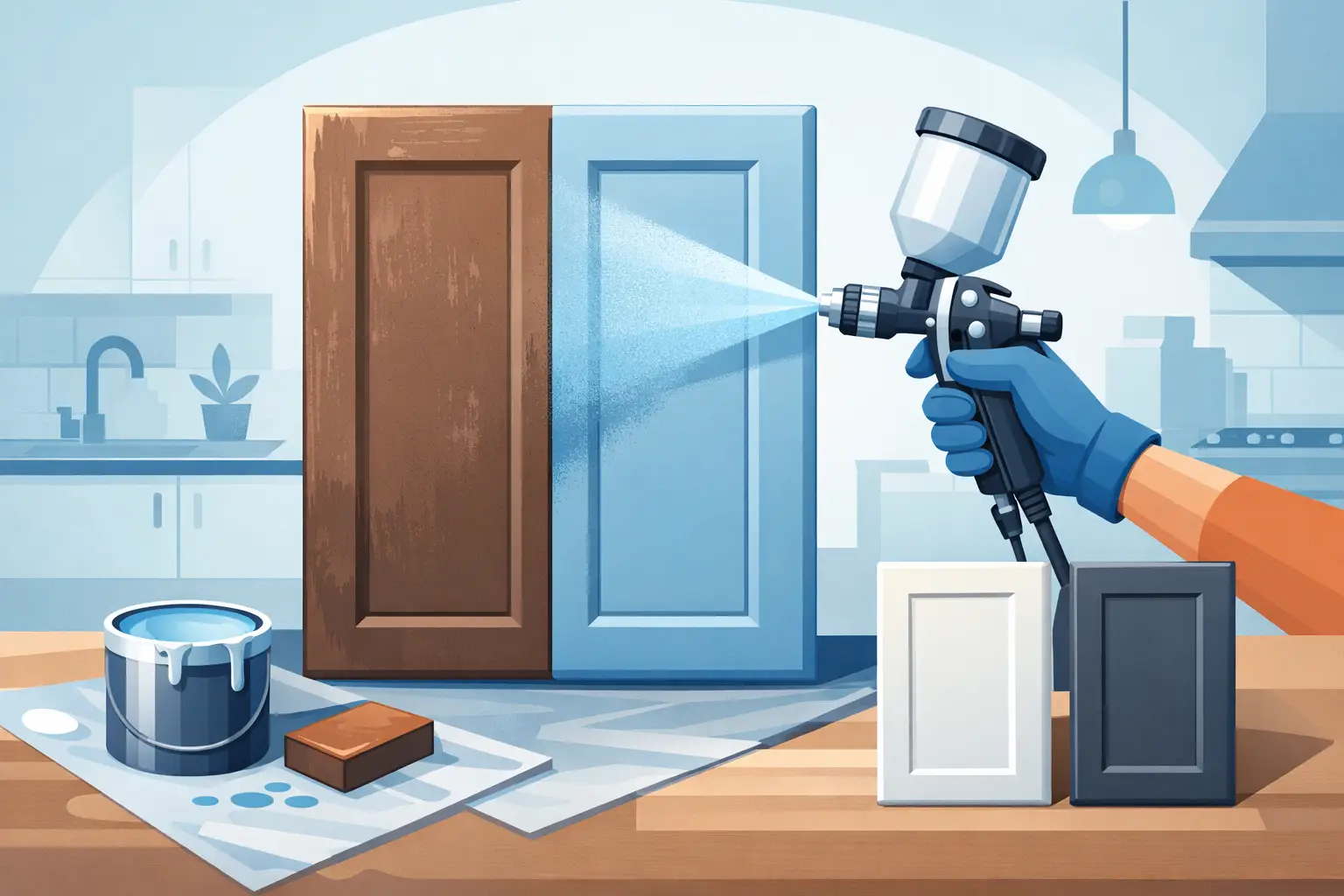
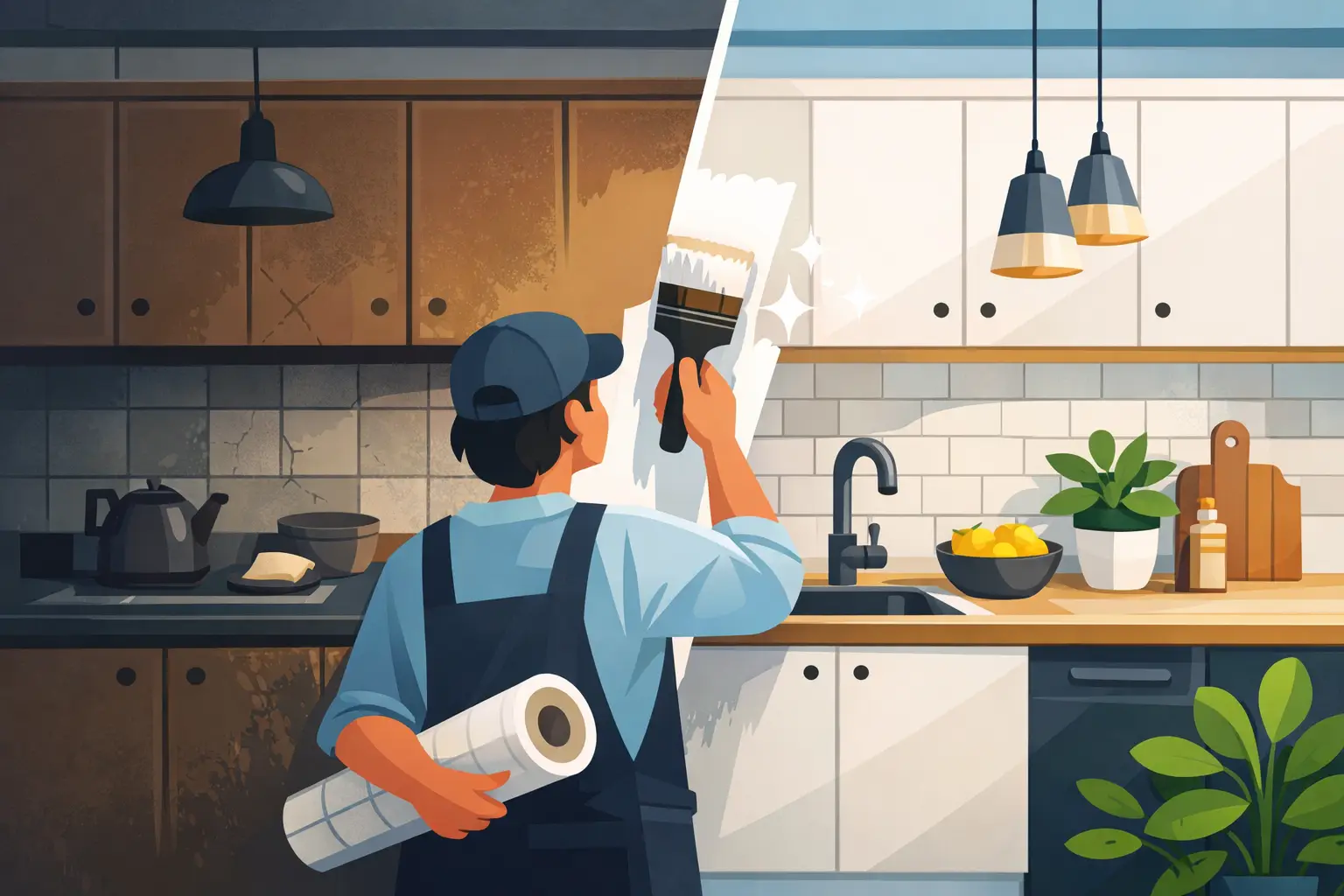
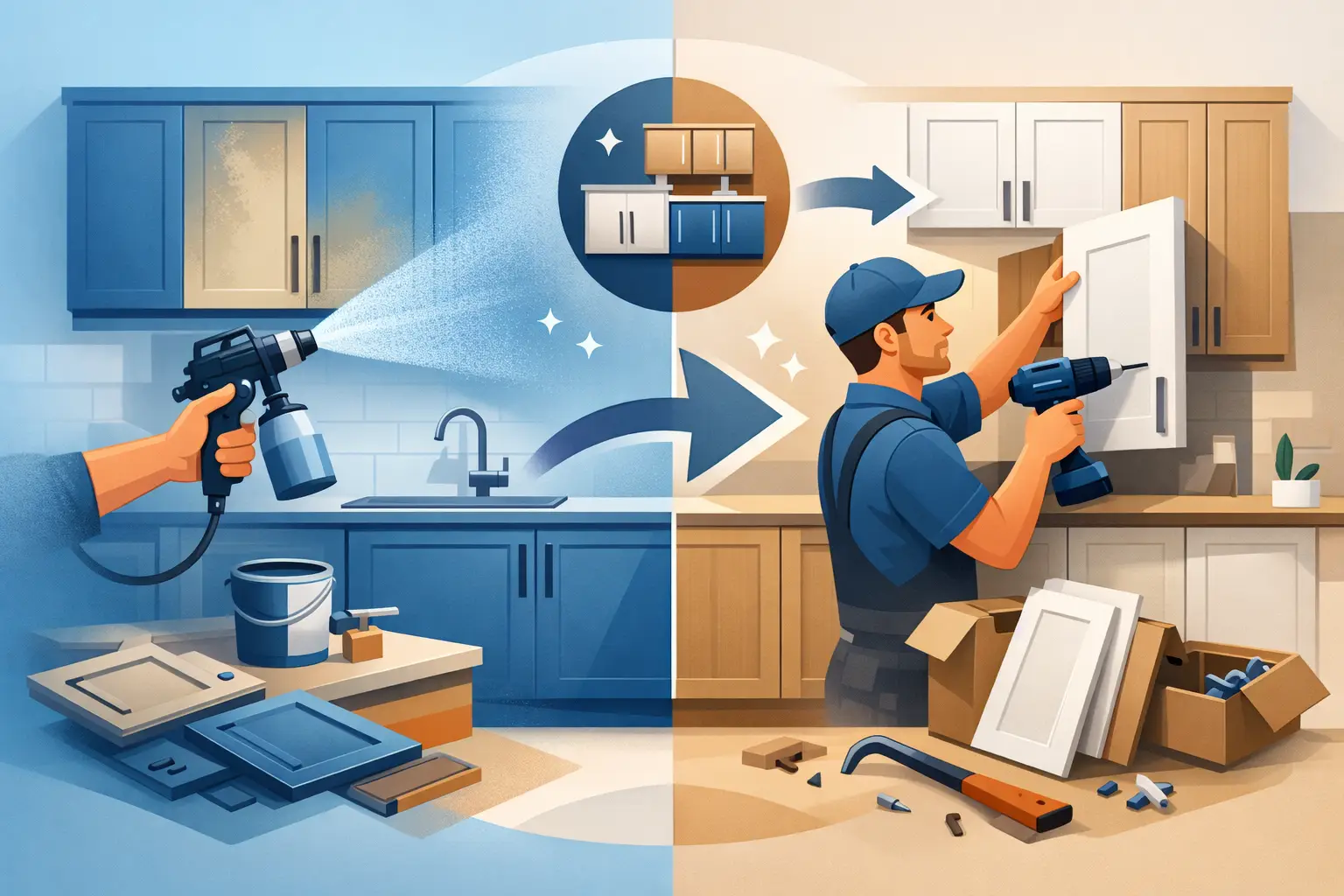
If your existing doors are structurally sound but the finish is tired, respraying can be the quickest route to easy maintenance. It allows you to choose a modern, cleanable finish (often satin for everyday practicality) without the disruption and waste of replacing units.
The result depends on preparation and product choice. A professional respray includes thorough degreasing (kitchens hold more invisible grease than people realise), proper sanding and priming, and controlled spray application for an even, durable coat—especially around edges and handle areas where wear starts.
If you’re in Dublin or the surrounding counties and want a trusted, affordable way to transform the look and cleanability of your cabinetry, Dublin Kitchen Respray specialises in professional cabinet respraying that refreshes kitchens without the hassle of a full rip-out.
“It depends” scenarios: choosing what’s right for your kitchen
There isn’t a single best surface for every home, because maintenance is tied to how you live.
If you have young children, you’ll touch lower doors constantly—so choose a finish that doesn’t show fingerprints and can handle frequent wiping (satin is often ideal). If you cook a lot with oils and spices, you’ll want a sealed, wipeable surface and a door style with fewer grooves. If your kitchen gets strong daylight, you may notice streaks and micro-scratches more easily, which can make high gloss feel higher maintenance than expected.
And if you’re dealing with peeling foil, lifting laminate edges, or swollen panels, the “easy maintenance” question becomes a repair question first. A new coating can do wonders, but the substrate needs to be stable.
A helpful rule: choose the surface that fits your real routine on a Wednesday night, not your ideal routine on a quiet Sunday morning.
A low-maintenance kitchen isn’t one you’re constantly cleaning—it’s one where a quick wipe genuinely resets the room, and you can get back to enjoying it.